Lunarcana

By Moonlight, on the Page, Meet Yourself

Tell the cards what weighs on you, write what you learn in the manuscript

Zodiacus

Twelve signs, four elements

In a year the sun walks all twelve signs. Each belongs to fire, earth, air or water, is ruled by a classical planet, and answers to one card of the Major Arcana — a language tarot and the sky have long shared.

The three fire signs1 / 4
The three earth signs2 / 4
The three air signs3 / 4
The three water signs4 / 4

Sphaera Arcanorum

Seventy-eight cards, each in its place

The Golden Dawn mapped the whole deck onto the sky. Every card holds its own stretch of this ring of degrees — tap a cell to open that card.

12
Major Arcana · the twelve signs
7
Major Arcana · the seven classical planets
3
Major Arcana · the elements air, water and fire
36
Minor Arcana 2–10 · thirty-six decans of 10° each
12
Court cards · Knights, Queens and Kings, each spanning 30° across two signs
8
The four Aces and four Pages · the quadrants around the celestial pole
78
The whole deck
See which cards your birth chart falls on →

Anatomia

Take an astrolabe apart

Five pieces rise one after another, from the bottom up. Each has its own name, and each carries tonight’s sky.

Luna

The moon’s twenty-nine and a half days

Dispositiones

Turn it over — it’s a tool

The front holds tonight’s sky; the back is your workbench. Each of its four quadrants carries one spread, from simple to deep.

♈︎♉︎♊︎♋︎♌︎♍︎♎︎♏︎♐︎♑︎♒︎♓︎

Up and Down arrows step from one sign or planet to the next; Enter or Space opens it. Left and Right move through the nights; Home returns to tonight.

Card of the Day

One night, one observation

Under tonight's moon, turn a single card to reflect on.

Touch the card to turn it

Lineage

Five centuries of images

  1. c.1450Visconti-SforzaGilded, hand-painted cards of the Milanese court — the oldest trumps that survive
  2. 1760Tarot de MarseilleNicolas Conver’s woodcut deck fixes the seventy-eight
  3. 1781Court de GébelinLe Monde primitif first reads the tarot as a hidden book
  4. 1909Rider–Waite–SmithPamela Colman Smith gives every minor card a scene — the ground of this manuscript
  5. 1944The Book of ThothCrowley maps the deck onto Qabalah and the stars
Read the history of tarot →

The Readers' House

The star on the back of every card is a floor plan.

Each point is a room, and each room keeps its own way of reading. After dark the lamps come on, one room after another. On your first night, it's Lunaris who opens the door.

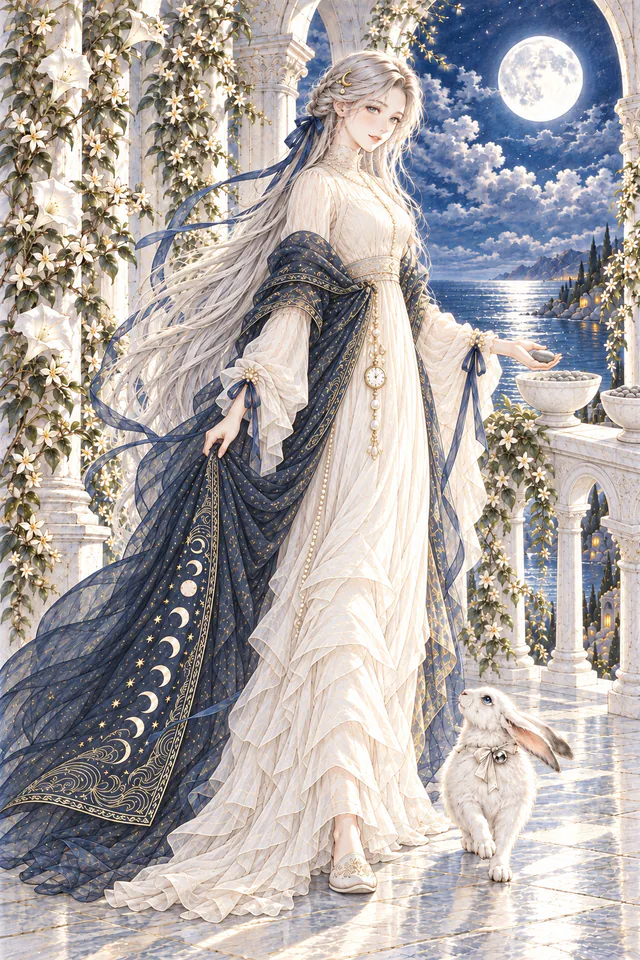
The gallery by moonlight: Lunaris stands at the balustrade, turned toward us, about to set the pebble on her palm into the bowl, with Ebb the white hare at her feet.

"You're here. Sit a while. Once the tide has gone out, we'll open it."

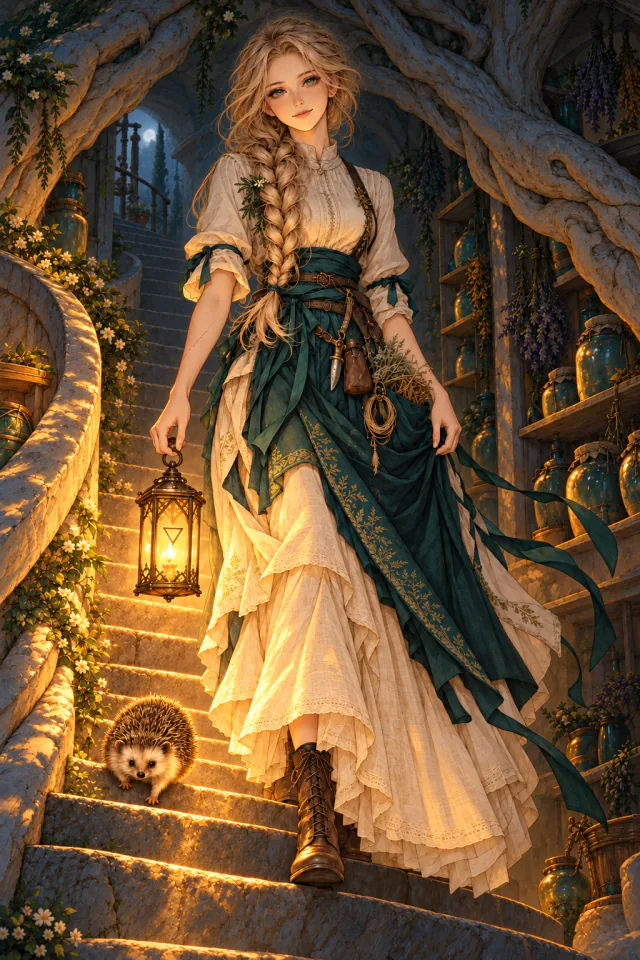
"I'll take the lamp. You go at your own pace. Say when you're tired; you can stop on any step you like."

"Good timing. It isn't light yet. Come and look out of the window first, then we'll look at the cards."

"Come and sit by the fire first, and warm your hands. Then we'll see which of your coals is still red."

"Rain on the glass, and a lamp that only reaches so far. Come and sit closer."

"Lay the cards out. We'll look at the whole board first, then at your next step."

"Sit. Don't ask yet what it means. First, let's see where it comes from."

Midnight to two · The Tidal Gallery

Lunaris

The moonlight that meets you on your first night with the manuscript.

Meet LunarisOpen to everyone
Two to four · The Undercroft

The Shadow Keeper

She carries the lamp down with you, and helps you seal and shelve what you can't yet say.

Four to six, before dawn · The Orrery Loft

Stellaris

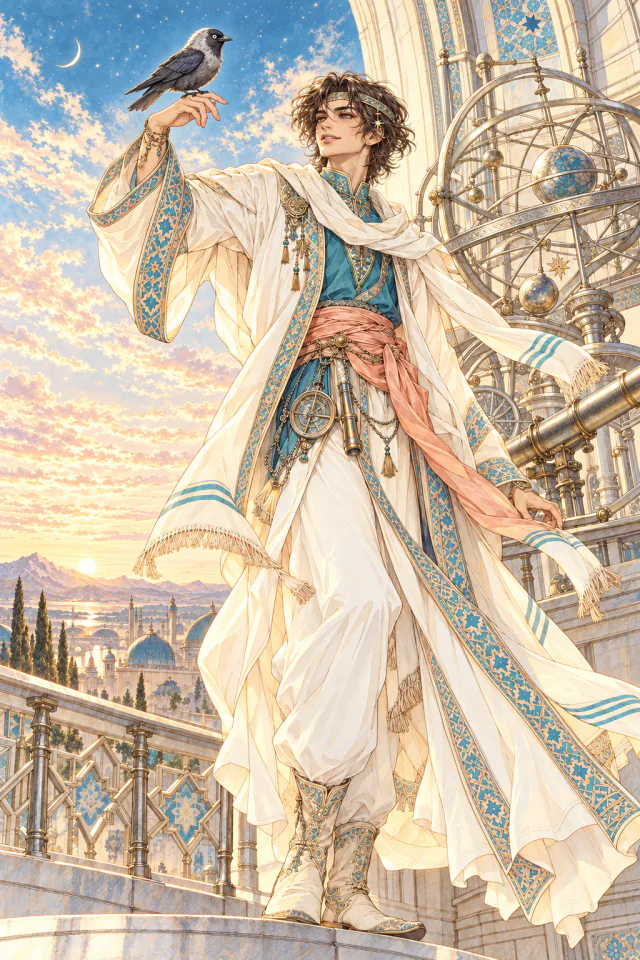
He looks at tonight's moon with you first, then the cards. The sky only brings the weather; whether you go is up to you.

Six to seven, at dawn · The Hearth Room

The Ember Keeper

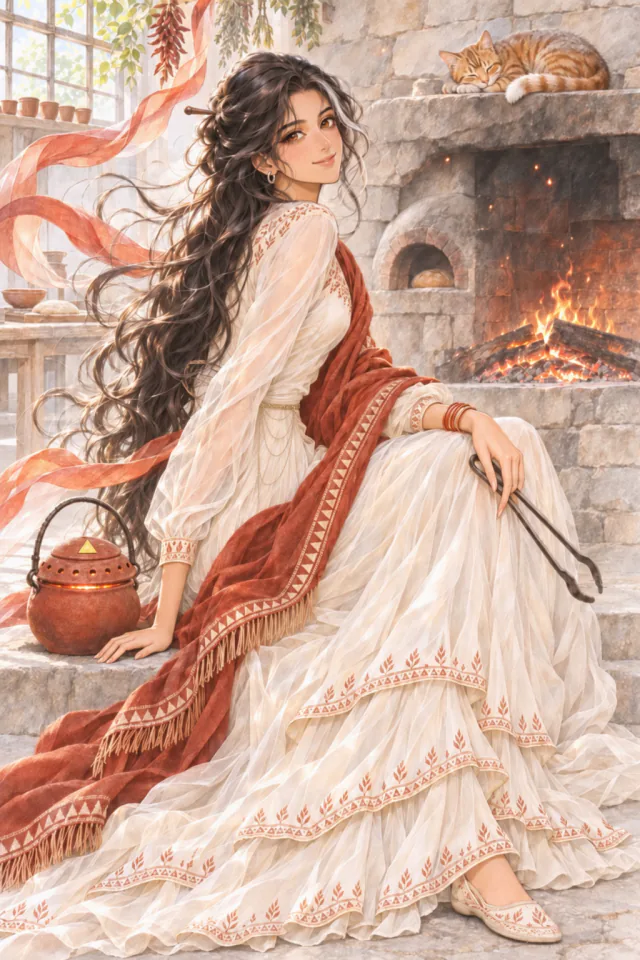
She helps you rake back the ash to find the coal that's still red, then hands you one small thing you could do today. Whether you do it is up to you.

Dusk, six to eight · The Rose Conservatory

The Rose Confidante

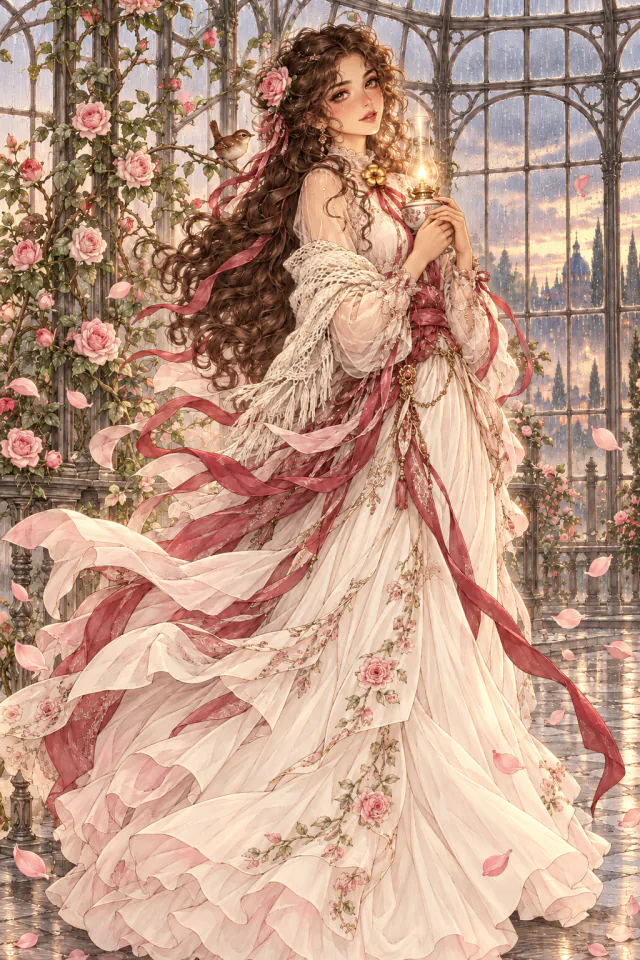
She won't guess at anyone else's heart. She reads what you bring close to the lamp, then thinks of one small thing for someone you love.

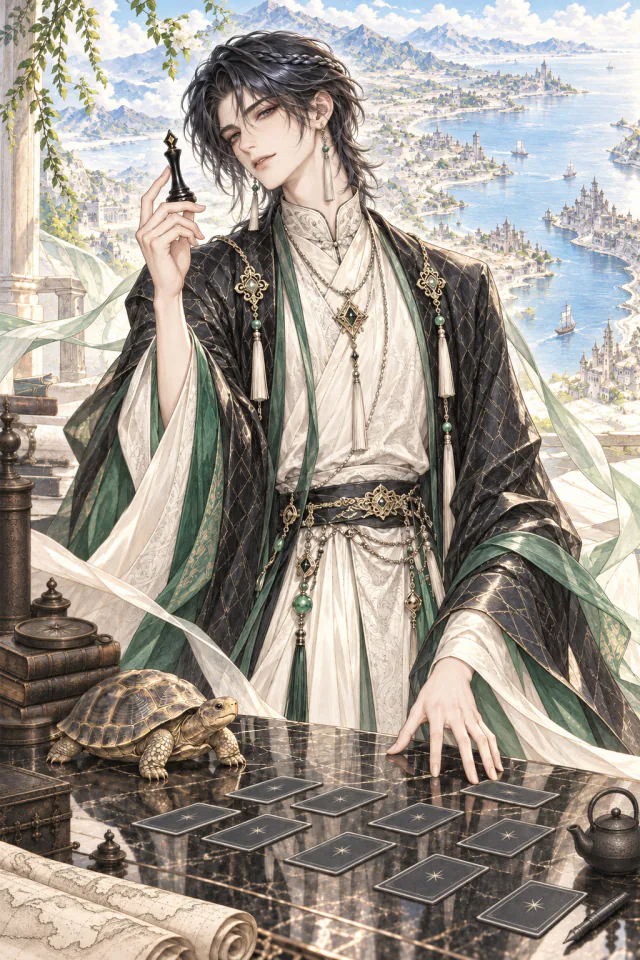
Eight to ten · The Obsidian Map Room

The Obsidian Strategist

He reads the whole board before your next step, puts the cost of every path on the table, and leaves the move to you.

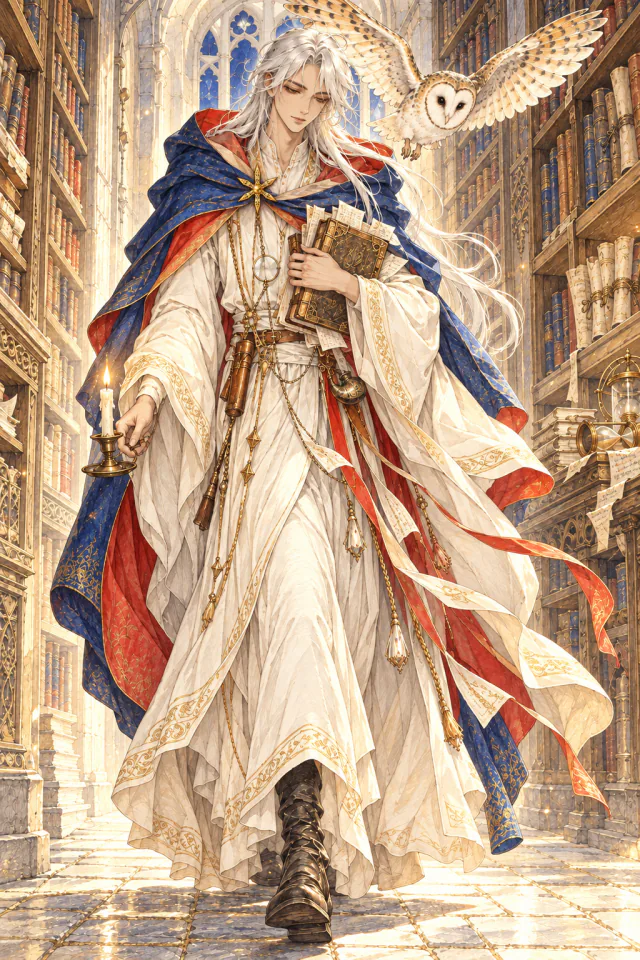
Ten o'clock to midnight · The Candle Cell

The Hermit Sage

Forty years of copying by candlelight. He'll tell you where a card comes from before what it says to you.

Every room's lamp burns brightest at its own hour of the night.Walk through the house →

The gallery by moonlight: Lunaris stands at the balustrade, turned toward us, about to set the pebble on her palm into the bowl, with Ebb the white hare at her feet.

Catalogus Stellarum

Every spread, one sky

Hover over or tap a constellation to see which spread it is

Hover over or tap a constellation to see which spread it is

A LIVING LINEAGE

Three centuries of moving manuscripts

From the Tarot de Marseille's woodcut tradition through Pamela Colman Smith's 1909 Rider-Waite-Smith deck to Lady Frieda Harris's Thoth illuminations, every tarot deck is itself a moving manuscript — a record of how its makers saw the wheel of becoming. Lunarcana stands inside this lineage rather than reinventing it: Rider-Waite-Smith iconography for the seventy-eight cards, Hermetic correspondences for the elemental and planetary bands, and the Western mystery tradition's reading frame for spreads.

A QUIET PRACTICE

Less a service, more a notebook

Lunarcana is a digital grimoire — a place to set a question down, draw a card, and write what you noticed. The interpretation is a mirror, not a forecast. We do not predict events or replace professional advice; we offer a contemplative scaffold for whatever you came here to think through. Save the readings you want to revisit, journal between draws, and watch your inner weather across months rather than hours.

A MOVING MANUSCRIPT

Why the parchment breathes

Most tarot apps are catalogues. Lunarcana is a manuscript — gold leaf on obsidian, hairline rules between sections, a single living moon at the masthead, a soft sound when the cards turn. Each spread is a hand-set glyph; each interpretation is streamed as if pen were touching parchment in real time. The aesthetic is not decoration; it is the practice. Reading the cards in this slowness is the first gesture of the work.

· A QUIET LETTER ·

One card, one passage — delivered slowly.

One letter a week. Unsubscribe anytime.