
Tarot memory · the path
Learn the 78 cards, one picture at a time
First recognize all 78, then learn what Waite wrote about each, then connect them. Every answer names its source: A. E. Waite's Pictorial Key to the Tarot (1911), Pamela Colman Smith's drawings (1909), and the Golden Dawn correspondences.
- 78 cards
- 3 stages · 19 stations
- 18 kinds of question
- Every answer sourced
Try one
The answer has a source
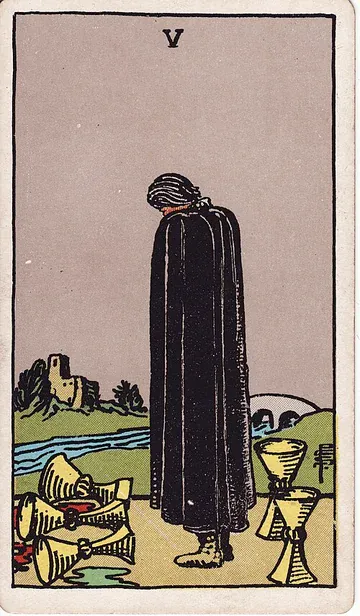
Five of Cups: three cups spilled, two still standing. How did Waite read this?
The path: recognize, then understand, then connect
Each stage walks the same stations: the four suits, the numbers Ace to Ten, the court, and the Major Arcana in three acts. Nothing is locked. Stations you have passed are lit; the gold one is the step we would take next.
- Passed
- Recommended next
- Open
Stage I · Recognize
0 / 18Know all 78 by sight, and what the details in each picture mean.
Stage II · Meaning
0 / 18Waite's own upright and reversed meanings, and the pairs that are easy to confuse.
Kinds of question, shallow to deep
Every scored question comes down to what a card means in a reading. The answers come from Waite's 1911 text or the Golden Dawn's tables and Book T, and each reveal names which. A card you miss comes back at the end of the level as a different question.
Stage I · Recognize
All 78 by sight, and what the picture saysName the card
The picture with its printed title covered: which card is it?
For example: Which card is this?
Picture and meaning / Tap the detail
One detail of the drawing; choose what Waite or the Golden Dawn says it means. The options are meanings, never things you could count. Some turn it around: you get the meaning and tap the detail in the picture.
For example: Ace of Cups: the dove placing the wafer in the cup. How did Waite read this?
Memory pairs
Turn cards two at a time and pair each picture with its name, in as few turns as you can.
For example: Find the pairs: each picture with its name.
Stage II · Meaning
Waite's 1911 wordsFrom meaning to card
Read a meaning first, then find the card that carries it. The picture appears only with the answer.
For example: Which card did Waite read as the house of the true heart — joy, content, nourishment and abundance?
Waite's words
One of Waite's own lines, and the card it belongs to.
For example: How did Waite read Ace of Cups upright?
Easily confused
Two cards that are easy to mix up, side by side, and one line of Waite's: whose is it?
For example: Two of Cups · Two of Swords — “Love, passion, friendship, affinity, union, concord, sympathy”
Upright or reversed
A line from Waite: did he write it for the card upright or reversed? The card turns over on the answer.
For example: Waite wrote this line for Ace of Cups. Upright or reversed? — “House of the true heart, joy, content, abode, nourishment, abundance, fertility”
Stage III · Connect
The cards inside the system and the spreadIn a reading
A situation someone brings to a reading; choose the reading closest to Waite. Reflection only, never a verdict or a forecast.
For example: In a reading about a journaling habit started this month, the Ace of Cups comes up.
Number and element
Number times element: the same number lands differently in each suit.
For example: Which card is the Ace of Fire?
Correspondence
Element, planet, sign and Hebrew letter from the Golden Dawn tables, and the court cards' two elements.
For example: Which element do the Golden Dawn tables give Ace of Wands?
Book T bridge
Book T gives each pip from Two to Ten a title and a planet in a sign; find the two majors that carry that planet and that sign.
For example: Book T titles Two of Wands “The Lord of Dominion”: Mars in Aries. Which two majors share that planet and that sign?
Spread position
What a position in Waite's Celtic Cross looks at. The two positions about what lies ahead are left out.
For example: In Waite's Celtic Cross, what does position 1, “What covers him”, show?
Odd one out
Four cards: three share a Golden Dawn element, planet or sign. Which one does not?
For example: Three of these share an element in the Golden Dawn tables. Which one does not? The Hermit · Ace of Pentacles · Queen of Wands · Page of Wands
In order / Pairs
Put the majors back in their numbered order, or pair each card with its correspondence.
For example: Put these majors in the order the 1909 deck numbers them.
Legendary
Optional, no hintsElemental dignity
Three cards in a row: by Book T, are the middle card's forces strengthened or weakened by its neighbours?
For example: Book T reads the middle card by the cards on either side. How does Ace of Wands fare here?
Three-card weave
Three cards on the first three Celtic Cross positions; choose the sentence that reads them as one.
For example: Ace of Cups · Two of Cups · Nine of Pentacles — Three cards on the first three positions of Waite's Celtic Cross. Which reading weaves them together?
Your 78
Every card you answer about moves through four tiers: unseen, known, familiar, mastered. A card you have not seen for a while comes due for review, and due cards show up in your next step.
- Unseen 78
- Known 0
- Familiar 0
- Mastered 0
0 / 78 learned
Today's goal: finish one level · 0 days of study in a row
Levels, reviews and the daily card all count toward the streak.
Where the questions come from
Every answer marked right or wrong traces back to one of three sources. When the picture and the text disagree, both are stated.
The Pictorial Key to the Tarot, 1911
A. E. Waite's own guide to the deck he designed: what each picture shows, and the meanings he gave every card, upright and reversed.
Pamela Colman Smith's drawings, 1909
The 78 drawings of the Waite–Smith deck. Picture questions are always about these drawings, so the quiz shows the 1909 art whatever deck you read with.
Golden Dawn correspondences
The elements, planets, signs and Hebrew letters of the Hermetic Order of the Golden Dawn and its Book T — the same tables the card pages on this site use.
When picture and text disagree, both are stated.
An example: Waite writes that four streams pour from the Ace of Cups; Smith drew five. The quiz never asks you to count them, but the answer for that card names both.
How to memorize the 78 tarot cards
Seventy-eight cards look like a lot until you see the structure. The path follows it.
Numbers are the skeleton
Learn the forty numbered cards across, not down: the four Aces together, then the four Twos. Forty cards become ten numbers, each seen in four elements.
Suits are elements
In the Golden Dawn system Wands are fire, Cups water, Swords air and Pentacles earth. The same number speaks in a different voice in each element.
Court cards are people
Page, Knight, Queen and King are four ways of carrying one element. Book T gives each a second element too — the Knight fire, the Queen water, the King air, the Page earth — and the quiz notes where modern books swap them.
The majors are a journey
Twenty-two cards, from the Fool at 0 to the World at 21, read as three acts of seven or eight. For many learners a story is easier to hold than a list.
Questions
- Is the tarot quiz free?
- Yes. Every station, stage and level is free and open without an account. An account only keeps your progress, your collection and your streak in step across devices.
- Where do the answers come from?
- From Waite's Pictorial Key to the Tarot (1911), Pamela Colman Smith's 1909 drawings and the Golden Dawn correspondences. Every reveal names the source of its answer.
- Do I need to know tarot already?
- No. The first station starts with the four suits through their Aces. If you already know some cards, nothing is locked: begin at any station.
- How does review work?
- Each card has a box. A right answer moves it up, a miss sends it back to the start. A card comes due again after one, two, four or eight days, depending on its box.
- Which deck are the pictures from?
- The deck Waite designed and Pamela Colman Smith drew, first published in 1909 and often called the Waite–Smith deck. The quiz always shows those original drawings.
Start with the four suits: a few lesson cards, then six questions.