
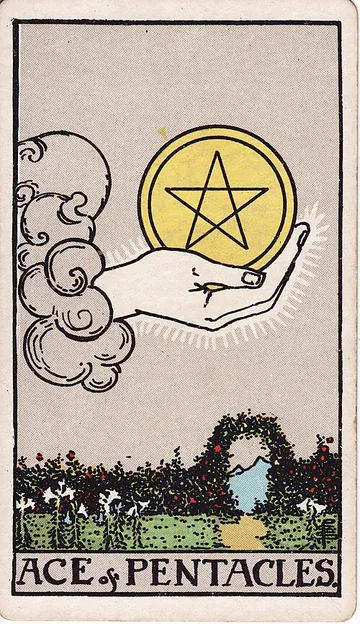
Ace of Pentacles Reversed · Core Meaning
Reverse the Ace of Pentacles and the gift does not withdraw — only the reach does. The cloud-hand still extends, the pentacle still hangs there, gold and patient — but the figure on the ground has folded its arms or turned its face. Maybe out of fear. Maybe out of pride. Maybe out of an old story about what gifts cost. Maybe out of an even older story about what the seeker deserves. Whatever the reason, the gift has stayed in the air. It has not yet become weight. It has not yet become flesh. The card asks you, gently, to look at why.
This is the reversed card's central knot: the gift is real, and the receiving has failed. Not the other way around. The Ace of Pentacles reversed is rarely a card of nothing on offer. It is almost always the card of something on offer that the seeker did not, could not, or would not take. The job interview that did not get scheduled because the email sat unanswered. The check that bounced because the account was not opened. The relationship that did not happen because the response was sent three weeks too late. The medical clearance that did not get followed up on. The opportunity that the body, when honest, registered as too good and therefore as suspicious. The card is the precise card of the gap between an extended hand and a closed one.
There is a second flavor of the reversed card: the gift that was grabbed but not planted. The job taken without the willingness to do the slow work of becoming good at it. The money received and immediately spent on the wrong things. The relationship begun and then never given the boring infrastructure that lets a relationship become a life. The investment made and then panic-sold the first quarter the market dipped. The card is the inverse of its central instruction — receive, then plant. In this version, the receiving happened, and the planting did not. The pentacle was held briefly and then dropped, or held tightly enough that it stopped being a seed and became a fetish.
There is a third flavor, less commonly discussed but recognizable to anyone who has met it: the gift that was offered with strings, and the seeker who took it knowing it was not free. This is the card of the financial dependency that comes with control, the job that turned out to be a trap, the relationship that asked you to pay in your own erasure, the investment that came with a manipulator attached. The reversed card is not naive. It can see when a gift is contaminated. The work, in that version, is not to take the gift better but to recognize what it actually is and choose differently.
The kabbalistic signature reverses too. Kether-in-Assiah upright is the crown realized in the world of action — spirit incarnating cleanly into matter. Reversed, the crown gets stuck in the cloud. The spiritual impulse never makes it into the body. The seeker is dreaming the gift, fantasizing the gift, journaling about the gift, but never quite letting it land in their actual schedule, their actual bank account, their actual relationships. The cloud-hand cannot land if there is no soil beneath it. Earth, ungrounded, becomes anxious dust.
Reversed, the Ace of Pentacles asks: what has been offered to you that you have not taken? Where is your fist closed? And what would it cost you to open it?
Ace of Pentacles Reversed · Love & Relationships
The trouble sits on the receiving end: the Ace of Pentacles reversed is a card about a closed door, not an empty hand. The cards distinguish carefully between love that is not on offer (the Three of Swords, the Five of Cups) and love that is being offered into a closed door (the Ace of Pentacles reversed). This is the second of those two cards. Someone is reaching. The reach is not finding the seeker.
For an existing partnership, the reversed card often indicates one or both partners refusing to receive the love that is being given. The partner who provides faithfully and is met with the small voice that says it is never enough, never quite right, never the form love was supposed to take. The partner who reaches for affection and is met with the body that is always tired, always working late, always preoccupied with something just slightly more important. The reversed card can be a quiet diagnosis of the relationship's actual failure mode: not that love is absent, but that love is being declined. The work is to investigate the declining. Sometimes the declining is justified — old wounds that have made the seeker unable to receive without flinching. Sometimes the declining is a habit — a learned posture from a previous relationship the seeker has not let go of. Either way, the card asks for honest looking.
For someone in a new connection, the reversed Ace of Pentacles can describe a partner who is offering specific, embodied gestures — meals, time, real attention — and a seeker who is talking themselves out of it. The voice that says it is moving too fast. The voice that finds reasons it cannot last. The voice that wants more drama, more uncertainty, more proof that this is the love story that justifies the years of waiting. The reversed card warns that a steady, real offer being declined because it does not feel like the imagined one is one of the more painful self-betrayals. Love that is grounded often arrives without the romantic theater the seeker had been trained to wait for. Take it anyway.
For a single seeker asking whether love is possible, the reversed Ace of Pentacles offers a precise diagnosis: love is possible, and the obstacle is not the world but a posture you are holding. The card asks you to inventory the postures. Are you turning down the dates that look promising for reasons you can articulate? Are you overpolishing your profile until no actual person can match it? Are you maintaining a fantasy person in your head whose existence makes every real person a disappointment? The reversed card is not punitive about these patterns — most seekers carry one or two — but it asks for honesty about them. The block is internal. The opening is also internal.
For someone recovering from a wound, the reversed card can describe the in-between season when the wound has begun to heal but the body has not yet remembered how to receive. Affection still feels like risk. Compliments still feel like setup. Real interest still feels like manipulation. The card honors how reasonable these reflexes are after what you survived. It also asks whether you would like to begin, gently, the practice of receiving small gestures without immediately translating them into threats. The healing is real and slow.
For partnerships in trouble, the reversed Ace of Pentacles can describe the moment a real repair attempt is being made and being missed. One partner has done substantial work — therapy, a meaningful behavior change, a real apology with real follow-through — and the other partner is unable, for whatever reason, to receive the work as the gift it is. Old grievances are easier to hold than new evidence. The card warns that this dynamic, if it continues, will eventually exhaust the partner doing the offering. The window does not stay open forever. If you are the seeker holding the closed door, the card asks whether you can let one small offering through this week.
For the question of reconciliation after a break, the reversed Ace of Pentacles tilts toward caution. Returning is possible — but only if the person returning is bringing materially new ground, not just the same self with a new apology. The card asks for evidence the gift this time is different from the one last time. If the evidence is there — they moved, they got the job, they did the year of therapy, they ended the other relationship — then the card can support careful re-opening. If the evidence is not there, the card warns that the reversed gift is the old gift in new wrapping.
For the long-distance question, the reversed Ace of Pentacles can warn against indefinite long-distance arrangements that are quietly fossilizing. The relationship that has been long-distance for three years and shows no concrete progress toward closing the gap. The reversed card asks: is anyone planting? Or is everyone keeping the seed in the box because planting requires a real change and neither of you is ready? The card is not condemning. It is naming. The card responds to honest re-engagement with the practical question of where the relationship is going to live.
For unrequited situations where you have been offering and not being met, the reversed card is one of the gentler instructions to stop. You have been the cloud-hand for someone whose figure has been folded the whole time. The card honors the offering and asks you to redirect it. The gift is yours; you can take it back. Offer it elsewhere — to a friendship, to a project, to your own life. The seed does not have to be planted in the soil that keeps refusing it.
For someone in an arrangement they are quietly unhappy in but cannot bring themselves to leave, the reversed Ace of Pentacles can be the card of the hidden alternative. There is a real alternative life on offer for you — a different relationship, a different city, a different shape of partnership. You are declining it because the cost of taking it is the dismantling of what you have built. The card does not push. It names. The choice is yours. But the card asks you to acknowledge that the alternative is real, not imaginary, and that pretending otherwise is its own kind of declining.
Ace of Pentacles Reversed · As Feelings
Their feeling exists; only its delivery is missing, and that gap is the whole of what the Ace of Pentacles reversed says when someone asks how a person feels about them. They feel something concrete about you — interest, care, attraction, a recognition that you would be good to have in their life — and the feeling is staying in their interior, not yet translated into the small material gestures that would make it visible. The feeling has not yet become a coffee invitation, a text, a calendar event. The pentacle is hovering. The hand has not closed.
If they are reserved, the reversed card can describe someone who has decided about you in private and has not yet figured out how to say so out loud. They are not pretending. The feelings are real. They are also, often, slightly afraid of the feelings — afraid of what acting on them would require, afraid of the version of themselves that wants something material from someone, afraid of the vulnerability of being a person with appetites. Read silence here as the long pause before action, with the caveat that the pause is not guaranteed to end. They may stay paused.
If they are demonstrative, the reversed card can warn of performative interest that does not make it into action. They will say beautiful things. They will tell their friends about you. They will make grand statements about how rare you are. And they will not, in fact, schedule the dinner. The feelings exist; the feelings are not yet load-bearing. The card asks you to weigh declarations against materials. If the words are large and the calendar is empty, the calendar is the truer signal.
For a partner you have been with a long time, the reversed Ace of Pentacles in feelings can describe settled affection that has stopped being expressed in the small material acts that originally proved it. They love you, and they have stopped picking up the prescription. They love you, and they have stopped noticing the laundry. They love you, and the love is being held in their head while their hands have grown quiet. The card asks for re-embodiment. Not new feelings. New gestures. The relationship returns to the upright Ace through the small material acts that had drifted out of the daily.
For a new connection, the reversed card can describe someone enjoying the idea of you more than the actual you. They like the texture of having met someone interesting. They are not yet doing the work of finding out who you actually are, on a Tuesday, when nothing impressive is happening. The card warns that fantasy attachment can feel intense and is structurally light. Watch what they do with the boring middle of you. That is the test the reversed card is naming.
For someone you have been hoping would notice you, the reversed Ace of Pentacles in feelings is a difficult but honest reading. The noticing has not happened in the way you wished. They are aware of you. They are not, currently, inclined to make you a material part of their life. The card is not predicting forever — feelings shift, lives shift — but it is reporting the present. The gift is not currently on offer in the form you wanted. The card asks you to stop reading minor signals as major ones. It asks you to redirect.
For someone who has hurt you and is now circling back with apparent feeling, the reversed Ace of Pentacles in feelings warns that the feelings may be real and the apology may be insufficient. Feelings without ground do not heal a wound. The card asks for evidence at the level of structure: have they made a real change, are they offering something specific, are they prepared to be patient with your understandable hesitation. If yes, the feelings can be received and slowly tested. If only the feelings are present and the structural change is absent, the card warns against re-opening.
For an ex who has been on your mind, the reversed Ace of Pentacles in feelings can describe a similar mutual pause — both of you carrying real residual feeling, neither of you currently in a position to convert the feeling into action. The card is not a prediction of reunion. It is a description of the suspended state. Many people sit in this state for years. The card asks whether the suspended state is what you want, or whether the suspended state is itself a way of avoiding the harder question of whether to fully release or fully return.
A small caution embedded in the reversed card: sometimes the feeling on the other side is genuinely smaller than you have been hoping. The reversed Ace of Pentacles in feelings can describe a polite, mild interest that you have been amplifying in your head into something larger. The card asks you to read at scale. The hand offering you a coin is not the hand offering you a kingdom. Both are honest gifts. Confusing them is its own pain.
Ace of Pentacles Reversed · Career & Work
Work, under the reversed Ace of Pentacles, is the offer that arrived and then evaporated — or arrived and was never picked up. The job offer that fell through. The funding that was approved and then withdrawn. The promotion that was discussed and then quietly reassigned. The client who was about to sign and then disappeared. The role that arrived and turned out to be a different role than was advertised. The card describes the precise pain of having seen something material in your hand and watching it dissolve before you could close your fingers.
For someone considering a current role, the reversed card warns of the position that pays well and is, on closer inspection, eroding you. The salary is real. The benefits are real. And the work is, day by day, taking more from you than it gives. The card distinguishes between difficulty (which is fine) and erosion (which is not). Difficulty makes you better at the work; erosion makes you worse at being a person. If the role is eroding you, the card asks you to begin planning a careful exit. Not a dramatic departure. A real, planned, well-saved-for, lined-up-the-next-thing exit. The reversed card respects practical caution about quitting. It does not respect staying in something that is making you worse for years.
For someone considering a new role, the reversed Ace of Pentacles asks you to read the offer carefully. Not the headline number — the structure underneath. What is the actual scope? Who is the actual manager? What is the team's actual retention rate? What does the role look like in year three, not in the recruiting pitch? The reversed card is the card of the offer that is technically real and substantively a trap. The card is not telling you to refuse — it is telling you to investigate. Talk to people who actually work there. Read the small print. Take the second meeting before you sign.
For someone who has been laid off or pushed out, the reversed Ace of Pentacles can describe the difficult middle of the unemployment season — the moment the early grief has worn off and the new opportunity has not yet materialized. The card warns against accepting the wrong job out of fear. The next role is coming, and it will be better suited if you give yourself the room to wait for it. The card distinguishes between strategic patience (good) and panicked drift (bad). If your savings are real and your ground is steady, wait. If the savings are running thin, the reversed card asks you to be honest about the numbers and to take a bridging role without confusing it for the destination.
For an entrepreneur or freelancer, the reversed card warns of the project that looks promising and is, on closer inspection, going to consume more than it returns. The client who is going to underpay and overdemand. The collaboration that is going to dilute the work without expanding the audience. The pivot that is going to use the next nine months without paying off. The reversed Ace of Pentacles asks for sober pre-mortem before the launch. What would have to be true for this to fail? Is any of it already true? If yes, restructure or decline.
For a creative practice, the reversed Ace of Pentacles can describe the season when external validation has gone quiet and the practice itself is in question. The card asks whether the practice is the thing or whether the practice was a vehicle for being seen. If the practice is the thing, you can continue without external reinforcement — the work is its own ground. If the practice was the vehicle, the silence is honest information about the misalignment, and the card invites a re-examination of what you actually want to be doing with your finite time. Neither answer is failure. The clarity is the gift.
For someone navigating a difficult workplace — bad manager, toxic team, slow erosion of morale — the reversed Ace of Pentacles can describe the painful middle of the situation when leaving feels impossible and staying is no longer sustainable. The card asks you to do the unromantic work: update the resume, take the recruiter calls, talk to people in the network, save aggressively. The way out is built quietly over months. The reversed card respects the construction. It also asks you to not lie to yourself about how much of you the current situation is using up.
For someone in a stable role wondering whether to leave for a passion project, the reversed Ace of Pentacles tends to caution. The passion project is real, but the ground beneath it is thin. The card asks whether you have done the un-glamorous preparation — the savings, the test customers, the realistic projections, the contingency plan. If not, the card asks you to do the preparation before leaping. The leap is not the courageous act. The preparation is. The reversed card respects this distinction more than the upright does.
For students or career-changers in training, the reversed Ace of Pentacles can describe the moment the path begins to feel false. The training is technically working, the credentials are technically accumulating, and the underlying conviction has thinned. The card asks for honest re-examination. Sometimes this is just the middle-of-the-program slump and the right move is to push through. Sometimes the conviction has thinned because the path was never quite right and the seeker was performing readiness rather than feeling it. The reversed card asks which one this is. Sit with the question for a season before deciding.
For someone in a season of professional jealousy — watching peers succeed in ways that activate something painful — the reversed Ace of Pentacles can be the card that names the actual feeling. The jealousy is, often, a signal about what you have refused to take for yourself. The peer's success makes visible the gift you have been declining. The card asks you to look at the declined gift in your own life and to consider whether you are ready to receive it now.
Ace of Pentacles Reversed · Money & Finances
Money leaks out of this card rather than crashing out of it: the Ace of Pentacles reversed is the refund never claimed, the raise never asked for, the help declined out of pride. The card is not, primarily, a card of catastrophic loss; it is the precise card of money that did not arrive in the form it was supposed to, or arrived and was not handled well.
For someone in active financial recovery, the reversed Ace of Pentacles can describe the painful season when discipline has been maintained for months and the trajectory has not yet visibly turned. The savings are still small. The debt is still large. The progress is real but invisible. The card asks for patience and accuracy: keep doing the boring monthly work, and watch the actual numbers rather than the felt sense of how it is going. Money is famously bad at producing visible feedback at the pace humans want it to. The card respects the discipline. It asks you not to abandon the practice in the painful middle.
For someone who has been managing chronic financial anxiety, the reversed card can describe the trap of refusing real money because of the fear that it will be taken away. The promotion declined because the responsibility feels dangerous. The opportunity refused because the upfront investment feels too risky. The new role passed up because the change in compensation feels too volatile. The card warns that financial anxiety, untreated, will keep you small even when you are no longer in danger. The reversed card asks you to begin the slow practice of receiving more than feels safe — under controlled conditions, with care, but actually doing it. The fear does not unwind through avoidance. It unwinds through small, supervised exposure.
For a question about a specific financial opportunity, the reversed Ace of Pentacles asks whether the opportunity is what it appears to be. The investment that promises returns above the market. The business proposition from the friend who is suddenly interested in your money. The client who wants you to do the work first and trust the payment to follow. The card is suspicious of these shapes. It asks you to look at the structure, not at the headline. If the structure is sound, the opportunity stays sound when investigated. If the structure is a trap, the trap reveals itself the moment you ask the second question.
For windfall — inheritance, gift, unexpected payout — the reversed Ace of Pentacles warns of two failure modes. The first is the rapid spend: the money arrives and is converted into objects within months. The second is the freeze: the money arrives and the seeker, paralyzed by the responsibility, lets it sit in a low-yield account for years while inflation slowly eats it. The card asks for the middle path. Sit on it for a season to let the impulse cool. Then deploy a portion deliberately into instruments that fit your actual life. Save some for emergencies. Pay down the high-interest debt. Invest a portion into long-term compounding vehicles. Spend a small, deliberate portion on something that brings real joy. Refuse both the spend-it-all and the freeze-it.
For someone considering a major purchase, the reversed Ace of Pentacles tends to ask whether the purchase is real or symbolic. The purchase made out of need is fine. The purchase made out of identity construction is a trap. The car that is genuinely necessary is fine. The car that is meant to make you feel like a person who has finally arrived is the reversed card's warning. The card asks you to separate the two. If the purchase survives the question, proceed. If the purchase needs the symbolic weight to justify itself, wait.
For investments and long-term financial planning, the reversed Ace of Pentacles is suspicious of dramatic bets and trendy instruments. It is the card that watched the seeker buy at the top of the bubble and panic-sell at the bottom. The card likes index funds, emergency funds, and the slow, boring instruments that benefit from being left alone. If your investment thesis requires excitement to maintain, the card asks whether it is an investment or an entertainment.
For business questions involving money — should I take on debt, should I bring in an investor, should I expand — the reversed Ace of Pentacles asks for harder math. What does the business look like if revenue is half what you projected? Does the structure survive? If not, the move is too aggressive. The card likes businesses with margin for error. It distrusts businesses that depend on best-case scenarios.
For someone watching a partner or family member handle money badly, the reversed Ace of Pentacles can be the painful diagnostic of the situation. They are receiving real opportunities and squandering them, or refusing real help and staying in difficulty. The card does not give you permission to manage someone else's life. It does ask you to protect your own ground. If their pattern threatens to pull you under, the card supports the difficult conversation about boundaries — the joint account that needs to become two accounts, the loan that needs to be refused, the help that needs to come with conditions.
A practical move when the card appears in a money question: open the account you have been avoiding. Look at the actual numbers. The reversed Ace of Pentacles' first instruction is almost always to face the inventory you have been hiding from. Money fear thrives on vagueness. The vagueness lifts the moment you write down what is actually true.
Ace of Pentacles Reversed · Health
Reversed, the Ace of Pentacles turns its attention to foundations — sleep, food, teeth, blood work, the plain infrastructure of a body. Not necessarily a crisis — more often the slow, unaddressed signal that has been there for a while and has been deferred. The fatigue you have been calling normal. The pain you have been working around. The bloodwork you have not gone back for. The dental appointment you have not made. The physical therapy you started and stopped. The card asks for the boring follow-through that the previous version of you decided to skip.
The card's body associations remain the bones and the kidneys — the structural and the filtration systems. Reversed, the card can warn of foundational weakness that has not yet declared itself acutely. Bone density that is slipping unnoticed. Kidney function that is mildly off in the labs and has not been investigated. Postural patterns that are slowly compounding into chronic back pain. The card asks you to take the foundational seriously, even when it is not screaming. A card can point at what is foundational; it cannot offer medical advice. The card is asking for the appointment. The appointment is what the card supports.
For someone managing a chronic condition, the reversed Ace of Pentacles can describe the season when self-management has slipped. The foundational dose, the one everything else is stacked on top of, is the one going missing. The exercise is happening — sometimes. The discipline that held the condition stable has loosened. The card warns that the loosening is now the problem and asks for re-engagement with the practice that was working. Not perfection. Re-engagement. Most chronic management is the long arc of falling off the practice and getting back on it without shame.
For acute issues — recovery from surgery, recovery from injury, recovery from a serious episode — the reversed Ace of Pentacles can describe the recovery that has not been given enough patience. The seeker who returned to full activity too soon. The seeker who stopped the prescribed exercises once the pain went quiet. The seeker who is, structurally, still healing and is treating themselves as fully recovered. The card asks for the longer arc. The body's clock for healing is rarely as fast as the seeker's clock for impatience.
For someone considering a new health practice, the reversed Ace of Pentacles can warn of the pattern of starting and abandoning. The gym membership, the meditation app, the diet, the journaling practice, the therapist — the long graveyard of beginnings. The card is not condemning. It is asking what is different this time. What structural support will you put in place to make it more likely that the practice will compound? Without that structural support, the card warns that this beginning will join the others. With it, the beginning has a chance.
For mental health questions, the reversed Ace of Pentacles can describe the embodied dimension of difficulty. The depression that is being treated only at the level of thought, while the body has been neglected. The anxiety that is being worked on in therapy while sleep, food, and movement have been allowed to deteriorate. The card asks you to support the mental work with the material work. The body is the substrate. If the substrate is starving, the work above it is harder than it needs to be.
For someone managing a relationship with food, weight, or appetite, the reversed Ace of Pentacles can describe the pattern of normal hunger being refused, ignored, or distrusted. The card asks for the slow practice of returning to eating in response to actual signals. Not as punishment. Not as performance. As the most basic act of receiving what the body has asked for. The card is one of the gentler invitations to repair this relationship if it has become difficult.
For someone managing alcohol, recreational drugs, screen use, or other comfort behaviors that have become routines, the reversed Ace of Pentacles is one of the deck's clearer mirrors. The pattern has not reached an emergency; it has quietly started drawing on the soil the card was offering. The behavior is also not at health. The card asks for the honest inventory: how much, how often, for what purpose? Reversed, the card describes the comfort that has begun to take more than it gives. The seed-card asks for the soil to be cleared of the things that are crowding out what wants to grow.
For pregnancy questions, the reversed Ace of Pentacles can describe difficulty conceiving, the pain of a loss, or the painful waiting in between attempts. The card is not a verdict. It is a description of the season's particular weight. The reversed card asks for material support — medical investigation if appropriate, real rest, real grief allowed to be real, the practical care of the body that is going through more than is visible. Nothing in the reversed Ace's request for material support is medical advice. The card describes the symbolic landscape, not the clinical reality.
For someone in the second half of life, the reversed Ace of Pentacles can describe the season when small declines have been accumulating without attention. The card asks you to begin tending the body you actually have, at the age you actually are. Not the body you had ten years ago. The current one. The card respects the work of late-stage tending — the strength training that becomes essential after fifty, the bone density work, the cardiovascular maintenance, the regular check-ins with the practitioner who actually knows your history. The body responds to attention even when it has been neglected for a while. The card supports the return.
For caregiver fatigue, the reversed Ace of Pentacles can be the painful naming of the seeker who has been giving so much to another body that their own body has been quietly erased. The card asks for the basics: sleep, food, an hour of solitude, a real check-in with your own state. The cloud-hand reaches toward you, too. Receive.
Sleep, food and an hour of solitude are the basics, not medical advice. Keep your practitioners. Take your medicine. The card simply offers a gentle, honest mirror: foundational health is built on attention to the unsexy basics, and the reversed Ace of Pentacles is the card of the basics that have been deferred long enough.
Ace of Pentacles Reversed · Spirituality
Whatever was given stayed in the head and never reached the hands, and the Ace of Pentacles reversed is the name for that particular failure to incarnate. The retreat that did not change anything. The practice that has stayed in the head. The teacher whose wisdom was collected and never embodied. The seeker who knows a great deal about spirit and has built no actual life around it. The card describes the painful gap between the spiritual life as content and the spiritual life as ground.
This is not a moral failure. It is one of the most common conditions of the modern seeker. The information is abundant. The practices are infinite. The traditions are plural. And the seeker, surrounded by material, has often not yet found the small handful of moves that they actually do, with their actual body, in their actual schedule, week after week. The reversed Ace of Pentacles is the precise card of this condition. The hand has been offering. The receiving has been theoretical.
For someone in active practice, the reversed card can describe a plateau that has become a stop. The breakthroughs have ended. Nothing in the teaching reaches the hands any more. What was a discipline has turned into a coin carried in the pocket and never spent. The card invites either deeper engagement with the same practice — finding the next layer — or honest experimentation with a different one. A coin kept in the pocket does no work. Not for novelty. For circulation.
For someone exploring belief, the reversed card warns against spiritual consumerism. The teaching collected as content. The retreat attended as experience. The lineage adopted as identity without the actual practice. The reversed Ace of Pentacles asks: are you a seeker, or are you a collector? The seeker is in the body. The collector is in the brand. Most modern spiritual lives have both modes; the card asks for honest accounting about which mode currently dominates.
For someone in a season of doubt, the reversed Ace of Pentacles offers a gentler note than its upright sibling. The doubt may itself be the form of spirit currently offering itself to you. Not all gifts arrive as comfort. Some arrive as the dismantling of a belief you had been holding too tightly. The reversed card asks you to receive the doubt as a real spiritual event rather than an obstacle to one. What is the doubt asking you to release? What would your spiritual life look like if you stopped defending the thing the doubt is dissolving?
For someone whose spiritual practice has been entangled with someone else — a teacher who has fallen, a community that has betrayed, a relationship that was the conduit and is now over — the reversed Ace of Pentacles describes the painful work of separating the practice from the person who carried it to you. The teaching may still be true even if the teacher was not. The community may still be real even if your former friends were not. The card asks for slow, honest sorting. What survives the loss? What does not? The seed is the part that survives.
The card's spiritual caution remains gentle but real: receiving the spiritual gift and refusing to let it become material curdles into spiritual narcissism. The retreat that you went on instead of taking the difficult conversation with your sister. The practice that gave you peace and made you no kinder to the people you actually live with. The teaching you adopted that has not changed how you handle conflict. The reversed Ace of Pentacles is the card of the seed that has been polished rather than planted. The card asks for planting.
A specific instruction the reversed card offers: choose one practice and do it for three months without changing it. Not the practice you think you should do. The smallest practice you can actually do every day. Five minutes of sitting. One page of journaling. One walk a day. The reversed card responds to small, consistent embodied practice more reliably than to anything else. Most spiritual progress is the slow result of the unsexy practice maintained for longer than the seeker thought possible.
A second instruction: give one teaching away. Give one ritual to a friend. Give one piece of the wisdom you have collected to someone who is in the season you were in three years ago. The reversed card returns to upright when the seed begins to move again rather than sitting in the box.
Ace of Pentacles Reversed · Yes or No
Not a refusal — a yes waiting on an open hand.
The reversed Ace of Pentacles is rarely a flat no. It is more often the answer that says: the gift is real, and the receiving has not yet happened. The literal yes is on the table; the seeker's posture has been refusing it. The card answers the question by pointing back at the seeker rather than at the world.
For yes-or-no questions about a job, a move, a purchase, a commitment, a beginning, a decision: the answer is technically possible, and currently blocked by a posture you are holding. The card asks you to look at the posture. Often the block is fear of cost — the fear that taking this opens you to a loss you are not yet ready to risk. Sometimes the block is identity — the fear that taking this changes you into a person you are not sure you want to be. Sometimes the block is unworthiness — the persistent voice that says you have not yet earned this. The card asks you to name the block specifically and then to consider whether it is true.
For questions about whether someone is being honest, whether an offer is sincere, whether a partner can be trusted with the practical thing, the reversed card asks for second-look investigation. Nothing on offer here is counterfeit. The hand from the cloud holds one coin, and nobody has yet walked the hedged path behind it to see where it ends. There is something the seeker has not yet looked at. Often the something is small and survivable. Sometimes the something is structural and disqualifying. The card asks you to look before you sign.
For questions about whether something will come through — the job offer, the loan approval, the apartment application, the medical clearance, the visa, the test result — the reversed Ace of Pentacles tends toward delay or partial yes rather than clean no. The thing may come through later than expected. The thing may come through in a smaller form. The thing may come through with conditions attached that you did not anticipate. The card asks for patience and adaptability rather than refusal.
Asked when, the reversed card suggests the timing is not yet. The seed is in the air; the soil is not yet ready. The card asks: what would have to be true for the soil to be ready? The answer is often a few specific moves the seeker has been deferring. Make those moves. The timing follows.
For binary decisions — should I act, should I wait — the reversed card answers wait, in most cases, with the specific instruction to use the waiting to prepare ground. Not passive waiting. Active preparation. By the time the right moment arrives, the seeker who has been preparing will be visibly different from the seeker who has been waiting.
For questions about beginning something new — a business, a project, a course of study, a relationship, a move — the reversed card asks for honest pre-mortem before launch. The card respects beginnings. It distrusts beginnings that have not been pressure-tested. If you have done the work of imagining what could go wrong and have built in real protections against it, the card supports the beginning. If you have not, the card asks you to do that work first.
If the question was: am I ready for this? The reversed card answers not yet — and asks what the readiness would look like in concrete terms. Often readiness is not a feeling. It is a list of three or four specific moves the seeker has been avoiding. Make those moves. The readiness arrives with them.
The reversed card is, in its compassion, often more useful than the upright. The upright says yes, take it. The reversed says: the yes is here, and it requires something specific from you. The specific thing is what makes the yes real. The card asks you to identify it and to do it.
Ace of Pentacles Reversed · Advice
Start with an inventory: the Ace of Pentacles reversed asks what has already been put into your hands and left there, unopened. Before you ask for new gifts, before you wonder why the world is not giving you what you want, before you blame circumstance — look at the gifts that have already arrived in your life and have not yet been received. The job offer that sat in your inbox. The introduction that was made and never followed up on. The advice from a mentor that you have not acted on. The relationship that has been quietly extended and you have not stepped into. The card's first instruction is to take the inventory honestly. The world has often been more generous than the seeker has noticed.
If there is one specific instruction the reversed card offers, it is to open the hand. The closed fist is the card's central image of the failure mode. Whatever you are gripping — money, control, the old version of your identity, the relationship you have outgrown, the job you have stayed in past its season — the reversed card asks whether the grip has begun to function as a refusal of what wants to come next. The gift cannot be received by a hand that is busy holding the previous one. Set down what you are holding. The next thing requires the empty palm.
A second instruction: identify the specific posture that is keeping the gift in the air. The card distinguishes between three common postures, and the work depends on which one is yours.
The first posture is fear: you have not received the gift because you are afraid of what receiving it would commit you to. The work for this posture is to investigate the actual cost. Often the feared cost is much larger than the real cost. The card asks for honest accounting.
The second posture is unworthiness: you have not received the gift because some part of you believes you do not deserve it. The work for this posture is to receive anyway, and to let the worthiness question be settled by what you do with the gift rather than by whether you should have been given it. Worthiness is settled in motion, not in stillness.
The third posture is suspicion: you have not received the gift because you cannot believe that something this good would arrive without strings. The work for this posture is patient investigation — not refusal — to see whether the strings are real or whether you have been trained, by previous betrayals, to see strings where none exist. Sometimes the strings are real. Often they are not. The card asks for the second look.
A third instruction: prepare ground rather than asking for more seeds. Many seekers in the reversed-card season are praying for new gifts while ignoring the gifts already in their hand. The card is gentle but firm: the new gift will land more reliably on prepared ground. Spend the next month preparing rather than asking. Clean the apartment. Repair the relationships that have been quietly fraying. End the work commitment that has been draining you. Update the resume. Have the difficult conversation. The ground that has been tended is the ground the next pentacle wants to land on.
A fourth instruction, gentler than the others: forgive yourself for the gifts you have missed. Most seekers have missed a few. Sometimes they were not the right gifts and the missing was a quiet form of self-protection. Sometimes they were the right gifts and the missing was painful. The reversed Ace of Pentacles is not a card of permanent missing. The world is generous; gifts come around again, often in slightly different shapes. The work is to be more practiced at receiving the next one. The practice begins with not punishing yourself for the previous one.
Practical advice for the day the card appears: do one act of receiving without deflection. Accept a compliment. Let someone pay for your coffee without insisting on returning the favor. Take an offer of help and use it. The card responds to the practice of clean reception. Most adults are bad at this; the skill is built one small allowance at a time. Receiving is a practice, not a personality trait.
A second practical move: identify one specific gift in your life you have been treating as too good to be true. The relationship that has been steady. The job that has been kind. The friendship that has been generous. The body that has been cooperating. Stop testing it. Stop waiting for it to fail you. Receive it as the gift it has been. The reversed card returns to upright through the simple, hard work of believing the good things.
Ace of Pentacles Reversed · Card Combinations
The Ace of Pentacles reversed is shaped most strongly by what surrounds it. The cards on either side often clarify whether the failure to receive is internal (a posture) or external (a contaminated gift). Some combinations recur often enough to be worth naming.
Ace of Pentacles Reversed + Four of Pentacles
The closed fist beside the closed fist. When these cards appear together, the question is almost always about the seeker's relationship to grip. The Ace says a gift is being offered. The Four says the seeker is currently holding what they have so tightly that no new thing can land. The combination is a clear diagnostic: the block is not the world but the posture. The work is to soften the grip on the existing pentacles enough to make space for the new one. The combination is one of the deck's more direct invitations to address the financial anxiety, control patterns, or scarcity reflexes that have hardened into refusal.
Ace of Pentacles Reversed + Ten of Pentacles
The seed that did not get planted, beside the lineage that did not get built. When these cards appear together, the reading often concerns generational patterns of refusing material gifts. The family that has historically distrusted money. The lineage that has equated suffering with virtue. The seeker who is, without realizing it, declining their inheritance because accepting it would mean breaking with a long pattern. The combination asks for compassionate work with the inherited refusal — not blame, but recognition. The lineage's pattern was its survival strategy; the seeker can honor it and still choose differently.
Ace of Pentacles Reversed + The World
A gift refused on the threshold of an arc that wanted to begin. When these cards appear together, the reading describes a moment of significant material opening that the seeker has hesitated to step into. The gift was the start of a much larger journey, and the hesitation has paused the larger journey too. The combination is rarely punitive — the World does not close — but it asks the seeker to recognize the size of what is being declined. Sometimes the recognition is what allows the receiving to finally happen.
Ace of Pentacles Reversed + The Empress
The seed that did not land, beside the fertile ground that was ready to receive it. When these cards appear together, the reading often diagnoses a seeker who has done the work of preparing ground and is now refusing the gift the prepared ground was for. The relationship is ready for love and the seeker is hesitating. The body is ready for pregnancy and the seeker is delaying. The business is ready for funding and the seeker is hedging. The combination asks: what is the hesitation actually about? The ground will not stay prepared forever. The card invites action.
Ace of Pentacles Reversed + Ace of Cups
A double gift offered and a double refusal. When both Aces appear and the Pentacles is reversed, the reading often describes a seeker offered the rare combination of emotional and material opening at once and unable to receive either. The fear of receiving so much at the same time has triggered the closing of the hand. The combination is gentle and serious: this is a seasonal opening that does not come often, and the card asks the seeker to find the courage to receive both gifts even though receiving both at once feels structurally dangerous. The deck rarely offers this. The card asks you not to refuse it out of habit.
Card Combinations
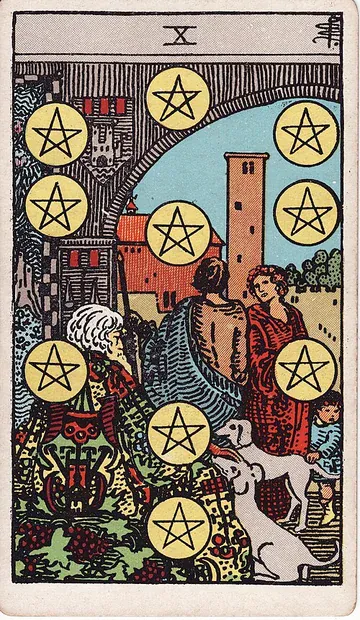
Ten of Pentacles
The seed beside the lineage. The first weight in the hand alongside the long inheritance it might become. Together the cards ask for patience across a longer time horizon than feels comfortable — marriage that becomes a house, job that becomes a career, investment that becomes a retirement. Build for the people who come next, including the future version of yourself.
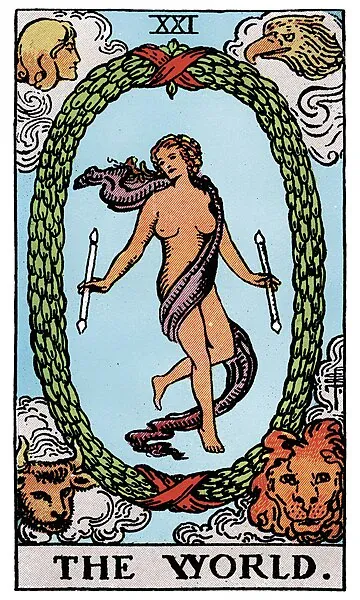
The World
The gift that is also a piece of a much larger arc. The Ace begins the suit; the World ends the deck. When they appear together, the small material thing in your hand is the start of a completion you cannot yet see — the founding of a business, the writing of a book, the move to the city you finally become from. Treat the small gift with the seriousness of the long arc.
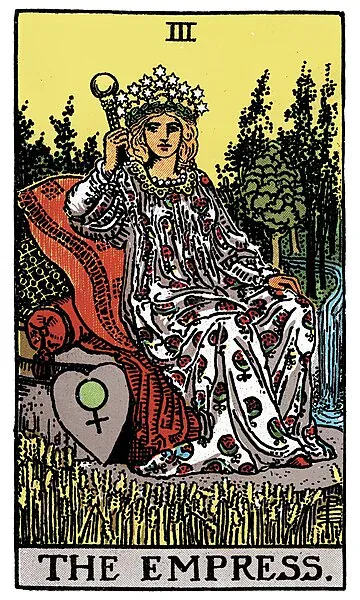
The Empress
Fertile ground meeting the gift. The Empress is the garden the card lands in — abundance as the natural state of a life that has been tended. Together the pair describes seasons of unusual material softness: pregnancy and birth, the founding of a household, the arrival of a season of plenty after long austerity. The card warns against under-receiving. Eat the meal. Sleep in the bed. Sit in the garden.
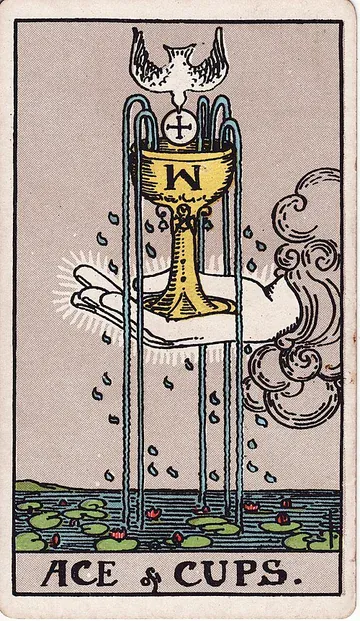
Ace of Cups
Earth and water meeting at the source. The Aces are friends across these two suits — Earth roots most readily in Water. When both arrive, the rare moment of emotional and material opening is happening at once: the new love that brings the new apartment, the project that arrives with the partner who can co-build it, the healing that includes both body and heart. Receive both gifts cleanly. Do not choose one and refuse the other out of fear.
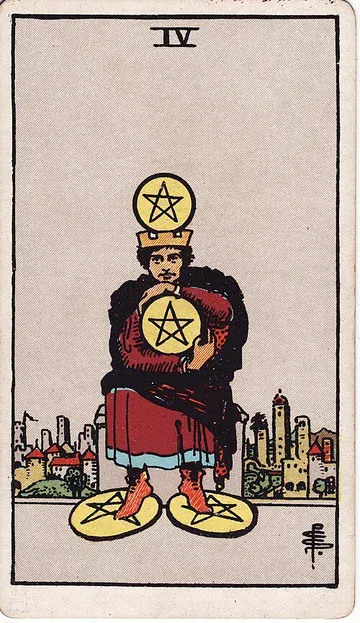
Four of Pentacles
The seed beside the hoarded coin. The pure offering of the Ace meeting the closed-fist shadow of the Four. The combination is one of the clearer mirrors for someone whose financial anxiety or control instinct has hardened into refusal — refusal to spend, share, invest, risk. The instruction is to soften the grip on the existing pentacles to make space for the new one being offered. Especially load-bearing as a reading of the reversed Ace.
Frequently Asked Questions
Is the Ace of Pentacles reversed a no, or a yes I have not picked up yet?
The reversed Ace of Pentacles is rarely a flat no — it is more often a delayed yes, a partial yes, or a yes that depends on the seeker first opening a hand that has been closed. Treat it as an instruction more than a verdict: the gift is real, and the receiving has not yet happened. Ask what posture you are holding that is keeping the offer in the air, and address it specifically.
With the Ace of Pentacles reversed, how do I tell whether they stopped offering or I stopped receiving?
Look at the door rather than the hand: reversed, the Ace of Pentacles almost always describes love that is still being offered and is not being let in. For partnerships, it can warn of a pattern of declining the affection that is actually being given because it does not match the imagined version. For new connections, it can describe steady offers being talked away. For singles, it asks whether the obstacle is the world or a posture you are holding — and the card almost always names the posture as the more solvable thing.
If their feelings are real, why does the Ace of Pentacles reversed say nothing is arriving?
When the Ace of Pentacles appears reversed to describe how someone feels about you, the warmth is real but has not yet found the door. They feel something concrete and the feeling is staying in their interior — not yet translated into the small material gestures (the text, the dinner, the calendar event) that would make it visible. Watch what they do, not only what they say. The materials are the truer signal.
What keeps the gift in the Ace of Pentacles reversed from ever landing?
Missed gifts. Closed hands. Hoarded seeds that never get planted. The card warns against the patterns that keep real opportunities from landing in your life: fear of cost, sense of unworthiness, suspicion of strings, and the rapid spend of windfalls without preparation. It also warns against gifts that came with strings you have not yet seen — sometimes the work is investigation rather than receiving.
How do I integrate the Ace of Pentacles reversed?
Open the hand. Inventory the gifts that have already been offered to you and have not yet been received. Identify the specific posture (fear, unworthiness, suspicion) keeping the gift in the air, and address it. Prepare ground rather than asking for more seeds. And practice the small, ordinary act of receiving without deflection — the compliment, the favor, the offered help — until the practice becomes a posture you can hold when the larger gift arrives.
Continue Reading
Ace of Pentacles · Card overview · symbols · correspondences →
Return to the full card view — image, symbols, sensory correspondences, and Hermetic axes.
Read the upright meaning →
Read the same depth on the opposite orientation.
Draw your reading now →
Bring this card to a question — open a quiet ritual.