
Four of Wands · Core Meaning
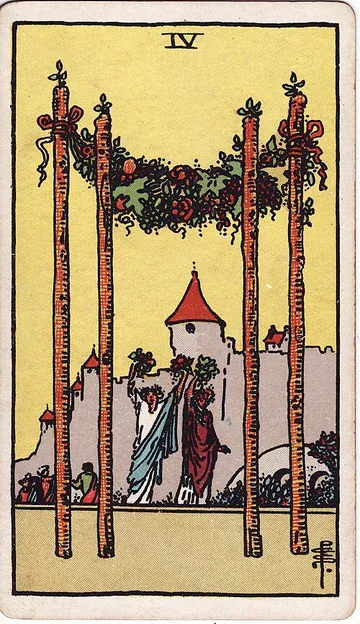
Four staves stand in a clearing as a small porch. Their crowns are wreathed in a garland — laurel and rose threaded with ears of wheat — and the wreath catches the afternoon gold. Behind the porch a walled town rises, faintly, the way a destination rises when the road has nearly been walked through. Two figures are passing beneath the arch with their hands raised in greeting. Their feet are still dust-marked from the long road. Their step has grown light. Drums and laughter come from inside. The first joy permitted after labor has begun.
This is the Four of Wands, and its signature tension is the small distance between taken shape and fully done. The four staves can stand on their own — that is the whole point of the image — and standing-on-their-own is what makes them a threshold rather than a project. They no longer need to be carried. They no longer need to be defended. The work has resolved into a structure that can be inhabited. But the courtyard inside the gate is not the road, and crossing the gate is its own act. The card is the porch, not the house. It is the half-step in which a labor becomes a place.
The traditional astrological signature reinforces this gentle, ceremonial quality. The Four of Wands is the third decan of Aries, ruled by Venus, the late-spring window from April 11 to April 20. Aries is fire that initiates; Venus is the architect of beauty and measure. Together they describe a burning that has been gathered by grace into a shape others can be invited into. The fire of will, on its own, scorches; under Venus' hand it learns garlands. The bonfire becomes a hearth. The march becomes a procession. Whatever raw drive built the four staves has been tempered enough to carry a wreath without burning it.
Kabbalistically, the card sits at Chesed in the suit of fire — the fourth sephirah, mercy, the first habitable house on the Tree of Life. Chesed is where will-force is transposed into an order that can be shared. The number four is the number of the room a person can stand inside. After the dynamic Three (vision, anticipation, the long horizon), the four pauses. It does not retreat from the burning; it gives the burning a roof. The Four of Wands is the architecture of generosity. It is what fire learns to build when fire decides not to be alone.
Read the card the way you would read a photograph of a homecoming. Not the heroic homecoming of the films — the small one. The freelancer who finally finishes the project. The student who graduates. The couple who sign the lease. The runner who crosses a self-set finish line nobody else cares about. The card is the moment those people stand together on the porch with the people who waited for them, and someone says, you came back, and somebody else holds out a glass. Whatever is in that pause — relief, gratitude, the small embarrassed pride, the impulse to immediately start something new — is the meaning of the card for that reading. The picture itself is neutral and warm. What you carry under the garland decides what the garland is for.
Four of Wands · Love & Relationships
Love reaches a point where it wants witnesses, and the Four of Wands is the card of that point. The bond has stopped being a private weather between two people and is ready to be brought into the light. The word the card carries quietly under everything is threshold — the engagement, the moving in, the meeting of families, the rented hall, the small ceremony in a backyard with twelve people, the toast at a thirtieth anniversary. Whatever the architecture of the bond, the relationship has built enough structure to hold the people who would arrive to celebrate it.
For an existing partnership, the Four of Wands upright most often describes the season in which the bond crosses from private to publicly witnessed. The proposal that has been turning over inside someone for months. The decision to combine households. The choice to introduce one another to the parents whose approval still matters in the body. The card describes the year the relationship is named out loud — and named generously. The four staves stand for the people who will form the human porch around your union; the garland is what they bring; the walled town in the distance is the future life the bond is being walked into. None of this is dramatic. The card's tone is afternoon-gold, not floodlit.
For a new spark, the Four of Wands signals that the connection has substance — enough that it could survive being shared with the people who matter to each of you. Early-stage attractions are mostly weather. The Four of Wands is what happens when weather has lasted long enough to lay a foundation. If you are early in something and this card arrives, it is asking you to notice that the small structures of a real relationship — the standing dinner reservations, the side of the bed, the keys exchanged — have begun to assemble. You are not in flirtation any longer. You are in the architecture of a beginning.
For a solo seeker asking whether love is possible, the card answers yes and adds a small instruction. The Four of Wands is hospitable; it loves the table set. Make your life a place a guest could be welcomed into without you needing to apologize for it. Not Instagram-perfect. Lived-in, with the lamps on and the chairs comfortable. The card describes the seeker whose own home has become hospitable enough that a partner walks in and recognizes a place they could stay. Build that. The right person, when they arrive, walks under your gate the way the figure passes beneath the arch in the image — hands raised, road-dust still on their boots, knowing they have come somewhere.
For love after a wound, the Four of Wands is the card of cautious return. After a long break — divorce, bereavement, a relationship that ended in a way that required mourning — the seeker has built a life that no longer needs love to function. The Four of Wands does not undo that work. It builds a doorway in the side of that life. Love is not coming to dismantle the house you survived in; it is coming to stand at your porch and ask if it can come in. Notice the moment of decision. The card does not press; it makes welcome possible.
For reconciliation questions — for a couple who broke and are weighing whether to come back together — the Four of Wands is one of the gentler upright signals. Returning is possible if the return is treated as a re-founding rather than a continuation. The old gate has fallen. The new gate has to be raised together: new agreements, new explicit witnesses, new rituals that mark this as a different relationship than the one that ended. Do not slip back inside the old shape. Build a new porch. Then walk through it.
For a long-distance or cross-cultural couple, the Four of Wands describes the moment the abstract relationship is tested by an actual shared threshold — visa, family meeting, holiday with both sets of parents, the move that reduces the miles to zero. The card supports the move and asks for ceremony around it. Long-distance bonds that survive the closing of distance tend to be the ones that mark the closing — not just unpacking the box but raising a small porch over the doorway. Acknowledge what the couple did to bridge what they bridged. The garlands are not decoration. They are documentation.
For a pursuer-distancer pattern, where one partner has pushed for more commitment and the other has held back, the Four of Wands suggests the holding-back is loosening. The distancer has begun to imagine the porch. They are not yet underneath it; they are looking at it from a few yards away, with curiosity rather than alarm. Do not lunge. The card responds to graciousness, not pressure. Keep the porch lit. The figure walking beneath the arch in the RWS image is not being dragged; they are coming on their own and lifting their hands willingly.
For seekers in households where the relationship would have to be defended — disapproving parents, conservative communities, religious or cultural friction — the Four of Wands is more complicated. It is still hopeful, but it asks how the porch gets built when some of the would-be guests refuse to attend. The answer the card gives is to invite the people who will come, with full warmth, and to honor that gathering as the real ceremony. The walled town in the distance is not the only town. Some homecomings are to a smaller, chosen community. That is still homecoming.
For a desire-mismatch reading — different intensities, different timelines, different ideas of what a public commitment should look like — the Four of Wands does not pretend the mismatch is not there. It only insists that the shape of the threshold is something you can negotiate. Some couples want the wedding with two hundred people; some want the courthouse and tacos after. Both are the Four of Wands. What the card requires is that the threshold be built, not skipped. Some private form of public marking. Pick one together. Then stand under it.
If you are asking whether someone is in love with you and the Four of Wands arrives upright, read it as a confident yes embedded in the ceremonial register. They are not playing it cool, and they are not lukewarm — they are getting ready to introduce you. They have begun to imagine the porch with you under it. The next move from them is more likely to be inviting you into something semi-public — meeting their friends, their sister, the colleagues they actually like — than another ambiguous evening alone. Be ready to walk through. Lift your hands.
Four of Wands · As Feelings
When the Four of Wands arrives to describe how someone feels about you, the answer is: ready to bring you into the open. They are not hiding the feeling. They are not still deciding whether the feeling counts. They have decided it counts and are warming toward the gesture of introducing you — to their friends, to their family, to the version of their life that has, until now, been kept on the other side of a wall. The card describes the body language of someone who has set down the road-pack of indecision and is unfolding the chairs.
If they are reserved by nature, the Four of Wands does not turn them into a different person. They will not suddenly become a public romantic. What it does is tell you that internally they have crossed a quiet threshold. Their reserve is no longer a stand-off; it has become protection. They are protecting the bond from premature exposure while it stabilizes. They will mention you to one trusted friend before they mention the relationship to their full circle. They will use your name without irony when speaking to people who matter to them. Read silence here as careful preparation, not as absence.
If they are demonstrative, the Four of Wands in feelings means they want a witnessed moment with you. They want to bring you to the dinner. They want the photograph. They want the toast. There is a public element to their warmth that may, at moments, feel slightly stagey to a more private partner. This is not performance for its own sake. The Four of Wands personality, when in love, uses ceremony to settle the bond into the world. They are knitting you into the social fabric on purpose. Let them.
For a partner you have been with a long time, the Four of Wands in feelings is one of the cards that arrives during anniversaries, the years before a major joint commitment, the seasons when one of you has finished a long task and the other partner is ready to acknowledge it. They feel a particular pride that is not show-off pride — it is the pride of someone who has watched you carry something and now wants to hand you the wreath. They are full of small offerings. They are not waiting for you to ask.
For a new connection, the Four of Wands in feelings means they have begun to imagine you in their life, not as an exciting possibility but as a regular guest — eventually, an inhabitant. Whatever shape they thought their life was going to take, they are quietly redrawing the floor plan to include a chair for you. This is more substantial than a flutter. They are not at the gate yet, but they are walking toward it.
For someone you've been distant from — long-distance, on pause, recovering from a hard stretch — the Four of Wands in feelings means warmth is gathering around the idea of return. They are imagining the homecoming. They are mentally rehearsing the porch. The work of actually returning may still be in front of them, but the feeling has already arrived. Trust the warmth even if the action lags.
For someone you have had a recent conflict with, the Four of Wands in feelings is one of the gentler signs. They want the conflict to end with a ceremony, not a fade. They are looking for the small ritual that lets you both step back through a doorway together — an apology made explicit, a meal shared, the mutual release of the grudge. They are not nursing the wound. They are looking for the porch where the wound can be put down.
For partners at different life stages — different ages, different career arcs, different timelines — the Four of Wands in feelings can describe the partner who has stopped worrying about the gap. They have decided the bond is enough to hold the difference, and the feeling is no longer guarded. The threshold they are imagining may not be the threshold you are imagining (they may be ready for one form of public commitment while you are ready for another), but the warmth itself has stabilized into something definite.
For a partner whose warmth has been divided — pulled toward an ex, a complicated family, a job that took priority — the Four of Wands in feelings means the division is resolving. They have chosen, even if the choice has not yet been spoken. The fire has been gathered into a single hearth, and you are at it. The remaining work, if there is work, is for them to say so out loud. The card supports them saying so.
There is a small caution embedded in this generous card. The Four of Wands personality, when in love, can become so taken with the frame of the relationship — the photographs, the introductions, the milestones — that they forget the unframed daily presence that built the frame in the first place. If you sense them more energized by the next big visible event than by the ordinary Tuesday with you, gently call them back. Ceremonies are nourishing only when they punctuate something real. The card responds to the request for ordinary attention.
Take the Four of Wands in feelings as confirmation that the emotional ground is not just real but ready to be witnessed. Whatever they feel, it is solid enough to be brought to the porch. Whatever they feel, they are choosing not to hide it any longer. The work, if there is work, is to walk under the arch with them. Lift your hands. Let yourself be welcomed.
Four of Wands · Career & Work
In career readings, the Four of Wands upright is the card of the milestone honored — not the project still being scrambled toward, but the project completed and being marked. The presentation that landed. The launch that shipped. The thesis defended. The product that has finally passed its first real customer test. The card arrives the morning after the all-nighters end, when the team can finally close the laptops and look up. The work has shape. The shape is good. The next step is to stand on the porch you have built before you sprint to the next project file.
For someone in a current role asking whether the role is working, the Four of Wands answers yes — and adds that the season the role has been carrying you toward has arrived or is just about to arrive. The bonus, the promotion announcement, the acknowledgment from the colleague whose opinion you respect, the smaller thing that feels larger because it confirms what you suspected — the role has been delivering. The card asks you to actually receive the delivery. Many high-functioning people miss the receiving moment because they have already mentally moved to the next quarter. The Four of Wands warns specifically against that. Stand a while under the porch you built.
For someone weighing whether to take a new role, the Four of Wands upright is a soft, encouraging yes. The new offer is built on the work you have done. It is the porch your previous role has earned you. You are not being lifted into a position you have not prepared for — you are being invited to step through into a space your work has, in fact, already prepared. The card warns gently against false modesty. Receive cleanly. Negotiate well. Walk under the arch.
For freelancers, founders, and entrepreneurs, the Four of Wands describes the moment the practice or business has stabilized into something other people recognize. The website looks like a real thing. The third client has come in via referral, not cold pitch. The cash flow has resolved into a pattern instead of a crisis. The card is the small private celebration of having built something that works, before you immediately try to scale it. There is a particular trap entrepreneurs hit: the stabilization is the most dangerous moment, because it is the moment when ambition wants to push past it. The Four of Wands asks you to honor the stabilization itself. It does not come twice. Mark it.
For a creative worker — writer, painter, musician, designer — the Four of Wands upright describes the season after a body of work has been received. The book published and read. The show opened. The album streaming. The exhibition in its second week. The first wave of response is in, and it has been generous. Friends have shown up. Strangers have sent messages. Reviews have been kinder than you feared. The card is the morning after the launch event, when the studio is quiet and you can finally see what you made. Sit with it. The next work is on the other side of an honest pause.
For a student or apprentice, the Four of Wands describes graduation, certification, the practical exam passed, the thesis defended in front of the committee, the moment the senior practitioner stops correcting you. The card honors the formal acknowledgment of competence. There is a particular poignancy here — much of the work was unseen, and the ceremony makes a few hours of it seen. Let the ceremony do its work. The card warns specifically against the impostor-syndrome reflex of saying it was nothing, I got lucky. The four staves were raised by you. Stand under them.
For a manager or leader, the Four of Wands asks you to be the one who throws the celebration for the people you led. The work is not yours alone, and the wreath is not for your head only. The leaders who sustain themselves are the ones who learn to host. The card is the toast you make at the end-of-quarter dinner, the small handwritten note to the engineer whose work was decisive, the public credit given to the colleague who would otherwise be invisible. Hosting is leadership. The card is your porch to raise for them.
For a care worker — teacher, therapist, healer, ritual worker — the Four of Wands describes the cyclical homecoming: the cohort that graduates, the patient who is discharged in good health, the client who is no longer your client because they no longer need to be. These departures are also celebrations, and they are easy to miss because the next cohort, the next patient, the next client is already in your calendar. The card asks for the small interior ceremony: a moment when you privately acknowledge that someone arrived to you in trouble and is leaving in better shape because of work you did. This is your wreath. No one will hand it to you. Hand it to yourself.
For someone who has just been promoted, the Four of Wands is the card of the brief grace period before the new role's demands fully arrive. The title is yours; the work has not yet expanded to fill the title. Use the grace. Throw the small dinner. Acknowledge the people who recommended you. Let the team see you stand under the arch before you start moving the new walls.
For someone navigating a layoff or transition, the Four of Wands is gentler than it first appears. The card does not pretend the transition is a celebration. It asks instead whether you can build a small porch over your own departure — a private ceremony marking what the role gave you and what you gave it, before you walk into the next thing road-dusty and disoriented. The card insists that even an involuntary ending deserves a threshold. Skip the threshold and the loss travels into the next chapter unprocessed. Make the porch. Walk under it. Then go.
For a cross-functional team finishing a hard collaboration, the Four of Wands asks for the joint ritual that consolidates what the team learned. Not the corporate retro, not the box-checked "lessons learned" doc — the human ritual. The dinner. The shared walk. The voice memo of the lead saying out loud what the team did. Without this, the team's gains evaporate. With it, the team carries the porch into the next project as a private structure they can rebuild together when the next hard thing arrives.
For questions about whether to expand — hire, scale, open a second location, start a side project — the Four of Wands says: not yet. Stand a while. Receive what has arrived before deciding what to do next. The Five of Wands, the next card in the suit, is the scrappy, disordered competition that follows when expansion happens too fast. Build the porch first. Sit under it. The expansion will be wiser if it begins from a foundation that has been honored.
Four of Wands · Money & Finances
Money under the Four of Wands always arrives with an occasion attached — the bonus after the long quarter, the invoice that finally clears, the round that closes, the inheritance that distributes at last, the windfall earned in full view rather than stumbled into. The card is fire under Venus' hand: industrious heat tempered into form. The money it describes is the money that has been worked for and is now arriving at the gate.
For the seeker who has been carrying a long financial weight — the project that has been unpaid, the slow climb out of debt, the investment that has been quietly maturing — the Four of Wands is the season of the first real shift. Not the windfall that solves everything; the consolidation that lets you put down a piece of the load. The card describes the relief of being able to plan again. Use the relief. Make a real budget. Set aside a portion for the celebration that the card insists on. Honoring the milestone is part of the financial discipline; if you skip the honoring, the next financial chapter will start road-dusty and resentful.
For someone considering a major purchase — the house, the car, the wedding budget, the down payment — the Four of Wands says yes if the purchase is the threshold purchase rather than the speculative one. Buying the house you actually live in is a Four of Wands purchase. Buying the second house as an investment hedge is not. The card supports the building of a hearth, not the speculation. If the purchase is the porch your life is going to stand under, the card is generous and warm. If the purchase is leveraged on the assumption that it will yield a return, the card is silent — which is its way of saying that is not what I am about.
For the ceremonial expense — the wedding, the funeral, the milestone birthday, the professional certification dinner — the Four of Wands quietly approves. These are not frivolous. They are the porches a culture builds over its thresholds. Budget honestly. Do not let shame about spending money on a marker erase the marker. The card insists that the wreath, the dinner, the rented hall, the catered food — these are real expenses doing real work. They are how a community remembers that someone crossed something.
For investments and speculative bets, the card cautions slightly. The Four of Wands is not a gambling card. Its yes is the yes of structures that have already taken shape; it does not predict which seedlings will become structures. If you are asking whether to put money into an opportunity that has not yet stabilized, the card will not tell you. It will only suggest that you separate the money into the portion that is going into your built life and the portion that is going into the speculative — and that you do not let the speculative cannibalize the built.
For someone in financial recovery, the Four of Wands is one of the cleaner signs. The recovery has reached a node. The emergency phase is over; the rebuilding has begun to produce visible results. The card asks for one specific move: build a buffer that is large enough to feel like a porch — a savings cushion, a paid-off card, a secured rent — before you allow yourself to be tempted by the next big purchase. The buffer is the structure under your future. Make it stand on its own.
For windfalls — inheritance, settlement, bonus larger than expected — the Four of Wands says receive cleanly, then build. The temptation with windfalls is to spend them immediately into experiences and then feel afterwards as if the money never existed. The card asks instead for the structural use: pay off the debt that has been gnawing, set up the account that has been deferred, fund the certification that has been promising. Make the windfall into a porch your life can stand under. Then, with whatever remains, throw a small celebration. Not the whole windfall on the celebration. A small named piece, deliberately set aside.
For business finances, the Four of Wands often arrives during the first profitable quarter, the first month that did not require dipping into reserves, the first time the founder paid themselves an actual salary. Mark these. They are not nothing. The trap of running a business is to treat each milestone as an interim, to be commemorated only when some larger milestone arrives. That logic produces founders who never feel they have arrived. The card insists that each shape that resolves is a porch, and each porch deserves its small honoring. The discipline of celebrating the micro-milestones is what makes the macro-milestones bearable when they come.
Four of Wands · Health
A body coming back from long illness or long overwork reaches a threshold of its own, and the Four of Wands is where it stands — well enough now to return to public life. The card is fire in Chesed: vital heat shaped into a structure that can be lived inside again. The body has done the slow work of repair. The energy has come back, not in floodlit form but in steady afternoon-gold form, enough to host other people in. The next move is to mark the recovery, then re-enter the world without sprinting.
If you are asking whether a treatment has worked, whether a procedure will hold, whether the rehabilitation is ready to graduate to the next stage, the Four of Wands answers yes. The body has built enough new structure to bear weight. The card supports the next step — the return-to-work plan, the reintroduction of exercise, the resumption of the social life that had been quietly shrunk during the harder season. Do the boring practical things one more time. Take the prescribed dose. Show up to the follow-up. The card does not undo medical care; it confirms that the work has begun to deliver.
For someone managing a chronic condition, the Four of Wands describes the seasonal reprieve — not cure, not the disappearance of the issue, but a stretch of stability long enough that you can plan inside it. Use the stretch. Have the conversation. Take the trip. Catch up on the rest you have been deferring. Chronic conditions teach a particular relationship with time, and this card offers the gift of a known good window. Honor it the same way a farmer honors a good harvest year — by making sure to lay in stores against the lean year that may follow.
The card's particular health signature lives in the liver and the blood. Aries' fire warms the liver; Venus tempers it into something that can metabolize without scorching. Watch for the signs of liver-fire imbalance — heat in the upper body, easy anger, sleep that comes hard before midnight, the particular dryness that comes from running too hot too long. The Four of Wands asks for the practices that gather fire: cool foods at the right times, alcohol moderated rather than abolished, walks at dusk rather than at noon, the small daily rituals that signal to the body that the long sprint is over.
For the seeker who has been running on stress hormones, the Four of Wands is one of the deck's clearer instructions: come down. The season of acute mobilization has ended, but the nervous system has not yet been told. The card describes the body that is still bracing as if there is something to brace against, when the actual situation has resolved. The work is to host yourself the way you would host a friend who had just driven all night — feed them, dim the lights, do not give them a problem to solve. The four staves are not weapons. They are a roof.
For someone considering whether to return to a physical practice — running, weightlifting, yoga, dance — after a long pause, the Four of Wands says yes, and asks for the ceremonial first session. Not a hard one. A welcoming one. The body needs to be greeted back into movement, not punished for the absence. The card describes the long-time practitioner who returns to the studio after a year away and is met by the teacher with quiet warmth, with no commentary on the absence. Be that teacher to your own body.
For mental health questions, the Four of Wands is generous and specific. The depressive season has lifted enough that you can host other people in your life again — and hosting is part of the medicine, not a step you take only after you are fully well. The card describes the morning after the bad season, when the world has stopped feeling hostile and the small social structures of life can be re-entered. Go to the dinner. Answer the message. Accept the invitation. The card warns specifically against the perfectionist instinct to wait until you are fully recovered before re-engaging. Re-engagement is a recovery practice.
For someone managing sleep, the Four of Wands suggests the structural fix: the porch over the night. A consistent ritual that marks the transition from the day's labor into rest. Not a long elaborate one. A reliable one. The lamp turned down at the same hour. The book before sleep. The hot drink. The card describes the body that has learned, through repetition, that the porch means rest is allowed. Build the porch. Walk under it. The body will follow.
For pregnancy and family-planning questions, the Four of Wands is one of the gentler upright signals. It does not predict the outcome of any specific cycle, but it describes a season of structural readiness — the home that has been prepared, the relationship that has been stabilized, the body that has come into a window where the conditions are good. Use the window for the practical work it makes possible. Speak with the practitioners. Run the necessary tests. The card supports the small ceremonies that honor the threshold a family stands under when it begins to consider its next chapter.
Small ceremonies at a family threshold are not medical advice. The Four of Wands reads the mood under a doorway and nothing about a body. Keep your practitioners. Take your medicine. Do the work. The Four of Wands simply confirms that the work is meeting you and that the body has built enough structure to be lived inside again. Stand under the porch. Then return.
Four of Wands · Spirituality
A practice that has held you long enough to bear visible fruit has earned a rite, and the Four of Wands is that rite. The card sits at Chesed in the suit of fire, and Chesed is mercy: the first habitable house on the Tree of Life, the first level at which the divine descends into a form a soul can actually rest inside. The four staves are not just a porch in the literal sense. They are the four pillars of a contemplative shelter. The card invites you to step under them, set down the road-pack, and acknowledge what has been built in the unseen.
For seekers in active practice — meditation, journaling, ritual, devotional work — the Four of Wands describes the season when the practice has become a structure rather than an effort. The morning sit no longer requires negotiation. The journal page no longer feels like a chore. The ritual that once felt awkward has become a doorway you walk through without thinking about it. This is the achievement the card celebrates. Practices, given enough time, become porches. The card honors the moment of recognition: I have built this, and it holds.
For seekers in community — a sangha, a congregation, a coven, a study group, a recovery meeting — the Four of Wands is the rite of inclusion. The introduction. The first time you are invited into the inner ceremony rather than received in the outer one. The card describes the threshold communities raise around their members, and it asks you to take the rite seriously. Show up to the gathering. Wear what is asked of you. Bring the contribution. Receive the welcome cleanly without minimizing it. The community has decided to fold you into its porch. Let yourself be folded.
For someone exploring belief, the Four of Wands describes the moment a tradition becomes home — not because you have agreed with all its claims, but because its rituals have begun to hold you. The aesthetics of the practice match the shape of your life. The calendar of feasts has begun to feel like the right calendar. The vocabulary you reach for in difficult moments has come from this tradition rather than from somewhere else. The card honors this homecoming and warns gently against the temptation to over-defend it. Inhabit the tradition; you do not have to argue for it. The porch defends itself by being a porch.
For seekers passing through ceremony — a wedding, a funeral, an initiation, a graduation, a coming-of-age — the Four of Wands describes the sacred function of the rite itself. Ceremonies do work that ordinary life cannot do. They mark transitions in a way the body recognizes. They knit the individual into the community. They honor the unseen labor that produced the visible threshold. The card asks you to stop apologizing for the formality of ritual. The garlands matter. The wreath matters. The procession matters. These are not theater — they are how the human soul learns that something has changed.
For questions about path, the Four of Wands answers that you are aligned. The work you are doing, the practices you are keeping, the community you are part of — these are forming a habitable structure. The card encourages you to enjoy the alignment without holding it too tightly. The next phase will eventually ask you to extend the porch into something larger; for now, simply rest under what you have already built. Notice the gold light. Receive the welcome. The seeker who cannot rest under their own porch is the seeker who eventually mistakes seeking itself for the goal.
The spiritual practice the card invites is small and concrete. Make a small ritual that honors a recent inner threshold. Not the big one — the small one. The week you stopped relapsing into a habit you were tired of. The morning you forgave the family member you had been angry with for years, even silently. The page in the journal that resolved a question you had been carrying. Light a candle. Speak the threshold out loud — to a friend, to the empty room, to whatever you address when you address the unseen. Mark it. The Four of Wands returns to fullness through the discipline of marking. Without marking, the inner thresholds dissolve back into undifferentiated time. With marking, they become the structure of a soul.
Four of Wands · Yes or No
Yes — and witnessed.
The Four of Wands upright is one of the deck's clearest yes-cards, and the yes it gives is a particular flavor: the yes that is meant to be celebrated rather than kept private. The thing you are asking about is on its way, has arrived, or is about to be marked publicly. The path is real. The structure is solid. The work has taken shape, and the shape is good.
For yes-or-no questions about a relationship, a job, a move, a major decision — yes. The shape is right. The card is not subtle in its affirmation. The thing you are weighing is a porch your life is ready to stand under. The hesitation, if there is hesitation, is not about the substance of the choice but about the readiness to be witnessed in it. The card insists that being witnessed is part of the choice. Do not skip the threshold.
Asked whether an offer is genuine, whether a person is being straight with you, whether a plan has anything under it — yes, and the yes is unusually plain. The Four of Wands carries little shadow in its upright orientation. The garland is real. The porch is real. The figures passing beneath the arch are not actors. The surface of this card and its floor sit at the same depth. The card's caution is not about deception but about your own tendency to mistake the threshold for the destination. The yes is real. The next chapter is not the same as this chapter.
For questions about whether to act — should I propose, should I sign, should I send the announcement, should I throw the party — yes. The Four of Wands is precisely the card of action that has earned its public form. The work done in private has built the porch; the next move is to invite people to it. Send the message. Make the call. Reserve the venue. The card supports the public marking.
Asked when the celebration lands, the Four of Wands answers within the season. Not immediately, not far. The thing you are asking about is at the threshold, which means it is close enough to plan around but not so close that it has already happened. Set the date. Mark the calendar. The card's timing is the timing of ceremony rather than the timing of weather: the gathering happens when it is set to happen, not when conditions feel right.
For binary questions about whether to receive an offer — should I accept the proposal, should I take the role, should I say yes to the invitation — yes. The Four of Wands is the offer-accepting card. Its whole posture is the figure walking under the arch with hands raised. Lift your hands. Let yourself be welcomed. Decline only if the offer fails some other test (alignment with values, affordability, the timing of other commitments) — but the card itself is for the receiving.
The only caution embedded in the yes is to read the kind of yes you are receiving. The Four of Wands does not promise the next thing or the bigger thing. It honors this thing. If you were hoping the card would predict the chapter after the one you are currently in, the answer is silence. The card is interested only in the porch you are about to walk under. Stand under it cleanly. The next porch will reveal itself when this one has finished its work.
Beneath the yes-or-no, the question is sometimes whether you may walk under the garland at all. The card answers yes, and asks why you are still negotiating with yourself about it. The threshold has been built. The community is waiting. The garland is woven. Walk under.
Four of Wands · Advice
Honor the threshold — the instruction of the Four of Wands is that short, and considerably less sentimental than it sounds. Whatever has resolved into shape in your life — the project completed, the relationship reaching its public node, the recovery that has stabilized, the practice that has held — receive it with a real ceremony rather than letting it pass into ordinary time unmarked. The card insists that marking is not vanity. It is what allows the soul to recognize that something has changed.
If there is one specific instruction the card offers, it is to host. Not host alone in your head. Host with other people. Invite the friend over. Throw the small dinner. Make the toast. Send the announcement. The Four of Wands becomes its full self only when the porch is occupied. A celebration witnessed only by you collapses back into ordinary time within the week. A celebration witnessed by the people who watched you build the thing becomes part of the structure of your life. Build that.
A second instruction: do not skip to the next project. The Four of Wands warns specifically against the high-functioning person's tendency to mark a milestone with a brief mental nod and immediately reach for the next file. The next file will still be there next week. The porch you have just built will not be there next week — it will have already faded into the noise of things that happened. Stand under it. The standing-under is the work the card is asking for. Refuse to mistake busy-ness for direction.
A third instruction: include the witnesses. The figure who passes beneath the arch in the RWS image is not alone, and the procession is not for the figure alone — it is for the community that waited. Whoever held space for you while you were on the long road is part of the threshold, and the threshold is incomplete without them. Make a list of three people whose support was structural for the thing you have just finished. Tell each of them, specifically, what they did. Not a vague thanks. A specific naming. The Four of Wands runs on specific gratitude.
A fourth instruction: build the porch even if no one else will do it. Some thresholds in life will not be marked by the institutions that should have marked them. The job ended without the proper send-off. The family did not honor the milestone. The community failed to gather. The card insists you build the porch anyway. Privately if you must. Mark the date. Light the candle. Write the page. Eat the meal. The threshold is not less real because the official ceremony failed to happen. Make the unofficial one count.
Practical advice for the day the card appears: pick one thing you have completed in the last quarter that you have not yet marked, and mark it today. Tell one person about it. Take a photograph of the place where the work happened. Eat a deliberate meal. Stand for a minute in the doorway of the room where the work was done. The card does not ask for the production of a grand event. It asks for the production of a small, honest gesture in the direction of marking. That is enough. The threshold honored once becomes a memory the body can return to during the next long road.
A final instruction, gentler than the others: receive welcome. If the people in your life are trying to throw the porch over your accomplishment, do not deflect. Do not minimize. Do not say it was nothing. Lift your hands as you pass beneath the arch. The community needs to witness you being witnessed. The card responds to graciousness in the receiver, not stoicism. Let yourself be welcomed.
Four of Wands · Card Combinations
The Four of Wands tells its richest stories beside other cards that mark thresholds, homecomings, and the edges between private work and public form. The five pairings below are not exhaustive — they are the ones that most reliably illuminate something the seeker would not see by reading either card alone.
Four of Wands + Three of Wands is the card-of-arrival next to the card of standing on the cliff watching the ships return. The Three is the hour before the homecoming; the Four is the homecoming itself. Together they describe a long arc of patience finally rewarded — the entrepreneur whose ships have come in, the long-distance partner whose flight has finally landed, the grad student whose thesis has at last been received. The combination asks you to remember the hour on the cliff while you stand under the porch. Both moments are part of the same achievement. Neither one can be skipped.
Four of Wands + Ten of Cups is the porch raised over a fully shared emotional life. Where the Four is the threshold of any homecoming, the Ten of Cups is the rainbow above a household that has stabilized into joy. Together they describe the engagement, the housewarming, the family wedding, the reconciliation that made the family possible. The combination is gentle and unambiguous. Build the porch. Walk under it together. The home you are walking into has already learned to laugh.
Four of Wands + The World is the porch raised over a major life cycle. The World is completion in the cosmic register — the long journey that began with the Fool finally resolves into a full circle. Beside the Four of Wands, the World adds a particular gravitas to whatever threshold is being marked: this is not merely the end of a chapter but the closing of an arc. The combination shows up at significant graduations, at the completion of major creative bodies of work, at the silver anniversary, at the retirement that marks the closing of a working life. Honor the scale. The porch you build for this threshold needs to be commensurate with the road you walked to reach it.
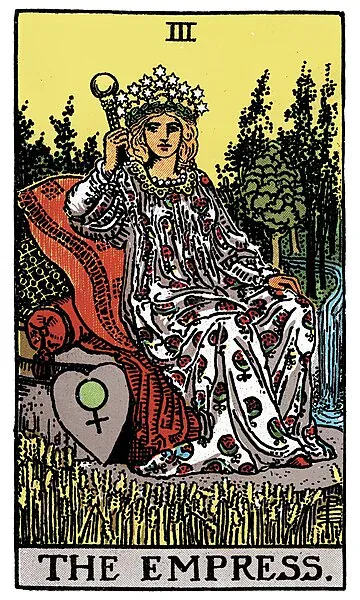
Four of Wands + The Empress is Venus rising twice. The Empress is the great hostess of the deck; the Four of Wands is the small, personal hospitality. Together they describe the gathering that nourishes both the host and the guests — the dinner that transforms acquaintances into friends, the wedding that knits two families, the celebration that feeds something larger than the occasion that prompted it. Decan-wise the link is precise: Venus rules the third decan of Aries, where the Four of Wands lives, and the Empress is Venus enthroned. The combination asks you to host generously. The garland is woven; the table is set; the season is warm. Open the doors.
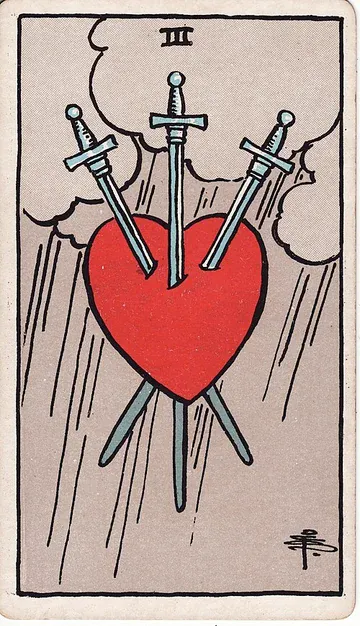
Four of Wands + Three of Swords is one of the deck's sharpest tonal contrasts. Where the Four is the porch with the celebration inside, the Three of Swords is the empty house — the celebration canceled, the wedding called off, the homecoming that did not happen because the road took someone too long. The combination is rarely a casual draw. When it appears, it asks you to honor the fact that some thresholds are mourning thresholds. The porch is built over an absence rather than a presence. The garland is laid on a coffin rather than a doorway. This is hard work, and the card does not pretend otherwise. The instruction is to build the porch anyway. Mark the loss. Some homecomings are returns to a place the awaited person did not return to. The community gathers to honor the gap. The threshold is real even when what stands inside it is grief.
Card Combinations
Three of Wands
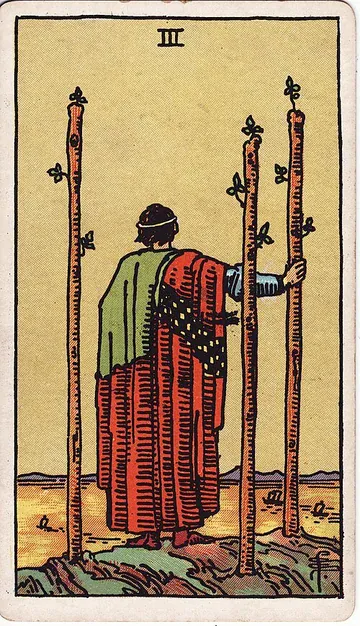
The watcher's hour resolves into the homecoming. Where Three of Wands stands on the cliff and waits for the ships to return, Four of Wands is the porch raised when the ships have docked. Together they describe the long arc of patience finally rewarded — the entrepreneur whose long bet pays off, the long-distance partner whose flight has finally landed, the grad student whose work has at last been received. Honor both moments; neither one can be skipped.
Ten of Cups
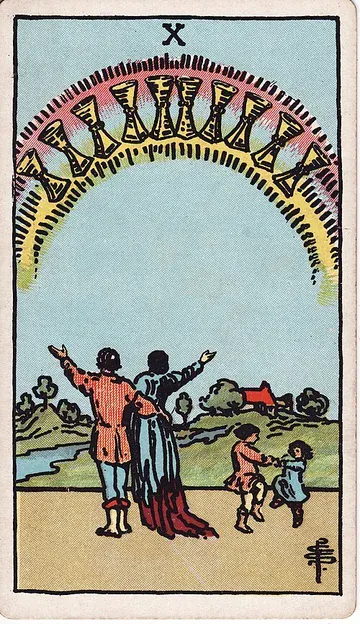
The porch raised over a fully shared emotional life. Four of Wands is the threshold of homecoming; Ten of Cups is the rainbow above the household that has stabilized into joy. Together they describe the engagement, the housewarming, the family wedding, the reconciliation that made the family possible. The household is ready to laugh out loud. Build the porch. Walk under it together. The home you are walking into has already learned to celebrate.
The World
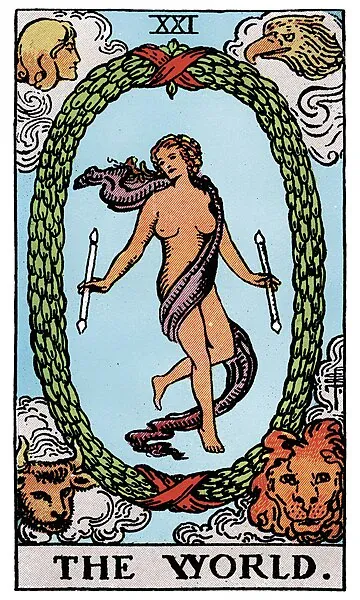
The porch raised over a major life cycle. The World is completion in the cosmic register — the long journey of the Fool resolves into a full circle. Beside the Four of Wands, the World adds gravitas to whatever threshold is being marked: a significant graduation, the completion of a major creative arc, the silver anniversary, the retirement that closes a working life. Honor the scale; the porch has to be commensurate with the road that was walked to reach it.
The Empress
Venus rising twice. The Empress is the great hostess of the deck; the Four of Wands is the small, personal hospitality. Decan-wise the link is precise — Venus rules the third decan of Aries where the Four of Wands lives, and the Empress is Venus enthroned. Together they describe the gathering that nourishes both host and guests. The garland is woven; the table is set; the season is warm. Open the doors and host generously.
Three of Swords
One of the deck's sharpest tonal contrasts. Where the Four of Wands is the porch with the celebration inside, Three of Swords is the empty house — the wedding called off, the homecoming that did not arrive, the celebration canceled because the road took someone too long. The combination asks you to honor the fact that some thresholds are mourning thresholds. Build the porch anyway. The garland laid on the doorway over an absence is still a real threshold; the community gathers to honor the gap.
Frequently Asked Questions
What is the Four of Wands tarot card meaning?
The Four of Wands upright is the card of the threshold honored — work that has resolved into a structure others can be invited into. Four staves stand wreathed in garland and wheat-ears as a small porch; figures returning home pass beneath the arch with their hands raised. Read it as homecoming, milestone, ceremony, the engagement or housewarming or graduation, the small public marking of something private that has finally taken shape.
Does the Four of Wands want me to make this public?
It does, and that is the specific flavor of its yes. The Four of Wands is one of the deck's clearest yes-cards, but the yes is not a private one: the whole image is a porch with people walking under it and raised hands on the far side. The thing being asked about has built enough structure to be marked in front of others, and the card reads the marking as part of the structure rather than as decoration on top of it. So it supports the proposal, the announcement, the accepted offer, the housewarming, the toast that names what a long stretch of work was for. Its single caution is about proportion: a threshold is not a destination. Receive the yes cleanly, let yourself be seen inside it, then keep walking.
Is the Four of Wands the engagement card, or does it cover any threshold?
Engagement is only its most photographed version. The card marks any point where a bond stops being private weather between two people and becomes something a wider circle can see: moving in together, the first meeting of families, a lease signed in both names, a child's arrival, a renewal of vows after a hard year, a quiet dinner with four friends who know exactly what the dinner is for. What the Four of Wands requires is not a ring but substance under the form. For a newer connection it confirms the bond has enough of that substance to be spoken about out loud. For someone single it turns the question around and asks whether the life you have built is hospitable — whether an actual person could be welcomed into it without everything having to be rearranged.
Do Four of Wands feelings mean they want to introduce me to people?
That is very close to the literal content of the card. When the Four of Wands describes how someone feels, the warmth has already passed the stage of being decided and has started gathering toward a gesture of inclusion: the friends, the family, the colleagues whose opinion they actually care about, the group chat where your name has not yet appeared. Nothing here is lukewarm and nothing is being hidden. The feeling has a door in it, and the door is being opened rather than guarded. Reserved people show this as careful preparation — the timing arranged, the right occasion chosen, the one friend told first. Demonstrative people show it as active pursuit of a witnessed moment. Either way, the direction is outward, toward the porch rather than away from it.
What is the Four of Wands tarot card known for?
The Four of Wands is best known as the homecoming card and the celebration card — the porch the community raises over a successful return. Astrologically it is Venus in the third decan of Aries; kabbalistically it sits at Chesed in the suit of fire (mercy, the first habitable house). It is a card of completed effort honored publicly: weddings, housewarmings, graduations, the toast at the end of a long road.