
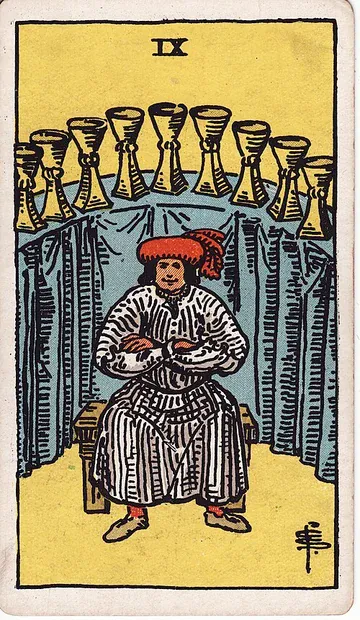
Nine of Cups Reversed · Core Meaning
The wish arrived and did not deliver — the Nine of Cups reversed is that sentence and its long quiet aftermath. The cups are still there, behind the figure, gold and full — but the figure's face has shifted. The contentment has turned slightly inward, slightly closed. The arms are still folded, but no longer in repose: in possession. The wish has been answered, and in the answering, something else has not been answered. The seeker now has what they thought they wanted and is privately measuring the gap.
This is the reversed card's central knot: success without the felt thing. The promotion came but the joy did not. The relationship is healthy but you feel quietly disappointed in yourself for not being more grateful. The body is well but the mornings are dull. The card is not punishing you — it is reflecting back what is. You wished, and the wish was granted in literal form. The literal form is not the soul of the wish. The work the card asks for is the search for what you actually wanted.
There is a second flavor of the reversed card: the wish that has tipped into excess. Not the wish that disappointed but the wish that now consumes. The cups, full, become the only thing that matters. The pleasure becomes the practice. The gratitude becomes performative. The figure sits behind a more elaborate table, more cups, more wine — and slowly, the second chair at the table is removed, then the table itself, then the room. The reversed card warns of comfort that has hardened into refusal: the refusal to let in anything that might disturb the warmth you have built.
The astrological signature reverses too. Jupiter in Pisces upright is benevolent generosity. Reversed, it becomes excess without containment — the gift overflowing the cup, soaking the silk, eventually rotting. Pisces, ungrounded, dissolves. The water that was clear becomes brackish. The seeker is asked to find the structure, the shore, the second chair — to bring the wish into a life that can hold it without drowning.
Turn the picture physically and watch what the image does. The arc that curved behind the figure's shoulders now hangs over his head like a low ceiling; the cups, upended, hold nothing and spill nothing, which is the detail worth sitting with — a cup that pours when inverted was full, and these do not pour. The blue silk slides toward the floor and the first thing visible is the underside of the table: the joinery, the unfinished wood, whatever was pushed beneath it when company was expected. That is the whole reversed reading in one movement. Nothing has been taken away. The surface that made the abundance dignified has simply stopped covering for it, and the seeker is left looking at the structure that was holding the display.
Much of the flatness this card describes is a problem of timing rather than of value. Wishes take years to arrive, and the person who receives one is never quite the person who made it. The flat you wanted at twenty-six arrives at thirty-four, in a neighbourhood you chose for reasons that have since expired. The recognition you needed during the bad job lands two jobs later, from people whose opinion no longer regulates your sleep. Nothing here has failed. A gift addressed to an earlier version of you sits slightly wrong when it is unwrapped, the way a coat kept in storage fits the shoulders you used to have. The work the reversed card asks for is a kind of updating: thank the wish, notice who it was for, and find out what the current occupant of your life would have asked for instead.
There is a gentler third reading that gets missed because the other two are louder. Yesod is the sphere of things that have taken shape and not yet touched ground, and a reversed Nine can simply mean the wish is still underground — forming, not yet showable, held in private for reasons that are sound. The seeker in the early weeks of something good who cannot say it out loud yet; the pregnancy before the scan; the offer accepted and not announced; the sobriety counted in days. Held this way, the cups are not hoarded. They are being protected while they set. Tell the difference by the quality of the silence: a protective silence has a date on it and a person it is waiting for, while a hardened one has neither and has stopped noticing it is silent.
Reversed, the Nine of Cups asks: what did you actually want? And: who is the wish for? And: where, in the warmth you have made, is the door for anyone else?
Nine of Cups Reversed · Love
Contentment can be a surface with nothing underneath it, and reversed in love the Nine of Cups describes one of those. The relationship looks good in photographs. The structure is enviable. The friends say the right things. And yet, sitting at the table together, the second chair feels strangely far away. The cups are full. The conversation has thinned.
For an existing partnership, the reversed card often indicates the comfortable plateau that has become a refusal. You have stopped fighting because you have stopped reaching. The agreements that hold the relationship together are also the agreements that prevent its growth. Both partners are pleased on the surface, individually busy with their own cups, and the shared cup that used to be the center has been pushed to the edge of the table.
For someone in a new connection, the reversed Nine of Cups can describe a partner who is privately satisfied with you in a way that does not move them to act. They feel they have what they wanted about you rather than with you. They like having you as a part of their life. They are not opening the door wider. The relationship is real but not yet shared.
Asked whether someone is in love with you, the reversed Nine of Cups wants a careful reading rather than a quick one. They feel something — but the feeling has not yet made it through the door. They may be guarding the wish. They may be pleasantly surprised by you and unwilling to let the surprise change them. They may be in love and quietly afraid that loving more will cost them the comfort they have already arrived at. None of this is malice. All of it is hesitation.
For the question of reconciliation after a break — the reversed Nine of Cups offers a soft no, or a partial yes that does not satisfy. Returning to the relationship would rebuild the comfortable shape, but the comfortable shape was the shape that broke. The card asks: do you want this person, or do you want the warmth you remember? They are not the same. If the answer is the warmth, find a new place to build it. If the answer is the person, prepare to rebuild on different ground.
For the single seeker, the reversed card is one of the deck's gentler warnings. It describes the comfort of solo life that has become a closed circle. You have arranged a beautiful table for yourself. The wine is excellent. The food is exactly what you like. The chair across from you is unoccupied — and it does not feel uncomfortable. The card is asking: have you made the loneliness so well-furnished that no one can fit inside it? The work is to leave a real seat empty. Not strategically empty. Actually empty. So that someone could sit down without rearranging.
A specific and painful branch belongs to the seeker who fought for this relationship. You defended it to a parent who disapproved, to the friend who staged an intervention, to a previous partner you left for it. The cups behind you are the arguments you won. Now something has gone quiet at the table and there is nowhere to put that information, because admitting the quiet would mean handing evidence to everyone who was against it. The reversed card is not interested in who was right. It notices only that the relationship is now being maintained partly for an audience, and that an audience is not a reason. Say the true sentence to one person who never took a side. A wish defended in public is still allowed to be re-examined in private.
Over-ordering is this card's reversed vice, and in dating it looks like a collection of beginnings. Nine conversations going at once, three of them good, all of them at the stage where nobody has had to be inconvenient yet. The first month is delicious and costs nothing, and a person can live on first months for years. What the card notices is that the cups are all the same cup at different tables. If the pattern is yours, the tell is what happens at the point where someone asks for a weekday, a difficult conversation, a plan that involves your family. Somewhere around there, interest thins and a new message arrives from someone easier. The reversed card does not scold appetite. It asks you to spend three months finding out what one person is like in a bad week.
When a third person is in the reading — an affair, a crush that has taken on weight, the colleague whose messages arrive after eleven — the reversed Nine describes appetite that has found a vessel rather than a bond that has found a home. This is the card of the cup, not the table. What is on offer there is intensity without shared logistics: no bins, no in-laws, no dull Sunday. Comparing it to a long partnership is comparing a first glass to a kitchen. None of that makes the feeling fake, and the card declines to moralise about where warmth arrives. It is exact about one thing only. Whatever is decided, decide it while sober about which of the two you are actually measuring, and do not let the silk stay over the table for another year because lifting it would require a conversation.
The most common version of this card in long partnerships has no drama in it at all. Two people, one sofa, two screens. The good takeaway on Friday. The series watched together in a silence that both of them would describe, honestly, as comfortable. Nothing is wrong — and the last genuinely new thing either of them learned about the other was some years ago. Water at Nine is at its most rounded, and rounded water stops moving; that is the reversal, not betrayal. The repair is unglamorous and small. Ask one question at dinner that cannot be answered with a status update. What were you like at nineteen. What would you do with a free year. Then leave enough silence for an actual answer, which in a long marriage may take several minutes to arrive.
Nine of Cups Reversed · As Feelings
The warmth is real and the door stays exactly where it is. That is the Nine of Cups reversed read as somebody's feeling. They feel something pleasant about you — a private satisfaction, a soft pleasure, a sense that you are good for them. But the feeling lives in their interior. It has not yet become an offering.
This is the card of the partner who likes having you in their life and has not yet figured out how to make you a partner. They are not pretending. The feelings are not fake. But the feelings have stayed inside the cup. Pouring requires a kind of risk the reversed card does not yet name.
If they are reserved, the reversed Nine of Cups can mean smug pleasure — they feel pleased with themselves for having you, in a way that is closer to acquisition than connection. Few sentences in a love reading land worse than that one, and few are more useful. Not all warm feelings are equal. Some warm feelings are about the warmer feeling and not about you. Watch for the partner who enjoys you the way they enjoy a meal: present, attentive, not exactly accountable to what you need next.
If they are demonstrative, the reversed card warns of performative satisfaction. They will tell people they are happy with you. They will post the photographs. They will say the right phrases. But in the room, alone with you, the depth of conversation does not match the public statement. They are using the wish-card to stabilize their own image as a person who got what they wanted. They are not yet a partner who shares it.
For a partner you have been with a long time, the reversed Nine of Cups in feelings can mean settled pleasure that has stopped being curious about you. They love you, and they have stopped asking who you are becoming. The feelings are real but the attention has narrowed. The card asks for re-noticing. Not new feelings — new looking.
For a new connection, the reversed Nine of Cups can describe someone who is enjoying you privately but not yet ready to integrate the enjoyment into their life. They like you in their fantasy. They are uncertain how to like you in their schedule. The card is not negative — but it is precise. The work, if there is work, is theirs: to bring the feeling out of the cup and across the table to you. Nobody gets to hand the feeling over on their behalf.
Asked about an ex, the reversed Nine gives an answer that is kinder than it sounds. They miss the table. The routine, the second toothbrush, the person who knew how they took their tea, the whole comfortable architecture that made ordinary evenings easy — that is what surfaces at eleven at night, and it wears your face because you were the one inside it. Nostalgia for a life is not the same as wanting the person who shared it, and this card is unusually precise about the difference. If a message arrives from them during a bad week, read it as the reversed card would: somebody looking for the warmth they remember, not yet someone who has done the work of missing you specifically. Answer or do not. Just know which of the two you are being offered.
Intermittent warmth is the reversed card's signature in modern dating, and it has a shape you can name. The person is delighted by you in bursts — a long call that goes somewhere real, a fortnight of attention, then the tide out. You are one of nine cups on their shelf, taken down when the taste for you returns and set back when it does not. The card insists this is not a strategy and rarely a cruelty; it is someone with more warmth than structure, giving each cup exactly the attention it happens to catch. Which changes nothing about what it costs you to live inside the rhythm. Watch what happens when you stop reaching during a quiet stretch. A person who is holding a wish reaches back within days. A person who is holding a collection does not notice for weeks.
Since this card describes a feeling that has not crossed the table, the useful move is a test rather than more interpretation, and the test is an invitation with a cost in it. Not a drink — a Saturday that requires planning, a favor that is mildly inconvenient, an introduction to someone who matters to you. Warmth held in the cup says yes in principle and finds the date hard to fix. Warmth that has decided rearranges something. Run it once and take the result without arguing with it, because the card's failure mode for the seeker is the opposite of the querent's: they hoard the feeling, and you hoard the evidence, rereading old messages for proof instead of asking for a weekday.
Read the reversed Nine of Cups in feelings as warmth held privately, with the door not yet opened. The body is not braced. The heart has decided. The voice has not arrived.
Nine of Cups Reversed · Career
The milestone arrived; the meaning did not travel with it. Reversed at work, the Nine of Cups is the size of that gap. The promotion landed. The bonus paid. The project finished and was praised. And the morning after, sitting at the desk that is now slightly more important, you noticed the question you had been avoiding: is this what I actually wanted?
For someone considering whether to stay in a current role, the reversed card warns of the comfortable compromise. The role pays well. The colleagues are pleasant. The work is not unpleasant. The feedback has been positive. And yet, week to week, the soul is slightly absent. A granted wish can furnish a room so completely that no one notices it has no door. Nothing in the role is bad enough to leave. Nothing is alive enough to stay for.
For someone considering a new role, the reversed Nine of Cups indicates that the new role will deliver in the metrics — title, money, recognition — but may not deliver in the meaning. Read the offer carefully. What did you actually wish for when you started looking? Was it status? Stability? Permission to stop trying so hard? Or was it the work itself, the chance to do something that mattered? If the offer fills the secondary wish but not the primary one, the reversed card warns: the hollow you carried into this search will follow you into the new chair.
Entrepreneurs and freelancers should read the reversed card as a check-in question. Has the practice become about the metrics — the followers, the revenue, the launches — at the expense of the work? The Nine of Cups reversed warns that the small business has, sometimes, replaced the dream that started it. Reconnect to why you began. The wish-card grants the wish; the reversed card asks whether you remember the wish.
For a creative practice, the reversed Nine of Cups can describe the season after a successful project, when the praise has not refilled the well and you are quietly worried that you used yourself up. No cup in this picture is tipping over. The reversal is asking for honest rest. Not productive rest — actual rest. Lie fallow. Let the soil re-form. The next work is on the other side of an honest empty.
For questions about authority and recognition at work, the reversed card warns of the smug colleague — the figure who has arrived at a comfortable seniority and has stopped extending the ladder. If you are this person, the card offers the chance to notice and change. If you are working under this person, the card validates what you are sensing: their pleasure is real, their generosity has thinned, and the path forward for you may not be through them.
Over-ordering has a professional form, and the calendar is where it shows. Saying yes to the ninth project because the eighth went well; keeping every client on the books because turning one away feels like tempting the lean year back; the freelancer whose diary is full and whose work has quietly become the same commission repeated. The cups are all there and none of them is being tasted. What this reversal asks is arithmetic rather than courage: take the list, mark which three pay for the life you have, and notice how many of the remainder exist to keep you from feeling the gap between contracts. One of them can be let go this quarter without the sky arriving. The test of a full diary is not whether it is full. It is whether you could describe what any single week of it was for.
Anyone leading a team meets this card as the season when the meetings became pleasant. Everyone agrees. Nobody argues about the roadmap. The retrospectives produce three small process notes and no heat. It reads like health and is usually the opposite: disagreement has gone somewhere private, or the people who used to push have decided it is not worth the friction. The reversed Nine describes exactly that comfort — a room where the cups are full and nothing is being risked. Go looking for the dissent rather than waiting for it, one person at a time, away from the group, and ask what they have stopped bringing up. The answer tends to arrive in the second half of the conversation, after the polite version.
Late-career seekers draw this reversal at the point where the ladder runs out. The title is the one you spent twenty years describing to yourself. There is no further rung that anyone wants, and the question of what the next decade is for has no ready-made answer, because the last three decades supplied theirs automatically. Retirement, phased or sudden, is the same reading with a harder edge. Nine cups behind you are a career's worth of arrivals and none of them tells you what a Tuesday is now. The reversed card is not asking for reinvention or a second act with a name. It suggests a much smaller thing: find one activity that nobody is paying for and that you are demonstrably bad at. Beginners' incompetence is the fastest route out of arrested arrival.
Nine of Cups Reversed · Money
Pleasure that has stopped pleasing still costs exactly what it used to cost. The Nine of Cups reversed reads money through that arithmetic — hollow plenty, quiet overconsumption, resources eroding a little each month. The wallet is fine. The bank balance is fine. And yet, the spending has crept upward in a way that is harder to defend. Small luxuries became routines. Routines became expectations. Expectations became invisible.
For the seeker who has been managing money well and finds the reversed card in a financial reading, the warning is gentle but specific: comfort is creating drag. The treats that began as celebrations have become the baseline. The card is asking you to notice what you are spending on without thinking — and to ask whether the spending still corresponds to genuine pleasure or has become the architecture of avoidance.
For someone in financial recovery, the reversed Nine of Cups describes the rebound spending after a long period of austerity. The constraint loosened, the system relaxed, and now the body is over-correcting. This is human. This is forgivable. But the card asks for self-honesty: the long climb out of debt is undone faster than the climb itself.
Asked about a large purchase, the reversed nine counsels delay. Whatever you are about to buy may deliver the literal thing without delivering the felt thing. Wait a season. Notice if the desire is still real. Often, with this card, the desire was a symptom of a different need — and the purchase, made impulsively, becomes a thing you own that asks nothing of you and gives nothing back.
For investments, gambles, or speculative moves, the reversed card warns of greed. The instinct to double down is the wrong instinct. The wish-card has already given. Asking for more, here, is asking the wrong question of the wrong source. Take the win. Walk away.
For windfall — inheritance, gift, unexpected income — the reversed Nine of Cups can describe the trap of the windfall: receiving without preparation, spending without intention, watching the gift evaporate within a season. The card is not punitive. It simply names the pattern. Slow down. The gift is real. The decisions about the gift will outlast the gift.
The purest image of this reversal in money terms is the storage unit. A monthly payment, indefinitely renewed, for objects that were once wanted badly enough to buy and are now too charged to discard. Most households keep a version of it without the rental agreement: the cupboard of unused equipment, the four services billing quietly each month, the membership that is really a fee paid to an earlier self who intended to go swimming. These are cups that were filled and then set behind the back. Go through one statement line by line and mark every charge that exists to protect a decision you no longer believe in. Canceling one of them frees a small amount of money and a disproportionate amount of attention.
Generosity can be the avoidance. Picking up every bill, sending the transfer to the sibling, funding the trip for the friends who cannot afford it — done from a full table, this is the upright card at its best, and reversed it becomes a way of paying not to be present. Money is faster than attendance. It settles the obligation before anyone has to sit through the difficult hour. If this is the pattern, the people around you have probably noticed and have no polite way to say it. The correction costs nothing and is harder than the money: go to the thing. Stay past the point where you would normally have paid and left. Let one visit be worth less on paper and more in the room.
A practical move when the reversed card appears in a money question: track one week of spending. Not as a punishment. As a practice of attention. The card responds to attention. Hollow consumption is invisible to the spender. Visible consumption begins to recover its meaning.
Nine of Cups Reversed · Health
The comforts that make a day manageable are also, quietly, wearing the body down, and the Nine of Cups reversed is where that arithmetic becomes visible. The metrics are okay. The labs are normal. The visible signs of health are present. And yet, the deeper baseline is dulled. Sleep is plentiful but unrefreshing. Food is abundant but not nourishing. Energy is sufficient but not vital.
The question itself is a clue: people sense, on this card, the gap between looking healthy and being well. The reversed card is the precise card for that gap.
For someone managing weight, food relationships, or appetite, the reversed Nine of Cups describes the seductive normalization of over-consumption. The portions have crept larger. The night-time snacking has become a ritual. The reward foods have become the everyday foods. Nothing dramatic is happening. Nothing alarming is showing on labs. And the body, if asked honestly, would say: I am being filled, and I am not being fed.
For someone managing alcohol, recreational drugs, screen use, or other comfort behaviors that started as pleasures and became routines, the reversed card is one of the deck's clearer mirrors. Nothing here has reached an emergency; the cups are simply being refilled without anyone tasting them. The behavior is also not at health. The card asks for the honest inventory: how much, how often, for what purpose? The wish-card reversed describes the comfort that has begun to take more than it gives.
For chronic conditions, the reversed Nine of Cups can describe the season when self-management has slipped. Doses get skipped on the good days, because a good day does not feel like a day that needs them. The exercise is happening — sometimes. The discipline that held the condition stable has loosened, and the loosening has felt like rest. Reversed, the ease those nine cups delivered has become the thing that needs managing. Pick the practice back up — the one that was quietly doing the work while you enjoyed the result.
For mental health, the reversed Nine of Cups can describe the distinction between feeling fine and being well. The depressive season may have lifted, but the practices that held you through it have been abandoned. The therapy is on pause. The journal is closed. The walks have stopped. The question left on the table is whether you are well, or whether you have simply become good enough at looking well that nobody around you checks any more.
The deferred appointment is this card's most literal reversal, and it deserves saying plainly. The screening letter that has moved house with you. The mole photographed and not shown to anyone. The dental work postponed for a fourth year, the bloods not repeated, the referral you were given and never booked. None of it is denial in the dramatic sense — it is the blue silk left over the table because nothing currently hurts and lifting the cover would start a process. A comfortable body is very good at making the check-up feel optional. Book the one you thought of while reading this. The card's whole argument is that the covering, not the condition, is what turns a manageable thing into a surprise.
Comfort also shows up as a body that is never asked for anything. The week contains no hill, no cold, no lifting, no hour where the breath goes hard. Everything is within reach, delivered, and seated. Tin and the belly are this card's correspondences, and both go soft when nothing tests them. The prescription is small and specific rather than a regime: one stretch of exertion a day that you would rather skip, at a scale you can keep for a year. Stairs instead of the lift. The long way round to the station. Cold water at the end of the shower. Discomfort chosen on purpose is how a rounded season stays a season and does not become a shape.
Cold water and the long way round to the station are notes about texture, not medical advice. Keep your practitioners. Take your medicine. The card simply offers a gentle, honest mirror: comfort and health are not the same, and the reversed Nine of Cups is the card of the gap between them.
Nine of Cups Reversed · Spirituality
Grace received and never passed along begins to go stale in the cup. The Nine of Cups reversed is the seeker at exactly that stage. The practice that opened the door has become decorative. The teachers who pointed the way have been replaced by content. The discipline that produced the original opening has been swapped for the comfort of the opening's afterglow.
This is the spiritual seeker who has built a beautiful altar, lit the right candles, kept the Instagram tidy — and quietly stopped meditating. The shrine is more elaborate than the practice. The aesthetics of seeking have replaced the seeking. The reversal says it without scorn: the cups have simply stopped being poured. Almost no one crosses a decade of practice without a stretch exactly like this one. Shame is not the work here; noticing what has quietly been set in the cup's place is.
For someone in active spiritual practice, the reversed Nine of Cups describes a plateau that has become a stop. The breakthroughs have ended. A teaching now lands the way a ninth cup lands on an already crowded counter. Routine has drifted from the steady meaning of that word to the dull one. The card invites a reset: a new teacher, a new tradition, a new question. Water left standing in nine cups goes flat; pour one of them.
For someone exploring belief, the reversed card warns against spiritual consumerism. Do not use traditions as products. Do not collect teachings the way you would collect cups. The wish-card reversed reminds the seeker that spiritual fullness, hoarded, decays. The teachings are meant to move through you — into your relationships, into your work, into the way you sit at the dinner table. If they are not moving, they are spoiling.
For questions about path, the reversed Nine of Cups asks whether you have mistaken comfort for arrival. The practice that brought you peace last year was a vehicle, not a destination. Are you still in motion, or have you set up camp at the place the vehicle stopped? The card respects the comfort. It just notices that the comfort has begun to function as a substitute for further work.
Gratitude is the upright card's instruction, so its counterfeit belongs here. The three lines written each night that have been the same three lines since spring. The list made quickly, before bed, in the tone of someone signing a form. Thanks offered fast enough that nothing has to be felt — which is the actual function, because a gratitude practice can be used to close a feeling rather than open one. If the practice has gone mechanical, stop adding items and change the unit instead. One thing, described in four sentences, with the texture in it: who handed it to you, what the room smelled like, what it cost them. Specificity is the difference between an inventory of cups and a taste of what is in them.
A relationship with the sacred can also turn into a wish list, and that is this card's oldest reversal. Every approach is a petition. The altar becomes an ordering counter, the practice a way of pressing for outcomes, and the silence between requests is read as absence rather than answer. Nothing is wrong with asking; the card is generous about asking. What it notices is a seeker who has never sat through the part where nothing is requested. Spend one session making no petition at all. Light the thing, sit the time, ask for nothing, and see whether the silence has a texture you have been talking over for years.
A small practice when this card appears: give one teaching away. Give one ritual to a friend. Give one piece of the wisdom you have collected to someone who is in the season you were in three years ago. The reversed card returns to upright when the cups begin moving again.
Nine of Cups Reversed · Yes or No
Soft no — or a partial yes that does not satisfy.
Reading this as a flat no misses what the card is actually doing. It is more often the answer that arrives in the literal shape you asked for and not in the felt shape you needed. The wish lands. The wish does not feed. The cup is full. The drink is shallow.
For yes-or-no questions about a relationship, a job, a move, a decision: the answer is technically yes, but the yes does not include the deeper thing you were hoping for. The role arrives, and the role does not feel like the answer. The relationship holds, and the relationship keeps its shape. The literal question gets a literal answer. The unspoken question gets nothing.
This is not the deck docking you a wish. It is being precise. The reversed Nine of Cups insists that you ask the right question. If you asked "will I get the promotion" and the answer is yes, but you actually wanted to know "will the promotion change my life," the card distinguishes those two questions and answers only the first.
Honesty, the soundness of an offer, whether a plan holds: reversed, the nine full cups are themselves the pleasant surface to be careful about. Nothing being said is a lie. The cups are simply lined up facing front, and whatever sits behind the counter is staying behind it. There is a comfortable refusal of full disclosure. Read the contracts. Ask the second question.
Asked how soon the wish arrives, the reversed Nine of Cups suggests yes, but the soonness will not relieve what you thought it would relieve. Whatever the underlying urgency was, the arrival of the answer will not make it go away. The work is upstream of the timing.
Act or wait: the reversed nine puts its weight on wait. Not forever. Long enough to know whether the wish you are about to grant yourself is the wish you actually had, or the surface version of an older one. A week. A season. Enough time for the answer to clarify itself.
This reversal has a particular relationship with the seeker who keeps asking. Nine cups, and the tenth question. If you have put the same yes-or-no to the deck three times this month, rephrasing it slightly each time, the card is describing that behavior rather than the situation: over-ordering applied to the answers themselves. The tell is that no result has been written down. A question asked to be answered gets recorded; a question asked for comfort gets asked again on Thursday. Close the journal on this one for a fortnight. Whatever is true about the job or the person stays true across two weeks of silence, and the silence leaves you the rarer thing — a record of what you thought before the outcome made you sure you had known all along.
Neighbouring cards change this verdict more than most. Set the reversed Nine beside an Earth card — coins, a Queen of Pentacles, anything with soil in it — and the hollow yes acquires a floor: the thing is real, it just needs building out in practical terms. Set it beside Fire and the same yes burns off into display, appetite, the purchase made to be seen. Air distils it into a good story you can tell about the decision, which is not the same as the decision being good. Water leaves it where it is. Read the two-card weather before you read the answer; this card alone is a temperature, not a verdict.
Underneath, the question is often about worthiness rather than about comfort. The reversed card answers yes — and asks why you keep needing to be told.
Nine of Cups Reversed · Advice
Your comforts deserve questions rather than suspicion, and the Nine of Cups reversed asks only for the questions. Not to abandon them. Not to suspect them of being secretly bad. To notice which of them are still serving the wish you actually had and which of them are quietly substituting for it.
If there is one specific instruction the reversed card offers, it is to remove one cup. Pick one of your routines, one of your comforts, one of your daily small pleasures, and set it aside for a season. Not as discipline. As an experiment. See what is underneath. The reversed card describes the seeker so well-furnished that they cannot feel their own life. Removing one cup makes the table visible again.
A second instruction: invite someone in. The closed circle of self-comfort needs a witness. Invite the friend you have been quietly avoiding because the friendship requires you to be more present than the comfort allows. Have the meal. Pour the second glass. Talk past the surface. The reversed card warms back into upright through actual relational presence.
A third instruction: re-ask the wish. What did you actually want when you wished? The reversed card is the card of the wish granted in the wrong shape. Look back at the wish. Was it fame, or was it being seen by the right person? Was it stability, or was it being safe enough to take a real risk? Was it the relationship, or was it being chosen? The literal version was answered. The deeper version is still waiting. The card asks you to re-articulate it.
A fourth instruction, gentler than the others: forgive yourself for the comfort. Most people pass through this card. Most seekers, at some point, get what they wished for and find it underwhelming. The reversed Nine of Cups is not failure. It is information. The information is that the next phase of your life will require a different question.
Practical advice for the day the card appears: do something that requires you to leave your most comfortable room. Eat in a restaurant where you do not know the menu. Take a walk somewhere you have not walked. Talk to a stranger. Open a book in a section you do not read. The reversed card returns to upright through honest curiosity. Manufactured curiosity does not work. Real curiosity, in small doses, does.
The shadow of the Nine of Cups reversed is the smug plenty — the figure who has received and uses the receiving as a wall. The full nine cups, behind the back, become a fortress against any future that might require unlearning. The seeker who is too pleased with what they have become has stopped becoming. The reversed card is the card of arrested arrival.
Integration begins with the honest acknowledgement that you have been here. Most adults, somewhere in their thirties or forties, encounter this version of themselves — the version that worked hard, got the things, and quietly stopped reaching. There is no shame in the recognition. The reversed Nine of Cups becomes integration when the recognition is followed by movement.
The practical shadow work is to find the part of your life that has become too furnished. Not the suffering parts — those are obvious. The pleasant parts. The default takeout. The default friends. The default opinions. The default response. Pick one. Disturb it. Not destructively. Curiously. Notice what shifts when the comfortable groove is interrupted.
The deeper shadow work, for seekers ready for it, is to pour out one cup. Choose something you have wanted and gotten and recognize as no longer alive in you. Release it without replacing it. Sit at the smaller table. Notice the relief and the discomfort. The reversed card most reliably becomes upright through the act of returning a wish.
This is hard. Most people will not do this. The reversed Nine of Cups, integrated, is one of the most quietly powerful cards in the deck — the seeker who has been blessed and chosen to keep moving. The unintegrated reversed card sits behind the cups forever, shrinking slowly, the table eventually empty in a way the seeker no longer notices.
Choose movement. Not dramatic movement. Honest movement. The card responds.
Nine of Cups Reversed · Card Combinations
The reversed Nine of Cups is a full table that does not satisfy, and the card beside it tells you why. Read each pairing as one scene: the host is still seated behind his nine cups, but something in the room has changed.
With the Wheel of Fortune, the reversed Nine describes a satisfaction that arrived on time and left on time. The wish was granted by a turn of circumstance, and the same turn is now taking its flavour away. The pairing asks you not to blame yourself for the fading and not to cling to the moment either; the wheel moves, and the next cup is coming. Seekers get this pair in the second year of something that was thrilling in the first: the city you moved to, the role that felt like rescue, the routine that saved you in a hard winter and now simply is the routine. Nothing has gone wrong and the flavour has genuinely gone. The instruction is to stop testing the old thing for a feeling it has finished producing, and to notice what has quietly started interesting you at the edges of the week.
With the Three of Cups, the reversed Nine becomes the party that was staged for the photograph. Everyone raised a glass; nobody meant it. The combination points to friendships and celebrations that have become performance, and it suggests one honest conversation with one person instead of another gathering. Watch for the friendship group that only meets in a restaurant. Nobody has been inside anyone's flat in two years; the news exchanged is headline-level; everyone leaves fond and unknown. This pairing also covers the celebration held for a thing you are not sure about — the engagement party thrown partly to make the engagement feel settled. Toasting something does not decide it. Have the unglamorous conversation first, with the one friend who would say the difficult sentence.
With the Ten of Pentacles, the flatness has a structural cause. The house is full, the accounts are sound, the family is intact, and the person behind the cups feels nothing. This is the pairing of inherited or accumulated comfort that was never chosen. The remedy is not to leave it but to choose it again, deliberately, or to name what is missing inside it. Two situations recur with this pair. The first is the family business, the inherited house, the life arranged by a previous generation's competence — comfortable, and never once selected. The second is the successful household where both people are performing contentment for the children, or for the parents, or for each other. The remedy in both cases is smaller than a rupture and harder than one: say out loud, to the person it concerns, the sentence you have been holding since last year.
With the Lovers, the reversed Nine reads as the wish for a relationship that was granted in the wrong form: the right person at the wrong time, or the right situation with the wrong person. The pairing is not a verdict on the bond; it asks whether the choice was made from appetite or from alignment. A useful distinction between the two: appetite is satisfied by acquisition and goes quiet immediately afterward, while alignment survives the ordinary Wednesday. Run the last six months through that filter. If the pull toward this person has been strongest at the moments you were furthest from having them, and thinnest whenever they were reliably available, the pairing is naming appetite, and no amount of deciding will convert one into the other. Alignment is boring in a way that holds weight.
With the Tower, the combination is the one to take most seriously. A comfort that has gone hollow is about to be shaken, often by an external event that exposes how little the nine cups were holding. This is not punishment. It is the room clearing itself so that the next wish can be a real one. What tends to go first is the thing that was least load-bearing and most decorated: the arrangement everyone was being polite about, the job held together by everyone's reluctance to say so, the friendship maintained by a shared habit. Seekers report the same odd detail afterward — relief arriving before grief, and then feeling guilty about the order. That order is accurate. A structure you were holding up with comfort takes energy to hold, and the body knows the moment it is set down.
Card Combinations
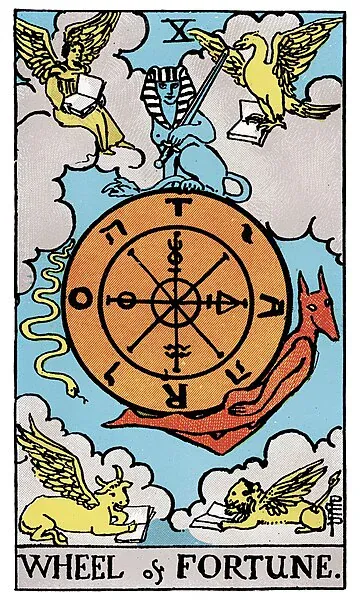
Wheel of Fortune
Wish-card reinforced by cosmic timing — the right thing at the right turn of fortune. Receive without grasping; the wheel rewards patterns, not luck.
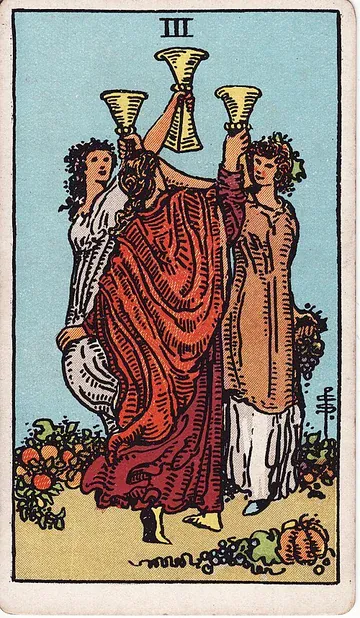
Three of Cups
Personal wish answered, then made communal. Private gratitude becomes shared celebration. Engagement parties, housewarmings, the announcement after the long wait. Make the wish public.
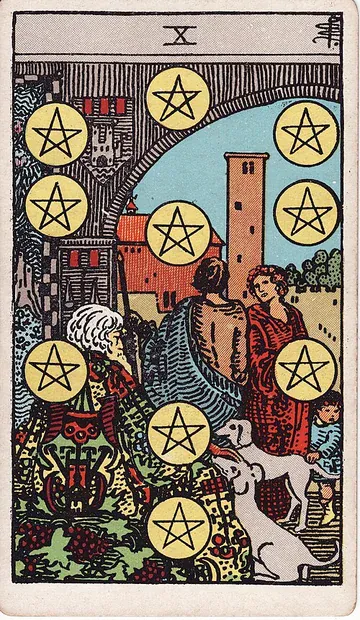
Ten of Pentacles
Material wish meeting generational ground. Wealth that is not just yours — a family's, a lineage's. Build for the people who come next.

The Lovers
The romantic wish granted — right person, real attraction, shared ground. Confirms the choice in long courtships; confirms mutuality in new bonds. Choose from the felt yes.
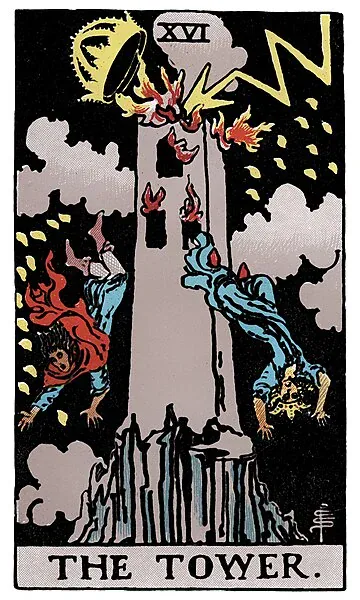
The Tower
A complex pairing. The wish granted becomes the catalyst for breaking what no longer fits. The new role makes the old life impossible. Receive the wish, then prepare to rebuild.
Frequently Asked Questions
Can the Nine of Cups reversed give me the thing and still count as a no?
Yes, and that is its particular sting. The reversal is rarely a clean no — it is more often a partial yes, or a yes that arrives in literal shape but does not feed the deeper question you were asking. Treat it as a soft caution: what you asked for probably arrives, but interrogate whether what you asked for is what you actually want.
Why does a good-looking relationship keep drawing the Nine of Cups reversed?
Because the card reads the second chair, not the photograph. It describes contentment without depth — pleasant on the surface, not yet shared from the inside. For partnerships, it can warn of a comfortable plateau that has become a refusal to grow. For new connections, it suggests pleasure held privately, with the door not yet opened. For reconciliation questions, it offers a soft no — returning would rebuild the comfortable shape that broke.
Is the person in the Nine of Cups reversed enjoying me privately without letting me in?
That is close to the card's exact description. The warmth is real and held inside. They feel pleased — privately, slowly — and have not yet brought the feeling across the table. Read it as warmth without offering: real, but not yet shared. Carrying the cup across the table is theirs to do, or not to do.
What is the Nine of Cups reversed warning about?
Smug plenty. Consumption over connection. Mistaking arrival for ending. The cups full but turned away from anyone who would share them. The card warns against the comfort that has hardened into refusal — pleasant on the outside, closed on the inside. It also warns against using the granted wish as a wall against further growth.
How do I integrate the Nine of Cups reversed?
Pour out one cup. Choose something you have wanted, gotten, and recognize as no longer alive in you. Release it without replacing it. Invite someone into the table you have built. Re-ask the wish — beneath the granted version, what was the older one? The reversed card returns to upright through honest curiosity, real relational presence, and the courage to keep moving after arrival.