
Strength · Core Meaning
Strength is the eighth card of the Major Arcana — number 8, the lying lemniscate, two linked rings on their side. It is the card of the inner sovereign, and it shows its sovereignty by what it refuses to do.
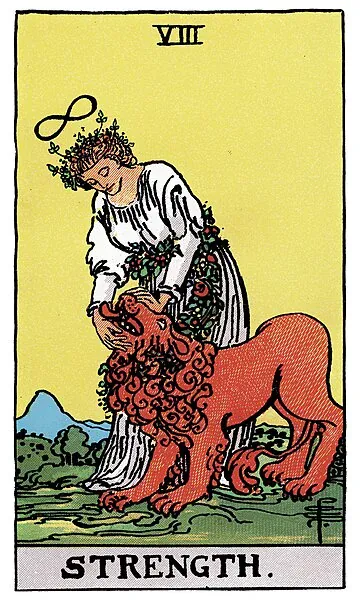
In the Rider-Waite-Smith image, a woman in a white robe stands in an open landscape under a clear sky. A crown of flowers rests on her head — not metal, not jewels. Above her brow floats the lemniscate of eternity, the same sigil that hovers above the Magician — but where the Magician's infinity is turned outward, hers is turned in. At her feet, a golden-maned lion has lowered its tail and crouched. Its tongue shows. Its jaw is open. Her hands rest lightly on its upper and lower jaw — open palms, not fists. She is not prying the mouth shut. She is closing it the way one closes a window at dusk: deliberately, without alarm, with no idea of contest. In the distance, golden hills the noon sun has just crossed.
The entire card balances on the width of that open jaw. The lion is not a danger she has subdued; it is an instinct she has learned to walk beside. She is not stronger than the beast. She is less alarmed by it than the beast is by itself. That difference — the difference between dominance and presence — is the entire teaching of Strength. The hand on the jaw is borrowed from no external authority. The crown is woven from flowers, which will wilt. The robe is white, the color with no defense in it. To wear white before a lion is to declare that the body is not the line of defense here. Something quieter is.
The card's astrological signature is Leo, fixed fire, ruled by the Sun. Leo is the heart's noon — radiant, durable, theatrical when young, regal when ripened. The Sun gives it the steady gold the hills wear in the background. Fixed fire does not flicker; it warms. On the Tree of Life, Strength walks the nineteenth path, running between Chesed (Mercy, the great expansive sea) and Geburah (Severity, the strict-edged sword). Chesed loves without limit; Geburah cuts without hesitation. Strength is the hinge between them — the place where mercy gains a spine and severity gains a heart. The Hebrew letter Teth (ט), which means "serpent — power coiled and held within," is the letter type "simple" but the image is anything but. Teth is the snake that does not strike because it has nothing to prove. The same coiled current the kundalini traditions name. The same patience a working dancer holds in the pelvis before a leap.
A historical note for the curious: Strength is numbered VIII here, the position A.E. Waite assigned in the RWS deck so the card would line up with Leo in the zodiacal sequence. Older Marseille decks placed Strength at XI and Justice at VIII; Crowley's Thoth deck reverts and renames the card "Lust." All three numbering schemes describe the same teaching from different angles. The card does not change because the number does. Read whichever number your deck carries; the lion stays the lion.
Three older pictures stand behind this one, and the card chooses among them. Heracles kills the Nemean lion and afterward wears its skin — strength as trophy, the beast carried as proof of the kill. Daniel sits a full night in the lions' den and walks out unbitten — strength as the absence of anything in him for the lions to answer. The medieval tapestries show the unicorn, uncatchable by any hunter in the field, laying its head in the lap of a girl who carries no weapon at all. The Rider-Waite-Smith card stands nearer the tapestry than the hunt. Nothing has been killed here. Nothing has been miraculously suspended. A person with flowers in her hair has stayed in the field long enough that the animal stopped reading her as a threat. If you were raised on the Heracles version — strength as the thing you win by defeating whatever frightened you — this card reads wrong for a while before it reads true.
Read Strength by reading the woman's face — not for confidence, but for the absence of urgency. If she is bracing, the card has flipped. If she is breathing, the card is upright. The same image. Two entirely different rooms.
In any spread, this card asks the same question: the part of you currently roaring — are you trying to silence it, or are you sitting beside it long enough that it stops needing to roar?
Strength · Love & Relationships
In love readings, Strength tarot upright is the card of the relationship that has learned to hold heat without being burned by it. Not the romance of the new spark — that is the Lovers, that is the Two of Cups. Strength is the romance of the long stretch in which two people stop demanding that each other be smaller, easier, less wild. The card describes love that has made room for the lion in both of them.
For an established partnership, Strength upright often arrives during a season when the relationship has just survived a rough passage — an argument that almost broke something, a shared loss that drew the worst out of both of you, a long winter of misalignment. The card names what just happened: you stayed. Not by gritting teeth. By learning, somewhere in the middle of it, to slow your own breath when their volume rose. By recognizing the part of them that frightened you most as the same part that, in another light, you fell in love with. Long love, this card says, is not the absence of the lion. It is the ongoing willingness to keep an open palm on its jaw.
For a new spark, Strength upright is one of the deck's quieter green lights. It reads less as "this person is your great romance" and more as "this person is steady enough that your wildness will not burn the bond." If you tend to scare new partners with the volume of your feeling, your speed of attachment, your refusal to play it cool — Strength shows up when the new person can sit with that without backing away. Inversely, if you are the more reserved party, Strength is the card of the partner whose feeling for you keeps room for whatever shape your interior actually has, including the parts you usually edit out before showing up.
For a single seeker asking whether love is possible, Strength's answer is yes — and the work it asks of you is to stop trying to perform the calm version of yourself for whomever you next meet. The card does not believe in the curated profile, the cool detachment, the "I am chill" performance. It believes in the woman in the open meadow with the lion at her feet. She is not trying to look like she has it together. She has it together by being unafraid of the parts of her that an earlier version of her was afraid of. Date from that ground. The right person finds it legible. The wrong person flees it. Both outcomes are useful.
For someone in love-after-wound — divorce, bereavement, betrayal, the long climb out of a coercive bond — Strength is one of the most precisely accurate cards the deck can offer. It does not say "you are healed." It says "you no longer mistake your own intensity for damage." There is a difference. Recovery from the wrong love is often misread as needing to become smaller, gentler, less reactive — to "fix" the part of you the bad relationship punished. Strength reverses the prescription. The lion was never the problem. The problem was the partner who treated the lion as a problem. Walk with the lion. The next love will recognize it as a feature.
For the love question readers most often bring to Strength at the end of a hard day, the cleanest answer is this: the card describes the love that does not require either of you to hide your heat. It also does not let either of you weaponize it. Both clauses matter. A relationship in which one person freely roars and the other person obediently absorbs is not Strength — that is the reversed card we will get to in a moment. Strength is the meadow where two adults have agreed that their respective lions are real, are theirs, and are not allowed to be used against each other. Inside that agreement, intimacy gets weight. Outside it, intimacy stays brittle.
A note on this card's particular love language: Strength loves with the patience of the Sun. It does not need you to be at your best to keep loving you. It does not withdraw warmth as punishment. It does not raise its voice to be felt. The signature is steadiness — the partner who is here on the bad day at the same temperature as the good day. From the outside this can look unimpressive next to the high-color drama of other love languages. Lived in, it is the rarest gift adult love offers.
Then the season when one of you is not at full capacity — an illness, a lost job, a parent dying slowly, a depression that has outstayed everyone's patience including its owner's. Strength upright on that question reads: stay, and stop keeping score. Not martyrdom; the card has no appetite for martyrdom, and the reversed reading is precisely what happens when carrying hardens into an identity. What it describes is the partner able to be near suffering without needing the suffering to end on their schedule. Ask for what you need while you carry — out loud, in ordinary words, before the resentment does the asking for you. The bonds that come out of these stretches intact are almost never the ones where somebody was silently heroic. They are the ones where two people kept talking at low volume through a long, unlovely winter, and neither pretended the winter was shorter than it was.
Couples assembled out of two different temperatures get a specific reading here. One of you runs loud: feeling arrives at full volume, the argument happens now, the door closes hard. The other runs quiet: feeling arrives three days late, the argument is processed alone on a walk, the door closes softly and stays closed. Strength upright says neither of you is the broken one. A volume difference is not a compatibility flaw — it is two lions with different manes. What the card asks is that you stop trying to convert each other into the other's tempo. The loud partner learns that a slow answer is still an answer, not a withholding. The quiet partner learns that an undeclared delay reads, from the other side of the house, as abandonment. For some couples that single negotiation is the entire marriage, and this is the card that says it is workable — not solvable, workable.
If you are asking whether someone is in love with you and Strength arrives upright, read it as a deep, considered yes — slow-grown, not impulsive. They have watched you in the rooms where you are not performing. They have noticed the hour you go quiet. They have decided, in their interior, that the version of you that surfaces under pressure is a version they want to know better, not flee from. They will not always say this in the language you expect. Watch instead for whether they stay steady when you are not. That is the card's most reliable love signal.
Strength · As Feelings
When Strength upright appears to describe how someone feels about you, the answer is a slow, durable warmth. Not the bright flare of a new infatuation. Not the volatile heat of a complicated entanglement. The Sun-on-the-hills warmth of someone who has decided you are a person worth being unhurried about.
The defining quality of these feelings is patience. They are not in a rush. They are not auditioning. They are not testing you with calculated silences or sudden withdrawals. Whatever attachment they have to you, it arrived gradually and is intended to last. From the outside, this can be misread as lukewarm — especially by readers used to relationships that ran hot and crashed. Strength's warmth doesn't crash. It also doesn't peak. It sits at noon temperature, day after day, and that is the texture.
If they are reserved by nature, Strength in their feelings means they have already made the decision about you internally and are simply moving at the pace their personality permits. They are not unsure. They are letting the conviction settle into action over weeks and months rather than hours. Their silences are not strategy. They are the time it takes for a quiet person to find the right sentence. Reading their interest by the volume of their messaging is the wrong instrument. Read it by whether they show up when they said they would, whether the small things you mention return to you weeks later remembered, whether — in stress — they reach for you rather than away.
If they are demonstrative, Strength's feelings often look like a kind of unembarrassed pride. They will introduce you. They will tell their family about you. They will say your name in rooms you are not in, and the people in those rooms will know the timbre of how they say it. Their warmth is public not because they are performing the relationship but because they have nothing to hide about it. The signal is not the volume of declaration; it is the absence of the small flinches that mark love uncertain of itself.
For a partner you have been with a long time, Strength in feelings means they have made peace with who you actually are — not with a fantasy version they can keep editing. The fantasy phase has ended. The disillusionment phase has ended. They are now in the long quiet that follows both, where you are simply, unmistakably, the person they live with, and they are not looking past you toward an alternate life. This is one of the cards most readers underrate when it appears in long-bond questions. It does not promise excitement. It promises ground. Ground is what builds.
For a new connection, Strength's feelings mean they are taking you seriously. Whatever they have given you so far is the bottom of what they will give, not the top. They are pacing themselves on purpose. The card is gentle about this: do not mistake their pacing for ambivalence, and also do not pressure-test it by demanding they prove the feeling on a faster clock. Strength's love arrives, when it arrives, as a sentence already complete. Trying to extract the sentence early gets you a fragment.
A third temperament sits between the two above and is regularly misread: the person who is neither reserved nor demonstrative but guarded — easy company in a room, unreachable the instant the conversation turns toward what they actually want. Strength in their feelings means the warmth is real and the guard is older than you are. They are not calculating whether you are worth it. They are finding out whether being known, here, costs what it cost the last time. The signal to watch is not declaration; it is disclosure. Small unprompted facts about their life, slightly inconvenient to have told you, arriving without being asked for. Each one is a hand coming off the jaw. Count those rather than the compliments, and give the count months rather than weeks.
A small, important caution embedded in this beautiful card. Strength in feelings can occasionally describe the partner who has decided to love you despite — to extend warmth across a difficulty in you they have not actually addressed with you. This is closer to the reversed card than people want to admit. Real Strength acknowledges the lion. Suppressed Strength quietly tolerates it. If a partner is "being patient" with you in a way that has begun to feel like silent endurance, the card has tipped. The repair is not for them to be more loving. It is for both of you to name the lion plainly and walk with it together. Tolerated lions become reversed-card lions. Acknowledged lions become Strength.
For ex-partners or paused connections, Strength upright in the feelings position usually means a slow re-thinking on their part — not a dramatic returning, but an unhurried reconsideration of who you were and who they were inside that relationship. Whether this leads to a re-meeting depends on factors the card does not promise. What it does name is the absence of bitterness on their side. They are not stewing. They are not building a case. They are sitting with what was, with the same temperature the woman in the meadow sits with the lion. That alone is rare.
Strength · Career & Work
She closes the lion's jaw with her bare fingers and no rope anywhere in the picture — at work, that gap between authority and force is the whole teaching. Strength upright is the card of slow heat. Its register is endurance, presence, and the kind of authority that arrives without being claimed. It does not describe the breakthrough, the launch, the hot streak — those belong to other cards. Strength describes the long stretch in which you become someone whose presence at the table changes what is possible at the table, without you having to perform it.
For someone in an ongoing role, the card almost always reads as confirmation: stay. Not because the role is exciting. Because something in you is being tempered by it that cannot be tempered by jumping. Leo's fixed fire wants the slow forge, not the constant forge-change. If you have been hearing the inner voice of "should I leave, am I wasting time, is the next thing better," Strength gently asks you to count what has been built in the current seat rather than what has been missed by not leaving it. Patience is not a synonym for passivity here. It is the active capacity to stay through the boring middle of mastery, and it is the rarest career skill in any field.
For someone considering a difficult conversation at work — a confrontation with a peer, a hard truth to a manager, a re-negotiation with a client who has been overstepping — Strength is one of the deck's clearest go-aheads. But it gives the conversation a specific shape. Do not match their volume. Do not pre-load the speech with grievance. Drop your own tempo half a beat. Speak from a register lower than the one the other party is using. Strength does not win the argument by argument. It wins by being the only adult in the room who has not lost composure. People remember composure for years. They forget who scored the rhetorical point by Wednesday.
For freelancers, founders, and independent operators, the card describes the season when the work has begun teaching the worker. You are no longer doing the thing you set out to do; the thing has begun shaping you. Stay with that. Resist the temptation to pivot every quarter. The lion's mane in the image is gold for a reason — Leo earns its gold over years, not in launches. Repeat clients, the slow-built portfolio, the body of work that compounds — these are Strength's favored fruits, not the hot first product.
For a creative practice, Strength is the card of the artist who has stopped fighting the medium. The painter no longer cursing the paint. The writer no longer fighting the sentence. The dancer no longer at war with the joint. There is a season in any practice where the practitioner discovers that the medium was never the enemy — the enemy was the impatience that wanted the medium to bend before it was ready. Strength names the post-impatience season. The work, freed from the war, begins to deepen visibly.
For someone managing other people, Strength upright is one of the most flattering cards a leadership reading can produce. It describes the manager who does not need to dominate the room to keep it together. The team has learned that this leader does not raise their voice, does not punish, does not retract warmth as discipline — and yet the team also does not slack. The mechanism is not weakness; it is the exact opposite. Strength leadership transmits the unspoken signal that consequences are real, expectations are real, the standard is real, and none of these things require theater. People work harder for this kind of authority because it does not waste their nervous system on managing the leader's mood.
For job-search readings, Strength asks you to slow down. The card is not strong at speed. It is strong at fit. If you are sending fifty applications a week to anything that moves, the card asks you to switch instruments — five carefully chosen applications a month, each with the kind of attention that lets you actually read the room you are about to enter. The right role responds to the slow approach. The wrong role responds to the fast approach. You decide which kind of life you are building.
For a layoff, demotion, or sudden setback at work, Strength upright is one of the most steadying cards the deck offers. It does not say "this didn't happen." It says "this happened, and it is not the measure of you." The lion in the image is not threatened by being looked at. You are not threatened by being measured wrongly by an institution that did not see you fully. Take the season. Let the wound be a wound. Do not rush back into the next role to prove anything. Strength rebuilds career through ground, not through narrative.
A specific note for those whose work is in caregiving, teaching, healing, social services, or any field that asks for sustained emotional presence with other people's pain: this card is yours. Strength's lion is the chronic exposure to suffering that frontline workers carry. The card does not ask you to harden against it. It asks you to learn to walk beside it without being consumed. That is a real skill. It is rare. The card upright says you have it, or are growing it. Honor what that costs.
Strength · Money & Finances
There is a mountain in the background of this card, and nobody in the picture is running at it. Strength upright is the card of the slow climb, the financial life that compounds rather than spikes — savings rather than windfall, the third year of a small business rather than the first quarter of a hot one, the steady salary that has been quietly outpacing the flashier resume of the friend who keeps switching jobs. The card believes in time as the ally of money, and it dislikes anything that promises to outrun time.
For someone managing a tight period, Strength's counsel is not contraction. It is composure. Many financial difficulties get worse because the person inside them begins making decisions from the lion's volume rather than from the woman's pace. Late-night purchases to soothe anxiety. Refusal to open the bills out of fear. Borrowing on bad terms to escape the stress of the better terms taking longer. Strength reverses the loop. Open the statements today. Look at the numbers without flinching. Make a single calm call to the creditor. Pay one specific bill. Each of these is a hand laid on the lion's jaw — small, deliberate, unhurried.
For a question about whether to make a major purchase, Strength leans toward "wait, but not forever." The card warns against the impulse buy, especially the one that promises to soothe a feeling. It also warns against the opposite mistake: refusing to ever buy the thing because the part of you that fears money will never approve. Both extremes are the lion ungoverned. The middle is the woman in the meadow — calm, decided, willing to wait the right number of weeks, willing to act when the waiting has run its course.
For investments, the card is direct and slightly old-fashioned. It does not believe in the hot tip. It does not believe in the asset that quintupled last year. It believes in the position you can hold for ten years without checking it weekly. If your current holdings would fall apart under that test, Strength is asking you to restructure. Not panic-sell. Quietly migrate, quarter by quarter, toward what your nervous system can actually carry without distortion.
For freelancers and independents thinking about pricing, Strength asks you to raise rates with the patience of someone who has earned them. Not 50% in one move because someone in a podcast said you should. 10% this year. 10% next. The clients who can carry the new rate stay; the ones who cannot leave; you have time to find better-fit replacements before the gap is felt. This is one of the most practical pieces of career-finance advice the card offers, and it gets ignored constantly because it lacks drama.
For windfall — bonus, inheritance, sudden gift — Strength upright says: do nothing for at least one full month. Park the money. Do not allocate it. Do not announce it. Do not spend it preemptively in your imagination. The lion's response to sudden plenty is to want to roar with it; the woman's response is to let the meadow absorb it slowly. By week four, the money will tell you what it wants to do. Almost always, the answer is more boring and more sound than the impulses of week one.
For long-term financial structure, Strength favors the unglamorous bones: the emergency fund that sits there for years untouched, the retirement contribution that runs on autopilot, the boring index position, the will that has been written and updated, the insurance policy that exists. None of these earn applause. All of them are how the woman in the meadow stays calm with a lion at her feet. The structural calm is what makes the daily calm available.
A small caution: Strength can occasionally describe a person who has held money so steadily that they have stopped letting it move at all. The savings account that has accumulated to the point of being inert. The reluctance to invest, spend on a real pleasure, give to something that mattered, take the trip while the body still wants the trip. The lion of money, denied entirely, also bites. Hoarding-as-discipline is a reversed card waiting to happen. Strength asks you to hold the money with the same temperature as you hold the lion: present, unafraid, willing to let it move when its movement is right.
Strength · Health
In health readings, Strength upright is the card of the body that has been heating for a while and has not yet been listened to. Or, in its better register, the card of the body that has just begun being listened to. The Leo–Sun signature points to the heart, the spine, the upper back, and — through Teth's coiled-serpent imagery — the deep core, the pelvic floor, the kundalini channel running the length of the body. None of this is medical claim. It is the geography the card is interested in.
For someone who has been pushing through a long stretch of stress, Strength asks for the unglamorous practices: slower breath, longer sleep, daily walks, the meal eaten without a screen, the cup of water before the cup of coffee. The card's healing is not the dramatic detox or the weekend retreat. It is the same act, performed without decoration, every day for a season. Leo's fixed fire wants regularity, not intensity. Twenty minutes of walking daily for six months will reach further into the body than three weekend hikes a year, and Strength is the card that knows it.
For chronic conditions — anything that has been with you for years and is not going anywhere — Strength's stance is collaboration rather than war. Many chronic-condition narratives get framed as battles: "fighting" the illness, "beating" the diagnosis, "conquering" the symptoms. Strength gently swaps out the metaphor. Walk with the lion. The body's persistent signal is not the enemy; it is information about what the system needs in order to remain habitable. Patients who can hold the chronic condition in this register tend to manage it more sustainably than those who cannot, because the war metaphor exhausts the very nervous system that healing depends on.
For acute symptoms — injury, infection, a new pain, a sudden change — Strength is unambiguous: see a practitioner. The card is not romantic about self-management of acute issues. The lion in the image is golden, but it is still a lion; if it has begun bleeding, you bring it to someone who knows lion anatomy. Make the appointment today, not after the project ships.
For the heart specifically — both the cardiac heart and the metaphorical one — Strength is the card of the organ that has been holding more than it lets on. Cardiologists know that long-term unspoken grief, chronic interpersonal stress, and the suppression of legitimate anger correlate with cardiac strain. The card asks you to stop using your heart as the silent storage closet. Speak the thing that has been unspoken for two years. Cry the cry that has been held since the funeral. Let the relationship that has been slowly killing you become a relationship you address. The body knows what is in the heart whether or not the mouth has named it.
For the spine and upper back, Strength asks the working professional, the long-hours laptop user, the parent who has been carrying children for a decade: undo the posture for fifteen minutes a day. Not yoga as performance — yoga as unwinding. Lie on the floor. Let the spine remember neutral. Do this daily for a month and report back to yourself.
For mental health, Strength upright is one of the most healing cards in the deck. It does not promise the absence of difficulty. It promises that the part of you that has been carrying difficulty has more capacity than you have been giving it credit for, if you stop treating that part of yourself as the problem. The lion is not your depression. The lion is not your anxiety. The lion is the part of you that survives them — the deep core that has been running heat for years to keep you alive. Sit beside it. Stop trying to surgically remove it. The card consistently describes seekers who improve when they switch from "I need to get rid of this part of me" to "I need to learn to live alongside this part of me."
A practical instruction for the day this card appears in a health spread: do one thing the body has been asking for and you have been postponing. Drink the water. Take the nap. Make the appointment. Walk for twenty minutes in actual daylight. The card responds quickly to small, honest, repeated acts of attention.
(Water, a nap and twenty minutes of daylight are ordinary kindnesses, not medical advice. Keep your practitioners. Take your medicine. Make your appointments. The card simply names what kind of attention the body is asking for: steady, unalarmed, unhurried, unembarrassed by the fact that the body is an animal and animals require care.)
Strength · Spirituality
Ruling the interior by presence rather than by suppression is the rarest skill the deck describes, and Strength upright is its portrait: the inner sovereign, hand resting where a muzzle would go. Its central teaching distills to a sentence that takes a lifetime to enact: the lion is not your enemy.
The most reliable way modern spirituality goes wrong is by treating the difficult parts of the self as material to be eliminated. The anger to be released. The desire to be transcended. The shame to be dissolved. The fear to be cleared. Strength reverses the prescription entirely. None of these is the enemy. Each is information, energy, instinct — the lion's coiled current. The work is not to slay them. The work is to walk beside them long enough that they stop needing to roar to get your attention.
The card's letter is Teth (ט) — the serpent, the coiled power held within. In Hebrew mystical tradition, Teth marks the moment in spiritual development where the seeker stops fearing their own depth. The kundalini traditions name the same current. Daoist internal alchemy names it again. Christian mystics writing on the dark night of the soul circle the same recognition: the part of you that frightens you is the part of you that, transmuted, becomes the seat of your spiritual authority.
For someone in active spiritual practice — meditation, contemplative prayer, journaling, somatic work — Strength asks for one specific recalibration. Stop trying to reach a state of "no-lion." Start sitting with the lion as it is. The thoughts you cannot quiet. The grief you cannot bypass. The desire that will not behave. The anger that has not received its hearing. The practice is not the absence of these. The practice is the slow shift from being commanded by them to being able to remain seated while they move through the room.
For seekers exploring tradition, Strength gives a particular blessing to slow paths. The traditions that ask for years before they hand over their core teaching. The teachers who do not promise rapid transformation. The lineages that build in graduated, body-tested stages rather than weekend intensives. Leo's fixed fire favors the slow forge. The card does not condemn other paths; it simply reports its own preference.
On the Tree of Life, Strength walks the nineteenth path between Chesed (Mercy) and Geburah (Severity). This is one of the most spiritually important paths a seeker can be on. Pure Chesed without Geburah's edge becomes a flood of indiscriminate mercy that no longer protects anything. Pure Geburah without Chesed's softness becomes a sword that cuts even what should have been kept. Strength is the hinge — the place where the seeker learns to be both kind and clear, both warm and unmovable, both open-hearted and unmistakable in their no. Most spiritual maturation happens, somewhere, on this hinge.
For someone in a season of spiritual exhaustion — too many books, too many teachers, too many practices, no actual resting place — Strength's instruction is simple. Pick one. Hold to it for forty days without addition. The card opposes spiritual consumerism with the same patience it opposes financial impulse. The path is not the most recently-encountered teaching. The path is the one you have been returning to for years.
Practical exercise for this card: once today, when something inside you starts to roar — anger at a co-worker, anxiety about a future event, grief about an old wound, craving for a substance, a person, a screen — do not act on it and do not suppress it. Sit beside it for three minutes. Watch its actual shape, not the story it tells about itself. Note what changes in the body during those three minutes. This is, in miniature, the entire spiritual practice the card teaches.
Strength · Yes or No
Yes — but a slow yes.
Strength tarot yes or no is one of the deck's clearer affirmatives, with one crucial qualifier: the yes is not fast. Whatever you are asking about can happen, will hold, will succeed — but it will do so on the card's tempo, not yours. If your question contains hidden urgency ("can I have this now"), the card answers no to the urgency and yes to the underlying outcome.
For yes-or-no questions about a relationship: yes, and the relationship is built to last on the long timescale. The slow yes is more reliable than the fast yes, even though the fast yes feels better in the moment.
For yes-or-no questions about a job, a project, a creative undertaking: yes. The work succeeds. The success arrives by accumulation rather than by breakthrough. Plan for the long version of the answer.
For yes-or-no questions about a difficult conversation: yes — go ahead. The card endorses your composure, not your argument. Speak from a register lower than you usually do; the room hears the lower register more clearly than the louder one.
For "should I stand my ground here": yes. Strength's quiet refusal carries more weight than louder protest. Hold the position. Do not raise your voice. The opposing party will adjust before you do.
For "should I be patient with this person": the card asks a counter-question. Patient how? Strength's patience is not silent endurance; it is presence with eyes open. If your patience has begun to feel like swallowing, you have already crossed into the reversed card. Real patience means continuing to walk beside the lion without pretending it is not a lion.
For timing — "will this happen soon" — Strength is the slowest of the clear-yes cards. Whatever you are asking will arrive, but on a horizon of months rather than days. Plan for the slow timeline. If you cannot wait the slow timeline, the card asks you to examine why the urgency exists and whether it is from you or from someone else's pressure.
For "do I have what it takes": yes. The card's specific gift to seekers asking this question is that the strength being asked about is not a reserve you have to build. It is the steadiness that emerges when you stop fighting the parts of yourself you have been told are too much. You already have it. You have been spending it on the wrong battles.
For "should I act now": Strength leans toward "act soon, but not now." Take twenty-four hours. Let the surge of urgency cool. If at the end of that time you still want to act, the action carries the weight of consideration. If the urgency has burned off, you have just saved yourself a regret.
For the seeker whose real question is whether the crown was earned. The card answers yes — and gently asks why you keep looking outside yourself for permission. The flower crown was woven by the woman in the meadow herself. No external authority is involved.
Strength · Advice
Strength upright's advice, distilled: do not match the roar with a roar. Match it with a steady hand on the mane.
The card's first instruction is a posture, not an action: drop your tempo half a beat. Whatever situation you are currently facing — argument, deadline, family conflict, new opportunity, tense email thread — your nervous system is running faster than the situation requires. The lion is not roaring at you; you are roaring inside, and reading the inside roar as the outside emergency. Slow your breath. Slow your sentences. Slow the email reply by an hour. The situation re-shapes itself around the slower tempo.
Second instruction: acknowledge the lion before you try to soothe it. The most common spiritual mistake of well-meaning seekers is rushing to "I am calm, I am at peace, I forgive" before the lion has been given its hearing. The lion that does not get heard does not go quiet; it bites from behind. Today, find a room where no one can be hurt — a parked car, a forest path, a closed bathroom — and let the part of you that has been suppressed make whatever sound it actually makes. Once. Fully. Then sit down and consider what to do.
Third instruction: stop trying to be smaller. Many readers drawing this card have been performing a curated, palatable, conflict-averse version of themselves for so long they have forgotten the larger self underneath. The flower crown was not woven by someone shrinking. It was woven by someone whose interior had room for a lion. Your interior also has that room. Stop apologizing for taking it up.
Fourth instruction: pick one situation that has been heating for months, and have the conversation this week. Not the dramatic show-down. The quiet, lower-register, eye-level conversation in which you say the thing you have been postponing. A long-postponed conversation rarely goes worse than the seeker fears. It almost always goes better. The dread is the lion in your body, not the danger in the room.
Fifth instruction: stop reading patience as endurance. Real patience is presence with the situation as it is, eyes open, willing to act when action becomes possible. False patience is grinding through with teeth set, hoping the situation will resolve itself if you outlast it. The first builds you. The second hollows you. If you suspect you have been performing the second, the card invites you to switch.
Sixth instruction: if you are in a position of authority — over a team, a household, a younger sibling, a student — practice the version of authority that does not need to demonstrate itself. Lower your voice, not raise it. Withhold the punishment, not deliver it. Stay in the room when most people would leave. People remember composure under pressure for years, in a way they do not remember scoring rhetorical points or "winning" the disagreement.
Seventh instruction: today, do one act of kindness toward yourself that has nothing to do with self-improvement. Not "I will do the workout because I should." Not "I will eat the salad because I am being good." Something that the woman in the meadow with the lion at her feet would do. A long bath. A book read slowly. A walk with no headphones. A meal eaten alone, by candlelight, without the phone. The card responds to small unwitnessed acts of self-honoring more than it responds to dramatic gestures.
Eighth instruction, gentlest: forgive yourself for the seasons you spent fighting the lion instead of walking with it. Most adults pass through this card more than once before learning what it teaches. The teaching is not that you should have learned faster. The teaching is that the learning is now available, and the rest of your life is the practicing.
Strength · Card Combinations
Strength rarely stays a private card in a spread. Its lion takes the color of whatever sits beside it — chained in one neighbor's picture, released into full noon in another, howling at a bedroom ceiling in a third. Read each pairing by asking what the other card is doing with the same animal, and the combined image tends to say more than either card says alone.
Strength + The Chariot
The predecessor pairing — outward drive followed by inward sovereignty. The Chariot conquers external territory by force of will; Strength then turns the same will inward to address the territory that cannot be conquered, only inhabited. When these two cards appear together, the message is usually that an outer victory has just landed and the inner reckoning is now arriving. The Chariot's two sphinxes were pulled into alignment by the charioteer's grip. Strength asks whether you are still gripping. The current chapter is not won by tighter reins. It is won by closing the jaw with breath rather than force.
Strength + The Magician
The shared lemniscate — both cards wear infinity above the brow, but the Magician's is turned outward toward craft and the Strength card's is turned inward toward presence. When this pair appears, the message is to integrate the outer wand with the inner palm. You have the tools and the language; what you have not yet brought is the unhurried temperature that turns competence into authority. The Magician makes things happen; Strength makes things hold. Together, they describe the rare practitioner whose work is both technically precise and emotionally sovereign.
Strength + The Devil
Same lion, opposite handling. The Devil's chained beasts and Strength's tamed lion are the same animal at different addresses. The Devil reads your instinctual life as a chain that binds you; Strength reads it as a current that, walked beside, becomes your sovereign warmth. When these two cards appear together, the question is not whether the lion exists — it does, in both pictures — but whether you are currently relating to it as enemy or as ground. The combination usually appears at a turning point: a habit, a relationship, a self-narrative is offering you a chance to switch its address from Devil to Strength. The mechanics of the switch are not dramatic. They are the slow, daily, unwitnessed practice of acknowledgment.
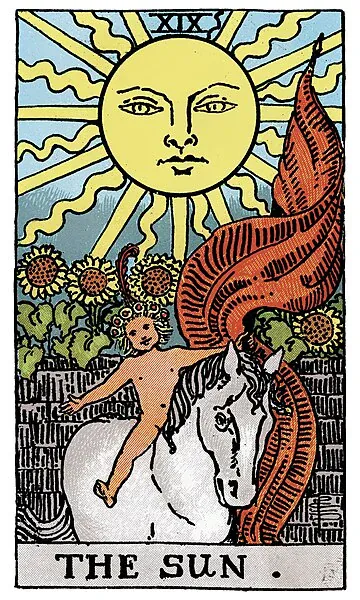
Strength + The Sun
Leo solar resonance — the tamed lion and the lion released into noon light. The Sun is Strength's planetary ruler; this combination is one of the most generous in the deck. It describes the season after long inner work, when the work begins to radiate outward. People feel it before they can name it. Children open up around you. Strangers trust you faster. The body, finally heard, returns its quiet gold to the world. Combination instruction: do not perform the transformation. Just keep walking with the lion. The Sun in the spread will do the announcing without you having to.
Strength + Temperance
Two cards about heat, measured differently. Temperance's angel pours between two cups with one foot in the water and one on the land, adjusting the mixture forever. Strength mixes nothing — it holds a single temperature until the other party comes up or down to meet it. Set side by side, they describe a practice, a relationship, or a body being brought back into proportion slowly enough that the proportion holds. Where the spread concerns recovery — from overwork, from a substance, from a season of too much of anything — this is the most encouraging company Strength keeps. The instruction the pair gives is dosage rather than abstinence or indulgence: the right amount, taken at the same hour, continued well past the point where it still feels necessary.
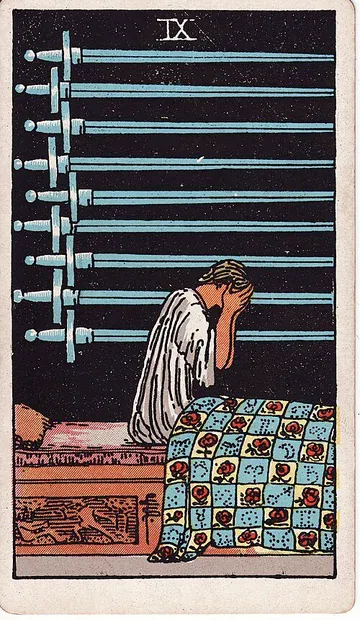
Strength + Nine of Swords
Tonal contrast — the calm meadow against the dark bedroom of insomniac dread. The Nine of Swords is the card of the 3am spiral, the catastrophizing mind, the chest that will not unclench. Strength, placed beside it, is the card's specific antidote: the slow breath, the unhurried palm, the recognition that the part of you spiraling is not the truth-telling part. When these two cards land together, the reading is asking you to physically place a hand on the part of the body where the panic lives — the chest, the throat, the sternum — and breathe with it the way the woman in the meadow breathes with the lion. The 3am voice goes quieter not because you argued it down but because you sat with it without flinching. This is the most common combination Strength forms in real readings during anxious seasons. Honor the antidote. The Nine of Swords lion is the same lion. It is just begging to be sat with rather than fled.
Card Combinations
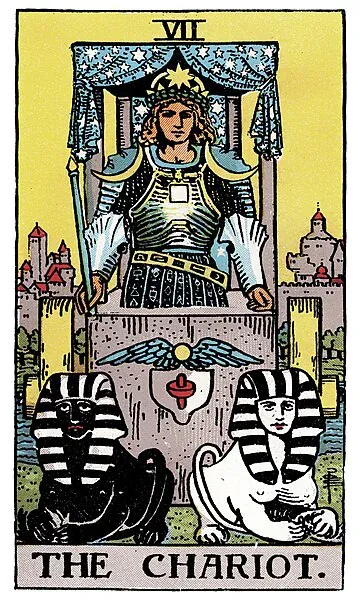
The Chariot
The predecessor pairing — outward drive followed by inward sovereignty. The Chariot conquers external territory by force of will; Strength turns the same will inward to address the territory that cannot be conquered, only inhabited. The current chapter is not won by tighter reins. It is won by closing the jaw with breath rather than force.
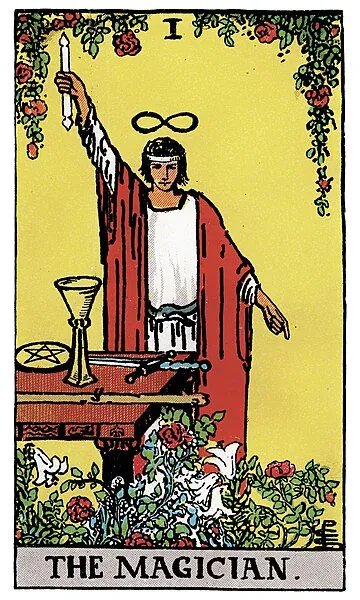
The Magician
The shared lemniscate — both cards wear infinity above the brow, but the Magician's is turned outward toward craft and Strength's is turned inward toward presence. Together they describe the rare practitioner whose work is both technically precise and emotionally sovereign. The Magician makes things happen; Strength makes things hold.
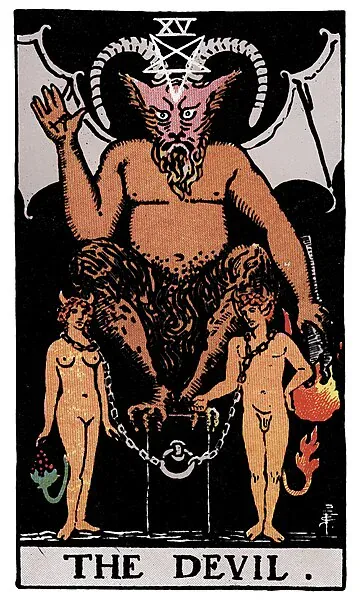
The Devil
Same lion, opposite handling. The Devil's chained beasts and Strength's tamed lion are the same animal at different addresses. The combination usually appears at a turning point: a habit, relationship, or self-narrative is offering a chance to switch its address from Devil to Strength. The mechanics of the switch are not dramatic — they are the slow, daily practice of acknowledgment.
The Sun
Leo solar resonance — the tamed lion and the lion released into noon light. The Sun is Strength's planetary ruler; this combination is one of the deck's most generous. It describes the season after long inner work, when the work begins to radiate outward. People feel it before they can name it. Do not perform the transformation; just keep walking with the lion.
Nine of Swords
Tonal contrast — the calm meadow against the dark bedroom of insomniac dread. The Nine of Swords is the 3am spiral; Strength is its specific antidote. Place a hand on the part of the body where the panic lives and breathe with it the way the woman in the meadow breathes with the lion. The 3am voice goes quieter not because you argued it down but because you sat with it without flinching.
Frequently Asked Questions
Why are her hands on the lion's jaws instead of holding a weapon?
Because closing a jaw by hand only works while the lion consents. Strength is Major Arcana 8 — a woman in a flower crown resting open palms on the jaws of a golden-maned lion. The card describes inner sovereignty: soft mastering hard, force ripened into warmth, the lion walked alongside rather than slain. Bound to Leo, the Sun, and the Hebrew letter Teth (the coiled serpent), it teaches that the parts of you that frighten you most are not enemies — they are the seat of your power once you stop fighting them.
How long does Strength's yes take to arrive?
Longer than you want. Yes — but a slow yes. Whatever you are asking can happen, hold, and succeed, but on the card's tempo rather than yours. If urgency is hidden in the question, the card answers no to the urgency and yes to the underlying outcome. Plan for a horizon of months rather than days; the slow yes is more durable than the fast yes, even though the fast yes feels better in the moment.
What does the Strength tarot card meaning in love look like?
Strength tarot love is the card of the relationship that has learned to hold heat without being burned by it. For long bonds, it confirms you have made room for the lion in each other; for new sparks, it describes a partner steady enough that your wildness will not break the bond. For love-after-wound, it names the moment you stop mistaking your own intensity for damage. The card's love language is patience — the partner who is here on the bad day at the same temperature as the good day.
What does Strength tarot mean as feelings?
Slow, durable warmth — Sun-on-the-hills temperature rather than infatuation flare. They are not in a rush, not auditioning, not testing you. If reserved, they have already decided about you internally and are simply moving at the pace their personality permits; if demonstrative, their warmth is unembarrassed and public. Read their interest by whether they show up steady when you are not, whether small things you mention return weeks later remembered, whether under stress they reach for you rather than away.
Why is Strength numbered 8 and what does the lemniscate mean?
Strength is numbered VIII in the RWS deck because A.E. Waite re-aligned the card with Leo's zodiacal position; older Marseille decks placed it at XI, and Crowley's Thoth deck reverts. The lemniscate above the woman's head is the same infinity sigil the Magician wears — but where his is turned outward toward craft, hers is turned inward toward presence. The figure-eight is also the side-laid 8 of the card's number: two linked rings, the eternal current of force held within shape rather than spilled in roaring.