The High Priestess · Core Meaning
The High Priestess is the second card of the Major Arcana, but to call her "second" is to slightly misread her function. The Magician, before her, speaks — points down, points up, names the four tools, declares the world. The High Priestess does not declare. She listens. She is the silence that the world's first sentence falls into, and out of which the world's actual answer rises. If The Magician is utterance, she is acoustics. The deck is not built without her.
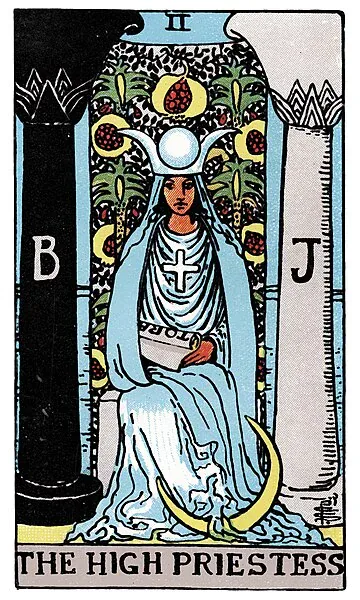
In the Rider-Waite-Smith image, she sits enthroned between two pillars. The black pillar bears a Hebrew B and is named Boaz; the white pillar bears a J and is named Jachin — Severity and Mercy, the two outer columns of the Tree of Life. She sits on the middle path, the one that does not commit to either side. Behind her hangs a veil embroidered with pomegranates whose pattern, when the eye knows what to look for, traces the figure of the Tree itself. On her lap rests a scroll marked TORA — the written law — half visible, half tucked into the fold of her mantle. On her head, a horned crown holding the full phase of the moon: waxing, full, waning at once. At her feet, a single crescent. An equal-armed cross rests at her breast. The water of the inner sea begins at the hem of her robe and continues, beneath the temple floor, all the way to the world.
Two details in the picture reward a slower eye. The scroll on her lap reads TORA, and the last letter is swallowed by the fold of the mantle — the written law is present, but never fully shown. Her number explains why: two is the half not yet spoken, the reflection that has not yet answered the thing it reflects. Then the pomegranates on the veil. Cut one open and there are hundreds of seeds under a single skin, a whole orchard held in one closed fruit — which is what a real silence is, and what a performed one is not. The older accounts call her a copyist in the depths of the temple, and say that every page she transcribes has first been read aloud to the moon. That is the order of operations the card teaches. Say it to the night before you say it to the day. Whatever she keeps on her lap has already been spoken once, inwardly, where no one heard it.
This is the card's signature tension: the answer is already present, but the answer is veiled. She is not refusing to speak. She is keeping the threshold accurate. The veil, with its pomegranates, is not a wall. It is an instrument that opens to the right asking and stays closed to the wrong one. Most seekers, the first time they meet this card, want her to lift it. The card is asking them, instead, to learn how to become someone the veil opens for. The work is not to force the door. The work is to become the kind of askings the door is made for.
The traditional astrological signature reinforces this: the Moon, water, Cancer — the lunar tide pulled across an inward sea. On the Tree of Life she walks Path 13, from Kether to Tiphareth — Crown to Beauty — the long path that crosses the abyss directly down the middle, through the place where most paths cannot go. The Hebrew letter is Gimel (ג), whose literal meaning is "camel" — the beast that crosses the desert carrying water without drinking it. This is not an accidental detail. The High Priestess carries something across an inhospitable stretch without consuming it; she keeps her own water. To meet her is to meet the part of yourself that has been carrying water across your own desert for years and has not been asked.
To read The High Priestess is to read the face of someone who knows more than she will say, not because she is withholding, but because the knowing itself does not translate into the language you arrived speaking. In that pause — the half-smile, the steady gaze, the scroll unread on the lap — is the meaning of the card for that reading. Whatever the question was, the card asks you to ask it again, more quietly, more interiorly, and to trust that the answer was already inside you before you began to ask.
The High Priestess · Love & Relationships
In love readings, The High Priestess is the card of what is known beneath what is said. The High Priestess in love is rarely about the loud signals — the grand confession, the public commitment, the dramatic reunion. She is about the quieter signal underneath: the way a partner's body angles toward you when they think you're not looking, the way a name keeps surfacing in your dreams a year after you stopped speaking, the slight pause before someone answers a casual question that tells you the answer is more weighted than the words show. In love, this card asks you to read the temple, not the announcement.
For an existing partnership, The High Priestess often arrives when something between the two of you has gone underwater. Not in a damaging sense — in the sense that the relationship has matured into a register that no longer needs constant verbalization. Old fights have stopped being fought because both of you, separately and silently, came to the same conclusion. Old jokes have become a private mythology. The relationship has developed its own veil, and behind that veil, real life is happening. Trust the depth. The card is also a quiet warning, though, against silences that are doing the wrong work: silences of avoidance dressed up as silences of trust. The honest test is whether the silence makes you feel held or whether it makes you feel alone. Held is the High Priestess. Alone is something else, and it deserves to be spoken.
For a new spark, The High Priestess in love is one of the most subtle cards in the deck. She does not promise the bright Lovers card's mutual recognition or the warmth of the Two of Cups. She promises something stranger: the recognition that has not yet surfaced into language. You are noticing this person more than the relationship has earned. Their texture stays with you after they leave the room. You are pretending to be more uncertain than you actually are because the certainty makes you feel exposed. The card asks you not to force this into shape. Premature naming kills early intuition. Let the recognition continue under the threshold for a while longer. The form will arrive on its own, and it will be more honest than anything you would have manufactured.
For a single seeker asking whether love is possible, the card's answer is: love is closer than your conscious mind has acknowledged, but not in the shape your conscious mind has been shopping for. The High Priestess refuses the criteria list. She does not bring the partner who matches your spreadsheet — height, industry, family background, the calculus of socially acceptable choice. She brings the partner who, when met, makes you realize you had been holding the spreadsheet to keep something more dangerous from happening. The work is not to find. The work is to become quiet enough that what is already approaching can land.
In the question of love after a wound, The High Priestess describes the long, interior re-formation of the self after a relationship that taught you something you did not know how to be taught. The wound is not "open." It is also not "closed." It is in the third state — the state of integration, where the loss has begun to teach the body something the mind has not yet articulated. The card asks you not to date yet, in the strict sense — not because dating is forbidden, but because the part of you that knows what you actually need now is still in the process of arriving. Wait for it. The arrival, when it comes, is unmistakable. Until then, the dating market will read as static, and that static is information.
A note on this card's particular love language: The High Priestess loves through accurate seeing. She does not love by promising. She does not love by performing. She loves by witnessing — by remembering the small thing you said three months ago that you no longer remember saying, by noticing the subtle change in your face that no one else has noticed, by understanding why this conversation matters to you more than the surface words show. If you are loved by a High Priestess archetype, you are loved through being seen. If you love through being a High Priestess, your offering is the most patient and most accurate witness the other person will ever have. Both versions are rare. Neither is loud.
There is also the reader who is the temple in this relationship — the one whose partner keeps asking what they are thinking, hears "nothing," and does not believe it. If that is you, the card takes your side and then asks something of you. Your silence is real; it is the inner sea, not an empty room. But your partner is standing at the pillars, and from the pillars the veil looks like a wall. Nobody can be expected to keep asking a door that never shows a crack of light. So bring one thing through the veil each week — not the whole scroll, one line of it: the dream you had about the house, the worry you had on the drive home, the reason you went quiet at dinner. The veil opens to the right asking. Teach them the asking by rewarding it, and teach yourself the answering by practicing on small things before the large one arrives.
If you are asking whether someone is in love with you and The High Priestess arrives upright, read it carefully. The answer is yes — but the yes is operating beneath their conscious awareness. They have not yet admitted to themselves the weight of what they feel. They might not for some time. Pressing them to declare prematurely will create resistance where there is currently only depth. Hold the question. Let them surface in their own time. The card distinguishes between "they are not interested" and "they are interested in a register their own conscious mind has not yet visited." This is the second.
The High Priestess · As Feelings
When The High Priestess appears as feelings — describing how someone feels about you — the answer is: they are holding you in a register too quiet to broadcast. They feel something about you that is real, settled, and so far inarticulate to themselves. They have not made a decision in the loud sense. They are not bracing or hedging in the Nine of Cups reversed sense. They are processing something underneath. The work has not yet finished. The form has not yet emerged. But the form is forming.
This is one of the most easily misread feelings positions in the deck. Readers who want a verdict — "do they like me, yes or no" — will find The High Priestess maddening. The card refuses verdicts. What it offers instead is texture: warm, watchful, deep, and as yet unspoken. They are not avoiding you. They are simply living inside a kind of feeling that does not declare itself in real time.
If they are reserved by nature, The High Priestess in their feelings often manifests as quiet steadiness. They do not seek you out aggressively. They do not flood your phone. They do appear, regularly, in the periphery of your life — at the same coffee shop, at the same parties, in the same conversations — and the appearances are not random. They are reading you, attentively, over a long horizon, without asking you to perform for them. Read the consistency, not the intensity. Reserved High Priestess affection is rarely loud and almost always durable.
If they are demonstrative, The High Priestess can show as a strange form of restraint that does not match their usual behavior. They are louder with everyone else and quieter with you. They make jokes with their friends and become slower-spoken in your presence. This is not a sign of disinterest. It is the opposite. With the people who don't matter to them, they perform. With you, the performance has fallen away. They are letting you see them with the surface stripped, and that is unsettling for them as well as for you. Read the drop in performance as the signal it is.
For a partner you have been with a long time, The High Priestess in feelings means they are seeing you at a depth they have not previously articulated, often because the depth is new even to them. Maybe a recent shift in you — a practice you started, a fear you finally admitted, a softening that surprised them — has reorganized how they hold you in their interior. They love you, and recently they have been loving a version of you they did not know they would meet. Don't startle this. Don't ask "what are you thinking" while it's still forming. Let the new shape settle. They will name it when they can.
For a new connection, The High Priestess can mean they are treating you as the answer to a question they have been carrying for some time, often without knowing they carried it. You feel important to them, and that importance is disproportionate to the time you have spent. This is one of the few feelings positions where the disproportion is honest rather than projection-driven. Something old in them is recognizing something old in you. The recognition is not yet in language. Both of you are listening for it.
If the connection lives mostly in writing — messages, voice notes, a thread that outpaces the hours you actually spend in a room together — this card in the feelings position is easy to misjudge in both directions. Look at what the person does with the gaps rather than what they do with the words. Do the messages resume mid-thought after two silent days, as though the conversation had been continuing on their side the whole time? Does something you mentioned once come back weeks later, unprompted and remembered accurately? That is the scroll on her lap — kept, transcribed, not displayed. Someone who feels nothing does not carry your sentences around with them. Read the retention rather than the response time; with this card the two almost never match.
A small caution embedded in this beautiful texture: The High Priestess in feelings is fragile to interpretation. If you press them for declaration before the declaration has formed in them, the unformed feeling will sometimes retract. Not because the feeling was false — because the feeling was not yet ready to be named, and naming it before its time damages the part of them that was forming it. If you sense them in this state, give the silence room. The silence is not empty. It is gestating.
Then the reading taken about someone you have not spoken to in a long time — an ex, a friendship that ended without a rupture, a name that has started surfacing in your dreams again after two quiet years. Here the card describes a region in them that was never closed out, only filed. That is not the same as an intention to return, and conflating the two is the most common way this reading gets misused. She reports a state, never a plan. What that person holds is a warm unresolved territory they have made a private peace with never resolving; most adults carry two or three. The more useful question is what your own dreaming has been doing with them lately, and whether what you actually want from this is contact or completion. Those two want opposite actions from you.
Read The High Priestess as feelings as: warm, watchful, real, not yet articulate. The articulation is coming. The articulation cannot be rushed. Whatever they will eventually say, they will mean it more deeply than the cards that broadcast quickly.
The High Priestess · Career & Work
The scroll in her lap is half-hidden under her mantle — only part of the writing is available to be read, and that is the precise condition of the work question you are carrying. The High Priestess upright is the card of the answer that rises only in stillness, and she does not describe ambitious leaps (that is the Magician or the Chariot), structural breakthroughs (that is the Tower), or the slow build of mastery (that is the Three or Eight of Pentacles). She describes the moment when the right move becomes obvious only after you stop forcing the question. She is the card of the bath, the long walk, the night before the resignation when the answer arrives in a dream and is, in the morning, both unmistakable and impossible to argue against.
If you are asking whether to stay in a current role, The High Priestess answers: you already know. The pressure you are bringing to this question — the pros-and-cons spreadsheet, the conversations with friends, the rehearsed speech to your manager — is working at the wrong altitude. The actual answer lives lower than your reasoning. You felt it weeks ago, possibly months. You have been arguing yourself out of it because the answer requires action you are not ready to take. The card is not ordering you to act. It is asking you to stop pretending you don't know. From there, the next step becomes possible.
If you are considering a new role, The High Priestess offers a more delicate counsel. The role on paper is one thing; the role in practice will reveal itself only after you have entered the room. The card asks you to read the temple of the place — the way meetings begin, the way silences are received, the way the senior person's chair sits relative to everyone else's, the way the person interviewing you holds their hands. These details, traditionally dismissed as unscientific, are exactly the data the card asks you to take seriously. Companies have a tide. Some places will absorb you and let you grow; others will quietly polish you into the wrong shape over five years. The High Priestess can read the difference. Trust the read.
For founders, freelancers, and anyone running an independent practice, The High Priestess is the card of the body of work that has been forming below your conscious tracking. You have been doing one obvious thing — the visible client work, the public output — and another, less obvious thing has been gathering underneath it. A pattern in the projects you keep saying yes to. A theme in the conversations that energize you. A tilt in the offers you keep almost-accepting. The card asks you to surface this hidden body of work. It may be the actual practice you are meant to build, half-formed already, waiting for you to admit it.
For a creative practice, The High Priestess describes the work that arrives only when you stop demanding it. You have been pushing — extra hours, more discipline, harder craft — and the work has been refusing to deepen. The card suggests, gently, that the next layer is not on the other side of more pressure. It is on the other side of a fallow period, a real one, where you stop trying to make and start listening for what wants to be made. This is the harder discipline. Most creatives can grind. Few can wait without losing their nerve. The High Priestess teaches the second.
For someone job-searching, The High Priestess often arrives with an unexpected instruction: stop reading job listings for one week. Read your old journal entries instead. Read the notes you took in the role before the role you have now. Read what you wrote when you were nineteen about what you wanted to be. The pattern in your own past writing is more reliable than the algorithm of the job board. You are looking for a role that matches who you are about to become, and the job board is built to surface roles that match who you have already been. The card asks for a week of internal research before the next round of external searching.
For workplace authority — promotions, leadership decisions, tense conversations with senior management — The High Priestess instructs the long pause before the response. Most of the damage done in workplace politics happens in the first ten seconds after a difficult comment lands. The High Priestess teaches the eleventh second. Wait. Let the room settle. Speak only when the speaking is genuinely yours. Authority, in her register, is not loud. It is accurate. People who learn this become unsettling to be in meetings with, in the best sense.
A note on stability: The High Priestess at work is not a card of expansion in the conventional sense. She does not say "go bigger." She says "go more accurately." For ambitious seekers, the card can feel disappointing — she is not promising the next level. But what she offers is the chance to make the move you eventually do make from the right interior register, so that the next chapter is yours and not someone else's idea of what your next chapter should be.
The High Priestess · Money & Finances
Some money decisions have to be taken to the quiet room before they are taken to the bank, and that room is where The High Priestess upright keeps her office. She is not the Two of Pentacles' nimble juggling, the Pentacles Knight's slow accumulation, or the Nine of Pentacles' arrived comfort. She is the card of the night before the big purchase, the morning before the big sale, the hour you spend alone with your bank statements before you make the call. The card asks you to bring your money decisions into the temple of your own attention before you bring them into the marketplace.
For someone weighing a major purchase — house, car, course, costly device, big trip — The High Priestess asks for a longer pause than the marketplace wants you to take. Wait two weeks. During those two weeks, ask yourself, in stillness, what the purchase is actually for. The literal answer is the surface — "I need a car." The deeper answer is the substrate — "I want to feel I have arrived," "I want to prove something to my family," "I want to escape a city that has stopped fitting." The substrate, more than the literal need, will shape whether the purchase delivers. If the substrate is honest, the purchase will fit. If the substrate is performing, the purchase will land and immediately begin to disappoint. The card asks for the honest read.
For someone in a tight financial period, The High Priestess offers a very specific counsel: stop reading aggregator websites for a week. Stop watching the market commentary, stop checking your portfolio every morning, stop reading the personal finance forums. The constant exposure to other people's panic and other people's strategies is jamming the signal of your own situation. Sit with your actual numbers, alone, for an evening. What is true about your situation, not in comparison to anyone else's, but on its own terms? Most financial anxiety is the anxiety of comparison. The card removes the comparison and asks you to face the bare facts. They are usually less catastrophic than the panic suggested.
For an investment or speculative move, The High Priestess leans toward caution — not because the move is wrong, but because the timing is asking for more interior research. The card distinguishes between "this is a bad bet" and "this is a bet that requires you to know yourself better before you make it." Most failed investments are not failures of analysis; they are failures of self-knowledge — the investor took a position whose risk profile their actual nervous system could not hold. The High Priestess asks: if this loses thirty percent in the first month, will you be able to hold it, or will you panic-sell? Be honest. The answer determines whether the bet is yours to take.
For an unexpected financial gift — bonus, refund, inheritance, surprise income — The High Priestess asks you to let the money sit. Do not allocate it within the first week. Do not, especially, post about it or tell anyone whose opinion would shape your spending. Let the windfall be private and unallocated long enough for its actual use to surface. Money received and immediately deployed almost always ends up where the previous version of you would have put it. Money received and held for a season often finds its way to a use the future version of you needs.
For long-term financial structure, The High Priestess asks the harder question: what are you saving for, actually? The literal answer is "retirement," "the house," "the kids' education." The deeper answer is sometimes "I am saving so I will never again feel the way I felt when my family ran out of money in 2008," "I am saving because saving is the one thing I can control in a life I cannot control," "I am saving for a self I have not yet become." The deeper answer is more useful than the literal one, because it tells you whether the saving is the right shape for the life you actually want. The card does not condemn savings. It asks you to know what your savings are doing for you in the unconscious as well as the conscious register.
The High Priestess · Health
In health readings, The High Priestess upright is the card of the body's own knowing. The card's element is water, its planet is the Moon, its sign is Cancer — the lunar tide pulled across the inner sea. The body, in her register, is not a machine to be managed; it is a temple speaking in dream, in tide, in subtle pre-language signal. The card asks you to listen to what your body has been quietly saying.
For someone living inside a heavily managed health regime — strict diet, prescribed exercise, scheduled supplements, calculated macros — The High Priestess asks for one day of unstructured listening. Not as rebellion. As recalibration. Spend a day eating only what the body wants, sleeping when it wants, moving how it wants. Notice what surfaces. The plan was useful. The plan is also, after a while, drowning out the body's actual signal. One day of listening per month restores the conversation.
For someone managing a chronic condition, The High Priestess often appears when a subtle shift is underway that the labs have not yet caught. The body is communicating, in its own register, that something has changed — for better or for worse. Pay attention to dreams during this season. Pay attention to what the body wants when no one is watching. Pay attention to the subtle pre-symptom — the slight change in sleep texture, the shift in appetite, the new tightness in a region that was previously loose. The card is not telling you to skip the doctor. It is telling you to bring more accurate information when you go.
For acute issues — recent injury, recent illness, the body in active recovery — The High Priestess upright is generally a positive sign. The body is doing the work it knows how to do. Get out of its way. Sleep more than you think you should. Drink more water than you think you need. Eat the simple foods. Don't force productivity onto a body in repair. The card is the card of letting the lunar tide do what the lunar tide has always done.
For mental health questions, The High Priestess is one of the deck's most precise mirrors. She is the card of the dream that has been telling you something for weeks. She is the card of the journal entry that surprises you when you read it back. She is the card of the slow surfacing of material from below. If you are in active therapy or contemplative practice, the card confirms that the work is bearing fruit, often in registers that have not yet reached your daily life. Trust the slowness. The integration is happening at depth.
For the body as a long-term signal system, The High Priestess teaches the practice of body scanning without intervention. Once a day, sit for five minutes and pass attention slowly through the body, head to feet, without trying to fix anything you find. Tightness in the shoulder? Just notice. Heat in the belly? Just notice. Cold in the hands? Just notice. The point is not diagnosis; the point is acquaintance. Most chronic conditions began signaling months before they became diagnosable. The bodies that are well-tracked are the bodies that have been quietly listened to for years.
The card's particular health signature is the digestive and reproductive center — the watery interior, the lunar organs, the womb-belly even in bodies that do not have a literal womb. Watch hydration. Watch the rhythm of your cycles, whatever cycles your body keeps. Watch the relationship between mood and gut, the relationship between sleep and appetite, the relationship between your dreams and your morning energy. These are her territory.
(Watching those pairings is observation, not medical advice. The card describes a state of body-mind acquaintance, not a diagnosis. Keep your physicians, take your medications, do your follow-ups. The card simply asks you to bring more accurate listening to the conversation you are already having with your own body.)
The High Priestess · Spirituality
Spiritually, The High Priestess is the inner threshold of the Major Arcana — the second card, but also the card that sits across from every other card. Wherever else in the deck you are, you arrive at her when you are ready to stop performing and start listening. She is the temple that does not advertise. She is the practice that does not announce itself. She is the part of the soul that keeps water on the long crossing without drinking it.
She governs Path 13 on the Tree of Life, from Kether to Tiphareth — Crown to Beauty — the longest path on the Tree, the one that crosses the abyss directly through the middle pillar. This is not a path of doctrine. It is a path of direct, interior crossing. The Hebrew letter is Gimel (ג), the camel — the beast that crosses the desert carrying its own water, asking nothing of the desert. Spiritually, this is the card that asks: what are you carrying that does not require validation from the outside? What part of your knowing have you kept intact across the dry crossing of your life so far?
For seekers in active practice — meditation, journaling, ritual, devotional work — The High Priestess confirms that the practice is bearing fruit, but warns against the temptation to broadcast the fruit. The deepest part of contemplative work is non-transferable. You cannot put it on the altar of a podcast. You cannot teach it before it has finished forming in you. The card asks for the discipline of keeping the practice yours until the practice has truly matured. Premature transmission costs the practitioner more than they realize.
For seekers exploring belief — newly drawn to a tradition, recently leaving one, in the long middle where neither current nor former tradition fits — The High Priestess asks for a season of quiet. Stop reading the new books. Stop arguing with the old one. Sit, instead, with the actual experience of your interior life. What do you actually believe, when no one is watching, when no community is rewarding the answer, when no teacher is judging the response? That bare answer is the soil out of which a real practice can grow. Anything else is borrowed, and borrowed practice does not survive the desert crossing.
For someone using "spirituality" as a costume — collecting traditions, accumulating teachers, posting the aesthetics — The High Priestess is the gentlest possible mirror. She does not condemn. She simply withdraws. The veil that opened to you when you were younger and more sincere has begun to close, not as punishment but as the natural response to performance. The card asks you to put down the collection and return to a single, honest, unwitnessed practice. Five minutes a day. Alone. No app. No teacher. No content. Just you and the silence. The veil reopens to the practitioner who has remembered why they began.
For the practical practice this card invites: choose one short ritual you can do daily without anyone knowing you do it. Light a candle for two minutes before bed. Write three lines in a notebook no one else will read. Sit in your bathroom with the lights off for three minutes and listen to your own breath. Walk a single block at sunset without your phone. The specific shape does not matter. What matters is that the practice is yours, kept private, and continued for thirty days. The High Priestess responds to consistency without audience. Most spiritual breakthroughs in adulthood happen on the other side of a small, secret, stubborn practice that no one else witnesses.
The High Priestess · Yes or No
Maybe — or rather, the wrong question.
The High Priestess yes or no is one of the deck's most famous non-answers, and the non-answer is itself the answer. She is the card of the veil, the card of waiting, the card of listening — and the yes-or-no frame is, by its nature, a frame she refuses. To force her into a binary is to misread her. The honest read is: you have not yet asked the question the situation actually requires. Sit with the question longer. The card you should be drawing is not the answer card; it is the question card.
For yes-or-no questions about a relationship, a job, a move, or a decision: the answer is conditional on stillness. If you ask now, in your current state of pressure, the card declines to answer. If you ask in a week, after a real period of quiet, the same situation will reveal an answer that is already inside you. The card is not refusing the question. It is refusing to perform certainty in a register where certainty would be false.
For questions about whether someone is being honest, whether an offer is genuine, whether a plan will hold, The High Priestess says: you already know. The reason you are asking is that the knowing has not yet surfaced into language. Ask yourself, in the body, not in the head: how does this feel? The body, in her register, has already filed the verdict. The conscious mind is catching up. Trust the body's read more than the spreadsheet's read.
For timing questions — "will it happen soon?" — The High Priestess refuses urgency. The thing will happen when the thing is ready. The thing's readiness is not negotiable by your impatience. The card asks you to release the timeline you have constructed around the outcome and trust the actual tide. This is, often, the hardest counsel the deck offers. We want our timelines confirmed; the card asks us to put them down.
For binary decisions — should I take A or B, should I message X or wait, should I stay or leave — The High Priestess often suggests that the binary itself is the problem. You are forcing a choice between two options because choosing feels like progress, when in fact both options are surface answers to a deeper question you have not yet articulated. Sit with the deeper question. The binary, when you return to it, may have rearranged itself into a third option you had not seen.
The single instruction in the non-answer is to stop demanding an answer the card cannot give without lying. The deck has yes-cards. The deck has no-cards. The High Priestess is neither. She is the card of accurate listening, and accurate listening, applied to your current situation, will tell you what you need to know in the register the situation requires. Forcing her into yes-or-no produces a false yes or a false no, both of which mislead.
Occasionally the question is about worthiness rather than about facts. The High Priestess answers: deservingness is a question for a different card. The question for this card is: are you ready to receive what you have been asking for? Most of the time, when this card arrives on a deservingness question, the honest answer is "almost" — the readiness is not yet complete, and the wait is the work that completes it.
The High Priestess · Advice
The High Priestess's advice is to listen before you speak, to wait before you act, and to trust that the answer is already inside you waiting for the right asking. The hardest part of this advice is not the listening — it is the willingness to remain in the unknowing for long enough that the actual answer has time to surface. Most modern adult life is structured to prevent exactly this kind of waiting. The card asks you to practice the unfashionable discipline of patience.
If there is one specific instruction the card offers, it is this: today, before any decision you are about to make, take three slow breaths and ask the question to the body, not the mind. The body answers in a fraction of a second. The mind answers after argument. The body's answer is usually correct. The mind's answer is usually a justification for what the body has already concluded. The card asks you to practice catching the body's answer before the mind has time to dress it up.
A second instruction: keep one practice secret. Whatever your current spiritual or contemplative practice is — meditation, journaling, prayer, ritual, breathwork, walking — choose one element of it that no one else knows about. Do not post it. Do not mention it to friends. Do not bring it up in passing. Keep it sealed for ninety days. The card responds to practice that is unwitnessed. Most contemporary spiritual practice loses depth because it is performed for an imagined audience. The veil opens to the practitioner who has stopped performing.
A third instruction: cultivate the long pause. In your next difficult conversation, when something lands that demands a response, wait longer than feels comfortable before speaking. Five seconds. Ten. The discomfort of the silence will press on you to fill it. Do not fill it. The pause changes the conversation. People who learn this become disturbing to argue with, in the best sense — they have removed the impulsivity from their speech, and what remains is more accurate.
A fourth instruction, gentler than the others: write your dreams down. Not as a discipline, not for analysis, just as a record. Keep a small notebook by the bed. In the first ninety seconds after waking, before the conscious day has organized itself, scribble whatever fragments remain. Most will dissolve in your hand. Some will return to you, weeks later, as the answer to a question you did not know you were asking. The High Priestess speaks in this register more often than she speaks in any other.
A fifth instruction, the most important: stop asking the question that has already been answered. There is, in your current life, a question you have been formally asking and informally already knowing the answer to. The High Priestess is asking you to admit that you know. The admission does not require action yet. The admission is the prerequisite for action. Half of all paralysis is the refusal to admit knowing what you already know. The card removes the refusal.
Before you close your mouth, ask what is being kept. This is the card's own house rule, and it costs about four seconds. There is something you have already decided to withhold today — the correction you have chosen not to make, the tiredness you would rather not mention, the price you cannot bring yourself to admit is out of reach. The withholding may well be correct. The card only asks you to know its name before you commit to it, because an unexamined silence drifts: it begins as discretion and becomes, a year on, a general habit of not being known by anyone. Name the thing you are keeping, to yourself, in one plain sentence. Then keep it on purpose, or let it go. Either is honest. The one thing the card refuses is the silence you never actually chose.
Practical landing actions, pick one for today: spend ten minutes in a room with no screen and no voice; light a candle and sit with it until it burns out; take a slow bath without your phone; walk a familiar path at twilight without earbuds; write a single page in a notebook you show to no one. These small actions are how the card actually operates. The High Priestess does not teach grand initiation. She teaches the slow, daily reacquaintance with the part of yourself that already knows.
The High Priestess · Card Combinations
Few cards change their neighbors as quietly as this one. She rarely supplies the event in a spread; she supplies the register the event has to be read in. Whatever card sits beside her is being asked which half of your life its news belongs to — the half you say out loud, or the half that has only ever been said inwardly. So read her position first and the card she touches second. And notice which column that card stands nearest: the black pillar of severity or the white pillar of mercy. The same news, filed under Boaz, is a verdict; filed under Jachin, it is a permission. She does not change the fact. She changes which of those two the fact turns out to have been.
The High Priestess + The Magician
The 1 → 2 sequence — the speech and the silence, the declaration and the listening. The Magician points at the world; The High Priestess sits inside the world and listens for what it answers. When this pairing arrives, the message is usually that you have done the speaking and now must do the listening. Or, less often, the reverse — you have been listening for so long that an act of declaration is now overdue. Read the order of the cards in the spread to know which way the current is running. They are siblings, opposites, and necessary to each other.
The High Priestess + The Empress
The 2 → 3 sequence — the hidden becoming pregnant, the seed becoming flesh. The High Priestess holds the silent knowing; The Empress brings the knowing into form. When this pair appears together, an interior process that has been gestating in private is ready to enter the visible world. Something you have been carrying invisibly is about to become visible. This is among the deck's most fertile pairings. Do not rush the emergence; The Empress's manifestation is real precisely because The High Priestess held it in stillness for long enough.
The High Priestess + The Moon
A pure water pairing, a deepening rather than a contrast. The High Priestess is clear lunar seeing; The Moon is the distorted lunar seeing of dream, fear, and projection. When they appear together, the question is whether you are reading the situation through The High Priestess's stillness or through The Moon's distortion. The same person, the same job, the same opportunity will look very different through each. The combination asks you to separate intuition (Priestess) from anxiety dressed as intuition (Moon). The first is quiet. The second is loud. Learn the difference; it is one of the most useful discriminations in adult life.
The High Priestess + The Hermit
She is the door; he is the lamp. The High Priestess holds the threshold; The Hermit walks the inner road carrying his own light. Together they describe the seeker who has chosen the long, solitary, unwitnessed path of inner work. This combination shows up at retreats, at thresholds of major life decisions, at the stretches of life where social activity has thinned and the interior work has thickened. The advice is simple: continue. The work is yours. Outsiders will not understand. Their not-understanding is not the problem; their not-understanding is the natural perimeter of the work.
The High Priestess + Two of Swords
The two number-2 cards in the deck — both pause to see, both sit between two pillars, both refuse to act prematurely. But the Two of Swords is blindfolded; The High Priestess is veiled. The blindfold is the refusal to see; the veil is the threshold of accurate seeing. When they appear together, the question is which side of the seeing you are on. Are you avoiding what you already know (Two of Swords)? Or are you waiting for what you do not yet know to surface (High Priestess)? The combination is one of the deck's clearest mirrors of the difference between honest waiting and dressed-up avoidance. Be honest with yourself about which one you are doing.
The High Priestess + The Emperor
The deck's clearest argument about where authority comes from. He governs by the law that has been written down, published, and made enforceable; she keeps a scroll whose last letter is still inside the fold of her mantle. Together they arrive when a seeker is caught between a rule and a knowing — the contract that says one thing and the body that says another, the family standard and the private certainty, the policy and the particular case sitting in front of you. Neither card wins outright, which is why the pairing is uncomfortable to draw. It asks you to state the rule accurately, out loud, without flinching, and then to state what you know, quietly, without apologizing for having no documentation for it. Most people can do one of those. The combination is the instruction to do both in the same hour, and then to notice which of the two you have been quietly discounting for years.
Card Combinations
The Magician
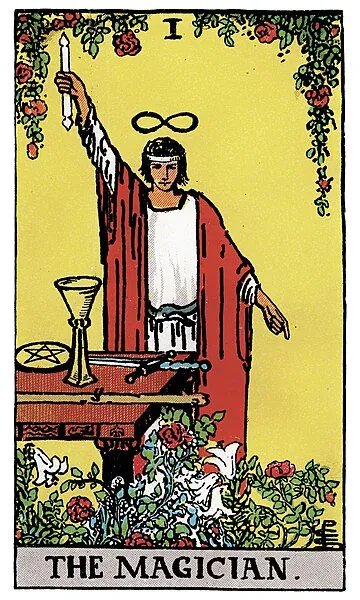
The 1 → 2 sequence — speech and silence, declaration and listening. The Magician points at the world; The High Priestess sits inside the world and listens for what it answers. The pair asks which way the current is currently running. You have done the speaking; now do the listening. Or, less often, you have been listening for so long that an act of declaration is overdue. They are siblings, opposites, and necessary to each other.
The Empress
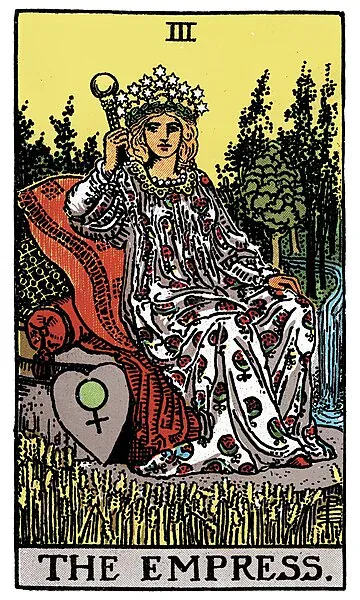
The 2 → 3 sequence — the hidden becoming pregnant, the seed becoming flesh. The High Priestess holds the silent knowing; The Empress brings the knowing into form. An interior process gestating in private is ready to enter the visible world. Among the deck's most fertile pairings. Do not rush the emergence; The Empress's manifestation is real precisely because The High Priestess held it in stillness for long enough.
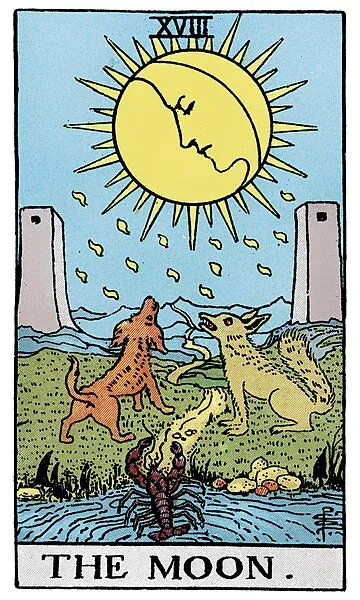
The Moon
Pure lunar water — clear seeing meets distorted seeing. The High Priestess is the moon at her station; The Moon is the moon refracted through dream, fear, and projection. Together they ask whether you are reading the situation through Priestess stillness or through Moon distortion. The same person, the same job, the same opportunity look very different through each. Intuition is quiet; anxiety dressed as intuition is loud. Learn the difference.
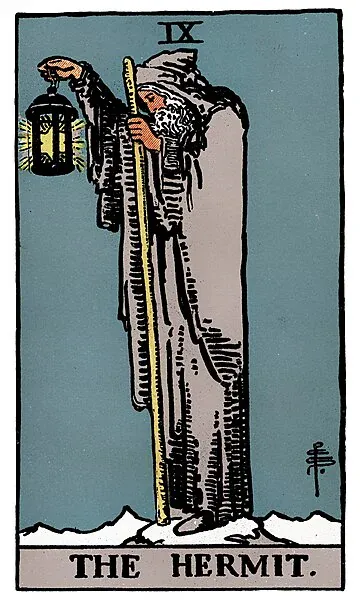
The Hermit
She is the door; he is the lamp. The High Priestess holds the threshold; The Hermit walks the inner road carrying his own light. Together they describe the seeker on the long, solitary, unwitnessed path of inner work. The advice is simple: continue. The work is yours. Outsiders will not understand, and their not-understanding is not the problem — it is the natural perimeter of the work.
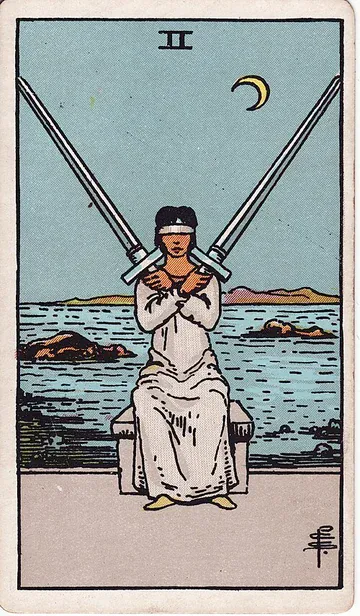
Two of Swords
The two number-2 cards — both pause to see, both sit between two pillars, both refuse to act prematurely. But the Two of Swords is blindfolded; The High Priestess is veiled. The blindfold is the refusal to see; the veil is the threshold of accurate seeing. Together they ask which side you are on. Are you avoiding what you already know, or are you waiting for what you do not yet know to surface? One of the deck's clearest mirrors of honest waiting versus dressed-up avoidance.
Frequently Asked Questions
What is behind the veil in The High Priestess card?
Water, pomegranates, and the part of an answer that does not convert into sentences. The High Priestess is the second card of the Major Arcana, numbered 2. She represents the silent half of knowing — intuition, dream, tide, and the answer already inside you waiting for the right asking. Bound to the Moon, water, Cancer, the Hebrew letter Gimel (camel), and Path 13 from Kether to Tiphareth, she sits between the black and white pillars holding a half-hidden TORA scroll, governing the threshold between what is seen and what is veiled.
Why does The High Priestess refuse to give a straight answer?
Because the refusal is the answer. She is famously a non-answer — closer to "the wrong question" than to either yes or no. The High Priestess is the card of waiting, listening, and the answer that surfaces only in stillness. Forcing her into a binary produces a false yes or a false no. The honest read is to sit with the question longer, ask it of the body rather than the mind, and notice that the answer is usually already inside you and has been for some time.
Does The High Priestess mean my partner is hiding something?
Upright, not hiding — holding. She is the card of what is known beneath what is said — the body language, the dreams, the long pause before answering, the recognition that has not yet surfaced into language. For partnerships, she means trust the depth even when the surface is quiet. For new sparks, she asks you not to force premature naming. For singles, she suggests love is closer than your conscious mind has acknowledged but will arrive in a different shape than your criteria list expected.
If someone feels this quietly, how would I ever know?
By the register rather than the sentences. When The High Priestess describes feeling, the person is holding you in a register too quiet to broadcast — warm, watchful, real, and not yet articulate even to themselves. They have not avoided you. They have not concluded against you. They are processing something underneath that has not yet surfaced into language. The work is patience. Pressing them for declaration before the declaration has formed in them often retracts the unformed feeling. The articulation is coming and cannot be rushed.
Why is The High Priestess's path the longest one on the Tree of Life?
She walks Path 13 on the Tree of Life, from Kether to Tiphareth, the longest path on the middle pillar — and corresponds to the Hebrew letter Gimel, the camel that crosses the desert carrying its own water. Spiritually she asks: what are you carrying that does not require validation from the outside? She rewards practice that is unwitnessed and small — five minutes a day, kept private, continued without audience. The veil opens to the practitioner who has stopped performing.
Continue Reading
The High Priestess · Card overview · symbols · correspondences →
Return to the full card view — image, symbols, sensory correspondences, and Hermetic axes.
Read the reversed meaning →
Read the same depth on the opposite orientation.
Draw your reading now →
Bring this card to a question — open a quiet ritual.