
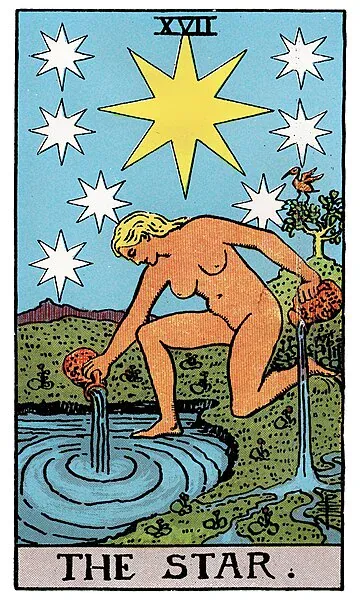
The Star · Core Meaning
The Star is the first card drawn after the Tower, and it is important to understand what this means: it does not mean the fire has gone out. It means someone is still standing at the edge of the pool, doing the work while the ashes are still warm.
In the Rider-Waite-Smith image, a naked woman kneels at the border of a pool. One foot rests on land; one dips into the dark water. Her right hand pours from a vessel into the pool — returning water to the formless source it came from. Her left hand pours onto the earth, where the water divides into five streams that run outward across the ground. Above her, one large eight-pointed gold star blazes at the center, surrounded by seven white stars arranged at a steady distance. Behind her, in a slender tree at the edge of the image, an ibis perches without moving.
She is naked. This is not the nakedness of the World card's triumph — the dancer wrapped in her sash, arms wide. This is the nakedness of the Tower survivor who took the armor off at the pool because armor, at a pool in the dark, is only weight. The card's signature tension lives here: she is utterly exposed, and utterly doing the work anyway. The Tower would have required the armor. The Star does not. Whatever she defended herself with in the previous card — the certainties, the pride, the elaborate self-protection — has been set down at the water's edge. The pool receives her as she is.
The Great Star above her — the eight-pointed gold star — is not a comfort. It is a bearing. Eight points in the medieval alchemical tradition indicate the Stella Sapientiae, the first geometry to surface from chaos: no warmth in it, no hour of day or night, only direction itself. It does not belong to any particular hour of day or night; it belongs only to the quality of direction. The Seven Lesser Stars surrounding it are the seven classical planets, watching from above in silence. They witness; they do not intervene. The sky is populated, but the work at the pool's edge belongs to the figure alone.
The Two Vessels together complete a single cycle. Right hand into the pool: returning to the formless, the unmanifest, the deep unconscious current that runs beneath everything. Left hand onto the earth: becoming usable form, the five streams of the five senses re-opening to a world that recently burned. The cycle requires both motions. Pouring only into the pool is dissolution — the self dissolves back into the undifferentiated source without producing anything the world can receive. Pouring only onto the earth runs dry — the exterior work depletes the interior well. The Star holds both in the same breath, maintaining the equilibrium that the Tower's collapse made suddenly necessary.
The Five Streams dividing on the land are worth attention. Water poured from one vessel onto one earth does not stay unified. It divides into five. This is not waste; this is the five senses reopening to the world. The seeker who has passed through the Tower's fire often loses sensory contact with ordinary reality — taste and smell and the simple pleasure of temperature become difficult to access. The five streams indicate the restoration of that contact: not all at once, not as a dramatic reawakening, but as the patient re-division of what has been poured into the specific channels the body knows.
The Hebrew letter Tzaddi — צ — is traditionally assigned to this path. Tzaddi is the fish-hook: the instrument that draws from depth. It is a simple letter, not a mother or a double, which is appropriate. There is nothing elaborate about the act of drawing from depth. It is patient. It is precise. You lower the hook and you wait. The hook does not command the depth. The hook presents itself as a tool available to the depth, and waits for the depth to offer what it will.
The kabbalistic path this card traces is path 28, from Netzach to Yesod. Netzach is the sphere of desire and emotion — Victory, in the sense of feeling's own overriding momentum, the sphere where the desire to love, to create, to reach overcomes everything else. Yesod is Foundation, the Moon sphere, the dream-layer where images form before they solidify into the physical world. The Star moves between wanting and dreaming — not yet the solid world, but already past the raw chaos of the Tower's fall. On path 28, the raw desire of Netzach is being translated into the dreamed image of Yesod; what the heart wants is being given form before it becomes manifest. This is the work of rebuilding: not yet the action, but the formation of what the action will eventually serve.
The astrological ruler is Uranus, the planet of sudden clarity and transmission, in Aquarius, the fixed air sign. Aquarius does not feel its way through; it perceives. It receives signals across great distances and transmits them with precision. The Star is not a water card despite being surrounded by water. She works with water as a medium. Her nature is air: clarity, transmission, the sudden break of sky through cloud. The fixed quality of Aquarius means the bearing, once found, is stable — not for one night but for a season, for the long transit that rebuilding requires.
The numerology confirms this: 17 reduces to 8. Eight is the quiet return of order — not imposed order, not the Charioteer's forced alignment, but the order that finds its way back when the false structure has been cleared. The Tower was 16. The 1 and the 6 of the Tower produce 7, and then the 7 produces the breakdown. The 1 and the 7 of The Star produce 8 — the number that often governs the structures of music, of time, of the cycles that repeat without being merely repetitive. One step beyond the Tower, and the world re-orients. Not dramatically. Quietly. The ibis in the tree records the moment.
Read The Star the way you read the first morning after an illness breaks. The fever is gone. The body is weak. The window is light. The air that comes through is not warm — it is late winter, the season the card inhabits — but it is clean. Whether to call it hope or simply the absence of crisis depends entirely on what you brought to the card. The card itself is neutral. What it does is point.
The Star · Love & Relationships
The Star in love readings does not arrive in peacetime. It arrives after the Tower — after the argument that broke the pattern, after the relationship fell apart, after the period where you stopped believing a certain kind of love was still available to you. That is the context the card carries when it enters a love reading, and ignoring that context produces a reading that is technically correct and humanly useless.
For an existing partnership that has survived a serious rupture — a betrayal, a long silence, a revelation that changed the terms of what the two people thought they were doing together — The Star describes what the season after the rupture looks like if both people choose to remain. They are not rebuilding what was there before. What was there before contained the fault line that the Tower found. They are sitting at the pool's edge in the dark, each with a vessel, trying to remember how water moves. This is not romantic, exactly. It is something more durable than romance: it is two people deciding to do the work without the assurance that the work will succeed. The card asks you to recognize this quality when you see it — in the partner who shows up to the conversation even when the conversation is difficult, in the small daily actions of maintenance that are indistinguishable from love itself.
Trust grows back in The Star's atmosphere the way hair grows back — slowly, invisibly, until one day the seeker notices that they no longer brace when the partner enters the room. The card does not promise this will happen. It describes what the conditions look like when it is beginning to happen. There is a quality of permission in the card: permission to let the wound be unhealed for a while, permission to not force the closing of something that is not yet ready to close. The five streams on the ground do not rush. They move at the pace of water finding its course.
For a new spark emerging in the aftermath of an old loss — the first genuine attraction after a season of numbness — The Star describes the exact quality of that opening. It is tentative and real at once. The armor is not all the way off. One foot is on land, one is in the water. The new person feels like a light that the seeker is not yet sure they deserve to look at. This is the card of the "soft reopening of the heart" — not the dramatic return of feeling, but the quiet, almost reluctant realization that feeling is still available. The seeker who has been through the Tower does not meet a new love the way they met the one before. They meet it the way you meet starlight: from a distance, with the knowledge that the source of the light is far and the light itself is what has traveled.
For a single seeker asking whether love is possible after a period of loss — whether the capacity has not been permanently damaged by what happened — The Star answers with a directional yes that is not a warm one. The ibis in the tree is recording the moment. The stars are above. The water is moving. None of this is an assurance that the seeker will find love on any particular timeline; it is an assurance that the conditions for finding love still exist. The instrument that draws from depth — the fish-hook Tzaddi — is in the seeker's hands. Whether they lower it into the water is the question the card puts back. The depth still has something to offer. The lowering requires a decision.
For the seeker asking about a person who seems drawn to them but cannot fully open — "drawn to you but fears opening up" is a lived experience this card addresses directly — The Star describes the internal landscape of that person. They are not indifferent. The orientation exists. But the Tower's fire in their history has installed something protective in the interior: a learned caution about the sequence of feel, open, trust, lose. The armor came off once before, at a different pool, and something happened there. They are not yet at this pool's edge. They are still carrying the armor. Be patient. The armor comes off when the person finds the pool — not when someone removes it for them.
For the seeker in a new relationship that has just passed through its first genuine difficulty — the first argument that revealed real differences, the first moment where the relationship stopped being easy and started requiring work — The Star describes the season immediately following that moment. The relationship is neither broken nor healed; it is in the process of learning its own nature. What gets poured now — into the interior source of the connection, into the exterior forms of care and communication — determines whether the water stays clear. The card is not dramatic about this. It describes the work as the work.
For the seeker in a long partnership where love has become habitual rather than felt — where the daily structure of the relationship is intact but the quality of attention between the two people has thinned — The Star describes the practice of returning to the pool. Not the dramatic gesture of renewal, not the planned romantic evening that puts pressure on the feeling to perform. The return to the pool looks like this: one person begins pouring again, quietly, without announcement, and waits to see if the other person notices the water. Often they do. Often the noticing is the beginning of the response. The card is patient about this sequence.
For the seeker asking about love after a significant loss — grief after the death of a partner, or the particular grief that follows the end of a long relationship — The Star describes the specific texture of the hope that is available in that season. It is not the hope of the fresh start, the Ace of Cups with its overflowing chalice. It is the hope of the fixed star: unchanging, directional, available to navigate by without requiring anything from you in return. The seeker is at the pool in the dark. The star overhead does not demand that they feel better. It points. They decide how long to pour before they look up.
For the seeker asking whether someone is "in love with them" — the direct question of whether the other person's feelings are substantial — The Star's answer is different from the flush certainty of the Ace of Cups or the deliberate warmth of the Nine of Cups. What The Star describes is a reliable orientation. The person has registered you. They find themselves knowing where you are in a room without looking. They think of something you said when they are doing something that has nothing to do with you. This noticing is not accidental and is not performed. Whether they have a name for it yet — whether they have allowed themselves to call it what it is — is a different question. The star does not require that you name it to navigate by it.
For the seeker asking about reconciliation with a former partner — whether to attempt a return — The Star offers a conditional opening rather than a clear direction. The question the card puts back is precise: what did the Tower find in the previous structure? If the Tower cleared away a false architecture — the relationship built on patterns that neither person chose consciously and both were harmed by — then The Star describes the possibility of building on the cleared ground. The cleared ground is honest; it is the most honest surface available. If the separation revealed an incompatibility that was always there, a structural fault that predates the Tower, then returning rebuilds the architecture that broke. The Star's water will drain through the same cracks. Reconciliation, in that case, is not the rebuilding the card describes — it is the reconstruction of what collapsed.
The Star · As Feelings
When The Star describes how someone feels about you, the first thing to understand is that the feeling carries the texture of night — clear, far, directional, without the warmth of proximity. This is not distance in the sense of disinterest. It is the particular quality of something that has been true for a long time and is still true, but has not yet arrived at you in language. The seven classical planets watch from above. The ibis records. The feeling is real and is being witnessed by something larger than it — and it knows this, and that knowledge gives it a quality of seriousness that more impulsive feelings do not have.
The figure in The Star pours in the dark, under stars, without an audience. This is how the feeling the card describes tends to move: privately, consistently, without fanfare. If the person whose feelings you are asking about is not saying much, The Star does not interpret that silence as absence. The ibis in the tree is recording the moment. The recording is internal, and the interior record is detailed.
For someone who is reserved by nature, The Star in the feelings position describes a state of quiet, sustained orientation toward you. They think about you at the times when no one is watching — in the middle of other tasks, just before sleep, when something reminds them of a specific thing you said two weeks ago. They have not figured out how to convert this interior noticing into approach. The card is explicit about this: one foot is on the land of concrete action, one foot is in the water of the felt interior. The motion has not completed. The feeling is at the pool's edge but has not yet lifted into speech or gesture.
For someone who is more openly expressive, The Star in feelings describes a steadiness that may read as less than it is. They are not swept away. They are reliably there. They find you after absences without drama. They remember what you mentioned and return to it weeks later without prompting. There is a quality the card conveys that might be mistaken for measured when it is actually precise — like a navigation star, not because it is cold, but because it has found its fixed point and does not move from it regardless of weather.
For a long bond where you are asking whether the feeling has sustained — whether what was there years ago is still present in a meaningful way — The Star is one of the most honest cards you can draw for this question. It describes feeling that has survived the Tower. Whatever upheaval happened in the relationship — the period of conflict, the lost years, the season when both people were somewhere else — the underlying orientation is intact. They still know which direction you are in. The warmth may have diminished in the ordinary dailiness of things, the accumulated small distances of a long life together, but the bearing is fixed. The Great Star does not move because of cloud cover or ordinary weather. It is still there on the cloudy nights.
For a new connection, The Star in feelings can describe someone who is startled by their own interest in you. They did not expect to notice you so sharply. The previous season — whatever it was, whichever Tower came through their life in the time before you appeared — had not left room for a new noticing. And now you are there, and they are a little disoriented by how clearly they can see you. This is the card of "renewed optimism" — the research's phrase — in its most specific form: the person who had stopped looking and found themselves looking anyway, with the exact clarity that the fixed air of Aquarius provides.
There is a nuance the card carries that is worth naming directly: The Star's feeling is directional but not possessive. The Great Star points; it does not hold. The person whose feelings The Star describes is oriented toward you, but they are not organized around you the way a more consuming or anxious feeling might be. This is healthy. It is also, occasionally, a source of bewilderment for seekers who want the feeling to be more consuming, who want to feel the pull of being urgently wanted. The card says: this is what it looks like when someone who has been through a Tower develops a genuine, post-Tower orientation toward a new person. Steady. Clear. Not theatrical.
The shadow of this feeling is the one the card's element names: air can convey light over a great distance without warming the space between. If the person whose feelings you are asking about has been burned before — and The Star's context is always after a fire — they may have learned to feel without leaning in. They carry the orientation without yet allowing it to move them into action. They are doing the pouring at the pool — maintaining the interior source of the feeling — but the exterior pouring, the motion toward you in visible and tangible form, has not yet begun. Watch for this: the feeling The Star describes is real, but it may need a gentle invitation before it makes the crossing from the interior to the shared space between you. Not a demand. An invitation. The card responds to invitations.
For the seeker asking whether a specific person is beginning to heal their feelings from a past loss — whether the heart is "coming into healing" (the research's phrase) and whether new feeling is possible from that person — the answer The Star gives is: yes, this is the shape of that coming back. The five streams re-opening the senses. The woman at the pool still doing the work of maintaining the source. The armor off, even without certainty of what comes next. The person is doing the internal work. The external turn toward you is what follows the internal work, not what precedes it. Give it the time that the card's patience implies.
For the seeker who is asking about their own feelings — whether what they feel for a particular person is genuine or a form of need produced by the Tower's aftermath — The Star offers a quiet test. Sit with the feeling at the pool's edge and ask: does this feeling point in a consistent direction regardless of your current state? A feeling that is real in The Star's register is stable across moods. It does not disappear when you are doing well and flood back when you are lonely. It is a fixed star, not a mood-dependent light. If the feeling for the person is consistent — if you find yourself oriented toward them in the ordinary mornings, not only in the difficult nights — the card confirms it as real.
The Star · Career & Work
The Star in career readings describes a particular moment: the one that follows a professional upheaval and lands in the stillness after. The restructuring happened. The project that defined a period ended badly. The role that felt permanent turned out not to be. The industry shifted in a way that made the previous skills suddenly insufficient. And now, in the aftermath, the seeker is at the edge of something — one foot on the familiar ground of what they knew, one in the less-mapped water of what comes next — trying to take the bearing from the available stars.
For someone currently in a role that survived an organizational upheaval — the restructuring happened around them, the layoffs took colleagues, but their position remains — The Star describes a period of recalibration rather than confident forward motion. The direction has clarified precisely because the old options were removed. There is a quality that some seekers in this position describe as "stagnant and monotonous": the adrenaline of the crisis has passed, the relief of having survived is wearing off, and now there is only the daily work of doing the job in a changed landscape. The Star says this is not a failure of ambition. This is the pouring season. Keep the vessels moving — maintain the interior source of what makes the work meaningful while also producing the visible output the role requires — until the direction firms up enough to walk toward something new.
For someone in job transition — between roles, searching, considering what comes next after a departure that was not entirely voluntary — The Star is the card of "living your purpose" understood at its most stripped-down: not the aspirational phrase, but the literal condition of the person who has lost the professional armor and now must decide what they actually are without it. The air is cold and clear. The eight-pointed star above points somewhere. The work is to identify which direction that is before the next structure is built — and to resist the pull of building quickly just because the openness of transition is uncomfortable.
For someone considering whether to take a new role, The Star gives guidance that is more about timing and authenticity than about whether the specific role is "right" in a measurable sense. The card asks: does this opportunity come from the direction the star has been pointing — from the long, clear knowledge of what this person's work is actually for — or does it come from the Tower's aftermath, from the urgency of the open landscape seeking any solid ground? The distinction matters enormously. A role taken out of post-Tower urgency will, when its initial novelty has worn off, reveal the same misalignment the previous role had. A role taken from a genuine alignment with the post-upheaval direction survives the ordinary difficulties of new work because the seeker knows which star they are walking toward.
For the entrepreneur or freelancer who has recently passed through a difficult period — a significant client walkaway, a product failure, a season where the work simply did not find an audience — The Star describes the practitioner who is still at the pool in the dark. Still maintaining the source. Still doing the daily work without a guarantee of the return. This is a position of genuine difficulty that the card does not minimize or romanticize. The ibis is in the tree, recording what is poured. The seven classical planets are watching from above. The work done in this season — the maintenance, the discipline, the refusal to abandon the pool because the crossing is not yet complete — is the foundation of the next stability. Nothing from the outside confirms it yet. The star confirms it. That is what stars are for.
For a creative practice — the writer, the artist, the musician who has passed through a fallow period or a painful public failure — The Star describes the morning of return to work. Not the inspired morning. The disciplined morning. The seeker who sat down and opened the notebook without knowing what would come, who moved the brush without the feeling of vision, who played the chord without hearing where it pointed — and found that the hand still knew something the mind had doubted. The Great Star points. The hand follows. This is the practice phase, and the card respects it deeply. The ibis records the practice sessions that produce nothing visible. They are being recorded. They will matter.
For the seeker asking about a job interview outcome or a specific professional application — whether an opportunity will materialize — The Star's answer is directional rather than definitive. It describes the conditions as aligned but not yet sealed. The bearing is sound; the approach is correct; the direction is one the star confirms. Whether the moment translates into this particular outcome depends on factors that exist beyond the card's view — the hiring committee, the timing, the hundred small variables that the card cannot resolve. What The Star does confirm is that the direction of effort is sound. Continue.
For the seeker asking about career alignment and authenticity — whether the work they do in the world reflects who they actually are, or whether years of professional compromise have produced a person they do not recognize in the bathroom mirror — The Star is one of the most significant cards to draw for this question. The naked figure, after the Tower, is doing the work without the professional costume. She is the Restorer: the archetype of replenishment, not of achievement. This card describes a mode of working that is service-oriented at a fundamental level — not in the sense of helplessness but in the sense of the figure who maintains the water so the world downstream can drink. If the seeker's work carries this quality of maintenance and replenishment, The Star confirms the fit and the direction. If the work feels like armoring up every morning — like putting on a version of yourself that doesn't quite fit before you can enter the building — the card suggests the armor is the wrong garment. Not that the work must change immediately, but that the direction of change is toward the pool, toward the naked maintenance, toward the work that feels like pouring.
For someone in a leadership or senior role asking about their impact or legacy, The Star describes the leader who has survived enough cycles that they no longer need to win any particular moment. They are at the pool, distributing water because the water is needed — not because they will receive credit for distributing it. This is a form of authority the card holds in high regard: the post-Tower authority that leads from clarity rather than from self-preservation, from the star's direction rather than from the short-term requirements of organizational politics.
For questions about a promotion or raise, The Star's answer depends heavily on the timing and context. After a period of organizational upheaval, the card suggests the conversation is premature — not because the seeker does not deserve it, but because the landscape has not yet settled into the configuration from which such conversations produce stable outcomes. Wait until the direction clarifies. Then approach from the position of the bearing you have taken: from the knowledge of what the work is actually for, what direction it points, what the seven stars above can confirm about the nature of your contribution.
The Star · Money & Finances
The Star in a money reading is not the card of financial arrival or windfall. It is the card of financial clarity after a period of confusion or loss — the moment when the numbers stop being terrifying and start being navigable, even if they are still difficult. The Tower may have taken the savings, or the income, or the financial structure the seeker thought was permanent. The Star arrives in the space after that fall and says: now you can see the ground. Now you can take a bearing.
The astrological signature is Uranus in Aquarius. Uranus governs sudden transmission and the breaking of old structures. In the financial context, this often describes the moment a seeker realizes that the way they had been organizing their relationship with money — the assumptions, the inherited attitudes, the unconscious narratives about what money is for and what it means about them — was itself part of what the Tower cleared. The financial situation that felt like a disaster may have been revealing a pattern that was never going to produce lasting stability. The Star arrives in the space after that revelation and says: now you can see the ground. Now the bearing can be taken.
For a seeker asking about financial recovery after a significant loss — job loss, failed investment, debt that accumulated during a difficult period of illness or crisis — The Star describes the early stage of that recovery. Not the triumph of it, not the morning when the balance has finally moved to safety, but the sustained daily work of it. The two vessels are both required: one maintains the interior source (financial self-care, preventing the spiral of despair-spending, maintaining the small reserves), one goes outward into practical form (the budget, the payment plan, the small daily discipline of attention to what is going in and what is going out). Both motions are necessary. The Star does not promise the recovery will be fast. It confirms that the direction is known and the work is appropriate to the moment.
For the question of a specific financial bet or investment under consideration — should I put money here, should I take this risk — The Star says: first determine whether this opportunity points in the direction the star points. The Aquarian air sees clearly from altitude; take the elevation. Not "will it return?" but "does this align with what I know, after the Tower, is true about my resources, my needs, and my genuine financial purpose?" Urgency is the Tower's signature. The Star does not operate in urgency. Wait for the clear view before moving money in a direction that cannot be easily reversed.
The card's financial trap is specific and worth naming: hope mistaken for exemption. The seeker who is in The Star's light sometimes mistakes the quality of orientation — the feeling of having a bearing, of knowing the direction — for having already arrived. They stop the daily work of the vessels because the star overhead must mean the crossing is complete. It does not. The star indicates direction. It does not walk the path. The external discipline of financial practice continues regardless of how clear the bearing feels from a given morning.
For a seeker in debt — carrying debt that accumulated during a period of crisis and now must be managed across years — The Star's advice is patient and concrete. Maintain both vessels. Do not pour everything outward into debt reduction at the expense of maintaining the interior source — the small reserve that prevents the desperation spending, the basic cushion that prevents the next crisis from becoming the next Tower. Maintain the emergency supply. Then pour steadily outward. The five streams on the ground are not a flood; they are five sustainable currents. Five small, consistent flows toward stability are more durable over time than one dramatic gesture.
For questions about inheritance, windfall, or money arriving from an unexpected source — a gift, an insurance settlement, an inheritance — The Star describes the appropriate relationship to that resource. The naked figure at the pool received the water she is working with from somewhere. She did not generate it through effort. She is the steward of it now. The question is: what is the most replenishing use of this resource? Not the most exciting use, not the most status-generating use — the most genuinely restorative use. What builds the well that the downstream world can drink from? Let the question sit for a season before the answer is acted upon. The star does not hurry.
The Star · Health
The Star's health signature is recovery after depletion — not the recovery of the triumphant healed body, but the recovery of the body that has survived something significant and is quietly rebuilding its capacity in the hours when no one is watching. The figure at the pool is not resting; she is working. But the work is sustainable. The scale is appropriate to the current resources. This is the health wisdom the card most consistently offers: calibrate the effort to the available vessel.
The element is air, which in the health context governs the nervous system, the respiratory system, and the cognitive-emotional interface — the place where what we think and what we feel and what we breathe all meet. The Star's health question is not "what is wrong with the body" but "what is the body's current relationship with the air it lives in." Is there enough room to breathe? Is the nervous system still running on the Tower's adrenaline — still in the heightened vigilance of crisis — or has it found the stillness of the pool?
For someone recovering from an acute illness or significant medical event — a surgery, an intensive treatment, a diagnosis that rearranged the sense of the future — The Star describes the season when the body has stabilized but the identity has not yet reorganized around the new reality. The physical work is mostly done. The deeper work of understanding what the body is now, what it needs, what its new limits and new capacities are — that work is the pouring into the pool. Do it without forcing a timeline. The seeker's relationship to their own body after a serious medical event is exactly like the woman at the pool: one foot on the known ground of what was understood before, one in the water of the unknown terrain that the event has revealed.
For someone managing a chronic condition, The Star describes the maintenance phase — not the crisis, not the dramatic intervention, but the daily discipline of the two vessels. The medication taken on time. The rest honored. The sleep protected. The food chosen. The patterns that prevent relapse maintained without resentment and without the expectation that the maintenance will ever feel like healing. The maintenance is its own form of healing even when it feels like nothing is happening. The ibis records the maintenance sessions. They are not invisible, even when they feel invisible.
The temperament the card describes is "cool sanguine — translucent and clear." This is the nervous system that runs bright rather than hot — the person who exhausts themselves through mental clarity, through the relentless pouring of precise attention into the work, without noticing the depletion until the vessel is nearly empty. This temperament's particular health risk is not the dramatic burnout but the gradual thinning: the quality of sleep that diminishes slowly over months, the appetite that becomes functional rather than pleasurable, the small sensory pleasures that fall away one by one until the seeker notices, one morning, that they have not truly tasted anything in weeks. The five streams on the ground are the card's answer to this: the restoration of sensory contact with the world. Return one sense at a time.
For mental health questions — the seeker asking whether they are beginning to recover from a depressive period, whether anxiety has genuinely loosened its grip or only temporarily quieted — The Star describes the earliest stage of that recovery. The stage where the loss of hope is no longer certain, even if the presence of hope is not yet confirmed. The lights are on at a great distance. They are visible. They have not yet warmed anything. The card says: this visibility matters. Do not minimize what you can see from here. The first morning when the world does not feel actively hostile is a significant morning. The Star is the card of that morning.
For the seeker asking about recovery from substance dependency or a behavioral pattern that has been depleting — The Star describes the daily maintenance as the primary practice. Not the dramatic moment of decision, which is the Tower's territory, but the morning after the morning after: the ongoing choice to keep the vessels moving in the right direction, without requiring the right direction to produce immediate comfort. The star provides orientation. The orientation does not produce warmth. Walk toward it anyway.
The card's health advice is the two vessels: give some care inward, to the source, and give some outward, into the visible forms of recovery that are practical and external. Too much inward becomes navel-gazing that substitutes for the action of recovery. Too much outward becomes a performance of wellness without the substance. Both motions together — the maintained interior and the engaged exterior — are how the body replenishes after the Tower's fire.
The Star · Spirituality
The kabbalistic path of The Star runs from Netzach — Victory, the sphere of emotion's pure momentum, the place where feeling overrides everything in service of its own direction — to Yesod — Foundation, the Moon-sphere where images form in the dream-layer before they descend into physical manifestation. To walk path 28 is to carry the raw desire of Netzach into the dream-world where it takes shape before becoming real. This is not ascent toward the divine; it is lateral translation. The seeker on this path is learning to carry what they love across the threshold into the form where it can be received by the world.
Spiritually, The Star describes the practitioner who has passed through a significant rupture in their understanding — the moment when the spiritual structure they had built turned out to be a Tower, and fell, and they are now sitting at the pool in the aftermath. The spiritual certainties are gone. The practices that organized the certainties may feel hollow. And yet the figure is still at the pool, still doing the work of the two vessels. This is the card's spiritual teaching: the practice continues in the dark. The ibis records what is poured. The stars orient from above. The seeker's work is to keep pouring, not to wait until the pouring feels spiritually meaningful again.
The Hebrew letter Tzaddi — the fish-hook — is the instrument that draws from depth without forcing. The hook presents itself to the depth. It waits. Patience here is not passivity; it is the quality of attention that allows the depth to yield something on its own terms rather than on the seeker's schedule. The spiritual practice The Star most naturally describes is the practice of remaining at the pool: showing up to the daily interior work without requiring it to produce visible results. The morning sits that produce nothing. The journal pages that reveal only the fog. The prayers that receive no answer. The card says these are being recorded. The ibis does not distinguish between the sessions that produce revelation and the sessions that produce silence. It records both.
A concrete practice the card invites: find thirty minutes in the early morning — before the day has fully formed its demands, before the mind has organized its agenda — and sit at the edge of something. A window, a door, a body of water if accessible. Take a vessel — a notebook, a cup, a bowl — and pour something from the interior. Write something that is not for an audience. Drink something slowly enough to actually taste it. Let the five senses reopen in the order they arrive, without directing them. Notice what the body offers when the mind has not yet organized it into productivity. This is the Star's practice: the daily restoration of the source through the simple act of attending.
The shadow the card names in the spiritual context is precise: hope mistaken for exemption. The spiritual seeker who has had a genuine opening experience — who touched the depth and felt the fish-hook draw something real — and concludes from that experience that the sustained daily work is no longer necessary. The opening was real. The star is real. The ibis recorded the opening. None of this means the vessels have been permanently filled by one experience. Thoth the scribe, the ibis in the tree, records what was poured today. Not what was poured in the year of the opening. The spiritual life of The Star is a daily action, not a historical credential. Return to the pool. Lower the hook. The depth still has something to offer. So do you.
For seekers who have lost contact with a practice they once valued — who have moved away from meditation, prayer, ritual, or whatever form the interior work took — The Star describes the path back as unglamorous. The first morning back at the pool is not an opening. It is a sitting at the edge of an ordinary pool in the dark, with the feeling that the practice has atrophied, that the skill has diminished, that the seeker is not who they were when the practice was alive. The card says: lower the hook anyway. The depth does not require you to be in peak form. It requires the hook.
The Star · Yes or No
Yes — but as a direction, not as a destination.
The Star upright is a yes-card, and it is important to understand the quality of that yes before using it. It is not the enthusiastic, warm, "go-ahead" yes of the Ace of Cups or the satisfied yes of the Nine of Cups. It is the yes of a fixed point in the night sky that tells you which way to walk: certain in its position, clear in its direction, without any promise of what is there when you arrive in that direction.
For yes-or-no questions about whether to proceed — whether to take the next step, send the application, make the approach, have the conversation — The Star answers yes. The bearing is sound. The direction is visible. The conditions for meaningful action exist. The card is not adding drama or urgency to the yes; it is simply confirming the direction. Move toward the star.
For yes-or-no questions about whether a relationship will work out, the card answers yes in the same directional sense: the conditions for the relationship to work are present. The orientation between the two people is real. Whether both people will do the daily work of the two vessels — maintaining the interior source of the connection while also pouring outward into the visible forms of care — is not something the card can resolve. The card describes the available sky. The walking under it is the seeker's.
For yes-or-no questions about whether a difficult period will improve — whether recovery is genuinely happening, whether hope is warranted — The Star is one of the clearest yes-answers in the Major Arcana. After the Tower, The Star. This is the deck's deliberate sequence. The direction toward recovery exists. The light is available. Yes.
On the question of how long the healing takes, The Star upright suggests the conditions are in place but the timeline is not compressed into urgency. Aquarius is a fixed sign. Fixed means sustained, not fast. The star has been in position for a long time and will remain in position for a long time. The arrival comes when the seeker has walked enough distance in the correct direction. Steady rather than fast is the card's timing signature.
For questions about whether to trust someone — whether a person or an offer or an opportunity is genuine — The Star upright carries its yes as a confirmation of the direction rather than an unconditional clearance. The bearing points toward trust. The trust being rebuilt, in The Star's atmosphere, is trust that is earned and maintained through the daily practice of the two vessels — the interior source of the relationship kept alive, the exterior connection maintained. This is not the all-or-nothing yes. It is the daily-work yes. Whether the seeker can bring that kind of sustained trust to the situation is the question the card puts back.
For the binary question of whether to act or wait, The Star upright says: act from the bearing. Not from urgency. Not from the Tower's aftermath. From the direction the star points. If the seeker knows the direction — if the bearing is clear — the action is warranted. If the bearing is not yet clear, wait. The star does not require your action in any particular week. It will be there when the direction becomes legible.
The Star · Advice
Take off the armor. This is the first advice, and it is specific enough to be useful: identify the protective structure you are currently wearing that is now only weight. The Tower took the structures that needed to fall. What remains from the Tower's debris is sometimes another layer of armor, put on in the immediate aftermath as protection against the next fall. Name it. Not the protection that is still serving you — the protection that has become indistinguishable from rigidity. At a pool in the dark, armor does not protect you. It prevents you from hearing the water.
Keep both vessels moving. The dual pouring is not metaphor — it is the specific instruction of the two vessels in the image. One pours into the pool: maintain the interior source. Identify what genuinely replenishes the interior in this specific season — not what should replenish it, not what used to replenish it, but what actually does it now, in the aftermath. Sleep, or particular solitude, or contact with something that makes the interior feel inhabited. Then do that consistently, regardless of whether it feels productive. The second vessel pours onto the earth: maintain the exterior work. The budget, the practice, the daily output that the life requires. Keep both moving. When one stops, the cycle breaks.
Orient to the distant star, not the nearest light. In a period of rebuilding — after a significant loss, upheaval, or failure — there is always a more proximate light available: the opportunity that presents itself because the seeker is vulnerable and will accept it, the relationship that appears because loneliness has made any warmth welcome, the plan that feels solid because the open landscape of transition is uncomfortable. Check whether the proximate light is in the direction the distant star points. If it is, proceed — the nearby and the far are aligned. If it is not, the Tower's lesson has not yet finished teaching.
Let the ibis record. The ibis in the tree witnesses without judgment — it does not celebrate the good days or annotate the difficult ones as failures. What is poured today is recorded. The sustained discipline of the daily practice — the patient, unglamorous maintenance in the months where no one notices and nothing dramatic happens — is what the star is oriented by. Not the peak moments. Not the dramatic gestures. The daily motion. A practice for the week this card appears: once each day, do one small act of pouring that has no audience and no immediate return. Fill a vessel. Walk somewhere that requires no commentary. Read something slowly. Sit near water. The star responds to sustained, unwitnessed motion more than to any single dramatic act. It has been pointing at this direction for a very long time. Your job is to walk in it.
The Star · Card Combinations
The Star combines most powerfully with cards that either amplify its directional quality, complicate its context of upheaval, or sit in significant relationship to it in the Major Arcana sequence. Because The Star is so explicitly the card that follows The Tower and precedes The Moon, its combinations with those two cards carry particular weight — as does its relationship to the cards that share its spirit of sustained, interior-sourced action.
The Star + The Tower (major-16)
The natural pairing, the one the deck arranges deliberately in sequence. When these two cards appear together in a reading, the seeker is in the middle of the transition rather than at the end of it. The Tower has done its structural work; The Star has appeared to give the bearing; the seeker is between the fall and the orientation — the fire still warm, the star newly visible, the armor recently removed and the pool recently found. The combination says: the fire and the light are simultaneous, not sequential. Trust the direction even before the ground is fully solid. The bearing is available now. Walk toward it now.
The Star + The Moon (major-18)
The Moon follows The Star in the Major Arcana and represents the territory The Star's direction leads into: the dream-layer, the unlit waters, the place where navigation requires something other than visual confirmation. When these cards appear together, the bearing The Star provides will be tested in the Moon's territory. The direction is sound; the path ahead is unclear. The waters are unlit. The figures at the Moon's edge may or may not be trustworthy. This combination says: you have the right star, and the next passage will ask you to hold the bearing in the dark without the reassurance of visible landmarks. The ibis has recorded where you are. The star has told you which way to walk. Hold both.
The Star + Nine of Cups (cups-09)
Two cards of quiet fulfillment from different registers. The Nine of Cups is personal contentment — the wish granted, the body settled, the private satisfaction of having received what was wanted. The Star is directional renewal — the bearing found after upheaval, the orientation available for the next crossing. Together they describe the seeker who has received what they wished for and, in receiving it, found a new direction forward. The granted wish has become the orientation point. The table of the Nine of Cups is the place where the bearing of The Star was found. Do not linger indefinitely at the table of the received wish; there is a direction to take.
The Star + Temperance (major-14)
Temperance is the card of measured integration — the angel with two cups, blending rather than pouring. Temperance precedes The Tower in the Major Arcana, which makes this combination interesting in a spread: it describes the seeker who was practicing the Temperance discipline — the slow blending, the patient integration, the sustained middle — before the Tower came, and is now in The Star's aftermath, rebuilding from the cleared ground with the same patient quality. The combination amplifies what both cards share: the direction is known, the method is measured, the timeline is not compressed. The patient work is the right work. Do not rush it.
The Star + The High Priestess (major-02)
The High Priestess holds what she knows in silence, veiled, between the pillars, behind the curtain. The Star translates interior knowing into outward motion through the two vessels. Together they describe the moment when the interior knowing — the thing the seeker has been holding privately, the understanding that developed in the silence of the Priestess's long patience — finally begins to move outward into form. The two vessels become the Priestess's hidden knowledge translated into the Star's motion. This is the combination of the practitioner who has studied long and in silence and is now beginning to pour the understanding outward, into the five streams that will reach the world.
Card Combinations
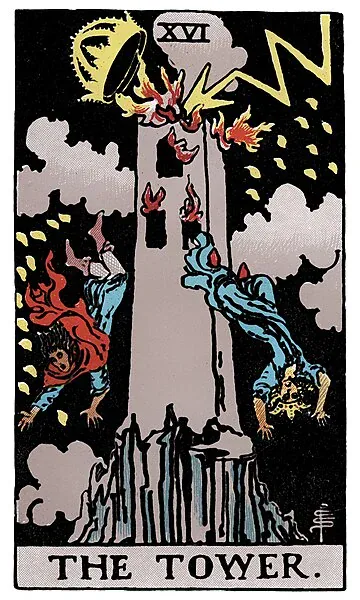
The Tower
The Tower cleared the structure; The Star arrives to give the bearing. When these two cards share a reading, the seeker is between the fall and the orientation — the fire still warm, the star newly visible. The crossing has begun. The direction is real even before the ground is fully solid beneath it. Trust the bearing while the smoke is still present.
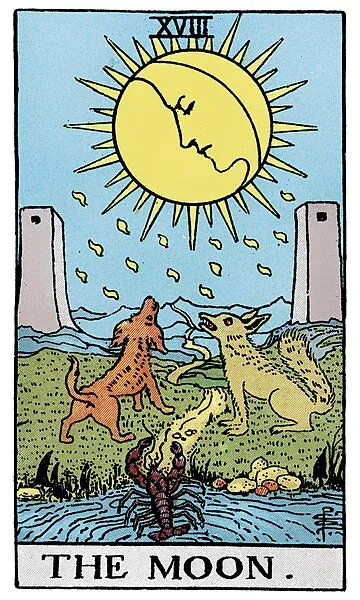
The Moon
The Moon follows The Star in the Major Arcana, and the pairing is the sequence of the crossing: direction given by The Star, tested in the Moon's lightless waters. The bearing is sound; the path ahead requires navigation by something other than visual confirmation. The star will be behind cloud for portions of this passage. Hold the direction that was given before the dark began.
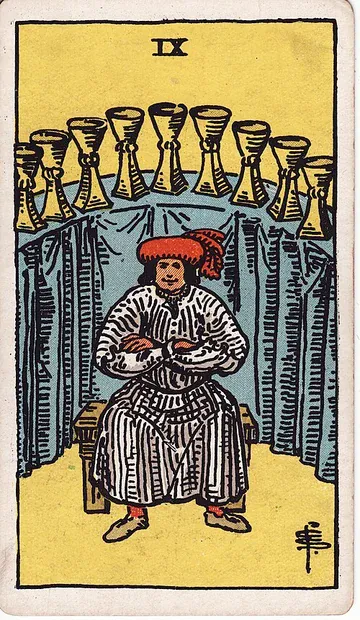
Nine of Cups
The Nine of Cups is the wish granted in private stillness; The Star is the direction that emerges from upheaval's aftermath. Together they describe the seeker who received what they wished for and found in the receiving a new orientation — the granted wish became the bearing point. Stay at the table long enough to receive, then take the direction the receiving reveals.
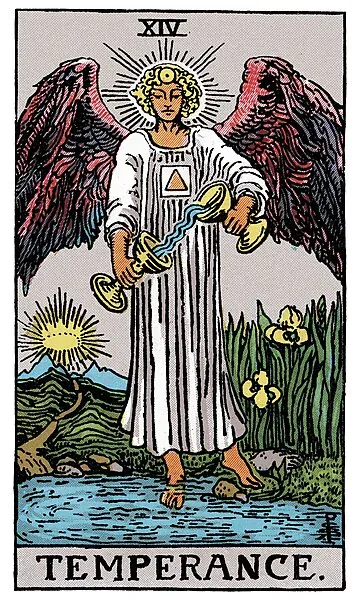
Temperance
Temperance and The Star share the quality of patient, measured motion — the angel blending two vessels, the woman at the pool maintaining two vessels. Together they describe the sustained, unglamorous discipline of someone who has survived the Tower and is rebuilding from the cleared ground. The timeline is long. The method is measured. The direction is genuine. Neither card rushes.
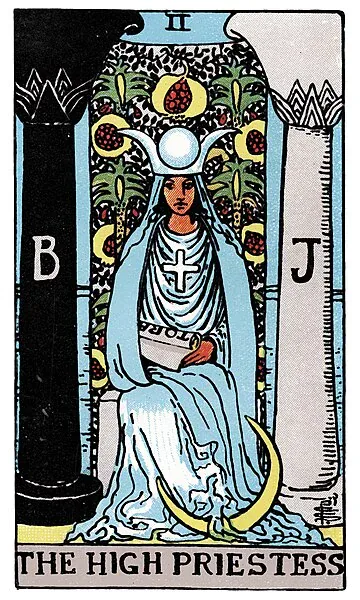
The High Priestess
The High Priestess holds the interior knowing veiled in silence; The Star translates interior knowing into outward motion through the two vessels. Together they describe the moment when what has been held privately begins to pour outward — the understanding the Priestess guarded is ready to become the five streams on the ground. The crossing from the interior to the visible world begins here.
Frequently Asked Questions
What does The Star tarot card mean?
The Star is the Major Arcana card that arrives after The Tower — after the collapse, after the false structure falls. It describes the first moment of orientation in the aftermath: the bearing becomes visible, the armor can come off, the direction is available. The naked woman at the pool is still doing the work of the two vessels, in the dark, under the light of the eight-pointed gold star. The card is not warmth or arrival; it is the confirmed direction. The crossing continues — now, at least, the seeker knows which way.
What does The Star tarot mean in love?
In love readings, The Star describes love rebuilding after upheaval — either a serious rupture in an existing partnership that the two people are choosing to survive, or a new connection emerging from the aftermath of an old loss. The card's love quality is the soft reopening of the heart: tentative, genuine, one foot on land and one in the water. It does not promise warmth or ease. It describes the conditions for trust to grow back — slowly, invisibly, through the daily maintenance of the two vessels.
Is The Star a yes or no card?
The Star upright is yes — but a directional yes, not a confirmed arrival. The card confirms the bearing is sound and the direction is real. For questions about whether to proceed, whether conditions are right, whether recovery is possible: yes. The star points toward the answer you are hoping for. The walking toward it is still the seeker's work. A thunderous yes is not The Star's style; its yes is fixed, quiet, and reliable — the way a navigation star is reliable.
What does The Star mean as feelings for someone?
When The Star describes someone's feelings toward you, it indicates a steady, private orientation — the kind of feeling that has found its fixed point and does not move from it regardless of weather. They think about you in the unwitnessed moments. They find themselves knowing where you are in a room. The feeling is precise rather than consuming, directional rather than theatrical. One foot is still in the interior water; the motion toward you has not yet completed. The feeling is real. It needs a gentle invitation, not a demand.
What is the spiritual meaning of The Star?
Spiritually, The Star traces path 28 on the Kabbalistic Tree of Life, from Netzach (the sphere of desire's momentum) to Yesod (the dream-layer where images form before they become real). Its Hebrew letter is Tzaddi — the fish-hook, the instrument that draws from depth without forcing. The spiritual practice is daily maintenance of the interior source: showing up to the pool, lowering the hook, keeping both vessels moving regardless of whether the practice feels alive. The ibis records the unglamorous days. They matter as much as the opening ones.