The Tower · Core Meaning
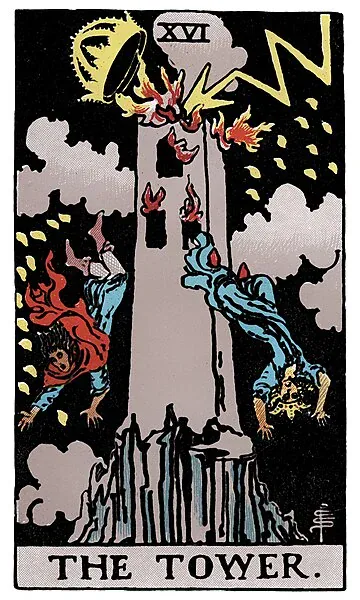
The Tower tarot meaning begins with a sound before it becomes an idea: the crack of lightning against stone. The Tower tarot card shows a black sky, a barren crag, a stone tower too narrow for the height it has claimed, and a crown struck off the roof as if authority itself had been misplaced. Fire bursts from three windows. Two figures fall head-first through the dark. Around them drift twenty-two flames shaped like Yod, each small tongue of fire a syllable of truth released after the wall splits. The scene is not subtle. It is not polite. It is the moment a structure can no longer pretend to stand.
The Tower is often feared because it does not negotiate. Yet the card is more precise than terror. Lightning does not invent the fissure; it reveals the fissure already running through the masonry. The false height, the isolated peak, the crown on the building instead of a living head, the windows burning from within: every detail says that the collapse has been prepared by design, pride, silence, denial, or a story too brittle to hold a human life. The bolt arrives all at once, but the failure is old.
The traditional signature confirms the force of the image. The Tower belongs to Mars, to fire, to the late autumn of sudden storms, to the choleric temperament that ruptures before it explains. Its metal is iron. Its scent is ozone, saltpetre, charred wood. Its Hebrew letter is Peh, the mouth: speech that breaks open. On the Tree, it is path 27 from Netzach to Hod, a road between desire and form, between the beauty of attachment and the architecture of thought. When that road is blocked by false structure, the mouth becomes thunder.
The numerology deepens the same motion. Sixteen reduces to seven, and in this card the seven is not a serene mystic but a necessary unbuilding. The journey position matters: after the Devil's prison, after the chain and the consent to bondage, the lightning arrives as a violent mercy. The prison does not unlock itself with a ribboned key. It is broken from above, and the first experience of freedom may feel like falling.
Readers sometimes type The Tower reversed while looking for a softer version of the card, but upright Tower is already more complex than catastrophe. It can name a breakup, an exposed lie, a job loss, a diagnosis, a failed launch, an eviction of a belief from the house where it had lived for years. It can also name the moment a family secret stops ruling the room, the morning a bad contract is finally seen clearly, the nervous system refusing to keep smiling, the emergency repair that begins because the roof has opened and rain is coming in.
The card's mercy is not sentimental. It is structural. The Tower does not say every collapse is good. It says false foundations carry a cost, and the cost eventually becomes visible. In a spread, read it as revelation before ruin, ruin before rebuilding, shock before honest ground. Ask what has been held upright by fear, vanity, habit, or silence. Ask where the crown has been placed on stone instead of on a living head. Ask what truth has been burning behind the windows, waiting for air.
It is worth distinguishing The Tower from Death. Death is organic ending, the season's scythe, the long road where form changes because time has completed its work. The Tower is architectural. Something was built, named, defended, maintained, decorated, insured, explained. Then the design fails under truth. Death may be quiet. The Tower is rarely quiet because it exposes not only an ending but the arrogance of the old construction.
It is also worth distinguishing The Tower from the Devil, the card immediately before it in the Major Arcana sequence. The Devil shows the chain while the figures still stand. The Tower shows the wall breaking around them. The shock can feel harsher than bondage because bondage, by the time the Devil appears, has become familiar. The Tower's gift is the loss of that familiarity. The false shelter stops sheltering. The open sky becomes frightening and possible at once.
In practical readings, give this card physical respect. Look for documents, dates, systems, bodies, thresholds, load-bearing roles, and subjects no one wants to name. The card often operates through the ordinary world: a phone call, a failed inspection, a message screenshot, a spreadsheet, a medical appointment, a locked door, a public mistake. The lightning is mythic; the place it lands is usually specific.
The Tower · Love & Relationships
The Tower love question usually arrives after the first crack has already sounded. In relationships, The Tower does not describe ordinary tension or the small weather of two people learning each other. It describes structural failure: a revelation, a rupture, a conflict that exposes the load-bearing lie, or the sudden knowledge that the relationship has been built on an arrangement the heart can no longer inhabit.
For an existing partnership, The Tower can name the argument that is not really about the dishes, the text, the late return home, or the money. It is about the architecture. One person has been living in a tower of explanations; the other has been bracing the wall. The lightning may be an affair discovered, a truth spoken after years of swallowing, a counselor's room where denial finally runs out of furniture. The card asks both people to stop repairing the wallpaper and inspect the foundation.
For a partnership held together by politeness, The Tower is the end of the elegant performance. There may be no villain. There may be kindness, shared history, good manners, a calendar full of obligations, and a private desert underneath. The card says the crown has been placed on the image of the relationship rather than on the living bond. The collapse may be a mercy because it returns both people to breathable air.
For a new connection, The Tower can feel like sudden heat: attraction that arrives like lightning, a confession too early, a speed that reveals what both people have not yet built. This is not always a warning against the connection. It is a warning against false height. If the bond has only a few stones and both people are already speaking as if it were a citadel, the card asks for ground. Let revelation happen, but do not mistake intensity for architecture.
For the solo seeker, The Tower can describe the moment a fantasy about love breaks. The fantasy may be about a specific person, a type, a rescue story, or a private vow never to need anyone again. The falling figures are not proof that love is unsafe; they are proof that the tower you built around love was never a home. The card asks what love becomes after the false height comes down.
For love after a wound, The Tower often appears when the old survival structure stops working. The rules that protected you after betrayal, grief, or abandonment may now be trapping you. The lightning is not the new lover; it is the shock of realizing that the old defense has become the new prison. The card invites no sentimental leap. It asks for controlled demolition: remove the dead scaffolding before it injures the living bond.
For reconciliation, The Tower asks an unromantic question: what exactly is being rebuilt? If the old structure collapsed because truth was missing, returning to the same rooms with fresh paint is not reconciliation. It is nostalgia with better lighting. A return is meaningful only if both people can name the fissure, the crown, the fire in the windows, and the ground that was ignored. Without that, the aftershock repeats.
For long-distance or cross-cultural love, The Tower can mark the first collision between beautiful private feeling and the hard structure of lived reality: visas, families, languages, money, time zones, religious expectations, obligations to children or elders. The card does not mock the feeling. It says feeling alone cannot hold the tower up. A real bridge needs engineers, calendars, documents, and a willingness to see where romance has been doing the work of logistics.
For household pressure, The Tower may show the moment the home itself becomes the storm. A move, a shared lease, a pregnancy, a sick parent, a financial emergency, or an inherited family pattern can strike the crown off the relationship's self-image. The question is not whether the household remains perfect. It is whether the relationship can stop pretending perfection was ever the measure of love.
For desire mismatch, The Tower exposes the body truths no one has wanted to say. One person wants touch; the other wants space. One wants commitment; the other wants the freedom to remain unclaimed. One wants children; the other wants the life before children to continue indefinitely. The card is harsh only because desire has been made unspeakable. Peh, the mouth, breaks open here. The body has been speaking all along.
For the pursuer-distancer loop, The Tower is the crash after too much running and too much hiding. The pursuer may finally stop chasing because humiliation has become visible. The distancer may finally feel the emptiness of the room they kept protecting. Neither person is asked to perform repentance for drama's sake. Both are asked to stop treating instability as proof of depth.
For the question, "Do they love me?" The Tower answers by changing the question. Love may be present, but love is not the only load-bearing material. A person can love you and still live inside a false structure. A person can be shocked by their feeling and respond defensively. A person can confuse the adrenaline of rupture with devotion. Read the card as a demand for truth before reassurance. If love survives the lightning, it earns a different name.
For secrecy, The Tower is one of the clearest exposure cards. The secret may be a relationship, a debt, a desire, a resentment, a relapse, a family history, or a private plan. What matters is the pressure secrecy has placed on the bond. When love requires a hidden room, the hidden room eventually becomes the building's weakest wall.
For couples who want to stay together after Tower weather, the path is narrow and real. The work is not to prove the rupture was not serious. The work is to let its seriousness reorganize the relationship. New agreements, outside help, financial clarity, sexual honesty, family boundaries, and changed conflict rituals may be needed. Sentiment cannot replace masonry.
The Tower · As Feelings
The Tower as feelings is shock in the nervous system. The person may feel struck, exposed, destabilized, or unable to keep the old story intact. This is not the calm warmth of a cup card or the measured choice of a swords card. It is the body realizing that a wall has opened. Feelings under The Tower are often real, but they arrive with alarm, defensiveness, and the aftershock of revelation.
For a reserved person, The Tower can look like sudden withdrawal. Their silence may not mean absence of feeling; it may mean the feeling has hit a structure they use to stay composed. They are trying to hold the crown on the roof with both hands while the bolt is still inside the stone. Do not romanticize the silence, but do not misread it as simple indifference either.
For a demonstrative person, The Tower can appear as intensity that spills everywhere. They may confess too much, argue too loudly, send the message at an hour when sleep would have been wiser, or turn every feeling into an emergency meeting. The emotion is not necessarily false. The container is failing. The card asks whether the feeling can survive when the dramatics end.
For a long bond, The Tower as feelings often marks the collapse of an old perception. Someone who thought they knew you may suddenly see what they had refused to see. Someone who felt secure in the pattern may realize the pattern was built on your silence. The feeling is a mixture of grief, awe, panic, and recognition. The relationship has not become unfamiliar; it has become visible.
For a new connection, the card can describe being unnerved by attraction. You may represent a force that breaks their planned life open. They thought they knew their type, their timing, their availability, their rules. Then the lightning hits. This can be compelling, but it is not automatically mature. A feeling that strikes like lightning still has to learn how to live on the ground.
For conflict aftermath, The Tower indicates a person still inside the blast radius. They may feel ashamed, angry, relieved, exposed, or unable to sort the true injury from the noise around it. The most honest sign is not the first message after the fight. It is what they can name after the aftershock: what cracked, what was already cracked, what they refuse to rebuild in the same shape.
For no-contact or distance, The Tower can mean the silence itself is part of the collapse. The old route between the two people is gone. A person may be using absence to avoid falling further, or they may need absence because the revelation was too large to process under observation. Either way, the card does not encourage surveillance of the smoke. It asks what the silence is revealing about the structure that came before it.
For the person who caused the rupture, The Tower as feelings may carry guilt with a defensive edge. They know the stone broke under their hand, but part of them wants to blame the lightning, the weather, the timing, the other person's reaction. The card says their feeling is not pure remorse yet. It is shock learning whether it has the courage to become accountability.
For the person who was struck by another's confession, The Tower can describe the stunned clarity that comes after being lied to, chosen, rejected, desired, or seen. The feeling may be painful because it is clean. It removes the haze. There is grief in this card, but there is also the strange relief of not having to doubt your own perception anymore.
For an avoidant or highly controlled person, The Tower is the feeling they most fear: loss of control. They may experience desire as invasion, intimacy as structural risk, truth as a storm at the window. If you are reading about such a person, the card advises restraint in interpretation. Their feelings may be strong and still not available. The bolt is not the same as a bridge.
For feelings after a confession, The Tower can mark the strange relief that comes when truth has already done the thing everyone feared. The person may still be shaken, but the exhausting work of concealment has ended. This is not peace yet. It is the first clean breath after a window breaks.
Sometimes the question is not about the one who fell but about the one who stood on the road and watched. A friend, sibling, colleague, or former partner may carry a strange mixture while your structure comes down: relief at having been right, guilt about the relief, fear that their own walls are made of the same stone, and a tenderness they cannot find a way to deliver. Their distance in those weeks is rarely judgment. It is closer to superstition — nobody wants to stand near a bare crag in a storm. Read the card here as a description of contagion anxiety rather than of loyalty. The ones who walk toward you while the smoke is still rising are telling you something exact about what they are built from.
The feeling texture, then, is not "they are calm" or "they are safe." It is revelation moving through an unprepared structure. Ask whether the person can speak after the lightning. Peh, the mouth, is the hidden key. If they can name the truth without turning it into spectacle, the falling becomes a beginning. If they cannot, the feeling remains trapped in the collapsing tower.
The Tower · Career & Work
The Tower in career and work readings points to structural upheaval: a company restructuring, a role that suddenly ends, a project exposed as unsound, a startup pivot forced by reality, a public mistake, or the private recognition that the ladder you have been climbing leans against the wrong wall. The card is not interested in office mood. It is interested in foundations.
For a current role, The Tower asks what has already been failing. The sudden meeting, the change in leadership, the budget cut, the conflict with a manager, the impossible workload: these may feel like lightning, but the cracks likely predate the strike. The card asks you to document, observe, and separate your actual work from the story the institution tells about itself. What stands after the bolt is useful information.
For a new role decision, The Tower warns against being seduced by height. A bigger title, a more glittering company, a public-facing position, or a dramatic leap can still be built on a barren crag. Read the offer for structural integrity: reporting lines, runway, governance, values under stress, how mistakes are handled. The crown on the roof is not proof of a kingdom.
For a founder or startup worker, The Tower often appears at the pivot point when the old thesis fails. The market does not want the product as imagined. The capital is thinner than the deck claimed. The cofounder agreement cannot hold the strain. The card does not say the work is dead; it says the pitch-deck tower has met weather. Emergency repair is useful only if the foundation is honest. Otherwise, controlled demolition saves time.
For a freelancer or consultant, The Tower can mark the loss of a major client, a platform change, a contract rupture, or the discovery that one income stream carried too much weight. The falling figure is not personal failure. It is concentration risk made visible. The practical wisdom is plain: diversify, put agreements in writing, keep reserves, and stop calling fragility flexibility.
For a creative worker, The Tower describes the critique that cannot be unheard, the failed launch, the public backlash, or the inner admission that the work has been serving vanity instead of truth. This is brutal and useful. Art sometimes needs lightning. The card asks what part of the practice survives without applause, without the crown, without the tower of identity built around being seen.
For a student or apprentice, The Tower can be the collapse of a plan: the program is not what it promised, the mentor disappoints, the field no longer fits, the exam result changes the route. The card does not reduce your path to one institution. It asks what learning remains when the chosen tower loses authority. Sometimes the education begins when the official structure fails.
For a manager or leader, The Tower is a warning about systems you inherited and systems you built. If your team is burning out, if information travels through fear, if dissent has been made expensive, the crown is already loose. A leader under The Tower must listen before the collapse becomes public. The card's mouth symbolism matters: truth not spoken becomes thunder.
For care, teaching, nonprofit, ritual, or service work, The Tower often points to moral injury. The mission language is beautiful; the staff are exhausted. The institution says care while quietly consuming the carers. This card asks for an honest audit of capacity, pay, boundaries, and the private cost of being good. A noble tower can still be structurally unsound.
For promotion questions, The Tower asks whether the promotion is actually an elevation or a move into the roof that the lightning strikes first. More visibility can mean more authority; it can also mean becoming the crown on a building already cracking. Take the role only with clear power, clear support, and a refusal to inherit hidden failure as a personal test.
For layoff, transition, or forced exit, The Tower names the shock without turning it into identity. Losing the role may feel like falling because the role carried more than income: status, rhythm, belonging, proof. The card asks for triage first, meaning later. Secure documents, contacts, references, benefits, money. After the aftershock, ask what part of you had been trapped in that tower.
For cross-functional teams or political workplaces, The Tower exposes the hidden conflict between departments, incentives, and truths. A project can fail not because the people lack talent but because the structure asks each group to protect a different crown. The card suggests less performance and more architecture: who owns the decision, who carries the risk, who speaks when the window begins to burn.
For people whose work identity has become spiritual armor, The Tower is especially sharp. The title, mission, craft, or public competence may have become the tower that keeps ordinary vulnerability away. A career collapse under this card can feel like annihilation because the work was carrying the self. The repair begins by separating livelihood from existence. You are not the roof. You are the person standing after it opens.
For job search after Tower weather, move slower than fear prefers. A sudden exit can create hunger for any structure that looks stable. Read the next opportunity for foundations rather than height. Ask about the manager, team turnover, decision-making, money, expectations, and the real reason the seat is empty. The next tower should be chosen from ground level.
The Tower · Money & Finances
The Tower in money and finances is the emergency repair card. It can describe a sudden expense, a lost income stream, a failed investment, a tax letter, a roof leak, a medical bill, a business cash-flow break, or the frightening clarity that the budget has been balanced on false height. The card is not here to shame. It is here to reveal the structure.
For personal budgets, The Tower asks where the numbers have been decorative. If an account looks fine only because a bill has been delayed, if a lifestyle works only when nothing goes wrong, if debt has been renamed convenience, the lightning is already in the room. The first act is not panic. It is inventory. Put every stone on the table: balances, due dates, interest, income, obligations, reserves.
For savings and emergency funds, The Tower is blunt: the reserve matters. The card's imagery is a building on a barren crag; there is no garden below, no soft landing, no village visible. A reserve is the ground you prepare before the fall. If a reserve exists, use it without shame and rebuild it deliberately. If it does not, let the card become the reason the next structure includes one.
For investments and speculation, The Tower warns against leverage, false narratives, and the intoxication of height. A position that depends on endless upward motion is a crown waiting for weather. The card does not forbid risk. It demands that risk be named honestly. If the loss would collapse the whole tower, the bet is not a bet; it is a structural flaw.
For shared money in relationships, The Tower can expose hidden spending, unequal labor, private debt, family pressure, or a plan one person understood differently from the other. Money becomes the lightning because money records what speech avoided. Peh, the mouth, is needed before the statements become thunder. Bring the numbers into the open. Let embarrassment be cheaper than collapse.
For business money, The Tower asks whether revenue, pricing, payroll, taxes, and obligations can survive a shock. A business may look tall because invoices are large and still be fragile because payments arrive late, margins are thin, or one client holds the load. The card's wisdom is operational: shorten the feedback loop, renegotiate early, cut vanity spend, preserve payroll if possible, and stop mistaking visibility for stability.
For debt recovery, The Tower can be the frightening but useful moment when denial ends. The total is named. The minimums are no longer fog. The call is made. The repayment plan begins. This may feel humiliating because the crown has been struck off the idea of being fine. Yet the first honest number is the first stone of the new foundation.
For a major purchase, The Tower says wait unless the purchase is part of necessary repair. A house, car, renovation, tool, or move should be examined for hidden structural cost. If the roof is already burning, buying a chandelier is not restoration. If the purchase prevents a larger collapse, act with discipline and documentation. The difference is not glamour; it is function.
For financial dependence, The Tower can reveal how much of one person's security rests inside another person's tower. A partner's income, a parent's support, an employer's goodwill, a landlord's patience, a client's renewal: none of these are wrong in themselves. The risk begins when dependence is denied. Name where your shelter comes from. Then decide what part of the ground needs to become yours.
For shame around money, the card is fierce because shame is one of the materials false towers use. People hide numbers not only because numbers are bad, but because numbers threaten identity. The Tower strips identity from arithmetic. A debt is a debt. A loss is a loss. A repair is a repair. Once the moral fog clears, the work becomes smaller and more possible.
The money lesson is hard and clean: build for weather. The Tower does not ask for fear-based hoarding. It asks for truthful architecture. Insurance, reserves, written agreements, boring maintenance, sober limits, and a willingness to see risk before the bolt lands are not unspiritual. They are the stones that keep a life from becoming a cliff.
The Tower · Health
The Tower in health readings describes the body as alarm bell: sudden stress, acute disruption, a somatic refusal to keep carrying a false structure, or a moment when the nervous system makes visible what the calendar has been hiding. This is not medical diagnosis. It is the card's image applied to attention: lightning, rupture, fire in the windows, the body saying the tower cannot hold.
The card's elemental signature is fire, Mars, iron-black and scarlet, the choleric temperament that ignites quickly. In the body, that can feel like inflammation, pressure, heat, urgency, adrenaline, accident-proneness, clenched jaw, racing pulse, sudden exhaustion after a long period of overdrive. The Tower asks what has been burning behind the windows while daily life kept its face composed.
For acute symptoms, the card advises respect for the alarm. Do not use spiritual language to bypass a bodily signal. If something is sudden, severe, dangerous, or frightening, seek appropriate care. The Tower is not subtle; neither should the response be vague. Emergency repair belongs to emergencies. The card's wisdom is the end of minimizing.
For chronic stress, The Tower can describe the crash after months or years of holding the wall. The deadline passed, the caregiving season ended, the relationship shifted, the job changed, and only then did the body collapse into illness, insomnia, pain, or numbness. The lightning may arrive after the storm because the body finally has permission to fall. Recovery asks for structure, not just rest: appointments, food, sleep, reduced load, honest boundaries.
For mental health, The Tower names the moment a coping structure fails. The mask slips. The old story no longer works. Anxiety spikes, grief breaks through, anger becomes audible, dissociation cracks, or the need for help becomes impossible to deny. This can be frightening and also clarifying. The card does not romanticize breakdown. It says a breakdown may be information about an arrangement that was never humane.
For trauma patterns, The Tower can appear when a trigger is not merely a trigger but a revelation of old architecture. A present event strikes the crown from an old survival tower. The body falls into the past. The work is gentle and skilled: grounding, support, therapy if available, a slower pace than the storm demands. The card asks for witnesses who know the difference between catharsis and care.
For burnout, The Tower is almost literal. The windows burn because the interior has been used as fuel. If work, family duty, activism, creativity, or caretaking has consumed the person doing it, the collapse is not weakness. It is physics. The first repair is subtraction. Remove load before adding rituals. The tower does not need more candles; it needs fewer fires.
For recovery, The Tower asks for the humility of rebuilding on the ground. After an acute episode, injury, panic cycle, or stress crash, the old pace may be unavailable. That can feel like humiliation if the old identity depended on height. The card suggests a different dignity: small routines, honest limits, practitioners who listen, friends who do not demand performance, and a body no longer forced to be architecture for a false life.
For people trained to override their bodies, The Tower can feel insulting. It interrupts the narrative of being reliable, strong, needed, disciplined, exceptional. The card asks a hard question: who benefits when your body is treated as a tower rather than a living creature? If the answer is an employer, family system, public identity, or inner tyrant, the health reading has already become structural.
For accidents and sudden disruptions, the card asks for sober aftermath. What condition made the accident more likely: speed, fatigue, anger, poor maintenance, distraction, unsafe equipment, ignored weather, an overloaded schedule? Not every accident is symbolic. Still, the card is interested in architecture. It asks what can be changed so the body is not asked to trust the same failing design.
The health message is not doom. It is attention. The body is often the first window to flame when the rest of the life refuses truth. Listen before thunder becomes the only language left.
The Tower · Spirituality
The Tower in spirituality is revelation without ornament. The card shows the moment a false sacred structure breaks: the teacher loses the halo, the belief cannot hold suffering, the ritual no longer covers the wound, the identity of being awakened becomes another crown on another roof. The lightning is not punishment. It is the rude mercy of truth arriving faster than the ego can curate it.
Mars gives the card its force, but Peh gives it its spiritual key. The mouth opens. A sentence is spoken. A name is named. A vow is broken because it was built on fear. A prayer becomes a shout. The Tower's path from Netzach to Hod suggests a passage between desire and language, between the heart's attachment and the mind's form. Spiritual collapse often begins when the words finally match the lived truth.
For a seeker leaving a tradition, The Tower can describe the grief of losing the house where meaning once lived. This may be a religion, a lineage, a teacher, a community, or a private cosmology. The card does not mock the house. It asks which stones were true, which were fear, which were borrowed authority, and which can be carried down the mountain for another building.
For a seeker inside an active practice, The Tower may be the end of spiritual performance. The altar is beautiful, the language refined, the symbols correct, but the life has not become more honest. The card strikes the crown from spiritual self-image. It asks for one practice that cannot be photographed: confession in a journal, apology, silence, restitution, a walk without headphones, thirty minutes sitting with the truth you keep aestheticizing.
For shadow work, The Tower is the moment the hidden room is opened by force. The figures fall because they lived too high above the ground. Spiritually, this can mean the descent into ordinary life: dishes, money, body, family, repair, consequence. The sacred is not only in the lightning. It is in how stones are relaid after the smoke.
The card's mythic echoes are old: Babel, Phaethon falling, Lucifer cast out of heaven, the Zen master's shout that wakes the pilgrim. Each story warns against false height and each contains a strange gift. Something inflated returns to scale. Something proud meets gravity. Something asleep wakes through shock.
The Tower also asks for humility about enlightenment. Sudden insight can become another crown if the seeker performs it too quickly. A revelation posted before it is integrated, a confession used to control the audience, a dramatic exit staged as purity: these are new towers made from the rubble of the old. The card's deeper spirituality is quieter. Let truth make you more accountable, not more impressive.
A simple Tower practice: choose one false sentence and write the true one beneath it. Not a grand confession. One sentence. Then act on the smallest consequence of that truth within twenty-four hours. Cancel the appointment, make the call, move the money, apologize, leave the room, ask for help. The spiritual work of The Tower is not to admire revelation. It is to let revelation change the architecture.
After the practice, do something ordinary with care. Wash a cup. Sweep glass. Pay a bill. Answer one honest message. The Tower's spirituality returns the seeker to matter because matter is where truth proves itself. If revelation does not change how a person handles the next small obligation, it has remained weather instead of becoming wisdom.
The Tower · Yes or No
No -- unless the question is whether the break has already begun.
The Tower is one of the clearest no-cards for questions that ask whether a current structure is stable, safe, easy, or ready to continue unchanged. If the question is "Can this keep going as it is?" the answer is no. If the question is "Is the foundation sound?" the answer is no. If the question is "Should I keep pretending the crack is cosmetic?" the answer is no.
For relationship yes-or-no questions, The Tower says no to denial, no to patching without truth, no to returning to the same structure because the fall is frightening. It can, however, give a disruptive yes to exposure. Should the conversation happen? Yes, if the purpose is truth rather than victory. Should the secret be named? Yes, with care. Should the relationship be rebuilt exactly as before? No.
For career yes-or-no questions, the card says no to fragile offers, no to institutions that depend on silence, no to promotions that place you at the roof of a burning building. It may say yes to leaving, auditing, whistleblowing, restructuring, or pivoting when the evidence is already visible. The yes is not comfortable. It is functional.
For money yes-or-no questions, The Tower says no to speculative excess, no to purchases that decorate a structural problem, no to ignoring debt or risk. It may say yes to emergency spending, repair, legal or financial advice, insurance claims, and protective action. The card favors triage over fantasy.
For health yes-or-no questions, the card says no to minimizing an alarm. It says yes to attention, examination, support, and changing the load. It does not answer as a clinician. It answers as an image: when lightning hits the tower, the correct response is not to debate the weather. It is to get people to the ground and inspect the damage.
For timing questions, The Tower suggests immediacy in the sense that the structure is already under stress. The visible event may be sudden; the underlying pressure is not. The card asks you to act as if the roof has begun to smoke, because waiting for perfect certainty can turn repair into collapse.
For questions framed as "Should I tell the truth?" the card leans yes, with preparation. Truth spoken as revenge is another bolt thrown by hand. Truth spoken as repair can become the first safe exit. Choose timing, witnesses, documentation, and tone according to the stakes. The Tower wants truth, not unnecessary injury.
For questions framed as "Is this over?" the card often says the old form is over. That does not always mean every person leaves the scene. It means the previous architecture cannot be restored without falsifying what has been revealed. A marriage may become a different marriage. A job may become a transition plan. A belief may become a smaller, truer practice. The old tower is over even if some stones remain.
For questions framed as "Can I avoid this?" the answer is usually no if avoidance means keeping the false structure intact. It may be yes if avoid means reduce harm, plan carefully, move people out of the burning rooms, or choose controlled demolition. The distinction matters. The card is not addicted to destruction. It is opposed to lies that require destruction to end.
So the yes/no answer is severe but not cruel. No to the false structure. Yes to the revelation. No to the crown on stone. Yes to the living head. No to pretending the fall is avoidable when the fall has become the only honest way down.
The Tower · Advice
The Tower as advice is simple enough to frighten the part of you that loves complexity: stop propping the false structure. Stop holding the wall with your shoulder while calling the posture devotion. Stop treating every fissure as a cosmetic issue. The card asks for truth first, repair second, rebuilding later.
Name the crack. Say the sentence that has been circling the room without landing. The relationship is not working. The role is not stable. The money is not fine. The body is not merely tired. The belief has become too small. Peh, the mouth, is the card's letter for a reason. A truth not spoken becomes thunder. Speak while speech can still be human-sized.
Separate emergency from drama. The Tower can tempt a person to make every discomfort into a catastrophe or, just as dangerously, every catastrophe into a mood. Make a triage list. What is on fire now? What can wait forty-eight hours? Who needs to know? What documents, keys, passwords, medications, money, or messages matter first? The card respects practical sequence.
Do not rebuild in the smoke. After the initial shock, resist the urge to replace the old tower with the first available structure. A rebound relationship, a panic job, a revenge purchase, a public declaration, a sudden spiritual identity: these can be new crowns placed on untested stone. Let the ground become visible. Let the dust settle enough to see where weight belongs.
Choose controlled demolition where possible. If the relationship needs a hard conversation, schedule it with sobriety and enough time. If the job needs an exit plan, gather documents and references. If the money needs repair, call the institution before the missed payment. If the body needs care, make the appointment. The Tower is sudden; your response does not have to be chaotic.
Protect the falling figures. In the image, the people are not symbols only; they are bodies in air. Advice under this card includes harm reduction. Sleep. Eat something plain. Tell one trustworthy person the truth. Do not drive angry if you can avoid it. Do not turn the first night of shock into the permanent story. The fall is transit, not identity.
Warn the people who live in the building with you. A tower rarely comes down on one person alone: children read the weather from your face, an employee has a lease timed to your payroll, a co-signer's credit sits inside your decision, a parent has told the neighbors a version of your life. Telling them is not a confession and it is not a request for permission. Give each person the piece of the truth their own planning requires — dates, money, whether they need to move, what you can still promise and what you cannot. The image holds two figures in the air, not one. Deciding alone who is allowed to know is its own quiet way of keeping the crown.
Look for the crown. What authority has been misplaced? A title, a parent, a lover, a belief, a brand, a self-image, a fear of being ordinary. The crown belongs on a living head or nowhere at all. If you have given your sovereignty to a structure, retrieve it from the rubble.
Make a witness plan. Tower moments distort memory because adrenaline edits the room. Write down what happened. Save the document. Tell someone stable, not someone who feeds the fire. If the matter involves money, law, employment, housing, or safety, seek qualified support early. Practical witnesses are part of spiritual repair.
Give the body a place to land. Even if the issue is emotional or symbolic, the body experiences Tower weather as impact. Water, protein, sleep, warmth, a walk, a shower, a cleared table, one lamp at night: these are not decorative comforts. They are ground. The falling figures need ground before interpretation.
After the aftershock, keep only honest stones. The old tower may contain real materials: a skill learned in a bad job, tenderness from a failed relationship, discipline from a rigid belief, survival tools from a painful family. Salvage is not nostalgia. Salvage is discernment. Carry what is real down to the ground. Leave the false height where it fell.
The Tower · Card Combinations
The Tower in card combinations intensifies whatever it touches by asking whether the other card is a true foundation or a decorated wall. It does not always destroy the neighboring card. Sometimes it liberates it. Sometimes it exposes the price of avoiding it. Read the pair as a single scene: lightning striking the exact structure the second card names.
The Tower + The Devil
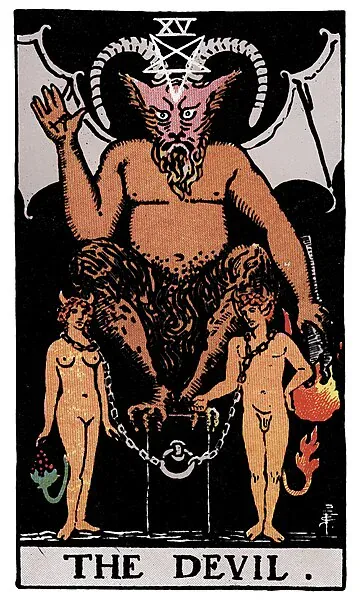
This is the prison wall breaking under thunder. The Devil shows the chain, the consent to bondage, the pleasure or fear that keeps the figures in place. The Tower brings the force that breaks the enclosure. The combination can be harsh because liberation may first feel like disaster. An addiction, affair, abusive dynamic, exploitative workplace, debt pattern, or shame loop can be exposed all at once. The question is not whether the old chain was comfortable. It is whether comfort was the lock.
The Tower + Death
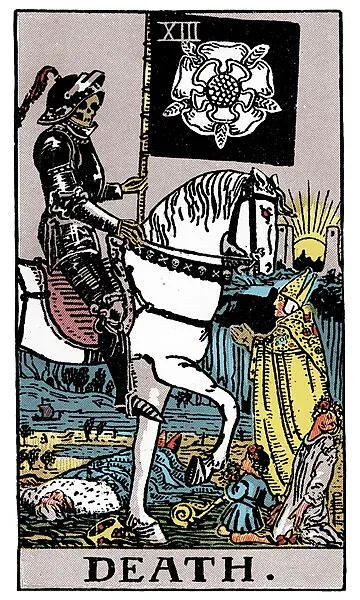
The Tower and Death together describe collapse followed by irrevocable transition. The Tower is the lightning; Death is the road after the smoke clears. This pair does not ask for emergency repair alone. It says the form itself has ended. A relationship may not return, a career identity may not revive, a belief may not be patched back into innocence. The mercy is that Death gives shape to the aftermath. The fall becomes passage rather than endless falling.
The Tower + The Star
Here the storm opens the sky. The Tower breaks the sealed structure; The Star appears afterward with water, night air, and the first calm after exposure. This combination is common in readings about recovery after shock: leaving the institution, naming the truth, surviving the breakup, admitting the need for help. The Star does not erase the damage. It makes the ground inhabitable again. The wound receives air.
The Tower + Three of Swords
This pair names the pain that cannot be intellectualized away. The Tower exposes the structure; the Three of Swords shows the heart pierced by what the exposure means. A betrayal, breakup, diagnosis, hard conversation, or family revelation may be involved. The combination asks for clean grief, not spectacle. Do not turn the wound into architecture. Let the heart register the truth, then keep the hands from rebuilding around the blade.
The Tower + Four of Pentacles
The image is a clenched grip struck by lightning. The Four of Pentacles holds, protects, saves, and sometimes freezes. The Tower asks what happens when holding becomes the danger. Money hoarded out of terror, a job kept only for status, a home maintained beyond capacity, a relationship possessed rather than loved: this pair exposes the cost of over-control. Security that cannot breathe becomes another false tower.
The Tower + Ten of Pentacles
The Ten of Pentacles is the family house: the courtyard, the dogs, the old man under the arch, the money that carries a surname. Struck by lightning, it names the inheritance quarrel, the property that turns out to be mortgaged, the elder whose authority was never once questioned, the estate that finally reveals what the family agreed not to say. What breaks in this pair is not affection but the arrangement carrying it — who lives where, who is owed, who was quietly written out of the ledger. The weight is generational: someone laid these stones before the seeker was born, and the crown was inherited rather than won. Read the combination as permission to inspect a structure presented as unquestionable. A lineage can be real and its architecture still unsound, and whoever says so first is usually accused of causing the collapse.
In combination work, notice whether The Tower is the first card or the second. When it comes first, the neighboring card often describes the terrain after the strike: grief, release, hope, guardedness, temptation. When it comes second, it often describes what happens to the neighboring card under pressure: the Devil's chain breaks, Death becomes unavoidable, the Star follows exposure, the Three of Swords stops being theoretical, the Four of Pentacles loses its grip. Order is not a law, but it is a useful lamp.
Also notice the spread position. In the past, The Tower may name the event whose aftershock the reading is still organizing. In the obstacle position, it may show the fear of disruption. In the advice position, it may demand truth. In the outcome position, it asks whether the current structure can survive honest weather. The surrounding cards tell whether the fall is already behind the seeker, happening now, or waiting inside a choice.
Card Combinations
The Devil
The Tower with The Devil is the prison wall breaking under lightning. A binding pattern, secrecy, addiction, exploitation, or shame loop becomes visible all at once. The shock may feel like loss because the chain was familiar. Read this pair as violent clarity: the old comfort was part of the lock, and the first motion toward freedom may feel like falling.
Death
The Tower with Death turns rupture into irreversible transition. The lightning exposes the failure; Death gives the aftermath a road. This is not a patch-and-return pairing. It marks the form that cannot be resumed: the role, bond, belief, or identity that has finished. Grief has work here, but so does relief, because the fall stops becoming endless once the ending is named.
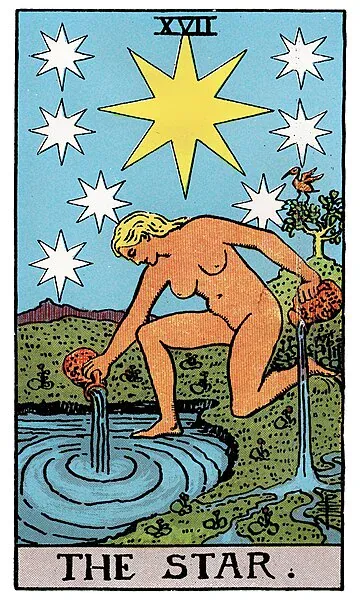
The Star
The Tower with The Star is the sky opening after the roof breaks. A crisis exposes the truth, then a quieter healing begins: water after fire, breath after smoke, night air after sealed rooms. The Star does not deny the damage. It gives the damaged place a way to receive light, help, and time without rebuilding the old false height.
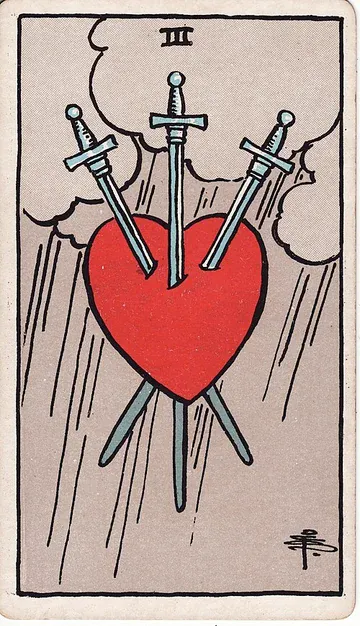
Three of Swords
The Tower with the Three of Swords is revelation entering the heart. The structure fails and the emotional truth pierces cleanly: betrayal, breakup, grief, or a sentence that cannot be unheard. This pair asks for honest pain rather than dramatic ruin. Let the heart register what the lightning revealed, but do not build a new identity around the blade.
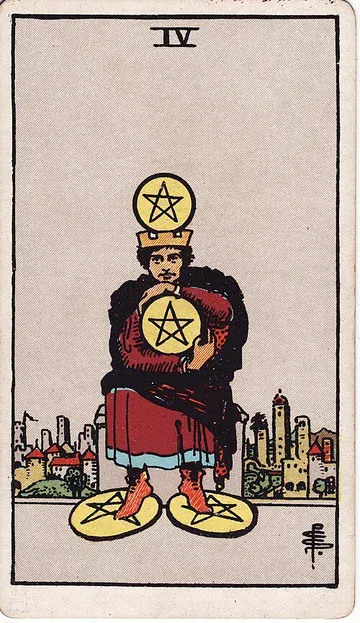
Four of Pentacles
The Tower with the Four of Pentacles shows the clenched grip struck by weather. Money, property, control, status, or emotional possession has been treated as safety, but the grip itself becomes the crack. This pair asks what security costs when it prevents breath. Open the hand by choice where possible; lightning is a harsher teacher of release.
Frequently Asked Questions
What does The Tower tarot meaning point to?
The Tower tarot meaning points to sudden revelation and structural failure: the lightning strike that exposes what was already cracked. It can describe rupture, conflict, exposure, emergency repair, or the end of a false story. The card is severe, but its severity is exact. What breaks was not strong enough to keep carrying life honestly.
Is The Tower a bad tarot card?
The Tower is difficult, not simply bad. It often marks shock, loss of control, or a truth arriving without permission. Yet the card also breaks prisons, false roles, and structures built on fear. Its value depends on what collapses. If the tower was a lie, the fall is painful and liberating at once.
What does The Tower mean in love?
In love, The Tower means the relationship structure is under lightning: a revelation, conflict, breakup, confession, or exposed pattern. It does not reduce love to disaster. It asks whether the bond has honest foundations. If truth has been avoided, the card brings that truth to the surface so repair or ending can become real.
What does The Tower mean as feelings?
As feelings, The Tower points to shock, defensiveness, exposure, and destabilized intensity. A person may feel struck by desire, truth, guilt, or the collapse of an old perception. The feeling can be real and still unsteady. Look for whether they can speak clearly after the aftershock.
Is The Tower yes or no?
The Tower is usually no for questions about stability, ease, or continuing unchanged. It can be a disruptive yes for truth, exposure, leaving, repair, or urgent action. The card says no to the false structure and yes to the lightning that reveals it. Treat the answer as a call to triage.