
Three of Pentacles · Core Meaning
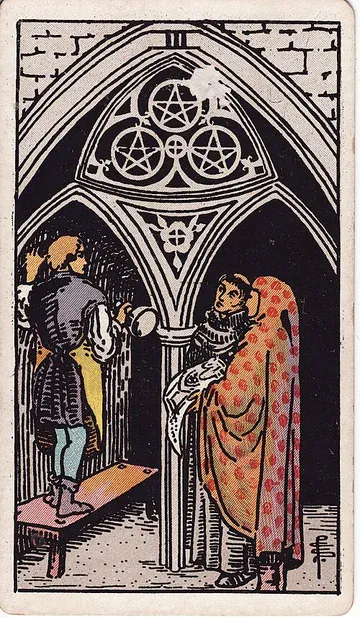
The Three of Pentacles opens inside a winter cathedral. A young mason stands on a low bench with a chisel touching the edge of the third pentacle on the arch. Stone dust falls like flour. Behind him, a monk holds an open parchment; a patron in brocade watches in silence. No one speaks. The air carries lime, candle, and pine resin. Three hands are drawing a single form down at once — the chisel, the drawing, and the purse — and none of the three would suffice on its own.
This is the card's signature tension: a craft only becomes craft when three things meet. The maker holds the tool. The keeper of the standard holds the drawing. The provider of time and means holds the silence at the back of the room. When any one of the three withdraws, the arch drifts off-line. When all three stand under the same arch, the work moves.
The third pentacle is the one being carved at this moment. The first two are already set into the stone above; the third is the seam where attention now lives. That is the Three's whole grammar — not a finished arch, but the place where finished and unfinished meet, where the apprentice notices that what he is doing is being recognized while he is still doing it.
Look at the bench. The mason is standing on it because the arch is above his natural reach — the pentacles sit at a height his years have not earned. Someone carried that bench in and set it under the wall. That is the quietest fact in the image and the one most readers walk past: the young hand is working at a master's height not because he climbed there but because the workshop admitted him to it. The card carries this everywhere it goes. Whatever you are being allowed to work on right now is slightly above your reach, on purpose, and the bench under your feet was placed by somebody who decided you were worth the risk of the stone.
The number matters too. Three is the first whole that rises above a pair. A maker and a patron alone produce a commission, but nobody in the room holds a standard, so the commission is only as good as the client's taste. A maker and a monk alone produce a beautiful study that never becomes a wall, because nobody is paying for the stone. A monk and a patron with no maker produce a meeting. The Three of Pentacles is the shape in which those three incomplete pairs finally close into one form, and the card's satisfactions — being seen, being paid, being corrected — are all the satisfactions of a pair becoming a whole.
Traditionally the Three of Pentacles sits on the second decan of Capricorn — Mars in Capricorn, 12/31 to 1/9 — the disciplined cold edge of the new year, where the force of Mars is gathered into a craftsman's chisel rather than spent on charge. Each stroke is precise and purposed. This is why the card so often appears in readings about apprenticeship, contracted work, building trades, and the moment an early-career maker is first taken seriously.
Kabbalistically the card belongs to Binah in Assiah — Understanding in the World of Action. Binah is the form-giver, the womb-mother who gives flowing force a shape fit to be carved. So the card is not yet about reward (the Ten will be that) and not yet about mastery (the Eight is closer). It is about the first synthesis: two becomes three, and three is when an idea can be held by other hands.
The card also keeps an hour. Its season is winter, its moment the first hammer-stroke of the workshop day — a winter morning, breath visible under the vault, the stone still cold enough to numb the fingers through the glove. Its note is C, the plain unornamented tone a choir tunes to before anything is sung. Its creatures are the honeybee and the stonechat: one builds a comb cell by cell in a hive of thousands, the other is a small brown bird whose call sounds exactly like two pebbles being knocked together. Everything in the card's sensory kit says the same thing at a different pitch — early, cold, patient, communal, the sound of stone on stone before the day has warmed. So if the Three arrives in a spread about something that feels late, tired, or already decided, hear it as the first stroke of a morning rather than the last stroke of a night. The arch is at the beginning of its day.
In any spread, read the Three of Pentacles as a question of alignment rather than effort. The card does not ask whether you are working hard. It asks whether the right three people are standing under the same arch.
Three of Pentacles · Love & Relationships
In love, the Three of Pentacles is the card of the relationship that wants a third hand to steady it. Not a third person — a third element. A friend's witness, a family blessing, a contract, a lease, a ritual that makes the shape of the love legible to more than the two of you.
For an existing long-term partnership, the Three of Pentacles often appears the season you are deciding what to build together. Not whether to be together — that question is settled. The question is what physical thing comes next to share: a household, a renovation, a child's school, a business, an aging parent's care. The card says the love can take that load if you bring in someone whose drawing you both trust. That can be a therapist holding the parchment, a financial planner, an elder in either family, a celebrant. The two of you alone are the chisel; the drawing wants a third hand.
Two people, one drawing, and the argument at the kitchen table about who is allowed to redline it. This is the most ordinary scene the Three of Pentacles describes in a settled couple, and it is worth reading closely because it is so often misread as a fight about the kitchen. One partner has quietly become the monk — the one who keeps the standard, checks the budget, remembers what the plan was. The other has become the mason — the one whose hands are in the work and who feels every red mark as a comment on their hands. Neither role is the wrong one. The strain comes when the roles have been assigned by default rather than chosen, and when the mason is never allowed to hold the parchment and the monk never allowed to touch the stone. Swap for one week. Let the planner carve and the carver plan. The arch stays the same; the two of you learn what the other has been carrying.
For a new spark, the Three of Pentacles describes the moment a private connection moves into a public room. The first time you bring them around the people whose opinion you actually weigh. The first dinner where their family sees how you handle the children. The first time you say their name in a work email. The card is friendly to this transition. The early infatuation is the chisel; the drawing is the social architecture that lets the spark cool into a real thing without losing heat.
For someone single and asking whether love is possible, the Three of Pentacles usually says yes — but not love as private revelation. Love as a workshop. The card describes connection found through shared craft: a community choir, a building project, a fellowship, a class, a coworking studio, a renovation crew. The chemistry begins as collaboration and discovers itself there. Apps and bars are not the card's natural ground. Look at the place where you already work alongside people, and notice who is reading the same drawing as you.
For love after wound, the Three of Pentacles is gentler than it looks. The card does not ask you to perform recovery alone. It asks you to let one trustworthy witness see the work in progress — a therapist, a sibling, an old friend who knew you before. Recovery is itself a craft, and the wound the previous love left is a kind of stone that will not be carved back into shape by a single chisel held by you in a private room. The patron in brocade in this branch is the past you that paid for the suffering; the monk is the witness; the mason is the present you re-cutting the form.
For the card's particular love language, the Three of Pentacles loves through making. It builds bookshelves. It learns the other's language. It cooks the recipe their grandmother left. It restores the bicycle. It does not say the words easily; it shows the words in finished objects. If you are reading this card as feelings of someone with this love language, do not wait for the speech. Watch what they are quietly fixing for you.
The mason is young and the patron is not, and some couples live inside that difference. A partner ten or fifteen years ahead in career, in money, in having already built a household once. The Three of Pentacles is not against this shape — it is, after all, the card of apprenticeship — but it insists on one condition. The senior partner may hold the drawing and the purse; they may not hold the chisel. If the younger partner's work, choices, friendships, and taste are being carved by proxy, the relationship has become a commission rather than a collaboration, and the card's warmth cools. Ask whose hands are actually on the stone of your own life. If they are yours, the difference in years is only a difference in bench height.
For the long bond, the Three of Pentacles often arrives at an anniversary. It is the card of the renewed contract — vow renewals, a re-financing of the mortgage, a redrawn estate plan, a co-authored letter to a child. The arch already stands; what the card is asking is whether the keystone needs replacing. Sometimes the answer is yes, and that work is sacred and unphotogenic.
Across a border or a language, the third hand turns literal. A couple separated by an ocean, or by two passports, or by two mother tongues, finds that love has to be entered into records before it can be lived in the same room — the visa application, the lease with two names on it, the language class one of you takes at night, the marriage certificate whose only romance is that a state agreed to read it. The Three of Pentacles is unusually tender toward this kind of love, because it already knows that a form nobody else can read is a form that cannot stand in weather. The paperwork is not the opposite of the feeling. It is the parchment the monk holds while the two of you carve.
For an open question about whether someone is in love with you, the Three of Pentacles is reserved. It does not show declaration. It shows quiet labor on your behalf. The unprompted help, the saved seat, the introduction to their best friend, the carefully chosen book. Add up those small pentacles — they are how this person says it.
For the worst-case shape this card can hold in love, the Three of Pentacles can describe a partnership that has become so collaborative it has stopped being intimate. Two project managers, no lovers. If that is your situation, the card's note is not to dismantle the project — it is to put the chisel down at six p.m. and let the cathedral be empty.
Seen as a whole, the Three of Pentacles in love is a slow, exact, public-facing card. It is not the card of secret romance. It is the card of love that wants to be entered into a record book.
Three of Pentacles · As Feelings
As feelings, the Three of Pentacles describes a person who is taking you seriously enough to want others' opinions on you. That is a specific texture, and not the same as being besotted. They feel that what is between you is worth checking against the drawing, against the standards of their family or community, against their own ten-year plan.
For someone reserved by nature, the Three of Pentacles' silence is loud in a particular way. They are not telling you what they feel; they are quietly aligning the work. They mention you to their mother. They put your number in their phone with your last name. They bring you to the office holiday party. The feeling is real, but it travels through arrangements.
The patron in brocade says nothing for the entire card. He stands at the back, hands folded, and watches the chisel. Some people feel exactly like that, and it is the feeling most often mistaken for indifference. They come to your show and do not comment. They read the thing you wrote and say only that they finished it. They sit in the kitchen while you cook and do not offer to help. What they are doing is funding you — with their attention, their time, their presence in the room — and they assume the funding is legible. Usually it is not, because the person on the bench has their back to the room. If you are reading a silent watcher's feelings through the Three of Pentacles, turn around once. The silence has a face, and the face has been there the whole time.
For someone demonstrative, this card is rarer in their hand. When it does appear, it means they have moved past public flirtation into private architecture. The flowers stop coming and the renovations begin. If you preferred the flowers, the card is an invitation to read the renovations as the new love language.
In a long bond, the Three of Pentacles often surfaces when the partner has stabilized into a particular form of love that looks unromantic from the outside but is structurally devotional. They are budgeting around your career change. They are taking up your father's care. They are planning the kitchen so your bad shoulder is not strained. None of this is performed. It is the chisel touching the third pentacle.
In a new connection, the Three of Pentacles describes someone who is concluding that you are worth doing the slow due diligence on. They are asking around. They are looking at how you handled your last relationship. They are measuring whether you fit the structure they are quietly drawing. This is not coldness. It is the form of attention shown by a person who has been hurt by mismatched material before.
There is a small caution specific to this card's feeling shape. The mason is young. The monk and the patron are senior. So the feelings can occasionally have a deferential pattern — the person feels for you, but they feel toward you through whatever institutional voice taught them how love is supposed to look. If that voice is healthy, this is steadying. If it is not, you are receiving someone else's drawing and the chisel is still in their hand. Notice whose parchment they are reading.
What does an ex feel, read through this card? Something closer to respect than to longing. The Three of Pentacles as a former partner's feeling describes a person who still thinks of the two of you as a piece of work — an arch they walked away from with the keystone unset. They remember what was built well. They may tell other people that you were good to build with. What the card does not show is a plan to come back and finish the arch: the feeling is real but it has no drawing attached, and a feeling without a drawing does not, in this card's world, move stone. Read it as an ex who would speak well of you at a dinner. Do not read it as an ex who is on their way over.
For a third party in a triangle reading, the Three of Pentacles usually says the third person is not yet a person — it is a structure. The job. The family obligation. The previous commitment they have not closed out. The card is more architectural than romantic in this position.
For the question of whether they are in love with you specifically as opposed to the idea of you, the Three of Pentacles' answer is: they love what you are building together. Whether that is the same as loving you is a question only the slow work will answer. Some people find that this is enough; some people need the chisel to be put down and a hand placed on the cheek. Read the card with your own appetite in mind.
One more shape appears often enough to deserve its own reading: the person who has just left a bad workshop. A controlling ex, a family that redlined everything, a job that took the chisel out of their hands. Meeting you, they feel something they have not felt in years — that the drawing is being shown to them instead of imposed on them. This registers as love, and it may become love, but on the day the card is drawn it is closer to relief. The Three of Pentacles does not sneer at relief; the mason on the bench feels it too, every morning the monk does not snatch the parchment away. The question for you is whether you want to be the first safe room this person has stood in, knowing that safe rooms are sometimes passed through on the way to somewhere else.
The card asks its own question back, and it is a plain one. Have you shown this person any unfinished work? Not the polished version of yourself you bring to the public room — the half-carved thing, the draft, the bad week. Feelings under the Three of Pentacles are formed at the workbench, watching someone's real hands. If all they have seen is the finished arch, whatever they feel is for the arch, and you already know it.
Three of Pentacles · Career & Work
In career, the Three of Pentacles is one of the most generous cards in the deck. It says the work is being seen. The right people are in the room. The drawing and the chisel are on the same wavelength. You may be tired, but you are not invisible.
For a current role that has felt stuck, the Three of Pentacles often appears the month before recognition becomes formal. A promotion is on someone's whiteboard. A senior is quietly arguing for you in a closed meeting. A peer has named you in their performance review. None of this is announced yet. Your job is to keep the chisel steady — do not break form looking for the announcement.
For a new role decision — accept the offer or wait — the Three of Pentacles tilts toward acceptance when the role is collaborative, structured, and craft-deep. The card is unfriendly to roles where you would be a solitary star. It loves apprenticeship. It loves senior mentorship. It loves work where there are real reviewers whose taste you respect. If the offer puts you on a team where the drawing is being kept by someone you can learn from, take it.
For the entrepreneur or freelancer asking whether the venture has fit, the Three of Pentacles is encouraging only when there are early signs of a real client / collaborator / advisor / financier triangle. A solo freelancer running pure direct sales is not living in this card's world. A studio with a senior advisor, a real first client, and a craft you can demonstrably ship is. If you do not yet have the three corners, the card's instruction is to find the missing one before scaling.
For the creative practitioner — writer, painter, musician, designer — the Three of Pentacles describes the moment your work begins to circulate among the people who actually know how to read it. A mentor takes notice. A peer recommends you. A small commission lands. This is the card's spiritual home for an artist. It is the moment the practice exits the private studio and acquires its first public seam.
For a job-search context, the Three of Pentacles favors roles found through warm introduction over cold application. Take every coffee. Walk into every studio. The card has very little to do with applicant tracking systems and very much to do with the senior mason who notices that you can hold a chisel.
For a layoff or transition, the Three of Pentacles is reassuring even when the loss is real. The card says the craft you built does not vanish with the job. The arch you carved is still in the wall. The next role will find you because of demonstrable past work, not because of a polished resume narrative. Show the arch.
For the question of promotion, the card is favorable but slow. Promotion under this card is not won by overdelivering on individual output. It is won by being legibly collaborative — by being the person whose name colleagues bring up in their own meetings. If you have been heads-down, lift your head and trade attention back.
Someone who has just been handed other people's work has drawn the hardest version of this card. The parchment is in your hands now and the chisel is in somebody else's, and every instinct trained by years on the bench says to climb up and cut the line yourself. The Three of Pentacles is precise about what has changed: your output has stopped being stone and become drawing. You are paid now for the clarity of the sheet, for whether three people read it the same way, and for whether the bench is at the right height under the person you handed the work to. The first quarter in this role feels like doing nothing, because the thing you used to be able to hold at the end of a day is gone. It is not nothing. It is the role the picture gives the monk, and the arch does not rise without it.
For the side project or second body of work, the Three of Pentacles is exceptionally good news. Side projects often die because no one is the keeper of the drawing for them. Find that person. A friend who critiques the work. A small cohort. A patron who gives you a deadline. The side project becomes the arch when it acquires its own monk and patron, even informally.
Where a trade fences itself with credentials, this card is entirely at home. Residency, articling, the teaching hospital, the logged flight hours, the board exam, the doctoral committee, the years a joiner spends before a guild will put its stamp on the work — each is a literal three-hand structure with a maker, a keeper of the standard, and an institution funding the time. The Three of Pentacles is friendly to sitting inside one of them even when the pay is poor and the hours are ugly, because the structure does something no amount of private brilliance replaces: it makes your competence legible to strangers who never watched you work. What the card asks is that you keep the far end of it in view. Apprenticeship is a season. A structure that keeps you at the bench indefinitely without ever raising the bench has stopped being an apprenticeship and become cheap labor.
Some readers meet this card while holding the parchment for a living — the editor, the auditor, the code reviewer, the building inspector, the teacher grading at a kitchen table in December. The card has a word for that work and the word is not gatekeeping. The monk is not refusing the mason; he is holding the one document that lets three people's separate hours add up to a single arch. If the work has begun to feel thankless — nobody thanks a standard — notice that the mason's recognition and yours arrive on completely different schedules. His comes the day the pentacle is cut. Yours comes years later, in the fact that the wall is still standing. The card counts both as craft, and only one of them gets applause.
For the question of whether to leave a stable job for craft, the Three of Pentacles' counsel is structural: do not leave until you have lined up the three. Solo migration into pure independence is not this card's recommendation; supported migration is.
Three of Pentacles · Money & Finances
In money, the Three of Pentacles describes income earned through work that is contracted, witnessed, and collaborative. Not freelance against a faceless platform; not sales against a quota. Money that arrives because three people agreed on the shape of the work and the price. The card is friendly to invoiced craft, to retainers, to grants, to fellowships, to scoped commissions.
For a financial bet — investing, big purchase, large outlay — the Three of Pentacles' counsel is to bring in the drawing-keeper. Do not buy the house alone in your head. Do not commit to the position without an advisor or a peer review. The card has nothing against the bet itself; it warns only against making it without the second and third hand. The patron in brocade in this branch is your future self, who is silently funding the present decision; you owe that silent funder a visible drawing.
For scarcity, debt, or recovery, the Three of Pentacles is more generous than it appears. The card's instruction in lean times is to find the third hand. A debt counselor. A community lending circle. A senior friend who can review the cash flow. A monk-figure who keeps the drawing without taking the chisel from you. People in this card's grip recover faster than people in the Five of Pentacles' grip because they know to enter the workshop with someone.
The signature trap of the Three of Pentacles in money is the trap of unpaid craft. Because the card is so friendly to collaborative work, people sometimes drift into structures where they are the mason, someone else holds both the drawing and the purse, and the recognition is verbal but the payment is thin. The cathedral was built on cheap mason labor for centuries. Do not be the mason whose chisel was real and whose wages were not. Bring the contract.
For a long-term financial plan, the card supports building rather than accumulating. Real estate, a small business, a pension you actually understand, an estate plan. Things with structural integrity that someone could read off a drawing. It is less friendly to speculative trading — that is a different card's territory.
For an immediate question — should I take this gig, sign this contract, accept this rate — the Three of Pentacles says yes when the gig pays for collaboration, no when the gig pays for solitary delivery against an unclear standard. Read the brief for the drawing. If there is no drawing, the price is wrong even if it is high.
Pricing is where this card earns its keep. A rate invented alone in a room at midnight is a rate with no drawing behind it — it drifts with your mood, and it is nearly always low. The card's move is to put a second and third pair of eyes on the number before it goes out: a peer in the same trade who will say aloud what they charge, a published scale from a guild or union or professional body, last year's invoices laid flat on a table. Three references and the figure stops being a feeling. Stone dust settles; the number stops moving. This is the unglamorous heart of the Three of Pentacles in money — the distance between what you are worth and what you can say you are worth is almost always a matter of who has counted alongside you.
The Three of Pentacles also speaks well of money pooled across roles. Family money discussed in the open. A couple's joint accounts with clear allocations. A business with fair partnership equity. The card's gold is gold that has been counted by three hands.
Some readers meet this card from the brocade side. You are the one funding something — a partner's retraining, a sibling's move, a child's degree, a friend's first year of trading. The patron in the picture does one thing well and one thing badly, and the difference is the whole lesson. He pays, and he stays at the back of the room. Money given with a hand still resting on the chisel is not patronage; it is purchase, and both sides feel the difference inside a year. Decide the amount you can lose without resentment, say the amount out loud so it exists outside your head, and then let the carving be theirs. If the number is too large to say out loud, it is the wrong number.
There is an opposite failure, and the card's elemental company names it. Earth settles with water and is scattered by air: stone takes a polish from Cups and is blown apart by too many Swords. A money decision made inside a group chat of eleven opinions is a stone standing in wind. The card asks for three hands, not eleven — one maker, one keeper of the standard, one provider. Past three, the drawing stops being a drawing and becomes weather. If you have been gathering advice for months and the purchase, the switch, the resignation still has not happened, what is missing is not more advice. It is the decision about which three people are actually in the room.
Three of Pentacles · Health
In health, the Three of Pentacles is the body-as-workshop card. It refers traditionally to the wrist and the shoulder — the arm that holds the chisel. So the card is friendly to questions of repetitive strain, posture, the hands of writers and surgeons and pianists and cooks, and the neck of anyone leaning into careful work for hours.
For chronic versus acute distinction, the Three of Pentacles tilts toward chronic. Not catastrophe — accumulation. The body is asking for the kind of attention it has not been getting because attention has been on the work. A standing desk. A physiotherapist. A weekly massage. A change in chair. Small adjustments that, like the third pentacle, are carved one at a time over weeks.
For an emotional-to-somatic mapping, the card describes what happens when the maker sustains effort beyond the body's design. Tension settles into the shoulders. Sleep gets brittle. Small infections take longer to clear because cortisol does not let them. None of this is mysterious. The card's counsel is that the body is not a problem to be solved but a colleague to be consulted. Bring the body into the room with the monk and the patron. Let it have a vote.
For temperament, the Three of Pentacles is melancholic — disciplined, exacting, prone to over-drying. People living deeply inside this card need warmth and moisture more than they think they do. Soup. Saunas. Hot baths. Pine resin in the air. Honey. Beeswax candles. The senses associated with the card are not decorative; they are medicinal for the temperament that lives there.
The card keeps a season, and in the north of the year the season is worth reading as an instruction. Light drops, the workshop is cold, the melancholic temperament dries out further, and the discipline that felt devotional in September has turned to grinding by January. Lime, beeswax, pine resin — the card's own air is warm smoke and something still alive. Take that at face value. Heat, fat, salt, a lamp on before the window brightens, a body of warm water once a week, and one evening where nothing whatever is produced. The mason does not cut better for being cold; he only cuts longer, and the stone knows the difference.
For when to worry and when to rest, the Three of Pentacles favors investigation over panic. The card likes diagnostics. Get the scan. Get the bloodwork. Bring the third hand — the doctor, the specialist — into the room. Self-diagnosis under this card is the card in its weak form. Real diagnosis under this card is the card in its strength.
For recovery rhythms after surgery, injury, or burnout, the Three of Pentacles is friendly to structured rehabilitation. Physical therapy with a real therapist. A graded return-to-work plan. A sleep schedule rebuilt over weeks. The card does not love the hero recovery — back at the gym in three days. It loves the slow return where the chisel is picked up again at a quarter speed.
For the hands specifically, this is one of the most explicit cards in the deck for tools-of-the-trade injuries. Tendinitis. Carpal tunnel. Trigger finger. The card's counsel is preventive — gloves, warm-ups, ergonomic review — and treats craft as something the body has to be matched to, not something the body must endure.
A large share of the health questions that land on this card are not about the reader's own body at all. They are about someone else's — a parent whose appointments have quietly become your second job, a partner in treatment, a child with a diagnosis that takes years to manage. The three hands are precisely the structure that keeps a caregiver intact. One person should not be the maker, the keeper of the record, and the funder of a long illness at once. Split what can be split: somebody else holds the calendar, somebody else makes the calls to the insurer, somebody else sits in the chair on Thursdays. The picture is worth copying literally here, because a caregiver carrying all three roles is the arch that cracks quietly while everyone in the room is watching the patient.
After a diagnosis that will not be going away, the card describes an apprenticeship nobody signed up for. The body you had is the old drawing; the body you have is a new one, and for the first year you are the beginner on the bench with it — measuring doses, pacing a walk, learning which hours of the day are usable. The card's kindness in this branch is that it refuses to call this a failure. A beginner is not a lesser person; a beginner is a person at the start of a craft. Find the other two hands — the clinician who keeps the standard, and the one friend who will listen to the week without trying to fix it — and the learning goes faster and costs less.
The card never gives medical advice. What it asks is what kind of attention the body is asking for. Read the body in the same posture the mason reads the parchment — with the assumption that the drawing is already there, and the work is to listen.
Three of Pentacles · Spirituality
Devotional craft is the Three of Pentacles' entire spiritual argument — the chisel as a form of prayer that leaves marks in stone. It belongs to Binah in Assiah — the form-giving Mother in the World of Action — and the cathedral in the image is not coincidental. Spirit, for this card, is what becomes legible when matter is shaped with reverence over time.
The sephirah Binah is the dark sea, the great form-giver, the womb that gives flowing force its shape. The Three of Pentacles is what Binah looks like when she descends all the way to the earth — when the abstract pattern reaches the chisel and becomes a stone. This is why the card resists fast spiritual movement. It does not respect peak experiences. It respects the long apprenticeship that turns a peak experience into a daily form.
The spiritual question the Three of Pentacles asks is: where in your life is sacred work being done by three hands, and where is it being done alone? Solitary practice has its place — the Hermit's territory — but the Three of Pentacles names a different practice. The choir, the sangha, the workshop, the prayer house, the small group meeting weekly to read the same text. Spirit, in this card, is collaborative.
The card invites a real, doable practice. Choose a single small skill — a calligraphic letter, a recipe, a piece of music, a passage of scripture — and apprentice yourself to it for thirty minutes a day for three weeks. Bring a witness. A friend who will see it at the end of week one and the end of week three. The witness is the monk; you are the mason; the time you set aside is the patron. Three hands, one form. This is the card's whole spiritual technology.
For the symbol that carries the spiritual weight in this image, look at the arch itself — the form taking shape but not yet closed at the keystone. Spirit, for this card, lives in the unfinished. The unclosed arch is more reverent than the finished one because it is still in conversation with its three hands. When the keystone goes in, the prayer ends. The Three of Pentacles is the prayer in progress.
There is a detail of cathedral work the card lives inside. Most of the hands that cut those stones are unrecorded. What survives of them is a mason's mark — a scratched sign a foot above the floor, put there so a foreman could count the day's blocks and pay the right man. Not a signature. An accounting mark that happened to outlast every name in the parish. The card offers this as a proposition rather than a consolation: work that will be attributed to no one is not thereby wasted work, and a practice measured by whether the right eyes fall on it at the right moment is not yet a practice. Cut the block. Make your mark. Let the counting be somebody else's office.
Yew and ivy grow on this card's ground, and both keep a longer clock than anyone reading it. A churchyard yew was standing before the foundation was dug and will still be standing when the roof is replaced again; ivy holds to stone it did not build. A practice inherited from a teacher, a liturgy older than the language you say it in, a recipe from a grandmother whose face you cannot quite recall — the Three of Pentacles reads each of these as a third hand arriving from outside your own lifetime. Nobody is asking you to invent a spirituality from nothing. Much of the drawing was made before you and is being held open at the page you need.
This is why the card so often arrives in the spiritual lives of people who are tempted to skip steps. The card's whole insistence is on the steps. There is no shortcut from raw chisel to recognized arch. There is only the slow seam between the second and third pentacle, where attention is, today.
For the question of vocation — what is my work in this life — the Three of Pentacles is encouraging without being prescriptive. The card says vocation is not a thing you find. It is a thing that becomes legible when three hands have been working on it long enough. Show up to the workshop. The vocation will appear in the carving.
Three of Pentacles · Yes or No
Yes — but it is the yes of a workshop, not a private wish.
The Three of Pentacles answers yes when the question concerns work that will be witnessed, contracted, or collaboratively built. It is one of the most reliably affirmative cards in the deck for those questions. Promotion sought through visible team contribution: yes. Marriage backed by a real shared plan: yes. Apprenticeship under a senior who sees you: yes. Renovation done with a contractor whose drawings you trust: yes. Grant application written with a strong reviewer: yes.
The yes conditions itself on the presence of three hands. If the question is about a private wish that depends on no one else seeing it — a secret love nobody knows about, a personal goal you have told no one, a freelance gig you intend to handle without contract or witness — the card softens. Not no. Just slow. The yes will come when the wish acquires its monk and its patron.
In lived life, this yes looks specific. It looks like the offer letter being signed at a table where someone else is also signing. It looks like the recipe shared at the dinner where four people taste it and one of them says you should publish this. It looks like the architectural drawing returning from review with red lines that improve it. It looks like the third hand showing up in a moment you did not ask for it.
There is a way to test which yes you are holding without waiting for the outcome. Say the question out loud and count the hands inside it. If you can name a person who will make the thing, a person who will hold it to a standard, and a person or an institution supplying the time and the money, the yes is the plain one. If you can name two, the card is telling you that the third name is your next task, not that the answer is no. If you can only name yourself in all three positions, what you have is not an answer yet. It is a drawing in an empty room.
The difference between this card's slow yes and an actual no is visible in the material. A no in this suit looks like stone that will not take the cut — an employer who cannot describe the role, a partner who will not say the relationship's name out loud, a client with no budget and nobody who could approve one. A slow yes looks like sound stone and an unbooked room: the thing itself is good, and what is missing is a date, a signature, a conversation nobody has scheduled. Ask which of the two is in front of you. Stone that resists the chisel is saying something no calendar can fix.
When the question is about somebody else — will they commit, will they hire me, will they forgive me — the card moves the question slightly before answering it. It says yes to what can be built in front of witnesses and stays quiet about what happens in private. So: yes, if there is shared work, a shared obligation, a room the two of you are both due in next month. The card is reserved about intentions that have never had to survive another person seeing them. Watch the arrangement rather than the declaration. In this suit, the arrangement is where the truth is kept.
The Three of Pentacles does not say the road is easy. It says the road is shared. Yes, with witnesses.
Three of Pentacles · Advice
The Three of Pentacles' advice is concrete and uncharacteristically directive for a card so quiet. The work in front of you wants the third hand. Find it.
Before any of that, a caution about how this instruction is usually misheard. Find the third hand gets read as network — collect contacts, stay visible, be liked. The picture says something narrower and harder. The monk is not a contact; he is someone who has read the drawing and can say where the line is wrong. The patron is not an audience; he is someone who has put money or hours behind the work and notices when it stalls. What you are looking for is two people with a stake, not fifty with an opinion.
First, this week, name the three roles around your current piece of work. Who is the maker, who is the keeper of the standard, and who is the provider of time and means? Sometimes one person is playing two roles, and that is the source of the strain. Write the names in three lines. If a line is empty, that is the line to fill.
Second, take one half-finished thing out of the private drawer this week and show it to someone whose taste you respect. Not for praise. For notes. The Three of Pentacles works only when the work is shown before it is finished. The arch is being carved while the monk and patron are watching; that is the moment, not the unveiling.
Third, accept critique as the ladder, not as the verdict. Notes from a senior on your work are not a judgment of you. They are how craft acquires scale. The young mason on the bench has been entrusted with a wall not because he is already a master but because he is teachable in public. Be that teachable in public. It is not a weakness; it is the card's specific strength.
Fourth, if you are the senior in a triangle, hold the drawing without taking the chisel. The card's worst version is a senior who micromanages the apprentice's chisel — the work stops being craft and becomes execution-by-proxy. Trust the chisel. Hold the drawing. Pay on time.
Fifth, slow your hand. Mars in Capricorn is force gathered, not force expended. Each stroke of this period of your life wants to be precise and deliberate. If you are noticing you are rushing, that is a signal to take twenty-four hours before the next decision. The arch can wait one day. The arch cannot survive a hurried keystone.
One more thing, because this card is often used to bully people into taking every note they are given. Notes are the ladder, not the verdict — and a ladder is a thing you choose where to lean. The mason follows the drawing on the arch and keeps his own hand on everything below the line. When a note is about the standard, take it. When a note is really about taste, thank the person and leave the stone where it is. Craft under this card is not the same thing as compliance, and the test is whether the correction can be traced back to the drawing or only to somebody's preference.
The decan this card sits on straddles the turn of the year — the dead week when the workshops are shut and the resolutions get written. That is the register the advice wants: not a burst, but the setting of a rate you can still hold in February. One stroke a day on a single arch outlasts a week of frenzy spread across four. If you are choosing between projects this season, choose the one that has a person waiting to see it.
And the card asks one question back, which is uncomfortable in a quiet way. What have you refused to let anyone look at? Not the thing you have not gotten to — the thing that is finished enough to show and has stayed in the drawer anyway. Name it. Most people can, instantly, and the speed of the answer is the whole point. Whatever surfaced in the two seconds after the question is the piece this card came for.
Three of Pentacles · Card Combinations
The Three of Pentacles takes on different weather depending on the cards it travels with. As a small card, it modulates strongly in the company of Majors, and it changes register entirely when paired with siblings or contrast cards. Five pairings in particular are worth holding in mind.
Three of Pentacles + The Empress. The patron in brocade steps fully into the room. The Empress is the Mother of Form, Binah's downward expression in the Empress card; together with the Three of Pentacles she names patronage of the deepest kind — funding, material support, the quiet maternal yes that lets the workshop run for years. In a love reading this pairing often signifies a relationship that becomes financially or domestically generative — moving in together, starting a household, the practical love of provided meals and tended gardens.
Three of Pentacles + Eight of Pentacles. Apprentice and journeyman in the same image. The Eight is the next stage — heads down, a row of finished pentacles, mastery acquired by repetition. With the Three, the pair reads as career arc rather than career moment. This pairing is friendly to the question of whether the current role is still teaching you. The answer is yes if both cards are upright; the answer is that mastery has been reached and recognition is ready when the Eight follows the Three.
Three of Pentacles + Three of Wands. Two Threes — synthesis on different elements. The Three of Wands looks out from a high cliff at ships on the sea; the Three of Pentacles looks down at the chisel touching stone. Together they describe ambition that has both vision and craft — the entrepreneur with shipping product, the artist with both gallery and studio. The pair is unfriendly to dreamers without bench discipline and to bench-disciplined makers who never look up.
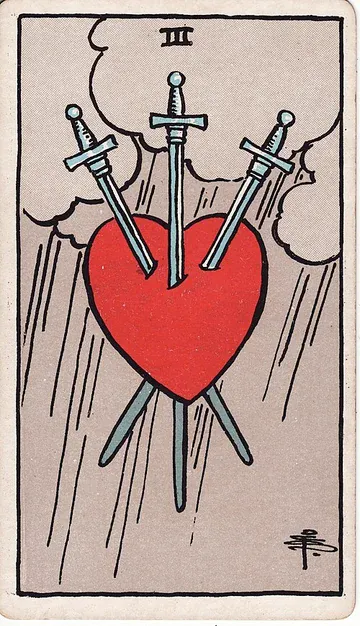
Three of Pentacles + Three of Swords. Tonal contrast. The Three of Swords is the heart pierced by three blades — solitary grief; the Three of Pentacles is the arch carved by three hands — collaborative making. Read together they describe the cost of being unwitnessed. The wound the Three of Swords names often becomes survivable specifically through the workshop the Three of Pentacles names. Bring the third hand.
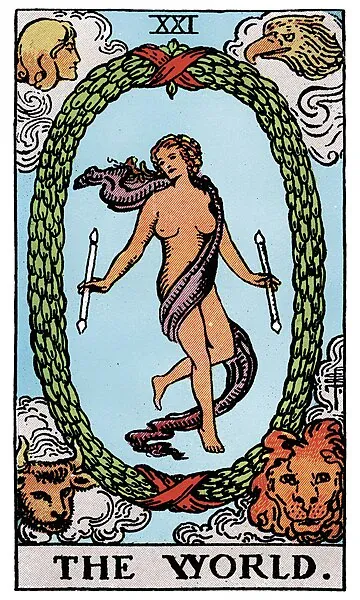
Three of Pentacles + The World. The arch closes. The keystone is set. The cathedral is consecrated. The World atop the Three of Pentacles is the long arc of craft completing itself — the book finally published, the building finally opened, the marriage finally vowed. Among Major modulators, this is the most generous of the Three of Pentacles' pairings — it says the work is not only seen but eventually finished.
Card Combinations
The Empress
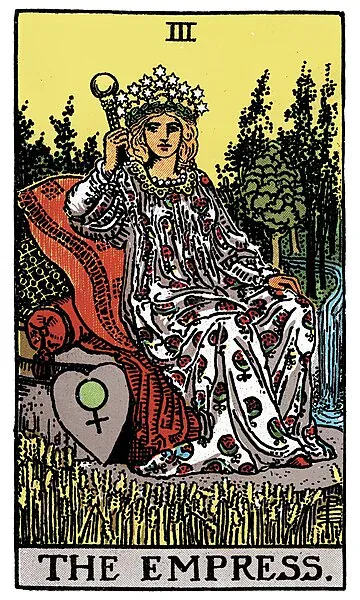
Three of Pentacles + The Empress brings the patron in brocade fully into the room. The Empress is Mother of Form — Binah's downward expression — and together with the Three of Pentacles the pair describes patronage of the deepest kind: funding, material support, the maternal yes that keeps the workshop running for years. In love, the pair often signifies a relationship turning generative — moving in, starting a household, the practical love of cooked meals and tended gardens. In career, it names a senior sponsor who is materially as well as politically committed.
Eight of Pentacles
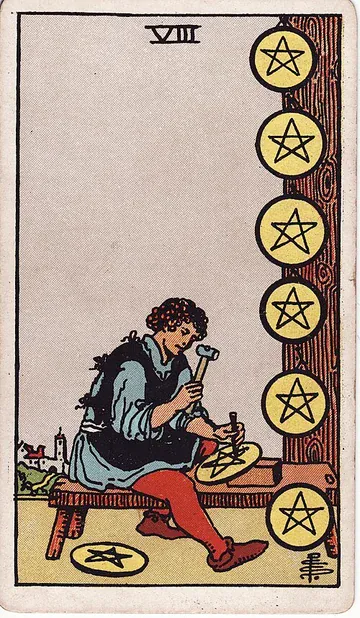
Three of Pentacles + Eight of Pentacles is apprentice and journeyman in the same image. The Eight is the next stage — head down, a row of finished pentacles, mastery acquired through repetition. With the Three, the pair reads as career arc rather than career moment. It is friendly to the question of whether a current role is still teaching you; if both cards are upright, the answer is yes. When the Eight follows the Three, mastery has been reached and recognition is preparing to land.
Three of Wands
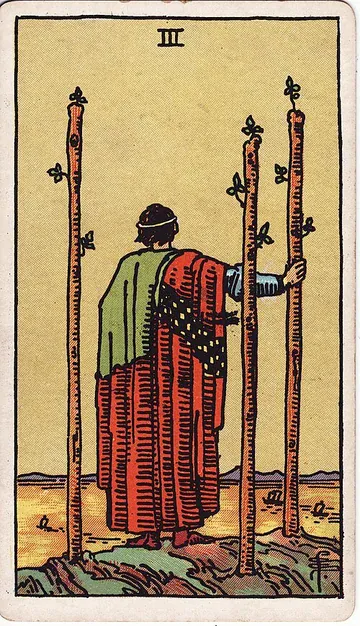
Three of Pentacles + Three of Wands is two Threes — synthesis on different elements. The Three of Wands stands at the cliff watching ships; the Three of Pentacles bends to the chisel touching stone. Together they describe ambition with both vision and craft — the entrepreneur who ships, the artist with both gallery and studio. The pair is unfriendly to dreamers without bench discipline and to bench-disciplined makers who never look up.
Three of Swords
Three of Pentacles + Three of Swords is the deck's clearest pairing of collaboration against solitude. The Three of Swords is the heart pierced by three blades — solitary grief; the Three of Pentacles is the arch carved by three hands — collaborative making. Read together they describe the cost of being unwitnessed. The wound the Three of Swords names often becomes survivable specifically through the workshop the Three of Pentacles names. Bring the third hand into the grief.
The World
Three of Pentacles + The World is the keystone landing. The arch closes. The cathedral is consecrated. The World atop the Three of Pentacles is the long arc of craft completing itself — the book finally published, the building finally opened, the marriage finally vowed, the apprenticeship completing into mastery. Among the Major modulators of the Three of Pentacles, this is the most generous — the work is not only seen, it is eventually finished and made whole.
Frequently Asked Questions
What is the core meaning of the Three of Pentacles tarot card?
The Three of Pentacles is the card of work that becomes craft because three hands are present — a maker, a keeper of the standard, and a provider of time and means. In a tarot reading it describes the moment a project, relationship, or vocation acquires legitimacy through being witnessed and supported, not through solitary effort. Mars in Capricorn's second decan and the sephirah Binah lend the card precision and form-giving weight.
Does the Three of Pentacles mean a relationship needs a witness — a blessing, a lease, a shared project?
That is close to exactly what it asks for: the Three of Pentacles describes a relationship wanting a third element to steady it — a friend's witness, a family blessing, a contract, a shared project, a household. It is the card of love made legible to others, not secret love. For long bonds it often arrives at anniversaries and renewed commitments; for new sparks it marks the first move into a public room together.
Does the Three of Pentacles say yes to something I have to build with other people?
The Three of Pentacles is a yes — but a workshop yes, not a wish yes. It answers affirmatively when the question concerns work that will be contracted, witnessed, or collaboratively built. For private hopes that depend on no one else seeing them, the card softens to a slow yes — the affirmation arrives once the third hand enters the room.
Should I show the half-finished work when the Three of Pentacles comes up?
As advice the Three of Pentacles tells you to bring out the half-finished work and show it to someone whose taste you respect. Critique is not rejection — it is the ladder by which craft grows scale. Name the three roles around your current piece of work, fill any empty role, and slow your hand. Mars in Capricorn is force gathered, not spent.
What's the difference between Three of Pentacles upright and reversed?
Upright, the Three of Pentacles is three hands working from the same drawing — collaborative, recognized craft. Reversed, the same three hands lose alignment: solo grind without witnesses, plans rejected because the drawing was never agreed on, or shoddy work because no monk held the standard. The reversed card is not a death sentence — it asks which of the three hands has gone missing and how to bring it back into the room.
Continue Reading
Three of Pentacles · Card overview · symbols · correspondences →
Return to the full card view — image, symbols, sensory correspondences, and Hermetic axes.
Read the reversed meaning →
Read the same depth on the opposite orientation.
Draw your reading now →
Bring this card to a question — open a quiet ritual.