· INQUIRY · NOT FORECAST ·
Tarot Card Combinations
Forty-four hand-authored pairings — thirty major × major, ten elemental, four court × theme — as journaling inquiries.
When two cards land beside each other in a spread, what tends to surface is not a verdict but a dialectic. The Tower beside the Star is one practice; the Magician beside the High Priestess is another. Each pair is a question to sit with — never a deterministic lookup.
Lunarcana is a digital grimoire and journaling tool, not a fortune-telling service. The combinations below are curated as inquiry frames: a summary of the dialectic, an italic pull-quote re-frame, an observation paragraph, four open prompts, and the contexts in which the pair tends to surface. Read them as scaffolding for self-reflection, not as a code to crack.
Major × Major (30)
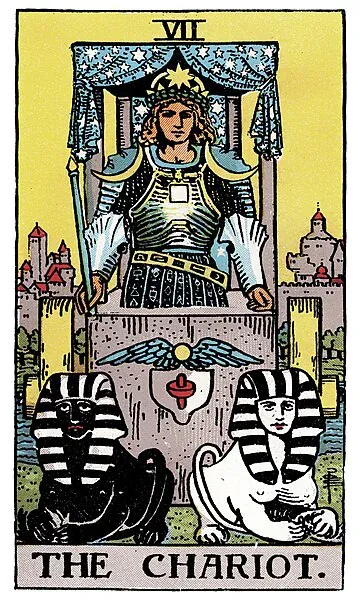
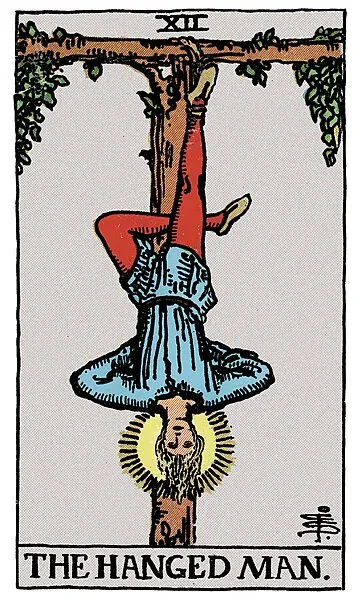
Chariot & Hanged Man — drive meets surrender
Two opposite postures share the page. The Chariot leans forward, reins gathered, momentum chosen. The Hanged Man hangs upside-down, motionless on purpose. Together they sketch a journaling tool for noticing where forward force has stopped serving you, and where stillness might be the next move rather than a lapse in discipline. Neither is the right answer. The dialectic is the prompt.
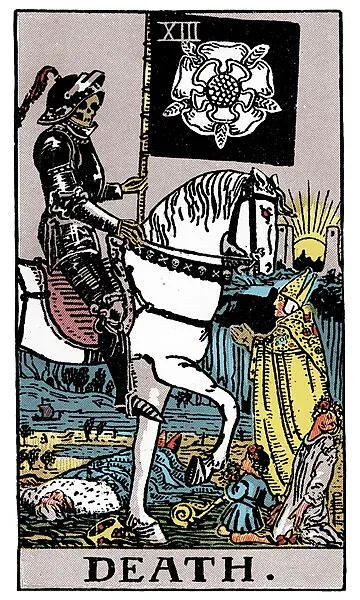
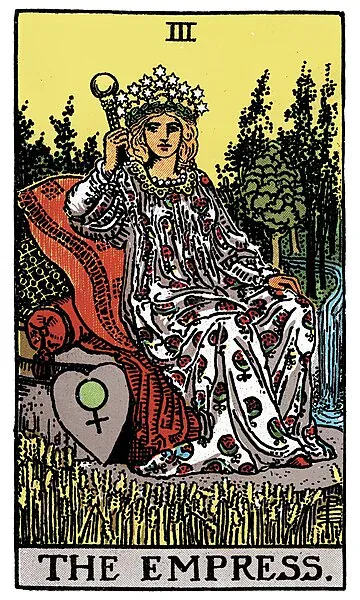
Death & Empress — what nurture asks us to release
Two of the deck's most embodied cards meet. The Empress nurtures, gathers, holds; Death composts, releases, lets fall. They are not enemies but the in-and-out breath of the same biological work. When they appear together, the pair tends to surface a question about what we have lovingly cultivated that has finished its growing season — and what the act of release will itself feed.
Death & Hanged Man — release into release
Two cards of letting-go in two different keys. The Hanged Man is voluntary suspension, the chosen pause. Death is the involuntary turn of the page. Side by side, they form one of the deck's quietest dialectics: surrender that one elects, and surrender that arrives unasked. The pair tends to invite a slower, more honest look at where one is still negotiating with a change that has already happened.
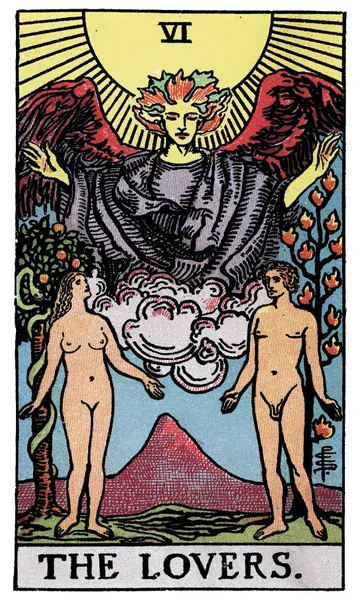
Death & Lovers — grief at love's threshold
Two cards of profound bond meet. The Lovers is the act of choosing — for partnership, for an alignment of values, for what one will join one's life to. Death is the moment a chosen bond changes shape, by ending or by metamorphosis. The pair tends to surface when love itself is asking to be re-chosen, or grieved, or both at once. It rarely points to literal endings; more often it points to the version of the bond that has quietly already ended.
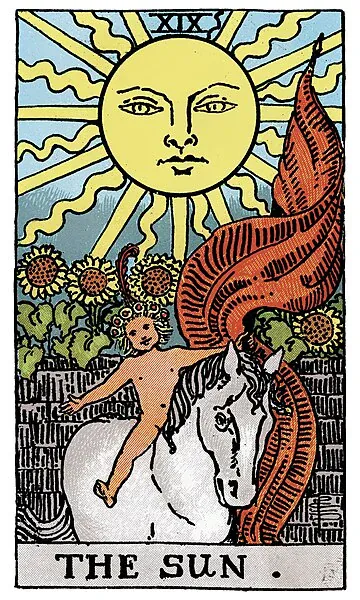
Death & Sun — ending opens into clearing
A pair that surprises by how often it lands well. Death clears what has finished; the Sun warms what now stands in open light. Together they sketch the rhythm of any honest renewal — the felt relief of seeing what has actually been growing in the background, once the dead branches are cut back. The combination tends to invite a journaling reflection on what was hidden by the older shape, not just what the older shape was.
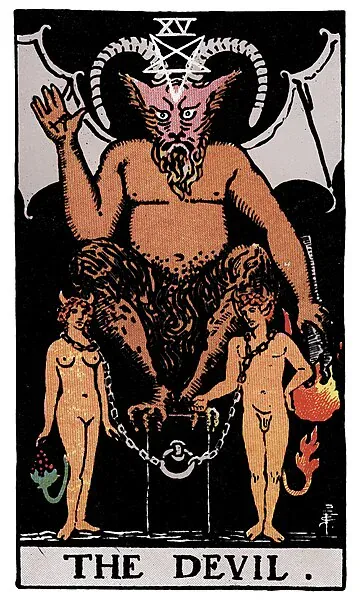
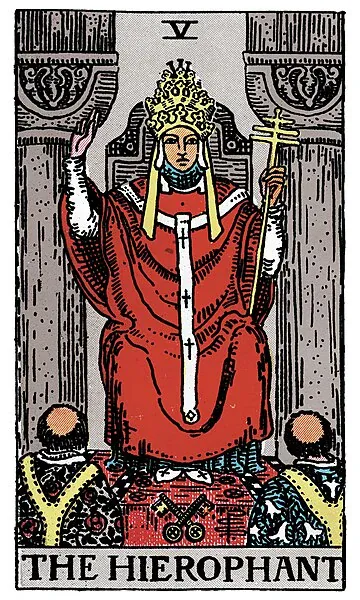
Devil & Hierophant — shadow meets orthodox teacher
Two cards of structure meet from opposite directions. The Hierophant is the inherited container — tradition, institution, the shape one was handed. The Devil is the bond one has made for oneself, often unexamined, often shadow. Together they tend to invite a careful audit of the structures, beliefs, and contracts one is operating inside, and which of them are still doing the work one signed up for.
Devil & Lovers — bondage and eros share a frame
Two of the deck's most embodied cards meet, and their shared symbolism — the figures, the bond, the angel/devil overhead — makes it almost impossible not to read them as a single dialectic. The Lovers ask which alignment is being chosen. The Devil asks which alignment has quietly stopped being a choice. The pair tends to surface a careful, non-shaming inquiry into desire, attachment, and the difference between conscious commitment and unconscious entanglement.
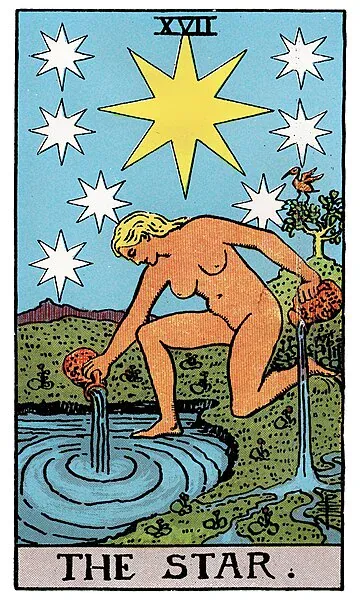
Devil & Star — entrapment loosens toward open sky
Two cards on either side of the Tower in the major arc, often read as the long passage from compulsion into renewal. The Devil is the bind one has been living inside, sometimes for years; the Star is the slow refilling of the well after the constriction releases. Together they sketch the tender, unhurried work of recovery — the kind that does not happen in a single dramatic moment but in the long hours after.
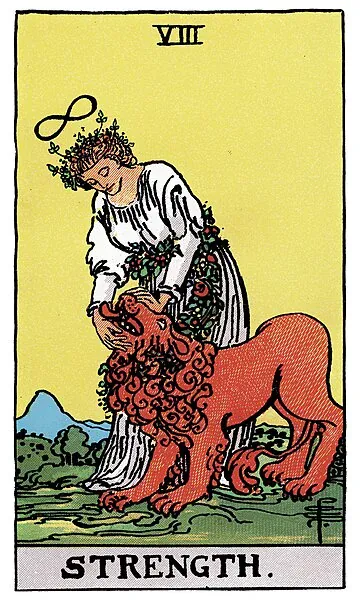
Devil & Strength — being tamed and taming
Both cards picture a human and an animal at close quarters, but the relationship is mirror-opposite. Strength shows the woman cradling the lion's jaws — neither breaking nor coercing, simply present. The Devil shows the figures bound but unaware. Side by side, the pair tends to surface a careful inquiry about how one is meeting one's own appetite, anger, fear, or longing — through tenderness or through suppression-and-bondage.
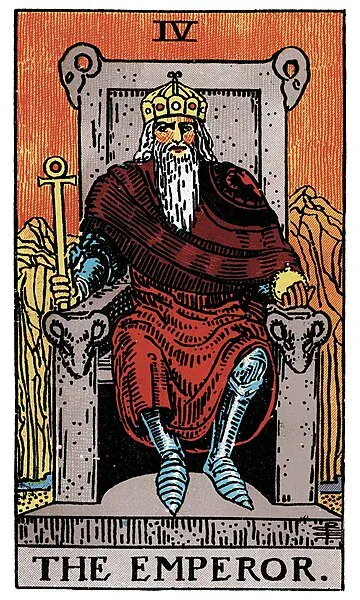
Emperor & Empress — structure meets flow
Two of the deck's most archetypal cards meet — often read as cosmic parents, but the pair is more useful as a journaling tool for noticing the inner balance between structure and flow, between what one builds and what one nourishes. Together they tend to surface a question about which of these two postures one's current life is over- or under-using.
Empress & Hierophant — nature meets institution
Two cards of given form meet from opposite vantage points. The Empress is form arising from earth — instinctive, embodied, seasonal. The Hierophant is form transmitted by lineage — codified, taught, repeated. Together they tend to surface a journaling inquiry into which of one's current rhythms are biological and which are inherited, and how the two are negotiating with each other in any given week.
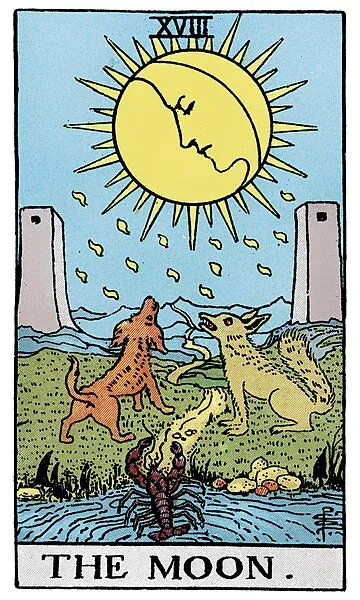
Empress & Moon — nurture under uncertainty
The Empress is daylit fertility; the Moon is the same fertility seen by a different light, where outlines blur and the unconscious takes the foreground. Together they tend to surface inquiries about creative work, fertility, intuition, and any form of nurturing that one is doing without full visibility into the outcome. It is the pair of the long gestation — the one whose shape will only be known later.
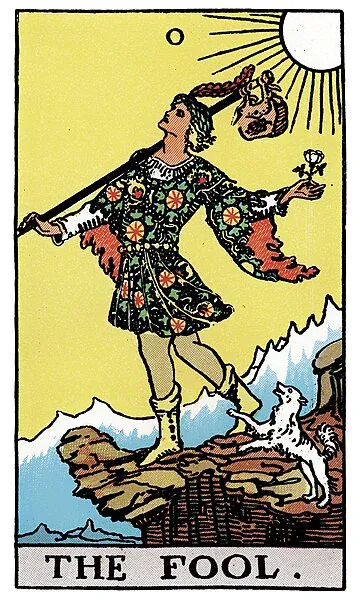
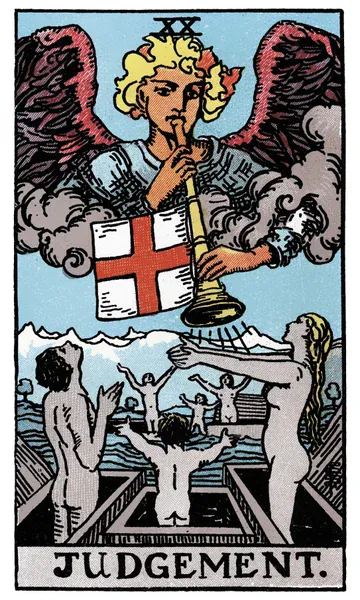
Fool & Judgement — resurrection invites the next leap
Two cards of beginning meet, but each at a very different point in the spiral. The Fool steps off the cliff for the first time. Judgement steps out of the coffin after a long undoing. Together they tend to surface a tender question about what happens after a major reckoning: how to begin again without erasing what one has just learned, and how to heed a real call without re-staging the old leap.
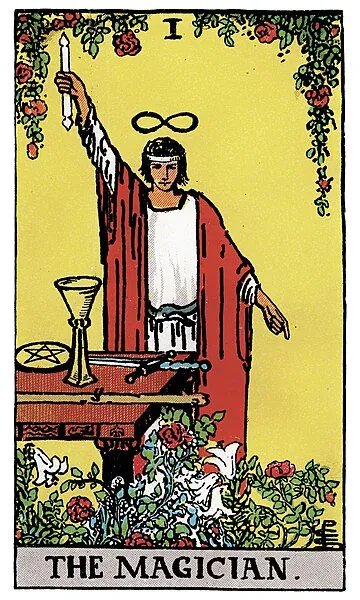
Fool & Magician — the unconditioned and the intentional
Two cards of beginning sit at the very front of the deck, and reading them together can feel like reading the first two notes of a piece. The Fool is the unconditioned spark — open, undecided, unencumbered. The Magician is the same energy gathered into focus — tools laid out, intention named, hands rolled up. Together the pair tends to invite a journaling reflection on which posture is being asked of one's current beginning.
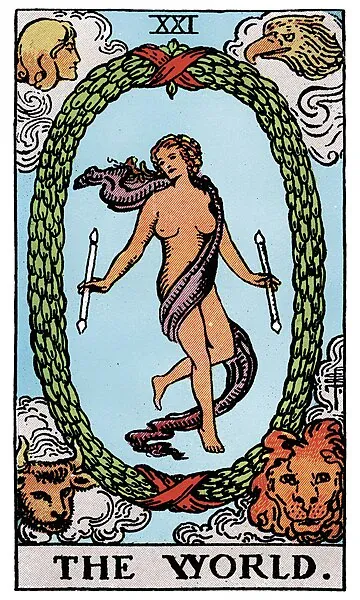
Fool & World — beginning meets completion
The first and last cards of the major arc share the page, and the pair almost always surprises by how quietly it lands. The Fool is the open step into the unknown; the World is the integration of a long arc into a single body. Together they tend to surface a journaling inquiry into the cyclical nature of one's own progress — that completion is itself the threshold of a new beginning, and that beginnings carry the whole arc inside them.
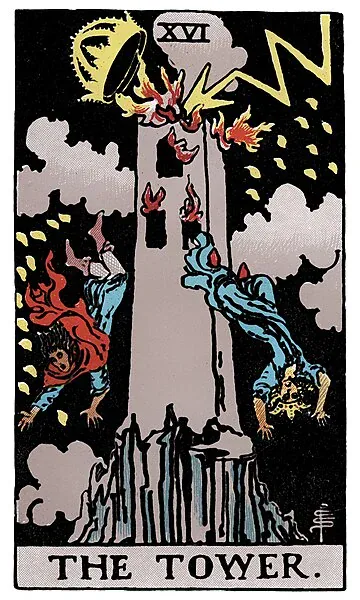
Hanged Man & Tower — voluntary and forced surrender
Two cards of upheaval meet, and their juxtaposition can be sobering. The Hanged Man is the inversion one chooses — the willing pause, the deliberate change of perspective. The Tower is the inversion that arrives without consent. Together they tend to surface a journaling inquiry about where one has been refusing a small voluntary surrender, and what larger forced one might be on its way to deliver the same lesson.
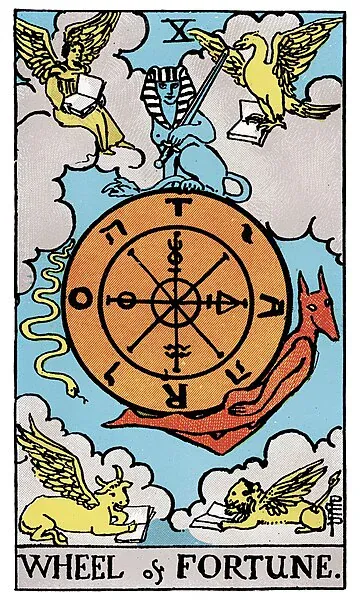
Hanged Man & Wheel of Fortune — suspension and motion
Two cards of orientation meet, but they reach the truth from opposite directions. The Wheel turns; the Hanged Man stays still and lets the turning happen around him. Together they tend to surface a journaling inquiry into one's relationship with timing — when a season is asking to be ridden, and when it is asking to be witnessed without intervention.
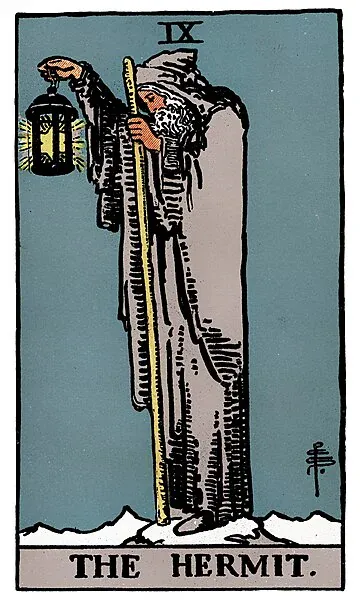
Hermit & Lovers — solitude meets union
Two cards of orientation toward another meet, but they hold opposite poles. The Hermit lifts the lantern and walks alone; the Lovers turn toward each other and choose. Together they tend to surface a journaling inquiry into the relationship between one's solitude and one's bonds — that the depth of each tends to draw from the same well, and that neither is real without the other.
Hermit & Star — lantern meets starlight
Two cards of light meet, but each carries its own texture. The Hermit's lantern is held in the hand — local, deliberate, walking with you. The Star's light is given freely from above, indifferent to whether anyone is below to receive it. Together they tend to surface a journaling reflection on the kinds of guidance one is receiving, and the kinds one has been overlooking.
Hierophant & Lovers — public vow meets private love
Two cards of bond meet, but their geometry differs. The Hierophant joins under a tradition's roof — vow witnessed, form transmitted. The Lovers face each other under their own sky — choice made, alignment named. Together they tend to surface a journaling inquiry into the relationship between one's intimate truth and the public form that holds it, and how to negotiate when the two ask for different things.
Chariot & Strength — outer mastery meets inner mastery
Two cards of will appear together, but their leverage is opposite. The Chariot bridles two opposing forces with reins held high — control through directional intent. Strength gentles the lion with a quiet hand on its jaw — control through patient relationship. The pair tends to invite a journaling distinction between the kind of mastery one is currently performing and the kind the situation actually rewards.
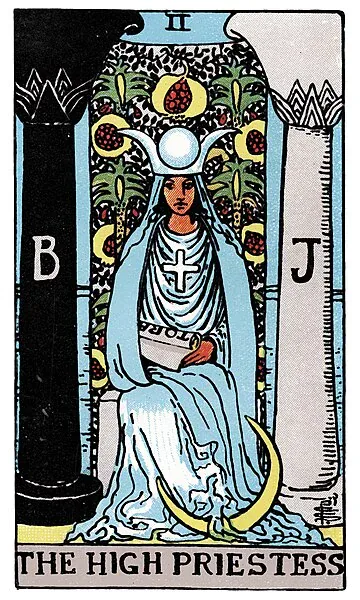
High Priestess & Magician — receptive meets active
Two cards of skilled practice meet, opposite poles of one current. The Magician gathers the four tools and points heaven down to earth — articulating, naming, doing. The High Priestess sits between two pillars, scroll half-hidden — receiving, holding, knowing without speech. The pair tends to surface a journaling inquiry into which mode the present question is actually built for, and where the practitioner has been confusing one for the other.
High Priestess & Moon — inner veil meets outer veil
Two cards of indirect knowing meet. The High Priestess holds a veil that sits between you and the inner waters — a veil one can walk through with practice. The Moon's veil sits between you and the outer landscape — a veil that thickens precisely when one tries to see through it directly. The pair tends to invite a careful journaling distinction between intuition's silence and uncertainty's fog, and how each one asks to be met.
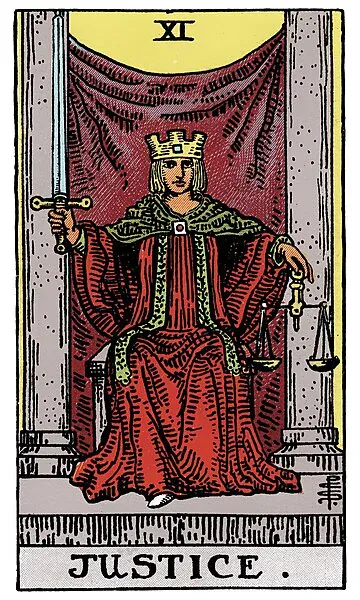
Judgement & Justice — cosmic accounting meets worldly accounting
Two cards of reckoning meet, but their tribunals differ. Justice weighs what was asked of you against what you did, in this life, with these people, around this contract. Judgement summons you upward, the trumpet sounding through layers larger than any single agreement. Together they tend to invite a journaling reflection on where the worldly weighing and the soul-weighing have stopped agreeing, and what kind of reckoning the present question is actually built for.
Justice & Wheel of Fortune — accountability meets fortune
Two cards of consequence meet, but they explain results differently. Justice attributes the outcome to choice, agreement, proportion. The Wheel attributes it to season, cycle, the rim that comes around. Most lives are some mixture of both — and the pair tends to invite a careful journaling distinction between what one earned, what one inherited, what one happened to be standing under when the wheel turned, and how to act with integrity inside both.
Lovers & Magician — chosen union meets articulate intention
Two cards of beginning meet — both about gathering, both about commitment. The Magician gathers the four elements and points down: I will it. The Lovers gather two faces and align them under one sky: we choose this. Together they tend to invite a journaling distinction between solo intention and chosen partnership, and how the practitioner moves between the two without confusing one for the other.
Moon & Star — uncertainty meets quiet clarity
Two cards of nighttime light meet, but their light works differently. The Moon casts an unstable, dream-soaked light in which familiar things look strange. The Star pours a steadier light that one cannot will but can receive. The pair tends to invite a journaling reflection on holding both at once — being inside fog, and trusting that a quieter, less anxious light is also pouring nearby, without trying to make one cancel the other.
Moon & Sun — reflection meets radiance
Two cards of light meet, the deck's clearest day-and-night pair. The Moon's light is reflective, indirect, qualified by the seas it travels over. The Sun's is direct, embodied, generous. Together they tend to invite a journaling reflection on which kind of consciousness one's current question actually belongs to — and where the practitioner has been demanding day-clarity from a question that lives in lunar territory, or vice versa.
Star & Tower — quiet light after collapse
One of the deck's most consequential adjacencies: the structure that fell, and the quiet light that pours afterward. The Tower names what could not stay standing. The Star names what arrives without permission, after, into the space the collapse made. The pair tends to invite a journaling reflection on receiving the post-collapse light without rushing to rebuild what just fell, or denying that something has actually been freely given.
Tower & World — collapse meets completion
Two cards of ending meet, but their endings have different shapes. The Tower's ending is sudden, structural, unchosen; the World's is processional, integrated, the closing of a long arc. The pair tends to surface a journaling reflection on which kind of ending the present moment actually is — and how to honor a long arc that is finishing, even if a sudden lightning strike is also part of how it ended.
Elemental matrix (10)
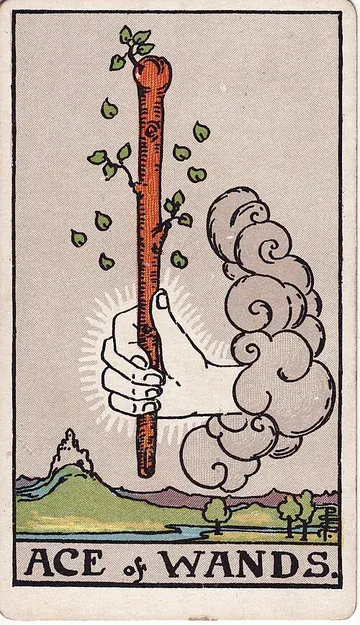
🜁 Air · 🜁 Air
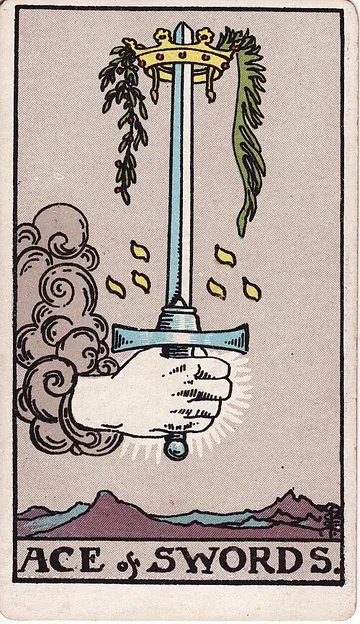
Air & Air — when thinking begins to think itself
Two airs in one spread doubles the medium of cognition. Mind meets mind, plan meets plan, voice meets voice. The pairing tends to surface in spreads where the inquiry has been intensely mental — strategy, naming, debate, decision-tree work — and where the body has slipped quietly out of the conversation. The dialectic is not air versus a feeling card; it is air noticing how thoroughly it has filled the room. The journaling invitation is to find one anchor outside thought.
🜁 Air · 🜃 Earth
Air & Earth — thought meets ground
Air carries the plan; earth carries the weight. Together they form one of the deck's most workable dialectics — the question of how a clear idea finds a body it can actually live in. The pairing tends to surface where a clean mental design is meeting an embodied constraint: budget, schedule, terrain, biology, the tolerance of other people. Neither half is the obstacle. The work is translation, slow, between two grammars that can absolutely speak to each other when neither is asked to become the other.
🜁 Air · 🜂 Fire
Air & Fire — spark meets articulation
Fire wants; air names. Together they form one of the deck's most generative pairings and one of its most flammable. Articulation can give a desire its shape; the right sentence makes the next move possible. Articulation can also harden a desire too soon, locking a still-forming impulse into a premise it will quietly outgrow. The pair tends to surface around launches, declarations, public speech, and the months in which a new direction is moving from felt to spoken. The dialectic is timing, and how much oxygen the spark actually wants.
🜁 Air · 🜄 Water
Air & Water — clarity meets feeling
Air clarifies, separates, names. Water gathers, mingles, holds. They are the two great solvents of the deck, working on different layers of the same situation. When they meet in a spread, one of them is usually being used to manage the other — thought to manage feeling, or feeling to manage the unbearableness of having to think. The pair tends to surface in seasons of grief, breakup, diagnosis, and any decision in which the data are clear but the heart is heavier than the data. The work is to let both have weight without collapsing one into the other.
🜃 Earth · 🜃 Earth
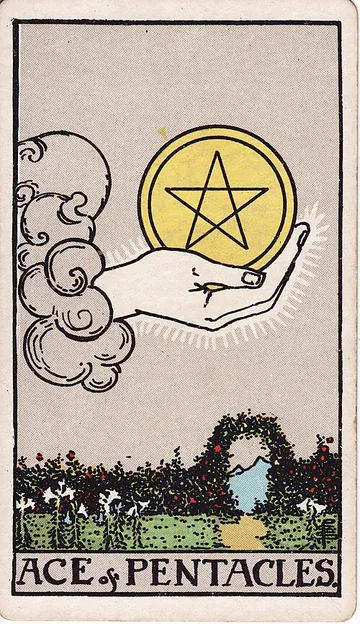
Earth & Earth — body knows what body knows
Two earths together doubles the weight of the embodied real. Body, time, money, place, materials, biology — the literal physical layer becomes the entire frame. The pair tends to surface in seasons of building, bodily change, financial reorganization, or moving house, when the spread question that arrived in language is answered most truthfully in the language of muscle, calendar, and ground. The dialectic is not earth versus a flighty card; it is earth noticing how thoroughly it has filled the room, and asking what the next slow good move actually is.
🜃 Earth · 🜂 Fire
Earth & Fire — heat meets material
Fire wants; earth requires. Together they are the deck's smith dialectic — the iron and the forge, the recipe and the appetite, the dream and the actual hours. The pair tends to surface where a strong desire is meeting a real material constraint, and where the work is to neither extinguish the want nor inflame the body. It also tends to land in seasons of long-form making — the second year of a book, the build of a craft, the months in which a vocation stops being a fantasy and starts being a daily practice. The dialectic is sustainability.
🜃 Earth · 🜄 Water
Earth & Water — soil meets rain
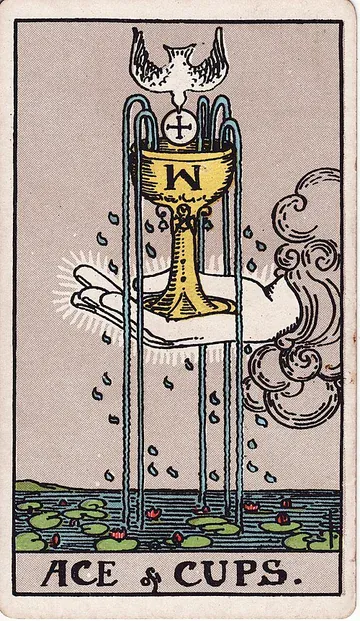
Earth holds; water moves through. Together they form one of the deck's most fertile pairings — the soil and the rain, the cup and the drink, the home and the ones who pass through it. The pair tends to surface in seasons of homemaking, caregiving, hospitality, gardening, and the slow work of letting a feeling actually shape a place. Earth alone can become dry; water alone can become unmoored. Met together, they can also flood: too much feeling on too small a ground saturates and slumps. The dialectic is absorption.
🜂 Fire · 🜂 Fire
Fire & Fire — passion's own mirror
Two fires together doubles want. Vocation, eros, urgency, will — whatever the fire is at this moment, it is now amplified, mirrored, and likely to outrun the rest of the page. The pair tends to surface in seasons of intense desire — a creative breakthrough, a new attraction, a vocational call, or the late phase of building something one has wanted for years. The dialectic is not fire versus its opposite; it is fire noticing how thoroughly it is in the room, and asking whether the chosen container is built to hold this much heat without warping.
🜂 Fire · 🜄 Water
Fire & Water — warmth meets weeping
Fire and water are conventionally read as opposites — heat and cool, action and feeling, will and tenderness. They can be opposites. They can also be steam, the form energy takes when desire and grief are working on the same situation. The pair tends to surface in seasons of love and loss layered together, projects driven by personal sorrow, or vocational calls that carry old wounds inside them. The work is not to choose one. The work is to let both touch the same question without one performing the other's collapse.
🜄 Water · 🜄 Water
Water & Water — depth meets depth
Two waters together doubles feeling. Whatever was already moving emotionally is now amplified, layered, and likely seeping into corners of the spread that are not formally about emotion. The pair tends to surface in seasons of love, grief, intimacy, family work, dream-life, and the slow turn from numbness back into sensation. The dialectic is not water versus a structuring card; it is water noticing how thoroughly it has filled the room, and asking whether the cup of the day is actually built to hold this much.
Court × Theme (4)
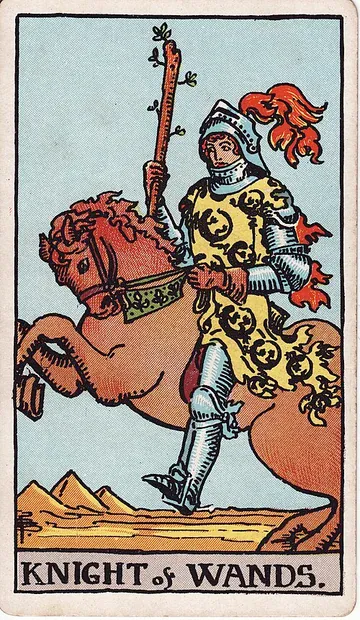
Knight of Wands × Career — momentum meets the long game
The Knight of Wands rides into a question about work, and the air in the room changes. He is the figure of bold movement, the leap, the pivot, the ambitious yes. When he lands on a career question, the dialectic that tends to surface is between impulsive momentum and the slower, less photogenic work of building something that lasts. He is not the wrong adviser. He is one voice on the council, and the inquiry is whether his is the voice the next move actually needs.
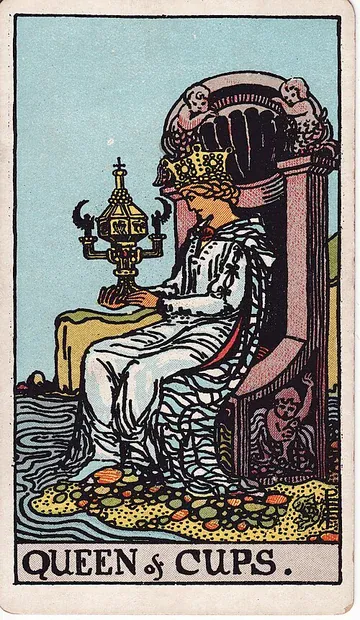
Queen of Cups × Relationship — attunement meets the edge of self
The Queen of Cups holds her cup carefully and listens with the part of the body most people forget they have. When she enters a relationship inquiry, she brings a gift — empathic precision, the ability to feel the unspoken weather of another person — and a shadow she shares with everyone who has carried this gift well. The dialectic that tends to surface is between attunement and the boundary of one's own life. Both are loving acts. The work is to know which the present moment is asking for.
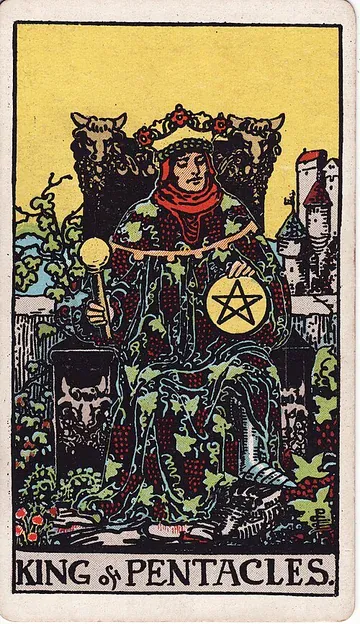
King of Pentacles × Money — stewardship meets accumulation
The King of Pentacles sits in his garden, his coin in hand, the long lineage of provision behind him. When he enters a money inquiry, he brings the deck's most grounded competence — knowing how a thing is built, how it lasts, how it feeds others. He also brings a shadow that competence carries: the slow drift from stewardship into accumulation, from sufficiency into the grip of more. The dialectic that tends to surface is the question of what enough actually looks like, and who and what one's wealth is in service of.
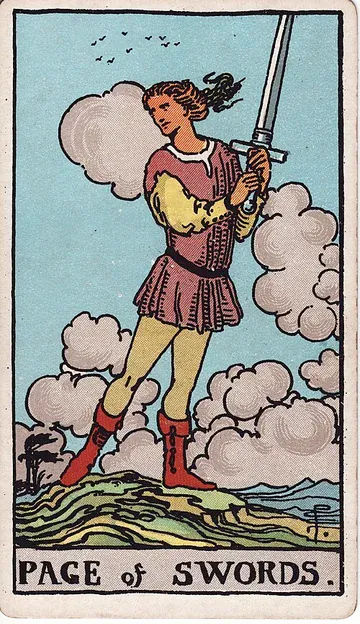
Page of Swords × Decision — curiosity meets the early yes
The Page of Swords stands on a wind-licked hilltop, sword half-raised, eyes already scanning the next angle. He is the figure of the live question — bright, restless, in love with finding out. When he lands on a decision inquiry, the dialectic that tends to surface is between his beautiful curiosity and the seduction of the early commit, the small clean answer that ends the discomfort of not yet knowing. He is not asking the question wrong. The question is whether he has lived in it long enough.
More pairings arrive in waves — we author each one by hand rather than by interpolation. If a pairing you reach for is not yet here, sit with the two card guides individually and let the dialectic surface in your own words. The voice of the page is yours.
Continue the practice
The companion practice for these combinations: how the question itself shapes what the cards can answer.
When two pip cards share a number, the same archetype crosses two suits. The combinatorial pattern that powers many pairings.
Fire, water, air, earth — and how their adjacency shapes a reading. The data layer behind the elemental matrix above.
Pages, knights, queens, kings as relational archetypes. The vocabulary the court × theme matrix draws from.