
Four of Swords · Core Meaning
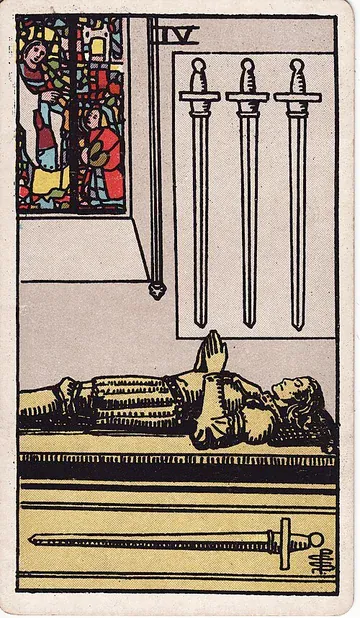
The Four of Swords is the chapel after the battle. The figure on the card is not dead — he is a stone effigy of himself, lying on a coffin within a stone room, hands folded at his chest, eyelids closed. Behind him on the wall, three long swords hang point-down, blades aimed at the body in the way a memory aims at a sleeper: insistent, but at a careful distance. A fourth sword rests horizontal along the side of the coffin, the blade still warm from the most recent fight, not yet cleaned, not yet hung up with the others. A small shaft of stained-glass light falls across a kneeling figure in prayer. The air is the cool of stone. From outside, faintly, the sound of battle is moving away.
This is the card's signature tension: the warrior choosing to look like the dead so he can stop dying. The Four of Swords is not the card of giving up. It is the card of intentional stillness — what an old warrior tradition calls the discipline of "rest like the dead for a while." The body is folded into the posture of an effigy not because the fight is over but because the next fight, the one already gathering on the other side of the chapel doors, requires a whole person to walk into it. He is purchasing wholeness with hours.
The traditional astrological signature is Jupiter in Libra, third decan — 10/13 through 10/22. Jupiter is the planet of expansion, fortune, and benevolent largesse. Libra is the sign of the scales, of weighed judgment, of the truce written down. Jupiter in Libra's third decan is a generous pause: the magnanimous truce, the lawful retreat, the sheltered space granted by ritual to the combatant. The card is built on that astrology. It is not the card of cowardice, and it is not the card of healing-because-you-have-to. It is the card of healing-because-the-tradition-says-you-may.
The kabbalistic placement is Chesed — the fourth sephirah, the sephirah of mercy and stable expansion — in Yetzirah, the world of formation. Air of Air, four. In the Tree of Life, Chesed is the first sphere below the abyss, where the abstract intentions of Kether descend into something a body can stand on. Mercy here is structural: it is the architecture of the chapel itself, the four walls, the cold flagstones, the shaft of light. The fourfold stability is not a comfort decoration. It is a held room. You can close your eyes inside it because the walls are doing the watching.
What the Four of Swords means in any spread is this: the question you brought to the table is, just now, less important than the rest you have been refusing yourself. The card answers your question by handing it back to you wrapped in a quilt and pointing at the door of the chapel. Whatever you came to ask about — the relationship, the role, the move, the diagnosis — needs a rested seeker before it can be answered cleanly. The card does not predict. It prescribes. It says: lay this question down for one cycle of sleep. Pick it back up after.
Read the Four of Swords as the photograph of someone who has chosen, on purpose, to be very still. The stillness is not absence. The stillness is a form of action so quiet that it looks, from the outside, like nothing. From the inside, it is the most coordinated thing the soul has done in months.
Four of Swords · Love & Relationships
A pause is not a breakup, and this card spends its entire love reading insisting on the difference. Not even, in most cases, a real fracture. A breath. A held silence. A stretch of separate sleep that lets the relationship become recognizable to itself again. The card is asking the partnership for what couples therapists call differentiation — the capacity to stand briefly apart so that what comes back together is two whole people, not two halves frantically clutching.
For an existing long-term partnership, the Four of Swords often arrives in the season after a long sequence of small fights — the kind of fights that did not have a single dramatic cause, just the slow accumulation of work stress, money pressure, family logistics, parenting attrition, and the endless small renegotiation of who does the dishes. Both of you are tired. Neither of you is wrong. The card recommends a deliberate stretch where the two of you stop trying to fix the relationship and instead try to fix your own sleep, your own bodies, your own nervous systems. You are not being asked to talk it out. You are being asked, both of you, to rest. The talk that follows the rest is the one worth having.
For a new spark or early-stage relationship, the Four of Swords upright is unusual but not negative. It often means one of the two people needs a quiet beat before the relationship can deepen — and that the relationship is healthy enough to allow it. They have not gone cold. They are catching their breath. If they are recovering from a previous attachment, from a long stretch of singleness that took on its own quiet shape, from a stretch of overwork that used up their availability, the card validates the pause. Trust the chapel. The figure inside is not avoiding you. The figure inside is becoming someone who can love you well.
For a single seeker asking whether love is on the way, the Four of Swords answers with a tilt of the head. The card says: love is closer than you think, and the version of you running on this little sleep is not the one ready to meet it. The work of the season is not searching, posting, swiping, attending — the work is restoring yourself to a baseline where a real connection can land. Lovers find rested people. Anxious people find anxious lovers. Lay down the search for one full lunar month. Sleep. Eat. Walk. Then re-enter the field as someone the right person can actually meet.
For someone in love after a wound — a divorce, a long grief, a betrayal that cost them their sense of safety in a partnership — the Four of Swords is one of the kindest cards the deck offers. It says the convalescence is allowed. The grief did not kill you, and the next stage is not a triumphal re-entry; it is the chapel. Mourn as long as you need. The fourth sword is not yet hung up. The blade from the most recent fight has not been cleaned. The card asks you not to rush the cleaning. The hand needs to stop shaking first.
For seekers in the disambiguating question — "is this person actually in love with me, or are they just preoccupied" — the Four of Swords upright says: preoccupied, but the preoccupation is not with someone else. They are tired. They have a thing in their life right now that is using their attention completely — a deadline, a sick parent, a body that is not cooperating, an old wound resurfacing. Their feelings about you are intact. Their bandwidth is not. Read silence here as exhaustion, not as cooling. The card distinguishes those two carefully, and it almost always names the first.
For someone considering reconciliation after a breakup, the Four of Swords advises against fast reunion. Both of you have been fighting recently — even if the fighting was internal, alone in your respective rooms — and rushing back together while the swords are still warm in the hand creates the next breakup, not the next chapter. Wait until both blades have been hung up. Wait until both bodies have slept through a full night without checking the phone. Then talk.
For seekers in long-distance relationships, the Four of Swords upright can describe the necessary stretch of separate routines that lets each of you restore yourself before the next visit. The phone calls have grown thin not because the love has thinned but because the calls have become another performance of presence on top of overworked days. Cancel two calls this week. Sleep instead. Send one short text that says: I love you, I'm tired, I'll call you Sunday rested.
For seekers in queer relationships, polyamorous configurations, or any partnership architecture that has its own particular logistic burden, the card has a specific kindness. It honors that the relationship has been doing more invisible work than a straight monogamous default would have demanded — coming-out conversations, family negotiations, scheduling labor across multiple partners, identity protection in unsafe contexts. The fatigue is real. The chapel is allowed.
The Four of Swords' particular love language is rest as offering. Couples who love through this card love by letting each other sleep. They love by leaving each other alone with a book on a Sunday. They love by not needing to be entertained. They love by being, in the same room, in the same silence, with the same slow breathing. The romance is not in the intensity. The romance is in the safety of being unconscious next to each other and waking up still trusted. If your love can do that, the card is saying, your love can do anything.
A small caution lives inside this beautiful card. The Four of Swords' rest is intentional and time-limited. It is not the same as the avoidant partner's permanent retreat into the silent-treatment chapel where the door never reopens. If you are the partner choosing the chapel, set a return date — even just for yourself, even just on a calendar nobody else sees. The card honors voluntary stillness. The reversed card describes what happens when the stillness becomes a hiding place. We will return to that.
Four of Swords · As Feelings
Protected, recovering, quiet: that is the whole texture when this card answers for what someone feels about you. They feel something real about you, but the feeling is currently held in the chapel posture. They have, in their own life right now, a stretch of necessary stillness that is making them less expressive than they want to be. The body language the card portrays is not coldness. It is the deliberate folded-hands pose of someone who has chosen, on purpose, to stop being demonstrative for a season.
For a partner who is reserved by nature, the Four of Swords amplifies the reservation in a specific direction. They are not hiding feelings from you. They are storing them carefully, the way a knight's effigy holds the prayer position — visible, deliberate, unembarrassed. Read silence here as devotion in a posture. They are protecting what they feel from being broken by their own current depletion. The feelings will resurface, intact, when they have the energy to hold them up properly.
For a partner who is naturally demonstrative, the Four of Swords describes an unusual season. They have, briefly, gone quiet in a way that is striking. Their normal warmth has narrowed to a small steady candle rather than a chandelier. This unsettles seekers because the contrast is sharp. The card asks you to read the candle, not to grieve the chandelier. The candle is still lit. They are conserving. Whatever made them this tired — work, family, a private health concern, a personal loss they have not told you about — has redirected the available energy inward.
For a new connection where the Four of Swords lands in the feelings position, they feel something — clearly, definitely, more than they had expected to — and they feel they need to slow down to honor it. Rest and distance look identical from outside, and this is rest. They are doing something more careful: they are protecting the early feeling from their own fatigue. This is, when read accurately, one of the more flattering things a new partner can be doing. They are not treating you like another casual round. They are treating you like a thing worth being rested for.
For a partner you have been with for years, the Four of Swords in feelings means the depth is steady, the love is intact, and the present moment is one of internal repair. They have begun a piece of inner work — therapy, journaling, a private confrontation with an old pattern — that is using their attention. The relationship is the safe container that allows the work. They love you the way the chapel walls love the praying figure inside: unmoving, holding the room.
For someone who has not yet declared, the Four of Swords as feelings can read as careful weighing. They are taking the question of you seriously enough to retreat from the surface noise and consider it. They are not stalling out of indifference. They are stalling out of respect. The Jupiter-in-Libra third decan is the truce's careful weighing — they are weighing the relationship on the scales not because it is in question, but because they want to walk into the next stage with a clean answer.
If you have been reading their texts looking for warmth and finding only short, polite, well-spaced responses, the Four of Swords feelings interpretation says: the warmth is in the spacing. They are giving you the small attention they currently have. They are not flooding you with anxious overcommunication. The person who is depleted but cares answers each text once, well, on their own time, and goes back to bed. The person who does not care answers nothing, or answers in a flurry of empty maintenance. Read which pattern this is.
A small caution: the Four of Swords feelings reading is not infinitely sustainable on the seeker's side. If the chapel posture continues for many months without any return to engagement, the feelings reading begins to drift toward the reversed card — the partner who has used "I just need rest" as an indefinite reason not to show up. We will read that in the reversed section. Upright, you are within the cycle of healthy convalescence. The figure will rise. The fourth sword will be hung up next to the others. The room will reopen.
Read as feelings, the Four of Swords gives this cleanest summary: warmth held in deliberate stillness. The body is not braced against you. The heart has decided. The voice is rationing itself. Trust the rationing. Trust the posture. Trust that what the figure on the coffin is doing is not absence — it is the most concentrated form of presence the warrior has access to in this season.
Four of Swords · Career & Work
Work under this card asks for a deliberate pause, not an exit. The role is not over. The career is not in collapse. The card describes a specific season — sometimes a week, sometimes a quarter, sometimes the full sabbatical — in which the worker is asked to stop adding new projects and instead let the current ones land cleanly. The fourth sword has not yet been hung up: the most recent fight is still warm in the hand. The card says, with quiet authority, that the warm sword needs to be cleaned and put away before the next campaign begins.
For someone considering whether to stay in a current role, the Four of Swords upright is a confirmation of the role and a critique of the pace. The role is not the problem. The pace is. The card asks you to renegotiate hours, scope, deliverables, or just your own internal pressure before you decide whether the role is wrong for you. Most "I should quit" feelings, examined inside the chapel, are revealed to be "I should sleep" feelings. Sleep first. Decide after.
For someone considering a new role, the Four of Swords upright says wait. Not no — wait. The opportunity may be real, but you are evaluating it from a depleted nervous system, and the depleted nervous system over-weights either the panic ("I have to take it, I can't keep doing this") or the inertia ("I can't possibly start something new, I'm too tired"). Neither is a clean answer. The card recommends taking a literal break — a long weekend, a week of leave, a quiet Saturday with the phone in another room — and re-asking the question rested. The right answer becomes obvious to a rested body.
For an entrepreneur or freelancer, the Four of Swords upright reads as a gentle warning that the practice has been running on adrenaline for too long. The clients are real. The revenue is real. The product is shipping. And privately, the founder has stopped sleeping well, has stopped exercising, has stopped reading anything that is not work-related. The card asks for a quarter of intentional reduction. Cut the launch list by half. Cancel the conference. Take Friday afternoons off. The business will not collapse. The founder will become someone who can run it for another decade rather than another six months.
For a creative practice — writing, painting, music, code as art — the Four of Swords upright is the card of the fallow season. The well has been drawn from for a long stretch. The work has shipped, has been seen, has been received. And now there is nothing more to say for a while. The card validates the silence. Real artists know this season — the months or sometimes years between major works when the soil is reforming itself. The card warns against forced productivity in this stretch. What is made under duress in a fallow season is rarely good and almost always tires the maker further. Lie fallow on purpose. Read other people's work. Walk. The next thing arrives when the soil is ready.
For someone who has been recently laid off or is going through an involuntary career transition, the Four of Swords upright is a profound kindness. The card says: this is the chapel you did not know you needed. The job that ended was using more of you than you realized, and the body has been waiting for permission to collapse. Permission is granted. Take three weeks before you start applying. Cry if you need to cry. Sleep at noon. The next role finds rested people faster than it finds frantic ones, and the rested person interviews better, negotiates better, and chooses better than the frantic one.
For someone in a leadership role, the Four of Swords upright has a particular meaning. It often signals that the leader's team is mirroring the leader's depletion. The team is tired because the leader is tired. The card asks the leader to model rest publicly — to take an actual vacation that the team can see, to leave at five on Fridays for a month, to stop sending Slack messages at 11 PM. Rest, modeled visibly from the top, is a form of leadership that no amount of strategy can replace.
For someone on a health-related career absence — medical leave, parental leave, eldercare leave — the Four of Swords upright is unambiguous validation. You are not falling behind. You are doing the work the chapel was built for. Return when the body returns, not when the calendar says you should.
For a job-search question, the Four of Swords advises a specific tactical move. Stop applying for two weeks. Do not refresh job boards. Do not check LinkedIn. Use those two weeks to write down what you actually want from the next role — not what you would settle for, not what the market is offering, but what would make you say yes without flinching. Two weeks of clarification beats two months of frantic applications. The applications you send afterward will be sharper, narrower, and more likely to land.
For someone in a creative collaboration that has soured — a co-founder dispute, a band breakup, a writers' room implosion — the Four of Swords upright recommends chapel time before any post-mortem. The fight is too recent. Both blades are still warm. Schedule the conversation for two weeks out. Sleep. Walk. Then, with a rested nervous system, write down what actually happened and what you actually want next. The conversation that follows the rest is the only one worth having.
For someone in a stable but slowly dulling role — the comfortable cubicle, the nice salary, the team that does not challenge you — the Four of Swords upright reads as permission to stay where you are for one more cycle. The dullness is not the alarm bell. The exhaustion is. Address the exhaustion first. The role question can wait another quarter. Often, when the exhaustion lifts, the role becomes interesting again because you can actually see it. Sometimes, when the exhaustion lifts, you finally see clearly that it is time to move. Either is fine. The chapel produces clean answers. The frantic floor of the open-plan office produces only more questions.
Four of Swords · Money & Finances
Hold is the whole instruction here — not collapse, not windfall, simply a hand taken off the controls. The card asks you to stop making moves for a stretch. Stop refinancing, stop optimizing, stop calculating, stop looking. The money is doing what money does in a held position: sitting, slowly compounding or slowly draining at known rates, while the seeker rests from the active management of it.
For a question about a financial decision — should I buy, should I invest, should I consolidate — the Four of Swords advises a delay. Not no, but not now. The card recommends a specific waiting period, usually thirty to ninety days, in which the seeker does not act on the question. Money decisions made in fatigue are nearly always worse than money decisions made in rest. Even if the rate goes up slightly during the waiting period, the cost of acting tired exceeds the cost of acting late.
For someone who has been managing scarcity, the Four of Swords upright can describe a brief but real plateau. The income has stabilized. The bills are being paid. The runway, while not generous, is not actively shrinking. The card asks the seeker to use this plateau for what plateaus are for: a chapel rest. Stop doing midnight spreadsheet anxiety. Stop refreshing the bank app. The numbers will be the numbers tomorrow. Sleep tonight. The next week of clear-headed work will be more financially productive than another midnight session of compulsive checking.
For an investor, the Four of Swords upright is the card of holding a position rather than trading. The instinct to rebalance, to optimize, to react to news is itself the trap. The card invites the discipline of the index investor: stop checking, stop adjusting, let the structure work. Jupiter in Libra gives benevolent slow growth; the seeker who can leave the position alone benefits more than the seeker who tinkers.
For someone in financial recovery from a debt cycle, the Four of Swords upright is one of the kinder cards. It marks the season after the painful acute phase — the consolidation has happened, the bankruptcy or settlement has cleared, the credit is slowly rebuilding. The card asks for patience. Recovery from debt is measured in years, not months, and the seeker who tries to sprint back to where they were creates the next debt cycle. Hold the rebuilt baseline. Let it compound quietly.
For a question about a major purchase — a house, a car, a significant tool — the Four of Swords upright recommends a delay. Whatever you are about to buy will still be available next month. The desire to buy now, urgently, is often itself the symptom of fatigue: the exhausted nervous system reaches for retail therapy as a shortcut to rest. Real rest is cheaper. Take the actual rest. If the desire to buy is still there, sharply, in thirty days, then buy.
For windfall — inheritance, bonus, unexpected refund — the Four of Swords upright is unusual and specific. It says: do not deploy this money for ninety days. Park it in something boring and safe. Let yourself acclimate to the fact of having it before you decide what it should become. Most poor windfall deployments come from acting within the first month, when the money still feels unreal. Ninety days makes it real. Real money gets used wisely.
For someone who has been giving more than they can sustain — the friend who picks up every check, the family member who covers everyone's emergencies, the donor who cannot say no — the Four of Swords upright is a quiet permission to pull back briefly. Not to become stingy. Not to become resentful. Just to rest the giving muscle. The Jupiter generosity of this card is real, but Libra's scales are also real. Give again when the giving feels like surplus rather than depletion.
For a financial question with a spiritual frame — am I in right relationship with money, am I being wise — the Four of Swords answers gently. Right relationship with money is not, today, an investment optimization. Right relationship with money is, today, the simple act of looking at the bank balance once and then closing the app for a week. The frantic relationship with money is the wrong relationship. Rest the relationship. The right answers to the deeper questions become visible when the relationship has stopped being so constant.
A practical move when this card appears in a money question: schedule one hour, one time per week, as your money hour. Do everything financial in that hour. Outside the hour, the money does not exist as a thing to think about. The discipline of the chapel applied to finances is one of the most underrated wealth-building practices.
Four of Swords · Health
Rest, without qualification or cleverness, is what this card puts on a health question. The body has been asking for rest. The card now formally writes the prescription. Sleep, more of it, deeper than recently, on a more regular schedule. The chapel posture in the image is, read literally, a person lying down with closed eyes and folded hands — and the card means exactly that. Lie down. Close your eyes. Fold your hands.
The card's elemental signature is Air, and within Air it is the throat, the lungs, and the nervous system. The Four of Swords' physical territory is the breath itself — slow, deep, restorative breath — and the nervous system that the breath modulates. Read the card in a health question as direction toward the parasympathetic: the slowed-down, rest-and-digest mode that the modern day rarely allows. The vagus nerve has been begging for attention. The card grants the audience.
For someone managing acute illness — flu, infection, post-surgical recovery — the Four of Swords upright is the kindest possible direction. Cancel obligations. Decline events. Stop trying to "stay productive" while sick. The body is doing immune-system work that requires the calories you would otherwise spend on standing up. Lie down without guilt. The work email will wait. The body will heal faster than your mind expects when the mind stops fighting it.
For someone managing a chronic condition — autoimmune, chronic pain, long COVID, anxiety disorder, depressive disorder — the Four of Swords upright describes the maintenance baseline. The condition is not being cured this week. The condition is being held stable through the practice of rest. The card asks the seeker to honor the rest practice as an active treatment, not as a failure to do something more impressive. Lying down is a treatment. Saying no to a social event is a treatment. Going to bed at nine instead of midnight is a treatment.
For mental health questions specifically, the Four of Swords upright is one of the deck's most useful cards. It marks the convalescent phase after a depressive or anxious season. The acute storm has passed. The body is no longer in crisis. And the temptation, immediately, is to return to full speed and prove that one is "back." The card warns against this. The convalescent phase is its own phase, and skipping it is the most reliable way to relapse. Honor the slow weeks. Read books. Walk slowly. Eat soft foods. Sleep ten hours when ten hours is what the body asks for. The next stable year is built in this convalescent stretch.
For sleep-related questions specifically — insomnia, sleep apnea, fragmented sleep, exhaustion that does not lift — the Four of Swords upright validates the seriousness of the question. Sleep is not a luxury. Sleep is the foundation on which every other health metric stands. The card asks for a clinical investigation of the sleep itself — a sleep study if needed, a sleep-hygiene reset if not, a stop on caffeine after noon, a wind-down protocol that does not include screens. Treat the sleep as if it were the diagnosis. Often, it is.
For a person dealing with burnout — the specific clinical condition, not the casual word — the Four of Swords upright is a long-term card. Burnout recovery is measured in months, sometimes years, and the card validates that timeline. Three weeks of vacation is not enough. Three months of reduced workload, regular therapy, restored sleep, and the gradual re-introduction of pleasure that has nothing to do with productivity — that is the actual prescription. The card is the literal chapel built into the schedule of recovery.
For someone in physical-therapy recovery from injury or surgery, the Four of Swords upright says: do the boring exercises, in the boring sequence, on the boring schedule. The recovery protocol works. The seeker who modifies it impatiently, skips the slow weeks, returns to the gym before the practitioner clears them — that seeker re-injures. The chapel is the protocol. Trust it.
For someone with a digestive or somatic complaint that has resisted explanation — the headaches, the gut discomfort, the random fatigue — the Four of Swords upright suggests the somatic loop is the loop to investigate. The body has been holding stress in tissue. Rest, sleep, and parasympathetic-activating practices (slow walking, gentle yoga, breath work, time in trees, time near water) often do more for these complaints than additional tests. Begin there. Tests can follow if the rest does not move the needle.
Authorized rest is not a treatment plan and this is not medical advice. Keep your practitioners. Take your medication. The card describes a felt season — the season of authorized rest — not a diagnosis. What it offers is the structural permission to slow down that contemporary culture systematically denies. Receive the permission. Let the body do what only stillness allows.
Four of Swords · Spirituality
Contemplative withdrawal — the deliberate retreat into stillness that mystical traditions across cultures have known under different names — is what this card formalizes. Vipassana retreat. Christian desert seclusion. Sufi khalwa. Zen sesshin. Jewish yom kippur. The card honors that lineage. It says the soul, like the body, has its own protocols of authorized stillness, and that the seeker who refuses them eventually breaks under the accumulated noise of an unprotected life.
The kabbalistic placement is Chesed, the sephirah of mercy, in Yetzirah, the world of formation. Chesed is the first sphere where the abstract becomes architecture, where the divine intention takes on a containing shape that a body can stand inside. The Four of Swords is, spiritually, the chapel — the literal architecture of mercy, four walls and a roof and a stained-glass window, built so that the soul can lie down without being seen by the marketplace. The chapel is not where spiritual work is performed. The chapel is where the soul is held while it does no work at all.
For seekers in active spiritual practice — meditation, prayer, ritual, devotional work — the Four of Swords upright validates the season of practice that does not feel like progress. Plateau seasons in real practice are not failures. They are the periods when the prior breakthrough is being absorbed into the body. The seeker who tries to force the next breakthrough during the absorption phase short-circuits the absorption. The card asks for the discipline of doing the practice exactly as it has been practiced, without expectation, for the duration of the plateau. The next opening is on the other side of the patience.
For seekers exploring belief, in transition between traditions, or simply uncertain what they believe, the Four of Swords upright is a kindness. It says: the question of what you believe does not need to be resolved this year. Stop reading new books on it. Stop attending new events. Sit with the unresolved question in a quiet room for a while. The right tradition, or the right syncretism, or the right private cosmology, becomes visible to a soul that has stopped scanning the horizon for it.
For seekers in a specific tradition — a yogi, a monk, a witch, a kabbalist, a contemplative Christian — the Four of Swords upright recommends a return to the foundational practice rather than the advanced one. The simple breath meditation. The basic morning prayer. The unornamented daily ritual. Advanced practices done from depletion are not advanced. They are noise. Return to the simple. Stay with the simple until simplicity is restored as a felt baseline.
For seekers in grief, the Four of Swords upright is the card of the chapel's particular kindness toward mourning. Grief is not a problem to be solved. Grief is a season to be inhabited. The card asks for the discipline of letting grief have its time. Cancel the parts of life that demand performance. Eat with one or two trusted people. Read poetry. Sleep. The grief moves on its own schedule. The chapel does not hurry it.
For seekers who have been doing intensive shadow work, deep therapy, ancestor work, or other psychologically demanding inner practice, the card is the literal chapel that the work requires. Inner work without rest periods is destabilizing. The card recommends explicit rest weeks built into any sustained inner practice — a week per quarter at minimum, where the practice stops and the body simply lives in ordinary daily life. The integration of the inner work happens in those weeks. Skipping them is how seekers end up overwhelmed by their own practice.
A practical 30-minute spiritual practice the card invites: lie on the floor of a quiet room, palms up at your sides, eyes closed. Not on a yoga mat — directly on the floor or on a thin rug. Let the floor be cold against your back. Set a 30-minute timer. Do not meditate. Do not try to relax. Do not visualize anything. Simply lie there, with the floor's coldness and your own breath and the random thoughts that come and go. When the timer ends, get up slowly. Drink a glass of water. Eat something simple. Resume the day. This practice, repeated weekly, is the Four of Swords made into ritual. It is small. It is cheap. It is, for many seekers, more transformative over a year than far more elaborate spiritual programs.
For questions about path, the Four of Swords answers that you are aligned, but you have been over-traveling on the alignment. Stay where you are for a season. Travel less. Read fewer teachings. Practice the small daily discipline you have already chosen. The path appears clearly to a seeker who has been stationary long enough to feel where they actually stand.
Four of Swords · Yes or No
Soft no — or, more precisely, "not yet."
The Four of Swords is one of the deck's clearest "wait" cards. Whatever you are asking about, the card's first instinct is to delay. Not because the answer is no — often the underlying answer, asked at a better time, would be yes — but because the seeker is asking from a depleted state and the card refuses to provide a clean answer to a question asked in fatigue. Rest first. Re-ask later. The answer that comes back from a rested seeker is the one to trust.
For yes-or-no questions about a relationship — should I commit, should I propose, should I move in, should I leave — the Four of Swords advises a delay. The decision the card honors is the decision made by a rested nervous system, not the decision made by an exhausted one. Take three weeks. Sleep. Then re-ask the question. The answer that emerges will have more authority than any answer you can produce right now.
For yes-or-no questions about a job or career move — should I take the offer, should I quit, should I pivot — the same answer applies. Wait. Most career decisions made in burnout are bad career decisions, not because they are wrong on paper but because they are answering the wrong question. The depleted seeker asks "what will fix this?" The rested seeker asks "what do I actually want next?" Those produce different answers, and only the second one is worth acting on.
For yes-or-no questions about a financial action — should I buy, should I sell, should I borrow — the card says wait. Money decisions made tired are systematically worse than money decisions made rested, even when the math looks the same on paper. The chapel period is, financially, the most valuable thirty days you can give yourself.
For yes-or-no questions about a confrontation or difficult conversation — should I send the message, should I make the call, should I have the talk — the Four of Swords is unusually clear: not yet. The conversation conducted from a depleted state will be the wrong conversation. The same content delivered from a rested state will land entirely differently. Wait until you have slept three good nights in a row. Then have the conversation. The version that arrives after the rest is almost always different — more honest, less defensive, less performative — than the version you were going to have tonight.
For yes-or-no questions about a creative project — should I publish, should I show this, should I send this in — the card recommends a brief hold. Sit with the work for one more week. Read it again rested. Often the work is better than your tired self thought; occasionally it has a flaw the tired self could not see. Either way, the version released from rest is the version worth releasing.
For yes-or-no questions about timing — will it happen, when will it happen — the Four of Swords upright suggests the answer involves more time than the seeker hopes. Whatever it is, it will not happen this week. It will not happen during this depleted stretch. It happens in the next phase, after the rest. Trust the spacing. The thing comes to rested seekers more reliably than to frantic ones.
The only category where the Four of Swords answers a clear yes is the question "should I rest?" To that question, in any phrasing — should I take the day off, should I cancel my plans, should I sleep in, should I stop pushing — the card is an unambiguous, emphatic yes. Rest is the one action the chapel sanctions immediately. Everything else waits.
If the question was: am I doing enough? The card answers, gently: you have been doing too much, for too long, and the question itself is a symptom. Stop. The chapel walls do not measure productivity. They measure presence. Be present in the rest. The doing returns when its time comes.
Four of Swords · Advice
Stop adding things to your life for one full cycle. Not a dramatic removal of existing obligations, not a cancellation of everything — simply no new commitments while the current ones land. The chapel posture is sustainable for a stretch precisely because the seeker has stopped picking up new swords. The fourth sword is heavy enough. Hang it up. Then rest.
Concrete instruction one: schedule a literal day of rest within the next seven days. Block it on the calendar. Tell the people who would otherwise reach you that you are unavailable. On the day, do not run errands. Do not catch up on emails. Do not finally clean the closet. Lie down. Read something slow. Walk in a park. Eat foods that do not require preparation. Be unproductive on purpose. The card responds to the gesture of dedicated rest the way the body responds to a cold glass of water on a hot day — immediate, grateful, restored.
Concrete instruction two: cancel one thing this week that you do not actually need to do. The wedding you do not really want to attend. The dinner with the colleague you tolerate. The volunteer commitment that has stopped serving anyone, including you. The card is asking you to identify one obligation that is purely inertial — happening because it has been happening — and remove it. Not all of them. Just one. Notice the relief. The relief is information.
Concrete instruction three: sleep one full hour earlier tonight than you usually do. Not as a permanent change. Just tonight. The accumulated sleep debt of the modern professional is staggering, and one extra hour of real sleep is worth more than three hours of "trying to be productive" the next day. Phone in another room. Book by the bed. Lights off when the body wants them off, not when the screen says it is time.
Concrete instruction four: ask one specific person for help with one specific thing this week. The Four of Swords' chapel includes a kneeling figure outlined by the stained-glass window — companionship is in the room, just silent. The card honors the asking. Help received is a form of rest the doer cannot generate alone. Pick someone who would not be burdened. Pick a small ask. Practice receiving without immediately reciprocating.
Concrete instruction five: set a return date for the rest. The chapel is not permanent housing. Decide, on the calendar, when you re-enter active engagement — a Monday, a particular date, the start of the next month. The reversed Four of Swords describes the chapel that has become a hiding place; the upright card describes the chapel that has a return date written on its wall. Honor the return date. Trust the rest until then. Walk out the door rested when the date arrives.
A small additional instruction for seekers prone to "rest guilt": rest is a practice, not a luxury, and the practice has measurable outputs. Track them. Note the better mood. Note the cleaner thinking. Note the way conversations land more accurately. Note the way the body stops aching. The data is on the side of rest. Let the data quiet the guilt.
For the day the card appears: take a twenty-minute nap, do not check your phone for the first hour after waking, and write down three things that have been worrying you. Then put the list in a drawer for a week. The list almost always looks smaller after a week, and the worries that remain are the real ones. The chapel filters the noise from the signal. Let it.
Four of Swords · Card Combinations
Four of Swords + Three of Swords
The wound that drove the retreat. When these two cards appear together — and they often do, because the Four is the chapel that follows the Three's rain — the reading is the slow architecture of recovery from a real piercing. The grief was earned. The rest is earned. The card pair asks the seeker to honor both: the depth of what was felt in the Three of Swords' open chest, and the sanctioned stillness of the Four of Swords' chapel. Do not skip either phase. The wound needed to be felt. The convalescence needs to be honored. Together, they describe a complete grief cycle.
Four of Swords + Five of Swords
The retreat aborted into bitterness. This is the cautionary pairing — the chapel cut short, the rest weaponized into resentment, the seeker rising from the coffin not rested but armed and alone. When these two cards appear together, the reading warns that the rest period is being interrupted by the temptation to settle a score that should be left settled. The Five's bitter victory is the trap. The Four's quiet sleep is the practice. Stay in the Four. The fight the Five wants is not the fight worth having.
Four of Swords + Four of Pentacles
A study in defensive stillness. Both cards are about holding rather than moving — but they hold differently. The Four of Pentacles holds material things tightly, controlling them so they cannot be lost. The Four of Swords holds the body still, releasing control so the body can be restored. The pair asks the seeker to notice which kind of holding they have been doing. Defensive grasping exhausts. Convalescent letting-go restores. The card combination invites a translation: from the white-knuckled posture of the Pentacles into the open-handed effigy of the Swords.
Four of Swords + The Hermit
Solitude as practice rather than circumstance. The Hermit walks alone with the lantern; the Four of Swords lies still in the chapel. Together, they describe deliberate, chosen, practiced aloneness — the introvert's discipline, the contemplative's vow, the writer's room with the door closed. The combination strongly favors retreat work: a solo trip, a writers' residency, a meditation week, a long walk with the phone off. The pair asks the seeker to stop treating solitude as an emergency measure and start treating it as a regular practice.
Four of Swords + The Hanged Man
Suspension as posture, not pause. Both cards stop the action — but the Hanged Man stops it from above, hanging upside down to see the world from a new angle, while the Four of Swords stops it from below, lying flat to let the body rest. Together, they describe a season where action is genuinely suspended and the suspension is producing perception. Trust both. The view from the Hanged Man's tree appears clearly only to a seeker rested by the Four's chapel. The two pauses are different shapes of the same wisdom: the world reveals itself to those who have stopped insisting on moving through it.
Card Combinations
Three of Swords
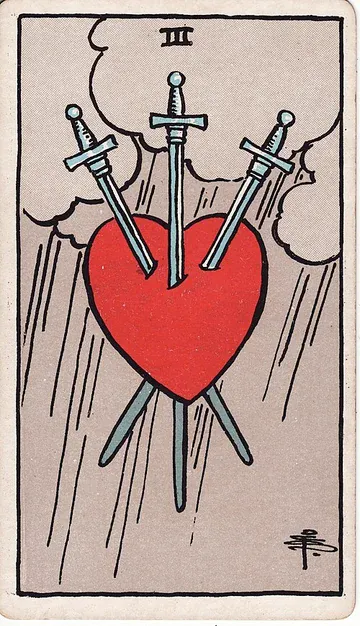
The wound that drove the retreat. The Three of Swords' open chest precedes the Four of Swords' chapel — the rain before the shelter. Together they describe a complete grief cycle: the piercing fully felt, then the convalescence fully honored. Do not skip either phase. The wound needed feeling. The rest needs honoring. Most readings where these two appear together are telling the seeker that they are exactly where the deck wants them to be, and that the timeline of healing is longer than they hope but shorter than they fear.
Five of Swords
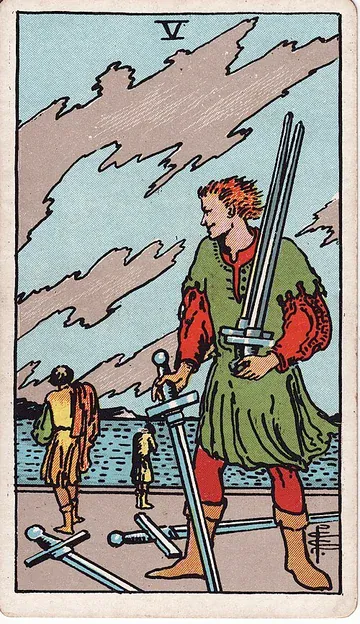
The successor to the Four — what happens when the chapel rest is aborted into bitterness. The seeker rises from the coffin not rested but armed, sharpens the rest into resentment, and walks into a fight that produces a hollow victory and a poisoned room. When these two appear together the reading warns against the temptation to leave the chapel angry. Stay until rested. Leave on the rest's terms, not on irritation's. The Five's bitter win is the trap that the Four's quiet sleep is meant to prevent.
Four of Pentacles
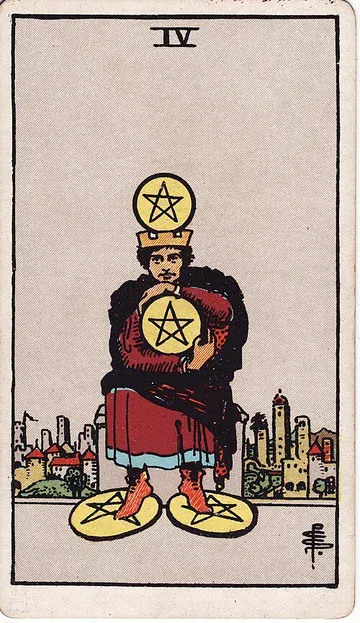
Same-number tonal contrast — both cards hold rather than move, but they hold differently. The Four of Pentacles holds material things tightly, defensively, against loss. The Four of Swords holds the body still, openly, in active recovery. The pair asks the seeker to translate the white-knuckled grip of the Pentacles into the open-handed effigy of the Swords. Defensive grasping exhausts. Convalescent letting-go restores. The two fours, side by side, teach the difference between the right kind of stillness and the wrong kind.
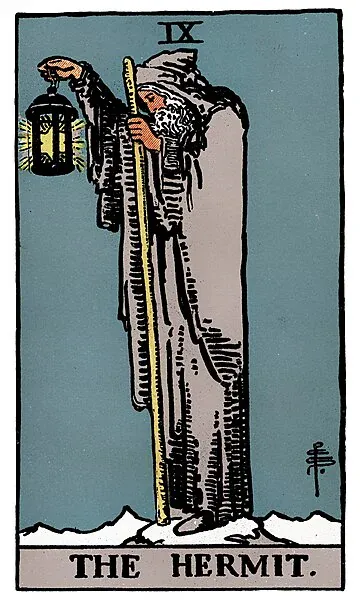
The Hermit
Solitude as practice rather than circumstance. The Hermit walks alone with the lantern; the Four of Swords lies still in the chapel. Together, they describe deliberate, chosen, practiced aloneness — the introvert's discipline, the contemplative's vow, the writer's room with the door closed. The combination favors retreat work: a solo trip, a residency, a meditation week, a long walk with the phone off. The pair asks the seeker to stop treating solitude as an emergency measure and start treating it as a recurring practice.
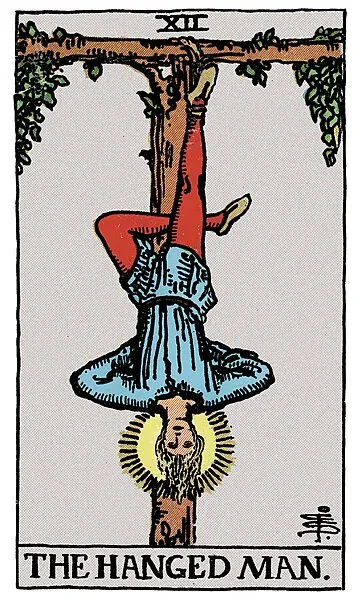
The Hanged Man
Suspension as posture, not pause. The Hanged Man stops the action from above, hanging upside down to see the world from a new angle; the Four of Swords stops it from below, lying flat to let the body rest. Together they describe a season where action is genuinely suspended and the suspension is producing perception. The view from the Hanged Man's tree appears clearly only to a seeker rested by the Four's chapel. The pair sanctions the stillness twice over and asks the seeker to trust that the world reveals itself to those who have stopped insisting on moving through it.
Frequently Asked Questions
Why is the knight lying on a coffin if the Four of Swords is not about death?
Because the figure is an effigy, a carving of the man laid over the place where he sleeps, not a corpse. The card means strategic retreat, convalescence, and sanctioned rest. The card shows a knight's effigy lying on a coffin within a chapel, three swords on the wall and a fourth still warm beside the coffin. It is the warrior's deliberate stillness — rest as a discipline, not as surrender. In any reading, it asks the seeker to lay down the question for one cycle of sleep and pick it back up rested.
Should I re-ask my question once the Four of Swords has sent me to rest?
Yes, and the card would much rather answer the rested version of it. The Four of Swords is a soft no, or more precisely a 'not yet.' The card refuses to give clean answers to questions asked in fatigue. To most yes/no questions — about love, jobs, money, confrontation — it advises a delay of three weeks. The exception is the question 'should I rest?' — to that, the card is an unambiguous, emphatic yes. Rest first. Re-ask the rest of your questions later.
What does the Four of Swords mean in a love reading?
In love readings, the Four of Swords upright is the necessary pause — not a breakup, but a deliberate stretch of separate silence that lets two whole people return to the conversation. For long partnerships, it often means both partners are tired and need rest more than they need a fight. For new connections, it can mean someone is recovering from a previous attachment and needs space before the relationship deepens. Trust the chapel; the door reopens.
What does the Four of Swords say about career?
The Four of Swords in career readings advises a deliberate professional pause. Most 'I should quit' feelings, examined inside the chapel, are revealed to be 'I should sleep' feelings. The card asks you to stop adding new projects, let the current ones land cleanly, and re-evaluate the role from a rested nervous system. For job seekers, it recommends two weeks of clarification before the next round of applications. The role question waits; the sleep question does not.
Is a plateau season in practice a failure, or an absorption phase?
An absorption phase, and the chapel card exists to say so. Contemplative withdrawal is itself a practice, not a failure to do something more impressive. The card honors the chapel built into every serious tradition — vipassana, sesshin, khalwa, desert seclusion. Plateau seasons are not stuck seasons; they are absorption phases. The card asks for the discipline of doing the simple practice in the simple way for the duration of the plateau. The next opening is on the other side of the patience.
Continue Reading
Four of Swords · Card overview · symbols · correspondences →
Return to the full card view — image, symbols, sensory correspondences, and Hermetic axes.
Read the reversed meaning →
Read the same depth on the opposite orientation.
Draw your reading now →
Bring this card to a question — open a quiet ritual.