
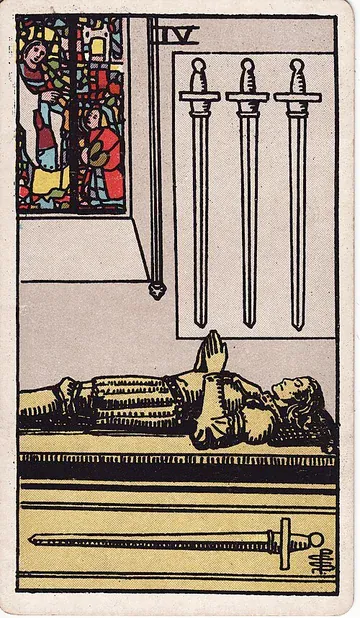
Four of Swords Reversed · Core Meaning
The Four of Swords reversed is the chapel that has held the figure too long. The effigy posture, originally a discipline of recovery, has become the seeker's only available posture. The fourth sword has stayed beside the coffin for months. The three swords on the wall have stopped being reminders and started being decorations. The kneeling figure outlined by the stained glass is still there, but the seeker has stopped noticing it. Outside the walls, the wind has not softened — only, sealed inside, the seeker has begun to doubt whether they can still walk out into it.
This is the reversed card's central knot: rest that has slipped into avoidance. Not laziness, not weakness, but the slow reclassification of the chapel from sanctuary into hiding place. The shift is rarely conscious. It happens over weeks. The seeker who needed the rest, took the rest, benefited from the rest, and then quietly never re-engaged. The body grew comfortable with the floor. The nervous system, having tasted parasympathetic, began to interpret any return to active engagement as a threat. The cure became the new condition.
There is a second flavor of the reversed card: forced rest the seeker is fighting. The body has stopped — illness, injury, depression, layoff, breakdown — and the seeker is trying to muscle through the stop, refusing to let the rest do its work. The chapel walls hold the figure down while the figure thrashes. This is the inverse problem: rest available, rest needed, rest refused. Both flavors live in the reversed card, and both ask the same question — what is your relationship, right now, to your own stillness?
The astrological signature reverses too. Jupiter in Libra upright is the magnanimous truce, the lawful pause. Reversed, it can become the truce that has stopped being honored — either the seeker has forgotten the truce was supposed to end, or the seeker is breaking it before the rest period is complete. Libra's scales tip out of balance: too long held in stillness becomes its own weight, atrophying what stillness was meant to restore. The card asks for re-balance. Not to abandon rest. To re-articulate what rest is for.
Reversed, the Four of Swords asks: are you resting, or are you fleeing? And: when did you last leave the room? And: is the door actually locked, or have you just stopped trying it? The answers, taken honestly, often produce the next move. The next move is rarely dramatic. The reversed card returns to upright through one street's worth of stepping outside — small, low-stakes, deliberately unimpressive. Then the seeker can decide whether to close back up. The decision is allowed. The decision being skipped is what made the chapel a cell.
Four of Swords Reversed · Love & Relationships
Two rooms, two doors, and a quiet that has been kept a season too long. The pause that was supposed to restore the partnership has begun to erode it. The two of you have grown accustomed to your separate rooms. The path back to conversation has grown unfamiliar. Neither of you is angry. Neither of you has done anything wrong. And yet, sitting at the same table, the silence has stopped feeling restorative and started feeling like distance.
For an existing partnership, the reversed Four of Swords often indicates the comfortable estrangement that develops when both partners individually withdraw to manage their own depletion and never quite reconnect. The TV is on. The kids are managed. The bills are paid. And the actual conversation — the one where you tell each other what you have been thinking about, what you have been afraid of, what you want next — has not happened in months. The card is asking for one step. Not a breakthrough. A single step toward the partner. A single sentence longer than logistics.
For someone in a new connection, the reversed Four of Swords can describe the partner who has retreated and not yet returned. They needed space for a real reason — work, a previous attachment that was not yet finished, a mental health stretch — and the space has now become indefinite. They have not ended things. They have also not re-engaged. The card asks the seeker to make one clear, low-pressure move toward them: a short text, a specific small invitation, a question that requires only a yes or no. If they cannot meet even that, the card is offering information about who they are, not a verdict on you.
For the question of whether the Four of Swords reversed is positive in love readings, the honest answer is mixed. It is not catastrophic. It is also not a green light. It is a yellow light — slow down, look at what is actually happening, decide deliberately what to do next. Most relationships under the reversed Four can be saved with a small concrete re-engagement. A specific date night, planned and attended. A conversation conducted on a walk. A weekend away from the house. The card responds well to small, concrete, low-drama moves toward each other.
On love specifically: the card describes love that has been in the chapel too long. Both partners have been resting, individually, from the relationship. The rest was needed. The rest is now itself the problem. The reversed card asks for the smallest possible re-engagement — not a state-of-the-relationship summit, just a small move toward each other made today. The smallness is the point. Big gestures from the reversed Four often fail; they ask too much of a system that has grown unused to motion. Tiny moves succeed.
For someone considering reconciliation after a separation, the Four of Swords reversed offers nuanced information. The separation may have run too long for the original cause. Both of you have rested into different shapes. The person you would now reconcile with is not the person you separated from, and the person they would reconcile with is not the person you were. This is not necessarily bad. The card asks whether you are reconciling with who they have become or who they were. If the former, proceed slowly and curiously. If the latter, you are not actually reconciling — you are visiting a memory.
For a single seeker, the reversed Four of Swords can describe the self-protective solitude that has crossed into isolation. The boundaries that were healthy responses to a past hurt have become walls that keep everyone out. The chapel makes no accusation. Most seekers in long stretches of single life have lain on that stone shelf at some point. The reversed card asks for one specific re-entry: one social event you accept, one conversation you initiate, one day where you go somewhere people are. Not all of them. One. The chapel reopens its door through one act of going through it.
For a seeker in a long marriage where the Four of Swords reversed appears, there is often a buried question about whether the marriage has become a cohabitation. The card does not say the marriage is over. The card says the rest period has run long enough that the marriage is no longer being actively chosen, only inhabited. Couples therapy, an explicit honest conversation, a planned activity that breaks the routine — these are the small re-engagements the card supports. The marriage is not the problem. The chapel-without-end is.
For a partner considering whether to leave, the reversed Four of Swords adds a specific question: have you actually rested, or have you just been hiding? Decisions to leave made from genuine clarity have one quality. Decisions to leave made from accumulated avoidance have another. Take a real break — a literal weekend at a friend's place, a stretch where you do not see your partner — and ask the question rested. The answer that comes from real rest is the one to act on. The answer that comes from continued avoidance is itself part of the avoidance.
For seekers in queer relationships, polyamorous configurations, or other partnership architectures with their own logistic burdens, the reversed Four of Swords can describe the way each individual has retreated into private exhaustion management without coordinating the recovery. Multiple rested partners can re-engage; multiple exhausted partners coexisting in separate rooms is the reversed card. The fix is collective — schedule a recovery date together, plan a low-stakes shared activity, eat one meal at a table together with phones in another room.
For the disambiguating question — "are they pulling away, or are they just resting?" — the reversed Four of Swords leans toward an honest middle answer: they have been resting, and the rest has begun to feel like pulling away even to them. They have not made a decision about the relationship. The decision is being made by inertia, which is the worst kind of decision-maker. The seeker can intervene by making one specific concrete request that the resting partner has to answer with a yes or a no. That answer is the actual data. Inertia is not data.
Four of Swords Reversed · As Feelings
The effigy's folded hands are the problem now rather than the protection. They feel something. The feeling is real. But the feeling has been held in stillness for so long that it has begun to feel, even to them, like absence rather than presence. They have not decided to stop caring. They have, for too long, been resting from the active work of showing they care, and the resting has taken on its own gravity.
For a partner who is naturally reserved, the reversed Four of Swords amplifies the reservation past its useful point. They have always been quiet about feelings. The quiet has, recently, become a wall they themselves cannot quite see through. They are not punishing you. They are not playing strategic games. They have, in some real sense, lost touch with their own access to the feeling — not because the feeling is gone, but because the feeling has been folded so tightly into the chapel posture that they no longer feel where it lives in their body.
For a partner who is normally demonstrative, the reversed Four of Swords describes a season of unusual quiet that has now run too long. Three weeks of less affection was a recovery period. Three months of less affection is a new pattern. Both of you have begun to live in the new pattern as if it were the relationship itself. The card asks whoever notices first to name it. Not as accusation. As information. "You have been quieter for a while. I miss you. What is going on?" — that sentence, asked from love rather than fear, often re-opens the chapel from the outside.
For a new connection, the reversed Four of Swords as feelings can describe a partner whose initial enthusiasm has cooled into a careful holding pattern that they have not yet broken out of. They felt something strong. They got scared of the strength. They retreated to a safer emotional distance. They have not yet figured out how to come back from the safer distance to the original closeness. Read this carefully — most new partners under this card need either a clear small move from you, or a conversation that names the cooling without escalating it. They are not bad. They are scared. The chapel is, here, a hiding place from their own feelings.
If they are reserved by nature and the Four of Swords lands reversed in feelings, the warning is that their natural reservation has, for now, hardened into something less generous. They are not just protecting their feelings. They are using the protection as a way to avoid offering anything. The card asks you to consider whether you have been reading restraint as depth when it might, here, be reading more accurately as withholding. This is uncomfortable to consider. The card asks for the consideration anyway.
If they are demonstrative by nature, the reversed Four of Swords as feelings describes performative quiet — they have started to perform the absence of feeling, perhaps because feeling has become inconvenient or because the relationship itself has become inconvenient. They will tell people they are fine. They will say the right small phrases. They will not, when alone with you, say the warm things they used to. The performance is information. The information is that something has shifted, and that the shift is being managed by retreat rather than honesty.
For a partner you have been with a long time, the reversed Four of Swords in feelings can be one of the harder cards to read. It often describes the long marriage that has stopped actively choosing each other and has begun running on the inertia of the original choice. Their feelings are not gone. Their feelings are dormant. Dormant feelings respond to deliberate re-activation: a question they have not been asked in years, a piece of attention they have not received in months, a small surprise that interrupts the pattern. The card asks you to make the re-activation. They will respond, often with relief.
For someone who has not yet declared, the reversed Four of Swords as feelings describes hesitation that has now lasted longer than was healthy. They have been deliberating. The deliberation has begun to function as its own answer — by not deciding, they have effectively decided to stay where it is safe. The card asks you, the seeker, to consider whether you can wait for them to decide on their own schedule, or whether you need to produce a question that forces a clean answer. Both responses are valid. The card simply notes that the indefinite wait is, itself, a relationship that has structure.
Read as feelings, the reversed Four of Swords gives this cleanest summary: the warmth is held privately and has not been moving across the table for too long. The chapel, originally a protective room, has become the only room they live in. They feel things about you. They are not, currently, in the practice of letting those feelings out. The work, if there is work, is to invite them out — gently, specifically, with a small concrete request that does not require them to declare the whole shape of the feeling, only one small fragment of it. Most reversed-Four-of-Swords feelings reopen through small fragments, not big declarations.
A small note for seekers reading this hard: the reversed Four of Swords in feelings is rarely a verdict of indifference. It is more often a verdict of frozen sincerity. They froze on purpose. They thought it would protect the feeling. The freezing has, as freezing does, made the feeling harder to access. The card is not saying give up. The card is saying meet them where they are, with one small warm gesture, and see whether the gesture lets the chapel door crack open.
Four of Swords Reversed · Career & Work
Professional rest has a point at which it turns into stagnation, and this card marks it. The sabbatical that became a stuck stretch. The medical leave that the body recovered from but the seeker did not return from. The voluntary slowdown that has slowed to a stop. The role you took to lower stress that has now become the role you cannot leave because leaving has become the new stressor.
For someone in a current role they have been in for too long, the reversed Four of Swords often appears. The role was originally a good fit. The fit has worn out. The seeker has stayed in the worn-out fit because leaving requires energy the role itself has been depleting. The card describes the soft trap: the comfortable cubicle, the predictable schedule, the colleagues you have grown accustomed to, the familiar drive to the office. Nothing about the role is dramatic enough to force the leaving. Everything about the role is just slightly too dull to justify staying. The reversed card asks for one small concrete move — update the resume, reach out to one recruiter, attend one industry event — to break the inertia.
For someone considering whether to return to work after a leave, the reversed Four of Swords can describe the moment when the leave should have ended and has not. The body has recovered. The week of returning has been on the calendar three times and been postponed three times. Each postponement was justifiable. The accumulation of postponements is no longer justifiable. The card asks for a return date that the seeker actually keeps. Not a hard return. A soft one — three days a week, half-days, gradual ramp-up. But a return. The chapel cannot indefinitely substitute for the marketplace. The body, eventually, atrophies in the chapel.
For an entrepreneur or founder, the reversed Four of Swords can describe the pause that has become a quiet shutdown. The business has stopped growing. The website has not been updated. The newsletter has stopped going out. There has been no formal closing — only a slow taper of energy that has now become indistinguishable from being closed. The card asks the founder to make a clean decision: either re-engage, deliberately and visibly, or close the business cleanly with a public note and a final invoice. The undecided middle is the trap. The reversed card returns to upright through clean decisions.
For a creative practice, the reversed Four of Swords describes the artistic block that has run too long. The fallow season has not produced new soil. The long break has not produced renewed hunger. The card asks for one specific small re-entry: a fifteen-minute writing session with a timer, a single sketch on a single page, a recording of a single voice memo. Not a return to full practice. A single small gesture toward the practice. The chapel reopens through the smallest possible doorway. Forced large gestures fail. Tiny accepted gestures succeed.
For a job-search question where the reversed Four of Swords appears, the card describes the search that has stalled. Applications stopped going out three weeks ago. Networking conversations were going to happen and did not. The seeker has rationalized the stall ("I'm being selective," "the market is bad," "I'm waiting for the right opportunity") and the rationalizations have become the new state. The card asks for one application sent this week. Just one. Not a flood. One specific role at one specific company with one specific cover letter. The motion restores the muscle. The muscle restores the search.
For someone who has been laid off, the reversed Four of Swords can describe the recovery period that has run past its useful length. The first month of grief was real. The second month of regrouping was useful. The third month of nothing has become a problem. The card is gentle but clear: re-engage. Not from a place of panic. From a place of honoring that the body has, in fact, recovered, and that the next phase is now waiting for the seeker to step into it. One networking coffee. One application. One day of structured work. Build from there.
For someone in a creative collaboration that has gone silent, the reversed Four of Swords describes the partnership that has been resting and forgot to schedule the return. The band has not rehearsed in months. The co-authors have not opened the shared document. The co-founders have stopped having weekly meetings. The card asks for one small re-engagement: a single scheduled meeting this week, even if the meeting is fifteen minutes, even if it produces no decisions. The presence is the practice. Practices in suspension atrophy. Practices in motion, even slow motion, recover.
For a leader whose team has gone quiet during a stretch of reduced activity, the reversed Four of Swords warns of the team that has rested into disengagement. Standups have become perfunctory. Initiatives have stalled. Side projects have been shelved. No single person has done anything wrong. The collective rest has, collectively, drifted into stuckness. The leader's job is to model the small re-engagement: a clear new initiative with a deliberately small scope, attendance at the standups with renewed presence, one explicit acknowledgment that the rest period is ending and the next phase is beginning. Teams take their cue from leadership. The chapel reopens from the top.
For someone whose career feels indefinite, undefined, or directionless after a long pause, the reversed Four of Swords asks a specific reframe: the pause has produced clarity that the seeker is now refusing to act on. Often, deep rest does produce real career insight — but the insight requires action, and the action is uncomfortable, and the seeker has been preferring continued rest to the discomfort of acting on what they now know. The card asks: what have you actually figured out during this rest? And: what would you have to do this week to honor it? The honest answer to the second question is usually small, concrete, and possible. Do that this week.
For someone in a stable role considering a sabbatical or leave specifically, the reversed Four of Swords offers a counterintuitive note: the leave you take while reading this card may be longer than you need. Plan a shorter leave with a clear return date. Most useful sabbaticals are six weeks, not six months. The longer ones often slide into the reversed Four's territory. Take the rest you actually need; do not over-engineer the rest into a structure that becomes its own trap.
Four of Swords Reversed · Money
Paralysis around money has run past the length anyone could still call prudence. The decision that needed to be made three months ago has been postponed three months. The bills you stopped opening have grown a quiet stack. The investment account you have not logged into has done whatever it has done, unobserved. The chapel posture, applied to money, has become avoidance — and avoidance has, as avoidance always does, made the underlying numbers worse.
For someone who has been in financial paralysis — the bills unopened, the budget abandoned, the savings unaddressed — the reversed Four of Swords describes the cumulative cost of the avoidance. The card is not punitive. It is informational. The avoidance was understandable; managing money under stress is genuinely hard. But the avoidance has now produced a second-order problem on top of the first one. The card asks for one specific small re-engagement: open the bank app once, look at one number, do not act on what you see, just look. The looking, repeated for three days, restores the relationship to manageable.
For someone whose financial situation has actually been fine but whose anxiety about money has run unchecked, the reversed Four of Swords describes the disconnect between the actual numbers and the felt experience of the numbers. The seeker has been catastrophizing without checking. The bank balance is, when looked at, fine. The retirement account is, when looked at, on track. The reversed card asks for the looking. Often, with this card, the actual numbers are far better than the feared numbers, and the relief itself is restorative.
For someone in real financial difficulty who has been in chapel-mode about it, the reversed Four of Swords advises one specific re-engagement: have one conversation with one person who can help. A financial advisor. A bankruptcy attorney. A friend who is good with money. A debt counseling service. The conversation does not have to solve the problem. The conversation breaks the chapel's silence. The next conversation comes more easily. The third one easier still. Most people in real financial trouble are alone with the trouble; the alone-ness is itself a load-bearing piece of the problem. Address that piece first.
For an investor who has been holding a position too long without reviewing it, the reversed Four of Swords advises a deliberate re-evaluation. Not a panic sell. Not a frantic re-allocation. A calm review. The thesis that justified the position six months ago — does it still hold? The risk tolerance that justified the allocation — has it shifted? The card asks for the review, not the action. Often the review confirms holding. Sometimes the review reveals a needed adjustment. The reversed card's concern is not the holding per se; it is the holding without ever looking.
For a question about a financial decision that has been pending — the offer to consider, the purchase to evaluate, the investment to enter or exit — the reversed Four of Swords advises a deadline. Set a date by which the decision must land. Not next year. Two weeks from now. The decision-by-deadline forces the chapel door open. Often the decision becomes obvious once a deadline exists; the absence of a deadline was itself the structural problem.
For someone managing scarcity who has been quietly relaxing the discipline because the discipline became too hard to maintain, the reversed Four of Swords is a kindness with an edge. The card honors that the prior discipline was real and effortful. The card also notes that the relaxation has begun to compound in the wrong direction. Re-engage the discipline gently. Not the full former discipline. One specific element — tracking expenses for one week, capping one category, automating one transfer. The full discipline returns through one element at a time.
For someone in long-term recovery from a debt cycle, the reversed Four of Swords can describe the season when the recovery has plateaued and the seeker has stopped actively building toward the next phase. The debt is paid. The savings are zero or near zero. The seeker has, understandably, rested from the intensity of the prior climb. The rest has, less understandably, become permanent. The card asks for the next stage of the journey: building the emergency fund, opening the retirement account, beginning the slow accumulation that follows debt paydown. The reversed card describes the moment when not-falling-back has been mistaken for arriving.
For windfall — inheritance, bonus, settlement — that the seeker has been sitting on without deploying, the reversed Four of Swords advises a deadline for deployment. Three months is enough time to acclimate. Six months is the chapel becoming a hiding place. Decide what the windfall will become. A fund, a payment, a purchase, a gift. Decide deliberately. Indefinite parking is its own decision, made by inertia, and inertia is the wrong financial advisor.
A practical move when this card appears in a money question: schedule one money hour, this week, on the calendar, with a specific list of three things to look at. Just look. Take notes. Decide nothing. The looking, accomplished, restores agency. Agency, restored, allows decisions. Decisions, made calmly, restore the financial life. The reversed Four of Swords reopens, in money matters, through deliberate attention applied to one specific thing at a time.
Four of Swords Reversed · Health
Two opposite problems live in this inverted card: rest that has run past its useful length, convalescence crossed into atrophy — or the rest the body plainly needs and the seeker is fighting to refuse. Both flavors are common, and the card asks the seeker to identify which one is in play.
For someone who has been resting from physical activity due to injury, illness, or burnout, the reversed Four of Swords often describes the moment when the rest has helped enough that the body is ready to move again, and the seeker has not yet noticed. The body has been quietly healing. The capacity has been quietly returning. The seeker, having grown accustomed to the rest posture, has stopped checking. The card asks for one small physical re-engagement: a ten-minute walk, a short stretch, a single yoga pose. Not the full return to the prior intensity. The smallest possible movement. The body, once moved, often surprises the seeker with how much it can now do.
For someone in long-term sedentary patterns where the chapel posture has become permanent, the reversed Four of Swords is a quiet but persistent invitation. The body has been still for too long. The deconditioning is real. The longer the stillness has run, the smaller the first re-engagement should be. Not a gym membership. Not a marathon plan. One block of walking, today. One flight of stairs taken instead of the elevator, today. Tiny. Consistent. Repeated. The body responds to small consistent invitations more reliably than to dramatic infrequent campaigns.
For mental health questions specifically, the reversed Four of Swords describes the depressive rest that has begun to feed the depression rather than address it. The bed that originally held the seeker through the worst of it has become the bed they cannot leave. The screen that originally distracted from the pain has become the only thing they engage with. The seeker is not lazy. The seeker is, in the precise clinical sense, depressed — and depression's particular cruelty is that the cure (movement, light, connection, structure) requires the very capacities that depression has reduced. The card asks for the smallest possible movement: making the bed each morning, opening the curtains, drinking a glass of water, sending one text to one person. Build from there. Therapy, medication if appropriate, daily structure rebuilt one piece at a time.
For someone whose anxiety has driven them into a chapel posture — minimal social engagement, minimal departure from a small safe perimeter, minimal exposure to anything novel — the reversed Four of Swords describes the way the safety has become the new prison. Anxiety treatment is well-understood: graded exposure, cognitive work, sometimes medication, lifestyle stabilization. The chapel-mode interrupts the exposure component, which means the anxiety persists at the level it has been allowed to settle. The card asks for the smallest possible exposure: one short trip outside the safe perimeter, one social engagement, one phone call. The smallness is the point. Big exposures from this state often fail. Tiny exposures, repeated, succeed.
For someone managing a chronic condition who has fallen out of their self-management practices, the reversed Four of Swords is a clear note. The medication is being taken inconsistently. The exercise has stopped. The diet has loosened. The self-monitoring has been abandoned. The condition, which had been stable, has begun to drift. The card asks for re-engagement with one specific element of the management protocol — refilling the prescription, reattending the practitioner, reinstating one piece of the daily structure. The full protocol returns through one element at a time. The chapel had been built on the protocol; the loosening of the protocol weakened the chapel's walls.
For sleep specifically, the reversed Four of Swords can describe sleep that has run too long without becoming restorative — the ten-hour nights that leave the seeker more tired, the daytime napping that disrupts the next night, the sleep schedule that has lost its shape entirely. Too much sleep, like too little sleep, is a symptom. The card asks for sleep hygiene re-engagement: a consistent wake time, light first thing in the morning, a wind-down protocol that does not include screens, an evaluation by a sleep professional if the pattern persists. Sleep is a discipline, not just a refuge.
For someone fighting to refuse the rest the body needs — the inverse flavor of the reversed Four of Swords — the card has a different note. The body is signaling clearly. The seeker is overriding the signals with caffeine, willpower, denial, or a deeply held belief that rest is for other people. The card asks the seeker to capitulate. The body wins these arguments eventually; capitulating early is cheaper than capitulating late. Take one full day off this week. Cancel something to make it possible. The thing canceled is less important than the day taken.
For somatic complaints that have not responded to the chapel — the headaches, the gut issues, the fatigue, the random pain — the reversed Four of Swords notes that rest alone has not been sufficient and asks for the next layer of intervention. Practitioners. Tests. Investigation. The somatic loop sometimes opens through rest; sometimes it requires more active engagement. The card distinguishes the two, and when rest has been tried and not delivered, the card recommends the next move.
For mental health recovery specifically, the reversed Four of Swords distinguishes the convalescent phase from the next-phase reentry. The acute phase is over. The convalescent phase has done its work. The seeker is now in a phase where careful re-engagement with life — work, relationships, hobbies, structure — is itself the treatment. The card warns against extended convalescence past the point where convalescence is helping. Talk to your practitioner about transitioning. The transition is itself part of the cure.
The conversation about leaving convalescence belongs to your practitioner; the card supplies no medical advice. Keep your practitioners. Take your medication. The card describes a felt season — the season when the chapel has held you long enough — not a diagnosis. Honor what your body is telling you. If the body is asking to move, let it move slowly. If the body is asking for rest, let it rest. The reversed Four of Swords' particular kindness is that it asks you to listen carefully to which direction the body is asking for. Answer accordingly.
Four of Swords Reversed · Spirituality
The inverted chapel describes a withdrawal that has lost its connection to the larger life it was meant to serve. The retreat has gone on too long. The hermitage, originally a chapter, has become the whole life. The teacher who suggested a season of stillness did not mean a decade. The card is gentle about this — most seekers in this position arrived here through real practice and real depletion — but it is also clear. Contemplation and life are meant to feed each other. When contemplation has eaten life entirely, contemplation itself starves.
For seekers in a long-term contemplative practice, the reversed Four of Swords can describe the plateau that has become the destination. The breakthrough seasons are years in the past. The current practice has stopped producing insight, stopped producing change, stopped producing anything but its own continuation. The card asks for a deliberate variation: a new teacher, a new retreat, a new tradition explored with humility, a new question asked of the existing practice. Stagnant practice is not practice. It is habit. Habit produces no fruit.
For seekers exploring belief, in transition between traditions, or simply uncertain what they believe, the reversed Four of Swords describes the unresolved question that has now run too long without resolution. The deliberate not-deciding has begun to function as its own decision, made by avoidance. The card does not push the seeker into a tradition. The card asks for one specific small move: reading one specific book, attending one specific service, asking one specific question of one specific teacher. The small move breaks the indefinite suspension. The next move comes more easily.
For seekers whose spiritual life has gone quiet without explanation, the reversed Four of Swords often appears. The morning meditation stopped happening three months ago. The journal has not been opened. The altar has gathered dust. The seeker does not feel especially fallen — only quietly disengaged. The card asks for re-engagement with the simplest version of the practice. Not the full former practice. One element, one minute, one day. Build slowly. Forced spiritual revivals fail. Tiny reactivations succeed.
For seekers in grief who have been in the chapel of grief for an extended period, the reversed Four of Swords describes the moment when grief work has done what it can do alone and the next phase requires re-engagement with life. This is hard. Grief is a sacred space. The seeker resists leaving it because leaving feels like dishonoring what was lost. The card is unusually tender here: leaving the chapel of grief is itself a way of honoring the loss. The dead want the living to live. The card asks for one small re-entry — a meal with friends, a small project, an outing — that the seeker undertakes without guilt. Permission is granted. The grief stays in the heart. The body returns to the marketplace.
For seekers in shadow work, ancestor work, or other psychologically demanding inner practice, the reversed Four of Swords warns of the inner work that has consumed the outer life. The therapy is going well. The shadow is being met. And the seeker has stopped functioning in regular life — has lost touch with friends, has let the work slide, has allowed the inner journey to become the only journey. The card asks for re-balance. Inner work without outer life loses its ground. Schedule the inner work into a portion of life rather than letting it become all of life.
For seekers in spiritual community who have withdrawn from the community for too long, the reversed Four of Swords describes the way community-of-practice atrophies through absence. The teacher has not been visited. The sangha has not been attended. The shared practice has been quietly abandoned. The seeker has been doing the practice "on their own" in a way that has slowly ceased to be doing the practice. Communities of practice are part of the practice. The card asks for one return — one service attended, one teacher visited, one sangha sit. The community holds the seeker more than the seeker realizes.
For seekers who have built an elaborate inner life that has little contact with the outer world, the reversed Four of Swords asks a precise question: where does the inner life land in the outer one? Real spiritual practice eventually shows up in how the seeker sits at a dinner table, how they handle a difficult coworker, how they speak to their family, how they hold their money. If the inner work has produced no outer fruit for years, the inner work has become decorative. The card invites a re-articulation of the relationship between practice and life. The chapel exists for the marketplace, not as an alternative to it.
A small practice when this card appears in a spiritual reading: spend one day this week practicing your spirituality in entirely public, non-private contexts. Not the morning meditation. Not the private journal. Just the way you eat lunch, the way you speak to the cashier, the way you manage frustration in traffic, the way you listen to your friend tell you about their problem. Treat the day as practice. Notice where the practice has weight in real life and where it has been entirely interior. The reversed Four of Swords reopens the chapel by reconnecting it to the world the chapel was supposed to be a refuge from, not a replacement for.
For questions about path, the reversed Four of Swords often answers that the path is intact, but the path is asking the seeker to walk it again rather than continue resting beside it. The rest was real and useful. The walking is what now restores the rest. The chapel reopens through stepping outside it. Stepping outside it is the practice the chapel was preparing the seeker for.
Four of Swords Reversed · Yes or No
Soft yes — but only after one specific re-engagement.
The reversed Four of Swords answers most yes-or-no questions with a conditional yes. The thing you are asking about is, in fact, ready to move. You have been the variable holding it still. The card asks for one specific small re-engagement before the answer activates. Make the move. The yes follows. Asked as a yes-or-no specifically: the answer is yes, but only if you re-enter rather than continue resting from the question.
For yes-or-no questions about a relationship — should I reach out, should I commit, should I have the conversation, should I leave — the reversed Four of Swords leans yes, but conditional on action. The relationship has been waiting on a small move from you. Make it. The conversation, the message, the visit, the decision — the reversed card asks for the action that has been postponed. Most relationships under this card respond well to small concrete re-engagements. The tiny move opens the door that has felt locked.
For yes-or-no questions about a job or career move — should I take the offer, should I quit, should I apply — the reversed Four of Swords advises action, finally. The waiting has run its useful course. The opportunity has been considered enough. Either take it or decline it cleanly, but stop holding it in unresolved suspension. The card prefers a decision to indefinite delay. A clear no is better than a held maybe. A clear yes is better than another month of waiting.
For yes-or-no questions about a financial action — should I buy, should I sell, should I move money — the reversed Four of Swords advises a deadline-driven decision. Set a date this week by which the decision must be made. Whatever you decide, decide it deliberately. Most reversed Four of Swords financial decisions are yeses being held in suspension by the seeker's avoidance rather than by the underlying merits. The merits, looked at calmly, often confirm the decision. The looking is the work.
For yes-or-no questions about a confrontation or difficult conversation — should I send the message, should I make the call, should I have the talk — the reversed Four of Swords is unusually direct: yes, and now. The waiting has not produced clarity it could not have produced sooner. The conversation will be uncomfortable whenever it happens. Tonight is not worse than next week. Send the message. Make the call. Have the talk. The card responds to action; continued postponement makes the conversation harder, not easier.
For yes-or-no questions about a creative project — should I publish, should I show this, should I send this in — the reversed Four of Swords leans yes. The work has sat long enough. Publish it. Show it. Send it. The further holding will not produce a better version. The work is what it is, and it deserves a chance to land in the world. The reversed card returns to upright through the act of releasing what has been held.
For yes-or-no questions about timing — will it happen, when will it happen — the reversed Four of Swords answers that the timing is now contingent on the seeker. The thing has been waiting. The seeker has been the variable. Move, and the timing becomes immediate. Continue not moving, and the timing becomes never. The card respects free will: it does not force the move, but it accurately describes the dynamic.
For the question "should I rest more?" — to which the upright Four of Swords answered yes — the reversed card answers no. The rest has been sufficient. More rest at this point is avoidance, not restoration. The card asks for the next phase. Light movement, small re-engagement, a single step outside the chapel.
If the question was: have I been hiding? The reversed card answers, gently but honestly, yes — and adds that the hiding has been understandable but is no longer serving you. Step out. One street's worth of stepping out. Then decide whether to close back up. The decision is yours. The decision being skipped is what made the chapel a cell.
Four of Swords Reversed · Advice
Step outside — one street is enough — before deciding whether to return to the chapel. The card is not asking you to abandon rest. The card is asking you to verify, through a small act of re-entry, that the rest has been doing what it is supposed to do — and to renegotiate the rest if it has not been.
Concrete instruction one: leave the room you have been in too much, today. Go to a coffee shop. Walk to a park. Drive to a different neighborhood. Sit in a public space for one hour. The room you have been in has shaped your nervous system in its own image. A different physical space will offer your nervous system a different shape. Notice which shape feels more like you. Choose accordingly.
Concrete instruction two: contact one person you have been delaying responding to. The reversed Four of Swords often involves a small accumulation of unresponded-to messages — a friend's check-in, a colleague's note, a family member's voice memo. The accumulation has its own gravity. The card asks for one response, today, even if the response is short. "I'm here. I've been quiet. I'll write more soon." That sentence is enough. The response is the practice; the perfect response is not the goal.
Concrete instruction three: do one thing today that you have been waiting to feel ready to do. Not the biggest thing. The smallest thing on the list of avoided moves. Send the email. Make the appointment. Open the document. Sign the paper. Readiness is a condition, not a calendar date — the card's deck-schema invocation is exact. Readiness does not announce itself first. Do it anyway. The doing produces a kind of readiness that the waiting cannot generate.
Concrete instruction four: set a return date for the rest period that has been running. Pick a specific date, this week or next, and write it down. After that date, re-engagement with active life resumes, even if at reduced intensity. The setting of the date is itself half the medicine. Indefinite rest dilutes; bounded rest concentrates.
Concrete instruction five: ask yourself, honestly, whether you have been resting or whether you have been fleeing. The card's deck-schema right-now cue asks exactly this. Both can look identical from the outside, but they feel different from the inside. Resting feels like sufficiency rebuilding. Fleeing feels like avoidance compounding. If the answer is fleeing, the next move is the small concrete re-engagement, not more rest. If the answer is genuinely resting and you have not yet completed the rest, give yourself one more week and then re-evaluate.
A small additional instruction for seekers who have been resting from one specific thing — a relationship, a project, a confrontation — for a long time: schedule one specific small interaction with that thing this week. Not the full re-engagement. One small touch. One short conversation. One short session of work. Five minutes is enough. The five minutes restores the relationship between you and the thing you have been avoiding. From there, the next move becomes possible.
For the day the card appears: take a short walk outside, even ten minutes. Talk to one stranger, even briefly — the cashier, a neighbor, the person in line behind you at the café. Do one task you have been postponing, even a small one. Notice how you feel by evening. The reversed Four of Swords almost always returns to upright through a sequence of small re-engagements done in a single day. The day is the medicine. The day produces the next day. The pattern reopens the chapel from the outside.
Four of Swords Reversed · Card Combinations
Four of Swords Reversed + Three of Swords
The wound that the chapel has not finished healing. When the reversed Four meets the Three of Swords, the reading often describes grief that has run long enough to become a chronic state rather than an acute passage. The seeker has been resting from the wound but has not yet metabolized it. The combination asks for the next layer — a therapist, a grief group, a deliberate ritual of release. Continued chapel-time alone has reached the edge of its usefulness.
Four of Swords Reversed + Five of Swords
The brittleness that comes from rest extended past readiness. The seeker has stayed in the chapel too long, and when finally roused, comes out armed and irritable rather than restored. The combination warns against forced re-emergence. If you find yourself re-entering with a sharpened tongue and a list of grievances, the rest was not complete or the re-entry has been mistimed. Step back briefly. Re-emerge again from a different angle, more rested and less defensive.
Four of Swords Reversed + The Star
Hope returning, slowly, after a long quiet. This is one of the kinder pairings. The reversed Four describes the chapel that has held too long; the Star arrives as the small light that begins to reopen the door. The combination is hopeful but specific: the recovery is happening, and the seeker should now permit the small expressions of hope rather than wait for the full restoration before acting on them. One small wish written down. One small step taken on a forgotten path. The Star opens the chapel through tiny acts of vulnerability.
Four of Swords Reversed + The World
Completion that requires re-emergence. The World is the card of cycle completion, and when it meets the reversed Four, the message is that one chapter has actually finished — finished enough that the rest has done its work — and the next chapter is now waiting for the seeker to step into it. The combination is unusually clear: the rest is complete, the door is unlocked, and the seeker's continued stillness is now the only thing holding the next phase in suspension. Step out. The next chapter is ready.
Four of Swords Reversed + Eight of Swords
The chapel that has become indistinguishable from the bound figure. When these two cards meet, the reversed Four's chapel-as-hiding-place has acquired the Eight of Swords' specific texture: the seeker feels trapped by the rest itself, unable to see how to leave the room they originally chose to enter. The combination is gentle but firm: the bonds are looser than they appear, and the blindfold is removable. Stand up, take three steps, look around. The trap is mostly perceptual at this point. The chapel reopens through one small act of looking honestly.
Card Combinations
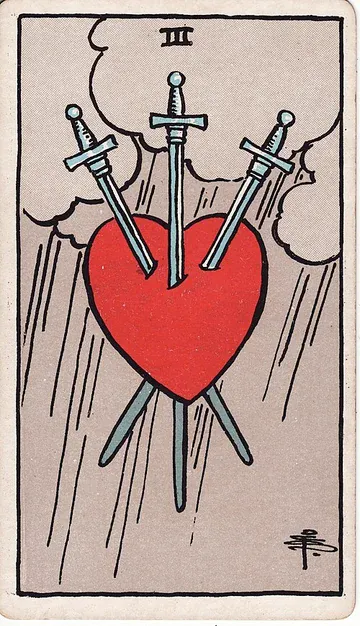
Three of Swords
The wound that drove the retreat. The Three of Swords' open chest precedes the Four of Swords' chapel — the rain before the shelter. Together they describe a complete grief cycle: the piercing fully felt, then the convalescence fully honored. Do not skip either phase. The wound needed feeling. The rest needs honoring. Most readings where these two appear together are telling the seeker that they are exactly where the deck wants them to be, and that the timeline of healing is longer than they hope but shorter than they fear.
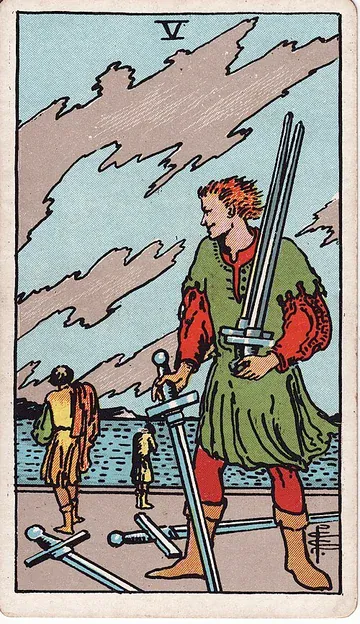
Five of Swords
The successor to the Four — what happens when the chapel rest is aborted into bitterness. The seeker rises from the coffin not rested but armed, sharpens the rest into resentment, and walks into a fight that produces a hollow victory and a poisoned room. When these two appear together the reading warns against the temptation to leave the chapel angry. Stay until rested. Leave on the rest's terms, not on irritation's. The Five's bitter win is the trap that the Four's quiet sleep is meant to prevent.
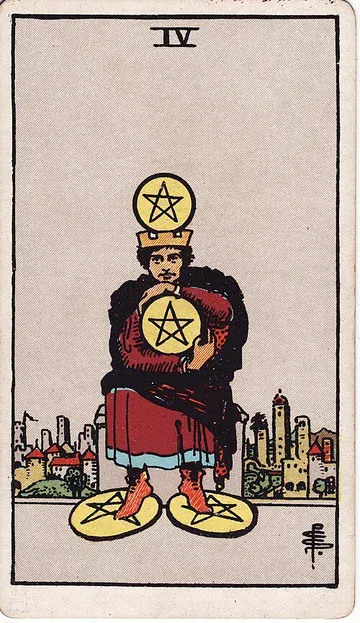
Four of Pentacles
Same-number tonal contrast — both cards hold rather than move, but they hold differently. The Four of Pentacles holds material things tightly, defensively, against loss. The Four of Swords holds the body still, openly, in active recovery. The pair asks the seeker to translate the white-knuckled grip of the Pentacles into the open-handed effigy of the Swords. Defensive grasping exhausts. Convalescent letting-go restores. The two fours, side by side, teach the difference between the right kind of stillness and the wrong kind.
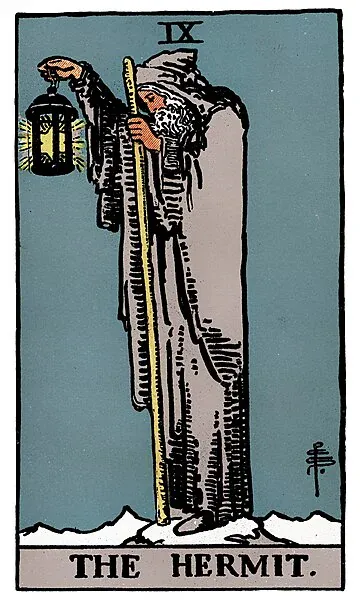
The Hermit
Solitude as practice rather than circumstance. The Hermit walks alone with the lantern; the Four of Swords lies still in the chapel. Together, they describe deliberate, chosen, practiced aloneness — the introvert's discipline, the contemplative's vow, the writer's room with the door closed. The combination favors retreat work: a solo trip, a residency, a meditation week, a long walk with the phone off. The pair asks the seeker to stop treating solitude as an emergency measure and start treating it as a recurring practice.
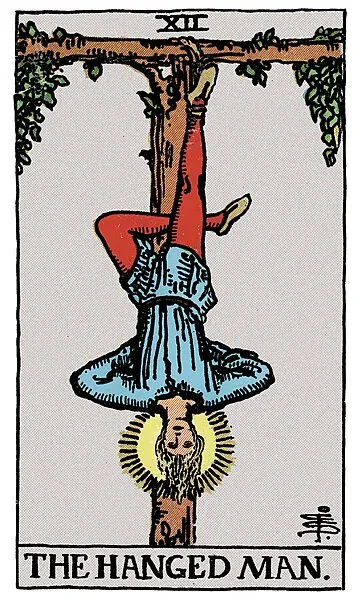
The Hanged Man
Suspension as posture, not pause. The Hanged Man stops the action from above, hanging upside down to see the world from a new angle; the Four of Swords stops it from below, lying flat to let the body rest. Together they describe a season where action is genuinely suspended and the suspension is producing perception. The view from the Hanged Man's tree appears clearly only to a seeker rested by the Four's chapel. The pair sanctions the stillness twice over and asks the seeker to trust that the world reveals itself to those who have stopped insisting on moving through it.
Frequently Asked Questions
What is the one small move that turns the reversed Four of Swords into a yes?
One act of re-entry, chosen small enough to be performed today rather than admired. The reversed card is a soft, conditional yes. To most yes-or-no questions, the card answers yes — but only if you take one specific small re-engagement first. The thing you are asking about is ready to move; you have been the variable holding it still. The card says: make one small move, and the yes activates. Continued postponement keeps the question in suspension indefinitely.
How do two people start talking again after months of separate rooms?
With something small enough to be survivable. Reversed in love, the Four of Swords describes a relationship that has stayed too long in separate silence. Both partners have been resting from the partnership; the rest has begun to erode rather than restore. The card asks for one small concrete re-engagement — a specific date, a single warm conversation, a tiny gesture toward each other. Big gestures from this card often fail; tiny ones succeed. The chapel reopens through a small move toward each other.
Is the reversed Four of Swords saying they are frozen, or that they are finished?
Frozen, and sincerely so. The warmth is real, but it has been held in stillness so long that it has begun to feel like absence even to them. They are not indifferent. They are frozen — sincerely frozen, not strategically. The feelings are dormant, not gone. The card recommends meeting them with one small specific warm gesture rather than waiting for them to declare the whole shape of what they feel. Dormancy answers to warmth applied in small amounts; it rarely answers to a demand for clarity.
What does the Four of Swords reversed mean overall?
The Four of Swords reversed means rest that has crossed into avoidance — the chapel that has become a hiding place. It can also mean the inverse: rest the body needs that the seeker is fighting to refuse. Both flavors ask the seeker to identify which one is in play, and to make one specific small re-engagement: step outside for one street, send one delayed message, take one tiny action toward the thing being avoided. The card returns to upright through small consistent acts of re-entry.
How do I put an end date on a rest that has lost its shape?
By naming the date out loud: set a return date for the rest period, contact one person you have been delaying responding to, do one small thing today that you have been waiting to feel ready to do, and ask yourself honestly whether you have been resting or fleeing. Readiness is a state, not a calendar date. The card responds to small consistent re-engagement rather than dramatic gestures. One street's worth of stepping outside is the medicine.