
Judgement Tarot Card · Core Meaning
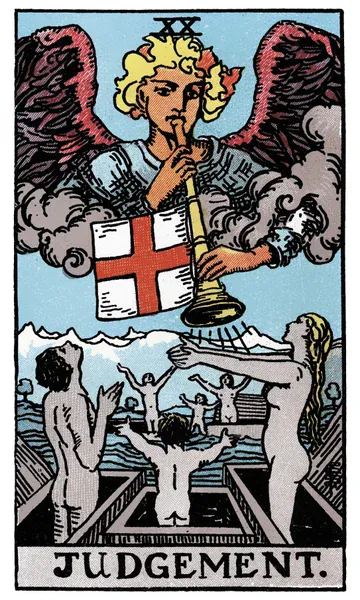
Judgement is the card of the moment a name is finally said aloud. In the Rider-Waite-Smith image, a brass horn leans down out of a long cloud and the archangel Gabriel sounds it. A white banner with a red cross flies from the horn's bell. Below, on a gray sea, three open coffins drift; from each coffin a figure has stood up — a man, a woman, and a child between them — all unclothed, all with their arms raised, all turned toward the angel. The child has its back to the viewer. Of the three risen, the child is the most at ease. The horn is not loud in the picture. The picture has the silence of a thing already heard.
The card's signature tension lies in what the horn is not. It is not a sentence pronounced from outside. It is not a punishment. It is not the first time the seeker has heard the call — it is the first time the seeker has answered. Everything in the image is responding. The lids have already lifted. The bodies have already risen. The arms are already up. The horn does not lever the dead from their boxes; the horn arrives in the moment the dead were already going to stand. Gabriel is the messenger. The risen are the message. The viewer is the one who has been resisting hearing what they already know.
The traditional kabbalistic signature is Path 31, the path connecting Hod (intellect, language, the mind that names) to Malkuth (the body, the world of action). On the Tree of Life, this is the path that takes the spoken word and lets it land in the lived body. Whatever you have been articulating to yourself — the diagnosis you reached privately, the verdict you came to in the shower, the sentence you keep almost saying out loud — Path 31 is the moment that articulation crosses from the head into the limbs. The Hebrew letter is Shin (ש), one of the three mother letters, whose literal sense is tooth — the edge that bites and discerns. Shin's element is fire, and the figure of Shin is three flames standing together on one stem. The horn is fire in audible form. It does not destroy. It separates the things that had been confused with one another, and lets each return to its own place.
The astrological signature is Pluto — the slow, geological planet of what cannot be undone. Pluto does not produce tantrums; Pluto produces irreversibles. Whatever rises with Judgement does not unrise. The card therefore arrives at moments when something in the seeker's life has crossed a threshold and there is no walking the threshold backward. This is not bad news. The threshold is the relief. The work that was being done in private is now being done in plain sight, and the soul stops having to carry the secret of itself.
Read the card the way you would read a photograph taken at the instant a person hears a verdict they had already given themselves. The face is not surprised. The body is not braced. The figure has been preparing for this sentence for a long time. The quality in the image is recognition, not revelation — and recognition is the older, deeper feeling. Whatever question brought you to the spread, Judgement says: you already know. You have known for longer than you have admitted. The card is the permission to admit it.
Judgement Tarot · Love & Relationships
In love readings, the upright Judgement is the card of the long-delayed honest sentence. The relationship has reached the moment where the unspoken has begun to weigh more than the spoken, and the horn is the agreement to finally let the unspoken have words. This is not always a dramatic moment in the visible sense; from the outside it can look like a quiet evening, two cups of coffee, a kitchen that has stopped pretending. But on the Tree of Life it is Path 31 — the moment intellect releases the truth into the body of the relationship — and the relationship that survives the saying-aloud is a different relationship than the one that had only the silence.
For an existing partnership, Judgement upright most often describes a reckoning that both partners have privately rehearsed. The argument that has run on a loop for the last year arrives, finally, in a form where neither person tries to win it. The posture changes. The hands come down off the table. One of you names the thing that has been there all along — the resentment that built across the move, the way the in-laws were handled, the silent tally on whose career got centred — and the other does not flinch, because they have been waiting. The card is the relief of the named thing. It is also, often, the card of the renewed vow: the partners who have looked at the worst of it and chosen, eyes open, to stay. The white banner over the brass horn is, in the deepest sense, the wedding flag of the second marriage to the same person.
For a new spark, Judgement upright reads as the moment when both people simultaneously stop pretending the connection is casual. There is a sentence — usually short, usually delivered without warning — where one of you names what is happening, and the other receives the naming without retreat. From that point the relationship is a different shape. It moves from possibility into reality. The brass horn here is not loud; it is the small, decisive moment in a parked car or at a goodbye on a doorstep, where someone says the obvious thing and the obvious thing is allowed to be obvious.
For a single seeker asking whether love is possible, Judgement upright answers yes — but with the specific tone the card carries everywhere. The love that arrives next is the kind a part of you already recognizes before it arrives. They are not the surprise you have been bracing for. Some part of you has been preparing the room. The card asks you to stop looking for the dramatic stranger and start noticing the person whose presence does not require explanation. The horn calls people who have already been practicing standing up. So practice standing up.
For love after a wound — a divorce, an affair, a long grief — Judgement upright is one of the kindest cards the deck offers. The card does not pretend the wound did not happen. The coffins are real. The card is what happens when the lid is lifted. It says: the part of you that died can stand again. It will not stand as the same person. The rising figure is not the figure that was buried. But the body knows itself. The arms know how to lift. Whatever you thought was over inside you, when the call comes, it turns out that you can answer it.
For reconciliation — the question of whether to return to someone who left, or to take back someone who is asking to return — Judgement upright reads as a yes only when the returning would be a returning to a different relationship, not the same one. The card does not bless the rebuild of the structure that broke. The card blesses the rebuild on honest ground. If the conversation that would precede the reconciliation has not happened yet, the card asks for that conversation first. If both of you can have the unflinching version, then yes. If either of you flinches, no.
For long-distance and cross-cultural relationships — where the silence between calls can become a place where unspoken things accumulate — Judgement upright is often the card of the visit during which the future is finally addressed. The two of you stop holding the relationship at arm's length. One of you names the shape the next year would have to take for the relationship to be possible, and the other agrees, or disagrees, but does not deflect. The gray sea of the card is the distance you have been crossing. The horn is the call that asks you to stop translating what you mean.
For the pursuer-distancer pattern — where one partner has been chasing and the other retreating — Judgement upright describes a stop. Both partners stop the dance. The pursuer stops asking. The distancer stops avoiding. The two of you sit and read what has actually been happening, not the script you both have been performing. The card is the precise moment that pattern becomes visible to both of you at once. The pattern often dies in that moment. The relationship sometimes does. The honesty does not.
For desire mismatch — where the bodies of the partnership want different rhythms, frequencies, intensities — Judgement upright asks for the conversation neither of you has been having. The card does not answer the mismatch; it answers the silence around the mismatch. Once the mismatch has been named cleanly, by both of you, the question of what to do with it can be a real question. Until then it is just a shadow under the bed. Pull the bed away from the wall.
For the contact-from-the-past reading — when an old name has come back into the seeker's life, an ex has resurfaced, an old friend has reached out, a chapter you thought closed has reopened — Judgement upright is the card par excellence. The image is literal: a figure who was buried has stood up. The card does not tell you whether to take the call. The card tells you why the call has come now, and why you knew, before you opened the message, who it would be from. Something between you was unfinished. Something has come to be finished. Whether finishing it means re-entering the relationship or saying the goodbye you never said is for the conversation to decide. But do not refuse the conversation; refusing it puts the lid back on the coffin and Pluto does not let lids stay closed twice.
A note on the card's particular love language: Judgement loves by acknowledgement. The lover under this card's sign does not show their love through gifts or through the small, daily kindnesses that other cards specialise in. They show it by seeing you accurately and saying so. The praise is precise. The apology, when needed, is exact. There is a kind of intimacy in being known this clearly that no other card produces, and a kind of pressure too — because the precision goes both directions. They will see your evasions. They will name them. To love someone under Judgement upright is to agree to be addressed, all the way through.
If you are asking whether someone is in love with you and the upright Judgement arrives, read it as a yes that has already been said in some form they thought you understood. They have already named it — to themselves, to their best friend, perhaps to you in a sentence you did not catch. The work, if there is work, is to make sure you have heard. Ask them, plainly, what they meant. The card responds well to direct asking. It does not respond well to telepathy.
Judgement Tarot · As Feelings
When Judgement appears upright to describe how someone feels about you, the answer is: they are reviewing you, and the review is finishing. They have been turning you over in their mind for some time — longer than you knew, probably longer than they would admit — and they are arriving at a verdict. The verdict is not a snap reaction. It is the considered conclusion of a private process. By the time the card shows up, that process is essentially done.
This is one of the most distinctive feelings-readings in the deck. Judgement does not describe heat or hesitation, sweetness or distance. It describes someone who has been weighing you against the question they were carrying. They had a question — about their own life, about what they want next, about who they are becoming — and you have been one of the data points. The card is the moment they decide what your data point means. The brass horn is leaning down out of the cloud and they are about to call you something. Whatever they call you, they will mean.
If they are reserved by nature, Judgement in feelings means their interior verdict is settling. They are not the kind of person to broadcast a feeling while it is still forming. They form it first, in private, with some thoroughness, and then deliver it whole. By the time they speak, they will know exactly what they think. The feeling is real. The expression of it is being prepared. Do not mistake the slowness for ambivalence. The reserve here is the reserve of someone making sure they will say what they actually mean.
If they are demonstrative, Judgement in feelings is the card of the public acknowledgement. They are about to make a statement — at the dinner table, in front of the friends, on the family group chat, in a small ceremony of words you did not see coming. They have been working out, internally, how to say it. The expressive person under this card does not announce the feeling lightly. They have rehearsed the announcement to be sure it lands as the feeling deserves.
For a long bond, Judgement in feelings can mean a profound re-cognition — the partner has, after years, looked at you again. Not in the dulled way of habit. With fresh attention, the way they looked at you in the first month, except now with the weight of all the years behind that looking. The risen figure on the gray sea is them, raising their head and seeing you, again, for the first time in a long time. This is rarer than people think. Treat it the way you would treat the second snowfall of a season — as a return that is also a new thing.
For a new connection, Judgement in feelings can mean they are deciding what kind of presence they want you to be in their life. They are not on the fence about whether you matter. They are sorting out the form of the mattering. Friend, lover, fellow traveller, person they introduce to their family — they are working out the category, and the working out is on its way to a clean answer. Whatever they decide, they are not going to leave it informal. The category will be named.
For reconciliation feelings — the question of whether someone who left is feeling something about you that might bring them back — Judgement upright reads with care. They are reviewing the relationship. They are not idle about it. They have been remembering you with some seriousness, sometimes with regret, sometimes with the slow recognition that what they thought was clarity in leaving was a kind of evasion. The card does not promise return. The card promises a verdict. The verdict may be that what was between you was real and that something honest has to be said about it, even if the saying does not include reunion. Either way, expect the named thing.
For conflict aftermath — the period after a hard fight, after a breach of trust, after a misunderstanding that has not been repaired — Judgement in feelings is one of the more useful cards to draw. It says the other party is integrating what happened. They are not pretending it did not happen. They are not also stewing in pure grievance. They are arriving at an honest read of their share and your share, and the read is fair. The horn here is the moment of clean accounting. When they speak next, the speaking will be precise.
For divided warmth — when you are not sure whether the feelings are warm but distant, warm but small, warm but compromised — Judgement says: they are warm and clear. There is no doubling here. The card does not describe a person who is half-feeling. It describes a person who has decided what they feel and is preparing to say it without dressing it up. If your sense of them has been ambiguity, the ambiguity has been yours, not theirs. They are not confused. Ask them.
For "they are reviewing me" — which is the most direct, most honest description of the upright Judgement feelings reading — the answer is: yes, and it is not painful. They are not picking you apart. They are looking at you with the patient, affectionate exactness of someone trying to see you accurately. Most people, looked at this way, find the looking uncomfortable, because most people have practiced being unseen. Judgement is the card of being seen accurately. Whoever this person is, they are practicing the rare and difficult art of looking at you the way you actually are. You are allowed to let them.
A small caution embedded in this reading: Judgement upright in feelings is the card of someone who, having reached a verdict, is unlikely to revise it casually. The arms have come up. The lid has lifted. The figure is standing. They are not going to lie back down because someone tells them to. If their verdict is in your favor, this is a steady thing. If their verdict is not in your favor — for example, that the relationship has run its course — that verdict is also steady. Pluto does not undo. Read the card honestly: the certainty of their feeling cuts both ways.
Judgement Tarot · Career & Work
In career readings, upright Judgement is the card of the work being seen. Whatever you have been making — quietly, slowly, without enough recognition for the effort it cost you — has come into a frame where it is being properly read. A report you spent six months on lands on the right desk. A piece of work you thought was buried surfaces and is taken up by someone who can move it. The promotion that should have happened a year ago happens. The manuscript that has been in a drawer comes out. The horn is the public moment of the long-private effort.
For a current role you have been holding while waiting to be acknowledged, Judgement upright says the acknowledgement is arriving. Not as flattery. As an accurate read. Someone with the standing to score the work scores it correctly. The pay rise lands. The title changes. The committee writes the citation. The card is not the card of inflated praise; it is the card of fair score. The thing you suspected was the truth — that the work was good, that you were carrying more than your share, that the contribution was load-bearing — is being confirmed by an external source whose authority your own internal court will accept.
For someone considering a new role, Judgement upright asks: which version of yourself is the offer for? The card is concerned with the name being called. If the new role is calling a version of you that you have actually become — has been quietly becoming for some time — then yes, take the role; the role is the public recognition of a private development. If the new role is calling a version of you that someone made up about you, that you do not in fact occupy, then no — taking the role will mean spending your first year producing the person they thought they were hiring, and producing-from-scratch is exhausting in a way that no salary covers. Listen for the name. Decide whether it is yours.
For someone considering leaving — whether to quit, whether to pivot, whether to walk away from a job that has paid the bills — Judgement upright reads as a confirmation only when the leaving has been long enough rehearsed that it has the quality of inevitability. The card does not bless impulsive exits. The card blesses exits that have been arriving for a year and a half, that the body has already begun. If you have been writing the resignation letter in your head every morning for nine months, the card is your permission to write it on actual paper. If you started rehearsing it last week, sit longer.
For freelancers and entrepreneurs, Judgement upright is the card of the year you are publicly read. The portfolio gets shared in the right rooms. The product gets reviewed by the publication that defines the category. The clients you have been doing brilliant work for, quietly, start telling the story of you to the kind of clients who change the trajectory. The card describes a public rescoring of a body of work that had been undervalued. Take the season. Show up to the meetings. Do not pretend the recognition is uncomfortable; the work was waiting for it.
For creative workers — writers, painters, musicians, anyone whose career is a body of work rather than a job — Judgement upright is the card of the public verdict. The book is reviewed. The album is heard. The exhibition is attended by the people whose attention matters. The verdict is, importantly, mostly fair. Most of the praise is for the things you actually did well; most of the criticism is for the things you actually skipped. There will be misreadings — there always are — but the dominant tone is precise. The card asks you to receive the precision, including the parts that sting. They are the parts that, six months from now, will be the gift; they will be the doors into the next work.
For students and apprentices — anyone in a learning role, where the work is not yet a body but is becoming one — Judgement upright is the card of the moment a teacher names what you are. The thesis advisor, the senior practitioner, the master teacher who has been watching you for two years says, in a sentence, the thing you have been hoping someone would say. From that point on, the question of whether you belong here changes its shape. You belong here. The work now is to deserve the naming, which means to keep practicing as if no one had said anything yet, while quietly carrying the named thing in your body.
For managers and leaders, Judgement upright describes the moment a team's situation is read accurately by the person responsible for reading it. The dysfunction that everyone knew about and no one had named is named, by you, in a meeting where the naming changes the room. The card asks the leader to do the unpopular thing of being honest, on the record, about what is happening. The relief of it is enormous. The team has been waiting. They were waiting for you. Sound the horn.
For care and teaching work — anyone whose career is the patient, often-invisible labor of holding others — Judgement upright is the card of the recognition that the work was real. A student says, years later, what you did. A patient writes a letter. A parent of a child you taught remembers your name. The card is the slow returning of a long generosity. Receive it. The work was meant to be invisible while you did it. The thanks, when it arrives, is the seal that lets you set the work down.
For promotion specifically, Judgement upright says yes, with the further note that the promotion asks the holder of it to be larger than the role for which they were promoted. The new role is not the old role plus a raise. The new role requires a different shape of presence. The card asks the promoted figure to leave the comfort of being the best at the previous level and become beginning-again at the next. The card does not ask you to refuse the climb. It asks you to climb honestly, which means without pretending you have already done the next level.
For layoff or transition — being asked to leave, being made redundant, finding the role dissolving under you — Judgement upright reads as a reckoning that was also, quietly, a release. The card is rarely cruel. The card describes a verdict you had been preparing for in some part of your mind, even if the conscious mind is now outraged. Sit with it long enough that the older preparation can speak. There is a thing you wanted to do that you were not doing. The space the redundancy creates is, painfully, the space for that thing. The horn is the call back to the work you set down.
For cross-functional teams and collaborators, Judgement upright describes a moment of honest accountancy. Who did what. Who carried what. Who was the unseen engine. The card brings the accounting forward, sometimes through a retrospective, sometimes through a difficult one-on-one, sometimes through a silent reorganisation that everyone reads correctly. Be precise about your share. Take the credit for what you did and only what you did. The card does not reward inflated claims, and it does not reward false modesty.
For public-facing recognition — awards, citations, being named in a list, the moment your work is read at scale — Judgement upright is the card of the lifting of obscurity. The card does not promise fame; it promises proper read. There is a difference. Fame is a kind of misreading at scale; the card does not bless it. Being read accurately by the people who matter is the gift the card actually carries. Receive that. Refuse the inflation.
For vocation and calling — the deeper question of whether you are doing the work you are here to do — Judgement upright says you have already been hearing the call. You have heard it for some time. The work is not to manufacture a vocation by importing one from outside. The work is to admit, on paper, in actual sentences, what you have been doing in your free time, in your most private hours, in the corners of your life where no one is watching. That is the call. The horn does not bring you a new name. The horn confirms the one you have been quietly answering to.
Judgement Tarot · Money & Finances
In money readings, upright Judgement is the card of the honest accounting. The numbers are about to be looked at directly, by you, in the sober afternoon light. No more spreadsheet by half-glance. No more "I'll deal with that next month." The horn is the moment you sit down with the actual figures, on actual paper, and let them say what they say. The relief in this card is enormous. Most financial pain is not the pain of the numbers; it is the pain of the avoidance. The avoidance ends here.
For someone who has been carrying debt that has not been faced, Judgement upright is the card of the amortisation table finally read. You add it up. The amount is what it is. It is rarely as bad as the unfaced version that has been living in your chest. It is sometimes worse, but worse-on-paper is still better than worse-in-the-fog. From the sober total, a real plan can be built. The card supports that plan, including the boring middle of it. Pay the smallest balance off first. Move the high-rate debt. Call the bank. The card responds well to mature financial moves.
For someone considering a major purchase or a financial decision — a house, a car, a business stake, a serious investment — upright Judgement asks: have you done the calculation honestly? Not the wishful one. Not the one where you assume best-case income. The pessimistic one. The one in which the next twelve months go worse than you hope. If the decision survives the pessimistic version, the card supports it. If the decision needs the optimistic case to work, the card asks you to wait until you can afford the pessimistic case.
For investments, Judgement upright reads with sober favor. Whatever you have been considering, the card asks you to make the move only on the basis of a verdict you have actually formed. Not the friend's tip. Not the article you skimmed. Your own read of the underlying. If you can articulate, in three sentences, why this investment is sound, and the sentences hold up under your own questioning, the card supports the move. If you cannot articulate it that way, the move is premature.
For windfall — inheritance, settlement, gift, bonus, lottery — Judgement upright says the windfall is real and the windfall is asking you a precise question. Not "how do I enjoy this?" The question is: "what does the older version of you, the one who could not afford this, need from this money?" There is a debt of attention you owe to the part of yourself that struggled. Pay that debt first. Then build. The card does not bless quick spending of windfall money; it blesses the deliberate one. Wait a season before any large move.
For someone in financial recovery — climbing back out of a hole, rebuilding after a crisis, slowly mending the damage of a hard year — Judgement upright is one of the kindest cards. It describes the moment your effort is publicly readable. The credit score lifts. The application is approved. The lender stops being suspicious of you. The body of work you have been doing in private, paying down what was owed, becomes legible. The gray sea of the card has had you on it for some time. The horn is the verdict that you have crossed.
For long-term financial structures — pensions, retirement, the slow work of building security — Judgement upright supports the boring, important moves. Set up the automatic contribution. Increase the percentage. Read the actual statement. The card describes a moment of clear-eyed engagement with a future that has been abstract. Pluto's signature is here: what you set in motion now is unlikely to undo. Use that. The slow, irreversible accumulation is the friend.
For the question of generosity — whether to give, how much, to whom — Judgement upright asks for honest accounting in a different register. Give from a place where the giving does not require pretence. If you can afford the gift cleanly, give it cleanly. If giving the gift would require you to perform a financial security you do not have, do not give the gift. The card respects the small, exact gift more than the inflated one. Tell the truth about your means, both in giving and in not giving.
A practical move when this card appears in a money question: spend one hour with the actual numbers. Bank balance, credit card balances, recurring subscriptions, the income across the next three months. Write the totals. The card is the card of the named figure. The unnamed one is what costs you sleep.
Judgement Tarot · Health
For health readings, upright Judgement is the card of the body finally being listened to. The signal that has been there for some time — the symptom you have been working around, the fatigue you have been calling normal, the small pain you have been pretending was nothing — is being heard. The horn is the body's own message, finally received. Most of healing begins here, in the moment the signal is honored rather than overridden.
The card's elemental signature is fire — choleric temperament, the ignition that cannot be taken back. Mother letter Shin (the tooth, the discerning fire) governs the kind of attention the body asks for under this card: not soothing, not numbing, but accurate. Look at the actual thing. Get the test. Make the appointment you have been postponing. The fire of Judgement is not violence; it is the heat that lets the metal be shaped. Apply it to the actual question, not to the substitute question.
The body parts the card touches are hearing — literally, the ear that hears the horn — the spine, and the immune system. These are the systems of receipt and verticality and discrimination. A reading with Judgement may ask: are you hearing what your body is saying? Are you standing under your own weight, or has your posture become a translation of someone else's expectations? Is the system that distinguishes friend from foe, in your blood and in your gut, doing its work, or has it become confused by chronic stress?
For acute conditions — something has just happened, an injury, an illness, a sudden episode — Judgement upright says the right move is the responsive one. Get the assessment. Take the recommendations seriously. The card warns against the urge to brave it out, to treat the symptom as a personal moral test. The body has spoken; let it be answered. There is no virtue in waiting longer.
For chronic conditions, Judgement upright describes a moment of clear engagement with the long shape of the condition. The half-managed regimen is being reorganised. The medications you have been taking irregularly are being taken on schedule. The follow-up has been booked. The card is the card of returning to the practice that was working before you let it lapse. The condition has not changed; your relationship to it has. That is the lift.
For mental health, Judgement upright is the card of accurate self-assessment after a long fog. The depression has lifted enough that you can see what was depression. The anxiety has thinned enough that you can name the patterns. The therapy work is paying off in the form of seeing yourself with less distortion. The card warns gently against the trap of over-correcting, of trying to compress the lessons of a hard year into a single weekend of self-disclosure. Let the named thing settle into the body slowly. Path 31 takes Hod (intellect, the names you now have for what happened) into Malkuth (the actual, daily body). Live the named thing. Do not just speak it.
For sleep, Judgement upright often describes the return of true rest after a long stretch of half-sleep. The body has decided to rest properly. The dreams are vivid again, sometimes startlingly so — unfinished things returning to be acknowledged. The horn is the call back into the body, and into proper sleep. If the dreams are bringing back old names, sit with them in the morning briefly. They are not pursuing you. They are completing themselves so they can rest.
For appetite and the slow, somatic work around food — eating as a register of presence in the body — Judgement upright asks for honest noticing. What is the body actually asking for? Not what the script says, not what the diet plan dictates, not what the social pressure suggests. The fire of Shin lets you discern. Eat the meals your body actually wants when you ask carefully.
For substance use that has slipped into compromise — alcohol, recreational substances, the comfort behaviors that have been carrying more weight than they should — Judgement upright is the card of the honest inventory. The card does not punish. The card asks for an accurate read. How much, how often, for what. The reading itself, done carefully, is most of the work. The horn here is the willingness to look without flinching.
The accurate read this card asks for is yours to carry to a clinician; a card gives no medical advice. Keep your practitioners. Take your medicine. The card is a frame for the kind of attention healing requires; it is not a diagnosis. What it does say, with the seriousness Pluto brings, is that the attention you are now ready to give is the attention the body has been waiting for. Begin. The first small honest move is most of the journey.
Judgement Tarot · Spirituality
Spiritually, Judgement upright is the card of vocation — the inner naming. On the Tree of Life, Path 31 connects Hod (the sphere of intellect, language, the named) to Malkuth (the kingdom, the lived world of the body). The path is the descent of the spoken word into the body of the world. The horn that Gabriel sounds is the moment that descent occurs. The sound is not abstract; it lands in the lived body and the body answers by standing. The white banner on the brass horn marks the four directions waking at once. The gray sea collapses the distinction between above and below — for one moment, in this card, there is only now, and the now contains a name.
The card's central spiritual claim is that vocation is recognized, not invented. The work you are here to do has been calling you for a long time. You have, on some level, always known. The seasons of confusion have been seasons of refusing to know, or of being too busy with someone else's call to hear your own. Judgement upright is the seal on that refusal lifting. The lid of the coffin has been removed and what stands up is the part of you that knew, all along, what your life was for. This is not a glamorous part. The risen figure in the image is unclothed. There is no costume. The vocation is not the dramatic version you fantasised about; it is the small, exact version that the rest of your life has been built around without your fully admitting it.
For seekers in active practice — meditation, prayer, journaling, ritual work — Judgement upright is the card of the practice bearing precise fruit. Not euphoria. Not dissolution. Recognition. The discipline you have been keeping has clarified what you actually believe, and what you believe has clarified what you are for. The teachings you read three years ago and could not yet hold are now arriving, with weight, into the body. The work has crossed Path 31. It has descended from concept into life.
For seekers exploring belief — those between traditions, those rebuilding after a deconstruction, those quietly assembling a working spirituality from the materials at hand — Judgement upright describes a moment of honest naming. You stop borrowing other people's vocabularies for what you sense. You name your own sense. The naming is awkward, often. It will not be philosophically elegant. But it is yours, and the card prefers your awkward, accurate sentence to anyone else's polished one.
For seekers carrying spiritual wounds — bad teachers, betrayed communities, the long damage of having been promised something that did not arrive — Judgement upright is the card of the honest reckoning with what happened. Not bypass. Not premature forgiveness. Look at the harm. Name it. The horn does not require you to forgive at the speed someone else's spirituality demanded. The horn asks for accuracy, including the accuracy of your anger. The standing up is not the leaving of the wound; it is the leaving of the silence around the wound.
For the question of guidance — teachers, mentors, the figures who have shown you the path — Judgement upright reminds you that Gabriel is a messenger, not a master. The angel does not own the call. The angel sounds it. Your teachers, at their best, have been Gabriels: instruments of a sound that was already coming. Honor them. Do not confuse them with the source. The horn is impersonal in the deepest sense; it belongs to no one and is for you specifically.
A concrete 30-minute practice when this card appears: sit quietly for ten minutes without trying to meditate. Then write, by hand, for ten minutes, beginning with the sentence "What I have been pretending not to know about my life is …". Do not edit. Do not be elegant. The point is not the writing; the point is the descent of the sentence from the head into the hand into the page, which is to say from Hod into Malkuth. After the ten minutes, sit again, briefly, with whatever has come. Do not try to solve it. Let it be named.
For questions about path, Judgement upright says the path is calling you into specificity. The general spirituality you have been holding will narrow into a particular practice. The next year's spiritual work is to live one specific tradition, or one specific discipline, or one specific question, all the way through. The horn does not call you to everything. The horn calls you, by name, to the particular thing the rest of your life has been quietly preparing.
Judgement Tarot · Yes or No
Yes — but a recognising yes.
Upright Judgement is one of the deck's clearest yes-cards, but its yes has a particular tone. The yes does not arrive as discovery. The yes arrives as confirmation. Whatever you are asking about, you already know the answer. The card is asking you to admit that you know.
Put a relationship, a job, a move, or a leaving to this card as a plain yes-or-no, and the horn answers yes. The path is the right one. The card has the strength of Pluto's irreversibility behind it; this is not a tentative permission. The yes you receive here is one you can act on without hedging.
For questions about whether someone is being honest, whether an offer is genuine, whether a verdict you have been considering is fair: yes, with the further note that the honesty can be tested by direct asking. The card supports the direct conversation. It does not support the side-channel investigation. Ask the person. Receive the answer.
For questions about timing — will it happen soon — Judgement upright suggests the answer is on the inbound side of arrival. Not instant; the horn does not produce overnight changes. But a season. The card describes a development that is essentially complete; the public form of it is what is arriving now. If you have been waiting for nine months, you are in the last stretch. Continue.
For binary questions about whether to act — should I send the message, should I take the role, should I have the conversation — upright Judgement says yes, and adds that the action is the seal on a decision that has been forming inside you for some time. You are not deciding now. You are admitting now. Do the admitting cleanly.
The card's yes is most useful when paired with a precise question. If you ask "should I be in this relationship?" the card answers as honestly as the question allows. If you ask "is this person right for me?" the card answers about the person. If you ask "will this make me happy?" the card declines the question — happiness is not Judgement's vocabulary; recognition is. Ask Judgement what you actually know. The card will confirm what you already do.
Some seekers are asking, underneath, whether they are worthy of being called. The card answers: the question is the wrong one. Deserving is not the relevant frame for the kind of arrival the card describes. You have been called. The call has not been a referendum on whether you have earned the call. Stand up. The arms come up. The work is to answer.
Judgement Tarot · Advice
The advice of upright Judgement is to say the long-delayed sentence aloud. Whatever you have been carrying as private knowledge — the diagnosis you have come to, the verdict on the relationship, the answer to the question of what you want next — let it cross from your interior into actual speech, in actual rooms, with actual witnesses. The horn descends into Malkuth, the body of the world. Your words are part of that descent.
If there is one specific instruction the card offers, it is to address the named thing directly. Do not approach it through hint, through context, through the careful placement of cues that the other person is meant to interpret. Name the thing. Say the sentence. The card does not respond to indirection. The risen figure in the image is unclothed; there is no costume between the body and the air. Speak with the same plainness.
A second instruction: forgive what you can, accurately. The card has often been described as the card of forgiveness, and the description is correct only if forgiveness is understood as accurate naming, not as bypass. To forgive in the Judgement sense is to look at exactly what happened, name your share and their share precisely, and decide which sentence of release you can honestly say. Do not say one larger than the truth supports. Say the one you can say. The card responds to small, true releases. It does not respond to the inflated forgiveness that performs grace without doing the work.
A third instruction: rise without explaining. When the horn arrives, the figures stand without conferring with one another about whether standing is the appropriate response. The standing is the response. If the call has come and you have heard it, do not spend three weeks justifying to your friends, your family, your inner committee why the call counts. Stand. The justification can come later, if it is needed. The standing is first.
A fourth instruction: receive the public reading. If a verdict from outside is currently being formed about you — a review, a citation, a public read of your work — receive it. Do not pre-empt it. Do not try to control its tone. Do not refuse it by being unavailable. Sit in the room. Let the verdict be said. Whatever its precise shape, the act of receiving it, with your back straight and your face open, is the work.
A fifth instruction, gentler: lay down the old name. Whatever you used to call yourself — by trade, by relationship, by injury — that no longer fits, say goodbye to it on purpose. Out loud. Once. The card responds to ceremony when the ceremony is small and exact. A lit candle in a quiet room. A sentence said into the candle. The candle blown out. The old name has now been laid down. The new one will arrive in its own time.
Practical advice for the day the card appears: write one letter you have been postponing. Not in your head. On paper, or in a draft folder, or in a voice note you actually send. The letter does not have to be long. It only has to say the named thing. The card returns the strongest readings to those who do this exact small thing on the day it arrives.
Judgement Tarot · Card Combinations
Judgement gathers depth from the cards around it. Beside transformation cards it sharpens. Beside light it arrives as confirmation. Beside endings it reads as the closing seal. The combinations below are the load-bearing pairings — the ones that change the meaning of the cards on either side, not just the surface inflection. Read each as a single combined image, not as two cards arithmetically added.
Judgement + Death
The old self has dissolved; the new self is being named. Death does the breaking; Judgement does the calling. Together they describe the deep, full arc of an identity transition — the long winter of letting the old shape go, followed by the spring morning of waking under a new name. This combination shows up at the end of long therapeutic processes, after the death of a parent, after a profession or marriage has fallen away. Do not try to keep the dissolved self present in the called one; the call is for who you are now, not who you were.
Judgement + The Sun
To be seen, and then to be named. The Sun's gift is unconditional visibility, the warmth that does not require performance. Judgement is the call that arrives after the seeing. Together they are one of the most generous combinations in the deck — first the warmth that lets you stand in your own skin, then the verdict that says, this is who you are, by name. This combination often arrives at threshold celebrations: weddings, ordinations, public commitments. The two cards confirm one another. Receive both.
Judgement + The World
The naming followed by integration. Judgement is the threshold; the World is the room you walk into after the threshold. Together they describe the completion of a whole arc — the call answered, the name received, the life lived in the new shape. This combination is rare and powerful; it most often shows up at the end of decade-long projects, the closure of a long chapter, the completion of a body of work. The two cards together say: this phase has been integrated. The next will begin in its own time. Rest in the room.
Judgement + The Hanged Man
The surrender that precedes the horn. The Hanged Man is the upside-down patience, the deliberate suspension of trying. Judgement is the call that arrives after the patience has done its work. Together they describe a process where the seeker had to stop pushing in order for the right name to come. This combination warns against the temptation to manufacture the call. The horn does not respond to demand. It responds to the honest, suspended attention the Hanged Man teaches. Stay hung longer than you thought you needed to. The naming arrives.
Judgement + The Fool
The bookend pairing — the unnamed beginning and the named ending. The Fool steps off the cliff with no name yet, no shape, only the bag and the dog and the rose. Judgement is the verdict at the end of the arc, the moment the Fool's journey acquires its name in retrospect. Together they describe a complete cycle: the unselfconscious leap and the conscious recognition that the leap was the right one all along. This combination often shows up at the end of an apprenticeship, a gap year, a journey of self-discovery. The Fool sets out unnamed; Judgement is the moment the name catches up with the walker, and the walker laughs and accepts it, because of course this was always who they were going to be.
Card Combinations
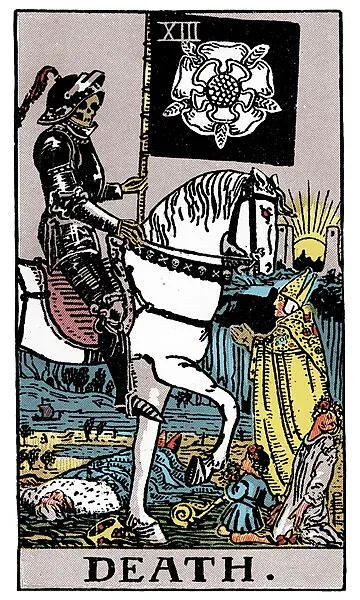
Death
The old self has dissolved; the new self is being named. Death does the breaking; Judgement does the calling. Together they describe the deep arc of identity transition — the long winter of letting the old shape go, then the spring morning of waking under a new name. Do not try to keep the dissolved self present in the called one.
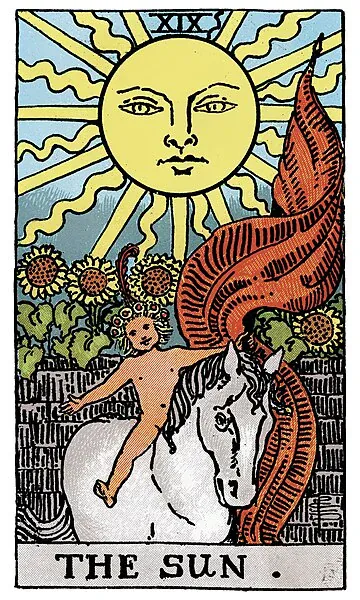
The Sun
To be seen, then be named. The Sun's gift is unconditional visibility; Judgement is the call that arrives after the seeing. Together they are one of the deck's most generous combinations — first the warmth that lets you stand in your skin, then the verdict that says, this is who you are. Wedding flag, ordination, public commitment.
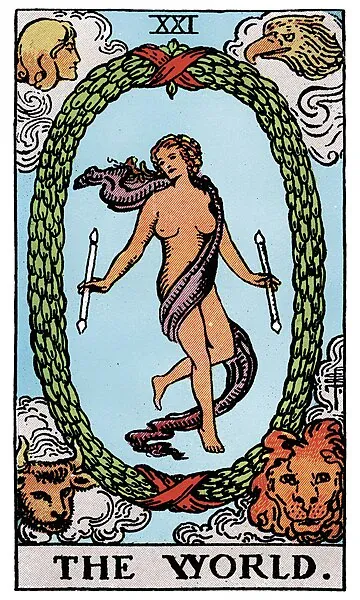
The World
The naming followed by integration. Judgement is the threshold; the World is the room you walk into after. Together they describe the completion of a whole arc — call answered, name received, life lived in the new shape. End of a decade-long project, closure of a long chapter, completion of a body of work. This phase has been integrated.
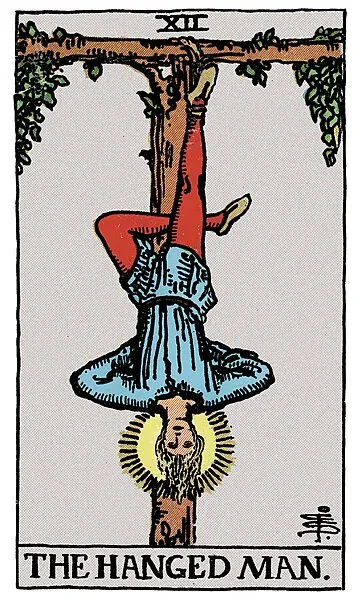
The Hanged Man
The surrender that precedes the horn. The Hanged Man teaches the deliberate suspension of trying; Judgement is the call that arrives after the patience has done its work. The seeker had to stop pushing for the right name to come. Stay hung longer than you thought you needed to. The naming arrives — but only to those who have actually stopped striving.
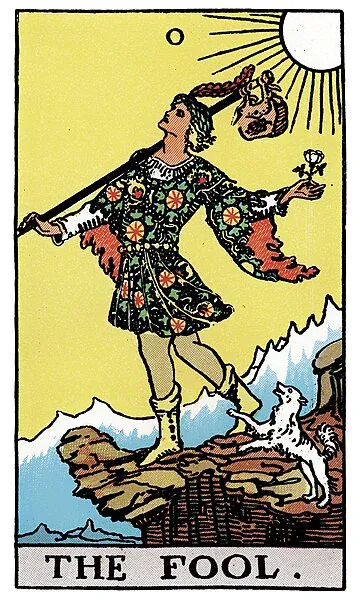
The Fool
The bookend pairing — unnamed beginning and named ending. The Fool steps off the cliff with no name yet, only the bag and the dog and the rose. Judgement is the verdict at the end of the arc, the moment the journey acquires its name in retrospect. End of an apprenticeship, gap year, journey of self-discovery — the walker laughs and accepts the name, because of course this was always who they were going to be.
Frequently Asked Questions
What does the Judgement tarot card mean?
Judgement upright is the card of the long-delayed sentence finally said aloud — a name being called, a verdict being recognized, a long-private knowing crossing into public speech. In the Rider-Waite-Smith image, the archangel Gabriel sounds a brass horn from a long cloud, and three figures rise from open coffins on a gray sea. The card is not punishment. It is the moment something inside you finally agrees with what you already know.
Is Judgement a yes, or a recognition of a yes I already reached?
Judgement upright is one of the clearest yes-cards in the deck. Treat it as a recognising yes — not new permission, but confirmation of an answer you have been arriving at for some time. The card has Pluto's irreversibility behind it, so the yes is sturdy. The only nuance is that the card answers what you actually know rather than what you wish it would say; ask it precise questions and it will answer them precisely.
Does Judgement mean the conversation we have been avoiding is finally happening?
In love, Judgement upright is the card of the long-delayed honest sentence. For partnerships, it describes the moment a hard truth is finally named without flinching, often producing a renewed bond on more honest ground. For new connections, it marks the moment you both stop pretending the connection is casual. For singles, it suggests the next love will arrive as recognition — a person you recognize more than you are surprised by.
Has the other person already reached a verdict about me under Judgement?
When Judgement appears as feelings, the other person is reviewing you, and the review is finishing. They have been weighing you carefully, often longer than you realized, and are arriving at a verdict they intend to name plainly. Their feeling is not flickering. It is settling into a sentence they are about to say. Whatever they name you, they will mean — and once named, they are unlikely to revise it casually.
What is Judgement's spiritual lesson?
The spiritual lesson of Judgement is that vocation is recognized, not invented. The work you are here to do has been calling you for a long time; the card is the seal on the moment you stop refusing to know. Rooted in Path 31 from Hod to Malkuth, Judgement describes the descent of the named thing into the lived body. Speak the long-private sentence aloud. Lay down the old name. Stand up under the one that has been waiting.