Knight of Swords Reversed · Core Meaning
Speed has outrun its own thought. The horse is still galloping. The sword is still raised. The visor is still down. But somewhere in the last hundred yards, the rider lost the question. He is now charging at high velocity toward something he can no longer accurately identify, swinging at shapes he cannot see clearly, cutting things that were never meant to be cut. The Knight of Swords reversed meaning is the card of the moment the gift becomes the wound — not because the rider stopped trying, but because the trying outpaced the seeing.
There is a second flavor of the reversed card, less common but equally important: the knight who has dismounted in the wrong place. The decision has been made in the head, the conclusion is sharp, the action should have begun a week ago — and the Knight is sitting on the saddle, paralyzed, polishing the sword instead of using it. This is the knight whose haste has imploded into hesitation. He has so over-rehearsed the charge that he can no longer execute it. The blade goes dull from being held in position too long.
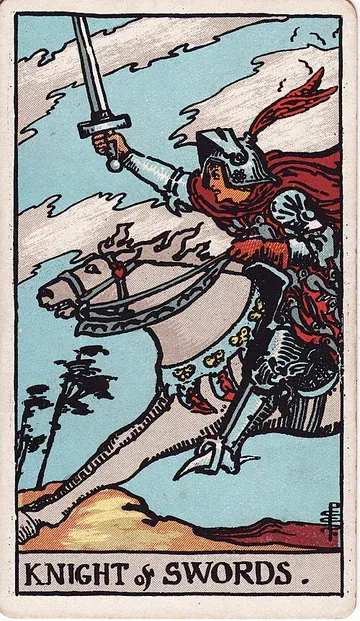
In the Rider-Waite-Smith image inverted, the sword now points downward and the horse appears to be falling rather than running. The plume that was a banner becomes a tangle. The visor that was a focusing slit becomes a wall between the rider and what he is riding into. The butterfly ornaments on the bridle, in the upright card delicate, become in the reversed card the warning ignored — light things tied to a body moving too fast, breaking the moment the speed turns wrong.
Watch the horse for a moment instead of the rider. Upright, the animal wants to run and the rider's whole job is to point it. Reversed, that arrangement has come apart in one of two directions. Either the horse has taken the bit and the rider is a passenger in the costume of a driver — the decision made by momentum, by temper, by whatever was loudest in the chest at the hour the message got composed — or the horse has planted its feet in the mud and will not move at all, and the rider sits there in full plate, still dressed for a charge that is not going to happen. From a distance the two riders are indistinguishable. Both are armored. Both have the visor down. Neither is steering.
This is the reversed card's central knot: the qualities that made the upright Knight magnificent now turn against him. Decisiveness becomes recklessness. Directness becomes verbal violence. The willingness to cut becomes the inability to leave anything uncut. The conclusion that arrived fast becomes the conclusion that was wrong because it was fast. The reversed card is not a different knight; it is the same knight after the moment the speed crossed a threshold he did not notice crossing.
The astrological signature does not change — Taurus into Gemini, late spring to early summer, Air court with inner Fire — but the temperament tips into excess. The fire-within-air, ungrounded, becomes the storm without the rain: lightning, wind, no nourishment. The seeker is asked to find the dismount, the still hour, the twenty seconds in which the sword is returned to the saddlebag and the question is reconsidered. The sword that was the gift, returned to its sheath for one breath, becomes the gift again. The sword that is never sheathed eventually cuts the rider.
There is also the spread in which you are not the knight. Someone else is riding at you at this speed — the manager who restructured the team by memo on a Friday, the relative who has decided what kind of person you are and says so across the table at dinner, the stranger in a thread who has your entire character worked out in four lines. Reversed, this card describes being on the receiving end of an unaimed charge at least as often as it describes delivering one. The reading changes accordingly. Do not meet a gallop with a gallop; a rider at that velocity cannot be reasoned with while the horse is still moving. Step out of the lane, let the animal go past, and answer later, when the dust has dropped and a sentence has somewhere to land.
Reversed, the Knight of Swords asks: what are you charging at, and why? Are you sure the target is the target? Is the sentence you are about to send the sentence you actually meant, or the sharpest version of it that occurred to you in the last ninety seconds? Is the speed serving the situation, or has the speed become the situation?
Knight of Swords Reversed · Love & Relationships
The conversation has tipped from honest into weaponized. The honest sentence is the gift of the upright card. The weaponized sentence is the wound of the reversed one. They sometimes use the same words. The difference is in whether the sentence was said to clarify the relationship or to win the argument. The reversed Knight has stopped clarifying. He is now winning, and the winning is breaking what the honesty was supposed to protect.
For an existing partnership, the Knight of Swords reversed in love is the card of the fight where one or both of you reaches for the sharpest sentence first. The thing you have both quietly known would hurt the most, finally said out loud, in the wrong moment, for the wrong reason. Once it has been said, no one can pretend not to have heard it. The relationship can survive the sentence — most do — but only with active repair work, beginning with the partner who said the sentence acknowledging that the speed of the saying was its own injury. Slow down. Apologize for the velocity, even if the content of the sentence was, in some way, true. The reversed knight wounds with the speed as much as with the words.
For a new connection, the Knight of Swords reversed in love can describe the partner who is moving too fast in the relationship — declaring intentions that have not yet been earned, pushing for commitments before the foundation is real, mistaking intensity for compatibility. Or, just as often, it describes you doing this. The card is gentle but honest: the speed that feels like passion may be the speed of someone who is afraid the relationship will dissolve if it is allowed to develop at its own pace. Dismount. Let the relationship walk for a season before you ask it to gallop.
When the question is whether someone loves you and this knight rides in reversed, read the sharpness rather than the words. They have feelings, and the feelings are sharp — but the feelings have become argument-shaped rather than affection-shaped. They may be in the phase where they are using their cleverness to hold you at distance. They may be the partner who says cutting things and then claims you are too sensitive. They may be in love and currently unable to express it without the protective sharpness of the air court at its most defended. None of this is a reason to leave or stay. It is a reason to read what you are actually being given. Pleasant words from a sharpened mind are not the same as a kind heart.
For the question of reconciliation after a break, the Knight of Swords reversed in love is one of the harder cards. It can mean that the conversation needed for reconciliation cannot yet happen because the wounded party is still in their reactive sword phase. It can also mean that the attempt at reconciliation will get derailed by one party reaching for the sharpest sentence the moment the conversation gets difficult. If you are pursuing reconciliation and the card arrives reversed, write the conversation in advance. Decide what stays unsaid no matter how the other person responds. Bring the discipline the upright Knight respects — the discipline of pointing at the real question instead of the closest grievance.
For the single seeker, the Knight of Swords reversed in love can describe the dating phase in which you have become too quick to dismiss. The first awkward text and you delete the contact. The first imperfect date and you decide they are not for you. The card warns of the cleverness that has become a substitute for actual discernment. The mind is moving fast enough to find a flaw in everyone, and the finding of the flaw is being mistaken for wise screening. Slow down. The right partner will also have flaws. The question is not whether they have them but whether their flaws are the ones you can live with.
On love, read the reversed Knight of Swords as the love that has become an argument the partners have stopped wanting to win for the right reasons. They are still arguing. They are still using sharp sentences. But the original purpose of the talking — to know each other more truly — has been replaced by the secondary purpose of being right. The card asks both partners to set down the sword. Not forever. Just for the next conversation. Try one conversation in which neither of you tries to win. Notice what changes.
For polyamorous, queer, or non-traditional structures, the Knight of Swords reversed warns of the boundaries that have been negotiated harshly rather than collaboratively. Agreements imposed instead of co-written. The card asks for a renegotiation in a softer register. The structure can hold. The way the structure was built may have been built too fast, with too much of one partner's sword and not enough of the other's voice.
For long-distance relationships, the reversed card warns of the late-night text that was sent in haste and read in worse haste. Stop. Re-read your messages before sending them. The medium is too thin to carry the corrections you would normally make in person. The reversed knight rides faster in writing than he should be allowed to ride.
A small instruction when this card arrives in love readings: the next time you feel a sharp sentence forming in your throat during a conversation with the partner, set it down for one hour before saying it. Not forever. One hour. Most of the sentences the reversed knight wants to say will not survive that hour. The ones that do are the ones worth saying — and they will say themselves more cleanly when the speed has come out of them.
Knight of Swords Reversed · As Feelings
When the Knight of Swords appears reversed as feelings, the answer is: sharp in a way that has stopped being honest. The person you are asking about has feelings about you that they are using to defend themselves rather than to communicate. The sword is up. The visor is down. But the charge has lost its target. They feel something — and the feeling has become tangled in their own commentary about it, in their cleverness about it, in the stories they are telling themselves to avoid sitting with what is actually true.
If they are reserved by nature, the Knight of Swords reversed as feelings can mean defensive coldness. They have decided something about you that puts them in a protected position. They may have decided you are not interested, based on thin evidence, and the deciding has now become the reason they are pulling away. They may have decided you are too much and are using the assessment as the wall. None of this is necessarily true about you. It is true about the story they have constructed. The reversed knight in feelings is often the partner whose mind has gotten ahead of the actual relationship and is now responding to a relationship that does not exist.
If they are demonstrative, the Knight of Swords reversed as feelings can mean the partner who is voluble in their criticism of you — saying sharp things to you or about you, often while also continuing to engage. This is hot-and-cold in its sword-form. They are not done with you. They are also not currently capable of speaking about you without the sharpness. Read it as feeling that has not yet matured into expression. Whether it ever does is up to them.
For a partner you have been with a long time, the Knight of Swords reversed in feelings can describe the chronic sniping that has become the relationship's default register. They love you. They have stopped speaking to you as if they love you. The reversed card is the card of the partner who has forgotten the difference between honesty and habitual sharpness. The cure, when it comes, is usually their own — the partner who realizes they have been wounding the person they came home to, often years into the pattern.
For a new connection, the Knight of Swords reversed as feelings can mean the partner who is privately impressed by you and publicly dismissive. They have decided they like you. The deciding embarrassed them. They are now performing skepticism to recover the protective distance. The card is honest about this — it is not flattering, but it is information. They are interested. The interest is being managed by their pride. Whether the management collapses into actual courtship is a different question.
Read as feelings, the reversed Knight of Swords is feeling held behind a defensive sharpness. The interior weather is real, but it has been weaponized in the act of being held. They feel something. They are using sharp words to cover that they feel something. The card is one of the harder feelings cards because it asks the reader to look beneath the words at the unspoken weather behind them.
For a complicated situation — a former partner, an unclear flirtation, a relationship that ended without ending — the Knight of Swords reversed in feelings says they are still arguing with you in their head. The argument has not finished even though the relationship has. They are reciting their grievances to themselves on long drives. They are crafting the perfect sentence they would say if they ever saw you again. None of this means they want you back. It means they have not yet been able to put the sword down. Whether they ever do is their work, not yours.
There is a softer reading of the reversed card in feelings, which sometimes applies: the partner who is paralyzed by the very sharpness of their own conclusions about you. They have decided. They cannot say what they have decided because saying it would make it real. So they sit on the horse, sword raised, going nowhere. This is the version of the reversed knight whose feelings are clear but whose actions are stuck. Read it as: they know what they want; they are afraid to say it; the fear is louder than the knowing.
A useful question to ask when this card appears in feelings: am I more interested in the sharpness of what they say to me, or in the warmth of what they say to me? If you are reading the reversed knight and finding their cleverness more compelling than their care, the card is asking you to consider whether you are choosing wit over kindness. The reversed knight at his worst is the partner whose sentences are excellent and whose presence is dehydrating.
Knight of Swords Reversed · Career & Work
The workplace move was made too fast and is now visibly wrong. The resignation sent in anger. The strategy pivoted on a single bad meeting. The hire made on instinct that turned out to be the wrong instinct. The presentation given before the data was actually checked. The card is honest about the cost. It is also kind about the recovery — most of these moves can be partially repaired if the worker stops doubling down and admits, quickly, that the speed was the error.
For someone in a current role, the Knight of Swords reversed at work is often the card of the email you are about to send. Stop. Save the draft. Do not send. The version that lives in your inbox at 11pm is almost never the version that should be in your boss's inbox at 8am. The reversed knight rides fastest in written communication, where the recipient cannot read your tone and where the absence of facial cues makes a sharp sentence land twice as hard as it would in conversation. Send by morning, after you have re-read the draft with coffee and possibly with a trusted colleague.
For someone considering a new role, the Knight of Swords reversed warns against the offer accepted in haste. The role looks great. The package is generous. The recruiter is moving fast. The card asks: have you actually verified what the day-to-day work will be? Have you talked to anyone currently in the role, not just the hiring manager? Have you read the reviews, not the marketing? The reversed knight is the candidate who said yes within an hour and discovered, three months in, that the role was not what the conversations had implied. Slow the acceptance by twenty-four hours. The offer that disappears in twenty-four hours was not your offer.
Entrepreneurs and freelancers should read the Knight of Swords reversed as the card of the launch shipped before the launch was ready. The product released with the bug that is now public. The pitch sent before the deck was proofread. The campaign launched without checking whether the URL actually resolved. The card is not punishment — it is information. The cost of the haste is real. The cost is also recoverable, usually, if the founder responds quickly with humility instead of slowly with denial. Acknowledge the bug. Fix it. Move on.
For a creative practice, the Knight of Swords reversed describes the work shown before it was done. The chapter posted before the editor saw it. The painting photographed and shared before the varnish was dry. The card asks the practitioner to honor the slow phase of the work — not as moral discipline but as practical wisdom. The work shown too early gets the wrong feedback, which then haunts the work for the rest of its development. Wait until the work can take the response without breaking.
For a job search, the Knight of Swords reversed is the card of the application sent to the wrong job. The cover letter that addressed the wrong company. The resume that listed the wrong dates. The interview prepared for the wrong role description. The card asks for the slow read of the actual posting. Most application errors come from haste. The candidate who applies to fewer jobs more carefully gets more interviews than the candidate who applies to many jobs sloppily.
For team leadership, the Knight of Swords reversed warns of the decision announced before the team was ready to hear it. The strategic shift communicated in a memo without the prior conversations. The reorganization announced without the courtesy meetings to the people most affected. The card asks the leader to honor the speed of the affected, not just the speed of their own conviction. The decision may be right. The way the decision was delivered may have made it impossible to implement.
For freelance pricing, the Knight of Swords reversed warns of the rate quoted in haste — usually the rate quoted too low because the freelancer was eager to close, or quoted too high because the freelancer was annoyed by something earlier in the conversation. Both errors come from speed. Send the quote tomorrow. The client who needed it today was not your client.
For someone in a long stalemate at work — a project that has been arguing with itself for months, a hire that has been pending for a quarter, a strategy that has been debated without resolution — the Knight of Swords reversed has a different reading. Here, the reversed card is the stuck knight, the rider who has rehearsed the charge so many times that he can no longer execute it. The team needs the decision. You have the position. The position has been clear in your head for weeks. Stop polishing it. Make the call. The reversed knight, in this register, is the leader whose haste has imploded into hesitation — and the cure is the same as the cure for the upright excess: the action taken with discipline, not the action endlessly deferred for safety.
A practical exercise when the Knight of Swords reversed shows up in a career reading: identify the one decision you have either made too quickly or postponed too long. Just one. Write down what you would do if you trusted yourself to handle the consequences either way. Then either send the message or schedule the meeting for tomorrow. The reversed knight responds to specific, modest action — not to grand corrections.
Knight of Swords Reversed · Money & Finances
A financial decision made in panic, in irritation, or in a burst of conviction that did not survive the next morning. The trade placed at 2am after reading one bad article. The subscription canceled in anger that you actually needed. The purchase made because someone slighted you and the spending felt like a victory. The card is gentle but honest: most reversed-knight financial moves are correctable, but the corrections cost more than the original deliberation would have.
For a question about whether to make a major purchase, the Knight of Swords reversed says wait twenty-four hours. Not because the purchase is necessarily wrong — but because if it is right, it will still be right tomorrow. The card warns against the urgency manufactured by limited-time offers, flash sales, and counter-strike spending. Most things you want at midnight are still wanted at noon, when you have actually checked the budget. The ones you have stopped wanting were the wrong purchases.
For investments and speculative moves, the Knight of Swords reversed warns of the trade made in revenge. You missed the up-move; you are now chasing it. You took a loss; you are now doubling down to recover. You read one piece of analysis; you are now restructuring the portfolio. The card describes the trader who has stopped consulting their actual strategy and is responding emotionally to recent price action. Close the trading platform. Do not place a trade today. The losses you avoid by waiting will, on average, exceed the gains you miss.
For someone managing debt, the Knight of Swords reversed warns of the consolidation move made before the actual numbers were checked. The new card opened to balance-transfer the old card, without realizing the new card has a higher rate after the introductory period. The loan taken to pay off the credit card, without realizing the loan has a fee that exceeds the interest savings. The card is asking for the actual math, not the felt sense that consolidation is good.
Shared accounts are where this card does its loudest damage. Reversed, a money conversation stops being about the figures inside about ninety seconds and becomes a contest over which of you is the more careless person — and the figures, the only thing in the room that could actually have been solved, sit on the table untouched while four years get relitigated over them. A workable discipline with a partner, with a sibling handling a parent's accounts, with a business co-owner: agree beforehand that the first sitting only reads the numbers aloud. No decisions in that sitting. No characterizations of anybody. The decisions belong to a second sitting, on another day, once the sums have stopped functioning as evidence about a person.
For windfall income, the Knight of Swords reversed warns of the immediate purchase. The bonus arrives and you upgrade the car the same week. The inheritance lands and you renovate the kitchen the next month. The card asks for the pause. The windfall that disappears within ninety days was not used; it was processed. Sit with the money for a season. Most of the wisest uses of windfall do not occur to the recipient in the first thirty days.
For someone in a long climb out of financial difficulty, the Knight of Swords reversed warns of the rebound spending. The constraint loosened, the credit card got paid off, and now the spending has crept back up because it felt like the constraint was the problem rather than the spending pattern that created the constraint. The card is honest: the spending pattern is the work. The constraint was just the bandage.
The cut aimed at the income side deserves its own naming. Firing the difficult client in a single evening. Walking off the contract mid-project. Closing the shop because one month came in badly. Reversed, the blade lands on the thing that was actually paying for the groceries, and it lands there because the thing that was paying for the groceries is also the thing that has been humiliating you. Some of those endings are correct and overdue. Almost none of them are correct tonight. If the client or the contract genuinely has to end, it still ends better with two weeks' notice, the final invoice sent in full, and the last delivery made properly. A knight who severs his own supply line and calls it integrity is still a knight standing in an empty field.
For a question about whether to negotiate, dispute, or push back on a financial transaction, the Knight of Swords reversed says: yes, but in writing, after you have slept on it. The reversed knight on the phone with customer service tends to lose the negotiation by being insufficiently calibrated. The reversed knight in writing, after sleep, can usually win — because the written negotiation removes the speed and the speed is the part of the knight that loses arguments.
A useful practice when the Knight of Swords reversed appears in a money reading: implement a twenty-four-hour rule for any non-essential purchase over a threshold you set yourself. Not as moral discipline. As basic protection against the reversed knight's spending pattern. The threshold can be modest — fifty dollars, a hundred, whatever your situation calls for. The practice is the practice, not the number.
Knight of Swords Reversed · Health
The body has been ridden too hard for too long without a dismount. The chronic overdrive that has stopped being a phase and has become the baseline. The breath that is shallow because it has been shallow for months. The throat that is hoarse because the speech has been too fast and too loud and too constant. The card is honest about the cost. The body of the reversed knight is the body that needs the dismount the rider keeps refusing to perform.
The card's traditional bodily territory remains the lungs and throat, but reversed, the territory tips toward dysfunction. Asthma triggered by stress. Vocal cord strain from over-speaking. Anxiety that lives in the chest as constriction rather than as discrete worry. The shallow upper-chest breathing that means the lungs are not actually being used to their capacity. Shallow upper-chest breathing, named here, is symbolism rather than medical advice. It is the symbolic field the card draws from. Keep your practitioners. The card simply names where the body's discomfort may be presenting.
For someone managing a chronic condition, the Knight of Swords reversed warns of the management protocol that has slipped because the seeker has been too busy to maintain it. The medication missed because the morning was rushed. The exercise abandoned because the schedule got tight. The dietary discipline relaxed because the takeout was faster. The card is gentle but firm: the condition does not relax because the schedule does. The body is keeping its own count even when the mind has stopped paying attention. Re-engage. Slowly, sustainably, but starting today.
For acute illness or injury, the Knight of Swords reversed warns against returning to full activity before the body has finished healing. The instinct to charge back to normal life the moment the worst symptoms have passed. The card is honest: the recovery that was going well at week three gets undone in week four by the seeker who decided they were fine. Honor the actual healing timeline, not the felt sense that you should already be over it.
For mental health, the Knight of Swords reversed describes the racing mind that cannot find its off switch. The 3am rumination. The thought that hooks itself into another thought into another thought, all night, with no breaks. The card asks for the practical interventions: turn off the screens an hour earlier, do the breathing exercise even when it feels stupid, take the walk in the morning, get the appointment with the practitioner if the racing has become chronic. The reversed knight does not respond to "just relax" — that instruction is the equivalent of telling a galloping horse to stop galloping by saying so. The horse responds to dismounting, slow walking, and water. The mind responds similarly.
For someone considering surgery or a major medical procedure, the Knight of Swords reversed asks for the second opinion. Not because the first opinion is necessarily wrong, but because the reversed knight tends to schedule the procedure before fully exploring the options. Slow down by a week. Consult one more practitioner. Read the actual research, not the headlines. The procedure that is correct will still be correct after the consultation. The procedure that turns out to be unnecessary will reveal itself in that week.
For the body under chronic stress, the Knight of Swords reversed is one of the deck's clearest warnings. The rider has been refusing to dismount for a long time. The body is now showing the cost in compounding ways — sleep that does not restore, meals that do not nourish, exercise that exhausts rather than energizes, conversations that drain rather than connect. The cure is structural, not behavioral: the schedule has to change, not the willpower applied to the existing schedule. Cut something. Anything. The reversed knight returns toward upright the moment the rider chooses to walk for an hour a day.
For breath specifically, a small practice when the card appears: three rounds of slow exhale, four counts in, six counts out, twelve breaths each round. The practice does not have to be done in any particular posture. It does have to be done. The reversed knight rebalances through the breath that says, clearly and physically, that the body still has time to be a body.
Knight of Swords Reversed · Spirituality
Practice has hardened into a series of decided positions, held with increasing rigidity. The practitioner who has gathered enough vocabulary to argue about every spiritual question and has lost the capacity to sit quietly with any of them. The card is the spiritual seeker who has accidentally turned the inner work into a debate, sometimes with others, often with themselves.
For someone in active practice, the Knight of Swords reversed warns of the practice that has become performative. The morning sitting that is being done to maintain the identity of someone who sits, rather than to actually sit. The reading that is being done to be the kind of person who has read those books, rather than to be changed by them. The card asks for the honest pause. Why are you doing the practice? If the answer has drifted from the original answer, the practice has drifted with it. Re-anchor.
For a seeker exploring belief, the Knight of Swords reversed warns of the cleverness that has begun to substitute for the actual question. The seeker who can dismantle every tradition's metaphysics but has not, in three years, sat with their own. The card is one of the harder spiritual cards because it does not flatter the intellect. It points at the intellect and says: the sword has gotten too sharp for its own good. The seeker who can cut every position cannot stand anywhere.
For questions of vocation or path, the Knight of Swords reversed describes the calling decided too quickly and pursued too rigidly. The vow taken in a peak moment that no longer fits the regular self. The career change made on the strength of one retreat that has not survived the return to ordinary life. The card asks: has the vocation continued to feel like the vocation, or has it become the position you defend even when defending it costs you? Reconsider without shame. The path that was right for the version of you who chose it may not be right for the version of you who has been walking it.
For the seeker who has studied multiple traditions, the Knight of Swords reversed warns of spiritual collecting. The practitioner who has the meditation app, the breathwork class, the journaling notebook, the tarot deck, the astrology software, the four substacks, the seven podcasts — and is doing none of them with depth. The card asks for the cut the upright Knight makes naturally and the reversed Knight refuses: pick the one practice that is actually moving you, drop the rest, and let the chosen practice become deep through staying with it.
For prayer, ritual, or devotional practice, the Knight of Swords reversed warns of the prayer said too quickly. The mantra recited as a checkbox rather than as a real address to whatever the prayer is addressed to. The ritual performed in haste because the schedule was tight. The card asks for the slowness the upright knight resists. Some forms of prayer require the prayer to slow the prayer down, before the prayer can do any work.
For the seeker in a season of crisis, the Knight of Swords reversed can describe the spiritual practice that has become a performance of coping rather than the actual coping. The card is honest: the meditation that you do because you should is not the meditation that helps. The journal that you write because you are supposed to journal does not soften what needs softening. The card asks for honesty about which practices are currently alive in you and which have become fossils. Set the fossils aside. Return to them when they have something to say. Stay close to whatever, today, actually carries weight.
A practical practice when this card arrives: choose one spiritual book on your shelf you have been meaning to finish. Sit with the chapter you have been stuck on for fifteen minutes. Do not move past it until you have written one paragraph in your own words about what the chapter is actually saying. The reversed knight returns toward upright through depth, not through breadth. One paragraph honestly written is worth more than a hundred chapters skimmed.
Knight of Swords Reversed · Yes or No
Conditional yes — but slow it down. Or: a soft no, when the question depends on speed you do not currently have.
The Knight of Swords reversed is one of the harder yes-no cards in the deck. It is rarely a clean answer. It is more often a yes that requires you to first remove the haste that is currently distorting the situation, or a no that becomes a yes the moment you slow down enough to ask the question correctly.
For yes-or-no questions about whether to act, whether to send the message, whether to make the move: the answer is wait. Not forever. Twenty-four hours. The action you take after the wait will likely be a different action than the one you would take right now. The reversed knight is honest: the answer to the literal question may technically be yes, but the version of yes you are currently about to enact is the wrong version. Pause. Re-ask the question. Then act.
For yes-or-no questions about whether someone will respond, whether the offer is real, whether the conversation will bear fruit: the reversed card warns that the response, when it comes, may be sharper than expected. They will respond. The response may include a sentence you were not braced for. Read it carefully before you reply. Do not respond to the reply on the same day. The reversed knight is the card of the email exchange that escalates because both sides are responding too quickly.
For yes-or-no questions about the truth of a situation — is this person honest, is this offer what it appears to be, will the deal hold — the Knight of Swords reversed says the truth is more complicated than a binary. Something in the situation has been moving too fast, in either yours or their reading of it, and the speed is creating false clarity in either direction. Slow down. Ask one more question. The answer that emerges from the slower inquiry will be more useful than the binary the speed is offering you.
Asked as a yes-or-no, the reversed Knight of Swords answers conditionally. If the question is "should I act now," the answer is no, not now. If the question is "should I act eventually," the answer is yes, but with calibration. If the question is "is this moving in the right direction," the answer is mostly yes, but the speed is currently distorting your read. Across all variants, the reversed knight asks for the dismount before the answer.
For questions of timing — will it happen soon — the reversed Knight of Swords suggests that the soonness may be a problem. What happens fast may need to happen slowly to actually work. What you are wishing would resolve next week may, if it resolved next week, resolve in a way that does not hold. Be patient. The reversed card is unusual in this register; most reversed cards complain about delays, but the reversed knight specifically warns that some things should take longer than the seeker wishes.
On a binary — act now, or hold — the inverted knight says hold, and says it nearly every time. The exception is when the seeker has been waiting for months on a decision they have already made internally and the wait has become its own form of avoidance. In that case, the reversed card flips: the deferred decision must finally be enacted, not because the situation demands speed but because the seeker has used "I am being careful" as a cover for "I am afraid." Honest waiting is virtue; performative waiting is sloth.
If the question was: should I trust my first instinct? The reversed Knight of Swords answers: not today. Your first instinct is currently shaped by something other than the situation. Let it sit. The instinct that survives twenty-four hours is the instinct worth trusting.
Knight of Swords Reversed · Advice
Dismount for twenty seconds before anything else. Put the sword back in the saddlebag first. Then decide whether to draw it. The reversed card is not asking you to abandon the action — it is asking you to reinsert the deliberation that the speed has been crowding out.
The first instruction is to delete the sentence you are currently typing. Not all sentences. The sharp one. The clever one. The one you composed in your head while showering this morning and have been refining all afternoon. The sentence that is currently waiting in your draft folder, in the half-written email, in the text message thread you have not yet sent. Delete it. Send it tomorrow morning if you still want to send it. Most reversed-knight sentences do not survive that night.
The second instruction is to wait one hour before any decision that feels urgent. Not all decisions. The ones with the racing-pulse signature. The ones where you can feel the speed in your chest and the answer is forming itself already. The reversed knight rides the racing pulse. The hour is the practice that lets the pulse settle before you act on it. If the decision is still the right decision after the hour, you have lost nothing by waiting. If the decision has changed, you have just been spared a mistake.
The third instruction is to ask the second question. The reversed knight is the seeker who asks one question, gets one answer, and charges off to act on it. The question is rarely the only relevant question. After you have asked the first question and received the first answer, before you act, ask: what is the question I should ask next? That second question is usually the one that contains the actual situation. The first question is usually the warm-up.
Read it aloud in the other person's voice before it goes anywhere. Not in yours — in theirs, in the kitchen it arrives in, on the morning it arrives, after whatever kind of night they have had. The reversed knight composes in his own acoustics, where every line sounds measured and fair because he can still hear the reasoning underneath it. The recipient gets only the surface. Thirty seconds of the sentence spoken out loud in someone else's mouth will tell you more about whether to send it than another hour of rewriting. If it sounds like a verdict when they say it, it is a verdict, whatever it felt like while you were typing.
The fourth instruction, gentler than the others, is to forgive yourself for the haste you have already enacted. The reversed knight applies retroactively: most adults have, at least once, sent the email that should not have been sent, ended the relationship that could have been saved with one more conversation, taken the role that was wrong, walked out of the meeting that needed them to stay. The card is not asking for shame. It is asking for the present-moment recognition that allows the future moments not to repeat the pattern.
Hand someone the reins on purpose, and do it while you are calm. One person — a friend, a colleague, a sibling — with a standing agreement: anything that matters goes past them before it goes out. The agreement has to be made in advance, because the reversed knight never thinks to ask for it mid-gallop; at that speed, asking feels like losing. Give them the terms plainly, so they are not left guessing whether you want counsel or applause. Tell me if this is sharper than the situation requires. Almost all of the damage this card describes happens in the forty minutes when nobody but you had read the sentence.
A practical exercise when this card appears: before you take any action you have been about to take, pause and complete the sentence "the version of me one week from now will say this action was..." If the answer is anything other than "the right move," wait. The reversed knight responds to time-shifting the decision-maker. The you who is one week ahead has perspective the you in the racing moment does not. Ask that you. Then act.
Knight of Swords Reversed · Card Combinations
The reversed Knight of Swords reads in combination as the card that warns the spread about haste — its own and the haste of the cards beside it. The pairings below illuminate where the speed is currently distorting the situation and what other cards in the spread are doing about it.
Knight of Swords Reversed + Queen of Swords
The reckless rider beside the matured discernment. The Queen sees what the Knight is about to do and is choosing whether to intervene. Read together, this is the seeker who has access to better judgment — sometimes their own older self, sometimes a wiser person in their life — and is currently choosing whether to consult it before acting. The card pairing is gentle but honest: the wisdom is available. The question is whether the seeker will pause long enough to receive it.
Knight of Swords Reversed + The Chariot
Two willed motions, both potentially over-driven. The Chariot can also tip into excess — the rider holding the reins so tightly that the sphinxes cannot move. Together, the reversed knight and the Chariot describe a season where the seeker is forcing motion on multiple fronts and the forcing is now the problem. The cure is to release one set of reins. Choose which battle is currently the actual battle and stop trying to win all the others simultaneously.
Knight of Swords Reversed + Four of Swords
The Four asks for stillness and the reversed knight refuses it — but in this pairing, the Four is winning, slowly. Read together, this is the spread of the seeker who is being asked, by the body or by circumstance, to finally take the rest they have been avoiding. The reversed knight resists. The Four insists. The combination usually means the rest will happen one way or another — the question is whether you choose it or whether your body chooses it for you. Choose it.
Knight of Swords Reversed + Knight of Wands
Two reversed knights — air-knight beside fire-knight, both potentially over-driven, both potentially careless. This is the spread of the seeker who is moving fast in multiple directions at once and whose actions in one domain are undoing their actions in another. The cure is to stop both knights, dismount both horses, and ask which charge actually matters. The seeker who tries to maintain both speeds simultaneously breaks something they did not intend to break.
Knight of Swords Reversed + The Tower
The charge meeting the wall the rider could have seen if the visor had been up. The reversed knight is more vulnerable to the Tower than the upright knight, because the reversed knight's blind spots are wider. Read together, this is the spread of the structural failure that the seeker contributed to by not slowing down to see what was already collapsing. The card is honest about the cost. The card is also kind: the structure was going to fall regardless. Your part in the fall was the haste, not the underlying instability. Take the responsibility for the haste, then rebuild.
Card Combinations
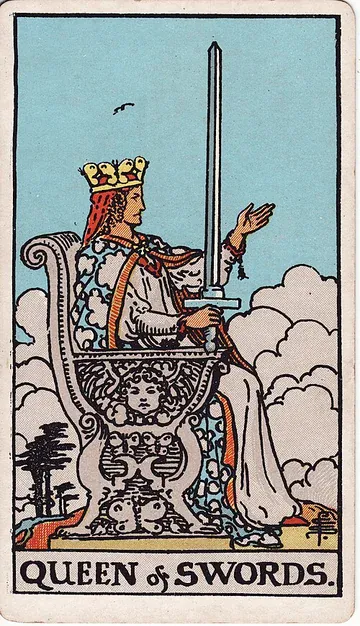
Queen of Swords
The charging mind beside the matured cut. The Queen has learned what the Knight does not yet know — that the right cut is sometimes the cut delayed by a day, sometimes the cut not made at all. The Knight is the courage to act; the Queen is the discernment that aims him. Together, the worker who finally makes the right decision after years of making the wrong ones quickly.
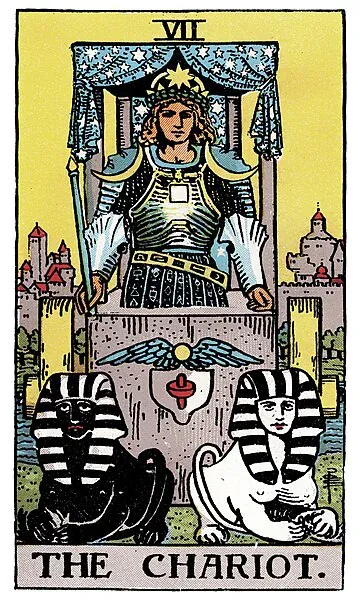
The Chariot
Two willed motions in the same spread — both charge, but the Chariot drives with reins, two sphinxes pulling in opposite directions, the rider holding both. The Knight has only the horse and the sword. Together, a season of forward motion that requires more steering than either card alone — the will to move and the discipline to manage the conflicting forces being moved.
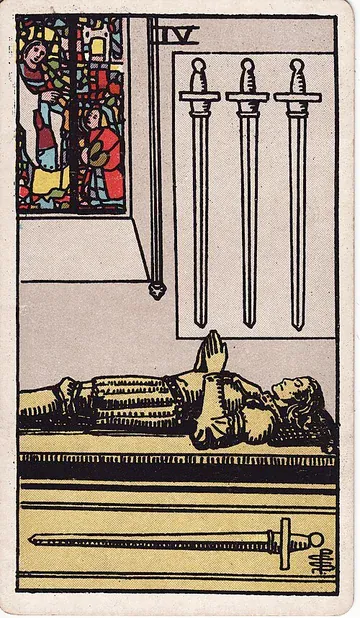
Four of Swords
Tonal contrast. The Four asks for stillness; the Knight refuses it. Together, the spread is naming the central tension of the seeker's current season — the rest the body needs and the action the situation requires, both real, both pulling. The work is to find the cadence that includes both. Charge for an hour, then lie down.
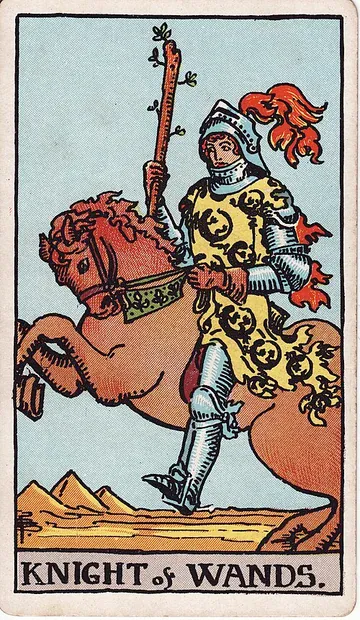
Knight of Wands
Air-knight beside fire-knight — two different kinds of haste. The Knight of Wands rides toward what excites him; the Knight of Swords rides toward what the truth requires. Together, double the speed and double the risk. Pause once a week and ask which knight is currently in the saddle. Both have their place. The seeker confused about which is currently riding is the seeker most likely to break something.
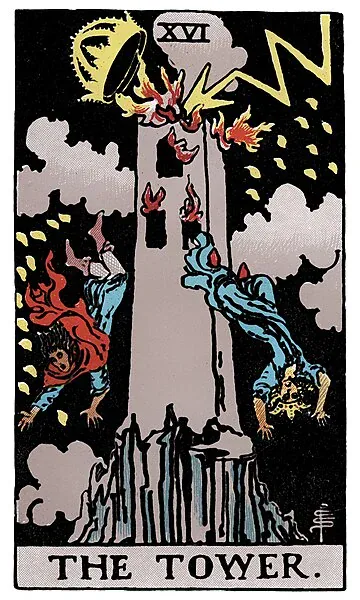
The Tower
The charge meeting the wall it does not see. The Knight's visor is down, the speed too high to register peripheral vision; the Tower is the structure that was about to come down anyway. Together, the season when rapid action coincides with structural collapse. The Tower is not random; it falls on what was already false. Rebuild — the structure that follows is the one the Knight was riding toward all along.
Frequently Asked Questions
How long should I wait before acting on a reversed Knight of Swords?
Twenty-four hours is the card's own figure. The reversed Knight is rarely a clean answer — it is more often a yes that requires slowing down first, or a no that becomes a yes the moment you ask the question more carefully. For most yes-no questions, read it as: wait twenty-four hours. The action you take after the pause will likely be different from, and better than, the action you are about to take right now.
How do I tell an honest sentence from one said in order to win?
By what it was aimed at. Reversed in love, the Knight of Swords describes the conversation that has tipped from honest to weaponized — the sharp sentence reached for too quickly, the criticism that has become habit, the speed of the relationship that has outpaced its actual foundation. The card asks both partners to set the sword down for the next conversation. Try one conversation in which neither of you tries to win.
Is the sharpness in their words hiding the feeling, or expressing it?
Hiding it, and doing it badly. The person has feelings about you that have become defensive rather than communicative. The interior weather is real, but it is being protected by sharpness rather than offered as warmth. They feel something. They are using sharp words to cover that they feel something. Read it as feelings held behind a sword the partner has not yet been able to put down.
Is the reversed Knight warning me about moving too fast, or not moving at all?
Both, and it treats them as one error. The reversed Knight warns about haste that has stopped serving the situation. The decision made too fast. The sentence sent too quickly. The charge launched before the field was in focus. It also warns about the opposite — the decision so over-rehearsed it can no longer be enacted, the knight stuck on the saddle polishing the sword. Both excesses respond to the same medicine: dismount for twenty seconds, then decide.
What is the difference between the Knight of Swords upright and reversed?
Upright, the Knight of Swords is decisive intellect in motion — the courage to make the call, send the message, cut the unfinished sentence clean. Reversed, the same energy tips into excess: speed without aim, sharpness without warmth, action without the deliberation that makes action wise. The reversed card is not a different knight; it is the same knight after the moment the speed crossed a threshold he did not notice crossing.
Continue Reading
Knight of Swords · Card overview · symbols · correspondences →
Return to the full card view — image, symbols, sensory correspondences, and Hermetic axes.
Read the upright meaning →
Read the same depth on the opposite orientation.
Draw your reading now →
Bring this card to a question — open a quiet ritual.