
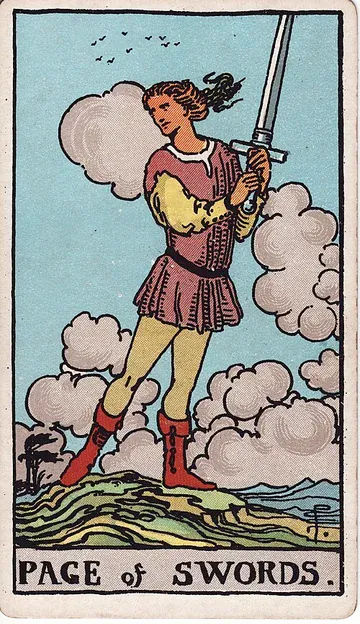
Page of Swords · Core Meaning
The Page of Swords is the deck's youngest scout. A slender figure stands on a ridge of uneven earth, both hands gripping a long sword held upright, the point tilted slightly back over the shoulder. The head turns — not toward the blade, but toward the sound that has just arrived in the wind. The short cloak streams sideways. Above, cloud banks run quickly across a washed sky. In the far background, a dozen or so small shapes ride the air — perhaps birds, perhaps ships, perhaps both. The figure has no army at his back. He has no authority yet. What he has is the first layer of alertness: hearing something a moment before anyone else has heard it.
Read the picture closely. The sword is not being raised to strike; it is being held vertical, two-handed, the way a beginner holds an instrument they have not yet learned to play but already love. The blade is intention, not cut. The Page is not the Knight, who will charge with the same blade in two cards' time. The Page is the frame before the charge — the moment of standing still on uneven ground long enough to register that the wind has shifted. The look over the shoulder is the entire card in a single gesture. Attention has gone toward where the news is coming from, not where the blade will go. The scout's job is to listen. The strike, if a strike is needed, belongs to someone older.
This is the card's signature tension: alertness without authority. The Page of Swords has the eyes and the ears and the readiness, but he does not yet have the weight of experience that would let him act on what he hears. He must, instead, report. He must say, plainly: I heard this. I did not catch all of it. Here is what I caught. The discipline of the card is the discipline of the apprentice scout — to come back with what was actually heard, not with what would have sounded better in the telling. Most readers underestimate how rare this is. Most adults, when they overhear a fragment, polish it on the way back to the room. The Page does not polish. The Page reports the half-sentence as a half-sentence and leaves it to the elders to decide what the missing half might be.
The Page of Swords is a court card, and court cards do not carry decans or sephirot the way the pip cards do. Their signature is elemental: the suit's element on the outside, a second element on the inside. For the Page, the outer element is air — the sword suit, the realm of mind, voice, distinction, the sharpened edge of language. The inner element is earth — the steady underfoot the apprentice has begun, just barely, to find. Earth-within-air is the technical name for the figure's particular weather. It means: thought has, for the first time, something solid beneath it. It can stand still for a second. It cannot yet hold a full system of reasoning. But it can say, with surprising precision, this here doesn't fit. That sentence — short, plain, ground-tested — is what the Page is for.
The body of the card is air's body: lungs and nerves, breath and quick electrical signal, the temperament that traditional medicine called sanguine — quick, light, easily raised, easily quieted. Spring afternoon, east-facing, the moment the wind first rises after the long winter stillness. Steel-blue and cloud-white. The plant is mint and wild thistle: cooling, sharpening, defended without being heavy. The animal is the sparrowhawk and the swallow: small, fast, cutting through air without apparent effort. None of this is decorative. These correspondences describe what the card feels like in a reading — what register of attention it asks the seeker to recognize, what kind of weather it announces.
Read the Page of Swords the way you would read a young apprentice arriving in the doorway with a densely scribbled note, asking you to verify each line in order. Whatever the question — relationship, work, household, identity — the card describes a posture the seeker is being asked to recognize as their own: the posture of standing on uneven ground with the wind on the cloak, listening for a sound the others in the room have not yet heard, willing to say "I'm not sure" out loud, willing to ask "is this really necessary?" plainly. The card is not the answer. The card is the readiness to hear what the answer is going to require.
Page of Swords · Love & Relationships
A young, question-shaped presence enters the frame — not necessarily a final answer, but the one whose plain questions shake the seeker awake from old answers that had stopped being examined. The card is rarely the long-arc partner card. It is the apprentice card: a connection that asks something of the mind, that brings curiosity rather than reassurance, that begins less in the heart and more in the conversation that runs late because neither person can quite let the question go.
For an existing partnership, the Page of Swords upright often arrives when one or both partners begin asking the long-deferred questions. Why do we do it this way. Why have we never talked about that. What did you actually mean, two years ago, when you said the thing I never followed up on. The card is not destabilizing on purpose; it is simply the moment when the relationship's unexamined assumptions get held up to a light that has not been pointed at them in a while. Treat the questions as scout reports, not indictments. The Page does not arrive to dismantle. The Page arrives to verify — line by line, the way an apprentice asks the master to confirm each entry in the densely scribbled note. The relationship that survives this season is more clearly itself than it was before.
For a new spark in the early stages, the Page of Swords describes a connection that runs first through the head. The two of you talk. You text things to each other you have not articulated to anyone before. You find yourself saying out loud, on the third date, something you had only half-understood about your own life. This is the card's love language: thought made shareable. The new presence is not necessarily the great love of your life. They are, however, the right reader for this chapter — the person whose attention organizes your own thinking enough that you can finally hear yourself. Honor that for what it is. Some loves are for the long arc. Some loves are for the awakening. Both are real.
For a single seeker asking whether love is possible, the Page of Swords answers with a particular kind of yes: love is approaching in the form of a conversation, not a thunderclap. Watch for the person who asks the second question after you give the standard answer — the one who does not let you off the hook with the polished line, who follows up gently but precisely until you give the truer version. That person is the one the card is pointing at. They will not look like the love stories you grew up with. They will look like someone leaning forward at a table to say "wait, can you say more about that?" The card asks you to recognize this as a real opening, even when it does not announce itself with conventional fanfare.
For a long-distance or message-driven relationship, the Page of Swords is unusually well-suited. The card thrives in the medium of words — texts, letters, late-night voice notes, the long thread that runs across time zones. The relationship that lives mostly in language has not been thinned by the distance; it has been concentrated by the requirement to actually say what is happening. The Page asks both parties to keep the language honest — to resist the polished version, to send the half-formed thought when it is the truer one. The connection that develops in this register can carry real weight. It is also, often, the connection that finally crosses the geography when the time is right, because the language has already done the foundational work.
For a love after wound, the Page of Swords describes a different kind of recovery than the cup cards offer. Where the Cups would soothe and refill, the Page asks. Why did you choose that. What did you learn. What pattern would you like to interrupt this time. The card is not asking these questions to weaponize them; it is asking them in the spirit of the apprentice scout returning to the master with a list of things observed, willing to be corrected. The seeker who lets themselves be examined this way — gently, by a partner who is also asking the same questions of themselves — comes out of the wound differently than the one who simply waits for time to close it. The Page's love rebuilds with the help of language.
For someone in the early stages of dating after a long stretch alone, the Page of Swords often describes a return of curiosity itself. You start asking about people again. You become interested in the small specifics: the way they fold their napkin, the book on their bedside table, the unexpected thing they said about their grandmother. This is the card's first and quietest gift. The capacity for curiosity has come back. Whether or not the specific person turns out to be the long arc, the re-opening of attention is itself a healing the card is naming. Honor it. Curiosity, once it returns, tends to keep returning.
For an on-again-off-again connection, the Page of Swords reads as the moment one of you finally asks the question that has been deferred for the entire pattern. Why do we keep doing this? The card supports the asking. It does not promise the answer will be comfortable. Sometimes the answer is that the pattern was the entire relationship, and the question's arrival is the pattern's end. Sometimes the answer is that there is a real connection underneath the pattern that has never been allowed to be named cleanly, and the asking is the beginning of actually naming it. The Page is the voice of the question, not the architect of the resolution. The work, after the question is asked, belongs to both of you.
For someone asking whether a particular person is interested, and the Page of Swords arrives upright, read it as: they are paying attention. They are noticing things about you that you did not realize you had said. They are storing your phrases. The interest is not yet declared, because the Page is the card before the declaration — the scout still gathering, still listening, still verifying. They have not yet reached the point of bringing the report to the council. But the report is being assembled. The signal is the small, attentive question they ask you that implies they remembered something you mentioned in passing. That memory is the card's particular love language at this stage.
A note on the Page's specific love language: this is the love that is fed by being known, line by line. The Page does not love a vague, romantic outline. The Page loves the specific person — their actual books, their actual irritations, their actual unfinished sentences. If you are loved by a Page-of-Swords-shaped partner, the questions keep coming for years. Some days that is exhausting. Most days it is the most accurate love you have ever been inside. The card's gift is the gift of being seen with precision. That is rarer than passion. Take it seriously.
If you are asking whether someone is in love with you and the Page of Swords arrives, read it as a yes that is still being verified. They are not yet certain they have caught the whole sentence. They are coming back to the master — to themselves — with a densely scribbled note, asking each line to be confirmed before they bring it to you. Give them the time to finish the verification. The declaration, when it arrives, will be the more accurate one for having been carefully assembled.
Page of Swords as Feelings
Alert, curious, gathering, not yet ready to declare anything. The other person is in the early register of paying attention to you — they are noticing more than they are saying, storing more than they are sharing. They feel toward you the way a scout feels toward a sound just heard from the next ridge: interested, careful, not yet sure whether to send the report up the chain or wait for confirmation. This is not the high of decided feeling. It is the lower, more honest register of the apprentice mind that has begun to organize what it is observing about you and is taking the work seriously enough not to rush.
If they are reserved by nature, the Page of Swords feeling-state goes deeper into the listening register. They are not withdrawing. They are gathering. The scout's posture is the body turned toward the source of the sound, head over the shoulder, blade held upright, neither raised nor lowered. They are watching for the thing about you that will tell them whether the report is worth bringing to the council. Read silence here as evaluation, not absence. They are taking you seriously enough to want to be sure of what they are seeing before they speak. The reserve is the seriousness, not the indifference.
If they are demonstrative, the Page of Swords describes a person who has begun asking you a great many small, specific questions. What did you mean by that. Where did you read that. Did you actually like the film, or did you just say you did because everyone at the table seemed to. The questions can feel slightly intense in early stages — the seeker can mistake them for interrogation when they are, in fact, the demonstrative person's version of gathering with care. They want to know you accurately. They are willing to look slightly awkward in service of that accuracy. Honor the awkwardness. It is the form their attention takes.
For a partner you have been with a long time, the Page of Swords in feelings describes a renewed curiosity about you that you may not have felt directed at you in years. They are looking at you again as a question rather than as an answer. They are asking small follow-up questions about your day that they had stopped asking sometime around year three. The card is naming a moment of re-noticing — the partner who has woken up, mid-bond, to the fact that you have continued to change and they have stopped tracking the changes. This is a gentle, generative card to draw in a long bond. Receive the renewed attention as the gift it is.
For a new connection, the Page of Swords in feelings means they think you are interesting in a way they were not expecting. You have said something — possibly something you did not even register as significant — that has lodged itself in their attention and will not leave. They are now circling back to it in their own thoughts, turning it over, looking at it from different angles. This is the card of the lover who, three weeks in, says "I have been thinking about something you said the first night we met." The thinking is the feeling. The remembering is the feeling. The willingness to come back to the small detail is the feeling.
There is a particular feeling-shape this card carries that few others do: attention as devotion. The Page does not yet have the language of grand declaration. The Page has the language of the carefully assembled note, line by line, each item verified. Some seekers, particularly those raised on the louder declarations, can miss this register entirely. They will scroll past the Page's feeling-state because it does not arrive in the format they were expecting. The card asks the seeker to recognize attention, paid carefully and consistently, as the substance of feeling — not the prelude to it, not a substitute for it, the substance itself.
For someone who is being taken seriously by a Page-of-Swords-shaped person, the card describes the texture of being verified. They are reading what you write. They remember what you mentioned in passing. They notice when you wear the specific shirt, eat the specific dish, take the specific route. This is not surveillance — that is the reversed card, and the distinction matters. This is care that has chosen accuracy as its medium. If the attention feels precise without feeling intrusive, the Page is upright. If the attention has begun to feel like inventory-keeping, the card is starting to slip toward the reversed reading.
For a partner who has been distant, the Page of Swords in feelings can mean they are not, in fact, distant — they are quiet. They are still listening. They are still gathering. They have simply gone into the scout's posture for a stretch, head over the shoulder, blade upright, attending to something they have not yet decided how to name. The texture is not coldness. It is concentration. If you can recognize it as concentration rather than withdrawal, you can wait without panic. The report will come.
A small caution: the Page-of-Swords feeling-state can be misread by seekers who are accustomed to more declarative cards. The other person is not failing to feel something. They are feeling something they do not yet know how to say accurately, and they would rather say it accurately later than say it inaccurately now. Honor the discipline. The eventual saying will be the more truthful one for having waited.
Take the Page of Swords in feelings as confirmation that you are being read carefully. Whatever they conclude, they will conclude with attention. Whatever they say, they will say after they have actually thought about it. That is the gift — and in any honest accounting, it is one of the more valuable gifts the deck offers.
Page of Swords · Career & Work
The scout arrives, the apprentice arrives, the unworn vantage arrives. Sometimes the figure in the card is a literal person: an intern, a junior hire, a transferred colleague from a different team, a new contractor whose first instinct is to ask "is this really necessary?" Sometimes the figure is the seeker's own beginner state — the part of you that has just started something and has not yet had time to develop the habit-blindness of experience. Either way, the card asks the workplace, and the seeker, to take the question seriously. The fresh-eyed question, properly received, is one of the most valuable instruments any organization has. The Page is the carrier of that instrument.
If you are starting a new role, the Page of Swords upright is one of the best cards you can draw. It describes the early-tenure stretch when your eyes are still working at full resolution — when you have not yet acclimated to the things in the office that the senior staff have stopped seeing. The card asks you to take notes. Write down the things that strike you as strange. Write down the meetings that seem unnecessary, the metrics that seem misaligned, the rituals that no one seems to be enjoying. Do not yet act on the notes. Do not yet write the manifesto. Just gather. The Page's job is the gathering, the verification, the densely scribbled note brought back to the council. Six months from now, the notes read differently, and it is plain which observations were the apprentice misunderstanding the context and which were the genuine scout report from a vantage the long-tenured had lost access to. Both kinds of notes are valuable. The card asks you to keep them all.
If you are managing a Page-of-Swords-shaped person — a junior colleague, a new hire, a frequent question-asker on the team — the card asks you to answer the questions. Not dismissively. Not with the senior shorthand that takes ten years to decode. With actual answers. The Page who is taken seriously becomes, three years later, a Knight; the Page who is dismissed becomes, three years later, the colleague who has stopped asking and has lost a faculty the team will need. The card is unusually direct on this point. The questions the apprentice brings you today are worth your real attention today. The investment in the answer is the investment in what the apprentice is going to become.
For someone considering whether to take a new role, the Page of Swords upright describes the role that asks you to be new again. The role where you do not yet know all the answers. The role where the first three months will involve a lot of uncomfortable, plain questions that have to be asked out loud. The card supports this move. The discomfort of beginning is not a sign that the role is wrong; it is the cost of admission to the next register of your work. If the role you are weighing offers you a chance to recover the apprentice's posture — head over the shoulder, listening for the new sound — it is worth real consideration.
For someone weighing whether to start a venture, the Page of Swords describes the early phase of the work, when the curiosity is intense and the certainty is low. The card is supportive of the start, with a particular caveat: do not pretend to know more than you do. The Page's signature line — let me get this straight — what is this, exactly? — is the venture's friend at this stage. Ask it of your customers. Ask it of your collaborators. Ask it of yourself when you are tempted to skip the verification and announce a conclusion. The venture that survives this card is the one whose founder kept asking the plain question after everyone else around the table had agreed to stop asking it.
For freelancers and entrepreneurs in active business, the Page of Swords often arrives at the moment a new line of inquiry begins to open — a niche you had not considered, a customer segment you had not understood, a service you had not realized was possible. The card asks for the apprentice's discipline: investigate carefully, take real notes, talk to actual people, do not extrapolate from a single conversation, do not announce the new direction before you have done the unglamorous verification work. The Page can become the foundation of a substantial pivot if you let it do its real job. If you skip the verification and rush to declaration, the Page becomes the reversed card.
For a creative practice, the Page of Swords describes the season of investigation. The next body of work has begun to declare itself in fragments — a phrase that keeps recurring, an image you keep sketching, a question you keep returning to. The card asks you to follow the fragments without forcing a conclusion yet. Read around the question. Take walks. Keep the notebook close. The Page is the apprentice phase of the next major work. The Knight will follow with the charge. For now, the work is the listening, the noticing, the willingness to stand on uneven ground with the wind on the cloak and let the sound from the next ridge clarify itself.
For someone considering a promotion, the Page of Swords asks an unusual question: does the promotion preserve your access to the apprentice's posture, or does it close it? Some promotions are healthy precisely because they expose you to a new domain in which you have to be a beginner again. Other promotions are stagnating precisely because they reward you with more authority over a domain in which you have already stopped asking questions. The card is suspicious of the latter and supportive of the former. Take the promotion that asks you to learn something new. Decline the promotion that simply enshrines what you have already become.
For job-search readings, the Page of Swords describes a useful early phase: the phase of asking what am I actually looking for. Not the polished version for the recruiter. The honest version for yourself. What do you want the work to do for you. What conditions would let you do your best version of the work. What conditions have, in fact, been quietly poisoning your work for the last several years. The card asks you to take the inventory before you begin replying to listings in earnest. The roles you reply to after the inventory will be different from the roles you would have replied to before it. That difference is the card's contribution.
For someone in the aftermath of a difficult workplace event — a layoff, a public mistake, a conflict with a senior colleague — the Page of Swords describes the season of learning what happened. Not relitigating, not rehearsing the grievance, not assembling the case. Genuinely investigating, with the apprentice's openness, what the situation has to teach. The card is gentle here. It does not require you to forgive prematurely. It does not ask you to take responsibility for what was not yours. It asks you, simply, to bring the densely scribbled note to yourself, to sit at the council with yourself, and to verify each line. What was theirs. What was yours. What was the structure's. The understanding that emerges is the foundation of the next chapter.
A note on the card's particular career language: the Page of Swords thrives in environments where plain questions are welcomed and stagnates in environments where they are punished. If you are in an environment that has begun to punish your plain questions, the card is naming what is wrong. The fix is not to stop asking the questions. The fix is to find a different room to ask them in.
Page of Swords · Money & Finances
Money here belongs to the apprentice — the seeker who has begun, often for the first time in adult life, to actually look at the numbers. Not in a panic. Not in pursuit of a windfall. Just in the patient apprentice posture of let me get this straight — what is this, exactly? The card describes a season of financial education: reading the statements line by line, asking the plain questions about what each fee is for, sitting down with the spreadsheet and learning what the categories actually contain. None of this is glamorous. All of it is foundational. The Page of Swords is the card of the slow, careful first competence with money.
For a question about whether to make a major purchase, the Page of Swords answers with a polite scout-report: not yet, and here are the questions to ask first. What is the actual total cost over five years, not just the sticker price. What is the maintenance, the insurance, the interest, the opportunity cost of the capital tied up. What does the salesperson have to gain from your saying yes today rather than next month. The card respects the desire. It also asks for the verification. The seeker who actually works through the questions will arrive at the right decision, whether the right decision is yes or no. The card is on the side of the verification, not on either side of the decision itself.
For an investment decision, the Page of Swords is unambiguously useful. It is the card of understanding what you are buying before you buy it. Read the prospectus. Read the fee structure. Read the founder's last three letters to shareholders. If you cannot understand what the investment actually does, the card asks you to either continue your education until you can, or to decline the investment in favor of something whose mechanism you genuinely understand. There is no shame in declining what you cannot yet read. The Page's signature is the willingness to say I'm not sure rather than the willingness to perform certainty.
For a seeker carrying debt, the Page of Swords describes the apprentice work of finally looking at the debt clearly. Not the avoidant glance, not the panicked late-night accounting. The patient, line-by-line inventory. What is the actual interest rate on each balance. What is the minimum, the optimum, the aggressive payoff schedule. What would the psychological relief of clearing one specific account be worth, even if it is not the largest one. The card supports this work. It also supports the further apprentice move: making one phone call to ask whether the rate can be negotiated. The phone call is uncomfortable. The phone call is also, often, the difference between a manageable debt and a poisonous one.
For someone in financial recovery after a hard season, the Page of Swords reads as the rebuilding of the basic competence. Open the savings account. Set up the automatic transfer, even if the amount is small. Read one financial book this quarter. Subscribe to one source of slow, careful financial writing. The card respects the modesty of these moves. The recovery is not the dramatic windfall; it is the patient apprentice work of becoming, by small degrees, more literate about money than you were a year ago. The literacy compounds. The literacy is the actual asset the card is pointing at.
For windfall — bonus, inheritance, unexpected income — the Page of Swords is one of the most useful cards the deck offers, because it asks for the unusual discipline of the apprentice rather than the spender. Open a separate account. Park the windfall there. Do not deploy it for ninety days. During the ninety days, ask the questions: what is the structural use of this money. What is the highest-leverage allocation. What would the version of you who has done a year of careful financial reading do with this. The Page asks for the verification before the deployment. The verification is what turns the windfall from a temporary boost into a structural change.
For questions of long-term financial planning — retirement, real estate, insurance, succession — the Page of Swords describes the moment of learning the actual rules. Most adults carry around vague impressions of how retirement accounts work, how mortgages amortize, how insurance products are priced. The card asks for the patient apprentice work of replacing the impressions with the actual mechanics. Read the documents. Ask the advisor the question you have been embarrassed to ask. Take the free hour with the credit-union representative. The competence accrued in this season will save the seeker more, over a lifetime, than most of the speculative bets they will be tempted by.
A note on the trap of this card with money: the Page-of-Swords financial pattern can curdle into perpetual research without action. The seeker who is always reading the next book, always comparing the next product, always drafting the next spreadsheet — and never actually opening the account, making the transfer, signing the form — is hiding inside the apprentice posture. The Page is the apprentice phase, not a permanent identity. At some point the verification has to give way to the action. If you have been reading about the high-yield savings account for six months and have not yet opened one, the card is asking you to take the next step.
A practical move when this card appears in a money question: choose one small, specific financial action you have been deferring out of mild embarrassment about not yet understanding it fully. Do the action this week. Open the account. Make the call. Read the document. The Page of Swords responds well to small, completed apprentice acts. The completion is what graduates the curiosity into competence.
Page of Swords · Health
The body has begun, with an apprentice's careful curiosity, to investigate its own signals. The seeker is at the early stage of paying attention to the small specifics: the way a particular food sits in the stomach, the way sleep changes after the late screen-time, the way the breath shortens in certain rooms or with certain people. The card describes the moment of first noticing — the moment a vague unwellness begins to differentiate itself into actual data. None of this is medical advice; the card simply names the texture of the body becoming literate about itself.
The card's particular health signature, read against its element and body associations, is the lungs and the nervous system — air's territory, the seat of breath, the long alert posture, the quick electrical signal. When the Page of Swords appears in a health reading, watch for the signals that live in this register. Is the breath shallow at the top of the chest, or has it found the lower belly. Is the nervous system perpetually braced for the next message, the next deadline, the next interpersonal difficulty. Is the throat scratching at the end of long speaking days. Is the sleep being interrupted at three in the morning by a mind that has not yet been taught to put down the day's questions. The card asks the seeker to begin tracking these signals carefully — not to alarm themselves, but to gather actual data the way a scout gathers field notes.
If you are asking whether a treatment will work, the Page of Swords answers with a measured maybe-yes-and-also-keep-asking. The treatment may help. The card's contribution is the willingness to track the response with apprentice precision rather than vague impression. Keep the symptom log. Note the dosage, the timing, the side effects, the changes in sleep and energy. Bring the notes to the practitioner. The Page is the patient who is treated more accurately because they have done the verification work themselves. The card supports this exact discipline.
For someone managing a chronic condition, the Page of Swords describes the renewal of curiosity about the condition itself. After years of management, the seeker may have stopped asking questions about their own situation, accepting the established protocol without re-examining whether the protocol is still optimal. The card asks for a fresh round of investigation. Is the medication still the right one. Is the specialist still the right specialist. Are there newer protocols, newer trials, newer understandings that the long-term routine has not yet absorbed. The apprentice posture, applied to long-managed conditions, often surfaces small adjustments that have a disproportionate effect.
For acute issues, the Page of Swords reads as the early diagnostic phase. The symptom has appeared. The cause has not yet been identified. The card supports the investigation: getting the test, asking the second-opinion question, declining to settle for the first explanation if the first explanation does not actually fit the data. The Page's signature line applies precisely here: let me get this straight — what is this, exactly? The patient who keeps asking that question, politely and persistently, often gets better diagnostic care than the patient who accepts the first plausible story.
For mental health questions, the Page of Swords is one of the most precise cards the deck offers. The card describes the moment when the seeker has begun, perhaps for the first time, to differentiate between the emotional weather and the thoughts that pass through it. The therapy has begun to be useful in a new way: not just as a place to vent, but as a place to examine — to ask plain questions about why a particular trigger lands the way it does, why a specific phrase from years ago still has weight, what the family pattern actually was rather than the family pattern as it has been mythologized. The Page is the patient who has begun to do the apprentice work of their own interior. The work is not glamorous. The work is the foundation of every real shift the next several years will allow.
For someone managing nervous-system issues — insomnia, anxiety, panic, the chronic alertness that does not turn off — the Page of Swords often arrives because the card itself is alert by nature, and the seeker has begun to wonder whether the alertness has become its own pathology. The card respects the question. It is, in fact, the right question to ask. The scout's posture is useful when there is something to scout; it becomes a body-cost when the scanning has become continuous and there is no longer a real threat to scan for. The card asks the seeker to begin the patient work of teaching the nervous system the difference between alert and braced. Breath practice, somatic work, the ten-minute walk after meals, the protected hour before sleep. None of this is medical advice; keep your practitioners. The card simply names the register the body is asking to be helped into.
For questions about sleep, the Page of Swords often arrives because the mind has not yet learned to put down the questions at the appropriate hour. The apprentice mind is up at one in the morning still investigating — replaying the conversation, drafting the email, gaming out the meeting, reading the article. The card asks for a deliberate end-of-day ritual: the specific notebook in which the unfinished questions get written down so the mind can release them, the specific hour at which the screen goes dark, the specific cue that tells the scout it is safe to come down off the ridge for the night. The body responds to ritual. The ritual is the card's gentle gift here.
For questions about somatic recovery — the body that is rebuilding strength after illness, the digestive system that is finally settling, the immune system that is finally able to handle a normal load — the Page of Swords describes the careful re-introduction of attention to the body's signals. Begin small. Track the response. The card is suspicious of the heroic re-engagement that ignores what the body is reporting. It is supportive of the apprentice re-engagement that actually listens. The body knows what it needs. The card asks the seeker to be the patient scout of their own physiology.
The card respects the body's intelligence. It does not demand wellness on a schedule. It asks: what is the smallest unit of careful attention you can give the body today? The answer to that question, applied consistently, is the foundation of the longer health the seeker is building.
Page of Swords · Spirituality
The real questions have started being asked of an inherited tradition. Not the polite questions. The honest ones. Does this practice actually do what its inheritors claim it does, in my body, in my actual life? Does this teaching, when I sit with it for an hour, illuminate something or merely reassure me that I am the kind of person who reads such teachings? Do I believe what I have been saying I believe, or have I been performing belief in front of a community whose approval has begun to matter more than the truth? The card describes the apprentice posture turned inward: head over the shoulder, listening for the sound of something the surrounding spiritual furniture has not yet acknowledged.
For seekers in active practice, the Page of Swords often arrives at the threshold of a more rigorous engagement with the practice itself. The casual reading has begun to feel insufficient. The half-attended retreat has begun to feel like a missed opportunity. The teacher whose talks you have been listening to passively has begun to ask, in your own internal voice, whether you are actually doing the work. The card asks for the apprentice's willingness to graduate from spectator to practitioner. Begin the daily sit. Begin the journal. Begin the actual study of the actual texts in the actual translation rather than the second-hand summary. The card supports this exact transition.
For seekers in a season of doubt, the Page of Swords is one of the kindest cards the deck offers. Doubt, the card says, is the apprentice's first real spiritual work. The certainty that has been carried since adolescence has begun to reveal its limits, and what is forming on the other side of the doubt is not the absence of belief but a more honest, more weather-tested faith — the kind that has been carried through actual interrogation rather than recited from the comfort of unexamined inheritance. The standing sword is the question itself: held upright, two-handed, with respect, neither raised against the tradition nor laid down in surrender. The card respects the doubt and asks for the patience of the careful apprentice investigation.
For seekers exploring new practices or traditions, the Page of Swords describes the careful early phase. Read the foundational texts in their actual length, not the summaries. Listen to the teachers in the tradition's own internal lineage, not the translators-to-the-mainstream. Ask, of any new practice, the apprentice's plain question: what is this actually for, what is it actually doing, how would I know if it were working. The Page is suspicious of spiritual consumption — the seeker who collects practices the way a tourist collects stamps. The card asks instead for the apprentice's slower, more committed engagement with one practice at a time, long enough to actually be changed by it.
The card's spiritual practice — the one specific practice it asks for — is the daily question journal. Twenty minutes, every morning, of writing out the questions the previous day raised and did not answer. Not the gripes. Not the to-do list. The genuine open questions: about your work, your relationships, your sense of meaning, your understanding of the tradition you are inside. Write them down without trying to answer them. Let the questions accumulate. Re-read the journal once a quarter and notice which questions resolved themselves through being held, which questions clarified into more precise versions of themselves, and which questions you have answered so quickly in the past that you never actually let yourself feel. The card responds to this practice. The questions, given time, do their own work.
The figure on the ridge, with the wind on the cloak and the small shapes in the distance, is the spiritual image the card asks the seeker to sit with. The shapes are not yet identified. They might be birds. They might be ships. The apprentice's discipline is to resist the rush to name them. The seeker who insists on knowing what the shapes are before they have come close enough to be known accurately substitutes anxiety for understanding. The seeker who can stand on the uneven ridge, in the wind, without prematurely naming the shapes, develops a faculty most spiritual paths take decades to teach: the willingness to live inside an unresolved question without fleeing into a premature answer.
For questions about path, the Page of Swords answers that the path right now is the learning itself — not the next initiation, not the next teacher, not the next tradition. The slow accumulation of careful attention to what you have already been given. The Page is the apprentice phase. The Knight, the Queen, and the King will follow in their own time. For now, the work is the standing on the ridge, the listening for the sound from the next valley, the willingness to come back to the council with the densely scribbled note rather than the polished verdict.
A small caution: the Page-of-Swords spiritual posture can become an identity that resists ever graduating. The seeker who is always asking, always investigating, always doubting — and never settling into a practice long enough to be changed by it — is at some point hiding behind the romance of the inquiry. The card distinguishes the dignity of real apprentice work from the avoidance of real commitment. The questions are valuable. The questions are also, eventually, in service of an actual practice. The card asks for honesty about which season you are in. If you have been in apprentice posture for fifteen years without ever joining a sangha, taking a formal commitment, sitting a long retreat — the card is asking, gently, what the holding-back is protecting.
The Page invites the seeker to honor the season of the question as a real spiritual season. Not a delay. Not a placeholder. The actual work of becoming someone whose inheritance has been examined and re-claimed line by line.
Page of Swords · Yes or No
Yes — but verify before you act.
The Page of Swords upright answers yes-or-no questions with a particular kind of yes: the yes of the apprentice who sees a viable path forward and who also asks for one more round of careful checking before the path is committed to. The thing you are asking about is real. The conditions are favorable enough. The card does not, however, want you to skip the verification step in pursuit of speed. Take the yes. And then — before the irreversible move — ask the plain questions one more time. The yes that survives the verification is the more durable yes.
For yes-or-no questions about a relationship, a job, a move, a decision: the answer is yes, with the apprentice's caveat. Yes, the conversation should be had — and gather your specific points first rather than improvising in the moment. Yes, the move is worth considering — and ask the three concrete questions about logistics, finances, and timeline before you commit. Yes, the relationship is worth pursuing — and let yourself notice the small inconsistencies rather than smoothing over them in the early enthusiasm. The card respects the action. It also asks for the action to be taken with the apprentice's eyes open, not the campaigner's eyes closed.
For questions about whether someone is being honest, whether an offer is genuine, whether a plan will hold, the Page of Swords answers: probably yes, and ask the second question anyway. The Page's discipline is the discipline of the follow-up. The first answer, given socially, is rarely the most precise version available. The follow-up question — can you say more about how that part works — is the one that surfaces the texture. The card asks the seeker to develop the habit of the second question. Most situations that turn out badly were situations in which the seeker had a faint sense that the second question should have been asked and let the social moment override the instinct.
For yes-or-no questions about whether to speak — should I say the thing, should I ask the question, should I raise the concern — the Page of Swords upright says yes, and adds: plainly, without polish. The temptation in difficult conversations is to dress the question up so that it lands more comfortably. The card discourages this. The plain version of the question is the version that the other person can actually answer. The polished version is the version they can deflect. Speak the plain version. The card supports the courage of the unornamented sentence.
For questions about timing — when will this happen — the Page of Swords describes the early phase. Not yet. Soon, but not yet. The investigation has begun; the conclusion has not yet declared itself; the conditions are aligning but have not aligned. The card asks for the discipline of patience without the discipline of stagnation. Continue to gather. Continue to verify. The moment to act will be visible when it arrives — and it will arrive in days or weeks, not hours.
For binary questions about whether to act — should I take the offer, should I send the message, should I make the move — the Page of Swords upright says yes, after the inventory. Sit down with paper. Write the actual list of things you do not yet know. Investigate three of them. The remaining items, if any, are either acceptable risks or deal-breakers; the inventory will tell you which. Then decide. The card supports the decision that comes out of the inventory. It is suspicious of the decision that skips the inventory in favor of momentum.
For questions where the seeker is asking the deck to confirm something they have already decided, the Page of Swords answers with friendly skepticism: are you asking me, or are you asking me to bless what you have already chosen? The card respects the seeker's authority. It also asks the seeker to extend their own inquiry one degree further: what is the version of this question I have been quietly avoiding? Ask that one too. The integrated answer — the one that includes both the desired direction and the avoided question — is the more durable answer.
For yes-or-no questions about a difficult conversation — should I raise the concern, should I call out the pattern, should I name the discomfort — the Page of Swords upright says yes, with the apprentice's specific caveat: speak from observation, not interpretation. Describe what you have actually seen and heard. Do not describe what you have concluded the other person was secretly thinking. The Page's discipline is the discipline of the verifiable report. The conversation that proceeds from observation tends to remain a conversation; the conversation that proceeds from interpretation tends to escalate into argument. Take the courage of the conversation. Honor the precision the card is asking for.
For yes-or-no questions where neither path is clearly correct, the Page of Swords reads as: gather more before choosing. The two paths look equivalent because you have not yet developed the discriminating data that would let one path declare itself more clearly. The card asks for one more round of inquiry — a conversation with someone who has been down each path, a longer sit with the underlying question, a careful look at what you have been quietly hoping for from each option. The right path will emerge from the additional data. Trust the apprentice's process.
If the question was: am I ready to act? The card answers: nearly. The remaining work is the finishing of the inventory, not the building of new courage.
Page of Swords · Advice
Recover the apprentice's posture in whatever domain you have quietly stopped asking questions in. The card's gift, when it is accepted, is the renewal of attention itself. The danger it warns against is the slow, almost invisible drift into habit-blindness — the state in which the seeker no longer notices what the seeker no longer notices. The Page asks you to notice again, plainly, in the specific area the question has put forward.
If there is one specific instruction the card offers, it is to say "I'm not sure" out loud at least once today. In a meeting. In a conversation. To yourself, in the journal, about the thing you have been pretending to have already figured out. The card considers this sentence to be the single most important utterance the apprentice scout has access to. Most adult seekers have unlearned it, replacing it with the polished hedge or the confident bluff. The polished hedge is harder to recover from than the plain admission, because the hedge produces a fake certainty that prevents further investigation. The plain admission opens the room. I'm not sure is the sentence that lets the room start telling the truth.
A second instruction: ask one plain question today that you have been avoiding because the question feels naive or inappropriate or already-supposed-to-be-answered. The naive question is, in fact, the apprentice's most valuable instrument. The naive question is the one that surfaces the unexamined assumption everyone in the room has been operating from without ever quite naming. Most rooms, when one person finally asks the naive question, exhale collectively — because the others had been waiting for someone willing to ask it. The Page of Swords asks you to be the one willing today.
A third instruction: take notes. Carry the notebook. Write the small observations as they arrive. The card respects the densely scribbled note. The note becomes, over weeks and months, the artifact that demonstrates the seeker has actually been paying attention rather than merely consuming. The notebook is also the place the half-formed questions can live until they are ready to be asked. Most seekers lose half their best questions to the air because the questions arrive at inconvenient moments and there was no notebook to catch them. The card asks for the discipline of catching them.
A fourth instruction, gentler than the others: do not pretend to know more than you actually know, especially in the conversations where the polished knowing would be socially rewarded. The card distinguishes the dignity of real apprenticeship from the embarrassment of fake mastery. The first is sustainable. The second eventually collapses, and the collapse is more public than the original admission would have been. Choose the apprentice's honesty now. The mastery that follows from honest apprenticeship is the mastery that lasts.
A fifth instruction, specific to interpersonal situations: when you overhear a fragment, treat it as a fragment. Do not assemble the missing pieces from your imagination and then act on the assembled inference as though it were the whole. The half-heard sentence is a half-heard sentence. The discipline is to either ask for the rest of the sentence — directly, of the person whose sentence it was — or to let it remain a fragment and not act on it. The card is unusually firm on this. Most relational damage in adult life comes from the inferred sentence treated as the verified one.
Practical advice for the day the card appears: choose one specific area in which you have stopped asking questions — the relationship, the job, the routine, the household arrangement — and ask one apprentice question about it. Why do we do it this way? What would happen if we did it differently? When was the last time we actually re-examined this? The question does not need to be acted on immediately. The asking is the contribution. The asking is the moment the scout's report enters the room. The room will be different after the report has been heard, even if no one acknowledges the difference at the time.
A final note on how to live with this card during a season in which it has appeared repeatedly: the Page of Swords asks for the apprentice's relationship to time. The apprentice does not rush the verification. The apprentice does not perform the conclusion before the conclusion has earned its place. The seeker who can hold the apprentice's relationship to time — patient, careful, willing to sit with the unanswered question for as long as the question needs — develops a competence that compounds across decades. Most of the people the seeker most admires are people who, somewhere in their twenties or thirties, learned the apprentice's relationship to time and never let it go. The card is asking for that kind of long apprenticeship. The reward is the long, accurate competence on the other side.
Page of Swords · Card Combinations
The Page of Swords reads most clearly in dialogue with other cards. As the youngest scout in the suit, the Page is rarely the whole story; it is the apprentice voice that the surrounding cards either confirm, redirect, or graduate. The combinations below trace some of the most useful dialogues. The fuller notes on each pairing follow further down. Begin here for the prose introduction; visit the structured combinations for the verified versions of each pairing.
When the Page of Swords appears next to the Page of Cups, the deck has placed two apprentices in the same scene — one of thought, one of feeling. The combination describes the situation where the seeker has access to both registers of inquiry but has not yet decided which to lead with. Neither apprentice is wrong. The work is the willingness to let both speak before the situation is decided. When the Page of Swords appears next to the Knight of Swords — its direct successor in the suit — the deck is showing the moment the apprentice's careful question is about to graduate into the knight's decisive charge. Read this combination as a sequence: do the apprentice work first, then let the charge follow. When the Page is paired with the Magician — the Major Arcana figure of mastered intention — the deck describes the apprentice in proximity to the master, and asks the apprentice to bring the actual note rather than perform the half-knowing. When the Page meets the Three of Swords, the half-heard fragment has been allowed to become a wound; the combination is the warning of what the reversed Page becomes if the verification is skipped. When the Page meets the Ace of Swords, the apprentice has come into the presence of the suit's root: the bare blade of intellect itself, waiting to be picked up with the seriousness the apprentice has been preparing for.
Each of these combinations rewards the seeker who reads them as living dialogues rather than additive lists. The Page is a voice in the conversation. The other cards are the rest of the council. The reading is the meeting.
Card Combinations
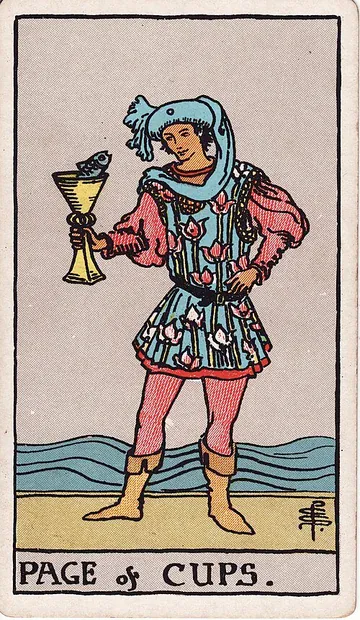
Page of Cups
Two apprentices in the same scene — one of thought, one of feeling. The Page of Cups gathers impressions through openness; the Page of Swords gathers them through inquiry. The combination asks the seeker to let both registers speak before any decision is made. Neither apprentice is wrong. The work is the willingness to consult both, especially in matters where the head has been over-trusted at the expense of the heart, or the heart over-trusted at the expense of the head.
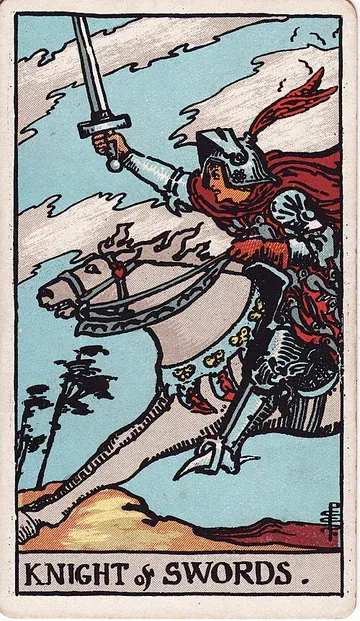
Knight of Swords
The apprentice's careful question about to graduate into the knight's decisive charge. Read the combination as a sequence: the Page does the gathering, the verification, the densely scribbled note; the Knight then takes the verified report and rides with it. The pairing warns when the sequence is reversed — when the charge has been undertaken before the apprentice work has been completed. The Knight that proceeds from a properly finished Page's report is durable; the Knight that skips the Page's work is brittle.
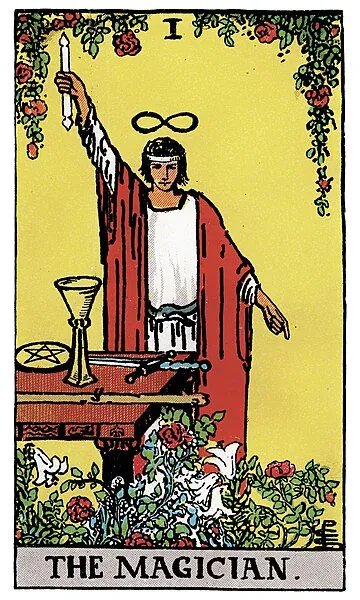
The Magician
The apprentice in proximity to the master. The Magician knows what is in his hand and uses it deliberately; the Page is still learning what is in his. The combination asks the apprentice to bring the actual densely scribbled note rather than perform a half-knowing the master will see through immediately. It also reminds the master that the apprentice is still the apprentice — the careful answer to the apprentice's plain question is the master's part of the contract.
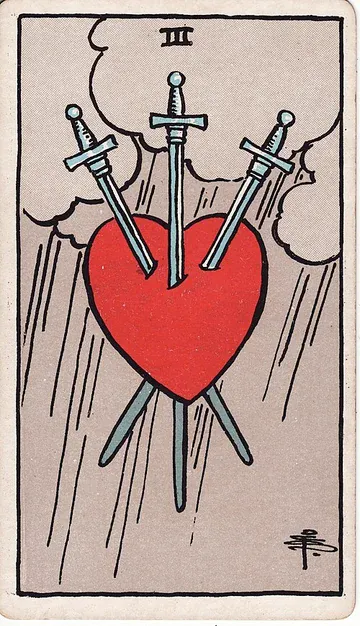
Three of Swords
The half-heard fragment allowed to become a wound. The combination is the warning of what the reversed Page becomes when the verification step is skipped: an inference treated as fact, a suspicion treated as confirmation, a sentence assembled from missing pieces and then used to cut. The pairing asks the seeker to interrupt the trajectory before the inference hardens — to either complete the verification through direct conversation or to let the fragment remain a fragment that does not yet justify a wound.
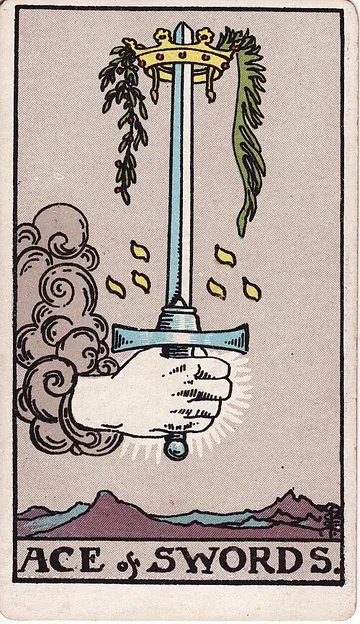
Ace of Swords
The apprentice in the presence of the suit's root. The Ace of Swords is the bare blade of intellect itself, the clean undivided edge. The Page is the figure who has just come of age enough to pick the blade up with both hands. The combination is the moment of inheritance — the apprentice asked to receive the sword with the seriousness the Ace requires. Not yet to wield it. To stand still, to feel the weight of it, to recognize what it will mean to use it well.
Frequently Asked Questions
Why is the Page of Swords looking over one shoulder while holding the sword up?
Because the posture belongs to a scout rather than a duelist. This is the deck's youngest scout — alert, curious, question-shaped. The card describes the readiness to listen before others have heard, to ask the plain question, to say "I'm not sure" out loud. It carries the apprentice posture: gathering field notes, verifying each line, willing to look slightly awkward in service of accuracy. Read the card as a renewal of attention itself.
Does the Page of Swords want the claim verified before I act on it?
That is its single condition. Yes — with the apprentice's caveat to verify before acting. The card sees a viable path forward and also asks for one more round of careful checking. Take the yes; complete the inventory of small unknowns; then commit. The Page is suspicious of momentum that skips verification and supportive of decisions that earn themselves through honest investigation.
What kind of connection begins in a late conversation rather than a spark?
The kind this card was built to describe: a young, question-shaped presence — possibly a literal person, possibly a renewed register of curiosity entering an existing bond. The connection runs first through language: the conversation that runs late, the texts that get more honest, the partner who asks a second question after your standard answer. Honor the love that is fed by being known accurately, line by line.
Is the quiet in a Page of Swords feelings reading evaluation or disinterest?
Evaluation, in almost every case. The other person is gathering carefully — alert, curious, storing more than they are yet saying. They feel toward you the way a scout feels toward a sound from the next ridge: interested, patient, not yet sure whether to bring the report up the chain. Read silence here as evaluation, not absence; precision, not coldness. They are taking you seriously.
What does the Page of Swords mean about a person's character?
As a person, the Page of Swords describes someone alert, curious, and direct — willing to ask plain questions, willing to admit when they don't yet understand. They notice small specifics, remember half-mentioned details, and prefer accuracy over polish. They can come across as intense in early acquaintance because their attention is high-resolution. Take the attention as the genuine respect it usually is.
Continue Reading
Page of Swords · Card overview · symbols · correspondences →
Return to the full card view — image, symbols, sensory correspondences, and Hermetic axes.
Read the reversed meaning →
Read the same depth on the opposite orientation.
Draw your reading now →
Bring this card to a question — open a quiet ritual.