
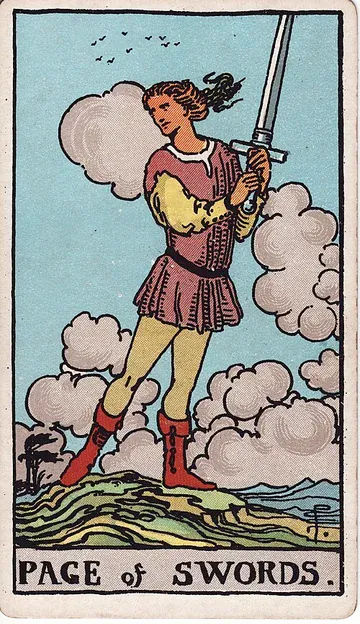
Page of Swords Reversed · Core Meaning
The Page of Swords reversed is the apprentice scout whose discipline has slipped. The same young figure stands on the same uneven ridge, the wind still in the cloak, the sword still upright in both hands — but the look over the shoulder has stopped being innocent. It has become probing. The eyes that were once trained on the horizon have begun to tilt down toward the wallets and the pockets and the open notebooks of the people in the next room. The scout has begun to gather what was not given. The half-heard sentence, instead of being reported as a half-heard sentence, has begun to be presented as the whole. The blade, instead of being held upright as intention, has been lowered and turned into a small, repeated cutting motion against the people the scout was supposed to be protecting.
This is the reversed card's central knot: surveillance disguised as care. The seeker has not stopped paying attention; the seeker has, in some specific area, begun to pay attention past the line of what was theirs to know. The phone gets scrolled when the partner steps out of the room. The colleague's email gets glanced at over their shoulder. The friend's social feed gets parsed for the specific small inconsistencies that might confirm the suspicion the seeker has not yet voiced. The reversed card warns: this is how the most fragile thing in a relationship dries out. Not in a single dramatic violation — in the slow, unnoticed conversion of attention into intelligence-gathering, of curiosity into intrusion.
There is a second flavor of the reversed card: the speaking past one's knowing. The same apprentice who was once careful to say "I'm not sure" has begun to speak with the confidence of someone who actually does know — only the knowing was never properly assembled. The half-research has been presented as the conclusion. The overheard fragment has been forwarded as the verified report. The opinion sketched in five minutes has been launched into the public conversation as though it had been considered for weeks. The reversed Page is the scout who returns to the council with a forged note, embellished from the actual fragment to the version that would make the scout look more useful. The forgery is rarely discovered immediately. It is, however, eventually discovered, and the cost — to the scout's reputation, to the council's trust, to the people whose lives were affected by the false report — is considerably higher than the cost of the original admission would have been.
The card is a court card and so does not carry decans or sephirot. Its signature remains the elemental axis: outer air, inner earth. Reversed, the axis tips. The earth-within-air, which gave the apprentice the capacity to stand still on uneven ground long enough to listen accurately, has thinned. The thought no longer has solid footing; it has reverted to the unfootnoted air of opinion presented as fact. The seeker is, in some specific area, no longer standing still long enough to verify what they are claiming to have heard. The fix begins with the recovery of the footing. Stand still. Listen again. Verify before reporting.
The body associations remain: lungs and nerves, the sanguine temperament, the quick electrical signal. Reversed, watch for the body cost of having lived in scanning mode for too long. The breath stays shallow at the top of the chest. The shoulders carry the long alert of the body that has been compulsively monitoring its environment. The sleep is interrupted at three in the morning by a mind that is still trying to assemble the pieces of an incomplete intelligence picture. The reversed card asks the seeker to recognize that the surveillance has been costing the body, not just the relationship — and that the body's cost is, in some ways, the more honest signal of how poorly the strategy has been working.
Reversed, the Page of Swords asks: what have you been investigating that you were not asked to investigate? And: who would be hurt if your investigation became visible? And: what would the apprentice's honest report have been, if the apprentice had stayed an apprentice rather than appointing themselves to a counterintelligence role no one had given them? The repair, when the seeker is ready, is direct. Put back what was taken. Do not act on what was not formally given. Wait for the proper telling. The card returns to upright through the recovery of the apprentice's original discipline.
Page of Swords Reversed · Love
Distrust has begun, quietly, to convert itself into surveillance. The seeker has begun to check the phone when the partner is in the shower. The seeker has begun to scroll through the social feeds of the partner's friends, looking for the small clue that might confirm the suspicion. The seeker has begun to glance at the messages, the calendar, the email previews on the lock screen, the tabs left open. None of this looks dramatic from the inside. It looks, from the inside, like care — like the responsible diligence of a partner who is paying attention. The reversed card insists on the precise distinction: this is intelligence-gathering, not care. This is how the most fragile thing in a relationship dries out.
For an existing partnership in which the seeker has begun to suspect the partner of something — infidelity, hidden financial trouble, secret communication, anything held back from the shared life — the reversed Page of Swords offers a difficult but precise advice. The covert gathering will not produce the truth in a usable form. Even if the gathering surfaces the suspected thing, the surfacing will be permanently compromised by the fact that the seeker came by the information through means that cannot be discussed openly. The relationship that survives the eventual confrontation will have to absorb both the original violation and the seeker's own. Most relationships do not survive the double absorption. The card asks for the harder, more dignified move: name the suspicion directly, in conversation, without the surveillance evidence to back it. The relationship that is robust enough to hold a directly named suspicion is the relationship worth saving. The relationship that requires evidence gathered in secret is already a relationship in which the trust has structurally collapsed.
For someone in a new connection, the reversed Page of Swords describes the early-stage investigation that has begun to overstep. The seeker is reading the new person's social history more carefully than is healthy at this stage. The seeker is asking mutual friends for context the seeker has not earned the right to ask for. The seeker is, in effect, building a dossier on someone they have not yet given the chance to introduce themselves directly. The card asks for the apprentice's restraint. Let the new person tell you who they are. Ask them the questions directly. The information that comes through their own voice will be worth more than the information assembled from the periphery, and the relationship that develops on that foundation will be steadier.
For the question of whether someone is being unfaithful, and the reversed Page of Swords arrives, the card refuses to offer a verdict. What it offers instead is the diagnostic question: are you asking because you have a specific, articulable observation, or are you asking because the suspicion has begun to live in you regardless of evidence? The first situation calls for direct conversation. The second situation calls for the seeker's own interior work — therapy, journaling, examination of the patterns from earlier relationships that may be projecting onto this one. The reversed card is suspicious of the pursuit of evidence as a substitute for the harder work of either direct conversation or honest self-examination. The pursuit will not yield peace. The other two paths might.
For the question of reconciliation after a break, the reversed Page of Swords offers a gentle warning. If you are considering reconciliation but have been quietly monitoring the other person's life — their dating activity, their friend groups, their travels, their moods — the monitoring has been affecting you in ways that make a clean reconciliation harder. You have been carrying a low-grade investigation alongside the desire for reconnection, and the investigation has its own momentum that the reconciliation will not easily dissolve. The card asks for an honest pause: stop the monitoring for a defined period — thirty days at minimum — before any reconciliation conversation. The version of you who has stopped monitoring will be a different conversational partner than the version who has not.
For the single seeker, the reversed Page of Swords often arrives because dating-app behavior has begun to slip. The pre-date research has gotten more thorough than is useful. The post-first-date inventory has begun to be assembled before the second date has even been confirmed. The social-media survey of the prospective person's history has become a small ritual that displaces the actual conversation. The card asks for a reset. The other person is not a research subject. They are a person you are, in good faith, attempting to meet. Meet them. Let them tell you who they are. The dating that works in the long arc is the dating that proceeds through actual conversation, not through pre-assembled dossiers.
For someone in a relationship in which they themselves are the one being monitored — the partner who has been checking their phone, scrolling their messages, scanning their email, asking pointed questions about people they have only mentioned in passing — the reversed Page of Swords names the texture exactly. This is happening. It is real. It is not paranoia on your part. The card asks for the courage of naming the pattern directly. Not as accusation. As observation. I have noticed that you have been doing X. Can we talk about what is underneath that? The relationship that can absorb this conversation is the relationship that has a chance. The relationship that cannot is the relationship that has begun to substitute surveillance for trust, and the substitution is rarely reversible without serious work.
For an on-again-off-again connection in which both parties have been quietly monitoring each other, the reversed Page of Swords describes the closed feedback loop the surveillance creates. Each party is tracking the other; each party's tracking confirms the other's worst suspicions; each party's worst suspicions justify continued tracking. The card asks for one party to break the loop unilaterally. Stop the monitoring. Tell the other person you have stopped. Invite them, without pressure, to do the same. The relationship may or may not survive the loss of the surveillance scaffolding. Either way, the seeker recovers a measure of dignity that the loop had been steadily eating.
A final note on the card's particular love-shadow: the reversed Page of Swords mistakes information for intimacy. The seeker has begun to feel that knowing things about the other person is the same as being close to the other person. It is not. Intimacy is built through what is offered freely, not what is gathered covertly. The intelligence dossier on a partner is not a record of intimacy; it is a record of the seeker's own anxiety. The card asks the seeker to recognize the substitution and to begin, slowly, the harder work of building intimacy through what is freely given. The relationships worth keeping are the ones in which the seeker no longer needs the dossier — because the actual conversation is making the dossier obsolete.
Page of Swords Reversed as Feelings
When the Page of Swords appears reversed as feelings, the other person's attention toward you has begun to slip out of the apprentice's healthy curiosity into something more probing, more anxious, more weaponized. They are still paying attention — but the attention has begun to be deployed as inventory rather than care. They are storing what you say in a way that can be used against you later. They are tracking your patterns to confirm a thesis they have already started to build, rather than to discover who you actually are. There is no soft way to name watchfulness that has turned into evidence-gathering. The reversed Page in feelings is the texture of being under investigation rather than being known.
If they are reserved by nature, the reversed Page in feelings often presents as cool watchfulness. They speak less. They watch more. They ask the occasional pointed question that is too specific to be casual — the question that signals they have been paying attention to a small detail you mentioned three weeks ago and have been turning it over in their mind ever since. The texture is not warm attention. It is a quieter, more careful surveillance. Read silence here as evaluation that has slipped into judgment, not as the patient gathering the upright card describes.
If they are demonstrative, the reversed Page in feelings can present as a barrage of small, slightly intrusive questions. Where were you. Who was that. What did you mean. Why did you say it that way. The questions individually feel reasonable; the cumulative effect is the feeling of being interviewed at every encounter. The card warns that this is the texture of someone whose own anxiety has begun to drive their questioning, regardless of what you are or are not doing. They are not gathering to know you. They are gathering to manage their own discomfort with you.
For a partner you have been with a long time, the reversed Page of Swords in feelings can describe the moment they have begun to keep mental score. The small irritations have been accumulating into a list. The list is not being shared, but it is being maintained. Conversations are being filtered through the list. Reactions are being calibrated against the list. The texture of the relationship has begun to feel slightly forensic. The card asks the seeker to recognize what is happening — not to take it personally as a sign of falling out of love, but as a sign that the partner has lost contact with one of their own healthy disciplines and has substituted scorekeeping for direct address. The repair, if both parties are willing, is the conversation that surfaces the list and dismantles it together.
For a new connection, the reversed Page of Swords in feelings can mean they are interested but in a way that has begun to feel slightly off. They know more about you than they should at this stage. They have been reading your old social posts. They have been asking mutual friends about you. They have been assembling a picture of you before you have had the chance to introduce yourself. The card asks the seeker to slow down the connection and address the pattern directly: I notice you knew about that — where did you hear it? The honest answer will tell you whether the new person is in the apprentice's healthy curiosity or in the reversed card's investigative mode. Both are real. They lead to different relationships.
For someone who has wounded you and is now in the reversed Page of Swords feeling-state, the card describes a complicated mixture: they may genuinely regret the wound, and they may also be monitoring you to see how you are reacting to it. The monitoring is not innocent care; it is partly the gathering of information about whether they need to brace for further fallout. The card asks the seeker to set a clean boundary regardless of the apparent regret. I need you to stop checking on me indirectly. If you want to know how I am, ask me directly. The wound's repair, if it is repairable, will require the direct asking, not the covert gathering.
For a partner who has been distant and is now exhibiting the reversed Page's feeling-state, the card warns that the distance has not been emotional withdrawal so much as a strategic shift into observation. They have stepped back not because they have stopped feeling but because they have decided to evaluate the relationship from a slightly more distant vantage. This can feel like coolness. It is, more precisely, assessment. The card asks the seeker to recognize the difference and to invite the assessment into the open: what are you weighing? what would you like to discuss? The conversation that surfaces the assessment is healthier than the unspoken evaluation that was eating at the relationship in silence.
A particular caution: the reversed Page in feelings can be the card of the gossiper — the partner or friend or colleague who is enjoying you in conversation while also collecting your details for use in conversation with others. They are not exactly malicious. They are, however, treating your interior as a resource for their own social capital. The card asks the seeker to be selective about what is shared with this person until the pattern is addressed. Not all of you needs to be currency in someone else's social ledger.
For a partner whose feelings the seeker is trying to read and the reversed Page arrives, the most useful frame is: their feelings are real, but their handling of them has slipped into something the seeker should not have to absorb in silence. Feelings, in any healthy relationship, are eventually offered directly. The reversed Page warns of the season in which the feelings have stopped being offered directly and have started being expressed as pointed questions, indirect monitoring, or scorekeeping conversation. The repair is the invitation to direct address. Tell me what you are feeling, plainly. I would rather hear the difficult version than be subjected to the inquiry version.
Take the reversed Page of Swords in feelings as a signal to address the texture of the attention itself, not just its content. The other person needs to recover their apprentice's posture — gathering openly, asking directly, willing to admit when they do not know. Until they do, the relationship will continue to be uncomfortable in ways that have less to do with what is being said and more to do with how it is being gathered.
Page of Swords Reversed · Career
The workplace scout's discipline has slipped into espionage. The seeker has been listening at the door of the wrong meeting. The seeker has been scrolling through a colleague's screen during the Zoom share. The seeker has been forwarding the half-overheard fragment as though it were the whole. The card describes the moment that the apprentice's curiosity, applied past the line of what was theirs to know, has begun to convert itself into a pattern of behavior that is — even if no one has yet named it — already costing the seeker more than it is gaining them.
If you are in a workplace conflict in which you have been gathering intelligence on the other party — assembling their messages, tracking their movements, asking colleagues for context that you have not earned — the reversed Page warns that the intelligence has begun to compromise your own position. Even if your underlying grievance is real, the means by which you have built the case will, eventually, be examined as carefully as the case itself. Most workplace investigations that proceed from gathered intelligence end up scrutinizing the gatherer as well as the target. The card asks for a different approach: stop the gathering, name the grievance directly, escalate through the formal channel if necessary, and let the formal channel do the gathering on its own terms. The seeker who follows this discipline retains both the integrity of the case and their own standing. The seeker who continues the covert gathering loses both, even when they are technically correct.
For someone considering whether to act on a piece of half-heard workplace information — an overheard layoff rumor, a fragment of a conversation about a reorganization, an indirect mention of a new policy — the reversed Page of Swords answers: do not act yet. The fragment is a fragment. Acting on it as though it were the whole sentence will, in roughly two-thirds of cases, position you embarrassingly when the actual sentence reveals itself. The card asks for the apprentice's discipline of waiting for the formal communication before adjusting your behavior. If the rumor is true, the formal communication will arrive. If the rumor is false, the formal communication will not arrive, and your continued composure will have served you better than a premature reaction.
For someone in a new role who has begun to share opinions about colleagues they have not yet worked with directly — opinions formed from secondhand reports, social media observation, casual hallway conversation — the reversed Page asks for an immediate pause. The opinions are not yet earned. The reports are filtered. The hallway conversation is not your hallway conversation; you have been overhearing other people's relationships and forming verdicts that are not yours to form. The card asks for at least three months of direct experience with each colleague before any opinion is communicated to anyone else. The opinion you form after three months of direct work will be the opinion that is actually yours; the opinion you would have communicated in the first three weeks would have been other people's opinion in your voice.
For someone weighing whether to raise a concern about a colleague's behavior, the reversed Page of Swords asks the seeker to separate observation from inference. Observation: I saw this specific event, on this specific date, at this specific time. Inference: I think this means the colleague has been doing X for a long time. The reversed card is suspicious of inference dressed as observation. The concern that proceeds from clean observation is the concern that holds up under scrutiny. The concern that proceeds from inference may be correct in spirit but will be vulnerable in execution, and the vulnerability will be exploited to discredit the underlying point. Speak only what you have actually observed. Let the broader pattern, if it exists, be confirmed by the observations of others.
Entrepreneurs and freelancers in active business should read the reversed Page as a check on competitive intelligence behavior. The line between learning from the market and covertly extracting information from competitors can blur quickly in early-stage work. The card asks for an honest review. Are you scraping data you should not be scraping? Are you cultivating sources inside competitor firms in ways that would embarrass you if disclosed? Are you using product trial periods to extract architectural details rather than to evaluate the product? The card is suspicious of all of these. The competitive advantage built on covert extraction is brittle; the advantage built on legitimate observation and direct customer conversation is durable. Choose the second.
For a creative practice, the reversed Page of Swords describes a particular trap: the artist who has been consuming other artists' work for ammunition rather than for nourishment. The studio is full of references gathered for the purpose of arguing with them rather than learning from them. The notebook is full of objections rather than observations. The artist has begun to mistake critique for creation. The card asks for a deliberate sabbatical from the consumption-for-ammunition mode. Read the artists you disagree with for what they are actually doing, not for the rebuttal you can build against them. Your own work will deepen when you are no longer using your peers as foils.
For someone considering a promotion in which the seeker would gain access to confidential information — personnel decisions, strategic plans, financial details — the reversed Page of Swords asks for an honest self-examination. Are you ready for the discipline of holding information without leveraging it? The reversed Page describes the seeker who, in a previous role, has been less than perfectly disciplined with information that was already entrusted to them. The promotion would expand the access without addressing the underlying discipline. The card asks for the discipline first. The promotion is more likely to be offered, and more likely to be sustainable, when the seeker has already demonstrated the apprentice's restraint with what they currently know.
For job-search readings, the reversed Page of Swords warns against a specific behavior pattern: the seeker who has begun to badmouth their current employer in interviews. Even when the grievances are legitimate, the badmouthing positions the seeker as someone willing to convert insider information into external currency. Hiring managers notice this. They imagine the seeker doing the same thing to them in eighteen months. The card asks for the discipline of speaking precisely about what you are leaving behind without weaponizing it. That role is not the right fit for me at this stage is sufficient. The detailed catalog of grievances belongs in the journal, not the interview room.
For someone in the aftermath of a layoff or a contentious departure, the reversed Page of Swords warns against the impulse to publicly air the internal information. The catharsis of the public airing will not heal the wound, and the airing will follow you into the next role. The card asks for a quieter, more dignified processing — the journal, the trusted friend, the therapist, the formal complaint through the appropriate channel if a formal channel exists. The public airing on social media of the workplace grievance is the reversed Page's signature mistake. The cost is paid in opportunities the seeker will never know they lost.
A final note on the card's particular career shadow: the reversed Page of Swords mistakes the appearance of being well-informed for the substance of being competent. The seeker has begun to perform knowing-more-than-everyone-else as a substitute for actually doing the work that would justify the performance. The card asks the seeker to choose, instead, the slower path: do the actual work, develop the actual competence, let the competence speak for itself in due course. The performed expertise is brittle. The earned expertise is durable. The Page returns to upright through the recovery of the apprentice's honest relationship with what they actually know.
Page of Swords Reversed · Money
Half-information gets acted on here — or paraded as expertise, or gathered in proximity to somebody else's finances and used in ways that will not bear daylight. The card is not a card of financial catastrophe. It is, more precisely, the card of the small, accumulating mistakes that are made when the seeker substitutes the appearance of financial sophistication for the substance of it.
For a question about whether to make a financial move based on a tip from a friend, a coworker, an investing forum, or any source other than the seeker's own thorough investigation, the reversed Page of Swords answers with a sober not on this basis. The tip is, by definition, a fragment. The seeker who acts on the fragment as though it were the whole picture is in the reversed card's signature mistake. The card asks for the apprentice's discipline: do the investigation yourself, read the underlying documents, model the actual outcomes, talk to a person who has both the credentials and no vested interest in your decision. The move that survives this process may be the same move the tip suggested, or it may not. Either way, the move you make will be one you understand, and the outcome will be one you can adjust based on actual data rather than on the receding memory of someone else's confidence.
For an investment decision in which the seeker has begun to pretend to expertise they do not have — speaking knowingly about asset classes they have not actually studied, recommending strategies to others based on a single article read once — the reversed Page asks for an immediate honest reset. The pretense is costing the seeker on two levels. First, it is producing decisions that are made on the surface of understanding rather than the substance, and the decisions will not perform as expected. Second, it is producing a public position the seeker will have to defend long after the underlying facts have shifted, which makes future course-correction harder. The card asks for the apprentice's plain admission: I do not yet understand this well enough to have a strong opinion. The admission is the foundation of the actual education that follows.
For a seeker carrying debt who has been hiding the true scale of the debt from a partner, a family member, or themselves, the reversed Page of Swords names the pattern with precision. The hiding is itself a cost. The mental and relational energy required to maintain the partial disclosure is energy that is not available for the actual work of debt management. The card asks for the difficult conversation: the full disclosure, in one sitting, with the person whose presence in the situation makes the disclosure necessary. The conversation will be uncomfortable. The conversation will also be followed, in most cases, by a measurable reduction in the seeker's overall stress, because the energy that was going into the maintenance of the partial disclosure is now available for the actual work.
For someone in financial recovery who has been gathering information about other people's finances — the friend's salary, the cousin's inheritance, the colleague's bonus — and using the gathered information as the comparison point for their own situation, the reversed Page warns that the comparison is poisoning the recovery. The other people's situations are, by necessity, only partially visible to the seeker, and the partial visibility creates distorted comparisons that are reliably more painful than they are useful. The card asks the seeker to step back from the gathering. The metric for your financial recovery is your own situation a year ago, not your friend's situation today. The first metric is one you can actually move. The second metric is a moving target that has been engineered, in the seeker's imagination, to remain just out of reach.
For windfall — bonus, inheritance, unexpected income — the reversed Page of Swords warns of two specific traps. First: the seeker who has been quietly researching aspirational purchases and now has the means to make them. The research has been polished into a small mental dossier of justifications, and the dossier is now ready to be deployed against the seeker's better judgment. The card asks for the ninety-day pause that the upright version of the card also recommends. The dossier of justifications is suspect; let the cooling-off period reveal which justifications survive scrutiny and which were always pre-rationalizations. Second: the seeker who has been telling others about the impending windfall in advance of receiving it. The telling has consequences — requests for help, advice, investment opportunities, social pressure — that will reduce the seeker's actual freedom of action when the windfall arrives. The card asks for a discipline of quiet about windfalls. Tell who needs to know. Let the rest find out later, or not at all.
For questions of long-term financial planning in which the seeker has been operating from outdated or incomplete information — running on assumptions about retirement, real estate, insurance, or tax law that were last updated five years ago — the reversed Page of Swords asks for the apprentice work of refreshing the actual data. The plan that is being built on stale assumptions will, with high reliability, miss the mark. The card asks for one focused afternoon of bringing the assumptions current: the actual current rate, the actual current rules, the actual current product landscape. The plan that emerges will be different from the plan the seeker would have continued to refine on the stale data, and the difference will compound across decades.
A note on the trap of this card with money: the reversed Page of Swords financial pattern frequently includes a specific behavior the seeker may not have named — the small rationalized dishonesty with money. The expense report that includes the slightly questionable item. The tax deduction that is taken without proper documentation. The borrowing from a family member that is presented as more temporary than the seeker actually intends. None of these is a felony; all of them are the small slippages that, accumulated over time, build a pattern of financial inauthenticity that the seeker eventually recognizes as a kind of shame. The card asks for the recovery of clean financial conduct in small things. The cleanness compounds, the same way the slippages did.
A practical move when this card appears in a money question: choose one specific area of your finances in which you have been operating from incomplete or borrowed knowledge, and commit to a one-week investigation of the actual mechanics. Read the actual statements. Run the actual numbers. Ask the actual qualified professional. The Page of Swords reversed returns to upright through the patient recovery of the apprentice's honest relationship with the actual data.
Page of Swords Reversed · Health
An excess of unsorted information is what ails the body here — symptom-searching at three in the morning, forum diagnoses, the constant low-level monitoring of every twinge for confirmation of the worst case the search box has already suggested. The card describes the seeker who has been gathering health information past the point of usefulness, and whose nervous system is now paying a real body cost for the gathering itself. None of this is medical advice; the card simply names the texture of the body becoming overwhelmed by information it has not been given the discipline to interpret.
The card's particular health signature, read against its element associations, is the lungs and the nervous system — air's territory. Reversed, watch for the signals of nervous-system overload: the chronic low-grade anxiety that has begun to live in the chest, the breath that has stopped reaching the bottom of the lungs, the sleep that is interrupted at three in the morning by a mind that is replaying the day's small accumulated worries, the throat that tightens at the moment of being asked a question the seeker is not sure how to answer. The reversed Page is the card of the body that has been kept on alert too long, and the alert itself has begun to be the symptom.
If you are asking whether you should pursue a particular medical investigation, the reversed Page of Swords answers: only if the investigation is being driven by an actual symptom or an actual test result. The card warns against the investigation that is being driven by anxiety about an imagined symptom — the lump that may not exist, the heart palpitation that has not actually been felt today but the seeker is now scanning for, the cognitive change that has been Googled into existence. The pursuit of investigation in this register often produces more anxiety than relief, because each negative result is followed by another suspicion. The card asks for an honest sit-down with whether the investigation is medically warranted or whether it is the latest expression of an anxiety pattern the seeker is using investigations to manage.
For someone managing a chronic condition who has begun to read research papers and online forums obsessively, the reversed Page of Swords asks for a deliberate moderation of the consumption. Some research is useful; the obsessive consumption is not. The card asks the seeker to restrict health-information intake to a defined window — perhaps thirty minutes a day, perhaps three days a week — and to spend the remaining time actually living the life the condition is being managed in service of. The information that matters will still be there at the appointed time. The condition will be better managed by the seeker who has remained psychologically intact than by the seeker who has been gradually ground down by continuous monitoring.
For acute issues, the reversed Page of Swords reads as the card of the patient who has begun to second-guess every piece of medical advice they have received, on the basis of fragments encountered online. The card respects the seeker's autonomy. It also asks for honest discrimination. The qualified specialist who has actually examined the seeker's body and reviewed the actual test results is, in most cases, a more reliable source of guidance than the aggregated wisdom of an internet forum. The card asks for the apprentice's appropriate respect for actual expertise — not because the specialist is infallible, but because the specialist is operating with information the forum cannot have. Ask the specialist your questions. Ask for the second opinion if the situation warrants. Do not, on the basis of a forum post, decline a treatment that has been recommended by someone who has actually examined you.
For mental health questions, the reversed Page of Swords is one of the most precise cards the deck offers. The card describes the seeker who has been diagnosing themselves and others through internet content, accumulating an ever-larger vocabulary of psychological terminology that is increasingly disconnected from any actual professional context. The vocabulary feels like power. The vocabulary is, in fact, a substitute for the slower work of either professional treatment or honest self-examination. The card asks for the recovery of the apprentice's humility. Names for psychological patterns are useful when applied carefully, by someone qualified, in actual therapeutic context. The same names, applied loosely to oneself or others on the basis of internet content, become weapons or excuses rather than instruments of understanding.
For someone whose relationship to information consumption has begun to feel compulsive — the constant news-checking, the social-media scrolling that does not actually feel pleasurable, the habitual reach for the phone in any moment of stillness — the reversed Page of Swords names the pattern with surprising precision. The behavior is air-energy that has lost its ground. The seeker is in the scout's posture continuously, with no opportunity to come down off the ridge and rest. The card asks for the deliberate construction of information-free time — the walk without the podcast, the meal without the screen, the hour before sleep without the phone. The body needs the off-ridge time to recover from the ridge time. None of this is medical advice; the card simply names the texture the body is asking to be helped into.
For questions about sleep, the reversed Page of Swords often arrives because the mind has been up at three in the morning gathering and rehearsing the day's information. The fix is not more information. The fix is a deliberate evening discipline that explicitly puts the gathering down. Write the unfinished questions in the journal. Close the laptop a defined hour before sleep. Let the scout come down off the ridge. The body, given consistent permission to stand down, will gradually relearn how to sleep through the night.
For questions about anxiety more generally, the reversed Page of Swords is sometimes the card of the seeker whose anxiety has organized itself around continuous information-gathering. The seeker believes that gathering more information will produce safety, when in fact each piece of new information is being processed by an already-overwhelmed system that turns the information into more anxiety. The card asks for a paradoxical move: less gathering, not more. The information that the situation actually requires can be obtained in ten minutes a day. The remaining hours of gathering are not in service of preparation; they are the anxiety pattern itself, rehearsing.
The card respects the body's intelligence. It does not demand that the seeker be calm immediately. It asks: what is the smallest unit of not-gathering you can give yourself today? Twenty minutes without the phone. One meal of full attention to the food. One walk in which the headphones stay home. The body responds to these small protected windows. The protected windows compound. The Page returns to upright through the slow recovery of the body's relationship with rest.
Page of Swords Reversed · Spirituality
Careful curiosity has gone brittle here, turning into something more weaponized and more concerned with the appearance of insight than with the substance of practice. The seeker has begun to use spiritual vocabulary as a small, sharp instrument — to win arguments, to claim a higher vantage in conversation, to dismiss positions the seeker has not actually engaged with. The card warns: this is how a real spiritual education is squandered.
For seekers in active practice who have begun to use the practice as a credential rather than as a discipline, the reversed Page of Swords names the slippage. The years of meditation have been converted, somewhere along the way, into a small social asset — the casual mention of the retreat, the offhand reference to the teacher, the subtle positioning of the self as someone whose spiritual maturity exempts them from ordinary critique. The card asks for the difficult honesty of recognizing the conversion. The practice was meant to deepen the practitioner; it has begun to be deployed as a kind of decoration on the practitioner's existing personality. The repair, when the seeker is ready, is to return to the practice with the apprentice's beginner's mind — and to stop mentioning it socially for a defined period. Six months. The practice that survives the social silence is the practice that was actually doing real work.
For seekers in a season of doubt who have responded to the doubt by collecting arguments against spiritual traditions rather than continuing to examine them, the reversed Page describes the slippage. Honest doubt is the apprentice's friend. Performative skepticism that has stopped engaging with the tradition's actual texts is the reversed card's signature mistake. The seeker has begun to dismiss what has not been read carefully, to mock what has not been understood, to assemble objections from secondary critics rather than from primary engagement. The card asks for the harder discipline: read the tradition's primary texts carefully, in their actual length, in good translations, before deciding what they are saying. The dismissal that survives the careful reading is the earned dismissal. The dismissal that has not survived such reading is the unearned one — and the seeker who builds a worldview on unearned dismissals will, eventually, find the worldview cannot bear weight.
For seekers exploring new practices or traditions who have begun to consume practices the way a tourist consumes destinations — the weekend retreat, the workshop, the introductory course, none of them committed to long enough to be changed by — the reversed Page of Swords names the pattern. The consumption produces the appearance of a deepening practice without the substance. The seeker can speak of having explored Vipassana, Sufism, Kabbalah, Christian contemplation, Jungian analysis — and yet has been changed by none of them, because change requires the apprentice's willingness to stay long enough to be reorganized by what is encountered. The card asks for a one-tradition commitment for at least one year. The tradition need not be the seeker's final tradition. The commitment to stay is itself the spiritual work the consumption was avoiding.
For seekers who have begun to teach what they have not yet been changed by — running the workshops, writing the posts, advising others on practices they have not personally sustained — the reversed Page of Swords offers a particular and important warning. The teaching position has begun to be an identity. The identity is being maintained at the expense of the seeker's own continued apprenticeship. The card asks for an immediate temporary withdrawal from the teaching role and a return to the student role. The seeker who can do this voluntarily will recover their own practice. The seeker who cannot will continue to teach hollowed-out versions of practices that no longer actually live in them, and the teaching will eventually be exposed as the hollow it was.
The card's spiritual practice, when it arrives reversed, is the silence retreat. Not the meditation retreat with the structured schedule, the teaching sessions, the community meals. The personal silent stretch — three days, alone, with no phone, no books, no notebook for the first day, no conversation. Just the body, the breath, the room, and the quiet. The reversed Page is the card of the seeker who has been generating an excess of spiritual content — internal commentary, conversation, opinion — and has lost contact with the silence underneath. The retreat returns the seeker to the silence. The silence returns the seeker to the practice. The practice returns the seeker to the apprentice.
The figure on the ridge, with the wind and the small distant shapes, is the spiritual image the reversed card asks the seeker to re-encounter — but with a particular reversal of the upright reading. In the reversed orientation, the seeker has begun to insist on naming the shapes prematurely. They are calling them ships when they might be birds. They are calling them birds when they might be ships. They are claiming to have identified them when in fact they have not yet come close enough for accurate naming. The card asks the seeker to put the names down. Stand on the ridge in the wind and let the shapes be unidentified for as long as it takes for the actual identification to be earned. The seeker who can tolerate the unidentified shapes recovers a faculty the premature naming has been steadily eroding.
For questions about path, the reversed Page of Swords answers with an unusually direct caution: you are at risk of mistaking the appearance of being a seeker for the substance of seeking. The collection of practices, the reading list, the social positioning as someone who is on a path — all of these have begun to substitute for the actual interior work the path was supposed to enable. The card asks for the recovery of the basic discipline. Choose one practice. Do it daily for a season. Speak of it to no one. Let the practice change you. The change will, in time, be visible to others without your having to advertise it. The advertising was always the problem.
A small caution: the reversed Page of Swords spiritual posture can rationalize itself indefinitely. There is always one more book to read, one more critique to make, one more position to articulate. The seeker can spend a lifetime in this register and never actually undergo the work the books, critiques, and positions were meant to be in service of. The card asks for the courageous closing of the laptop, the setting down of the social spiritual identity, the return to the simple, unwitnessed daily practice. This is not glamorous. It is, however, where a spiritual life actually happens.
The Page invites the seeker to recover the apprentice's honest relationship with what they actually understand and what they are actually practicing. The recovered honesty is the foundation of every real spiritual development the next several years will allow.
Page of Swords Reversed · Yes or No
No — or a yes built on information you should not be acting on.
The Page of Swords reversed answers yes-or-no questions with a particular kind of caution. The action you are considering may technically be possible. The yes that would justify it, however, is being assembled from sources or methods the seeker should not be relying on. The card asks the seeker to step back from the question and examine how they have been gathering the information that has produced the apparent yes. If the gathering has been clean — direct conversation, formal communication, properly sourced research — proceed carefully. If the gathering has been covert, half-overheard, inferred-from-fragments, or assembled from someone else's secondhand report — do not act on it.
For yes-or-no questions about a relationship, a job, a move, a decision: the reversed card answers no, in most cases, because the question itself has typically been triggered by information the seeker is uneasy about having gathered. The unease is the data. The card asks the seeker to recognize the unease, address the gathering pattern, and re-ask the question once the foundation is cleaner. The decision that survives the cleaner foundation is the decision worth making; the decision that requires the unsourced information cannot honestly be defended.
For questions about whether someone is being honest, whether an offer is genuine, whether a plan will hold, the reversed card warns of projection of the seeker's own pattern onto the situation. The seeker who is themselves operating in the reversed Page's mode — gathering covertly, speaking past their knowing, presenting fragments as wholes — frequently suspects others of doing the same thing. Sometimes the suspicion is correct. Often, it is the seeker's own pattern reflected back. The card asks the seeker to address their own conduct first; the question of others' honesty becomes much easier to read once the seeker has cleaned up their own gathering practices.
For yes-or-no questions about whether to confront, accuse, or expose another person on the basis of information the seeker has gathered, the reversed Page of Swords answers no. The exposure, even if the underlying claim is true, will be compromised by the means of gathering. The card asks for a different approach: name the concern directly, without the gathered evidence as backup, and let the other person respond to the concern in their own voice. The conversation that proceeds from direct address is one the seeker can continue to live with. The conversation that proceeds from covert evidence is one the seeker will have to defend long after the original concern has been resolved.
For questions about timing — when will this happen — the reversed Page of Swords describes a pattern of premature action followed by the consequences of having acted too soon. Not yet. The information is incomplete; the situation has not yet declared itself; the action that would be taken now would be taken on a foundation that has not stabilized. The card asks for the discipline of waiting for the situation to clarify. The cost of waiting is patience. The cost of acting on incomplete information is the recovery from the resulting mistake, and the recovery is reliably more expensive than the patience would have been.
For binary questions about whether to act — should I send the message, should I make the call, should I publish the post — the reversed Page of Swords frequently answers no, especially when the message, call, or post is reactive. The card warns against the impulse to broadcast information — about another person, about a workplace situation, about a community dispute — that the seeker has not yet had time to evaluate carefully. The reactive broadcast is the reversed card's signature mistake. Hold the impulse for twenty-four hours. Re-read the message in the morning. The version of the seeker who has slept on it will be a more discerning author than the version that drafted it in the heat of the moment.
For questions where the seeker is asking the deck to confirm an accusation, suspicion, or grievance, the reversed Page of Swords answers with friendly resistance: are you asking me to confirm what you have already decided, or are you actually open to hearing whether your reading of the situation is accurate? The card respects the seeker's authority over their own life. It also asks the seeker to extend their own inquiry — what is the version of the situation in which you are not the central injured party? Sit with that version for a while. The integrated reading that includes both the seeker's perspective and the considered alternative is the reading that produces durable decisions.
For yes-or-no questions about a difficult conversation that the seeker is contemplating because of recently gathered intelligence — should I confront them about what I saw on their phone, should I raise the thing I overheard at the meeting — the reversed Page of Swords says no, not in this form. The conversation that begins with covert evidence cannot proceed cleanly. The card asks instead for the conversation that begins with the seeker's own honest position: I have been carrying a worry. I would like to talk about it. The conversation that proceeds from the seeker's vulnerability is one the relationship can absorb. The conversation that proceeds from the seeker's evidence is one the relationship typically cannot.
For yes-or-no questions where neither path is clearly correct, the reversed Page of Swords reads as: pause completely. The decision is being made on a foundation that has not yet stabilized. The two paths look equivalent because the seeker is reading both of them through a lens that the gathering pattern has slightly distorted. The card asks for a defined cooling-off period — perhaps a week, perhaps a month — during which the seeker explicitly stops the gathering and lets the underlying situation declare itself in its own time. The decision after the cooling-off period will be different from the decision before it, and the difference is the contribution the card is making.
If the question was: am I being paranoid? The card answers: in some specific area, yes. The fix is not to gather more information. The fix is to address what the gathering itself has been doing to you.
Page of Swords Reversed · Advice
Put back what you have been quietly gathering, and wait for what you are properly told. The card's central instruction is unusually direct. The covert investigation of another person's life, the half-heard fragment used as though it were the whole sentence, the opinion declared on the basis of research that has not actually been done — all of these are versions of the same underlying mistake. The repair is the same in each case: stop the unauthorized gathering, restore the situation to a place where the relevant information is being conveyed through proper channels, and let those channels do their work.
If there is one specific instruction the card offers, it is to stop checking the thing you have been checking. The seeker usually knows exactly what the thing is. The partner's phone. The colleague's screen. The friend's social feed at three in the morning. The competitor's product launches. The ex's new relationship. Whatever it is, the checking has been a small ritual that the seeker has rationalized as innocent and that has, in fact, been quietly accumulating into a pattern. The card asks for an immediate, defined moratorium. Thirty days. No checking. Let the body and the mind discover what they were avoiding by having the checking available as a discharge for the underlying anxiety. The discovery is the work the moratorium is in service of.
A second instruction: when you catch yourself about to repeat a half-heard fragment, say "I'm not sure of the rest of the sentence" before you say anything else. The single sentence radically changes the social register of what follows. It signals to the listeners that they are about to receive a fragment, not a verified report, and they will calibrate accordingly. It also disciplines the seeker, in the moment of speaking, to acknowledge the limit of what they actually know. Most reversed Page of Swords damage is done by fragments presented as wholes. The qualifier disrupts the pattern at the moment it would otherwise harden into damage.
A third instruction: when you are tempted to present an opinion in a domain in which you have not actually done the work, describe the work you have not yet done instead of pretending you have done it. I have not read that book yet, but I have been wanting to. I do not know enough about that situation to have an opinion that would be worth your hearing. I have only read summaries; I would not trust my read. The honest description of the limit is more interesting, in any room worth being in, than the bluff that pretends to a knowledge the seeker has not earned. The bluff loses respect over time; the honest description gains it.
A fourth instruction: replace one channel of unauthorized information-gathering with one channel of authorized inquiry. If you have been monitoring your partner's behavior covertly, replace the monitoring with a weekly direct conversation about how each of you is doing. If you have been scanning your colleague's screen for evidence of conflict, replace the scanning with a direct conversation about the working relationship. If you have been collecting your friend's social activity for evidence of betrayal, replace the collection with a direct invitation to lunch in which you ask, plainly, where the friendship stands. The direct channel is uncomfortable. The direct channel is also honest, repairable, and capable of producing the actual information the covert channel was only imitating.
A fifth instruction, gentler than the others: forgive yourself for the gathering pattern, recognize it as a pattern most adults slip into in some form, and use the recognition as the energy for the change rather than as the material for additional self-criticism. The reversed Page of Swords becomes upright through the recovery of the apprentice's honest posture, and the apprentice's honest posture includes honest self-knowledge. You have been doing this. Most people do this in some form. The work now is to stop doing it. The card respects the difficulty of the stopping and asks for the stopping anyway.
Practical advice for the day the card appears: identify one specific covert gathering practice you have been engaged in — phone-checking, screen-scanning, social-media monitoring of a particular person, eavesdropping on a particular conversation pattern — and impose a thirty-day moratorium on it, beginning today. Tell one trusted person about the moratorium so that you have witnessed yourself in the commitment. The witnessing changes the difficulty curve. The card responds to witnessed commitments more reliably than to private ones.
A final note on how to live with this card during a season in which it has appeared repeatedly: the reversed Page of Swords often arrives because the seeker's nervous system has been in scanning mode for so long that the scanning has become indistinguishable from being. The recovery is the slow re-teaching of the nervous system that not-scanning is also a mode of being, and that not-scanning produces a different quality of presence than the scanning had been allowing. The recovery takes time. The recovery is worth the time. The seeker who completes this work gains back hours of the day, the texture of relationships that no longer have surveillance running underneath them, and the body's capacity for actual rest. None of these are small. All of them are the card's gift on the other side of the slip.
Page of Swords Reversed · Card Combinations
The Page of Swords reversed reads most clearly in dialogue with the cards that surround it, because the reversed card is rarely the whole picture; it is the slipped scout whose weather is being either confirmed or interrupted by the rest of the spread. The combinations described below trace some of the most useful dialogues between the reversed Page and other cards, and the pairing notes further down carry the same verified readings the upright section also references.
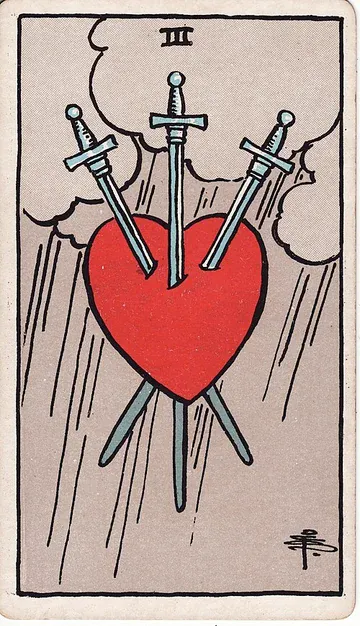
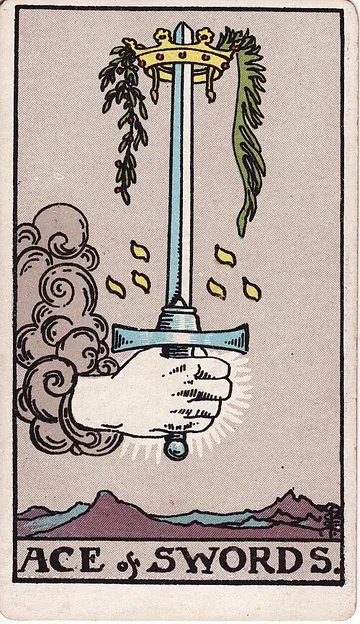
When the reversed Page of Swords appears next to the Page of Cups, the deck is showing the contrast between thought-gathering that has slipped into surveillance and feeling-gathering that has remained open and apprentice-shaped. The combination asks the seeker to learn from the Cups Page how to gather without weaponizing — to receive impressions with the openness the Cups Page demonstrates rather than the extractive gaze the reversed Swords Page has fallen into. When the reversed Page appears with the Knight of Swords, the deck warns of the slipped apprentice who is about to graduate into the equally slipped knight: rushed action based on poorly verified information. The combination asks for an immediate pause before the charge. When the reversed Page appears with the Magician — the Major figure of mastered intention — the contrast is sharp: the Magician knows what is in his hand and uses it deliberately, while the reversed Page is gripping a tool he has not earned the right to wield. The combination asks the seeker to put the tool down until the apprenticeship is complete. When the reversed Page meets the Three of Swords, the half-heard fragment has done its work: a wound has been opened by an inference that should not have been treated as fact. The combination is the warning of what the reversed Page becomes when the misuse of partial information goes unaddressed. When the reversed Page meets the Ace of Swords, the apprentice has come into proximity with the bare blade of intellect itself — and is being asked, gently but firmly, to recover the seriousness the Ace requires before any further use of the apprentice's tools.
Each of these combinations gains its meaning when read as a conversation rather than as a stack. The reversed Page is one voice. The other cards are correctives, mirrors, or warnings about the trajectory the reversed posture has put the seeker on. The reading is the meeting at which the voices speak — and at which the seeker is invited, by the spread, to recover the apprentice's honest posture before the situation hardens further.
Card Combinations
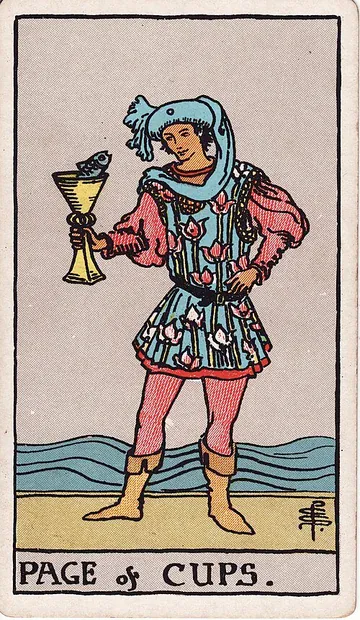
Page of Cups
Two apprentices in the same scene — one of thought, one of feeling. The Page of Cups gathers impressions through openness; the Page of Swords gathers them through inquiry. The combination asks the seeker to let both registers speak before any decision is made. Neither apprentice is wrong. The work is the willingness to consult both, especially in matters where the head has been over-trusted at the expense of the heart, or the heart over-trusted at the expense of the head.
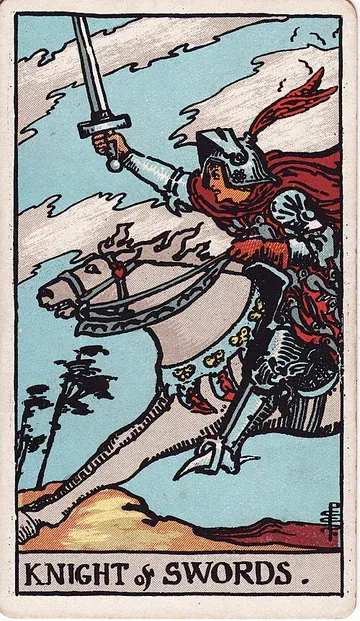
Knight of Swords
The apprentice's careful question about to graduate into the knight's decisive charge. Read the combination as a sequence: the Page does the gathering, the verification, the densely scribbled note; the Knight then takes the verified report and rides with it. The pairing warns when the sequence is reversed — when the charge has been undertaken before the apprentice work has been completed. The Knight that proceeds from a properly finished Page's report is durable; the Knight that skips the Page's work is brittle.
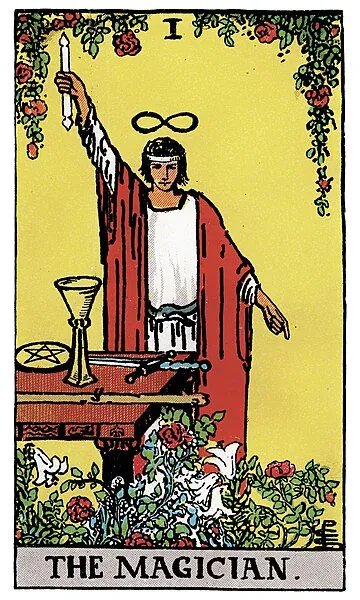
The Magician
The apprentice in proximity to the master. The Magician knows what is in his hand and uses it deliberately; the Page is still learning what is in his. The combination asks the apprentice to bring the actual densely scribbled note rather than perform a half-knowing the master will see through immediately. It also reminds the master that the apprentice is still the apprentice — the careful answer to the apprentice's plain question is the master's part of the contract.
Three of Swords
The half-heard fragment allowed to become a wound. The combination is the warning of what the reversed Page becomes when the verification step is skipped: an inference treated as fact, a suspicion treated as confirmation, a sentence assembled from missing pieces and then used to cut. The pairing asks the seeker to interrupt the trajectory before the inference hardens — to either complete the verification through direct conversation or to let the fragment remain a fragment that does not yet justify a wound.
Ace of Swords
The apprentice in the presence of the suit's root. The Ace of Swords is the bare blade of intellect itself, the clean undivided edge. The Page is the figure who has just come of age enough to pick the blade up with both hands. The combination is the moment of inheritance — the apprentice asked to receive the sword with the seriousness the Ace requires. Not yet to wield it. To stand still, to feel the weight of it, to recognize what it will mean to use it well.
Frequently Asked Questions
Can a yes assembled from information I should not have still count?
The reversed Page says no, and it says so on structural grounds: this is a yes built on information you should not be acting on. The reversed card frequently appears when the seeker has been gathering in ways the situation cannot openly support. The card asks the seeker to address how the apparent yes was assembled before acting on it. The decision that survives a cleaner foundation is the decision worth making; the decision that requires the covertly gathered information cannot be defended honestly.
When does checking a partner's phone stop being worry and become surveillance?
At the first check that is not disclosed. Reversed in love, the Page of Swords describes the moment distrust has begun to convert itself into surveillance — checking the phone, scrolling the feeds, scanning for confirmation of an unspoken suspicion. The card warns that this is how the most fragile thing in a relationship dries out. The repair is to stop the covert gathering, name the underlying worry directly in conversation, and let the relationship respond to a direct address rather than to assembled evidence.
What does it feel like to be studied rather than known?
Precisely what this reversed card describes: attention toward you that has slipped from healthy curiosity into something more probing — they are storing what you say as inventory, tracking your patterns to confirm a thesis, asking pointed questions that reveal they have been keeping mental score. Read it as the texture of being under investigation rather than being known. The repair, if available, is the conversation that surfaces the assessment and dismantles the scorekeeping together.
How does honest gathering turn into something extractive?
It begins as surveillance disguised as care. Half-heard news weaponized into reports. Speaking past one's actual knowing. The collection of opinions, fragments, and observations into instruments deployed against the people they describe. The card warns the seeker to recognize when their own apprentice's curiosity has slipped into something more extractive — and to put the gathering down before the pattern hardens into a kind of person the seeker did not intend to become.
What is the first thing to stop if I recognize myself in the reversed Page?
The specific covert gathering practice you already know you have been engaged in. Impose a thirty-day moratorium and tell one trusted person about it. When tempted to repeat a half-heard fragment, prefix it with "I'm not sure of the rest of the sentence." When tempted to present an opinion in a domain you have not studied, describe the work you have not yet done instead. The reversed card returns to upright through the patient recovery of the apprentice's honest relationship with what they actually know.