
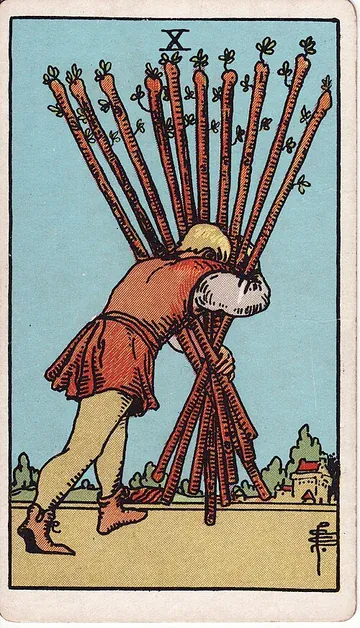
Ten of Wands Reversed · Core Meaning
Something in the reversed Ten of Wands gives way at last: the fingers loosen, one stave slips, then another. The carrier looks down — for the first time in months, possibly years — and notices that several of the staves clattering to the ground were never actually his. He had picked them up at some forgotten point and folded them into the bundle and forgotten the picking up, and now, in the involuntary release, the original division of labor has become visible again. Some of what falls is loss. Some of what falls is return.
This is the reversed card's central knot: the release is rarely chosen, and the discovery that follows is rarely comfortable. The carrier did not decide to set the load down. The body forced the issue. The schedule blew up. The relationship surfaced what had been quietly true. The illness arrived. The deadline was missed. The card describes the moment after — the seeker on the road with several staves at his feet and the strange recognition that the bundle was not what he thought it was. There is grief in this moment. There is also clarity. Both are real.
There is a second flavor of the reversed card: the carrier who refuses to release. The bundle has become identity — without it, he does not know who he is — and so when the world offers help, he declines. When colleagues offer to take on a piece, he says he has it. When the partner offers to share the load, he insists it is fine. The reversed Ten of Wands warns of comfort that has hardened into refusal: the refusal to let anyone else carry, because being the one who carries is the only self he recognizes. The bundle, in this version, is no longer functional. It is performative. Martyrdom has replaced labor.
The astrological signature reverses too. Saturn in Sagittarius upright is structure given to expansive vision — the aspiration disciplined into form. Reversed, it becomes either the structure dissolving without permission, or the structure ossifying into rigidity that no longer serves the original aspiration. Pisces of the dissolution; Capricorn of the petrification. The seeker is asked to find the middle posture — willing release where release is genuine, deliberate retention where the work is still truly theirs. The kabbalistic placement, fire in Malkuth, also reads differently in the reversed orientation: the kingdom is no longer the obligatory landing site for every earlier wand. The seeker is allowed, finally, to ask which fires were genuinely theirs to land — and to let the others return to the worlds they were borrowed from.
The four signature symbols read inverted as well. The ten staves clutched together loosen into a counted set the carrier can finally see one at a time, instead of as a bundle so dense it had ceased to be readable. The bent spine begins, by hours and then by days, to remember its upright posture — though the muscle memory of bending lingers, and many carriers in this card catch themselves slumping into the old shape weeks after they have set the load down. The line of sight blocked by the staves clears, and the carrier sees the road ahead for the first time — and is sometimes startled to discover that the gate they had been moving toward is not exactly where they remembered it being. And the small town on the low hill turns out to be approachable from more than one direction; the path the carrier had been on was one of several, and other paths exist that do not require the bundle.
There is a useful diagnostic embedded in the reversed card. Releases come in two textures, and they need different responses. The forced release — the body breaking, the relationship surfacing, the deadline blowing up, the institution failing — feels like loss and is followed by the slow recognition that some of what fell was return. The chosen release — the carrier finally saying no, the carrier accepting an offer of help, the carrier handing back a stave with words — feels less like loss and more like the strange exposure of having decided. Both are reversed Ten of Wands work. Both are valid. The card asks the seeker to know which one is happening, because the recovery from each looks different. Forced release requires grief work first, then redistribution. Chosen release requires conviction work first, then the holding of the limit against the inevitable pushback. Misreading which is which delays the recovery.
Reversed, the Ten of Wands asks: which staves were never yours? And: who, in your life, has been quietly waiting for you to set their stave down so they could pick it back up? And: if you were not carrying this bundle, who would you still be?
Ten of Wands Reversed · Love & Relationships
The uneven load is finally being addressed in the reversed Ten of Wands — by choice if the couple is lucky, by crisis if they are not. The over-functioning partner has reached a limit. The bundle has begun to slip. The relationship is now in the difficult conversation that should have happened a year ago, in which the actual division of labor — emotional, practical, logistical — is being named for the first time. The work is messy. The work is also necessary. The card respects both.
For an existing partnership where one partner has been over-functioning, the reversed Ten of Wands marks the season of the renegotiation. You have stopped silently absorbing the slack. The partner is now confronted with what your absorption has been hiding from them — the tasks they did not realize were happening, the emotional labor they had outsourced without naming, the household decisions they had treated as background noise. They may rise to the moment. They may resent you for breaking the comfortable arrangement. Often both, in waves. The card asks for patience with the messiness. The first month of redistribution is always more chaotic than the year of imbalance that preceded it.
For a partnership where the carrier refuses to release, the reversed card warns of the most damaging version of the dynamic. You have made the bundle into your identity inside the relationship, and now, even when the partner offers to help, you decline. You decline because accepting would force you to recognize that the indispensability you have been performing is not love but a strategy — possibly an old one, predating this relationship, predating perhaps even adolescence. The card asks gently: what would happen, in this relationship, if you were not the one holding it together? The answer is often what the entire defense has been organized around avoiding.
For someone in a new connection where you are already over-loading the bond, the reversed Ten of Wands offers an early-warning chance. You have begun to notice the pattern. You have caught yourself, this time, before the bundle became permanent. Use the noticing. Decline one piece of premature responsibility this week. Let the new partner do their share clumsily, late, or imperfectly. The card describes the seeker who has the rare opportunity to do this differently — not by carrying nothing, but by waiting, this time, to see what the other person actually carries before deciding what is yours.
For a solo seeker carrying old weights, the reversed card describes the season of inventory. You have begun to set down the staves that were never yours. The expectations from the family of origin. The grief of an old relationship that has been quietly aging in your arms. The version of love you were taught to look for that turned out to be load. None of this is fast work. The card validates the slowness. Putting down old staves is exactly as long a process as picking them up was.
For reconciliation after a break, the reversed Ten of Wands gives a careful answer. Reconciliation is possible — but only if the load that broke the relationship is divided differently this time. The reversed card describes both partners with hands open, willing to look at the bundle together and ask which staves are yours, which are mine, which were ours, which were neither of ours but somehow ended up between us. If only one partner is willing to do this work, the reconciliation rebuilds the old shape. If both are, something new becomes possible. The card asks which version you are walking into.
For long-distance or cross-cultural relationships where one partner has flexed disproportionately, the reversed card surfaces the imbalance for renegotiation. The partner who relocated, the partner who learned the language, the partner whose career bent — they are tired. The reversed Ten of Wands is the conversation in which the asymmetry is finally named not as resentment but as a structural fact requiring a structural response. What is the partner who has not flexed prepared to do, now, to redistribute the carrying? Until that question is answered, the bond rests on the same uneven ground.
For pursuer–distancer dynamics where the over-functioner is finally stepping back, the reversed card describes the unexpected discovery. You stopped pursuing. You stopped scheduling. You stopped being the relationship's organizer. And the partner, surprisingly, did not collapse — but they also did not rise to the empty space the way you had hoped. They rested in it. They liked it. The reversed card asks you to read the rest accurately: is this the breath the relationship needed before redistribution, or is this the confirmation that the partner was always content to let you carry it? The first case rebuilds. The second case clarifies.
For a household constraint reading — money, caregiving, blended family logistics, eldercare — the reversed card is the card of the structural intervention. The arrangement that was unsustainable is finally being changed. You hire help. You move the parent into care. You renegotiate the schedule with the ex. You get a different apartment. None of this is dramatic in retrospect. All of it required the carrier to admit, out loud, that the previous arrangement was not working. The card honors the admission. The admission was the hardest part.
For a partnered-but-isolated reading, the reversed Ten of Wands marks the moment the isolation becomes unmistakable to both partners. You have named the bundle. They have seen it. Now there is a real test: do they pick up a stave, or do they explain to you why the stave is yours? The card does not script the answer. It only insists that the test be allowed to happen. The relationship that survives the test is structurally different from the one that preceded it.
If you are asking whether someone is in love with you and the reversed Ten of Wands appears, read carefully. They may be relieved that you are no longer over-extending toward them — which is good news for the relationship's health, not bad news for their feelings. They may also have grown accustomed to your over-extension and be slow to recognize the change. Give the relationship a season to settle into the new equilibrium before you decide what their feeling is. The first weeks after a redistribution are always misleading.
Ten of Wands Reversed · As Feelings
In the reversed Ten of Wands their warmth has started surfacing from under a load they are finally willing to put down — or, in the harder reading, the feelings have hardened into the resentment of the carrier who has decided you are part of what they have been carrying. The card is precise about which version applies, and the precision matters. Read the surrounding cards, but more importantly, read the actual texture of recent contact.
The first version is the gentler one. They have been exhausted. They have been distant in a way that read as coldness but was actually capacity. Now, with the bundle slipping, the feeling for you is becoming visible to them in a way it was not when they were running on fumes. They may reach out unexpectedly. They may say something tender that has been held back for months. The reversed card here describes the partner who has come back into the room because they finally have enough of themselves to bring.
The second version is the harder one. They have decided, somewhere along the way, that you are part of the bundle. Your needs are something they manage. Your emotional rhythms are something they negotiate around. Your love is something they receive without quite reciprocating, because reciprocating would require energy they have allocated elsewhere. The reversed Ten of Wands here describes the partner whose feelings have curdled from love into obligation, and who is now beginning either to release the obligation by leaving, or to harden into the martyrdom of staying without warmth. Neither outcome is comfortable. The card insists you read which one is happening.
If they are reserved by nature, the reversed Ten of Wands can describe the moment they finally speak. The silence had been load. Now, with the load slightly lighter, the words are arriving. Often these are the most important words in the relationship's history — late, halting, freighted. Read them carefully. The reserved partner who finally speaks under this card is rarely speaking lightly.
If they are demonstrative by nature, the reversed card warns of performance giving way to either honesty or collapse. They have been showing up bright. The brightness is no longer sustainable. Either the brightness is replaced by a more honest, quieter warmth — which is good news, even if it looks like a cooling — or the brightness is replaced by sudden coldness, because the energy that produced the performance has run out and there is no warmth underneath. The card asks you to wait long enough to see which.
For a partner you have been with a long time, the reversed Ten of Wands in feelings can mean the resentment that has been quietly accumulating is finally being acknowledged. The love has not been set down with the other bundles. They have been carrying something — a household task, an emotional labor, a thing about themselves they have been hiding from you because raising it felt like adding to your load — and the carrying has begun to color the love. The card asks for the conversation in which the carried thing becomes nameable. Most long-bond reversed Ten readings resolve into renewed warmth once the carried thing is finally said out loud.
For a new connection, the reversed card describes the moment the partner realizes they have been performing more capacity than they have. They are still interested. They are also now aware that they cannot meet you at the pace they had implied, and the awareness is producing either an honest slowdown or an avoidant disappearance. The card asks you to give them the chance to choose honesty before assuming avoidance. Many new connections under this card recover when the over-functioning partner is allowed to show up smaller and the bond proves it can hold a smaller showing-up.
For reconciliation feelings, the reversed Ten of Wands describes the partner who is willing to come back if the load is shared differently. The feeling is real. The conditions are also real. They are not playing hard to get. They are stating, with as much honesty as they can muster, what they would need in order to do this again. The card asks you to listen to the conditions as information, not as a negotiation. The conditions are the path.
For divided warmth, the reversed card is precise. They are setting something down — possibly an old relationship, possibly an old self, possibly an obligation to a family or context they have outgrown — and the setting down is making room for you. The feeling for you is increasing as the older feeling decreases. The card warns against rushing this. The releasing has its own pace. Walk alongside it, not in front of it.
For real exhaustion versus avoidance, the reversed Ten of Wands offers a clearer disambiguation than the upright card does. Real exhaustion under this card produces small, warm, apologetic contact and a slowly returning capacity. Avoidance dressed up as exhaustion produces continued vagueness, no apology, and no return — only the steady recession that was always going to be there. If you have been waiting for them to surface and they keep not surfacing, the reversed card is offering you the permission to read what their non-return is actually saying.
Ten of Wands Reversed · Career & Work
The pretending has stopped, and the reversed Ten of Wands is the week that begins after it stops. Sometimes the body forced it — a real burnout, a real illness, a real collapse of the schedule. Sometimes the seeker chose it — declining a project, naming the limit, walking out of the meeting in which the bundle was about to be expanded again. Either way, the season of unconscious accumulation is over. What follows is the work of redistribution, and that work is not optional.
For someone reconsidering a current role, the reversed card marks the conversation that is finally being had. You are speaking, plainly, about what is actually in your job. Maybe with a manager, maybe with a partner, maybe only with yourself in a journal at the kitchen table on a Sunday morning. The card describes the inventory becoming visible. Once visible, the inventory cannot be unseen. The redistribution that follows may be small — declining one recurring meeting, handing off one project, naming one task as not yours — but the inventory itself is the foundational move. Carriers in this card lose their loads more reliably to clarity than to willpower.
For someone considering whether to leave a role entirely, the reversed Ten of Wands does not say go. It says, before you go, distinguish between the role and the load. Some roles are genuinely the wrong shape for the worker, and leaving is the answer. Some roles are the right shape that has been overloaded by accident, by attrition, by a manager's neglect, by your own inability to enforce limits — and leaving will not solve the problem, because the next role will replicate the pattern. The card asks: have you ever, in this role, attempted the limit? Not in the abstract. With a specific request, to a specific person, in a specific week. If the answer is no, leaving is premature. If the answer is yes and the limit was rejected, leaving may be wisdom.
For freelancers who have been over-extended, the reversed card describes the season of saying no at the level of the system. You stop accepting client X-shaped work. You raise rates such that fewer projects can fit. You build a calendar that has white space written into it as a rule, not a hope. The card warns that the redistribution will cost income in the short term and will save the practice in the long term. The carriers who refuse the short-term cost generally become the freelancers who burn out completely six months later. Pay the cost now.
For creative workers whose backlog had become crushing, the reversed Ten of Wands is the card of the deliberate cull. You declare two of the unfinished projects finished — or abandoned — on terms that are honest rather than perfect. You release one piece of the work into the world as it is, knowing it is not what you imagined, and find that the release frees you to actually finish the rest. The card describes the artist who has confused completion with perfection, and who is finally letting completion mean something else. The body of work survives this culling. The body of the worker survives the body of work being culled.
For students or apprentices, the reversed card describes the season of the strategic incomplete. You drop the optional course. You skip the supplementary reading. You let one assignment be merely adequate so that another can be excellent and the rest of you can stay alive. The card honors that not all losses are failures — some are pruning, and pruning is what allows the surviving branches to bear. Carriers in this season often feel they are betraying the discipline by not maximizing it. The discipline is not betrayed. The carrier is being conserved for the work that comes after the credential.
For managers and leaders who had become bottlenecks, the reversed Ten of Wands describes the deliberate handover. You let the team make the decision without you. You stop reviewing every line. You accept that the result may be 85% as good as your version and that 85% delivered by the team's hands is structurally more valuable than 100% delivered by yours. The card warns the manager that the version of leadership in which you carry everything is, at scale, the version that produces an organization that cannot survive your absence. The handover is not generosity. It is the role of the leader.
For care work and teaching where the load is morally legible, the reversed card is the card of structural intervention. You finally stop privately absorbing the system's failures and begin to name them publicly — to administrators, to unions, to the structures around the work. Sometimes this means leaving the role. Sometimes this means staying and changing the role. The card asks for the move that is honest about what is the worker's responsibility and what is the institution's. Carriers in care work who refuse this distinction are reliably consumed by the work; carriers who insist on it tend to last decades.
For a promotion that turned out to be load-without-power, the reversed Ten of Wands describes the renegotiation. You are now informed enough about the role to ask for what would actually make it deliverable — the budget, the headcount, the authority, the political backing. If the organization grants it, the promotion becomes real. If it does not, the promotion is revealed for what it was, and the carrier can now make a clear decision rather than a defeated one. Either way, the card has done its work: the situation is no longer ambiguous.
For layoff or transition, the reversed Ten of Wands describes the moment after the immediate panic, when the carrier finally allows themselves to feel the relief that was hiding underneath the loss. You did not realize how heavy the bundle was until it was taken from you. The relief is uncomfortable because it is mixed with grief. The card honors the mixture. The next move is not the next job — it is the time spent letting the body remember its own posture before the bundle is rebuilt.
For a cross-functional connective-tissue role where you had become the unofficial integrator, the reversed card is the moment the work is finally formalized — or the moment it is finally declined. Either is acceptable. What is not acceptable is continuing to do the invisible work invisibly. The reversed Ten of Wands asks for visibility. Once visible, the work is either compensated, distributed, or returned. Continuing the invisibility past this card is a choice the carrier is making against themselves.
Ten of Wands Reversed · Money & Finances
Somebody has finally opened the Ten of Wands bundle and started naming what is inside it. The recurring obligations are being audited. The implicit supports are being named. The lifestyle that had inflated to fill the income is being deflated, sometimes by choice and sometimes by circumstance. The card is not punitive. It is the financial version of the body finally being allowed to read the receipts.
For someone in a debt or recovery process, the reversed card describes the season when the disciplined climb has begun to actually pay off — the balance is moving the other way, the buffer is forming, the slack is returning. The card warns against the post-recovery rebound, in which the loosened constraint produces new spending that recreates the original problem. Honor the discipline that produced the recovery by maintaining a fraction of it after the worst is over. The body of the financial life remembers the shape that worked.
For the seeker carrying others financially, the reversed Ten of Wands is the card of the renegotiated arrangement. You have a conversation with the family member, the partner, the friend. You name the limit. You set a date by which the arrangement changes. You convert the open-ended support into a structure with edges. The card warns that the conversation will be uncomfortable and that the discomfort is the price of the relationship's long-term health. Open-ended financial support without conversation eventually becomes resentment with money attached.
For someone whose lifestyle had inflated, the reversed card describes the deliberate contraction. You cancel three of the subscriptions you had stopped using. You step back from the social engagements that cost more than they nourish. You move into the smaller apartment. You sell the car you did not need. None of this is austerity for austerity's sake. The card describes the relief, almost surprising, of carrying less — the financial version of the bent spine standing up.
For investments and speculative positions, the reversed Ten of Wands warns of the bet placed under recovery. After a period of loss or constraint, there is often a temptation to swing for a recovery position — a bigger bet, a longer reach, a more aggressive deployment. The card warns against this. The carrier is not yet rested enough to make a calibrated decision. Wait. The market will provide other entries. The body's recovery is more valuable than this particular trade.
For a windfall arriving in a depleted state, the reversed Ten of Wands offers the same instruction as the upright card with greater urgency. Use the windfall to set down a stave. Do not deploy it into another bundle. Pay off the debt that has been quietly draining your margin. Hire the help that will let you sleep an extra hour. Buy yourself one quarter of not freelancing on the side. The card describes the seeker whose problem is not lack of resources but exhaustion, and the only useful first move is conversion of resources into rest.
For a financial decision that had been postponed, the reversed card is the card of finally acting. You file the taxes. You sign the will. You consolidate the accounts. You have the conversation about the joint finances. The procrastinated tasks were not avoided because they were difficult. They were avoided because the bundle was already at capacity and adding the task to the stack would have broken the system. With the bundle slipping, the system finally has room. Use the room. The procrastinated tasks reliably resolve in less time than the procrastination took.
A practical move when this card appears in a money question: cancel one recurring obligation that you cannot remember signing up for. The cancellation is symbolic. It reactivates the carrier's relationship with their own money. After the first cancellation, the rest are easier.
Ten of Wands Reversed · Health
The body insisted on being heard, and the reversed Ten of Wands is the season that starts afterward. Sometimes this is a real medical event — the back episode, the migraine that did not lift, the panic response that finally overran the carrier's ability to push past it. Sometimes this is a quieter intervention — a doctor's pointed remark, a partner's worry, a self-imposed pause that the schedule reluctantly accommodated. Either way, the body has spoken in a register the will can no longer overrule.
The reversed card asks for the slower pace that the upright card refused. The schedule is being rebuilt around rest, not the other way around. Sleep is being protected. Meals are being eaten at tables. Exercise is happening at gentler intensities. The carriers who do this work tend to recover — sometimes more fully than they thought possible. The carriers who treat the rest as another stretch to push through tend to relapse.
For someone managing a chronic condition where self-management had slipped, the reversed Ten of Wands marks the re-engagement. You take the medication on time again. You return to the practice — the gentle one, not the heroic one. You forgive yourself for the months of drift and start over from the place you actually are, not from the version of yourself you had imagined you would maintain. The card warns against perfectionism in re-engagement. The chronic condition does not require a flawless restart. It requires a real one.
For acute symptoms that the upright card had been ignoring, the reversed Ten of Wands describes the body finally being attended to. The doctor's appointment is kept. The test is run. The intervention is accepted. The card is not predicting the outcome of the intervention. It is naming that the carrier is finally allowing the intervention to happen, which is the prerequisite to any outcome at all.
For mental health, the reversed card describes the moment the over-functioning depression is finally being named for what it was. The therapy resumes. The medication is accepted. The friend who had been worried gets the honest answer. The card warns the seeker against the immediate temptation to recover quickly so that the productivity can resume. Recovery in this card is the work itself, not the precondition for the work that follows. The seeker who treats it as a sprint reliably re-collapses.
For sleep, the reversed Ten of Wands describes the slow rebuilding of the rest the carrier had been borrowing against. The first weeks of real sleep often produce strange dreams, residual fatigue, surprising emotion. The body is processing what the schedule had refused to let it process. The card asks for patience with the strangeness. It passes. The other side of it is a baseline of energy the carrier had forgotten was possible.
For somatic and lifestyle-related conditions — digestion, weight, alcohol use, screen-time fatigue, posture-related pain — the reversed Ten of Wands describes the structural change that had been postponed. You finally see the practitioner. You finally make the dietary shift. You finally cut the substance. You finally do the physical therapy. The card warns that the change is rarely as dramatic in execution as it had been in dread. The carrier had been carrying the imagined difficulty of the change as well as the original symptom. Releasing the imagined difficulty is half the relief.
For the question of when to worry and when to rest, the reversed card is unambiguous: rest first, then assess. If the symptom that had been chronic clears with two weeks of real rest, the symptom was the load. If the symptom persists through real rest, the symptom is something else and the carrier can now distinguish accurately. The upright card cannot make this distinction because the carrier is never actually rested. The reversed card makes it possible.
A practical move when this card appears in a health question: do nothing for one full day. Not nothing as in lying on the couch with screens. Nothing as in walking, sleeping, eating, sitting in a window. The card responds to the body remembering that it is allowed to exist outside of its productive capacity. The reading the carrier needs is the body's answer to that day. Asking the carrier to stop overruling the body is not medical advice. Keep your practitioners. The card simply asks that the carrier stop overruling them.
Ten of Wands Reversed · Spirituality
A practice that had turned into labor gets put down in the reversed Ten of Wands, by deliberate choice or by collapse. The cushion is unused for a season. The page is left blank. The teacher is on pause. The seeker is doing the un-spiritual thing of being a regular person without the framework, and the un-spiritual thing turns out to be exactly the spiritual work the framework had been substituting for.
The reversed card distinguishes the practitioner from the practice. The practice was always a vehicle. The seeker had begun to treat it as a destination. With the practice set down — voluntarily or otherwise — the seeker discovers what was underneath the seeking. Often it is a person who is tired. Often it is a person who needs sleep, conversation, ordinary food, and the consolation of not being a project. The card describes the soul resting in its baseline before the work resumes.
For seekers whose practice had become identity, the reversed Ten of Wands marks the disorienting season when the identity is no longer available. You are not currently a meditator. You are not currently writing. You are not currently studying. The card asks: who are you now? The honest answer is uncomfortable and necessary. Until the practitioner can survive without the practice, the practice is functioning as a costume, not a path.
For someone who had been collecting traditions, the reversed card describes the season of the cull. You stop reading new books on the subject. You unfollow the teachers whose work you had been consuming without integrating. You return to the one practice that has actually changed something in your life and you stay with it without supplementing. The card describes the spiritual student who finally accepts that depth is more useful than breadth, and that depth is produced by the discipline of return, not the appetite for novelty.
The reversed Saturn-in-Sagittarius signature is the structure being re-examined. Some of the structure was true and necessary; some had become rigidity for its own sake. The card asks the seeker to keep what serves and release what has hardened past usefulness. This is not antinomian — the card is not saying abandon all structure. It is saying that structure that has stopped breathing is no longer alive, and the spiritual life requires breath.
For questions about path, the reversed Ten of Wands often marks the season when the path has been clarified by the carrier's own honest exhaustion. You now know what you cannot do. You now know what is not your work. The clarity is a gift, even when it arrives via collapse. The card describes the seeker on the other side of the bundle, with empty hands and a quieter relationship to the calling — and the calling, when it returns, returns more honestly.
A real practice for the day this card appears: take the practice that had become heaviest and shrink it to its smallest possible form. Five minutes of sitting. One sentence in the journal. One candle lit, one breath taken, one prayer said. The card describes the recovery of the practice through radical reduction. The carriers who try to resume at full volume tend to set it down again within a week. The carriers who resume at the smallest possible scale tend to rebuild a practice that lasts. Spirit, in the reversed Ten, is the willingness to be a beginner in your own life again.
Ten of Wands Reversed · Yes or No
A reluctant yes through release — or a clean no, finally said.
The reversed Ten of Wands answers binary questions with a careful distinction the upright card cannot make. The upright card almost always says yes through depletion. The reversed card asks whether the question itself is still the right one.
For yes-or-no questions about whether to continue what you have been carrying — the role, the relationship, the project, the practice — the reversed card answers no, often for the first time. The carrier has been answering yes by default for so long that the no has been structurally unavailable. The reversed card makes the no possible. Not all carrying is wisdom. Some is inertia. The card supports the release.
For yes-or-no questions about whether to take on something new in the wake of a release, the answer is wait. The carrier has just set down a load. The hands are not yet ready to pick up another. The interval between releases and acquisitions is sacred in this card; it is the season in which the carrier remembers their own posture. Adding too soon negates the release.
For questions about whether to ask for help, the reversed card answers yes, immediately, and warns against the pride that has been calling the asking weakness. The reversed card describes the carrier who has been refusing offered help for so long that the muscle of accepting has atrophied. The first acceptance is awkward. The second is easier. By the fifth, the carrier is in a different posture entirely.
For questions about whether to push through a difficult stretch by sheer will, the reversed card answers no. The will has been doing the work for too long without support, and continuing on will alone is the path that produced the bundle. The card asks for structural change, not heroic endurance. What changes? Anything that lets someone or something else hold a piece of the load.
For binary questions about whether someone else is being honest about their capacity, the reversed Ten of Wands often answers no, in the kindest possible way. They are not lying. They are also not delivering, and the gap between their stated capacity and their actual capacity has been costing the relationship. The card asks for the conversation that names the gap. After the conversation, the relationship either renegotiates or releases. Both are clarifications.
For timing — will the release happen soon? — the reversed Ten of Wands says yes, often more abruptly than the carrier had imagined. The bundle does not gradually lighten in this card. It slips, sometimes all at once. Plan for the suddenness. The carriers who are surprised by the release tend to grasp at a new bundle before they have processed the loss of the old one. The carriers who are prepared for the release tend to move into the next chapter with cleaner hands.
For binary decisions about acting, the reversed card distinguishes between the act of releasing and the act of beginning. Yes to releasing. Wait on beginning. The interval is the work.
If the question was: am I allowed to set this down? The card answers yes, has been answering yes for years, and asks why you needed it explicit before you could act.
Ten of Wands Reversed · Advice
Kneel down in the road and look at what is actually in your arms — not metaphorically. The carrier in this card has been moving for so long that the contents of the bundle have gone invisible to him, which is why the first move of the reversed card is an inventory. Stop walking. Set the bundle down at the side of the road. Look at each stave. Decide which ones are yours.
If there is one specific instruction the reversed card offers, it is to return three staves to their owners. Pick three loads in your current life that you have been silently carrying for someone else — a partner, a parent, a colleague, a child, an institution, an old version of yourself. Hand them back. The handing back will not be comfortable. The other party will rarely catch the return gracefully on the first attempt. The card validates the discomfort as the price of the redistribution. The relationships that survive the return become different and better. The relationships that do not survive the return were not actually the relationships the carrier thought they were.
A second instruction: accept one offer of help that is currently on the table. Almost every carrier in this card has at least one outstanding offer that has been waved off — a partner saying "let me handle Thursday," a friend saying "I can read that for you," a colleague saying "let me take this one." The carrier has been declining these offers reflexively, sometimes for years. The reversed card asks you to accept the next one without modifying it, without adding caveats, without redistributing it back to yourself in the act of accepting. Just yes. Just thank you.
A third instruction: examine the identity that has been built around the carrying. Most carriers in the reversed Ten of Wands have, somewhere, organized their sense of self around being the one who carries. The reliable one. The capable one. The strong one. The one who is not a burden. The card asks: if you were not this, who would you still be? The question is not rhetorical. The carrier needs an actual answer, even a small one, to begin the work of unhooking the self from the bundle. Often the answer is something the carrier has not been in years — a person with hobbies, with curiosities, with rest, with relationships that do not require their utility. Recover one piece of that person this week.
A fourth instruction: forgive the carrier you have been. Most over-functioners did not arrive at over-functioning by malice or pathology. They arrived by being praised for it, by being needed, by being the person in the room who saw what had to be done and did it. The reversed card honors that history. The history is real. The history is also no longer load-bearing for the rest of your life. Both can be true. Forgive the version of you who took on so much. Then ask the current version what they actually want.
A fifth instruction, gentler than the others: notice that your hands work. The carriers in this card have used their hands so exclusively for carrying that the other things hands can do — cooking slowly, holding another hand, gardening, writing without an output, simply resting palms-up on a table — have gone unpracticed. Practice one of them this week. The body relearns its other postures through use, not through resolution.
Practical advice for the day the card appears: write down everything you currently consider your responsibility, in one column. In a second column, write whose responsibility each item actually is in a healthy version of your life. Notice the gap. The card responds to the gap becoming visible. Most carriers have been carrying staves whose ownership they have never explicitly examined, and the examination alone redistributes a portion of the bundle.
A final note. The reversed Ten of Wands is the deck's permission slip for setting down what you have been carrying without earning the right to set it down. You do not have to deserve rest. You do not have to finish first. You do not have to convince anyone that the load was real. You can simply set it down. The carrier in the upright card believed he had to make it to the gate before he could rest. The reversed card knows the road itself is allowed to be a place to rest. The gate will still be there. It has not been moving. You have.
Ten of Wands Reversed · Card Combinations
Ten of Wands Reversed + Nine of Wands
The watchful guard who is finally allowed to lower the staff. Where the upright pair traced the trajectory of vigilance hardening into burden, the reversed pair describes the moment the vigilance is allowed to soften. The Nine of Wands' alertness can rest because the Ten of Wands' bundle has been redistributed. The combination reads as the seeker who has spent years braced and is finally permitted to unbrace — and the discovery, often, that the ground beneath the bracing is more stable than the bracing assumed. Nothing collapses. Some things, finally, breathe.
Ten of Wands Reversed + Ten of Pentacles
Series-sibling completion meeting honest household. The Pentacles' Ten remains the card of communal, generational arrival; the reversed Ten of Wands meeting it describes the seeker who is finally allowed to receive the inheritance — material, familial, structural — that they had been carrying alone. The household, the institution, the family steps in. The carrier is no longer the sole load-bearing column. The combination warns against the carrier's reflex to refuse the redistribution because the refusal feels safer than the unfamiliar relief. The instruction is to accept the holding. The architecture was built to hold the carrier too.
Ten of Wands Reversed + The World
The major modulator: the gate the carrier was staggering toward turns out to be a threshold the carrier can cross empty-handed. The World remains the cosmic completion, the integrated end of a cycle. With the reversed Ten of Wands, the combination becomes the rare and precious card of arriving without the bundle. The carrier set the staves down on the road, walked the last hundred paces with hands free, and crossed through into the new chapter as a person rather than as a hauler. The card describes what the upright pairing made impossible — completion experienced as completion. The instruction is to take the long pause at the threshold. The World does not collect on a clock.
Ten of Wands Reversed + The Hanged Man
Deliberate suspension as the gentle teacher of compulsive carrying. The Hanged Man hangs by choice; the reversed Ten of Wands has finally allowed the hanging. Together they describe the seeker who has stopped insisting on motion, allowed the inverted view, and discovered that several of the staves they had been carrying looked entirely different from the other angle. The combination is one of the deck's clearest invitations into productive stillness. The carrier learns that not-doing is itself a form of doing, and that the doing being modeled here is older and wiser than the productive sprint the upright Ten was running.
Ten of Wands Reversed + Four of Wands
Tonal contrast resolved into invitation. Where the upright pair described the celebration the carrier was too heavy to attend, the reversed pair describes the celebration the carrier is finally walking into empty-handed. The Four of Wands' threshold festival becomes available because the bundle has been set down at the gate. The carrier crosses through and is received — not as the staff who built the festival, but as the guest. The combination is one of the most quietly hopeful pairings in the deck. The party was always going to happen. The carrier was always going to be welcome. The only thing that needed to change was who the carrier thought they were.
Card Combinations
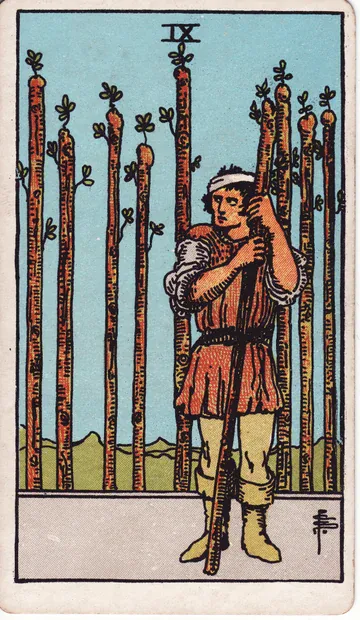
Nine of Wands
The watchful guard who became the burdened porter. The Nine wondered whether to take this on; the Ten has accepted the bundle and is bent under it. The trajectory from vigilance to over-carrying — and the moment the choice could still be made differently today.
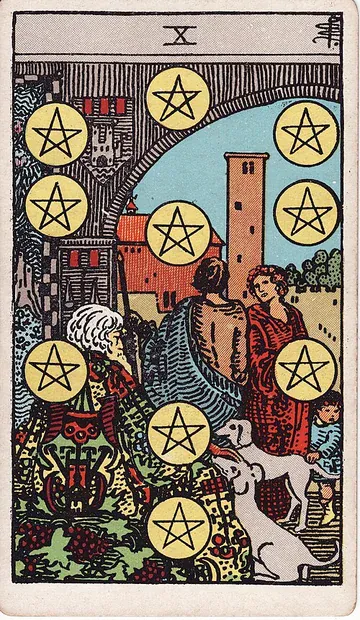
Ten of Pentacles
Completion held in a household, not in one back. Series sibling — both Tens, both arrivals — but the Pentacles' arrival is generational and shared. The combination asks whether the architecture you have built will be allowed to actually hold you, or whether you go on holding the architecture alone.
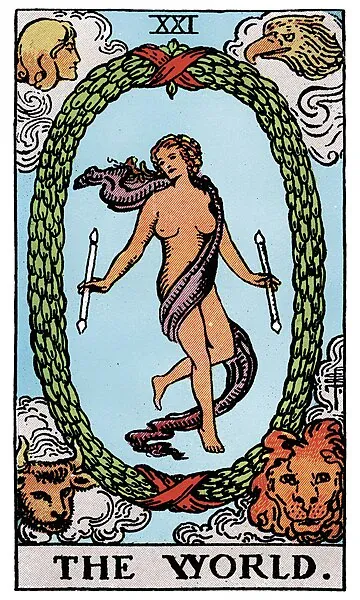
The World
The gate the carrier is staggering toward. The World is the integrated completion the Ten of Wands is moving toward — and the question is whether the carrier crosses the threshold bent under the bundle, or sets two staves down first and walks through with hands free. The pause at the threshold is the whole work.
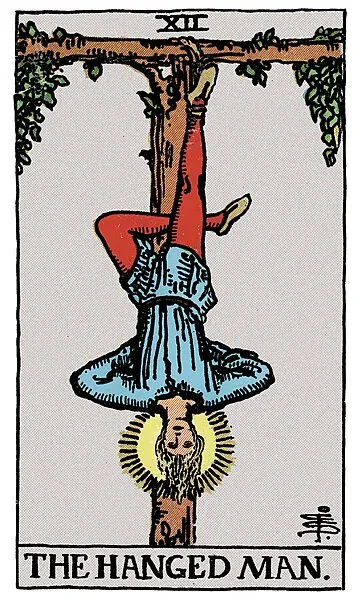
The Hanged Man
Deliberate suspension as the inverse of compulsive bearing. The Hanged Man hangs by choice; the Ten of Wands carries by accumulation. Together a sharp diagnostic: real sacrifice is conscious and time-bound; compulsive carrying is neither. Stop, hang upside down, and look at the bundle from a different angle.
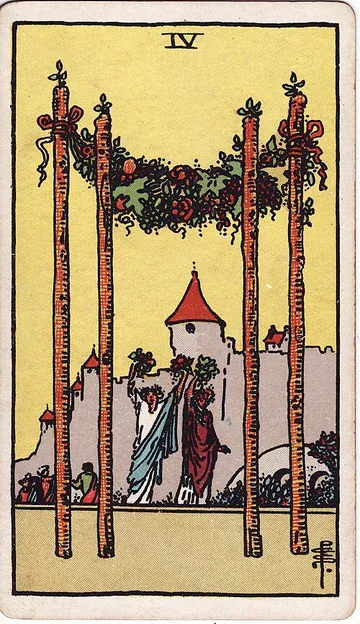
Four of Wands
Tonal contrast: the celebration the carrier is too heavy to attend. The Four of Wands is the threshold festival; the Ten of Wands is the carrier just outside, unable to feel the celebration because the bundle is still in his arms. Set the bundle down at the gate. Walk in empty-handed. Let yourself be a guest at the festival you helped build.
Frequently Asked Questions
Which of the fallen staves were never mine to begin with?
That discovery is the entire reversal. The bundle comes apart — set down deliberately, or knocked loose by a body that stopped cooperating — and several of the staves hitting the road turn out to have belonged to somebody else all along: a sibling's responsibility absorbed years ago because it was faster than negotiating, a colleague's task that migrated during one busy quarter and never migrated back, a parent's expectation carried since adolescence, a standard inherited from a job you left. None of them were assigned. All of them were accepted. What follows is a season of redistribution rather than collapse: the inventory, the awkward conversations that return each stave to its owner, the structural changes, and the disorienting relief of walking with lighter arms and having to relearn what your own posture feels like.
Ten of Wands reversed: yes to setting down, but can I start something new?
Not yet, and the gap between those two answers is the whole teaching of the reversal. To releasing, the card says an unambiguous yes: set it down, end it, decline it, walk away from the thing that has been emptying you, and do not require yourself to justify the decision to a committee first. To beginning, it says wait. The interval between the release and the next commitment is the part carriers habitually skip, because empty hands feel like a problem to be solved and there is always something available to pick up. That interval is where posture returns and where you find out what you actually want to carry, as opposed to what arrived and was accepted. Give it longer than feels comfortable. The next bundle will still be there.
Is the Ten of Wands reversed the conversation we should have had a year ago?
Almost certainly, and it is arriving now because the limit arrived rather than because the timing improved. Reversed, the card marks the renegotiation of an unequal load: the partner who has been over-functioning has hit a wall, and the division of labor that was never explicitly agreed to is finally being spoken about in words. These conversations go badly when they are held as verdicts and well when they are held as inventories — this is what I am carrying, here is what I thought was shared, here is what I want to hand back. One warning the card is specific about: the carrier whose bundle has become their identity will often refuse help that is genuinely offered, because being the one who copes is load-bearing for them. For someone single, the same work is quieter — setting down old responsibilities so that another person could actually fit.
Ten of Wands reversed: are they coming back, or have I become part of the load?
The card holds both endings and does not choose between them for you. In the first, warmth is surfacing from underneath a setting-down: they were distant because capacity was gone, the load is being redistributed, and what returns first is usually apology — the specific, slightly embarrassed kind about a stretch they know they were absent for. In the second, the feeling has hardened into the resentment of a carrier who has quietly filed you among the things being carried, and what you get is vagueness delivered on time, contact that fulfills an obligation without any surplus in it. The tell is surplus. Someone whose capacity is returning offers more than was asked for. Someone managing you offers precisely what is required and nothing beyond. Read a fortnight of behavior, not one good evening.
What is the Ten of Wands reversed advising?
Stop walking, kneel down, and look at what is actually in your arms. Return three staves to their rightful owners. Accept one offer of help without modifying it. Examine the identity that has been built around the carrying — if you were not this, who would you still be? Forgive the version of you who took on so much. The card is the deck's permission slip for setting down what you have been carrying without first earning the right to set it down.