The Chariot Tarot · Core Meaning
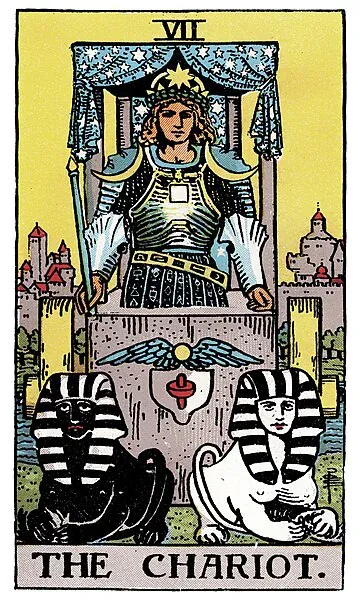
The Chariot is the seventh card of the Major Arcana, and the deck rarely shows movement so plainly: a prince in armor stands inside a canopied chariot, a wand in one hand, a square cartouche on his breastplate, two crescent moons resting like epaulets on his shoulders. Above him, a canopy of stars. Behind him, a walled city and a river. In front of him, two sphinxes — one white, one black — paused mid-stride, their faces still, their gaits not yet matched. He has not set out, and yet he is already moving. The world has agreed to call this instant advance.
Read this way, The Chariot is less a card of triumph than a card of direction. The prince has not defeated the sphinxes; he has yoked them. He has not silenced the city behind him; he has chosen to leave it. The card's signature tension is opposition gathered under one rein: white and black, soft and hard, the part of you that wants to stay and the part of you that wants to go. A decision has finally put on the body by which it can travel.
The traditional astrological signature is Cancer — cardinal water, the moon's house. This is why the crescents sit on the prince's shoulders rather than on his crown. The Chariot does not run on willpower alone; it runs on tides. Its driver carries the moon with him. He moves not in spite of the water in his nature but because of it: the cardinal mode of Cancer is the initiating current, the impulse that opens a season. Summer solstice on the wheel. The midnight tide rising. The pause before setting out, when the rest of the household is asleep and the road is still cool.
The Hebrew letter is Cheth (ח), whose literal meaning is enclosure — the fence that gathers a field into shape. On the Tree of Life, the card walks Path 18, between Binah (the great mother, structuring intelligence) and Geburah (severity, the disciplined arm). What flows between those sephiroth is exactly what the chariot is built for: the form-giving water of Binah brought down into Geburah's measured force. The square breastplate the prince wears is a small Cheth, an emblem of the larger letter. He is the field that has been fenced into a shape that can move.
Two details in the picture are easy to pass over, and both change how the card reads. The first is the canopy: a blue cloth spangled with stars, held up over the car on four posts. The prince is not driving under open sky; he travels under a sky he carries with him — a still, fixed pattern held over a moving vehicle. The image is a reminder that the traveler who can no longer look up has already lost half of what the journey was for. The second detail is behind him: the walled city, and beyond the wall, the river. He has come out of an enclosed place and there is still water to cross. The chariot is not fleeing the city; it is passing from one enclosure into open ground with the water still ahead. That sequence matters when you read the card for someone who wants to know whether they have "made it." They have left the walls. They have not yet reached the far bank. The Chariot is the crossing itself, not the arrival — and from the inside it looks less like triumph than like a very long morning on a road the prince has never driven before.
The shadow embedded in this card is its own engine. The Chariot, untempered, locks the rider inside the metal — unable to halt, unable to hear, unable to see anyone past the rail. "Direction" then becomes a windowless room. Read the upright Chariot as the moment before that hardening: the will is real, the route is set, the armor is on, but the prince still remembers his own ankles. He still has the option of stepping out into the tide.
Read this card the way you would read the photograph of a procession the morning it sets out. Whatever lives in the pause between the unmoved hooves and the road ahead — resolve, dread, exhilaration, the sober realism of the journey — is what the card is offering this reading. The chariot itself is neutral. The prince is the question.
The Chariot · Love & Relationships
The walled city sits behind him in the picture, already small. A relationship under The Chariot upright has acquired direction: the bond is no longer drifting; someone has taken hold of the rein. Whatever the architecture — long marriage, new attraction, the recovery year after a hard ending — this card means the love now has somewhere to go. It is not only a temperature between two people; it is a road that can reach a far place.
For an existing partnership, The Chariot describes the season when the couple has stopped negotiating fundamentals and started traveling. The arguments about whether you are compatible, whether the geography works, whether the values line up — those have been settled, not by surrender but by a real decision. Now you are inside the chariot together, and the work has changed shape. The work is no longer "are we?" but "where are we going?" The card often appears in readings near a move, a wedding, a child's arrival, a public commitment — anywhere the two of you are loading the chariot for a journey the city behind you can no longer hold.
For a new spark, The Chariot upright reads as a connection with unusual forward motion. The pace feels deliberate. The signals are clear. Whoever drew the card is dealing with someone who has already decided you are part of the route they are taking — they are not playing it cool, they are pacing themselves. The two sphinxes here are the two of you: different by temperament, opposite in some essential register, and yet pulling toward the same hill. The early heat is real, and what makes it different from a fling is that the heat already has direction baked into it. The chariot is moving toward something neither of you names yet.
For a single seeker who is asking whether love is even possible, the answer the card gives is yes — and the condition embedded in the answer is that you must know where you yourself are going first. The Chariot does not arrive in lives that drift. It arrives in the life of the prince who has named the road. Strangers feel the difference. The work is not to be more available; the work is to be more directional. Decide what kind of life you are building. The right driver of the other sphinx will recognize you across a crowded room because you are visibly headed somewhere.
In the question of love after a wound, The Chariot has a particular tenderness. The prince's armor is not denial; it is the shape that lets him cross the river without being unmade by it. After heartbreak, after a long silence, after the year you swore off entirely, this card describes the season when the body is willing to mount up again — but only because the armor underneath has been earned. You are not pretending not to be hurt. You have built a shape that can carry the hurt without leaking it onto the next person.
Long-distance couples meet this card in its most literal form. One of you is in the walled city, the other is on the far side of the river, and the question underneath every call is whether anyone is actually going to load the chariot. The Chariot upright says the loading has begun — a lease ending, a transfer requested, a date on a calendar both of you can see. The distance is no longer a condition of the relationship; it is a stretch of road with a known length. What the card asks of the two of you is to agree on the far bank before the wheels turn. A move made toward a person, with no shared picture of the life on the other side, is a chariot with one sphinx in the harness. Name the city you are moving toward, not just the person, and the crossing holds.
Then there is the partnership in which one of you is unmistakably the driver and the other has become, without anyone deciding it, a passenger. The Chariot upright does not condemn the arrangement — a chariot needs someone at the rein — but it puts a question the driver rarely thinks to ask: does the person beside you feel escorted or transported? Escorted means their destination was consulted and folded into the route. Transported means they are along for a journey drawn without them. The card lights the difference. If you are the driver, loosen the rein for one evening and ask where they would go if the chariot were theirs. If you are the passenger, say it before resentment says it for you. The two sphinxes in this picture have different faces for a reason; the chariot goes straight only when both are actually pulling.
A seeker torn between two people sometimes draws this card and reads the sphinxes as the two of them, one white and one black. Resist that reading; it flatters the drama and misses the picture. The sphinxes are not two suitors; they are the two pulls inside you — the one that wants to be held and the one that wants to be free, the loyalty and the appetite. The Chariot's counsel here is that a choice between two people is almost never resolved by looking harder at the two people. It is resolved by naming which life you are driving toward, and then noticing which of them is already on that road. The one who fits the route is the answer. The one who would need the route redrawn is the question you have been avoiding.
A note on this card's particular love language: The Chariot loves by escorting. It pours itself into the practical motion of getting two lives to the same place. It is the partner who books the flight, drives through the night, makes the call to the landlord, walks you to the train. It expresses care through structure rather than sentiment. The lover who shows up with The Chariot in their natal current may not be the one who writes the long letter — they will be the one who already loaded the car. Read the gesture as the love. The interior tenderness lives under the breastplate.
If you are asking whether someone is in love with you and The Chariot arrives upright, read it as a yes with an intentional shape. They have decided. They are not improvising. They have folded you into the route they are running, and they would defend that route to anyone who asked. They will say it plainly when the moment is right. They are simply waiting for the road to arrive at the village where saying it makes sense.
The Chariot · As Feelings
Two sphinxes, one black and one white, walk the same road because a single will is pointed down it — and that is the shape of this person's attention toward you: directed. They feel something purposeful, structured, not yet visible to anyone outside the chariot — but the rein in their hand is already pointed at you. This is not a card of effusion. It is a card of committed forward motion. They are not fluttering; they are traveling.
If they are reserved, the Chariot in feelings often means they have privately decided. The face is calm. The voice does not warble. The texture of their feeling sits behind the square breastplate — armored, not as defense against you, but as the shape that lets the feeling survive the gaze of the city behind them. They will not gush. They will arrange. Read the calendar invitation, the careful question about your week, the thoughtful logistical move as the love letter. Inside this archetype, those gestures are the love letter.
If they are demonstrative, The Chariot turns their feelings into action without much preamble. They will show up. They will plan. They will introduce you to the people who matter to them with a quiet pride. The two sphinxes pulling in different directions inside their chest do not cancel out; they generate the forward push. There is a particular satisfaction in being chosen by a Chariot lover — they choose with their whole life arranged behind the choice, not just with their mood that evening.
For a partner you have been with for a long time, The Chariot in feelings can describe a season when their devotion has become structural. They have stopped reconsidering you. They have started building. The gestures may be smaller; the architecture is larger. They feel about you the way a captain feels about the ship — they may not be in the bow declaring it, but every decision they make passes through the assumption that you are aboard.
For a new connection, The Chariot in feelings means they are deciding about you faster than they are letting on. The crescents on the prince's shoulders are the moon's tides; under his composure, a strong current is rising. They are noticing things. They are weighing whether you are the second sphinx — the one whose pull complements rather than cancels their own. Whatever they say in early conversation, the more accurate story is in their planning. If they are pulling you into the future tense — trips next month, ideas for next year — they have begun yoking their direction to yours.
Someone from your past who turns up under this card is not drifting back on nostalgia. The Chariot in feelings, asked about an ex or an old flame, describes a person who has spent the interval building — a job, a discipline, a route — and who now looks back at you from inside that structure and wonders whether you belong in it. Their feeling has an odd formality to it. It is less "I miss you" than "I have somewhere to go now, and I keep checking whether you are on the way." Take the formality as seriousness rather than coolness. Whether it is welcome is your question, not theirs; the card only reports that the motion toward you is deliberate.
A colleague, a friend of a friend, anyone who has to keep their composure around you in public reads under this card as the prince with the visor down. The armor is a social necessity, not a wall against you, and what is under it is more decided than their neutral face admits. Watch for the practical tells the card favors: they arrange to be on the same project, they remember the thing you said in passing three weeks ago, they walk you to the door rather than saying goodbye at the desk. Chariot feeling leaks through logistics before it ever finds words. If you want it to find words, give it a place where the armor can come off — an hour that is not work, a walk that is not a meeting.
A small caution embedded in this otherwise focused card. The Chariot personality, when stirred, can confuse protection with opening. They can armor themselves so well around the feeling that you cannot reach the body underneath. Their gentleness lives there, beneath the breastplate, and if they never unhitch the armor when alone with you, the feeling stays sealed. If you sense them carrying you everywhere but never sitting with you in stillness, gently ask. The card responds to invitations to halt. It does not respond to assumption.
Take The Chariot in feelings as confirmation that the emotional ground is sound and that the direction has already been chosen. Whatever they feel, they feel with intention. Whatever they feel, the body is moving toward you and not away. The work, if there is work, is to find the moments when the chariot pauses — and to be a person they can step out of the armor with, briefly, before the road continues.
The Chariot · Career & Work
Nothing in this image is still being decided, which is why The Chariot upright is the card of execution at work. The deliberation is over. The prep is done. The decision has been loaded into the chariot, the armor is on, and now the work is the road itself. The card describes the moment a project moves from the planning room into the world — the launch, the deal closing, the first day in the new role, the press release going out. The body is leaning forward. The pace, finally, is yours.
If you are asking whether a current role will succeed, The Chariot answers yes — provided you can keep your hand on the rein. The role is going somewhere. The metrics are responding. Promotion, recognition, expanded scope are visible on the road ahead. The trap, in this card, is not failure; it is loss of direction inside the success. The chariot can be moving and the prince can still be staring at the wrong horizon. Re-name your destination weekly. The card asks for ongoing clarity about what victory means in this particular role — without that anchor, the velocity becomes its own problem.
For someone considering a new role, The Chariot upright reads as a green light with a small but important caveat. Take the role. The new chariot fits. What it cannot do for you is choose your direction once you are inside it. The role will hand you a wand and a rein and a pair of sphinxes; what it will not hand you is the destination. Decide that yourself, in private, before the first day. Then mount up.
Entrepreneurs and freelancers should read The Chariot as the card of disciplined launch. The product is ready. The brand has stabilized into something that can travel through the city without being dismantled by the gaze of strangers. The next move is to go — to ship, to sell, to commit to the route. The card cautions against the entrepreneur's particular vice of perpetual preparation. The sphinxes are already harnessed. Stop adjusting the bridle. Lift the rein.
For a creative practice, The Chariot describes the season when a body of work earns the discipline to leave the studio. The book is finished; submit it. The album is mixed; release it. The series is complete; show it. The card warns that creative work, like the prince, eventually needs the armor of public form — frame, deadline, audience — or it stays in the workshop forever, soft and unfinished. The armor is not a betrayal of the work. The armor is what lets the work cross the river.
For someone in a stalled career — passed over, restless, quietly resentful — The Chariot is unusually pointed. It says the issue is rarely talent and rarely circumstance; it is direction. Where, exactly, are you going? Not the platitude. Not the LinkedIn line. The actual destination, in plain language, that you would tell a friend over coffee. If you cannot say it, the chariot is parked. The career section of this reading begins with the answer to that question.
After a layoff, or at the end of a contract that is not being renewed, the upright Chariot is stranger news than it first appears. The old chariot has been taken from you, and the card's answer is that the loss is not the story — the direction is. Most people leave a role backward, still looking at the walled city, spending the severance months explaining what happened. The Chariot asks you to face the river instead. The first month is not for applying; it is for drawing the route the next role must serve, in one plain sentence you could say to a recruiter without flinching. The armor here is the composure to treat the search as a crossing rather than a rescue. Seekers who do this tend to find that the next chariot appears sooner, and fits better, than the one they were mourning.
For job-search and promotion questions, the upright Chariot favors the candidate who shows up with a route. Interviewers and decision-makers respond viscerally to people who can describe where the chariot is headed — they want to be aboard. Walk in with the route already drawn. The role, in your description, should be the next station on a road you were already traveling.
A note on collaboration: the two sphinxes are not always you and the work; they are often you and a partner, you and a co-founder, you and a manager. When the card appears in workplace conflicts, it usually means the issue is not values — it is gait. Two competent, well-meaning people are pulling at slightly different speeds. The chariot still goes; it goes crookedly. The fix is not to convert one sphinx into the other. The fix is to name the destination clearly enough that both gaits adjust.
The Chariot · Money & Finances
Name the destination of every recurring payment, and count how many you cannot name. The Chariot upright is the card of directed finance — a budget that has woken up and started moving. The numbers are no longer drifting. Income and expense have been gathered under one rein, and the household, the business, or the personal account is now traveling toward a defined destination: the down payment, the debt cleared, the runway extended, the round closed.
For someone managing scarcity, The Chariot offers a particular kind of news. The climb is real, but it has acquired structure. The spreadsheet is functional. The plan is plausible. What was a panicked daily juggle has become a route. This card supports the boring, structural moves: the autopay set up, the budget category honored, the side income consolidated. Cancer's cardinal water is the initiating mode — this is the moment the long financial discipline finally starts to feel like progress instead of penance.
For a question about whether a financial gamble or large purchase will pay off, The Chariot answers with conditional yes. The move is sound if it serves the route. If you are about to take on a mortgage that fits the life you are actually building, mount up. If you are about to take on a mortgage because the signal of having one will quiet your anxiety for six months, the card is warning you: the chariot is impressive; do not buy a chariot that does not match your road.
For investments and longer-term financial decisions, The Chariot is one of the deck's clearer "yes, with discipline" cards. It supports automated, regular, route-aligned moves — the index fund contribution that runs every month, the retirement account that gets fed without theatrics, the emergency fund that grows by accumulation rather than enthusiasm. It does not support speculative reaches, hot tips, or the seductive feeling of being smarter than the market. The prince's wand does not strike; it points. Use it to direct, not to attack.
For a windfall — bonus, inheritance, surprise check — The Chariot upright says: route the money before you spend it. Within the first week. The card is allergic to undirected resources. Money that arrives without a destination tends to evaporate into the ambient pressures of daily life; money that arrives with a route survives and compounds. Pick the destination. Send the money there before the chariot is overtaken by anyone else's idea of where it should be heading.
Shared money between two people is where this card's harness image turns practical. Two incomes, two attitudes to risk, two histories with debt — two sphinxes, and one household account. The Chariot upright says the account moves straight only when the two of you have named the same destination for it, out loud, with a number attached: the down payment by a date, the year the second income becomes optional, the sum that means the parents are covered. Without that, the careful one saves in secret and the spending one buys in secret, and the chariot goes sideways looking respectable. One evening a quarter, rein in hand, both of you at the table with the real statements. The card does not ask the two temperaments to become one; it asks them to pull toward the same bank.
The card's particular financial trap is armor without route — the high earner who has built an enormously expensive infrastructure (mortgage, leases, school fees, lifestyle) without a clear sense of what the spending is in service of. The chariot looks magnificent and goes nowhere in particular. The fix is to step out of the chariot for one weekend, write down what the wealth is for, and then test every recurring expense against that line. The Chariot upright supports brutal financial editing in the service of a clearly named life.
For debt recovery, the card supports consolidation. Gather the scattered obligations under one rein. Pick a single repayment route and travel it. The Chariot is not the card of fast wins; it is the card of disciplined arrival. The relief, when it comes, will be the relief of having traveled the distance — not the relief of having found a shortcut.
The Chariot · Health
A body under this card stops arguing with itself. The Chariot upright describes what has been gathered — disciplines that were scattered, now harnessed under one rein. Sleep, food, movement, breath, and rest are no longer competing for attention; they have been folded into a single daily route. The body is responding. Energy is rising in a steady, structural way rather than in spikes. The card describes the season when the nervous system stops fighting the schedule and starts riding it.
If you are asking whether a treatment will work, whether a procedure will go well, whether a recovery will hold, The Chariot answers yes — provided you can stay the course. The card does not promise instant resolution; it promises traversal. The healing is a road, and the road has a known end. Take the medication on time. Show up to the appointment. Do the boring thing daily for the boring number of weeks. The chariot does not tire of repetition; that is its gift.
The card's particular health signature is Cancer, ruled by the moon — the cardinal water of the body. The traditional associations are the chest, the breasts, the stomach, the rhythms of fluid (lymph, digestion, hydration, hormonal tides). When The Chariot appears in a body reading, attend the digestive and emotional center. The two sphinxes are the sympathetic and parasympathetic nervous systems, the activating and the receptive, the doing and the digesting. They need to be yoked, not silenced. Plenty of motion, plenty of rest, in alternation, on a route the body can predict.
The temperament under the armor is phlegmatic — soft water drawn taut inside a metal shape. That is a precise description of a certain kind of body: slow to start, reluctant in the mornings, fond of the couch and the second helping, and yet capable of extraordinary endurance once it has been given a route it trusts. If you are this body and you are starting something — a training plan, a rehabilitation protocol, the first real attempt at a sleep schedule — the card's counsel is not to force the water to become fire. Build the fence first. Fix the wake time before the workout, the walk before the run, the same three meals before the diet. Phlegmatic bodies do not respond to intensity; they respond to enclosure. Give the water a shape and it moves with a steadiness the fiery temperaments envy by month three.
For someone managing a chronic condition, The Chariot offers the dignity of structure. The condition is not in remission, perhaps; it is also not in chaos. The protocols are working. The relationship between you and the body has become one of mutual respect — you ask it to do certain things, and it does them, in exchange for genuine care. This is the gift of cardinal water: the body that has agreed to travel with you, even on a long road.
For mental health, The Chariot is one of the clearer cards of structural recovery. It often appears when a person has been doing the unglamorous work of therapy, medication management, sleep hygiene, sober living, or daily journaling, and the practices have begun to load-bear. The acute crisis is past. The architecture is holding. There is still discipline required — the chariot rolls because the prince keeps his hand on the rein — but the discipline is no longer torment. It has become a gait.
A small caution. The Chariot's shadow in health is the body that has been armored into ignoring its own signals. The high-functioning seeker who runs the marathon while flu is brewing. The professional who skips the appointment because the calendar will not yield. The athlete who treats every twinge as weakness. The card asks for honesty: armor is not the same as health. The breastplate's job is to let you cross the river, not to deafen you to your own ankles. One night a month, as the integration cue suggests, unhitch the armor and step out of the chariot. Let the tide recognize your ankles again. The body has news for you when the metal is off.
Unhitching the armor is an image, not medical advice. Stay with the practitioners who know your history, keep the prescribed regimen running, keep showing up for the work. The card simply names the season: gathered body, directed practice, slow steady rise.
The Chariot · Spirituality
A crescent sits on each shoulder, one waxing and one waning, and both of them are traveling in the same direction. That is The Chariot's yoked practice. The seeker who has spent years gathering teachings, traditions, fragments of insight, and disparate disciplines has begun, finally, to hitch them to a single forward motion. The morning meditation feeds the journaling, the journaling feeds the conversations, the conversations feed the silence at evening, the silence feeds the next morning's sit. The path has acquired direction.
This is the card of Cheth — the enclosure, the field gathered into a shape that can be tended. On Path 18 of the Tree of Life, between Binah's structuring intelligence and Geburah's disciplined arm, the Chariot carries form-giving water down into measured force. In practical spiritual terms, this is the moment a contemplative life stops being a hobby and becomes a vocation. The practices are no longer optional. They are the chariot you ride into your own life.
For seekers in active practice, the upright Chariot means the disciplines are bearing their proper fruit. The breath is steadier. The reactivity is shorter. The teachings you encountered five years ago are now landing in the body, not just the head. There is a felt sense of being escorted by your own work — the practice has begun to take you somewhere rather than the other way around.
For seekers exploring belief, the card describes a season of commitment without rigidity. You are not declaring war on the other traditions; you are simply choosing the route this chariot will travel. Commitment is the rein. Without it, the sphinxes pull crosswise and you end up in roughly the same village every spring. With it, the body begins to know the road by feel.
The oldest version of this picture is not a prince alone. It is Arjuna on the field at Kurukshetra with Krishna holding the reins — the warrior in the car and the god as the charioteer, the will and the thing that steers the will. Held in mind, that older image corrects a mistake the card invites: the belief that spiritual direction means gripping harder. In the older story, the one who fights is not the one who drives. The practice this card blesses is the one in which you have handed the rein to something steadier than your mood — a rule of life, a teacher, a vow, a daily hour kept whether or not you feel like it — and then done your own work in the car without arguing with the driver.
The card's spiritual practice, doable in thirty minutes: name your destination. Sit down with a sheet of paper and write, in plain language, what you are walking toward. Not the abstract noun. Not the curated spiritual brand. The actual condition of soul you are trying to grow into — the kind of person you want to be at the table with your friends, the kind of presence you want to bring to your work, the kind of stillness you want available at your own deathbed. Write it concretely. Then, for one week, every morning, ask the practice to serve that destination. Drop anything that does not serve it. The Chariot integrates through this small act of route-drawing.
A spiritual caution. The Chariot's shadow in this domain is the seeker who has armored their practice so tightly that the practice itself becomes a wall against the very tenderness it was meant to open. The lifelong meditator who is not actually any kinder. The disciplined faster who is also imperious. The student of every tradition who cannot sit with their own mother. When the armor begins to harden against the people in your life, the chariot has stopped being a vehicle and become a fortress. Step out. Let the tide recognize your ankles. The road begins again under bare feet.
For questions of path, the upright Chariot answers that you are aligned. The work, the relationships, the discipline are the right shape. The next phase of the path will be longer than you think and more tender than you expect — but the chariot is correct, the rein is in your hand, and the destination, properly named, will draw you the rest of the way.
The Chariot Tarot · Yes or No
Yes — but only if you can name where you are going.
The Chariot upright is one of the deck's conditional yes-cards. The answer is real, the path is open, the momentum is gathered — and the condition embedded in the yes is direction. If you can name the destination clearly and out loud, the card confirms the road. If you cannot, the chariot is parked and the yes evaporates.
For yes-or-no questions about a relationship, a job, a move, a decision: yes, with a small but unskippable test. Take the action if you can articulate, in one sentence, what you are moving toward. "I am taking this role to build the kind of work that lets me leave the city in three years" — yes. "I'm taking this role because the offer was there" — the chariot is moving without a driver. The card is asking for direction, not for ambition.
For questions about whether something will succeed — a launch, a project, a campaign, a conversation — The Chariot answers yes, by execution. The work succeeds for the rider who travels it, day by day, with a hand on the rein. It does not succeed by inspiration alone. It succeeds because someone put on the armor and crossed the river.
For questions about whether someone is being honest, whether an offer is genuine, whether a plan will hold, the upright Chariot answers yes with a particular flavor: the people involved have already decided. The honesty here is structural — they have committed to the route, and what they say from inside the chariot is what they will defend. The card has clarity rather than warmth. The yes is reliable.
Asked how fast the chariot travels, The Chariot upright suggests yes, on the schedule of disciplined motion. Not instant. Not far. Within the season, by traveling the road. Cancer's cardinal water means the tide is initiating; whatever is moving will move now and continue to move. You are not waiting for the universe to align. The chariot is already harnessed.
Asked whether someone is coming back — the ex, the estranged friend, the client who went quiet — the upright Chariot answers yes only when the return has a road under it. Not sentiment; logistics. Has a message actually been sent, a date actually proposed, a ticket actually booked? If the answer is that they "seem" to be softening, the chariot has not left the city. The card counts motion, not weather. When there is a visible move toward you, read the yes as reliable and paced. When there is only atmosphere, read the card as describing your own direction instead, and ask where you are driving while you wait.
Applications, exams, approvals, the visa, the license, the loan: here the card is close to a plain yes, because these are questions of traversal, and traversal is what a chariot is for. The condition is that the paperwork has been driven, not wished at — every form complete, every deadline met by the person holding the rein. Under those conditions the answer is yes, on the schedule of the institution rather than of your nerves.
For binary questions about whether to act — should I take the offer, should I send the message, should I make the move — The Chariot upright says yes, with the further note that the action is the seal on the choice, not a precondition for it. The choice was already made. Your action is the visible form of the decision. Mount up.
If the question was: will I get there? The card answers yes — and then asks, gently, where there is. The yes belongs to the traveler who can answer. Take a moment, before reading the rest of the spread, to name the destination plainly. The card is waiting for the rein.
The Chariot · Advice
Mount up — but name the destination before you take hold of the rein. The Chariot upright is not asking you to be braver. It is asking you to be more directional. Bravery without direction makes loud, expensive circles. Direction with bravery makes a road.
If there is one specific instruction the card offers, it is to name the destination out loud. Not in your head. Out loud, to yourself in the car, or to a friend, or onto a page. The Chariot integrates through articulation. The crescents on the prince's shoulders are tides — the will rises and falls under his armor — but the wand in his hand points. Speak the route. The body will follow what the mouth has named.
A second instruction: yoke the opposing forces in your life rather than trying to silence them. The two sphinxes are not problems to be solved. The pull toward stability and the pull toward risk, the part that wants closeness and the part that wants solitude, the responsible self and the wild self — these are the engine of your particular chariot. The work is not to choose between them. The work is to gather them under one rein and let their difference produce forward motion. The card responds to integration, not to amputation.
A third instruction: put on the armor and stop arguing with the roadside. Once the route is named and the chariot is in motion, the energy spent persuading every doubter — internal or external — is energy not in the rein. The Chariot is not the card of the explainer. It is the card of the traveler. Some people will not understand your direction until you arrive. Travel anyway.
A fourth instruction, gentler than the others: one night a month, unhitch the armor. Step out of the chariot. Take a slow walk by water. Eat a meal alone without the day's plan in your head. Let the tide recognize your ankles. The Chariot returns to its own freshness only when the prince remembers he is also a person. The disciplines that build the chariot can, if never paused, build a metal room. Pause.
Look up, too. The canopy over the prince's head is spangled with stars, and it is held over the car on four posts precisely so that the traveler does not have to choose between moving and seeing the sky. The failure the card watches for in a driven person is not laziness; it is a horizon that has shrunk to the road surface. Once a week, on the road you have named, stop for the length of a coffee and look at something that has nothing to do with the journey — a friend's news, a piece of music, the weather over the river. A route with no sky above it is a tunnel, and the chariot was not built for tunnels.
Choose the second sphinx with care. Every route long enough to matter is traveled with someone — a partner, a co-founder, a friend who holds you to it — and this card is particular about who sits in the other harness. It is not the person who agrees with you; that is the same sphinx twice, and the chariot lists. It is the person whose pull differs from yours in a way that produces a straight line. Before you set out on the ninety days, name the one person whose difference from you is going to keep you honest, and tell them the destination. The prince does not drive alone. He drives between two faces that are not his own.
Practical advice for the day the card appears: write the next ninety days as a route, not a list. Three months from now, what village do you want the chariot to have entered? Work backward from there to this week. Do the boring, structural thing today that the route requires. Make the appointment. Send the email. Walk the loop. The card responds to small, faithful moves on a named road. It does not respond to inspiration. It responds to gait.
The Chariot · Card Combinations
The Chariot is a card of yoked opposition and named direction. Its meaning shifts noticeably when read alongside other cards — sometimes the rein loosens, sometimes the destination changes, sometimes the prince finally agrees to step out of the armor. A short prose introduction precedes five named pairings below; each pairing reads the combined image the two cards make.
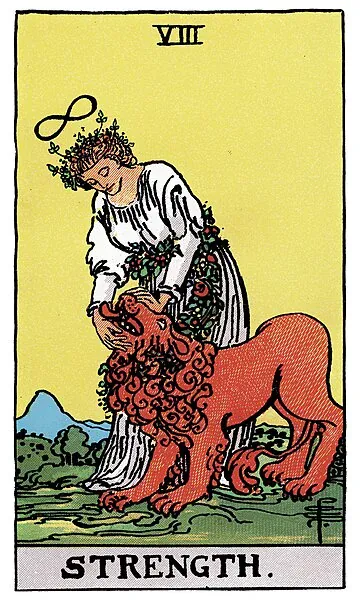
The Chariot + Strength (major-08)
Two cards of taming, side by side. Strength tames inwardly — the woman with the lion places her hand on its open jaw with calm gentleness, and the lion goes still. The Chariot tames outwardly — the prince in armor yokes the two sphinxes and rides them. Together, they describe a complete victory: the will that has gathered both the inner beast and the outer opposition, riding through the world without flinching and without cruelty. When this pair appears, the question is whether you have done both halves. Most seekers do one well and the other badly. The Chariot without Strength is the hard winner who has never befriended his own anger. Strength without The Chariot is the gentle soul who has not yet built the chariot to carry that gentleness into the world. Together, they are the card of mature force.
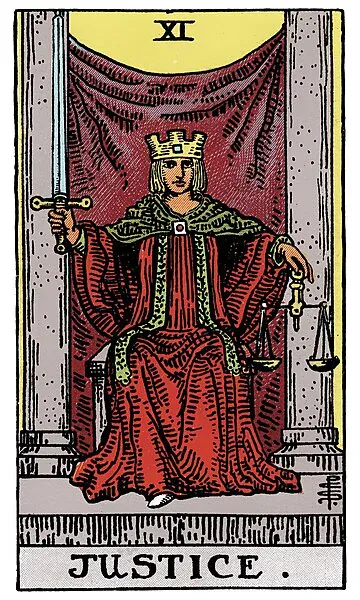
The Chariot + Justice (major-11)
Direction meeting measure. The Chariot has set out; Justice is the court the chariot eventually arrives at. When these cards appear together, the work is to make sure the route the chariot is taking would survive examination — that the victory you are riding toward is one you would defend in front of someone holding a sword and a scale. This is the combination of the founder going to court, the partnership entering a contract, the relationship facing the conversation that will name what it has actually been. Travel honestly. The destination is a tribunal.
The Chariot + The Emperor (major-04)
Two cards of authority, but at different temperatures. The Emperor is static authority — the man on the stone throne, the established order, the ram-headed certainty of structure. The Chariot is mobile authority — the prince in armor, the route the throne sends out into the world. Together they make a complete governance: the throne and the chariot it dispatches. When this pair appears, the question is which of the two you are. If you have been over-throning — locked in administrative stasis, defending the structure rather than moving it — the Chariot is calling you out of the chair. If you have been over-charioting — restless, in motion, never standing still long enough to let people meet you — the Emperor is asking you to dismount. The healthy life uses both. The chariot returns to the throne. The throne sends out the chariot.
The Chariot + The High Priestess (major-02)
The crescents on the prince's shoulders find their teacher. The High Priestess is the moon at her seat between the pillars, holding the scroll of inner law; The Chariot is the same moon strapped to a man's shoulders, riding into the world. When these two appear together, the reading is that the lunar interior of the seeker — the dreams, the intuition, the half-known knowing — is finally finding a body that can carry it through the day. The shadow side of the pair is the prince who has only the crescents and refuses to consult the priestess at her own altar. Take the High Priestess's counsel before mounting up. The armor will hold longer when it has been blessed by stillness.
The Chariot + Two of Cups (cups-02)
The Chariot at its decanic source — Cancer water in its first, most relational form. The Two of Cups is the bond at its origin: two figures facing each other, exchanging the cup, the lion-headed caduceus rising between them. The Chariot is what that bond eventually grows into when it is asked to travel — the same water gathered into armor and sent into the world. When these two appear together, the reading is about a love that is being asked to become directional. The early facing-each-other has been beautiful; now the work is to face the same horizon together. This is the card of the couple loading the chariot, the partnership preparing for its first long journey, the friendship that has decided to build something that requires both of them. Pour the second cup. Then mount up.
Card Combinations
Strength
Strength is inner taming; The Chariot is outer taming. Together they describe a complete victory — the will that has gathered both the inner beast and the outer opposition, riding through the world without flinching and without cruelty. Most seekers do one well and the other badly. The pair is the card of mature force.
Justice
Direction meeting measure. The chariot has set out; Justice is the court the chariot eventually arrives at. The combination asks whether the route the chariot is taking would survive examination — whether the victory you are riding toward is one you would defend in front of someone holding a sword and a scale. Travel honestly. The destination is a tribunal.
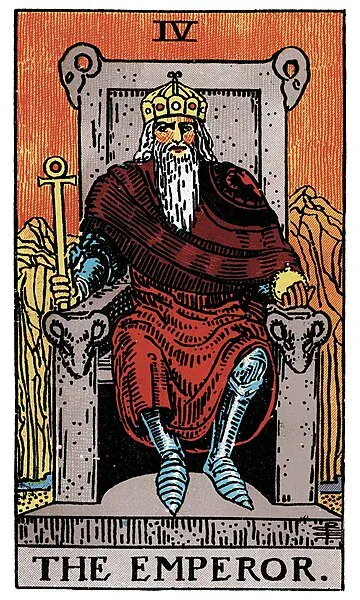
The Emperor
Two cards of authority at different temperatures. The Emperor is static authority — the throne, the established order. The Chariot is mobile authority — the prince in armor, the route the throne sends out into the world. The healthy life uses both: the chariot returns to the throne; the throne sends out the chariot. The pair asks which of the two you have been over-relying on.
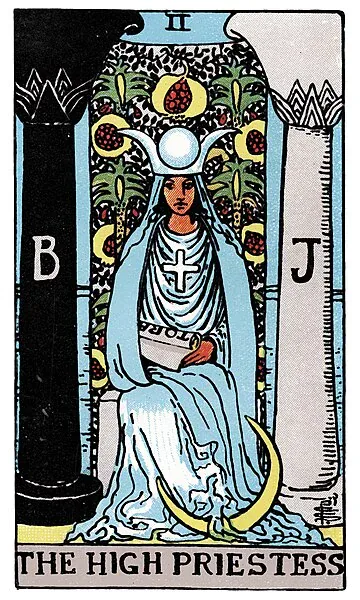
The High Priestess
The crescents on the prince's shoulders find their teacher. The High Priestess is the moon at her seat between the pillars; The Chariot is the same moon strapped to a man's shoulders, riding into the world. The pair signals that the seeker's lunar interior — dreams, intuition, half-known knowing — is finally finding a body that can carry it through the day. Take the priestess's counsel before mounting up.
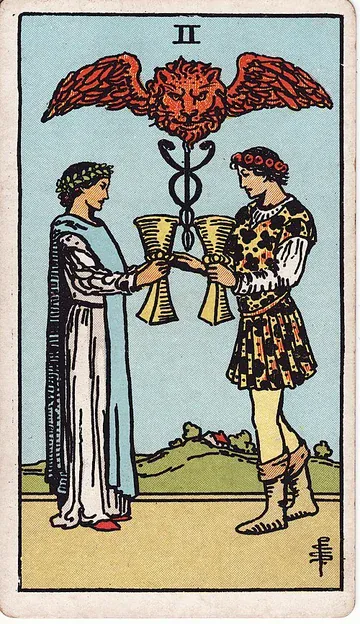
Two of Cups
The Chariot at its decanic source — Cancer water in its first relational form. The Two of Cups is the bond at its origin; The Chariot is what that bond grows into when asked to travel. The pair appears when a love that has been beautifully facing each other is being asked to face the same horizon together. Pour the second cup. Then mount up.
Frequently Asked Questions
Why do the two sphinxes pull in different directions?
Because a will with nothing to reconcile has not been tested yet. The Chariot is the seventh Major Arcana card and represents directed will — opposing forces (the two sphinxes) yoked under one rein. It is associated with Cancer, ruled by the moon, and walks Path 18 between Binah and Geburah on the Tree of Life. The card describes the moment a decision puts on the body that can carry it through the world: armor, rein, route, motion. Read it as victory through direction rather than victory through force.
Can I move on this before I know exactly where it leads?
The Chariot upright is a conditional yes, and that condition is the destination. The answer holds when you can name where you are going clearly and out loud. If the destination is articulated, the card confirms the road, the timing, and the disciplined arrival. If the destination is vague, the chariot is parked — yes evaporates into ambition without route. Take a position before reading the rest of the spread.
Has someone taken the rein in this relationship?
Under The Chariot upright, yes — the bond has acquired direction. For partnerships, this often appears near a move, a wedding, a public commitment — the bond is now traveling. For singles, the card means love is possible when you yourself become directional; strangers feel the difference between drift and route. The card's particular love language is escorting — care expressed through structure rather than sentiment.
Have they already decided about me without saying so?
Very likely. Under The Chariot, the feeling is directed: privately decided, structurally arranged, traveling toward you. Their gestures may be logistical rather than effusive — the calendar invitation, the careful logistical move — and inside this archetype those gestures are the love letter. They are not improvising. They have folded you into the route they are running.
How is victory different from arrival in The Chariot?
Committed direction is itself the victory; arrival is a separate event on a later card. The work is not to silence the opposing forces in you (the wild self and the responsible self, the impulse to stay and the impulse to go) but to yoke them under one rein. Cheth, the card's Hebrew letter, means enclosure — the field gathered into a shape that can be tended. Name the route. Mount up. Travel.