
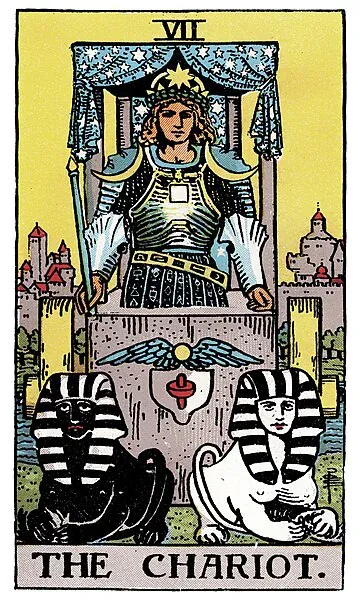
The Chariot Reversed · Core Meaning
The Chariot reversed is the same image, faced the wrong way. The chariot is still in motion. The armor is still on. The sphinxes are still harnessed. But the prince's hand is no longer on the rein — or the prince is no longer truly inside the chariot at all. The body of the vehicle rolls on, mostly out of habit, while the driver's attention has wandered out toward something else entirely. The two sphinxes, sensing the slack, begin to pull each in their own direction. The chariot lurches. The road becomes ragged. Someone, looking at it from a distance, would still say "they're moving" — but the inside of the chariot has gone quiet in the wrong way.
This is the card's central reversed knot: motion without direction. Force without route. The posture of victory without the substance of victory. The reversed Chariot describes the seeker who has armored up, set off, and somewhere along the way forgot what they were riding toward — and instead of halting, kept going, because halting feels like defeat to a chariot. Pride is the thing that keeps the metal rolling. Underneath, the prince is exhausted, distracted, or fighting a battle that has nothing to do with the original journey.
A second flavor of the reversed card: the sphinxes pulling crosswise. The two opposing forces in the seeker's life — the responsible self and the wild self, the part that wants closeness and the part that wants solitude, the loyalty to the old life and the call of the new — are no longer yoked. They are tearing in opposite directions inside the same body, and the chariot is splintering. Outwardly, the seeker may still be performing competence. Inwardly, they are coming apart at the harness.
A third flavor: the armor that has hardened into refusal. The breastplate that was once a shape that let love and tenderness travel safely through the world has, with time, become the wall that prevents anyone from reaching the heart underneath. The reversed Chariot warns of protection that has become deafness. The "I'm fine" that has stopped being honest. The relentless competence that no longer lets in the friend who is actually trying to help. Cancer reversed turns its claws inward — the very water that should have been carried in the chariot has been frozen into armor, and now nothing can get either in or out.
Turn the picture over and notice what the reversal does to its smaller details. The canopy of stars is now beneath the prince's feet: the sky he was meant to look up at has become the thing he stands on, and he cannot see it because he is standing on it. The wand no longer points forward; it points at the ground. The walled city and the river, which stood behind him as the place he had left and the water still to be crossed, are now ahead — which is the reversed card's most exact description of the seeker who has gone in a circle and is heading back toward the enclosure they set out from, at speed, in armor, calling it progress. The square cartouche on the chest, the little Cheth that was supposed to give the going a stable ground, has become a lid. Read the reversed Chariot as this inverted geography: a sky underfoot, a wand at the floor, a river arriving from the wrong side. None of the parts have changed. Their order has.
The sign behind the canopy turns with the chariot. Cancer's cardinal water — the initiating tide, the mode that begins seasons — becomes either erratic or stagnant. The crescents on the shoulders no longer feed the prince; they overflow him, or they dry up. The moon is the ruler in trouble. There may be moodiness without insight, defensiveness without depth, retreat that has become hiding. None of this is permanent. All of it is information.
Reversed, The Chariot asks three questions in order: where am I actually going? Are the opposing forces in me yoked or warring? And — most tenderly — when did I last step out of the armor and let the tide recognize my ankles? The card's recovery begins at the answer to these. Not with more force. With a halt long enough to take the rein back.
The Chariot Reversed · Love
The two sphinxes have begun pulling toward different streets and nobody inside the canopy has said so out loud. The Chariot reversed describes a relationship in which the direction has been lost, the driver has been lost, or the armor has been mistaken for the love itself. The chariot is still rolling — there is still a household, still a calendar, still a public version of the partnership — but somewhere inside the metal, the rein has gone slack and the two of you are pulling crosswise.
For an existing partnership, the reversed Chariot often indicates the long marriage that has stopped naming where it is going. The structure is intact. The discipline is intact. The vows are intact. And the destination — the actual shared horizon you were both traveling toward — has been quietly forgotten. You are still in the chariot together, but you are commuting rather than journeying. The fix is not to dismantle the chariot. The fix is to halt for one weekend and re-name the destination together. Where, exactly, are we going now? Out loud. The card responds to articulation between partners more than to almost any other gesture.
For someone in a new connection, the reversed Chariot can describe a partner who is performing direction without actually possessing it. They show up with the language of commitment, the gestures of seriousness, the route already drawn — and somewhere in the second or third month, you notice that the route does not quite have you in it. They have a chariot. They are looking for the shape of a sphinx to put in the empty harness. The card warns gently: real direction has the other person's actual life baked into it, not just the silhouette of a partner.
Put the question of love to the reversed Chariot and the answer comes back muffled rather than absent. They feel something — but the feeling has gotten stuck inside the armor. They may protect you, plan for you, defend you in conversations you never witness, and still never sit across from you long enough to let the breastplate come off. The reversed Chariot lover loves through doing and forgets to love through being. None of this is malice. It is a habit that began as care and hardened into substitute. The work, if you care enough to do it, is to invite halting. Real meals. Long evenings. Conversations that have no agenda. The prince has to be helped out of the armor; he will not step out on his own.
For the question of reconciliation after a break, the reversed Chariot offers a soft no, or a partial yes that requires new direction. Returning to the same route that broke is not the answer. The chariot will simply break the same way again. If reconciliation is to mean anything, the two of you must agree, before mounting up, on a destination neither of you was riding toward last time. The card supports the reunion built on a redrawn route. It does not support nostalgia for the chariot you used to drive together.
The partner who moved cities, changed jobs, or rearranged a life so the two of you could be together meets this card in a particular way. The crossing was made — the river is behind you both — and now the one who moved is discovering that the route on the far bank was drawn entirely by the other person. They live in the chariot; they do not drive it. The reversed Chariot in this reading is not a verdict that the move was wrong. It is a description of a rein that was handed over during the crossing and never handed back. The repair is small and specific: one decision this month that is theirs — where the money goes, what the weekend is, which friends come to the table — made without the driver adjusting it afterward.
When love has become an errand, the reversed Chariot names it exactly. One of you is escorting the other through the world — the appointments, the paperwork, the difficult parents, the illness — and the escorting has quietly replaced everything else the relationship was. The escort is exhausted and cannot say so, because saying so feels like abandoning the post. The escorted is grateful and cannot say so either, because gratitude has begun to feel like debt. Neither is looking at the other; both are looking at the road. The card asks the two of you to halt long enough to remember the Two of Cups underneath the chariot, the face-to-face that preceded all the logistics. One meal where nothing is arranged. One conversation in which no one is being managed.
A seeker being pursued by someone whose interest feels like a campaign is reading this card from the roadside. The reversed Chariot describes the suitor who has decided on you the way a prince decides on a city — the gestures are large, the timeline is fast, and the resistance you offer only seems to confirm the route. This is not the upright card's deliberate lover, and the difference is whether your actual life has been consulted or merely surveyed. Direction that arrives without listening is force wearing direction's armor. You are allowed to step off the road. A person who wants you as a destination waits at the halt; a person who wants you as a victory drives on to the next city.
For the single seeker, the reversed Chariot is one of the deck's gentler diagnostic mirrors. It can describe the seeker who has put on so much competence-armor — the great career, the impressive routine, the highly-managed solo life — that no one can actually reach them anymore. The chariot is impressive. The chariot is solitary. The seat in the chariot beside you is welded shut. The card asks for a small, repeated act of unhitching: one evening a week without the armor, in the company of someone who knew you before the metal was on. The route to partnership begins under bare feet, not inside the breastplate.
For relationship questions involving conflict — the recurring fight, the unresolved issue, the pattern that keeps surfacing — the reversed Chariot says the issue is rarely the topic. The issue is that the two sphinxes have been pulling crosswise for months and neither of you has named it. Halt the chariot. Walk to each sphinx in turn. Listen to what each one is actually crying about. With the rein clenched, you cannot hear. The fight resolves only after the listening.
The Chariot Reversed · As Feelings
The rein has slipped out of their hand and the chariot is still rolling: that is The Chariot reversed as feelings. They feel something — often something tender, often more than they let on — and the feeling has not been gathered into a route they can show you. It is loose inside them. It is occasionally sharp. It is, at times, defended against rather than shared.
If they are reserved, the reversed Chariot in feelings often describes the partner who has armored themselves so completely around what they feel that they no longer know how to hand the feeling across the table. They are not playing games. They are not testing you. They have simply lived long enough inside the breastplate that the gesture of opening has become unfamiliar. They feel close to you privately and distant publicly. They love you through logistics and forget to love you through stillness. Read their silence as armor, not as absence — but recognize that the armor is now their problem, not your evidence.
If they are demonstrative, the reversed Chariot can describe the partner whose feelings come at you in lurches. One week they are all forward motion — plans, intensity, the chariot at full speed. The next week they have pulled the rein hard in the other direction without explanation. The two sphinxes inside them are pulling crosswise. They want closeness; they fear being known. They want to commit; they fear the ending of options. None of this is about you specifically. All of it makes the relationship feel like a road full of potholes. Read the lurches as internal disagreement, not as cruelty.
For a partner you have been with a long time, the reversed Chariot in feelings can mean a slow drift into automatism. The love is still there. The attention has narrowed. They no longer notice the changes in you because they think they already know who you are, and the chariot is rolling on the rails of an outdated map. The card asks for re-noticing. Not new feelings — new looking. The integration is small: one question about your actual interior life this week, asked with the armor briefly off.
For a new connection, the reversed Chariot can describe someone who is intrigued, possibly even smitten, and unable to figure out where you fit in the route they had drawn before they met you. They are doing math you cannot see. They are revising the chariot's plans. The result, on your end, is mixed signals — clear interest, then sudden distance, then clear interest again. Wait. Do not chase the lurches. The card does not respond well to pursuit. It responds to the steady presence of a person who has their own route and can simply be present without joining the lurching.
About an ex, the reversed card is unusually readable. They have not resolved anything. The armor went on the day it ended and has stayed on, and inside it the feeling has neither cooled nor been driven anywhere — it circles. If they reach out, it is in lurches: a message at midnight, then silence for a month, then a like on something old. That pattern is not a strategy and not a game; it is a chariot with no one at the rein passing your street at intervals. Read it as unfinished rather than as intent. Nothing about it obliges you to open the gate.
The person who withdrew after a stretch of intensity — the two weeks of daily calls that stopped without explanation — carries a specific version of this card. The intensity was real and it was theirs; the withdrawal is the moment the two sphinxes inside them started pulling apart, the one that wanted you against the one that feared the route changing. They are not evaluating you from a distance; they are arguing with themselves, and you are hearing the silence of the argument. Whether they return is not the reading's business. What the card does say is that pursuit would join the lurching, and that a person with their own rein in hand is the one thing in this picture the sphinxes cannot pull against.
A specific texture to watch for: the reversed Chariot lover, when stressed, can confuse protecting you with deciding for you. They will book the trip without asking. They will make the choice unilaterally. They will armor up around what they think you need and then be wounded when you say you wanted to be consulted. This is not malice; it is the chariot's defense mechanism. Name it gently and explicitly when it happens. The card responds to specific, calm corrections — not to silent endurance and not to escalation.
Read the reversed Chariot in feelings as warmth that has not yet been gathered into a route. The body of the feeling exists. The driver of the feeling has wandered. With patience, halt, listening, and your own un-armored presence, the rein can come back into the hand.
The Chariot Reversed · Career & Work
Hours are being logged against a destination nobody has written down anywhere. The Chariot reversed describes the role, the project, or the practice that is in motion without one. Effort is being expended. Hours are being logged. Meetings are happening. And somewhere underneath the motion, the actual question — what is this work for — has gone unattended for longer than anyone wants to admit. The chariot is rolling. The rein is loose.
For someone in a current role, the reversed Chariot warns of velocity confused with progress. You may be highly competent, busy, and even valued, while privately uncertain whether the role is still taking you anywhere you want to go. The card asks the most uncomfortable question of any career reading: if I imagine myself in this same role in three years, with a slightly better title and slightly more money, do I feel relief or quiet horror? If horror, the chariot is rolling on the wrong route, and the work is to halt long enough to redraw the destination — even if the redrawing is internal at first.
For someone considering a new role, the reversed Chariot is a caution. The new role looks impressive in the listing. The metrics will improve. The chariot the new role offers is undeniably handsome. What the card warns is that you may be jumping into a more decorated chariot without having answered the underlying directional question. The next role will not give you direction; it will, at best, reflect the direction you already have. If you cannot articulate where you are going before you accept, the new role will hand you the same problem at higher altitude.
Entrepreneurs and freelancers should read the reversed Chariot as the diagnostic of busy without aimed. The launches are happening. The content is shipping. The freelance gigs are stacking. And the deeper trajectory — the body of work, the brand that grows, the kind of practitioner you are becoming — has gotten lost under the daily output. The card warns of the entrepreneur who has built a chariot so elaborate that it now requires all of their attention just to keep rolling, with no time left to ask whether it is rolling somewhere worth arriving.
For a creative practice, the reversed Chariot can describe the artist who has armored their work into a form so polished that the original animating tenderness has been sealed inside the breastplate. The product is professional. The audience approves. And the maker, alone in the studio, has stopped recognizing themselves in what they make. Step out of the armor. Make one private piece — a journal entry, a sketch, a song fragment — that no one will ever see. The card responds to the small private gesture more than to the big public one.
For workplace conflict, the reversed Chariot says the issue is almost always two sphinxes pulling crosswise that no one has named out loud. Two competent people, two incompatible gaits, and a project that is suffering for the unresolved tension. The fix is rarely a "stronger rein" — that is the chariot's vice. The fix is a halt, an honest conversation about what each person is actually pulling toward, and a renewed agreement on a destination both can serve. Without the halt, the chariot keeps rolling and the relationship splinters at the harness.
Losing the role — the layoff, the contract ended, the business closed — under the reversed Chariot has a texture that is easy to misread as the card's judgment. It is not. What the reversed card describes is the chariot that was taken away and the driver who keeps making the motions of driving: the same hours at the desk, the same commute to nowhere, the applications sent in the old direction because the old direction is the only one the body knows. The armor stays on because taking it off would mean admitting the vehicle is gone. Let it be gone. The reversed card, here, is the invitation to spend one honest fortnight without pretending to drive — and then to draw the next route from the ground, not from inside a chariot that no longer exists.
For job-search and promotion questions, the reversed Chariot warns against pursuing roles for the signal of the role rather than the route the role serves. The promotion that pays well and points away from where you actually want to live, ten years out, is the chariot rolling in the wrong direction at higher speed. Halt. Re-name the destination. Then move.
The card's particular career trap is armored exhaustion. The seeker who has been in motion for so long that the exhaustion has become invisible to themselves, defended as professionalism. The reversed Chariot integrates only when you are willing to admit that the metal is heavy and that you have not stepped out of the chariot in months. One week of genuine rest. One honest conversation. Then re-take the rein.
The Chariot Reversed · Money & Finances
Money moves all month, and none of the movement is going anywhere in particular: The Chariot reversed describes finance with motion but no route. The accounts are active. The transactions are happening. The income is, in many cases, real. And the underlying directional question — what is the money for, where is it taking you — has been quietly unattended for longer than anyone wants to admit. The chariot is rolling; the budget is slack.
For someone managing scarcity, the reversed Chariot warns of the disciplined-looking budget that is actually performative. The spreadsheet exists. The spreadsheet is updated. The spreadsheet is also, on closer inspection, mostly a way to feel control rather than a route to actual financial change. The card asks for honest numbers, not impressive-looking ones. Halt. Look at where the money actually went last quarter. Where did the chariot roll, regardless of where you said it was going?
For a question about whether to make a major purchase, the reversed Chariot warns against the purchase that performs direction without supplying it. Buying the more impressive chariot, the larger house, the new car, the office space — these can feel like progress and can in fact be the chariot rolling sideways while looking magnificent. The reversed Chariot asks whether the purchase serves the route or merely advertises it. If you cannot answer that out loud, wait.
For investments and speculative moves, the reversed card is one of the deck's clearer no's. The instinct to leverage harder, double down, take a bigger swing because the smaller swings have not satisfied — all of it is the chariot reversed, the prince who has lost the rein and is now trying to win the journey by sheer speed. Step back. Halt. The investments that compound are the boring, route-aligned ones. The reversed Chariot's vice is the spectacular bet.
For windfall — bonus, inheritance, unexpected income — the reversed Chariot warns of money that arrives and is absorbed by the ambient expense of the existing chariot before any directional decision is made. The bonus disappears into the mortgage. The inheritance becomes the new car. The surprise check funds three weekends of distraction. None of this is sin; all of it is the chariot's drift. Receive the money. Park the chariot for one week. Then route the funds before the chariot starts rolling again.
Irregular income — the freelancer's feast month followed by the dry one, the commission cycle, the seasonal trade — is the tide this water card knows best, and reversed it describes the tide managed badly. The good month is spent as if it were the new normal; the thin month is survived on the card; and the chariot lurches between the two without ever being parked long enough to average them. The reversed Chariot here is not asking for a steadier income, which may not be yours to choose. It is asking for a container the tide can rise and fall inside: one account that receives everything, one fixed monthly transfer out of it that you pay yourself like a salary, and the surplus left where the moon cannot reach it. The water is fine. The trouble is that it has been given no enclosure.
For debt — accumulating it, recovering from it, restructuring it — the reversed Chariot describes the seeker who has the technical knowledge of what to do and is not doing it. The plan exists in a folder. The folder has not been opened. The chariot is rolling on credit. The card responds to small, faithful moves on a real route — the autopay, the consolidation, the boring monthly payment held with discipline — far more than to dramatic financial gestures. Halt the chariot. Open the folder. Take the first faithful step on the actual route.
Shared accounts under this card usually have one person at the rein and one person who has stopped looking. It rarely begins as control; it begins as competence, one partner being better with the spreadsheet, and hardens over years into a household in which one adult does not know what the mortgage costs. The reversed Chariot names that arrangement as the two sphinxes with one harness empty. The passenger cannot pull; the driver cannot rest. The repair is dull and effective: one evening with both statements open, the driver explaining nothing unprompted and the passenger asking everything, until the route is a thing two people can describe.
The card's particular financial trap, reversed, is expensive armor without destination. The high earner who has built a magnificent infrastructure of recurring obligations — premium subscriptions, status purchases, lifestyle commitments — without a clear underlying life the spending serves. The chariot is dazzling. The chariot is also, when looked at honestly, going nowhere in particular at considerable cost. The integration is the same as in upright Chariot's career advice, with more urgency: write down what the money is for. Cut every recurring expense that does not serve the named destination. The reversed Chariot returns to upright through brutal financial editing in service of a clearly named life.
The Chariot Reversed · Health
The breastplate is still buckled on and the body underneath it has stopped being consulted. The Chariot reversed describes that armored deafness to one's own signals. The disciplines that once gathered the body into health have, with time, become rigidity that drowns out what the body is actually saying. The seeker is functioning. The seeker is even, by external measures, performing well. Underneath, the nervous system has been running too long without unhitching, and the metal is heavy.
This is the card of the high-functioning operator who skips the appointment because the calendar will not yield. The athlete who treats every twinge as weakness and trains through it. The professional who has not taken a real day off in two years and has begun to identify the chronic low-grade tension in their chest as their personality. The reversed Chariot warns: armor is not the same as health. The breastplate's job is to let you cross the river, not to deafen you to the body underneath.
For someone managing a chronic condition, the reversed Chariot can describe the season when self-management has slipped — not dramatically, just enough that the chariot is now rolling without the discipline that was holding the condition stable. Medication taken inconsistently. The exercise dropped. The sleep window collapsed. The card asks for a halt and an honest re-engagement with the practices that were working. Cancer's cardinal water reversed becomes either erratic flow or stagnation; either pattern is a signal to re-hitch the route.
For someone managing acute illness or recovery, the reversed Chariot is gentle but precise: the recovery requires you to step out of the chariot, and you have not. The body needs more rest than your professional identity will allow. The body needs more help than your independence wants to admit. The integration cue applies here directly: one night a month — and probably more, in this season — unhitch the armor and step out. Let the tide recognize your ankles. The card responds to the willingness to be a person rather than a vehicle.
The body part the card touches is the moon's domain in the body — the chest, the breasts, the digestive center, the lymphatic and hormonal tides. Reversed, watch for fluid retention, digestive distress, chest tightness, disrupted sleep, the sense of being unable to fully breathe in. None of this is medical advice; it is a literary mirror of where Cancer-water tends to register stress. Take the symptom seriously. See the practitioner.
Sleep is where the reversed Chariot shows first, and the moon's rulership makes it exact. The chariot that would not halt by day keeps rolling at night: the mind at two in the morning still driving tomorrow's route, the jaw set, the shoulders — where the crescents sit — up around the ears. The body has not been given a signal that the journey has paused, so it does not pause. The integration here is physical and unglamorous: an evening border, a Cheth for the night, after which nothing is driven. Screens off at a fixed hour. Tomorrow's plan written down and left in another room. The body is water; it settles only when the container stops moving.
For mental health, the reversed Chariot is one of the more important diagnostic cards in the deck. It often appears for the seeker who has been "managing" — performing wellness convincingly enough that the people around them have stopped checking — while privately running on fumes. The therapeutic work has been paused. The journal has been closed. The walks have stopped. The card asks: are you well, or have you simply learned to drive the chariot well enough that no one can tell the prince has fallen asleep at the rein? Re-engage with the practices. The card responds.
A specific reversed signature: the body that registers distress as defensiveness. Snapping at the people closest to you. Withdrawing from the friends who care. Taking small slights as betrayals. The chariot's metal has begun to ring against the bodies that approach it. This is the moon-water frozen into shell. The integration is to halt, soften, and let one trusted person past the armor. The card returns to upright when the body remembers it is allowed to be reached.
Keep your practitioners. Take your medicine. Do the boring practical things. The reversed Chariot is a card of recovery once the prince is willing to sit down.
The Chariot Reversed · Spirituality
A practice can be polished until it becomes armor. The Chariot reversed describes the seeker whose discipline has hardened into exactly that — a form so exact that it walls them off from the very tenderness it was meant to open. The lifelong meditator who is no kinder than they were ten years ago. The disciplined faster who has become imperious about the discipline. The student of every tradition who can recite the teachings flawlessly and cannot sit with their own grief. The chariot is magnificent. The road is wrong.
This is one of the harder reversed cards to face because the form looks correct. The morning sit happens. The journal is kept. The reading list is impressive. The retreats are attended. And underneath, the original animating impulse — the why of any of it — has gone quiet. The chariot is rolling on momentum. The prince has not unhitched in years.
For someone in active spiritual practice, the reversed Chariot describes a plateau that has hardened into a wall. The practice has stopped producing insight. The teachings have stopped feeling alive. The discipline has begun to feel like duty without the warm undercurrent that made it possible. The card invites the difficult move: halt the practice for a season. Let the chariot park. See what is still alive in you when the daily structure is removed. Most seekers are afraid of this halt because they suspect — correctly — that their identity has been welded to the practice rather than to what the practice was supposed to open. The reversed Chariot integrates only on the other side of that honest pause.
For someone exploring belief, the reversed card warns against spiritual armor without spiritual route. The seeker who has collected an impressive vocabulary, a beautiful altar, the right teachers, the correct postures — and has not, in their actual daily life, become measurably more present, more honest, or more available to other people. The teachings are meant to move through you into your relationships, your work, the way you sit at the dinner table. If they are sealed inside the breastplate, they are decorative metal, not living water.
The card's specific reversed practice is to give one teaching away. Not to share it on a feed. To actually give it, in conversation, to someone in the season of life you were in three years ago. The reversed Chariot returns to upright when the chariot's contents start moving again. Hoarded teachings spoil. Shared teachings refresh both giver and receiver.
A second practice: one ritual silence per week with no agenda. Not a meditation in the sense of a technique to be performed. Twenty minutes in which you are simply allowed to be unproductive in a spiritual sense. No mantra. No tracking. No journal afterward. The reversed Chariot warns that even the spiritual life can become another form of armored output. The integration is to remember that you are also a person who can sit on a porch.
The deeper question the reversed Chariot asks in the spirituality slot is: is the practice taking you toward the kind of person you wanted to become, or has the practice simply become a more elegant form of avoidance? The honest answer is uncomfortable for almost every committed seeker. Sit with it. The card respects the discomfort. The road begins again from there.
For questions of path, the reversed Chariot warns against the seductive feeling of being far along. Spiritual progress, like financial progress, is measured by the destination — not by the chariot's polish or the route's length. Halt. Re-name the destination. Then mount up — but only if you can answer, in plain language, what you are walking toward.
The Chariot Reversed · Yes or No
Not yet — the vehicle is moving and the destination line is still blank.
The reversed Chariot rarely gives a clean affirmative. It is the card of the chariot that rolls without a driver, the route that has been forgotten, the answer that lands in the literal sense and not in the felt one. The technical thing happens; the substance does not.
For yes-or-no questions about a relationship, a job, a move, a decision: the answer trends toward no, and the no is conditional on willingness to halt. If you can stop, listen to each sphinx in turn, and re-name what you are actually moving toward, the yes can come back. If you cannot — if you are determined to keep the chariot rolling because halting feels like failure — the answer is no, and the no will be enforced by the road itself. The reversed Chariot eventually breaks when ridden without direction.
For questions about whether someone is being honest, whether an offer is genuine, whether a plan will hold, the reversed card warns of polished surfaces. The chariot is impressive. The presentation is on point. The numbers in the offer are real. And underneath, something has not been gathered — a missing piece, an unspoken qualifier, a route that does not quite include you. Read the contracts. Ask the second question. The reversed Chariot does not always lie; it often simply forgets to mention.
For questions about whether a project will succeed, the reversed card warns of motion without aim. Effort will be expended. Outputs will be produced. The project may even ship. And the substance of success — the actual goal the project was meant to serve — may not arrive, because the chariot has been rolling sideways under a beautiful canopy. The fix is to halt before the launch, re-name the success metric in plain language, and then mount up only if the route is still oriented correctly.
On the question of when, The Chariot reversed suggests that the timing is broken, not by external forces but by internal disagreement. The two sphinxes have been pulling crosswise. Until the rein is gathered again, the schedule will keep slipping. The card asks for a halt as the precondition for any honest answer about when.
Should I leave — the job, the city, the relationship — is the one question on which the reversed Chariot is not a soft no. It is a not-yet with a precise reason. Leaving while the chariot is driverless is not a departure; it is the same rolling in a new direction, and the seeker who quits under this card tends to rebuild the identical chariot in the next city within a year. The card's answer is to halt first, in place, and to re-take the rein where you are. If, with the rein in hand and the route re-named, the answer is still to go — then go, and the going is upright. The order matters more than the decision.
Asked whether the two of you can go back to how it was, the reversed card is a clear no to the how-it-was and a conditional yes to something else. The old route is exactly what the chariot broke on. A return is possible only on a road neither of you has driven; if the proposal on the table is the same road with a fresh coat of paint, the answer is no, kindly.
For binary questions about whether to act, the reversed Chariot answers wait. Not forever. Long enough to halt the rolling, listen to each sphinx, and decide — clearly and out loud — whether the action serves a route you still believe in. The wait is not weakness. It is the precondition for the chariot's recovery. A week. A weekend. Enough time for the rein to come back into the hand.
If the question was: will I get there? The reversed card answers: not yet, not on this route, and not in this gait. Park the chariot. Listen. Redraw. Then ask the question again.
The Chariot Reversed · Advice
Halt. Not forever — long enough to find the rein again. The Chariot reversed's deepest counsel is that more force, more speed, more discipline applied to the chariot in its current state will not solve the problem — the problem is structural, and structural problems do not yield to harder pushing. They yield to a stop.
If there is one specific instruction the reversed card offers, it is to let the chariot halt for a quarter hour — and longer if you can — and listen to each sphinx in turn. The two opposing forces in your life that have been pulling crosswise are not enemies; they are aspects of you. The responsible self and the wild self. The part that wants closeness and the part that wants solitude. The loyalty to the old life and the call of the new. With the rein clenched, you cannot hear either of them. With the rein loose for one honest hour, both will speak. The card responds, more than to almost any other gesture, to the willingness to listen to your own opposing pulls without trying to resolve them in the first ten minutes.
A second instruction: re-name the destination. The reversed Chariot is almost always a card of forgotten route. Sit down with paper and write, in plain language, what you are walking toward — not the abstract noun, not the curated brand, the actual condition you are trying to grow into. If you cannot write it, the chariot is parked and the rein is on the floor. Pick it up by writing the route. The card integrates through articulation more than through effort.
A third instruction: unhitch the armor. Specifically. For one evening this week, take off the metal. Eat slowly. Walk somewhere with no destination. Be with someone who knew you before you became this competent. The reversed Chariot is often the card of the seeker who has been so long inside the armor that they no longer remember they are a person who can be touched. The armor is not the problem. The forgetting is. Let the tide recognize your ankles again.
A fourth instruction, harder than the others: identify the people you have been performing competence at, rather than being honest with. The friend who only sees your highlight reel. The colleague to whom you have not admitted you are tired. The partner who has not been told you are afraid. The reversed Chariot's metal hardens fastest in the spaces where honesty has been replaced with composure. Tell one person this week, with no preamble and no apology, what is actually going on inside the chariot. The card responds to specific, uncostumed honesty.
A fifth, gentle instruction: forgive yourself for the drift. Most adults pass through the reversed Chariot at some point — usually in their thirties or forties — when the disciplines that built their early adulthood have begun to roll without them. There is no shame in finding yourself here. The reversed card is not a verdict; it is information. The information is that the next phase of your life will require a different rein, a redrawn route, and a willingness to sit down.
Know when the halt is finished, because the reversed card has a second failure hidden inside its remedy: the halt that becomes a permanent parking. The signal is not that you feel ready — the phlegmatic body under this armor rarely feels ready — but that you can say the destination in one sentence without editing it, that both sphinxes have been heard and neither is still shouting, and that the thought of driving produces a plain, unglamorous willingness rather than dread or a rush. When those are true, mount up that week, not next month. A rein left on the floor too long is as much a reversed Chariot as a rein clenched too tight.
Practical advice for the day the card appears: cancel one obligation that is no longer serving the route. Write the new route in one sentence. Call one person you have been too armored to call. Walk somewhere without your phone. The reversed Chariot returns to upright through small, humble, uncostumed moves — not through a grand reset.
The Chariot Reversed · Card Combinations
The reversed Chariot, paired with other cards, rarely lifts cleanly into yes; it tends to find new ways of being parked, or new instructions for halting. A short prose introduction precedes five named pairings below; each one reads the combined image the two cards make when The Chariot is faced the wrong way.
The Chariot Reversed + Strength
Outer taming has failed; the inner taming is being asked to take over. When the reversed Chariot meets Strength, the reading is that brute direction — the metal, the rein, the armor — is no longer carrying the journey. The work is to put the hand on the lion's open jaw and let inner gentleness do what outer force could not. The combination often appears for the seeker who has been white-knuckling a project, a relationship, or a habit and is finally being invited to soften their grip. The chariot needs Strength's hand more than another inch of rein.
The Chariot Reversed + Justice
The chariot has been rolling on a route that will not survive examination. When these cards appear together, the work is to face the courtroom honestly — the conversation, the contract, the inventory — before the route reaches it on its own. The reversed Chariot warns against arguing with Justice's scales while still in motion. Halt the chariot. Take off the helmet. Walk into the court without the armor. The card supports the painful, clarifying conversation that resets the route on grounds you can defend.
The Chariot Reversed + The Emperor
Mobile authority faltering inside static authority's structure. When these cards appear together, often in career or family readings, the question is whether the larger institution (employer, family of origin, marriage, government) is the chariot you are riding in — and whether you have lost the rein inside it. The reversed Chariot here describes the seeker who has been carrying out the Emperor's instructions on autopilot, with the prince's rein slack. The integration is to step out of the chariot long enough to ask whether the Emperor's route is still your route. If yes, re-take the rein deliberately. If no, dismount and rebuild.
The Chariot Reversed + The High Priestess
The crescents on the prince's shoulders have outrun the moon. When these cards meet, the reading is that the seeker has been acting on intuition that has not been consulted in months — riding the chariot of an old hunch, an old call, an old conviction, without sitting back down at the priestess's altar to ask whether the call is still true. The card pair invites a return to stillness before any new direction is named. The reversed Chariot's recovery, here, runs through the priestess's silence rather than through more motion.
The Chariot Reversed + Two of Cups
The relational source has been forgotten under the armor. When these cards appear together, the reading is almost always about a partnership — romantic, creative, business — that began with two figures genuinely facing each other, exchanging the cup, and has since become a chariot rolling sideways with both partners armored. The combination warns against doubling down on logistics when the underlying water has gone untended. Halt the chariot. Sit across from each other. Pour the second cup again, in slow time. The card pair integrates through the small unarmored gesture between two people, not through a strategic reset.
Card Combinations
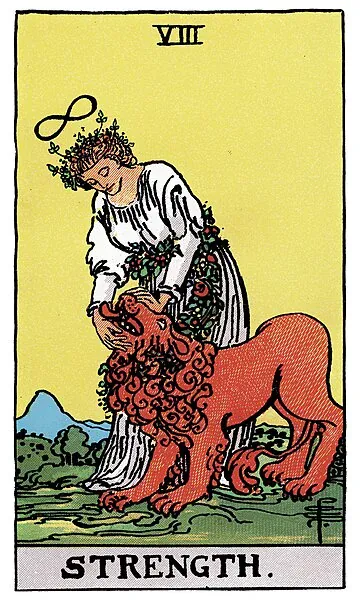
Strength
Strength is inner taming; The Chariot is outer taming. Together they describe a complete victory — the will that has gathered both the inner beast and the outer opposition, riding through the world without flinching and without cruelty. Most seekers do one well and the other badly. The pair is the card of mature force.
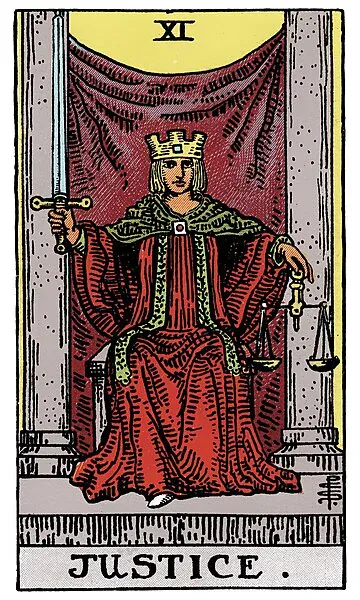
Justice
Direction meeting measure. The chariot has set out; Justice is the court the chariot eventually arrives at. The combination asks whether the route the chariot is taking would survive examination — whether the victory you are riding toward is one you would defend in front of someone holding a sword and a scale. Travel honestly. The destination is a tribunal.
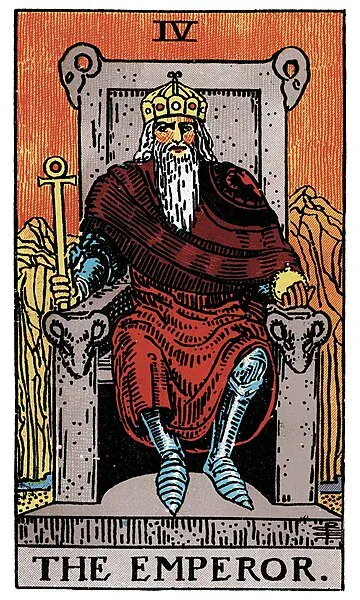
The Emperor
Two cards of authority at different temperatures. The Emperor is static authority — the throne, the established order. The Chariot is mobile authority — the prince in armor, the route the throne sends out into the world. The healthy life uses both: the chariot returns to the throne; the throne sends out the chariot. The pair asks which of the two you have been over-relying on.
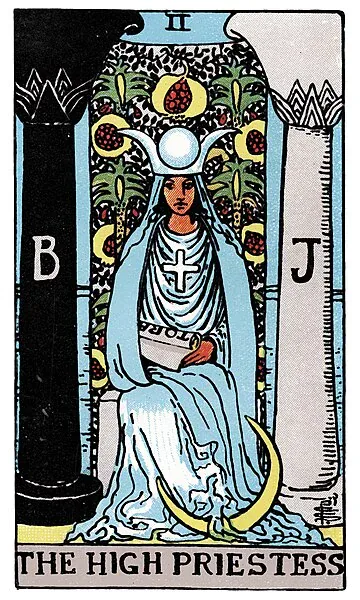
The High Priestess
The crescents on the prince's shoulders find their teacher. The High Priestess is the moon at her seat between the pillars; The Chariot is the same moon strapped to a man's shoulders, riding into the world. The pair signals that the seeker's lunar interior — dreams, intuition, half-known knowing — is finally finding a body that can carry it through the day. Take the priestess's counsel before mounting up.
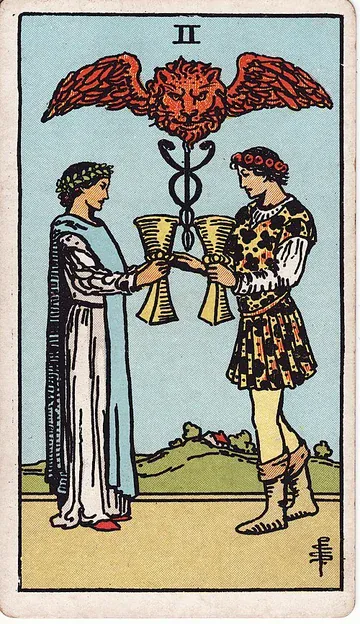
Two of Cups
The Chariot at its decanic source — Cancer water in its first relational form. The Two of Cups is the bond at its origin; The Chariot is what that bond grows into when asked to travel. The pair appears when a love that has been beautifully facing each other is being asked to face the same horizon together. Pour the second cup. Then mount up.
Frequently Asked Questions
The Chariot reversed came up on a decision — do I stop, or steer?
Stop long enough to steer. Reversed, it is most often a soft no, or a yes that arrives without anyone present to receive it. The chariot is rolling without a driver — motion is happening, but the substance of arrival is missing. The yes can return when you halt, listen to the opposing forces in your life, and re-name the destination clearly. Until then, treat the answer as: not on this route, not in this gait.
If nobody is driving, what is moving the chariot?
Momentum, which is not the same as will. The Chariot reversed describes motion without direction: the same prince, the same armor, the same two sphinxes — but the rein has gone slack and the route has been forgotten. It can also mean the sphinxes pulling crosswise (opposing forces in your life warring rather than yoked) or the armor hardening into refusal (protection that has become deafness). Halt. Listen. Re-take the rein.
Are we still going somewhere together, or just still going?
Reversed, The Chariot describes a relationship that has lost its directional thread — partners commuting rather than journeying, or one person performing the language of commitment without genuinely including the other in the route. For singles, it can describe competence-armor so thick that no one can reach the heart underneath. The repair runs through halting, honest conversation, and the willingness to be a person rather than a vehicle.
Do they even know what they feel about me?
Often not clearly. With The Chariot reversed, the warmth is real but the rein is no longer in their hand. They feel something — often more than they let on — and the feeling has not been gathered into a route they can show you. Read their lurches as internal disagreement, not cruelty; read their silence as armor, not absence. The integration runs through small, unarmored moments together rather than through pursuit.
How do I get the rein back into my own hand?
Halt. Long enough for it to come back. Listen to each opposing force in your life in turn rather than clenching the rein against them. Re-name the destination in plain language. Unhitch the armor for one evening this week and let the tide recognize your ankles again. The reversed Chariot integrates through small, humble, uncostumed moves — not through more force, more speed, or another grand reset.