
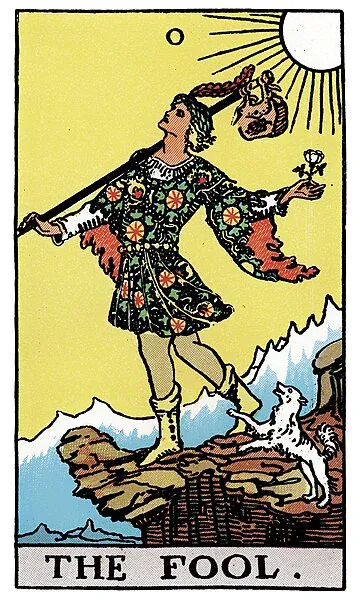
The Fool Reversed · Core Meaning
Turn the card and the cliff sits overhead instead of underfoot: in tarot, The Fool reversed is either the leap made by someone who was not present for it, or the edge admired at length by someone who never stepped off. It has two opposing faces, and beneath them is the same problem: your relationship to the edge has gone somehow absent.
The first face: recklessness. The youth still stands at the cliff, but he no longer looks toward the far blue sky. He looks down at the white rose in his hand, finds the rose beautiful, finds his own posture on the precipice photogenic. He jumps. But what he was thinking about during the jump was not the road — it was how striking he must look while jumping. This is the most common reversed reading: treating The Fool as a costume, not as an action. That kind of "leap" doesn't actually take you anywhere new, because there was no real takeoff — only a performance of takeoff.
The second face: avoidance. The youth still stands at the cliff, knows perfectly well he should jump, the small white dog has begun tugging anxiously at his hem — but he does not move. He tells himself "I'm not ready," "let me consider this a little longer," "I'll do it next month." Each time he says it, "next month" pushes another month back. He has not given up the Fool aesthetic — he wants the image of standing on the edge, not the actual leap. Over time he becomes someone permanently "about to depart," who never quite departs.
Both faces are common in real readings. The first appears more often in young romantic readings — romantic-cinematic leaps that, mid-air, realize they never thought about the landing. The second appears more often in career questions — "I'm planning to write that book / change industries / go back to school," but the "planning" stage has become the entire life. This card asks you to honestly check which face is yours.
There is a third face, and it hides better than either of the others: the person who leaps constantly. New city, new field, new relationship, a new name for what they do — and from outside the motion reads as courage. Puer Aeternus, the eternal youth, is the archetype standing behind this card, and his signature failure is not cowardice. It is departure used as a way of never arriving. Every one of those jumps was sincere. Every one of them also landed somewhere he left before the ground could ask him for anything. The tenth month is where the pattern shows: the month a place stops being interesting and starts being real, which is precisely the month his eye moves to the horizon again. If this is the face in the mirror, the reversed card's instruction runs backwards from the usual one. The brave act available to you is not another leap. It is staying somewhere long enough to be ordinary in it.
Turn the card physically and watch what happens to the picture. The precipice moves overhead, the blue expanse lies underfoot, and the youth hangs off the bottom edge of the world with his feet toward the sky. The small white dog is no longer at his heel — it is above him now, out of reach, still barking. That is the most exact description of this state anyone has managed: the instinct is still speaking, and it has been moved to where you cannot hear it. The rose stays in the hand, unspilled, because the rose was never what went wrong. What is gone is the relation between a body and the ground it stands on. Nothing in the image is destroyed by the turn. Everything in it has been rearranged so that the parts no longer touch.
The Fool's sky turns with him. Uranus upright is sudden liberation, lightning awakening; reversed, it is restless motion without orientation — change for change's sake, novelty for novelty's sake, not where you're leaping but the gesture of leaping. Aleph, the primal breath, reversed becomes "the breath continues, but the person has gone elsewhere" — you're still moving, still choosing, still going forward, but it is no longer you doing the choosing. Some inertia is operating you.
The reversed Fool asks you to return to the edge — this time, with awareness intact. Awareness is not a longer pause for hesitation; awareness is, in the leap, knowing why you are leaping, and in the not-leaping, knowing why you are not. The first protects you from recklessness; the second protects you from permanent avoidance. The moment both protections coexist, The Fool turns upright on its own — same cliff, same youth — but now the light has returned to his face.
The Fool Reversed · Love
The Fool reversed in love describes a particular kind of "absence within the relationship." It might be your absence, it might be theirs, often it's both partners half-present at the same time. There's a relationship on the surface — but inside the relationship are two people whose attention is not on each other. There are no dramatic ruptures. There is the slow, quiet drift that no one is yet calling anything.
For an established partnership, The Fool reversed often shows the "living together but each individually single" condition. Same roof, joint accounts, weekend plans together — and you haven't asked each other "what have you been thinking about lately" in months. The danger of this state is not in conflict but in its quietness. There's no breakup to mourn, only an erosion neither has named. The card doesn't ask for grand repair. It asks for one honest face-to-face this week. Phone off. Sit down. Ask one question you used to ask in the early days. That one move is enough to begin turning reversed back to upright.
For a new relationship, the reversed Fool warns of "all romance, no weight." Both of you are too in love with the lightness of the beginning to do the heavy work that lets a relationship hold up. You haven't really introduced each other to your friends. You haven't really discussed values. You haven't really faced your first conflict. A relationship like this is more brittle than it feels. The card asks you to add some weight. The romance won't disappear; it'll have somewhere to land.
For a single seeker, The Fool reversed is a tender warning: you've been using "I'm free" as a shield against intimacy. You enjoy the lightness of solo life. You don't want to be tied to a specific relationship. You feel you haven't met the right person. All of this can be true — and inside it can be packaged something quieter. Maybe an old wound that hasn't actually healed. Maybe a private "as long as I don't have to hand myself over to anyone, I'm safe." The card doesn't ask you to rush into the next relationship. It asks you to acknowledge that part of why you aren't is that you can't yet — not that the conditions haven't arrived.
A connection with someone whose life is already accounted for elsewhere — a partner at home, a marriage, a household with other people's names inside it — draws The Fool reversed more reliably than almost any other situation. The lightness in it was never chosen; it is structural. Nothing has to be negotiated because nothing can be. No bills, no in-laws, no ordinary Tuesday. What gets called freedom here is an enclosure with the door painted to look like open sky. The card neither moralizes nor assigns blame. It asks the single question the arrangement is built to prevent you from asking: if the obstacle vanished tomorrow, what would you actually want? Asked honestly, a surprising number of people find they would want considerably less than they have been waiting for. That answer is worth more than another six months spent watching someone else's calendar.
For the question of reconciliation after a break, the reversed Fool says reconciliation is possible — but in a very specific shape. It does not happen as "we get back together and this time it'll be better." It happens more often as "we come into each other's lives again from an angle neither of us anticipated." A few years later, an unexpected meeting. A mutual friend re-introducing you. A collaboration outside the romantic frame entirely. The precondition for any of this is that, in the time between, both of you went through growth the other didn't know about and you didn't know about either. If the original cause of the breakup hasn't been worked through, this "re-meeting" will collapse back into the original state quickly. Read the card as: the door isn't locked, but you can't open it with the old key.
For an on-again-off-again entanglement — broken up and reunited many times — The Fool reversed is a mirror. It tells you the root issue isn't "we have problems"; it's "we're both unwilling to truly commit and unwilling to truly let go." That state drains both people. The card doesn't decide for you, but it asks honestly: do you want this person, or do you want the security of "this person is at least there if I can't find someone else"? The latter is more common than people admit.
Two people holding a relationship together through a screen, across time zones, with visits that keep sliding a month at a time — reversed, this card names the risk precisely: you may both be in love with a very well-maintained idea. Distance strips out everything that would test it. Nobody is tired in front of anybody. Neither of you has watched the other handle a delayed train, a sick parent, a week of bad news. The card is not saying the feeling is false; it is saying the feeling is untested, and untested is a different condition from false. So put weight on it on purpose — a week in one place with nothing scheduled, one ordinary disagreement allowed to run its course instead of being deferred until the call ends. Whatever survives boredom in the same room is the part that was real.
For "does this person actually like me," The Fool reversed often means: they like the feeling of being with you, but they haven't yet liked you the person. Subtle, important. The first liking fades with novelty. The second deepens with knowing. Watch how they behave when learning your specific details — your family, your career anxieties, your past, the things you're not good at. Closer or further? That is the most accurate way to tell those two kinds of liking apart.
The Fool Reversed · As Feelings
When The Fool reversed describes how someone feels about you, the standard reading is: they have an unresolved interest in you, but the interest hasn't actually settled on you. They might be using you to solve their own problem, using your warmth to dilute their loneliness, using your attention to prove "I'm still wanted." This sounds harsh; please don't sentence them too quickly. The Fool reversed's "absence" is rarely malicious. Most of the time it's unconscious. They genuinely don't know they aren't fully looking at the actual you.
If they are reserved, the reversed Fool's "feelings" often show as "their mind is somewhere else when you're together." Not impatient — half-present. Maybe unfinished work. Maybe an unresolved former relationship. Maybe an inner thread they themselves haven't named. Don't immediately translate "half-present" into "doesn't care about me" — but also don't translate it into "they're just busy." Sit honestly inside "they aren't fully there yet" and ask: how long can I wait?
If they are outwardly expressive, the reversed Fool's feelings often show as "noisy but not deep." Out together, lots of energy. Lots of compliments to your face. Mentions of you to friends. But when you push the conversation toward something a degree deeper — what they think about the future, a difficulty you're facing — they slip away with a joke or a topic shift. This is the most easily misread reversed-Fool signal: outward warmth gets read as "they really care about me," but the real signal is in the moments they refuse to stay.
For a long partner, The Fool reversed in feelings means they think they already know you — and have stopped truly looking. They aren't unloving; they love the version of you they met three or five years ago. Recent shifts in you, new interests, quiet inner turns — they haven't actually noticed. The card doesn't ask you to blame them. It asks you to give them a chance to "re-see." Tell them about something recent they probably doesn't know. Watch how they respond.
Someone recently out of something large — a divorce, a long relationship, a move across a country, a death in the family — holds a feeling toward you that is genuine and badly timed, and The Fool reversed describes that mismatch better than any other card. They are on the road with the wallet hanging open and seeds spilling out of it, and you have walked into the frame during the stretch where they cannot reliably tell warmth from rescue. The affection is not a performance. It is also not yet addressed to you in particular; it is addressed to the fact that this room is warm. Your decision here is about your own tolerance rather than their character. Can you be near this without needing it to resolve by a certain month? If so, stay and expect nothing. If not, step back now, while stepping back is still cheap.
For a new connection, the reversed Fool's "feelings" often mean "they haven't taken you seriously yet." This isn't necessarily bad faith. They simply haven't filed your name into the inner folder marked "this is a person I might commit time to." You're "one of the interesting people I've recently met," not "the one I'm specifically arranging time for." That can change with deepening contact. It can also stay flat. Don't rush their conclusion — but don't make investments beyond your tolerance during this stage either.
Where someone has simply gone quiet — replies thinning, then a week, then nothing, with no argument anywhere behind it — this card reads the silence without softening it. They have not decided against you. They drifted, and drift requires no decision at all, which is exactly what makes it so difficult to answer. The instinct is to summon them back with a more interesting message, and that is the move that never works: it puts you in the position of supplying presence for two people. Send one plain line that names the situation and asks for nothing. Then stop writing. Whether they come back is now information rather than a performance you are staging, and information is what you came here for.
A small but firm reminder: if you've repeatedly drawn this card asking the same person, and every time it's reversed — that itself is a signal. Reversed cards repeating usually mean you already know the answer and are unwilling to admit it. Take that "unwilling to admit" as the actual subject of study. It's worth more of your attention than the other person's interior is.
The Fool Reversed · Career
The Fool reversed in career readings describes "action without presence" — either charging in the wrong direction, or repeatedly postponing in the right one. Both states leave you neither moving forward nor genuinely resting.
For someone who has been "switching constantly" — two jobs in a year, three new side projects in six months, identities cycling — The Fool reversed is a mirror. You're switching this often partly because you refuse to stay in any role past the "still novel" phase. The first three months in a new role have a bright excitement. Months four to six bring a turning point — not a problem with the specific job, but the natural transition every job has. You've been switching at exactly that turning point. The card asks you to consider, the next time the turning point arrives: walk through it instead of switching again. What is on the other side of that turning is the actual test of fit and the place real growth happens.
For someone trapped in "preparing" — "I'm going to write that book," "I'm going to open that store," "I'm going to do that grad program," "I'm going to move cities" — the reversed Fool's verdict is unambiguous: you've been preparing too long. Continuing to prepare will turn "preparation" into your life's permanent posture, and the actual beginning will never arrive. The card isn't asking you to charge in. It's asking you to halve your preparation timeline. If you're planning six more months, make it three. If you're planning a year, make it half. Then, on that day — ready or not — start.
For founders and early-stage independent practitioners, the reversed Fool warns of the "reckless startup" — the one undertaken to prove yourself, settle a grudge, look brave to others. That kind of beginning has explosive fuel that burns through fast. Examine the motive: if no one knew you were doing this, no Instagram post was possible, no narrative halo could attach — would you still do it? If the answer is still yes, it's real. If the answer is "what would be the point," the launch needs reconsidering.
Six months after a leap that has not worked — the move made, the job taken, the business opened, and the numbers or the mornings saying plainly that it is not landing — this is the card people draw while deciding whether going back counts as failure. It does not. What the reversed Fool asks you to separate is the leap from the landing site. The decision to go can have been sound while the particular place you went is wrong, and those two facts get collapsed nightly into one verdict about your own judgment. Write out what the six months actually taught you, in specifics, as though briefing somebody who has to do it next. If that list runs long, the leap did its work and you are simply choosing the next place to stand. Returning to something is only a retreat when you arrive pretending you never left.
A career that has quietly become the performance of a career is the other shape this takes at work. The announcement gets written before the thing is built. The talk gets delivered about a method used twice. The profile is maintained more attentively than the craft is practiced. This is the vanity face in professional dress, and it is genuinely hard to see from inside, because the audience is real and so is the applause. One test settles it: subtract every observer. If nobody could ever know what you worked on this quarter, what in it would you still want to have made? Whatever survives that subtraction is the career. The rest is the costume the youth was admiring while standing on the ledge.
For a creative practice, The Fool reversed describes "stopping where you shouldn't have, rushing where you shouldn't have." Maybe a project that was just starting to take root, and you jumped to the next one. Maybe a piece that hadn't ripened, and you forced a final push to release it. Maybe a practice you should have continued, but you swapped methods mid-way and undid the prior accumulation. Look back at your last six months. Find the project you abandoned too early. Pick it back up.
For job-seeking, the reversed Fool's most common reading is "you're filtering with the wrong criteria." Maybe you've been filtering by company prestige when what you need is "where can I actually learn." Maybe you've been filtering by salary ceiling when what this stage of your career needs is "an environment where I can fail forward." Maybe by your previous industry when in fact you've already decided internally to move. The card asks you to redefine your filter — pick a dimension you'd never have used before.
For someone hesitating to leave a current job, the reversed Fool typically means "you've already left in your interior, but your body hasn't moved yet." This costs more than committing to either side. You don't get the benefits of staying (depth, long compounding) and you don't get the benefits of leaving (new opportunity, new identity). The card asks for a choice: bring your heart back in, or take your feet out. The most damaging position is having neither.
The Fool Reversed · Money
The Fool reversed in money describes a "drift" between you and your finances. It isn't lack (that's the Five of Pentacles), and it isn't overconsumption (that's the Nine of Cups reversed). It is "I don't really know where the money went, it just sort of slipped past." The account zeroes out every month; you can't quite reconstruct why.
For someone who's said "I should start budgeting" for a long time and never actually did, The Fool reversed has a specific instruction: today, open your bank app and read three months of spending line by line. Not budgeting, not planning — just looking. In the looking, you'll find two or three transactions you cannot account for. Those two or three are exactly what the card is pointing at. You don't need to cut them immediately; you need to re-acquaint yourself with where your relationship to money has been leaking from.
For someone struggling with impulse spending, the root usually isn't "I have no self-control"; it's "I use buying to soothe an emotion I don't want to face." The next time you're about to check out, ask one question: am I currently sitting with an unprocessed emotion? Anxiety? Loneliness? The "do I deserve this" inner argument? If yes, name it first, then decide about the purchase. That single second of recognition saves a great deal of regret.
For a major outlay — a costly device, a big trip, a course enrollment — the reversed Fool asks you to delay two weeks. Not opposing the purchase; offering it a cooling period. Two weeks later, if you still want it, the want is real. If two weeks later you've forgotten why it felt urgent, that was impulse. Most impulse purchases self-resolve in two weeks.
For an investment or speculative move, The Fool reversed leans "no" — particularly for the kind packaged in "a friend recommended it," "this group has been talking about it," "if you miss this it's gone." This card guards against narrative-driven betting. Your money should be tethered to your own research, your own judgment, your own tolerance — not to a chat group's atmosphere.
For sudden financial loss — bad debt, getting scammed, a large bill — the reversed Fool asks you not to sink into "I'm so stupid, I'll never again." That self-punishment sounds like extracting a lesson; in fact it just continues the "money and I are a mess" narrative. Treat the loss as a specific case study: at which step did this break? If I had asked one more question, looked at one more piece of evidence, waited a week — would it be different? Write the lesson down. Place it where you'll see it before your next big decision. That is the real extraction.
Money handed to people you love is where this drift does the most damage. A sibling's loan that never got a date. A friend covered again at dinner, for the fourth year. A parent's bill absorbed in silence twice a season for nine years. None of that is generosity's fault — the absence sits in the fact that nobody ever said out loud what the transfer was. Sort each one into one of two boxes: a gift, which you release entirely and never mention again, or a loan, which gets a figure and a date. Both are honorable. The corrosive third box is the one you are living in now, where you keep a private ledger the other person does not know exists. Say the sentence this week. It is much shorter than the resentment it replaces.
For long-term financial structure, the reversed Fool warns against using "freedom" as an excuse for skipping structure. "I don't like budgets, they feel rigid" / "I prefer to go with the flow" sound Foolish, but they're actually The Fool reversed. The genuine Fool builds the bones, then exercises freedom inside them. The reversed Fool refuses bones, then keeps getting battered by reality. Acknowledge: structure is what gives freedom — not what takes it from you.
The Fool Reversed · Health
In health readings, The Fool reversed describes "the body has been signaling, but you can't hear it" — or have heard it and chosen not to listen. It's not the card of acute crisis (that's the Tower); it's the card of "the body has raised its hand several times and you keep pretending not to see."
For someone who has been putting work ahead of body for a long time, The Fool reversed is a gentle but firm warning. The recent fatigue, the recent sleep disruption, the recent appetite shifts, the recent vague discomfort — you've been postponing them with "once this project ends." The card tells you: that "once it ends" never arrives. The next project picks up immediately. Today, do one health-related thing you've been postponing. Schedule the physical. Reschedule the dental. Get the test. Restock the medication that ran out a month ago. One thing. Doing one thing flips the card a notch toward upright.
For someone who has long ignored body signals, The Fool reversed asks you to rebuild basic awareness. First minute after waking each morning, before the phone: scan the body head to feet. Is the head clear or heavy? Are neck and shoulders loose or tight? Is the stomach empty or muffled? Is the back open or congested? Don't analyze, don't intervene — just know. That minute is "hello" between you and the body. Many chronic problems began signaling months before they became diagnosable; nobody was listening.
For someone managing a chronic condition, the reversed Fool warns of "method-switching too fast." Every new therapy, doctor, food plan, exercise routine you encounter, you try for a week or two and switch. That switching prevents any approach from getting room to work. Pick one path you somewhat trust. Hold to it for three months. Evaluate then. Anything shorter is noise.
There is a chemistry a great many people are running without ever having chosen it: coffee to start the airy system, something in the evening to stop it, a screen in the last hour to occupy the gap between the two. Reversed, The Fool puts that loop under the light without scolding anyone. It is not weakness. It is an improvised attempt to manage a nervous system that is naturally quick and currently carrying no ballast. The loop takes its payment in sleep, though, and sleep is where this body does its repair work. Change one end of it for a fortnight — the evening end, which is easier than people expect — and watch what the mornings do. If the mornings lift, you have learned something about your own wiring that no article was ever going to tell you.
Coming back from an injury or an illness, the reckless face shows up as a body asked to resume at the level it left. The run restarted at the old distance. The week resumed at the old hours. This card is blunt about the arithmetic: a body that has been still does not pick up where the calendar stopped, and the second injury is almost always taken in week three of the return rather than in week one. Halve whatever you had planned for the first two weeks. The small white dog in the picture runs ahead and comes back, ahead and back — that doubling is how a body covers ground safely, and it has never been a lack of ambition.
For the body as a long-term signal system, the reversed Fool often shows up when a physical symptom is speaking on behalf of an emotion you don't want to face. The stomach speaks for anxiety. The neck and shoulders speak for "I'm carrying too much." Insomnia speaks for some unprocessed fear. Read symptoms as letters, not malfunctions. Who is the letter from? What does it say? What address did it come from? Often more revealing than the symptom itself.
For mental health, the reversed Fool describes a particular fatigue: the kind that "looks fine." You can work normally. Socialize normally. Post normally. Inside is a slow, deep depletion. This state gets overlooked easily — there's no breakdown to point to. The card asks you to redefine "fine." "Functioning" is not "fine." "Hasn't broken" is not "well." If your emotional baseline has been measurably lower for half a year, that itself deserves to be seen.
(Being asked to stop calling a low baseline fine is not medical advice. Keep your doctors, take your medication, do your follow-ups. The card is reminding you — the body has been raising its hand. Look back today.)
The Fool Reversed · Spirituality
Spiritually, The Fool reversed describes "spiritual consumerism" — treating seeking as collecting. New courses get enrolled in nonstop; new methods get learned; new teachers get rotated; new concepts get filed. But the actual practice underneath it all has never been kept up.
The card gently calls out a common pattern in modern spirituality: using "books I've read, courses I've taken, teachers I've followed, concepts I've encountered" as proof that "I'm on the path." These are all props. Real practice doesn't need outside proof. It only requires you to spend five minutes alone with yourself each day. No book, no course, no teacher, no experience to be tracked. Just you and you. If those five minutes feel hard, those five minutes are exactly your real work.
For someone densely exploring multiple traditions — meditation, yoga, shamanic work, tea ceremony — The Fool reversed asks you to stop adding for three months. Not abandoning what you have. Just no new additions. In those three months, only use what you've already met. See which ones still nourish you without the boost of novelty. Those are the real ones for you. The others are excitement, not path.
For someone using "spirituality" to dodge reality — "I'm focused on inner work, so I'm not handling that relationship right now," "I'm doing my practice, so I won't face that family conflict," "I'm transforming, so I'm not doing that job" — the reversed Fool is a stern reminder. Real practice doesn't make you avoid reality; it makes you re-enter reality with more clarity. If your practice is making you less able to face life, it isn't practice; it's avoidance wearing the costume of practice.
For someone embedded in a teacher / community / tradition long enough to feel inner exhaustion but not willing to admit it, The Fool reversed asks you to listen to that exhaustion. You don't necessarily have to leave. But allow yourself to ask: is this teacher / community / tradition still helping me grow, or am I continuing because I've invested too much to walk away? Honestly answering takes courage. That courage is exactly the card's invitation.
One more pattern belongs here, and it is gentler than the others. Somebody had a real experience once — an hour on a hillside, a night that rearranged them, a stillness that arrived unasked in the middle of an ordinary week — and every practice since has been an attempt to get back to it. Reversed, The Fool names that trap kindly: the experience was given, and what is given cannot be commissioned. Aleph is a breath, not an event. Chasing the repeat turns practice into a slot machine and converts every unremarkable session into a failure. Stop auditing for its return. Sit the five minutes with no expectation of weather at all. What arrived once was never the point; what is underneath all the unremarkable sessions is.
For form of practice, the reversed Fool returns you to the simplest: breath, walking, silence. One a day. Pick any. Don't have to be long. Don't have to be special. Don't have to "produce results." Aleph's gift was never complex — it's the fact that you're breathing. When your spiritual practice has begun requiring complex tools, complex schedules, complex content, you've stepped outside its core.
One last note: The Fool reversed often shows up when one's "spiritual identity" has become too visible. You've started identifying as "I'm someone who practices," "I'm on the spiritual path." Once that label is up, the actual practice has typically stopped. Take down the label. Become an ordinary person who doesn't quite know what they're working on. That is the card's true grace.
The Fool Reversed · Yes or No
Wait — or a yes whose motive needs re-examining.
The Fool reversed yes or no is rarely a clean "no." More often it gives: the action you're about to take isn't itself wrong, but the manner or motive of the action needs re-examination. Asked "can I do it," the answer is usually "yes." Asked "should I do it now, in this way," the answer is often "wait."
For yes-or-no questions about a relationship, a job, a move, or a decision: the action isn't in a forbidden zone. You won't ruin yourself by doing it. But your current state carries some "absence" — pushed by impulse, pulled by fear, propelled by a pressure you haven't fully examined. Decisions made in this state are exhausting to execute. Postpone a week to a month. Wait for "I have to do this" to become "I am clearly choosing to do this," then act.
For "is this person honest," "is this offer genuine," "will this plan hold," The Fool reversed warns of the "open-seeming surface." They're being expansive, accommodating, unrestrictive — and that lack of restriction may be because they themselves haven't truly committed. Real commitment isn't "anything goes"; it's "this I can do, this I cannot." Ask for specific, verifiable commitments instead of accepting the broad "we'll figure it out."
For timing — "will it happen soon?" — The Fool reversed says yes, but "soon" here means abruptly. It may arrive faster than you expect — fast enough to leave you no time to process. Pre-plan emotionally: if this thing lands next week, am I ready to receive it? If not, the speed becomes panic.
For binary decisions, The Fool reversed asks you to re-read both options. Often when reversed, your two options aren't actually the right ones — you think it's an A-or-B question, but really it's "I haven't yet seen C." Allow yourself two more weeks of observation; let a third option, currently outside your frame, surface.
Asked whether to trust your gut, this card answers with a distinction rather than a verdict. Instinct and urge produce the same sensation in the chest and mean opposite things. Instinct is quiet, arrives early, repeats without escalating, and survives a night's sleep unchanged. Urge is loud, arrives with a deadline attached to it, and weakens noticeably the moment you say the plan out loud to a friend. Both of them are the white dog — except that reversed, the dog has been moved out of earshot, and you are guessing at what it is barking about. Run the two tests before acting on the feeling: one night, and one sentence spoken to somebody who knows you. Whatever passes both is worth following.
Asked whether to walk away now — from the job, the arrangement, the course, the person — the answer here is almost always: not today, and not in this condition. A departure executed in the middle of a bad week has a recognizable signature. It arrives fast, it feels enormous, and it wants an audience. Give it two ordinary weeks. If the wish to go survives a decent Thursday, a full night's sleep, and one pleasant exchange with the very person or place you intend to leave, then the wish is real and this card raises no objection to it. What it objects to is leaving used as a painkiller — the relief from which lasts roughly as long as the packing.
The single hidden hint: sometimes "wait" itself is the card's intended answer. If you've repeatedly drawn The Fool reversed on the same question — that is the message. It's not "this can never happen"; it's "the energy isn't ready to land." Forcing maturity creates an outcome that isn't its true shape.
And when the worthiness question returns in reversed form? The reversed Fool answers: deservingness still isn't the question. The real question is whether you're willing to walk this step with awareness rather than absence.
The Fool Reversed · Advice
The Fool reversed's advice is to halt — but not retreat. It is not the same as "do nothing." The halt it asks for is a particular kind of stop — set the feet down, reopen the eyes, and look once more at the edge you hadn't actually examined.
If there is one specific instruction: take the thing you've been pushing back and forth this week, put it in a drawer for one week. Not abandoning. Just shelving. During that week, don't open the file, don't keep editing it, don't ask another opinion. Open it again at week's end. You'll see it differently — a detail you'd been masking with tension, a mistake you were too close to, a possibility you'd missed. That week of distance loosens the relationship between you and the project.
A second instruction: find the "voice that isn't yours" that has been making your decisions. An elder's expectations. A wound from the past. An "ought" you never questioned. That voice has been pulling your recent decisions off your real center. Sit down with paper and pen and confess: in this matter, the pressure I feel — where is it actually coming from? Write it honestly. Don't show it to anyone. That confession cleans up the relationship between you and the edge.
A third instruction: do an "absence inventory." Lay out what you did this past week chronologically; mark beside each item: was I present when I did this? Many will get a check-no. Look at those check-nos for a pattern — a category of situation, conversation, body position where you don't fully arrive? Those are the interfaces this card asks you to repair.
A fourth instruction, gentler than the rest: forgive yourself for either the recklessness or the avoidance. Both are not moral failings; they are byproducts of a moment of recalibration. Don't crush yourself with "I was too impulsive" or "I was too cowardly" — those labels prolong the reversed state. Treat this as an unsteady period, then re-orient with kindness.
A fifth instruction: do something a "real" Fool would do. Not the romantic-cinematic leap — a small, unperformed, honest action. Send the apology you owe. Cancel the subscription you've stopped using but kept paying for. Open the book you bought and read page ten (not page one). These small actions don't have drama, but they are the concrete steps from "performing The Fool" back to "being The Fool."
Close two of the options you have been keeping open. Not because either one was wrong — because the number itself is doing the damage. Someone holding six live possibilities has arranged a life in which no single one can ever ask anything of them, and the absence this card describes is frequently built out of exactly that arrangement. Name your six honestly: the city you might move to, the person you might call, the field you might retrain into, the project you might revive, the course you might take, the conversation you might have. Cross two off this week — in writing, out loud, with a witness. The relief you feel when you do it is the tell. What remains then receives the attention that was being divided six ways.
Practical landing actions, pick one for today: silence your phone for two hours; walk without earbuds; eat a meal actually tasting it, not scrolling; write down on paper three small things you've been postponing, then do one of them. Any of these five micro-actions is a real path from reversed to upright.
One last, most important note: this card isn't punishing you. It is a mirror. It's helping you see how far you've drifted recently. Once you see, no dramatic repair is required — only put your heart back into your body. Same edge, same youth — the only difference is that this time, he is here.
The Fool Reversed · Combinations
The Fool Reversed + The Tower
The most common "rashness and consequence" pairing. The reversed Fool's leap meets the Tower's sudden collapse — a hasty decision is now triggering a chain of consequences you hadn't predicted. This is not "the world is ending." It is a precise prompt: something you assumed could be done in "leap-now-figure-it-out-later" fashion in fact required a sturdier ground. With Temperance or the Two of Wands also in the spread, repair is possible; with the Devil, you'll need to acknowledge a dependency you hadn't seen.
The Fool Reversed + Seven of Cups
A complicity of fantasy and absence. Seven of Cups is "I imagine futures across many options"; the reversed Fool is "but I've actually walked into none of them." Especially common in career readings — you have ten side projects, ten career pivots, ten skills to learn, all still in the cloud. Pick one. Just one. Run a one-week concrete experiment. Every option in the Seven of Cups only becomes real once a Fool actually leaps into it.
The Fool Reversed + The Moon
Distraction inside the fog. The Moon is unconscious uncertainty; the reversed Fool is action without presence. This pair usually means the basis for your recent decisions sits in interior territory you haven't yet seen clearly. Don't decide right now. Spend a stretch with dream-tracking, mood journals, or some form of inward practice first. In love readings this also appears — saying there is something in this relationship you intuitively know but aren't admitting.
The Fool Reversed + Four of Pentacles
The grip inside the avoidance. Four of Pentacles is "I'm holding what I have"; the reversed Fool is "but I won't take a real step." This appears with seekers who refuse to leave their comfort zone for too long — neither willing to leave nor willing to actually root. The combination produces a "stuck" experience. Acknowledge the stuckness. Then choose a side: actually leave, or actually root. The middle is the most expensive position.
The Fool Reversed + Knight of Cups
The beautiful offer with nothing underneath it. The Knight of Cups rides up holding a cup out at arm's length — the invitation, the declaration, the plan made at one in the morning — and reversed, The Fool is the one who will not be there when the cup has to be carried anywhere. In love readings this pair is frequently the person who says extraordinary things early and then becomes strangely difficult to schedule. The advice is not to refuse the cup. It is to accept it and then wait, without penalty and without announcement, for the second gesture. Anyone can extend a cup once. What this combination tests is the third Tuesday.
The Fool Reversed + Eight of Cups
Departure meeting departure. The Eight of Cups is the figure walking away from a row of cups that were not wrong, only finished; the reversed Fool is the leap taken without anyone inside it. Together they describe a life that has now left several things in the same manner, and the pairing asks you to look at the row rather than the current cup. What did the last three exits have in common — the month they happened, the sentence you told yourself, the person you did not talk to first? An honest departure leaves a cup behind. This combination suggests you have been leaving the same cup repeatedly, in different cities.
The Fool Reversed + Eight of Pentacles
The antidote pairing, and the least glamorous one in the deck. Eight of Pentacles is the bench, the repetition, the eighth identical coin carved better than the seventh; the reversed Fool is the ungrounded leap that keeps the bench empty. Drawn together, they are not a rebuke — they are an instruction with a timescale attached. Choose the one skill you have restarted three times and give it ninety unremarkable days with no announcement of any kind. Presence, for this card, is not a feeling you summon at the edge. It is what accumulates in a person who stayed at one table long enough to get good.
The Fool Reversed + Three of Cups
Self-consumption inside social life. Three of Cups is the bright celebration; the reversed Fool is the ungrounded leap. This pair warns that your recent social activity may be masking interior loneliness. You're loud in public, animated at gatherings, but there's a hollow when you return to one. Allow yourself some unattended evenings. In those evenings, you reconnect to your own center. The Three of Cups is still a good card — it just needs upright Fool's support, not reversed Fool's performance.
Card Combinations

The World
The two ends of the sequence on the same surface — 0 and 21, departure and consummation, leaving and returning. A major cycle is closing while a new one is opening. Don't rush to file the World as 'past' or The Fool as 'future' — in this moment they are two ends of the same beam of light.
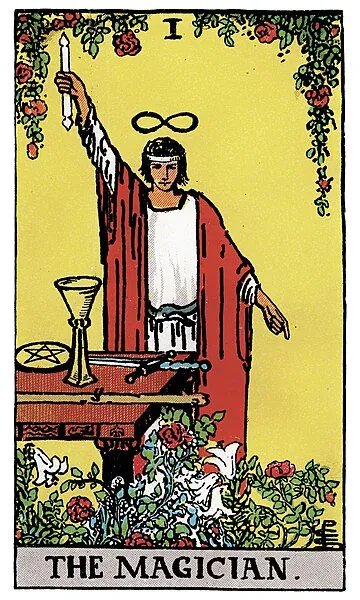
The Magician
The 0 → 1 sequence — unsigned potential meeting its first specific form. The thing you want to do has just met its tools. The tools, contacts, and skills you need are mostly already in place. Admit it. Then take one specific small action that connects The Fool's impulse to the Magician's table.
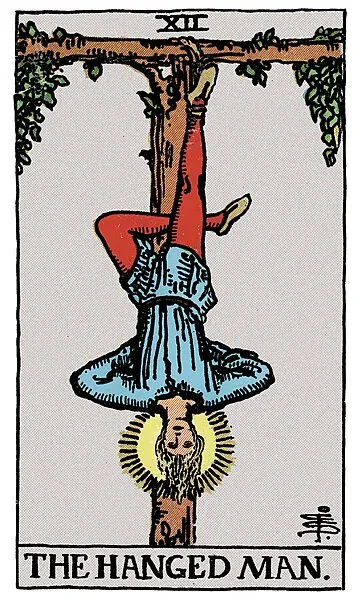
The Hanged Man
Aleph and Mem — two of the three Hebrew mother letters, air and water, breath and descent. 'Step forward' and 'stop and look inward' revealed as two faces of the same act. A leap of the body is needed; immediately after the leap, sit in stillness. Move first, still second — more force than 'think first, act second.'
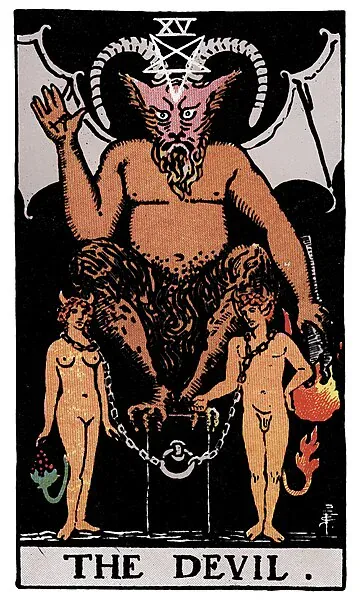
The Devil
The most cautionary pairing. The pure leap beside the Devil's bondage means the leap may be one some hidden chain is pushing you into. Before you leap, ask: is this jump growing from my own root, or is it being pushed by fear, vanity, or someone else's gaze? If the latter, postpone — solve the chain first.
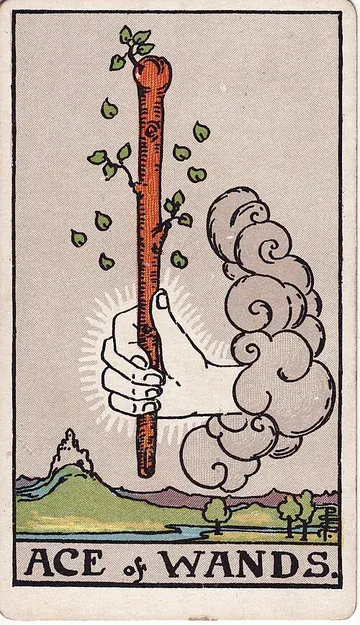
Ace of Wands
Air meets fire — a single bolt of lightning igniting a torch. The deck's purest opening combination. Inner potential has found its specific form to burn in. Stay with the fire, but don't try to plan it. It knows where it wants to burn. Your only job is not to step on it and not to put it into a too-small container.
Frequently Asked Questions
Is The Fool reversed about recklessness, or about never jumping at all?
Both, and telling which one you are in is the reading. The card has two opposing faces — recklessness (jumping without presence) or avoidance (refusing to jump while admiring oneself at the edge). Beneath them is the same problem: your relationship to the edge has gone absent. The card asks you to return to the edge with awareness intact — knowing why you leap when you leap, knowing why you don't when you don't. Both kinds of awareness restored, the card flips upright on its own.
I have already leapt and The Fool came up reversed — should I turn back?
Turning back is rarely what it asks. The card is rarely a clean no — more often a "wait," or a yes whose motive needs re-examining. The action itself isn't in a forbidden zone, but your current state carries some absence: pushed by impulse, pulled by fear, propelled by unexamined pressure. Postpone a week to a month. Wait for "I have to do this" to become "I am clearly choosing to do this," then act.
We are still together but neither of us is really here — is that The Fool reversed?
That is its most common shape: an "absence within the relationship" — your absence, theirs, often both half-present at once. Long partnerships read as "living together but each individually single"; new sparks read as "all romance, no weight"; singles read as "using freedom as a shield against intimacy." The card doesn't ask for grand repair — it asks for one honest face-to-face this week, phone off, asking one question you used to ask in the early days.
Does The Fool reversed mean this person is using me?
Not in the deliberate sense the word usually carries. They have an unresolved interest in you, but it hasn't actually settled on you — you may be soothing their loneliness or proving "I'm still wanted" rather than being seen for yourself. This is rarely malicious; usually unconscious. The most accurate test: watch how they respond when you reveal specific details (family, anxieties, things you're not good at). Closer or further? That distinguishes "liking the feeling of being with you" from "liking you the person."
How do I stop at the edge without losing my nerve completely?
Halt, but don't retreat — the distinction is the whole instruction. Shelve the thing you've been pushing for a week — no editing, no opinions, just distance. Find the voice that isn't yours that's been pulling your decisions off-center. Forgive yourself for either the recklessness or the avoidance — both are recalibration byproducts, not moral failings. Then do something a real Fool would do: small, unperformed, honest. Send the apology. Cancel the subscription. Read page ten of the book you bought.