
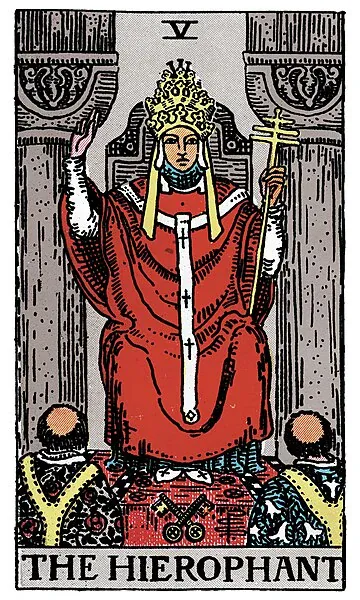
The Hierophant Reversed · Core Meaning
Turned over, the crossed keys at the foot of the throne stop pointing anywhere: The Hierophant reversed in tarot is the form that has lost its fire, or the seeker who has begun to suspect the form was never carrying the fire in the first place. In the upright orientation, the figure between the two stone columns transmits a living teaching — the flame moves cleanly from his hand into the kneeling acolytes' hands. Reversed, the same scene reveals its decay. The triple crown is still on his head, the triple-cross sceptre is still in his fist, the two acolytes are still kneeling, and the keys at the throne's foot are still crossed. But the air in the hall has gone stale. The chant is still being said; the meaning has gone out of the words. The Hierophant reversed tarot card meaning, at its core, is the disclosure that an institution can outlive its own purpose for a long time before anyone notices.
This is the card's central knot: the form persists after the flame has left. Tradition does not announce its own hollowing. The rituals continue. The credentials are still being awarded. The hierarchy still demands the bows. And yet, somewhere, the seeker begins to notice that the words are not landing, the practice is not changing them, the senior figures are not actually wiser than the junior ones, the lineage's claims about itself no longer match the lineage's behavior. The card is not punishing the seeker for noticing. It is naming the noticing as the real beginning of the next stage.
There is a second flavor of the reversed card: the seeker who has tipped into private invention and quietly cut themselves off from any tradition at all. Where the upright card warns against refusing the form, the reversed card sometimes warns against refusing every form on principle — the seeker who has read enough to dismiss every lineage but has not committed to any practice long enough to be changed by it. This is the autodidact who has become a connoisseur of teachings without ever being a student of one, the spiritual sampler who has tasted everything and digested nothing, the entrepreneur who has refused to read the existing books because reading them would feel like submission. The reversed Hierophant names this refusal too. Both extremes — the captive of a hollow form, and the refugee from all form — share the same root: a relationship to lineage that has gone wrong.
Venus in Taurus turns over inside the reversed card. Venus in Taurus upright is patient earth holding the slow growth of a tradition. Reversed, the patience has become inertia; the holding has become hoarding; the slow growth has become a refusal to allow any new growth at all. Earth, ungoverned, becomes mud — the same matter that nourished the seed, now drowning it. The seeker is asked to find the form that is alive and to leave the form that is not, without sliding into the easier escape of dismissing all forms.
Look at the keys again. In the upright card they lie crossed at the throne's foot, waiting to be picked up by whoever the teaching is handed to. Reversed, the picture turns over and the keys are the first thing to slide: a pair of keys nobody has lifted in a long time, polished by the cloth that cleans the floor around them, kept because they have become part of the furniture rather than because anyone still remembers which door they open. That is the exact texture of a hollowed form — the object retained, the use forgotten. The Hebrew letter behind this card is Vav, the nail, the pin that fastens one thing to another. A nail is only good while it is holding two things together. Reversed, it is the nail still driven through the beam after the second board rotted away, or the nail hammered so deep that the wood around it has split. Ask, of whatever tradition the question is pointing at: what two things is this form still fastening? If you cannot name them, the fastening has ended and only the iron is left.
Reversed, The Hierophant asks: which of the rooms you sit in are still teaching you anything? And: which of the traditions you carry forward have you actually examined, versus inherited unconsciously? And: where, in the practices you maintain, is the door someone alive could come through?
The Hierophant Reversed · Love
There is the version of the relationship you describe at a family table, and there is the one you actually live in, and The Hierophant reversed sits in the gap between them: a bond pressed out of shape by external expectation — or, just as often, a bond that has quietly skipped the rite that should have marked the moment. The hierophant reversed love reading is the most precise card in the deck for the relationship that looks correct from the outside and feels wrong from the inside, and equally for the relationship that feels real but has been allowed to drift past the threshold where adult formalization belonged.
For an existing partnership, the reversed card often indicates that the form is fighting the love rather than holding it. The marriage that has become a performance for the families. The household whose schedule is organized around extended-family expectations the two of you no longer share. The religious or cultural rite that one of you cares about and the other privately does not. The compromise has been working on the surface. Underneath, one or both of you has been quietly leaking. The card asks for an honest conversation about which forms in your shared life still serve the love and which ones have begun to suffocate it. The point is not to abandon all forms — the upright Hierophant remains the deeper truth — but to identify the specific structures that have hollowed and either renew them or release them.
For someone in a new connection, the reversed Hierophant can describe a partner who is enthusiastic about the relationship privately and resistant to any formal step that would make it visible to their family or community. They will not introduce you. They will not put up a photograph. They will not name the relationship to their parents, their religious community, the friends who know them best. None of this is necessarily fatal — there are good reasons people protect new connections — but the reversed card asks you to look honestly at how long this has been going on. If it has been a few weeks, normal. If it has been a year, the reversal is reading a structural unwillingness rather than an early-stage caution.
Asked point-blank whether they love you, the inverted Hierophant gives an answer that has to be taken apart slowly rather than read off the surface. They feel something — but the feeling has either not yet survived the test of being seen by their existing structure (family, community, faith), or has survived only as a private exception to that structure. Some partners can hold an exception forever; most cannot. The card asks whether the exception is being maintained because the relationship is genuinely incompatible with their public life, or because they are afraid to let what they feel for you reorganize the structure that was already in place when you arrived. The first is sad. The second is workable, but only if they are willing to do the work.
For the question of reconciliation after a break, the reversed Hierophant offers a soft no, or a partial yes that comes with a warning. Returning to the relationship would mean re-entering the same form that already failed once. The card asks whether the form itself was the problem, or whether the form was fine and the two of you simply did not know how to stand inside it. If the form was the problem — too much external expectation, too rigid a script for what the relationship was supposed to be — then a reconciliation has to invent a new shape. Returning to the same shape will produce the same result. The Hierophant reversed in reconciliation questions is rarely a clean yes; it is usually a "yes if you can build a different rite this time."
For the single seeker, the reversed card is one of the deck's gentler warnings about the private template. You may have, without quite naming it, accumulated a long list of conditions a partner must meet — conditions that draw heavily on a particular cultural script, a particular family structure, a particular romantic ideal you absorbed from somewhere you can no longer trace. The reversed Hierophant asks you to examine the template. Some of its conditions are genuinely yours; many of them were inherited. The conditions that were inherited may be ruling out partners who are actually right for you in the form your life is now, rather than the form your nineteen-year-old self imagined. Examine. Release the inherited conditions you no longer want to defend. Make room for the love that does not match the template.
Love after a wound sits differently under the reversed card than under the upright one. If the relationship you are recovering from was held together by a form — a marriage, a congregation, a family arrangement, a circle of couples who all had dinner on the same night — then the ending took the form with it, and part of what you are grieving is not the person at all but the architecture of the week. The reversed Hierophant is precise about this double loss and about the confusion it causes. People in this position often mistake the ache for the structure as unfinished love and go back, only to discover that what they missed was Sunday, not the marriage. Separate the two. Grieve the form on its own terms — rebuild the calendar, find the new table to sit at, put something into the hour the old rite used to fill — and then look at what is left of the feeling for the person once it is no longer being amplified by an empty schedule.
There is a version of this card that arrives in the middle of a wedding. The date is booked, two families are negotiating the guest list, someone's grandmother has strong views about the ceremony, and the two people at the center of it have not had an unmanaged conversation in eleven weeks. Reversed, the Hierophant reads the rite that has begun eating the thing it was built to honor. A form is meant to carry the love out into public view, not to stand in for it while the love waits in a side room. The card asks for one evening with the planning closed — no venue, no seating chart, no relatives — to check that the two of you still recognize each other underneath the production. Then it asks which parts of the ceremony either of you actually wants, and which are being staged for an audience whose approval you stopped needing years ago. Keep the first without apology. Negotiate hard about the second.
The hierophant reversed as feelings (in love, specifically) often describes the partner whose feelings exist but cannot find the public form. They love you in private. They withhold the public expression of the love because the public expression would require them to confront a structure they are not yet ready to revise. This is not always their fault; sometimes the structure is genuinely punishing. But it is, structurally, the position the reversed card most precisely names. Read it not as the absence of love but as love without the rite — and notice that love without rite, over time, tends to thin.
The Hierophant Reversed · As Feelings
When The Hierophant reversed appears to describe how someone feels about you, the warmth is real but the form is missing. The hierophant reversed as feelings reading is the precise card for the partner who feels something genuine and has not figured out — or refuses to figure out — how to place that feeling inside their public life. They feel committed in the private sense; they have not yet committed in the form that would change anything in the world.
This is the card of the lover whose feelings live entirely in the interior. They are not pretending. The feelings are not fake. But the feelings have stayed under the throne, never raised to the hand of blessing where they could be witnessed. Raising them requires a kind of formal act — a conversation with their family, a public introduction, a step that would make the feelings consequential — and the reversed card describes a moment when they cannot or will not perform that formal act.
If they are reserved, the reversed Hierophant in feelings can mean ritualized affection that has stopped corresponding to anything alive. They observe the date. They send the message at the customary moment. They perform the customary gestures. But the gestures have become performances that no longer carry the weight they used to. A rite that has outlived its meaning is a painful thing to say out loud about someone who still shows up. Not all maintained forms are alive forms. Some forms continue out of habit long after the feeling that originally animated them has thinned. Watch for the partner who keeps the rituals beautifully and seems to have stopped, somewhere, meaning them.
If they are demonstrative, the reversed card warns of public performance that is not matched by private substance. They will say the right things to the family. They will perform the right gestures at the right occasions. But in the room, alone with you, the depth of conversation does not match the public statement. They are using the form as cover, and the cover is becoming more important to them than what is supposed to be inside it. The hierophant reversed in feelings names this gap with unusual precision.
For a partner you have been with a long time, the reversed Hierophant in feelings can mean settled commitment that has stopped being curious about who you are now. They love you in the form they originally chose to love you in, and they have not updated the form to match the person you have become over years. They observe the anniversaries. They show up to the family events. They have not asked you a real new question in three years. The card asks for re-noticing, not new ritual. The same person is in front of them. Different person now.
For a new connection, the reversed Hierophant in feelings can describe someone whose family or culture has strong views about what you should be to them, and who has not figured out how to honor what they feel for you against the pressure of the existing form. Sometimes this resolves. Sometimes it does not. The card is not delivering a verdict; it is naming a structural complication. Their feelings for you are real. The form that should be carrying the feelings is in the way. The work, if there is work, is theirs — to either rebuild the form or to step out of it. You cannot do this for them, and you should not be the one carrying the cost of their ambivalence.
Some people's feelings arrive as instruction, and the reversed Hierophant catches the moment that stops being generous. They advise you. They correct your grammar, your career plan, the way you sit at the dinner. Underneath the correcting there is real care — this is how they were taught to love, by a parent or a teacher who said "here is how it is done" and meant "I want you to be all right." Reversed, the care has thinned while the correcting has continued under its own momentum. You are being taught by someone who has stopped noticing that you already know. Whether the position is worth staying in comes down to one test: ask them a question about themselves. If the person underneath the instruction comes out to meet you, the form still has fire in it. If the answer arrives as another lesson, the feeling has been replaced by the habit of having had it.
When the query is about someone you are no longer close to — an ex, a parent you barely speak with, the friend the falling-out took — the reversed card describes affection that has retreated into the one channel the relationship still keeps open. The birthday message, arriving on time every year. The card at the funeral. The polite question relayed through a sibling. This is not nothing; a form kept up for a decade with no obligation to keep it is a form somebody is choosing. But it is also the whole of what they can currently offer, and reading it as a door swinging open usually ends in disappointment. Take the channel for what it is: evidence that the feeling survived, delivered in the only shape that does not require either of you to say anything you are not ready to say.
Read the hierophant reversed as feelings as warmth held inside an outdated form, with the door not yet opened. The body is not braced. The heart has decided. The setting in which the deciding can be voiced has not been built — and may never be, if the partner is not willing to do the work the form requires.
The Hierophant Reversed · Career
The building is still there; the thing it was built to hold has moved out. The Hierophant reversed describes that institution, and equally the practitioner who has quietly left the tradition without a destination. The hierophant reversed career reading is the precise card for the moment when the credentialing system, the company culture, the professional guild, or the hierarchy you have been operating inside reveals itself as no longer carrying the substance it claims.
For someone considering whether to stay in a current role, the reversed card warns of the institution-shaped cage. The job has the title. The company has the brand. The credentials are what you wanted when you started. And yet the work itself has stopped teaching you anything; the seniors are no longer better than the juniors; the practices the institution claims to embody are no longer being practiced inside its walls. This is hard to admit — leaving a credentialed seat is socially expensive — but the card asks for the honest read. If the form has hollowed and you can revive it, do so. If you cannot, the integrity move is to leave for somewhere the form is alive, even if the new place has less prestige.
For someone considering a new role, the reversed Hierophant indicates that the credentials of the new position may not match its substance. Read carefully. Talk to the people who have actually worked there, not the people who are recruiting you. Ask what the daily work looks like rather than what the title says. The reversed card warns of the seductive prestige offer — the role at the famous firm, the appointment at the famous institution — that turns out, on the inside, to be a hollow chair the institution has been propping up because the institution itself no longer knows what it is for. Better to take a smaller seat in a place still doing real work than a larger seat in a place running on its reputation.
For founders and entrepreneurs, the reversed Hierophant warns against the mirror trap: building a company that is replicating the hollow forms of the institutions you were trying to leave. The company that has the right org chart, the right meetings, the right OKRs, the right HR policies — and that has, somewhere along the way, stopped doing anything anyone outside the company would call valuable work. The early-stage founder is most vulnerable to this. They want to seem legitimate; they imitate the apparatus of legitimate companies; they end up with the apparatus and not the substance. The card asks for ruthless honesty about which of your imported forms are alive and which are cargo cult.
For freelancers and independent practitioners, the reversed card describes the season of either (a) finally needing to apprentice yourself to a real tradition rather than continuing as an autodidact, or (b) quietly leaving a tradition you outgrew that has become a constraint rather than a teacher. Both are common. The card asks which is your situation. Most autodidacts who have been at it for a decade are ready for the apprenticeship they refused at twenty-five; many practitioners who entered a tradition at twenty-five are ready, at forty, to leave it for something more capacious. Be honest about which direction the reversal is pointing in your case.
For a creative practice, the reversed Hierophant can describe the moment when the school, the workshop, the residency, the conservatory — the formal training apparatus you submitted yourself to — has finished its work and is now beginning to constrain you. The card honors the training. It also names the moment to leave it. Most artists outgrow their formal training at some point; the ones whose late work is most distinctive are usually the ones who left the school when the school's work in them was finished, rather than continuing to live as a permanent disciple of a tradition that was supposed to be a launch.
Turn the card toward the person who is already senior, because this is where it stings. The reversed Hierophant is not only about the hollow institution you are sitting inside; it is also about the possibility that you have become the hollow part of it. The manager whose feedback has been the same four sentences for three years. The principal investigator who has not learned anything a junior could have taught him. The instructor whose course notes were last revised when the field looked different. This happens without malice and almost always without noticing, because seniority insulates a person from the correction that would tell them. The card's test is simple and unpleasant: name the last thing you changed your mind about because someone junior to you was right. If the answer takes more than a few seconds to find, the seat has been carrying you rather than the other way around, and the acolytes kneeling in front of you have already worked that out.
Job searches under this card run straight into the credential gate. The posting asks for a degree you do not have, for years in a title you held under another name, for a certification whose only real function is to prove you paid for it. The reversed Hierophant names the gate accurately — much of it is form without substance, screening for compliance rather than for capability — and then refuses to let the observation become an excuse. The gate is hollow, and the gate is still there. The working response is to go around it through a person rather than through the front form: the practitioner who can vouch for what you can actually do, the small employer who tests instead of screening, the body of work that makes the credential question awkward to ask out loud. Spend your effort on the human route. Arguing with the gate is a year you do not get back.
For a hierophant reversed advice question about career specifically — what should I do, where should I move, how should I navigate this — the consolidated reading is: keep what is alive, release what is hollow, refuse to perform legitimacy you do not feel. The reversed card returns to upright when the form you are inside is one you would willingly enter again today, knowing what you now know. If it is not, the integrity move is to leave it, even if the leaving costs you a year.
The Hierophant Reversed · Money
The pension, the mortgage, the salaried post with the respectable title — The Hierophant reversed asks which of these is still a structure and which has become a container with no handle on the inside. It describes the conventional financial form that has turned into a trap, and equally the seeker who has quietly stepped outside conventional finance without a coherent alternative. The card is not anti-tradition; it warns against the two opposite errors: blind obedience to forms that no longer serve, and reflexive rejection of forms that still might.
For someone managing day-to-day finances, the reversed Hierophant asks whether the financial form you inherited from your family or your culture is still serving you. The home-ownership-at-all-costs imperative; the belief that one job for forty years is the path; the rule that you must support every relative who asks; the avoidance of any conversation about money because in your family money was not discussed. These forms were not invented by you. The reversed card asks you to examine which of them are working in your actual life and which are bleeding you slowly. Some of what you inherited will turn out to be wisdom. Some will turn out to be the obsolete furniture of an earlier century, and keeping it is what is keeping you stuck.
For someone in financial recovery, the reversed Hierophant can describe the moment when the conventional repayment plan, the conventional consolidation strategy, the conventional advice you have been following has stopped working — and you are tempted to throw all of it overboard for an unconventional alternative. The card asks for the harder middle. Most conventional financial wisdom is correct. The cases where it does not apply are usually cases where a careful adaptation, not a wholesale rejection, is what works. Find the practitioner who knows the conventional wisdom well enough to know when to bend it.
For a question about a major financial decision, the reversed Hierophant warns of the bespoke vehicle, the elaborate structure, the unusual product, the unconventional opportunity that promises to outperform the standard. Most of these promise more than they deliver. The financial industry's history is largely a history of clever people convincing other people that the standard, boring instruments are insufficient and that some new product is the answer. The reversed card asks for skepticism here, more than upright did. If the offered structure is unusual, ask what it is doing for the person offering it. The answer is rarely "nothing."
For investments, gambles, or speculative moves, the reversed Hierophant can warn of cult dynamics. The investment community organized around a single charismatic figure. The asset class whose adherents speak of skeptics with religious contempt. The trading floor that has begun to function as a cult. The card asks you to step outside the room and read the room from the outside. If the only people defending a financial position are people whose identity has become wrapped up in the position, the position has become a tradition that lost its fire. Leave before the form collapses.
For someone over-indexed on financial conventionality — the saver who has hoarded every dollar into the most conservative possible vehicles, who has refused every reasonable risk, who has become so afraid of breaking the form that life has been deferred for decades — the reversed card asks for the gentle break. Take the trip. Make the donation. Help the family member. Try the small risk on something you have been wanting to try. The form was meant to be a servant. When it has become the master, the reversed card is the figure asking you to remember why you were saving in the first place.
For windfall and inheritance, the reversed Hierophant can warn against the windfall that arrives wrapped in expectation. The money has come with a script — what your family expects you to do with it, what your community expects, what tradition would prescribe. Some of that script may be wisdom. Some may be obligation that has nothing to do with the actual life you want to build with the money. The card asks for one season of honest examination before the script gets executed. The money is not yet committed. Examine the form before you slot the money into it.
The Hierophant Reversed · Health
A protocol followed for eight years without anyone asking whether it still fits the body it was written for — that is one face of The Hierophant reversed in health. The other is the seeker who has rejected all conventional practice in favor of an idiosyncratic regimen that is quietly failing them. The card honors the body's wisdom; it warns against both the over-medicalized life and the under-medicalized one.
For someone in basically good health asking about maintenance, the reversed Hierophant warns against the tradition that has hollowed. The annual physical that has become rote. The exercise routine that has stopped serving the body it was originally designed for, ten years ago. The diet that was right for who you were at thirty and is no longer right for who you are at forty-five. The forms that helped you once may need to be revised, not abandoned, but actually revised, and the reversed card is the moment of honest revision.
For someone managing chronic conditions, the reversed Hierophant can describe the moment when the medical relationship itself has become hollow — the doctor you have seen for years who no longer knows you, the specialist whose protocol has not been updated since you started seeing them, the practice that schedules you efficiently but no longer thinks about you. The card asks whether your medical care still includes someone who is actually thinking about your case, or whether the form of medical care has continued without the substance. If the substance has gone, find the practitioner where it has not. Your body is not served by maintaining a relationship with a medical form that has stopped engaging.
For someone managing alcohol, recreational substance use, screen use, or comfort behaviors that began as occasional pleasures and have become daily routines, the reversed card is one of the deck's clearer mirrors about the form-becoming-cage dynamic. The behavior has become a private rite. The rite was supposed to relax you, to comfort you, to mark a moment. Now the rite happens whether or not there is a moment to mark. The form has eaten the meaning. The card asks for the harder honesty: this rite was supposed to serve you, and somewhere along the way you started serving it. The path back is rarely abolition; it is usually re-entering the form deliberately enough that you can see it again. Take the break. Notice what surfaces.
For chronic conditions where self-management has slipped, the reversed Hierophant describes the season when the discipline has loosened and the loosening has felt like rest. Some of the loosening was healthy; the original protocol was probably more rigid than the body required. Some of it was avoidance, and the avoidance is now starting to cost. The card asks for the honest inventory and the modest re-entry. Not the heroic perfectionist re-entry that crashes again in three weeks. The modest, sustainable re-entry that respects how much real practice the body can carry now.
For mental health, the reversed Hierophant describes the moment when the therapy has become rote, or when you have left therapy without finding any equivalent practice to hold the work. Both happen. The therapy that has continued for years without movement is, eventually, a hollow form; the unsupported life that has left therapy and adopted nothing in its place is, equally, a hollow form. The card asks for the courageous middle: change the form deliberately, do not abandon the form by drift. Find the new therapist. Try the modality you have been resisting. Add the practice that complements the therapy. Or, if therapy is genuinely finished, build the structure that lets the work that therapy began continue without it. Which modality belongs in your life is for you and your clinicians to settle; the Hierophant offers no medical advice. The card asks for honesty about which of your current health forms is alive.
The Hierophant Reversed · Spirituality
Between a tradition that no longer feeds and a freedom that has not yet found a form, there is a narrow corridor, and The Hierophant reversed is the seeker standing in it. Both ends are real positions. Many serious spiritual lives pass through this reversal at some point, and the card is not punishing the seeker for being here. It is naming the position so the seeker can see it clearly enough to move through it.
This is the spiritual seeker who has noticed that the tradition they entered earnestly in their twenties no longer corresponds to what they now know. The community is still gathered. The texts are still being read. The practices are still being performed. And yet, somewhere, the seeker has begun to suspect that the tradition has been operating on assumptions that no longer hold for them — about the nature of authority, about the place of women, about the relationship to other traditions, about what is allowed to be questioned and what must be accepted. The reversed card honors the noticing. The honest answer is rarely either "stay and pretend you do not notice" or "leave overnight and burn the bridge." The card asks for the slow, careful work of distinguishing what in the tradition is genuinely alive (and worth keeping) from what has decayed (and needs to be left behind). Most mature seekers end up carrying forward fragments of the traditions they leave; the reversed Hierophant is the figure who teaches how to do this without bitterness.
For someone in active spiritual practice, the reversed Hierophant can describe a plateau that has hardened into a stop. The practice is still being done. The breakthroughs have ended. The teachings have become repetitive. The community has become familiar in a way that no longer challenges. The card invites a careful reset — a new teacher inside the same tradition if one is available, a new tradition if not, a serious retreat, a sabbatical from the practice that may, paradoxically, return you to the practice with fresh eyes. Movement is required. Standing still in the form that has stopped working is what the reversed card is precisely warning against.
For someone exploring belief, the reversed card warns against spiritual consumerism and the autodidact identity that has hardened into a stance. The seeker who has spent fifteen years tasting traditions without ever submitting to one has, at this stage, accumulated enormous breadth and very little depth. The reversed Hierophant is gentle about this — most contemporary seekers fall into this pattern — but the card eventually asks for the commitment that depth requires. Pick the tradition. Stay with it long enough to be changed. The connoisseur identity is comfortable. It also produces, in the end, very thin people.
For someone who has left a tradition and is now in the wilderness, the reversed Hierophant can describe the season of reconstruction. You are not yet in a new form, and the lack of form is beginning to cost you. Improvised spiritual life works for a while; it does not, in most cases, sustain a long life. The card asks you to begin the patient construction of your own rite, even knowing that it will be imperfect, even knowing that it will draw on traditions that were not yours originally. Build the daily practice. Build the seasonal observance. Build the markers of life-stage transitions. The form does not have to be inherited; it does have to be chosen and kept. A self-built rite, kept faithfully, will eventually become a tradition for someone who comes after you.
For questions about path, the reversed Hierophant asks: which of your current practices are alive, and which have you been performing because you did not know how to stop? Stop the practices that have died. Keep, deliberately and with renewed attention, the practices that still teach. Add something new. The reversed card returns to upright when the seeker has rebuilt a form that has fire in it again.
The Hierophant Reversed · Yes or No
No in the form you are currently holding — possibly yes in a form you have not named yet.
Reversed, this card almost never delivers a flat refusal. It is more often the answer that the conventional door is not the right door this time, or that the door you were about to walk through is no longer connected to anything alive on the other side. The reversed Hierophant is not against tradition; it is against the specific tradition the question is pointing at, which has decayed in ways the upright card would not endorse.
For yes-or-no questions about a relationship, a job, a move, a decision: the answer is generally to refuse the conventional path here and look for the alternative form. No, do not take the credentialed seat at the institution that has hollowed; yes to the smaller, less prestigious seat at the place still doing real work. No, do not enter the relationship in the form your family expects; yes, possibly, if you can build a different form together. No, do not make the financial decision the standard playbook recommends here; yes, after you have examined whether the standard playbook still applies to your particular situation.
The card is not punishing you for asking. It is being precise about which form is alive and which is not. The hierophant reversed in yes-or-no questions distinguishes between no, this conventional path is wrong and yes, but only if you build a custom path that respects the wisdom of the conventional one without imitating its now-decayed form.
For questions about whether someone is being honest, whether an offer is genuine, whether a plan will hold, the reversed card warns of the convincing surface. The credentials are real. The institution is recognized. The contract is written. And yet the substance is not what the surface advertises. The reversed Hierophant asks you to look past the form to the people. Who are they actually? What is their track record? Have they done what they say they will do, in past instances, with people similar to you? The form should not substitute for the diligence; the reversed card precisely names the moment when seekers let credentialed surfaces serve as a substitute for examination.
Asked how soon by the usual calendar, the reversed card suggests the conventional timeline does not apply here. Either the situation will resolve faster than tradition would predict (because the tradition is no longer slowing it) or slower (because the form you are operating inside cannot deliver on the schedule it claims). Read which way the spread is leaning. The card refuses to confirm the standard expected timeline.
For binary decisions — should I act, should I wait — the reversed card asks for a third option. The act-or-wait binary often comes from inside a form that has predetermined that those are the only two options. The reversed Hierophant asks: who decided those were the only two options? Are there other options the form has rendered invisible? Often there are. The card asks for one round of reframing before committing to either side of the binary.
When the worthiness question is being asked inside the institution itself: The reversed card answers yes — and asks why you are asking the question inside a form whose authority you no longer believe in. Drop the form. The deserving question, asked outside a hollow tradition, is usually a different question — and the answer, asked outside that tradition, is usually clearer.
The Hierophant Reversed · Advice
Take an inventory before you take an exit. Interrogate the forms you are standing inside — the job title, the weekly service, the family rule about money — rather than abandoning them all in a single dramatic gesture. To examine which of them are still alive and which have decayed, and to act on the examination with patience and care. The card is the patron of the slow exit and the deliberate reform, not the panicked rebellion.
If there is one specific instruction the reversed card offers, it is to leave one form that has hollowed and stay in it long enough to see the leaving through. Not all forms at once. One. The membership you have been quietly outgrowing. The ritual you keep performing without meaning. The credential you keep paying for that no longer represents anything you are actually doing. The relationship to the institution that has stopped serving you. Pick one. Begin the careful exit. Notice what is freed, and what new responsibility arrives in the freedom.
A second instruction: build one rite that is yours. The reversed card describes the seeker stranded between hollow inheritance and unbuilt selfhood. The path forward is the slow construction of the practices, observances, and small rules that will hold your life together once the inherited forms are gone. The morning ritual you choose. The evening practice you commit to. The weekly observance you keep. The yearly retreat you take. These do not have to be invented from nothing; they can borrow from many traditions. They have to be kept, and they have to be yours.
A third instruction: re-enter one tradition more carefully. The reversed card sometimes warns the seeker who has rejected too quickly. There is a tradition you walked away from in your twenties or thirties because it failed you in some specific, often legitimate way — and you may be ready, now, to re-enter it with adult eyes, taking what is still alive in it and leaving the rest. The advice is not to return to the tradition exactly as you left it. It is to revisit, examine, and decide as the adult you have become whether some part of what you rejected was actually wisdom you were not yet ready to receive.
A fourth instruction, gentler than the others: forgive the lineage. The reversed Hierophant carries some bitterness, especially in seekers who feel they were misled by a tradition or a teacher. The bitterness is understandable. It is also corrosive when it lasts too long. The advice is not to pretend the harm did not happen. It is to find a way to honor what was useful in what you received and release the rest, so the bitterness does not become a permanent feature of your spiritual character. The seeker locked in lifelong contempt of a former tradition is, in some ways, more bound by it than the still-faithful believer.
Practical landing actions for the day this card appears: identify one form in your life that you have been performing without meaning, and decide whether to revive it or release it. Talk to one person who has left the tradition you are in, and one who has stayed; listen carefully to both. Read one book by a tradition you walked away from, with adult eyes. Begin the construction of one daily practice that is yours and only yours, not inherited from anyone, not performed for anyone. Light the candle in the form your interior chooses, not the form your family expects.
The fifth and most important instruction: stop pretending the choice is binary. The reversed Hierophant most often appears to seekers who have set up a false either/or — either I obey this hollow tradition entirely, or I reject all tradition entirely. The card asks for the harder middle. Most mature spiritual lives are made of selectively kept inheritances and slowly built personal practices. Both. Neither alone. The reversed card returns to upright when the seeker has begun to live inside a form that is alive again, even if it is a form they had to rebuild from pieces.
The Hierophant Reversed · Card Combinations
The reversed Hierophant's combinations sharpen the diagnosis. The same five neighbors that illuminate the upright card disclose, in reversed configuration, the specific way the form has decayed — and what the seeker is being asked to keep and what to release. The pairings below are read with the Hierophant reversed; the second card may be upright or reversed depending on the spread, but the reversal of the Hierophant is the load-bearing element.
Hierophant Reversed + The Emperor
The two figures of established authority, both showing strain. When the Hierophant reversed sits next to The Emperor, the question is whether the institution itself — civic, professional, familial — is still legitimate, or whether you have been performing loyalty to a structure whose actual authority has dissolved. Read which Emperor is in the spread. Upright Emperor with reversed Hierophant suggests: the secular structure still works, but its sacred dimension has thinned; consider what gives the structure meaning beyond function. Reversed Emperor with reversed Hierophant suggests: both registers of authority have failed; the integrity move is to step out of the structure entirely and rebuild on different ground.
Hierophant Reversed + The Lovers
A common pairing in love spreads. The form is failing the choice. Either the relationship's surrounding tradition (family, community, faith) is pressing the bond out of shape, or the bond was entered inside a form that no longer fits the people who were married inside it. The reversed Hierophant + Lovers combination is rarely a sentence on the love itself; it is a sentence on the form the love has been asked to live inside. The card pair asks the partners to either rebuild the form together or release the love from a form that is suffocating it. The harder middle — staying in the form and reforming it from inside — is sometimes possible and almost always preferable when both parties are willing.
Hierophant Reversed + The High Priestess
The exoteric teacher reversed, the esoteric teacher upright. This pairing usually arrives when the seeker is being asked to leave the spoken tradition and trust the silent one. Not forever. For a season. The institution has stopped teaching; the silent practice still has something to give. The pair sometimes appears at the moment a seeker leaves a religious community for a long stretch of solitary practice, or at the moment a student leaves a formal school for the slower, harder work of self-instruction guided by intuition. The reversed Hierophant warns against the premature return to the exoteric form. Stay in the High Priestess's room until something has actually changed.
Hierophant Reversed + The Hermit
The institutional teacher reversed, the solitary teacher upright. The card pair almost always arrives at a moment when the seeker has left or is about to leave the formal tradition and is being asked to trust the long, slow walk alone with the lamp. This is often a frightening transition — the institution provided community, identity, schedule, language — and the Hermit phase that follows is by definition lonelier. The combination is reassuring even when difficult: the lamp is real, the path is real, the solitary walk is part of the full curriculum, not a mistake. The reversed Hierophant gives the seeker permission to leave; the Hermit shows the road that opens after the leaving.
Hierophant Reversed + The Devil
The dark twin of the upright Hierophant + Devil pairing. Where the upright pair asks whether the form has begun to function as a chain, the reversed combination is the moment of recognition: yes, the form has become bondage, and the seeker is being asked to break it. The pairing arrives at the moment when a seeker realizes the tradition they have been inside (religious, professional, familial) has been operating the way an addiction operates — keeping them attached through fear rather than through life. The card pair is not without warning: the rebellion against a hollow tradition can become its own cult, and the Devil reversed at the end of this sequence is sometimes more dangerous than the Hierophant reversed at the start. Leave the bondage; do not slide into a new bondage that calls itself freedom. The reversed Hierophant returns to upright through the construction of a form that is freely chosen, openly examined, and willingly kept.
Card Combinations
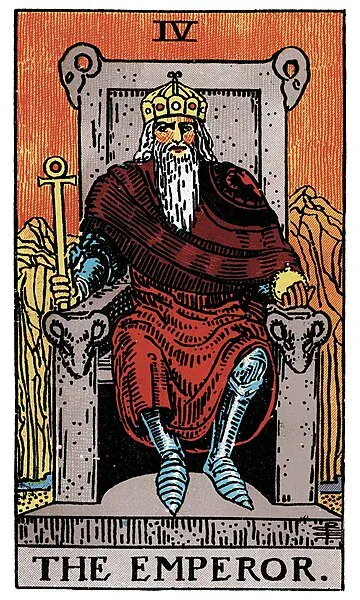
The Emperor
The Emperor sets the order outside; The Hierophant turns that order inward and inscribes it on the body through rite. Together they describe the moment authority moves from civic structure into spiritual structure — or, in difficulty, the moment one register of authority is being asked to compensate for the other's absence.
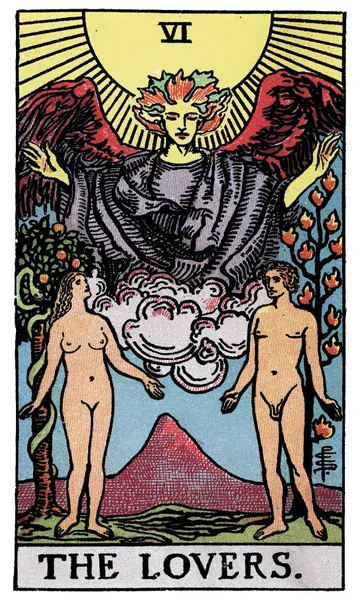
The Lovers
The Hierophant transmits the form; The Lovers face the choice that takes place inside the form. The pair asks the seeker to enter the tradition seriously enough to be shaped by it, then to make the choice that is theirs to make from inside it. Not the form instead of the choice. The form so the choice has weight.
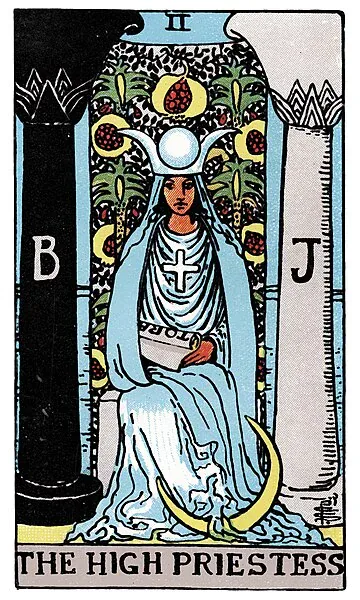
The High Priestess
The exoteric teacher and the esoteric teacher facing each other across the deck. The Hierophant teaches what can be transmitted in words and rite; the High Priestess holds what can only be approached in silence. Both teachings are real. The mature seeker learns when each is required, and which throne to sit before in any given season.
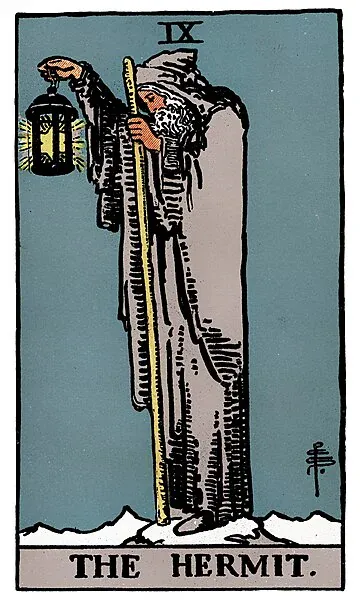
The Hermit
The school and the cave. The Hierophant builds the institution; the Hermit walks alone with the lamp. Neither teacher is wrong. The pair asks which mode the soul currently needs — the structure of the school or the solitude of the long walk — and warns against confusing one for the other.
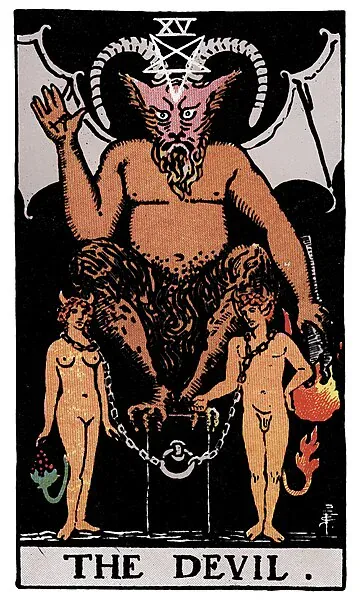
The Devil
The two cards of binding. The Hierophant binds through tradition; the Devil binds through appetite. Together they ask honestly which kind of chain is currently around the seeker, and warn that even sacred forms can curdle into bondage when the fire has left them. The path forward is to find the form that has fire in it again, or to break the chain consciously rather than slip from one bondage to another.
Frequently Asked Questions
Does The Hierophant reversed mean I should leave the institution?
Not necessarily, and not quickly. The card is rarely a clean no. It is more often a soft no to the conventional path the question is asking about, with an implicit yes to an alternative form that respects the wisdom of the tradition without inheriting its decay. Treat it as a structural caution: the well-trodden path you were considering may have hollowed; the alternative path, carefully built, may be the right one.
Is our relationship being shaped by what other people expect of it?
That is the reversed Hierophant's first question. It describes a bond pressed out of shape by external expectation, or a relationship that has skipped the rite that should have marked its commitment. For partnerships it can warn of a marriage held together by family or community pressure rather than mutual presence; for new connections it suggests a partner who feels something privately and resists letting the feeling enter their public life. The hierophant reversed love reading asks for the rebuilding of the form, not its abandonment.
They care but refuse to name it to anyone — what is that?
That is the reversed Hierophant exactly: the warmth is real and the form is missing. They feel something committed in the private sense; they have not yet placed the feeling in any public structure. Read it as warmth without rite: the heart has decided, the setting in which the deciding can be witnessed has not been built, and the building may or may not happen depending on whether they are willing to revise the structures that were already in place when you arrived.
Which of the forms I am inside should I actually leave?
Interrogate them one at a time rather than all at once. Leave one that has hollowed; stay in it long enough to see the leaving through with care. Build one rite that is yours, drawing freely on traditions but kept by you. Re-enter one tradition you walked away from with adult eyes. Forgive the lineage that taught you, even where it failed you. The card asks for the harder middle between blind obedience and total rebellion.
My field still has the titles but not the substance — what now?
The reversed Hierophant names that directly: the institution that has hollowed out or the practitioner who has left the tradition without a destination. It often arrives when the credentialed seat you hold has stopped teaching you anything, when the company brand outweighs its substance, or when the certification you have been chasing turns out to represent less than it claimed. The integrity move is to find a place — smaller if necessary — where the form is still alive, rather than perform legitimacy you no longer feel.