
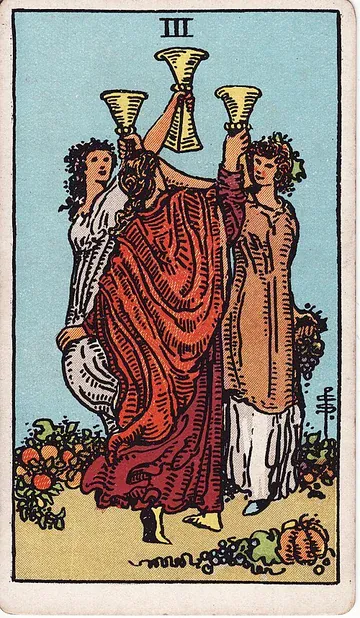
Three of Cups · Core Meaning
Three women stand in a small clearing and lift their cups toward the center. The cups touch — not loudly, not theatrically, but with the soft chime of vessels that have been brought close enough to ring. This is the first frame of the Three of Cups, and the whole card rests on it: the moment three voices agree without speaking, the moment a circle becomes visible to itself. Behind them, the laurel wreath floats overhead — victory belonging not to one woman but to the round. At their feet, ripe fruit lies scattered on the ground, evidence of a harvest already done.
The Three of Cups is the deck's small festival. Not the great wedding of the Ten of Cups, not the public spectacle the World eventually crowns — something earlier, more private, the round of cups raised before any of the official ceremonies have begun. It is the toast at the kitchen table the night before the wedding. It is the moment three friends realize, mid-conversation, that the conversation has become a lifetime. It is the celebration that arrives at the threshold of arrival itself.
This is the card's signature tension: completion that is also a beginning. Three is the first whole number after the pair — the Two of Cups, with its single mirrored vow, has just learned to recognize itself; the Three lets that recognition spill outward into community. A third figure walks in. A child is born. A friend joins the dyad and the dyad does not contract — it expands. Three cups, lifted, hold what two cups could not contain alone. And yet, because three is also the first crowd, the card carries a quieter weight: the small circle, once it forms, can become the only circle. The festival's warmth can curdle into a clique. The card holds both possibilities in a single image and asks the seeker which side of the round they are standing on.
The traditional astrological signature reinforces this: Mercury in Cancer's second decan, the dates 7/2–7/11. Cancer is water at its most domestic — the household, the family meal, the moon-pulled tide of belonging. Mercury is the messenger, the conversationalist, the tongue that finds the right word for the feeling everyone has been carrying without naming. Together, Mercury in Cancer is emotion steeped in words — feeling that needs to be spoken to become real, the toast that turns warmth into witness. The card's voice is not eloquent; it is exact. The right thing said to the right person at the right hour transforms a private feeling into a shared one. That is the Mercury-in-Cancer gift, and it is the work the Three of Cups asks for.
In Qabalah, the Three of Cups sits in Binah — Understanding, the great mother of the upper triad — in the world of Briah, Creation. Binah is the sephirah where the unstructured flow of Chokmah is given form, the womb that shapes flowing substance into vessel. In the watery suit, Binah's office is to take the boundless tenderness of the Cups element and pour it into a containable shape. Three figures, three cups, three notes of laughter — the feeling has been given a body it can travel in. This is what makes the Three of Cups feel like blessing rather than mere happiness. The joy has become structural. It can be returned to.
Read the Three of Cups the way you would read a photograph someone took without telling the people in it. Whatever lives in the unposed warmth — the recognition, the relief, the small embarrassment of being seen mid-laughter — is the card's meaning for that reading. The picture is not arranged. The toast is not for the camera. The cups touch because three people happened to mean it.
Readers asking what the Three of Cups means most often arrive at this card after a friend has done something quietly generous — kept a seat, sent the message no one else thought to send, made the gathering bigger so they could be inside it. The Three of Cups meaning is the texture of those small acts of inclusion accumulating into a life. It is what the deck calls home in the friendship register.
Three of Cups · Love & Relationships
Love in the Three of Cups upright has an audience, and the audience is the point — it is among the warmest cards the deck offers in a love reading, and the warmth has a particular shape. This is not the candle-lit dyad of the Two of Cups, two faces meeting in private vow. This is love witnessed — love that has learned how to invite a third presence into the frame without losing the thing that made it intimate. The card describes the season when the relationship begins to become a place other people can walk into. It describes the meal you cook for the friend who has not yet met your partner, and the easy way they laugh together by dessert.
For an existing partnership, the Three of Cups arrives when the bond is ready to be shared with the wider world. The early-stage privacy that protected the new attachment has done its work; the relationship is now sturdy enough to host. Friends are invited. Families meet. The two of you start to be referred to as a unit by people who used to mention you separately. Often this is also the season of small public celebrations — engagement parties, milestone birthdays, the housewarming that signals the move-in is real. The card does not promise these markers; it describes the ground from which they grow. The relationship has stopped flinching at being seen.
For a new spark turning from friendship, the Three of Cups is one of the deck's most precise cards. The card knows that some loves begin as a third person walking into an existing pair, and others begin as the slow inversion of an old friendship into something neither person wanted to name first. Three of Cups is the second kind. The trio has thinned to two. The toast at the group dinner happens to be only between you. The recognition that was once shared with the round is now shared with one person, and the room around you keeps moving without noticing what has just changed. If you are asking whether the friendship is turning, the card answers yes — and adds that the turning is being witnessed by a community that loves you both. This is good news. Loves grown out of friend circles tend to last because the circle has already vouched for the fit.
For a solo seeker, the Three of Cups is a quiet promise about how the love you are still waiting for is most likely to arrive. Not through the strategic single-night encounter. Not through the algorithmic match curated by an app. Through the third chair at the table — the friend's friend, the colleague's brother, the person introduced casually at the small festival you almost did not attend. The card asks you to invest in your community. Make the dinner. Go to the housewarming. Say yes to the gathering you would normally skip. The wider the round of cups, the more likely a new face joins it. Solo love, in this card, is a function of social warmth, not solo strategy.
For love after a wound, the Three of Cups is the card of chosen family doing its quiet repair work. The bad year ended. The texts from the friends who stayed kept landing. The dinner invitations kept coming, and at some point you went again, and at some point you laughed without surprise. The card describes the season when the women who held you through the grief lift their cups beside you and you can finally lift yours back. The wound is not the subject of the toast. The fact that you are still here is. From this ground, romantic love can be considered again — not yet, perhaps, but soon, and from a body that knows what care actually feels like.
For reconciliation, the Three of Cups is gentler than most reconciliation answers. It says: invite a witness. The repair you have been trying to do alone with this person needs a third presence — not as a referee, but as a frame. The friend whose presence makes you both more honest. The therapist whose room makes the conversations possible. The shared community whose warmth reminds you both why this bond was worth rebuilding. Two people stuck inside their own argument cannot always find the exit. A third cup, lifted, sometimes points the way.
For long-distance or cross-cultural relationships, the Three of Cups speaks to the chosen family that holds the bond when the geography does not. The friends who video-call you both. The mutual community formed online. The shared subreddit, the shared taste, the shared inside joke that survives time zones. The card recognizes that not every love can be sustained by two people alone. Some loves require a small festival around them — a community of witnesses who keep believing in the connection even when distance makes the lovers themselves doubt.
For relationships under household constraints — living with parents, caring for an ill family member, navigating an in-law situation that leaves little room — the Three of Cups asks where the breath in the relationship is. If the house has no third room, the friendship circle has to become it. Schedule the dinner with friends that lets you both be lovers again, in public, without the household's weight pressing on the table. The card does not solve the structural problem. It offers a regular reprieve from it.
For desire mismatch — one partner wanting more contact, more affection, more sex, more attention — the Three of Cups asks both of you to step out of the closed loop. The closed loop is exhausting. The grievance has become the language. Bring in a third presence — a long weekend with friends, a couples workshop with other couples, a community context that reminds you both that you are not alone in your difficulty. The mismatch is not solved by the third party. It is loosened by no longer being the only thing the room is about.
For polyamorous or chosen-family love shapes — triads, partnered networks, queer family structures that do not collapse into the conventional dyad — the Three of Cups is one of the deck's most affirming cards. It says: this shape is ancient. It says: three is not a deviation from two but a different whole. The card's three figures do not require any of them to be lover, sister, or friend in the strict sense; they are simply held together in the same circle of recognition. If you are asking whether your unconventional love shape is real, the card answers yes, and adds that the shape itself is one of the sacred geometries of the suit.
If you are asking whether a friend is in love with you and the Three of Cups arrives, the card distinguishes itself precisely. They love you. They do not yet know whether they are in love with you. The friendship is the foreground; the romantic possibility is the hum underneath it. They have not decided because the friendship is too warm to risk. The card's advice is to let the question rest — to keep showing up to the round of cups, to keep being part of the group, to let the answer arrive in its own time. Pressing for clarity here often costs the friendship before any clarity comes.
Three of Cups · As Feelings
Said out loud, the feeling the Three of Cups reports sounds like you should come — glad you are part of the circle, glad the circle has you in it. Not the singular romantic flush of the Two of Cups, not the dramatic infatuation of the Knight of Cups — the warmer, steadier feeling of someone who has decided you belong at their table. They feel like raising a glass when they hear your voice on the phone. They feel like telling their friends about something you said. They feel like making the gathering bigger because you are coming.
If they are reserved by nature, the Three of Cups in feelings looks like quiet inclusion. They will not declare. They will not perform their pleasure. But what becomes visible, week by week, is that you are being remembered — that they bring up something you mentioned three weeks ago, that they save you a seat without making a show of it, that they refer to you in the plural when describing their week. The reserved person under this card does not say "I'm so glad you're here." They simply rearrange their table to include you, and the rearrangement is the feeling.
If they are demonstrative, the Three of Cups feelings become the public toast. They want to introduce you to everyone. They want to bring you to the dinner with the friends whose opinions matter most to them. They want to post the photo of the three of you laughing. There is a generosity in this version of the card that is unmistakable — they are happy and they want their happiness to spread. Watch for the small-but-real signal: they do not just include you in their joy; they make sure their joy includes you specifically. You are not interchangeable in the round.
For a long bond, the Three of Cups in feelings is one of the kinder cards to draw. It means the relationship has stabilized into the kind of warmth that survives ordinary weather. They are not freshly in love with you the way they were in the first year. They are something steadier — they are at home in the sound of your voice. They look forward to the small rituals — the Sunday breakfast, the weekly call, the inside joke that has lasted a decade. The feelings are not new. The feelings are seasoned, and the seasoning is the point.
For a new connection, the Three of Cups in feelings can mean they are still discovering you in the company of other people. They have not yet had the long private dinner where everything gets said. What they have had is the group context — the introductions, the shared friends, the early afterglow of a few warm gatherings. They feel pleasantly surprised by you, and they are letting the surprise build slowly. They are watching how you are with their people. They are watching how their people are with you. The card is not yet the verdict; it is the ongoing audit of fit, and the audit is going well.
For a reconciliation, the Three of Cups in feelings carries a soft signal worth reading carefully. They have begun to remember the warmth without the grievance. The story they are telling themselves about you has shifted from the months that broke it back to the years that built it. They are softening — but they are softening in a private, not-yet-spoken way. The card does not promise return; it describes the interior weather that often precedes return. Move gently. Do not press them to declare what has not yet stabilized.
For someone you are unsure about — the friend who might be more, the colleague whose attention has felt warm — the Three of Cups in feelings clarifies: they like you, and they like you in the context of the group. The romantic question is not yet decided in their interior. They are enjoying you as part of their circle of people. Whether the affection thickens into something else depends on time, not on either of you announcing intent. Stay in the round. Let the feeling do its own work.
If a third person is in their picture — an ex still circling, a friend they spend a lot of time with, a partner-of-record they have been ambivalent about — the Three of Cups in feelings is honest about it. The third presence is real. It is not a betrayal yet, but it is a complication. They feel something for you that does not eliminate what they feel for the other figure. They are sitting at a table with three cups already, and you are one of them, and the other two have not yet been put down. The card asks for patience and honesty in equal measure. Not jealousy, not strategy — clear-eyed attention to what is actually being held.
A small caution embedded in this generous card: the Three of Cups personality, in feelings, can confuse warmth with availability. They can be very glad you are around and not yet ready to be in a one-to-one bond with you. They can love you in a way that does not translate into the specific shape you want. Read the feeling, but read its size honestly. If you are hoping for a private candle and they are showing you the public toast, the love is real and it is not yet what you asked for. Let the room be the room. Some loves grow in groups before they grow in private.
Take the Three of Cups in feelings as confirmation that you are warmly held — possibly more so than you realize — and as an invitation to read the warmth at its actual scale. They are glad you are here. They have made you part of the architecture of their belonging. The work, if there is work, is to let the warmth stay the size it actually is, and to enjoy what is given without demanding it become a different shape.
Three of Cups · Career & Work
Which toast is this — the one raised before the work, or the one that closes a chapter of it? The Three of Cups upright can be either, and it is never the prize that crowns the labor; it is the glass lifted around it. This is the team huddle the morning the project ships. This is the round of drinks after the long quarter. This is the post-launch dinner where the people who carried the thing finally look at one another and acknowledge what they made together. The card describes work as communal, recognition as collective, and milestones as moments to be marked rather than sprinted past.
If you are asking whether the current role is working, the Three of Cups answers yes — provided the role has people in it you actually like. The card is unromantic about this: the work itself can be ordinary, the deliverables can be unglamorous, the title can be forgettable. What makes the role worth keeping is the round of cups it is part of. The colleagues you genuinely look forward to seeing. The Tuesday lunch that has become a small ritual. The inside jokes that have outlived three reorganizations. If those are present, the card says stay — the warmth of the workplace is the substance of the workplace. If those are absent, the card prompts a quiet question: what is keeping you here, and is it enough?
For a new role decision, the Three of Cups upright tilts toward yes when the role brings you into a community of practice. Not just colleagues — community. Other engineers wrestling the same hard problems. Other writers convening at the same conference. Other founders at the same stage. The card prefers the role that puts you in a wider circle to the role that pays slightly more but isolates you. Compensation matters, but the Three of Cups is a card about the long game of work, and the long game requires belonging. Take the role that gives you a tribe.
For a freelancer or founder, the Three of Cups is the card of the early collaborator network — the small festival that forms before the company has a logo. Two friends, or three, decided the work was worth doing together, and the work has begun to find its shape. This card validates that shape. It says: do not solo what wants to be communal. Bring in the partner. Hire the early teammate. Get the small advisory circle to stand around the table with you. The card warns against the founder mythology of the lone genius; the gift is in the round, and the round is what makes the work survive its early thinness.
For a creative worker — writer, painter, musician, designer — the Three of Cups upright is the card of the studio scene, the workshop, the band. Creation here is collaborative. The card describes the season when the right collaborators arrive. The editor who actually gets it. The bandmate who plays the part you cannot. The studio of peers whose work makes you better simply by being near it. If you have been working alone and finding the work flattening, the card is an explicit instruction: find your three. The art happens in conversation with other artists. The lone studio is a phase, not a destination.
For a student or apprentice, the Three of Cups is the card of the cohort. Whatever you are learning, you are learning best alongside others learning the same thing. The card asks whether you have a study group, a writing partner, a peer practice circle. If the answer is no, the card's instruction is to build one. The great teachers do not produce great students one-by-one; they produce great students in small festivals, who then teach one another past the teacher's reach.
For a manager or leader, the Three of Cups is the card of the team that is becoming a team. Not yet the well-oiled machine of a Ten of Pentacles family business, not yet the heroic individual contributor of a single Wand. Something earlier and more important: the moment three or four people decide they are in this together. The card's instruction here is to mark the moments. Throw the small celebration when the milestone lands. Buy the team lunch unprompted. Toast the colleague whose work was invisible but load-bearing. The Three of Cups warns against the leader who is too efficient to celebrate; the celebrations are not overhead, they are the substance of the cohesion the leader is trying to build.
For care work, teaching, community organizing, or any practice rooted in being-with-others, the Three of Cups is a profound affirmation. The work you are doing is the work of holding a circle. Do not measure it against the metric-heavy career paths that make you feel small. The teacher who creates the safe room. The therapist who keeps the small group running for fifteen years. The community organizer who makes the neighborhood feel like a neighborhood. These are the Three-of-Cups practitioners, and the card sees them and says yes.
For a promotion question, the Three of Cups upright tends toward yes — and adds that the promotion is more about being recognized by your peer group than about being chosen by leadership. The visible recognition matters; the invisible recognition by the people who do work alongside yours matters more. If you have the second kind already, the first usually arrives. If you do not, the first does not heal the absence of the second.
For a layoff or transition, the Three of Cups offers an unusual comfort. Yes, you have lost the role. No, you have not lost the people. The colleagues who became friends are still your colleagues-who-became-friends. The professional network you built is yours. The next chapter usually arrives through that network — not through cold applications. The card asks you to spend the early weeks of the transition reaching out to people, not polishing the resume. The round of cups is what relocates you.
For cross-functional teams in startups, agencies, or any setting where collaboration spans disciplines, the Three of Cups warns against silo loyalty and rewards genuine cross-pollination. The product manager who actually drinks with the engineers. The designer who has a working friendship with the data team. The CEO who knows the names of the customer-support staff and means them. The card describes the workplace where the cups are routinely raised across functions, and it predicts that workplace's resilience.
For performance arts — band, theater company, dance troupe, improv group — the Three of Cups is essentially the home card. The work is communal by nature. The card affirms the practice and adds a quiet warning: protect the trust within the trio. Once a band's three friends become two friends and a stranger, the music starts losing the thing that made it the music. Tend the friendship as actively as you tend the craft.
Three of Cups · Money & Finances
Three cups meet in the middle of the clearing and nobody is drinking alone; that is where the Three of Cups upright puts money — pooled resources, shared celebrations, and the financial weather that improves when it is handled with company. The card does not promise wealth. It promises that what you have, shared well, becomes more than what you have alone. The wedding cost is split across the families. The vacation house is rented with two other couples. The big purchase is undertaken with a friend who knows the market. Money in this card moves in small festivals, not in solitary calculations.
For someone managing tight finances, the Three of Cups asks who is in your circle. Not in a transactional way — in the way that real chosen family asks the question. The friend who lets you sleep on their couch during the gap month. The family member who quietly pays for dinner without making a thing of it. The community fund the local mosque, church, or sangha keeps going. The card is honest about the fact that scarcity loosens faster in a network than in isolation, and it gently asks the seeker whether they have been refusing offers of help out of pride. The cup is meant to be passed.
For a financial windfall — bonus, inheritance, unexpected gift — the Three of Cups upright tilts toward sharing. Not all of it. Not foolishly. But the card warns against the windfall that becomes a private hoard. Some of it goes to the people who were beside you in the lean season. Some of it pays for the celebration that marks the shift. Some of it goes to the small festival that lifts everyone you love a few inches off the floor. The card is suspicious of the windfall recipient who quietly absorbs the gift and tells no one — that path leads to the reversed card and to a slow, lonely wealth that does not feed anyone.
For a celebration purchase — wedding, milestone birthday, anniversary, the dinner that marks a long-postponed reunion — the Three of Cups offers full permission. Spend on the gathering. Buy the bottle of wine that is one notch above what you would normally choose. Pay for the friend who is in a hard year and would otherwise not come. The card understands celebration as a financial category and does not shame it. The toast that marks the moment is not waste; it is what makes the moment a moment.
For a question about a financial gamble, investment, or speculative move, the card answers with caution but not refusal. Mercury in Cancer's caution: emotion can flood the analysis, and the ripe fruit on the ground can distract from the cups in the air. The card asks whether the move is being made because the numbers work or because the friend group is moving in that direction. Crowd-driven speculation — meme stocks, late-stage crypto fads, the friend's startup that everyone is investing in — has a particular Three-of-Cups shadow flavor. Step out of the room before deciding. Run the numbers when you are alone and sober. Then, if the numbers still work, return to the round.
For someone in financial recovery — climbing out of debt, rebuilding after a major loss, recovering from a long stretch of underemployment — the Three of Cups confirms that the recovery is real and adds that it is not happening in isolation. Whoever has been quietly supporting you through the climb is part of the recovery. Acknowledge them. The card asks for a small, specific thank-you — a card, a meal, a clear naming of what their support has meant. Recovery is communal even when the bank account is private.
For a question about generational wealth, family money, or shared financial structures — household budgets, joint accounts, inheritance disputes, family-business governance — the Three of Cups tilts toward yes, with the condition that the conversations are had openly. The card warns against the family that handles money in private silos and pretends the silos do not exist. Bring the topic to the table. Have the awkward conversation. The festival that raises a cup to the family's actual financial truth, however unflattering, is healthier than the festival that pretends.
A practical move when the Three of Cups appears in money: pick one financial favor someone did for you in the last year and acknowledge it specifically. The card responds to active gratitude. It also responds to active sharing — pay for one friend's meal you would not normally pay for, contribute to the community fund you have been benefiting from without contributing, make the donation you have been postponing. Money shared in this card multiplies; money hoarded curdles. The Three is one of the suit's clearest invitations to keep the cups moving.
Three of Cups · Health
The first real laugh after a long season is a respiratory event before it is an emotional one, and the Three of Cups upright lives exactly there: the chest opening — the heart and lungs, the suit's traditional body region, finally breathing freely after a long stretch of holding. The card describes the season when the body remembers what laughter feels like. The shoulders drop. The breath deepens. The voice that had become quiet in a hard year starts to fill the room again. None of this is dramatic. It is the slow re-inhabitation of the body's social capacity.
If you are asking whether a treatment is helping, the Three of Cups answers yes, and adds that part of what is helping is not the treatment but the people around the treatment. The friend who sits in the waiting room. The chosen family that delivers the meal. The therapist whose office has become a third place that is neither home nor work. Health in this card is rarely solo. The cup is held by three pairs of hands, and the holding is part of what makes it medicine.
For chronic conditions, the Three of Cups suggests a stable season — not cure, not the disappearance of the issue, but a window where the management is supported and the support is making the management bearable. The card asks whether you have a chronic-illness peer network. The forum. The Sunday support group. The friend with the same diagnosis who actually understands the texture of the day. Solo chronic illness is harder than community chronic illness by a margin most healthy people do not appreciate. The card invites the seeker to find their three.
For acute conditions or recovery from a procedure, the Three of Cups upright reads as a benevolent prognosis with a specific instruction: accept the help. The card warns against the recovery patient who insists on doing it alone, who turns away the meals, who does not let anyone come over because the apartment is messy. The body heals faster in cared-for context. Order the dinner the friend offered to bring. Let the sister stay over the first night. Recovery is not a privacy event.
For mental health, the Three of Cups upright is one of the deck's most explicit cards about social medicine. The depressive season has lifted in part because you started saying yes again — to the dinner, to the call, to the gathering you would have refused six months ago. The anxiety has loosened in part because the room around you has started to feel safe enough to speak in. The card validates therapy. The card validates medication. And the card adds that the round of cups — the friends who keep showing up, the chosen family that is still chosen — is a load-bearing part of the structure. The card is not a substitute for medical care; it is a confirmation that the social practice that sits alongside medical care is doing real work. A circle of friends is real support and still not medical advice. Keep your practitioners. Take your prescriptions. The card simply names what the body already knows: people who are loved out loud heal faster than people who are loved in private.
For somatic complaints around the chest — anxious chest, shallow breathing, the ache that lives between the shoulder blades, the tightness in the throat that comes before tears — the Three of Cups upright suggests that the body is asking for expression. Mercury in Cancer: emotion finds its way out through words. The chest has been holding what the throat has not yet said. The card is asking for a long phone call. A letter. A therapist appointment. A friend's couch and three hours. The somatic signal is not a malfunction; it is a request.
For digestive or appetite issues, the Three of Cups can describe the season when communal eating becomes part of the medicine. The body responds to meals shared. Solo eating, hurried eating, eating-while-working — these have a way of accumulating into low-grade disturbance. The card prescribes the regular dinner with people who matter. Slow food. Real conversation. The chest open. The shoulders down. The fork moving without the calendar pressing on the wrist.
For sleep, the Three of Cups can mean the difference between the night before a gathering you are looking forward to and the night before a duty you are dreading. The body sleeps better when tomorrow has a friend in it. If the insomnia has been chronic, the card asks what is on the calendar — and whether anything on the calendar is genuinely warm. Adding one warm appointment per week, kept reliably, sometimes does more for sleep than three weeks of sleep hygiene advice.
For fertility, pregnancy, or the early postpartum window, the Three of Cups upright is one of the deck's gentler companions. The card holds the threefoldness of the suit — the woman, the partner, and the child arriving (or being grieved, or being tried for) — without sentimentality. It acknowledges that this region of life is communal. The mother needs the friends. The new family needs the village. The grief, when grief comes, needs witnesses. None of this is a prediction. The card describes the ground on which fertility journeys, in any direction, become bearable: in company.
Three of Cups · Spirituality
A clearing becomes a sanctuary the moment three people agree to lift something at the same time. No building is required, no ordination, no name for what is happening — the Three of Cups upright is communal devotion in its plainest form, the small festival that turns ordinary time into liturgy. The laurel wreath floats above them not as a prize but as the memory of a victory already won, somewhere outside the frame, by someone the trio collectively honors. The ripe fruit on the ground is the offering — the harvest already given, the abundance of the natural world that the festival is gratefully drinking from.
For solo seekers, the Three of Cups offers a quiet correction. The spiritual life is not, fundamentally, a private practice. It can begin in private, deepen in private, find its quietest moments in private — but the card insists that maturity in any spiritual practice eventually requires a community of practice. Three other meditators. Three other journalers. Three other people walking their version of a similar path. Without the round, the practice slowly becomes self-referential. With the round, the practice keeps being calibrated against lives that are not yours.
For seekers in active community — sangha, congregation, coven, meditation group, twelve-step room — the Three of Cups is one of the most affirming cards in the deck. It says: this is the work. The Sunday meeting that is mostly small talk and tea is not separate from the spiritual life; it is part of it. The shared retreat where nothing dramatic happens but everyone returns to their daily life slightly softened — that is the working. The Three of Cups blesses the unspectacular communal practice and gently warns against the seeker who privately considers themselves more advanced than the room.
The card's Binah signature deepens this. Binah is Understanding — the womb that takes the wild, undirected substance of feeling and gives it form. The communal practice is the womb. The tradition's liturgy, the group's rituals, the agreed-upon rhythms of the circle — these are what shape raw spiritual longing into something that can be passed on. A solo mystic produces solo mysticism. A circle produces a tradition. The Three of Cups is the card of the small tradition forming, and it asks the seeker to honor what the circle is doing even when the circle's practices feel less personally tailored than a solo practice would.
A specific practice the Three of Cups invites, doable in thirty minutes: the gratitude toast. Sit with two or three other people — partner, close friend, chosen family member, even on a video call. Each person, in turn, names one specific thing they are grateful for, and the others raise an actual cup (water, tea, anything) and drink to it. Three rounds. No commentary. No advice. Just the named thing, the lifted cup, the witnessed sip. This is one of the oldest devotional practices on the planet, and the Three of Cups is its specific image. The practice does not require theology. It requires three people willing to be precise about what is good in their lives and to let the precision be heard.
For seekers exploring what their own spirituality should look like — having left the religion of childhood, having tried several traditions, having arrived at no fixed practice — the Three of Cups offers a permission and a clue. The permission: it is fine to construct your spirituality from a small festival rather than a grand cathedral. The clue: pay attention to what you do with the people you love. The way you mark birthdays. The way you light candles for the dead. The way you make food together. These small rituals, taken seriously, are already a spirituality. The card asks you to recognize what you are already doing and tend it as practice rather than dismiss it as habit.
The card's spiritual caution is the shadow noted on the deck schema: the small circle, once formed, can become a source of exclusive safety, invisible to those outside it. The festival meant to celebrate communion can curdle into a clique that congratulates itself on being chosen. The integration cue printed beside the shadow is one of the deck's loveliest instructions: keep one cup unclaimed, for the guest who has not arrived yet. Spiritually, this means the round must always be open to a fourth. The chosen family must be ready to choose one more. The sangha must keep its door propped. The Three of Cups, in its highest expression, is not a closed triangle. It is three sides of an open square, and the fourth side is whoever is still walking in.
Three of Cups · Yes or No
Yes — but bring your people.
Asked as a yes-or-no, the upright card gives the warm yes described above, and the working condition is that the yes wants to be held in company.
The Three of Cups upright is one of the deck's clearer yes-cards, and its yes has a particular accent: the yes that is meant to be celebrated, witnessed, and shared. As a yes, it is not the thunderous declaration of the Sun or the inevitable pull of the Lovers. It is the warm, slightly tipsy yes that arrives at the kitchen table among friends. The thing you are asking about is favored — and the favoring works best when the answer is allowed to be held in company.
For yes-or-no questions about a relationship, a job, a move, a creative project: yes. The Three of Cups says go ahead, and adds that the project is more likely to thrive if you keep it in conversation with your circle rather than executing it alone. The relationship is favored when it is invited into your friend group. The job is favored when it brings you into a richer community of practice. The move is favored when it does not isolate you from your chosen family. Whatever the question, the path with more people in it tends to be the right path.
For questions about whether a friendship can become a romance, the Three of Cups upright leans toward yes — softly. The card knows that some loves grow out of friend circles, and the friend circles tend to support rather than oppose them. The transition is favored. The community does not punish it. The two friends-becoming-lovers are usually surprised by how easily the round absorbs the change.
For questions about whether someone is being honest, whether a plan will hold, whether the people involved are trustworthy: yes. The card carries no shadow in the upright orientation. The festival is real. The toast is meant. The people in the room are who they appear to be. There is no hidden manipulator behind the laurel wreath. What is being celebrated is actually worth celebrating.
When the question is how soon the good news arrives, the Three of Cups upright suggests within the season, often around a gathering. The good news arrives in company more often than in solitude. The decision crystallizes during a dinner. The new attachment becomes official at someone else's wedding. Stay in the round of social life; the answer tends to land where the people are.
For binary decisions about whether to act — should I take the role, should I send the message, should I host the dinner, should I make the introduction — the Three of Cups answers yes with a specific instruction: do not act alone. Bring at least one other person into the action, even just as a witness. The card responds beautifully to acts done in good company. It responds less well to acts that are technically correct but executed in lonely privacy. Make the move; bring a friend.
The only condition embedded in the yes is the card's own quiet question: are you saying yes to this thing, or are you saying yes because everyone else is? Mercury in Cancer can flood the analysis with social emotion. If the friend group is enthusiastically pushing you toward a decision and you are pleasantly carried along, pause for one private hour. Ask yourself the question without the room. If the answer still holds in that hour, the yes is a real yes. If the answer collapses without the room, you were not actually answering — you were reflecting the round. The Three of Cups loves company. It does not love decisions made because of company. The right yes is the one that survives the silence between gatherings.
If the question was: do I have permission to celebrate this? The card answers yes — and asks why you needed permission.
Three of Cups · Advice
Make the celebration — put it on a date, name the people, buy the thing that gets opened. Whatever you have just finished — the project, the diagnosis you survived, the breakup you are out the other side of, the long stretch of underemployment that just lifted, the small ordinary milestone that no one else has noticed — mark it. Not extravagantly. Not on social media. Mark it with at least two other people in a room together, with something raised, with something said out loud — the Three of Cups upright is that arithmetic exactly, three and no fewer. The card insists that the marking matters. Unmarked transitions accumulate as flatness. Marked transitions accumulate as life.
If there is one specific instruction the card offers, it is to call the friend you have been meaning to call. Not text. Not voice memo. Call. The phone the way the phone was originally meant to be used — the actual sound of the actual voice, no editing, no asynchrony. The Three of Cups runs on the live presence of voices in the same hour, and the card warns gently that the asynchronous half-presence of texting has been quietly thinning the social weather of your life. One call this week. Make it long enough that something real gets said.
A second instruction: invite a third. Wherever your life has settled into a comfortable dyad — you and your partner, you and your closest friend, you and the colleague you spend every lunch with — bring in a third person on purpose. The third person does not threaten the dyad; they enrich it. The card warns against the dyad that has become so insulated it stops being porous. Have someone over. Add a friend to the standing dinner. Introduce the colleague to the partner. The round of cups requires three to ring.
A third instruction: receive the toast directed at you. Most readers of this card are better at giving toasts than receiving them. The Three of Cups asks you to sit still when someone is praising your work, thanking you for showing up, acknowledging what you have done. Do not deflect. Do not joke it away. Do not redirect the praise. Let it land. The card's particular shadow is the seeker who participates in the round only as the giver, never as the recipient. Be the third today. Let the cups be raised toward you. Drink.
A fourth instruction: include the person who is not yet in the circle. The Three of Cups, in its highest form, is open to the fourth chair. The colleague who is new and has not yet found their lunch group. The friend's friend who is having a hard year. The relative who has been peripheral for reasons no one quite remembers. The card invites you to be the one who pulls them in. Not as charity. As the natural extension of the round. The festival expands to fit whoever shows up. The card asks you to make sure someone is showing up because you remembered to invite them.
A fifth instruction, quieter than the others: keep one cup unclaimed. The integration cue from the deck's shadow note. Spiritually, materially, schedule-wise — leave room for the guest who has not yet arrived. Do not over-furnish the round. Do not let the chosen family become a closed circle that strangers cannot enter. The fourth chair, kept genuinely empty, is the discipline that keeps the Three of Cups from curdling into the reversed card.
Practical advice for the day this card appears: pour three drinks. Yours, plus two for whoever else is in the house, plus one symbolically left on the counter for the absent or the not-yet-arrived. Or simply pour three cups of tea, drink yours slowly, and notice what the second and third cups call to mind. The card responds to small, deliberate, ritualized communal gestures. Even alone, the gesture rehearses the round of cups, and the round of cups quietly rearranges what is possible the rest of the week.
Three of Cups · Card Combinations
The Three of Cups gathers other cards around it the way a small festival gathers a guest list — its meaning shifts depending on who is at the table. Some pairings amplify the warmth, some test it, and a few rare ones reveal the shadow that lives just past the laurel wreath. The combinations below are five of the most load-bearing readings in the suit's neighborhood; each rewards careful attention.
Three of Cups + Two of Cups
The dyad and the trio in the same spread describe the precise architecture of a love story growing from intimacy into community. The Two of Cups is the private vow — two faces meeting, recognition exchanged, the promise made in the small space between them. The Three of Cups is what happens when that promise becomes visible to a wider circle. The two figures step out of the candlelit room and bring their bond into the kitchen where the friends are already gathered. The pairing usually marks the season of public emergence — the first joint dinner with the friend group, the introduction to chosen family, the slow expansion of "we" from secret to known. Read it as a confirmation that the relationship is ready for the wider witness it is about to receive.
Three of Cups + Ten of Cups
The small festival meeting the household blessing. The Three of Cups is the toast at the kitchen table; the Ten of Cups is the family standing under the rainbow with the children running ahead. Together, they describe the long arc of communal joy — from the first round with the chosen family through the years that turn the chosen family into actual family. The pairing often shows up around weddings, the moving-in, the milestone anniversaries that gather the original witnesses around the long-built household. There is a quiet warning in the combination too: the Ten cannot be rushed. The Three is its precondition. The household blessing of the Ten is built from years of small festivals, not from a single dramatic ceremony. Tend the Three carefully. The Ten arrives only where the Three has been kept.
Three of Cups + Three of Swords
The same number, different suits — the toast and the heartbreak in tonal collision. This pairing is one of the deck's most precise readings of betrayal. The Three of Cups celebrates inclusion; the Three of Swords names the moment one figure realizes they were not, in fact, included. The combination often describes the friendship-turned-romance gone wrong, the trio that became two-against-one, the gathering that the seeker realizes they were the unspoken topic of. Not always — sometimes the pairing simply marks the season of grief held in chosen family, the wound being witnessed by the round. But where the dynamic is unhealthy, this combination names it directly: someone is being toasted at while being cut from. Read the spread carefully and ask which figure the seeker is.
Three of Cups + The Empress
The Major modulator of nurture lifting the trio's small festival into something archetypal. The Empress is Binah's lower octave in the Major Arcana — the great mother, the abundant garden, the body that holds and feeds. The Three of Cups, also seated in Binah, vibrates with her at the same frequency. Together they describe the deep maternal warmth of community — chosen family that nourishes, friend circles that hold like wombs, the gathering that genuinely feeds rather than performs. The pairing often appears in readings about pregnancy, fertility, mothering (in any direction — biological, adoptive, mentoring, creative), and the deepening of women's-circle / chosen-family bonds. The instruction is to receive what is being offered as actual food, not to politely sip from the edge of the cup.
Three of Cups + The World
The small festival meeting the cosmic completion. The World is the final card of the Major Arcana, the dance of the four elements integrated, the round of completion at planetary scale. The Three of Cups is the small, local, kitchen-table version of the same energy — completion held in a circle of three rather than at the level of the cosmos. Together, they describe the milestone that lands at the right scale and is celebrated at the right scale. The big achievement that is honored with the small dinner. The cosmic ending that is marked with the human toast. The pairing reminds the seeker that even the largest completions are made of, and require, the small festivals beneath them. The World does not arrive without the Three. The rounds are nested, and each one matters.
Card Combinations
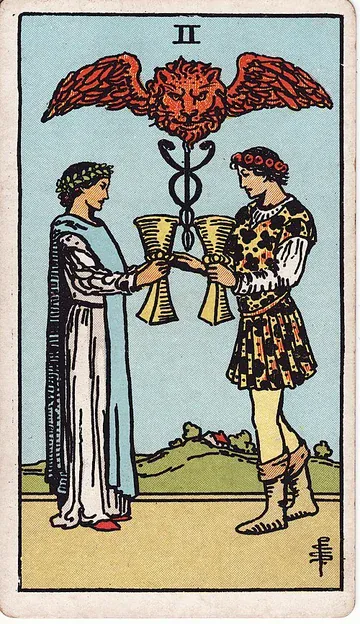
Two of Cups
The dyad's recognition becoming the trio's celebration. Two of Cups is the private vow; Three of Cups is the moment that vow steps into the kitchen where the friends are gathered. The pairing marks the season when an intimate bond becomes ready for wider witness — public emergence, introductions to chosen family, the first joint dinner with the friend group. The relationship has stopped flinching at being seen.
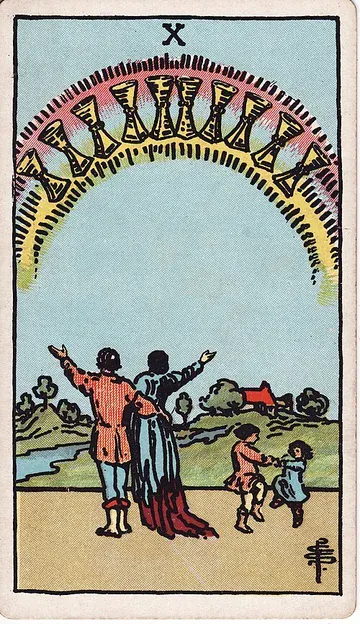
Ten of Cups
The small festival meeting the household blessing. Three of Cups is the toast at the kitchen table; Ten of Cups is the family under the rainbow with the children running ahead. Together they describe the long arc of communal joy, from the first round with chosen family through the years that turn chosen family into actual family. The Ten arrives only where the Three has been faithfully kept. Tend the round; the household builds from it.
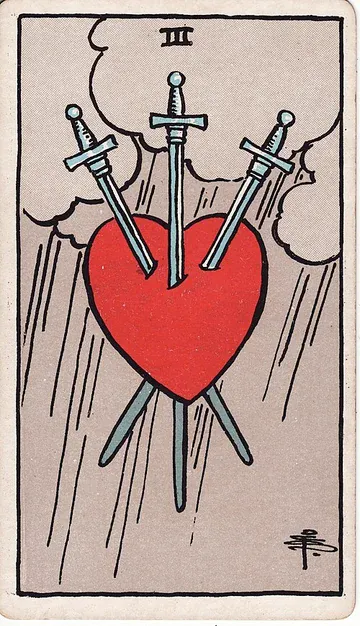
Three of Swords
The same number, different suits — the toast and the heartbreak in tonal collision. Three of Cups celebrates inclusion; Three of Swords names the moment one figure realizes they were not, in fact, included. The pairing often reads as social wounding — the trio that became two-against-one, the gathering whose unspoken topic was the absent friend, the betrayal that came from inside the round. Grief is the work; rebuilding the round elsewhere is the path forward.
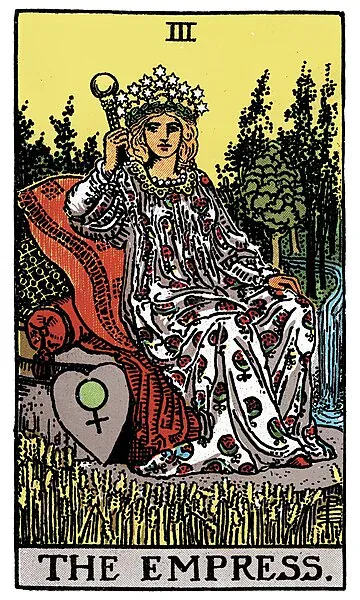
The Empress
The Empress is Binah's lower octave in the Majors — the great mother, the abundant garden, the body that holds and feeds. The Three of Cups, also seated in Binah, vibrates at the same frequency. Together they describe the deep maternal warmth of community: chosen family that nourishes, friend circles that hold like wombs, gatherings that genuinely feed rather than perform. Often around fertility, mothering in any direction, and the deepening of women's-circle bonds.

The World
The cosmic completion meeting the small festival. The World is the dance of integrated elements at planetary scale; the Three of Cups is the same energy held in the local round of three. Together they describe milestones that land at the right scale and are celebrated at the right scale — the big achievement honored with the small dinner, the cosmic ending marked by the human toast. Even the largest completions are made of, and require, the small festivals beneath them.
Frequently Asked Questions
Why does the Three of Cups show three figures rather than a couple or a crowd?
Three is the smallest number that makes a circle instead of a line — a pair can only face each other, and a crowd has no faces at all. The Three of Cups is the small-festival card of the deck — three figures raising their cups in mutual recognition, a laurel wreath floating overhead, ripe fruit on the ground. It signals friendship, communal celebration, and the moment when private feeling becomes shareable. Tied to Mercury in Cancer's second decan and seated in Binah, it describes emotion finding form through conversation and the round of trusted witnesses.
Does the Three of Cups still say yes to something you would have to do alone?
It says yes more quietly there — this is a yes that prefers company. The Three of Cups upright is one of the deck's warmer affirmatives: the path you are asking about is favored, especially when the decision is held in conversation with the people who love you. It is not the thunderous yes of the Sun; it is the kitchen-table yes among friends. The only condition is to make sure the yes survives a quiet hour alone, not just the enthusiasm of the round.
Is the Three of Cups in a love reading about romance or about the people around it?
About the ring the romance stands inside. In love readings, the Three of Cups upright describes love that has learned to be witnessed — the relationship ready to meet the friend group, the friendship gently turning into romance, the chosen family that holds the bond when geography or circumstance does not. For solo seekers, it suggests new love is most likely to arrive through the third chair at the table — a friend's friend, a colleague's introduction, the gathering you almost did not attend.
What is the Three of Cups tarot card meaning for friendship?
Friendship is the Three of Cups' native register. The card describes the trio that has become its own small tradition — the standing dinner, the shared rituals, the inside jokes that have outlasted hard years. It honors chosen family and asks you to tend the round actively: call the friend you have been meaning to call, mark the small milestones out loud, keep one cup unclaimed for the friend who has not yet joined the circle.
Can the Three of Cups as feelings mean romantic interest, or only belonging?
It can carry both, but belonging is what it states plainly: the person is glad you are part of their circle. Not the singular romantic flush of a Two of Cups — the steadier warmth of someone who has decided you belong at their table. Reserved people show it by quietly rearranging the room to include you; demonstrative people show it by introducing you to everyone they love. Either way, the underlying signal is inclusion: you are in the round.