
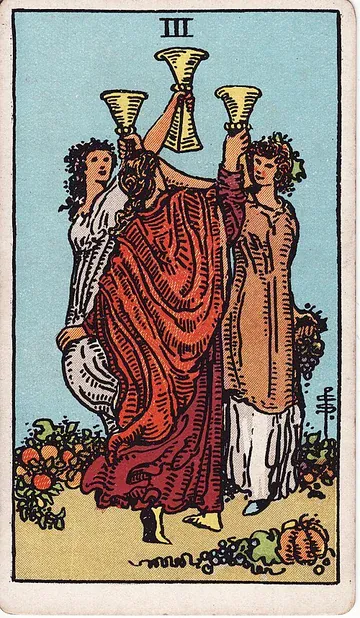
Three of Cups Reversed · Core Meaning
When the question is simply what the reversed Three of Cups means, the working frame is straightforward: read it as the festival that has curdled, the round that has lost its evenness, or the small circle that has closed itself off.
The Three of Cups reversed is the card of the festival that has curdled. The same three figures stand in the same clearing, the same cups are raised — but the laurel wreath above them has tilted slightly, and one of the three faces is no longer in the circle. Maybe she has stepped back. Maybe she has been edged out. Maybe she is still standing in the round but no longer being heard. The toast is still happening. The toast is no longer including everyone it appears to include. The round has lost its evenness, and the unevenness is the meaning of the card.
This is the reversed card's central knot: communion that has thinned into performance. The gathering still looks like a gathering. The photos still look like joy. But beneath the surface, the warmth that made the round actual has begun to evaporate. The same three friends are still calling themselves close, and quietly each of them is starting to suspect the others of having drifted. The festival continues by inertia. No one wants to be the one who admits it has stopped being real.
There is a second flavor of the reversed card: the small circle that has closed itself off from the rest of the world. The chosen family, once warmly hospitable, has become a clique. The friend group has stopped welcoming new faces. The team that used to throw parties has become the team that complains about how much the rest of the company has changed. The cups are still raised; they are now raised against, not toward. The shadow noted in the deck schema is precise here — the small circle becomes a source of exclusive safety, invisible to those outside it — and the reversed card is that shadow surfacing.
A third flavor, more diffuse: the celebration that has slipped into excess. The round of toasts that became a round of drinks that became a long, dull morning. The party that ran past the point where joy was being made and into the slow accumulation of a hangover. The card does not look away from the sticky version of joy. Not every Three of Cups reversed is dramatic; many are simply the soft erosion that comes from too much pleasure with too little intention. The fruit on the ground has been stepped on. The wreath has wilted. The ground around the trio is sticky.
The astrological signature inverts too. Mercury in Cancer upright is emotion finding the right word — the precise toast, the named gratitude, the conversation that turns warmth into witness. Reversed, it becomes emotion drowning the word — gossip, half-truths spoken because the silence felt too heavy, the conversational drift where everyone says something kind and no one says anything precise. The decan's gift becomes its shadow when the conversation continues without honesty. The third figure who feels excluded, the friend who senses the gathering has thinned, the colleague who notices the team's celebrations have started to feel obligatory — they are reading something real. The reversed card asks the seeker to read what they are reading instead of pretending the round is still whole.
Reversed, the Three of Cups asks: who is actually in the circle? And: who is being drawn for? And: where, in the warmth that used to be communal, has private exclusion begun to take root?
Three of Cups Reversed · Love & Relationships
Turn the circle over and one of the three is standing where the couple used to be alone. Reversed in love, the Three of Cups is that third presence in the picture, the gathering that has begun to undermine the relationship rather than support it, or the chosen family whose warmth has begun to compete with the dyad. The card does not always name betrayal — but it almost always names a triangulation that needs careful attention.
For an existing partnership, the reversed card most often describes one of two patterns. The first: a third party has begun to occupy attention. Not necessarily an affair — sometimes a coworker who has become inappropriately close, an ex who has reentered the social orbit, a friend who is leaning on one partner in a way the other partner finds destabilizing. The second pattern: the relationship has been outsourced to the friend group. Both partners spend more energy maintaining their respective social circles than they spend with each other. The dyad has become two people who happen to share an apartment between gatherings. Either way, the card asks for a return to the private cup — the candle-lit conversation that does not include anyone else.
For a new spark, the reversed Three of Cups can describe the third-wheel discomfort that has not been named. The two of you are technically together, and one of you keeps bringing along the friend whose presence prevents the relationship from deepening. The friend may be lonely. The friend may be the safer option than the actual intimacy. The card is not asking you to drop the friend; it is asking you to schedule time without the friend and notice whether the new connection can stand on its own. If it cannot, you have learned something important.
For someone in the friendship-becoming-romance liminal space — and this is one of the most common reversed Three of Cups questions — the card warns of the configuration in which the person you are interested in is enjoying both you and another candidate, while privately deferring the choice. They like the round of cups too much to narrow it. The friendship-as-flirtation continues; the actual decision does not arrive. The card's instruction is to step back from the gathering long enough to make your own interest legible. If that costs the gathering, the gathering was not what you thought it was.
For a solo seeker, the reversed card is one of the gentler diagnostic mirrors in the deck. It asks whether the friend group has become a substitute for partnership — the chosen family so well-furnished, so reliably warm, so emotionally satisfying that no romantic candidate could compete with it. The card is not asking you to abandon the chosen family. It is asking you to notice that the chosen family is not the same shape as a partner, even when it covers most of the same emotional ground. Leave the gathering early sometimes. Sit with the loneliness the gathering has been managing. Make space for someone whose place would not fit in the existing round.
When the question is what the reversed Three of Cups says about love, the answer rarely lands as a clean verdict. It lands as a configuration in motion — a triangle that has slipped sideways, a couple whose round of friends has begun to thin, a love that is real and partially distracted. Read the configuration before reading the verdict.
For reconciliation after a break, the reversed Three of Cups offers a soft no — or a complicated yes. Returning would re-enter the social circle that supported the relationship. The friends have probably stayed. The chosen family is still there. The pull to return is partly the pull of the bond and partly the pull of the round of cups. The card asks the seeker to disentangle them. If the relationship were starting today, with no shared community in place, would you choose this person? If the answer is no, the warmth pulling you back is the round, not the love. Build a new round. Let the love decide on its own merit.
For long-distance or cross-cultural love under the reversed card, the gathering that was supposed to support the relationship has begun to weaken it. The mutual community online has gone quiet. The friends who were meant to bridge the geography have drifted. The bond is now genuinely in two — and being in two, across distance, with no community holding it, is harder than the original arrangement assumed. The card says the difficult part out loud. It is not predicting collapse; it is naming a structural pressure that requires deliberate response. Build a new shared circle, or accept that the geography is now the dominant variable.
For desire mismatch under the reversed card, the gathering has become a way to avoid the conversation. You and your partner spend social weekends with friends, party-adjacent, pleasantly distracted, never alone long enough for the difficult subject to surface. The friends are not the problem; the use being made of the friends is. The card asks for a deliberate weekend without the round, without the gathering, with the difficult conversation set as the only item on the agenda.
For polyamorous or chosen-family love shapes, the reversed Three of Cups reads with particular precision. The shape itself is not the issue. The issue is when the agreed-upon openness has begun to function as avoidance — when "we have other partners" has become "we no longer face each other." Or when the metamour relationships, supposed to be supportive, have begun to triangulate. The card respects the shape and asks for honest accounting within it. Some triads are functioning beautifully. Some are quietly collapsing under the weight of the unspoken. The reversed card asks which version yours is.
For a queer reader asking whether their chosen family has become both lifeline and limit — a familiar dynamic for many — the reversed card is gently affirming. Yes, the chosen family has been the house. Yes, the chosen family is also now slightly too small. Building wider community without abandoning the original family is the work, and the work is not betrayal. It is the natural maturation of a chosen-family structure that started as survival and is now ready to host more people.
For a question about whether a friend is in love with you and the reversed card arrives, read carefully. They feel something — and they are not yet ready to act on it because the friend group's stability matters to them more than the romantic possibility does. Or, less generously: they are enjoying your interest while keeping their options open. The card does not adjudicate which version is true. It asks you to give the question time and to refuse to organize your life around someone who is enjoying the gathering more than they are honoring you.
Three of Cups Reversed · As Feelings
Read as feelings, the reversed Three of Cups gives a working answer of divided warmth, not absence.
When the Three of Cups appears reversed to describe how someone feels about you, the warmth is not absent — but it is divided, distracted, or held in a configuration that does not fully include you. They feel something. The feeling is competing with other feelings, other obligations, other people they are also caring for in adjacent ways. You are in their picture. You are not yet at the center of their attention.
This is the card of the partner who likes you and is also, simultaneously, sustaining a complicated relationship with a friend, an ex, a parent, a coworker. They are not necessarily lying. They are also not yet free in their own interior. The feelings are real and the feelings are partial.
If they are reserved by nature, the reversed Three of Cups in feelings can mean they are pulling back into their established circle in a way that excludes you. They have a small group of trusted people, and they are holding their warmth there rather than risking the warmth toward you. This is not a verdict on you. It is a description of their habit. They protect themselves by retreating to the round of cups they already have, and you are being kept just outside it. Read the silence carefully. Sometimes the silence is genuine reserve; sometimes it is quiet exclusion. The two feel different.
If they are demonstrative, the reversed card warns of performative warmth — the public toast that does not match the private text message. They will tell their friends about you in glowing terms. They will post the photo. And in the smaller, quieter moments, the warmth has not yet arrived. The gap between public statement and private intimacy is the card's clearest signal. The reversed Three of Cups personality, when in love, can love the version of the relationship the friends are watching more than the actual relationship being had.
For a long bond, the reversed card in feelings can mean a settled affection that has stopped being curious about you. They love you. They have stopped asking who you are becoming. The Tuesday lunch is still happening, and the Tuesday lunch has become a script. The card asks for a re-introduction. Not a new feeling — a new looking. The feelings are not gone; the noticing has been turned off.
For a new connection, the reversed card can describe someone enjoying you primarily in the social context — at the gathering, in the group chat, on the periphery of mutual events — without yet being ready to sustain you in the private one-on-one. They are pleasant company in the round of cups. They are uncertain in the candle-lit dyad. The card is not negative; it is precise. Any crossing from the circle into the candlelit room has to be theirs to make. You cannot recruit them out of the round into the private space they have not yet decided to enter.
For reconciliation, the reversed Three of Cups in feelings can mean they remember the warmth and are simultaneously surrounded by people advising them not to return. The chosen family they are part of is whispering. The friend group has taken sides. They feel something for you privately and cannot yet act on the feeling without confronting the round of cups that has rallied around their post-breakup version of the story. Patience is the card's instruction. Not pursuit. Not strategy. Time for the feeling to outgrow the gathering's gravity.
If a third party is in the picture — and the reversed Three of Cups is one of the clearer cards for this question — the third presence is real. It may be a flirtation, an ex, a person they spend an unusual amount of time with, an obligation they keep prioritizing. It is not always the worst version. Sometimes the third party is a sick parent. Sometimes the third party is a creative collaborator they are deeply tied to. The card does not name which kind. It simply confirms that the configuration includes more than two of you, and that until they reduce the configuration on their own, the bond cannot become what it could be.
For someone quietly drinking too much, leaning on the friend group too hard, or otherwise blurring their feelings under social or chemical noise, the reversed card describes the affection that is real and largely inaccessible. They feel something for you on the third drink. They forget what they felt by the morning. The pattern is not malicious. It is the slow erosion of conscious feeling under the soft excess that the reversed card warns against. The card does not ask you to abandon them. It asks you to not organize your hopes around someone whose access to their own emotion is being mediated by social or chemical buffer.
A small caution worth naming directly: the reversed Three of Cups in feelings is one of the cards most easily misread by hopeful seekers. The card looks like warmth — the cups are still raised, the gathering is still happening — and it is easy to read the public signals as confirmation. Read the private ones. The card asks: when the gathering ends and the room empties out, are you still in their hand, or are they alone with their other thoughts? The answer is the actual feeling.
Take the reversed Three of Cups in feelings as a precise diagnostic. Some warmth is present. Some warmth is not yet for you. The work is to read the configuration honestly and to not decorate it into a clearer feeling than it has actually become.
Three of Cups Reversed · Career & Work
The same three names at lunch, and now the talk is about the fourth. Reversed at work, the Three of Cups is the team beginning to come apart, the collaborative practice that has slipped into gossip, the workplace celebration that rings hollow. The same colleagues who used to be the reason you loved the role are now the reason you are exhausted by it. The work has not necessarily changed. The round around the work has begun to corrode.
For someone considering whether to stay in a current role, the reversed card warns of the social-cohesion problem rather than the work problem. The deliverables are fine. The compensation is fine. The colleagues — once the warmth that justified the long hours — have begun to function as the source of the drag. The Slack channel has become a complaint forum. The team lunches have become passive aggression with food. The card asks the seeker to read whether the role's people problem is still solvable through honest conversation, or whether it has crossed the threshold where leaving is the only path back to working dignity.
For someone considering a new role, the reversed Three of Cups offers a careful warning about the workplace that markets itself on culture. Cultures that talk about themselves are usually compensating for something. The team that throws too many parties, the company that uses "family" too often in the recruiting deck, the founder who emphasizes how close everyone is — these are the workplaces the reversed card is most often warning about. The marketed warmth is not always real warmth. Read the offer for the actual work, not for the implied festival around it. If the festival is real, time reveals it. If the festival is performative, the warning has already been given.
Entrepreneurs and freelancers should read the reversed card as a check-in question about the early collaborator network. The friends who started the project together — has the trust thinned? The advisors who used to be enthusiastic — have they gone quiet? The early customers who acted like community — have they drifted? The reversed Three of Cups names the season when the small festival that birthed the venture has begun to lose its members. The work can continue. The work is now harder, because the round of cups that used to lift it is no longer reliably lifting. Address the relationships before addressing the metrics. The metrics will follow.
For a creative worker, the reversed card describes the collaborative scene that has soured. The studio of peers has become competitive. The band's three friends have become two friends and a tolerated third. The writers' group has become the place where everyone secretly resents whoever's career is taking off fastest. The work suffers when the round suffers. The card's instruction is to either repair the round honestly — name what has been unspoken, have the difficult conversation, choose the practice over the pettiness — or to find a new round. Solo creative work is sustainable for a season; it is rarely sustainable for a decade.
For a student or apprentice, the reversed card warns of the cohort that has become competitive in unhealthy ways. The classmates who were peers have become rivals. The shared learning has become individual jockeying for the professor's favor. The card asks whether the program's structure is producing this, or whether the cohort itself has chosen the dynamic. Sometimes a transfer is the right answer. Often, finding two or three sane peers within the larger cohort and building a genuine micro-round with them rescues the experience.
For a manager or leader, the reversed Three of Cups is the card of the team that has stopped functioning as a team. The official celebrations are still being held. The morale events are still on the calendar. And underneath, the trust has thinned, the conversations have gone underground, and the gossip has become more substantive than the standups. The card warns the leader against the temptation to address the symptom — more pizza parties, another team-building offsite — without addressing the cause. Whatever broke the trust needs to be named. The reversed card respects honesty more than activity.
For someone working under a manager whose celebrations feel hollow, the card validates the perception. The performative warmth is not real warmth. The recognition that arrives in the all-hands meeting and not in the day-to-day work is not the recognition you need. The card respects your discernment and asks what you do with it. Sometimes the answer is to perform the warmth back in kind and find your real round elsewhere — peers in other departments, the industry community outside the company, the friends from previous roles. The role can be tolerated; the social need has to be met somewhere.
For care work, teaching, or community organizing under the reversed card, watch for the specific exhaustion of holding a round that has stopped reciprocating. You have been the convener for too long without rotation. The community has grown used to your hosting. The card asks for redistribution. Not abandonment. Specific requests for others to host, to bring food, to plan, to sustain the round you have been single-handedly maintaining. If the round cannot redistribute the labor, the round is not actually a round; it is a one-way relationship the seeker has been calling community.
For a promotion question, the reversed Three of Cups warns that the promotion may arrive in a configuration that costs you the peer round. Moving up on this team often means moving away from the colleagues who became friends. The card asks whether the promotion's social cost has been factored. Sometimes the answer is to take it anyway and rebuild a new peer group at the new altitude. Sometimes the answer is to wait for a promotion that does not require severing the existing round. The card does not adjudicate; it surfaces the cost.
For a layoff or transition under the reversed card, the comfort the upright version offers — the network is still yours — is partially compromised. Something about the transition has strained the colleagues-who-became-friends bond. Maybe survivor's guilt has made them awkward. Maybe the way the layoff was announced created factions. Maybe your departure exposed dynamics that had been hidden. The card asks for honest tending of these relationships even when easier to let drift. Reach out anyway. The bonds that survive a hard transition are often deeper than the bonds that lived only in the easy season.
Three of Cups Reversed · Money & Finances
Go down the statement and mark every line that has a social reason attached to it. The Three of Cups reversed gathers there: spending that has quietly become unsustainable, a community arrangement extracting more than it returns, a celebration culture draining the savings one round at a time. The cups are still being raised, and the bar tab is now larger than it should be.
For someone managing tight finances, the reversed Three of Cups names the quiet truth that scarcity reveals: not all communities are net-positive financially. Some friend groups assume a level of discretionary spending — the dinners out, the weekend trips, the rounds of expensive drinks — that does not match every member's actual income. The card asks the seeker to be honest about which gatherings are compatible with their financial reality and which have been quietly accumulating as small debts. The warmth is real; the cost has become real too. Reconfiguring how you participate — hosting at home rather than going out, suggesting cheaper venues, sometimes opting out — is not a betrayal of the round. It is honoring it sustainably.
For someone in financial recovery — climbing out of debt, rebuilding after underemployment, repairing after a major loss — the reversed card describes the rebound spending on social occasions. The first months out of constraint, the body wants to celebrate, the round of cups wants to be raised again, and the spending creeps back faster than the income has stabilized. The card is not punishing. It names the pattern. The recovery is not yet sturdy enough for the level of festival-spending the upright card endorses. Hold the line for one more season. The round will still be there.
For windfalls — bonus, inheritance, settlement, unexpected gift — the reversed Three of Cups warns specifically about the social drift of the windfall. The friends who heard about it. The family who has begun to treat it as collective property. The chosen family whose unspoken expectation has solidified into spoken request. The card does not say refuse. It says respond deliberately, not under social pressure. Decide privately what you want to share before the round of cups begins assigning shares for you. Some of the gift may go to the community, generously and gladly. Some of it should not, and you are allowed to keep that boundary.
For a celebration purchase under the reversed card, watch carefully. The wedding budget that has crept past sustainability. The milestone birthday that has become a small financial crisis. The anniversary trip that has been planned at a scale that will haunt the credit card for two years. The card does not refuse celebration. It asks whether this celebration is being sized for the actual life or for the appearance of the life on social media. The toast that matters is the one that does not require the next year's anxiety to fund.
For a financial gamble, investment, or speculative move under the reversed card, the warning sharpens. Crowd-driven speculation — meme stocks, the friend's startup that everyone is investing in, the community-led financial trend — is one of the reversed Three of Cups' clearest patterns. The card describes the seeker who is making the move because the round is making the move, who is investing because the friends invested, who is participating in the financial trend because not participating would mean stepping outside the gathering. Step outside the gathering. Run the numbers when you are not in the room with the round. If the move still makes sense alone, return to it. If it does not, you have just saved yourself a financial wound.
For someone whose drinking, gambling, or other comfort behaviors have begun to exceed the social context, the reversed Three of Cups reads with particular precision. The behavior started as celebration. The celebrations have become the behavior. The round of cups has been replaced by the cup itself, raised alone, raised regardless. The card does not diagnose. It mirrors honestly. None of this is a clinical assessment; if the pattern feels familiar, the appropriate response is professional rather than tarot-mediated. The card simply names what the seeker may have been refusing to see.
For a question about generational wealth, family money, or shared financial structures under the reversed card, watch for the configuration in which the family's unspoken financial dynamics have begun to fracture the relationships. The inheritance that everyone is privately calculating. The parent's ongoing support that has tilted into resentment on both sides. The family business whose succession is unspoken and increasingly tense. The card asks for the difficult conversation. Not the festival's polite avoidance. The honest accounting at the actual table.
A practical move when the reversed Three of Cups appears in money: track one month of social spending. Specifically the social spending — the round of drinks, the group dinner, the gift-giving, the gathering-related travel. Notice the total. Notice what you would do differently if you had seen the total at the start of the month. The reversed card responds to attention. Hollow social spending is invisible to the spender; visible social spending begins to recover its meaning.
Three of Cups Reversed · Health
The body keeps whatever hours the round keeps. Reversed, the Three of Cups describes a body worn by social pattern rather than by private choice — the chronic late nights of the gathering culture, the alcohol intake that has become routine because the round of cups runs every weekend, the sleep deprivation that comes with always saying yes to the dinner. The metrics may still be okay. The cumulative weight is showing up somewhere harder to measure.
For someone managing weight, food relationships, or appetite under the reversed card, the social context is the diagnostic frame. The portions at the regular dinner have crept larger. The dessert has become standard. The "just one more" of the gathering culture has become the body's default. The card is not asking the seeker to refuse the round. It is asking whether the round's eating norms have become the seeker's eating reality, and whether the seeker is willing to keep that body or wants something else.
For alcohol use under the reversed Three of Cups, the card is one of the deck's clearer mirrors. The drinking started in the round — celebrations, gatherings, weekend rituals. The drinking has begun to outlive the round. The drink alone before bed. The drink at the end of the work day. The friend who has begun to drink before the gathering to ease into it. The card does not diagnose. It asks honest questions: how much, how often, in what mood, around what people. None of this is medical advice; if the pattern feels familiar, the response should be clinical rather than tarot-mediated. The card simply names the configuration most likely to surface in this position.
For sleep under the reversed card, the social calendar is the variable to examine. Late dinners that became late nights. Weekend gatherings that pushed bedtimes for years until the body forgot what early sleep felt like. The card asks whether the seeker has been sleeping under their own rhythm or under the round's rhythm. Reclaiming sleep often requires opting out of some gatherings, and the reversed card does not consider that a betrayal of community — it considers it the maintenance the round has been quietly demanding.
For chronic conditions under the reversed Three of Cups, the social management of the condition is the focus. The friend group that does not respect the diagnosis. The workplace celebrations that ignore dietary restrictions. The chosen family whose meals consistently exclude what the body now requires. The card asks for the seeker to be more legible about their needs. Quiet accommodation of the round is not sustainable. The round needs to know what it is hosting. Some communities will adjust beautifully when asked clearly. Some will not, and that information matters.
For mental health under the reversed card, watch for the social mask that has become heavier than the original difficulty. The seeker who has been performing wellness in the gathering for so long that the performance is exhausting. The depressive who keeps showing up to the dinner because not showing up would worry the round. The anxious person whose social calendar has become the strategy for outrunning the anxiety, until the running itself has become the anxiety's medium. The card asks for one social opt-out a week, deliberate, named, defended. The round will still be there. The body will not.
For chest, heart, or lung complaints — the suit's traditional body region — under the reversed card, the somatic signal is often emotional crowding. Too many voices in the chest. Too many obligations being stored where the breath should be. The card asks for the long phone call with one person — singular, honest, unhurried — rather than the social weekend with seven people half-present. Mercury in Cancer reversed is the conversation that should be precise but has become noise. The body asks for precision.
For digestive issues, the social-eating pattern is the lens. Solo eating may need to be re-prioritized. Meals taken at the seeker's own rhythm, not at the round's. The card is gentle about this; it is not asking for isolation, just for restoration of the body's own digestive sovereignty. The festival, when it arrives, then arrives without the body already taxed.
For fertility, pregnancy, or postpartum questions under the reversed card, the round may have become heavier than the body can carry. The chosen family that meant well but has begun to weigh in too much. The friend group's opinions on the pregnancy that have become unsolicited. The mother-in-law whose presence has tipped from supportive into colonizing. The card asks for boundaries with the round, not abandonment of it. Specific requests, named clearly. The body needs less commentary, not less love.
A practical instruction when the reversed Three of Cups arrives in health: take one weekend off the round. Not as exit. As recalibration. Notice what the body does without the gathering. Notice what it asks for. The body's quietest requests get drowned in the round's noise. Listening to them once a season is preventative care.
Three of Cups Reversed · Spirituality
When did this circle last change shape? The Three of Cups reversed puts that question to the religious or spiritual community that has curdled — the sangha that has become a clique, the congregation that has stopped welcoming new faces, the meditation circle whose unspoken hierarchy is louder than its stated egalitarianism. The festival of communion has begun to function as a fortress. The card asks the seeker to read what the community has actually become, not what it claims to be.
For someone in active religious or spiritual community under the reversed card, the diagnostic question is whether the community's energy is going inward or outward. Healthy communities renew themselves by welcoming new members and being changed by them. Curdled communities consolidate around the existing membership and treat newcomers as auditioners. The reversed Three of Cups names this and asks the seeker to notice which way their community is tilting. If it is tilting inward, the seeker has a choice: try to reopen it, or find a community whose round is genuinely round.
For solo seekers who have been considering joining a community, the reversed card warns about the community whose marketing emphasizes how welcoming it is. The communities that need to advertise welcome are often the ones that have not actually been delivering it. Visit several times. Listen for how often the community references its own warmth versus how often it actually demonstrates it. The actual round is often quiet about itself. The performative round is loud about its inclusion.
For someone in a position of spiritual leadership — teacher, facilitator, group convener, lay leader — the reversed Three of Cups warns of the seeker who has begun to draw status from being in the leadership round rather than from the practice itself. The teacher whose teacher relationships now matter more than their student relationships. The facilitator who is more comfortable talking with other facilitators than with the people who actually attend their group. The card asks the leader to spend the next month consciously attending to the new arrivals, the quiet members, the people who do not yet have status in the community. The round restores itself when the leadership remembers who the round is for.
For seekers in twelve-step or recovery community, the reversed card is one of the deck's most precise readings. The fellowship that became home is real and is also vulnerable to the same patterns it helps members escape. The clique within the meeting. The sponsor relationships that have become political. The newcomers who are not being welcomed because the room has stopped seeing itself as a room for newcomers. The card asks the seeker to remember that the round, in this context, exists for the next person walking through the door. Tend that door.
For someone whose spirituality has been outsourced to social media, podcasts, or content rather than embodied practice and community, the reversed card is precise. The feed of teachers has replaced the practice. The shared aesthetic of seeking has replaced the seeking. The round of cups has become a round of like-buttons. The card does not condemn the digital space; it names what the digital space cannot do. The body needs other bodies in actual rooms. The round of cups needs cups, not screens.
For someone whose spiritual practice has slipped into excess — too much retreat, too much ritual, too much identification with the seeker role — the reversed card describes the festival that has consumed the festival-goer. The seeker who has stopped being in the world and is now permanently in the gathering. The card respects the depth of the practice and asks whether life outside the round has been quietly abandoned. Spiritual maturity, in this card's reading, includes the return from the gathering to ordinary life, repeatedly, without resentment.
The card's spiritual caution, drawn directly from the deck's shadow note: the small circle becomes a source of exclusive safety, invisible to those outside it. The integration cue, from the same note: keep one cup unclaimed, for the guest who has not arrived yet. Spiritually, this means the practice must remain open to the stranger. The community must keep its door propped. The teacher must keep one seat in the room for the seeker who has not yet been told about this teacher. The reversed Three of Cups, integrated, returns the round to its original shape — three sides of an open square, the fourth side waiting for whoever walks in.
A small practice when this card appears reversed: the next time you attend a community gathering, sit with the person who has arrived alone. Do not gather with your usual round. Spend the hour with whoever the round has not yet absorbed. The reversed card returns to upright when the seeker themselves becomes the door rather than the wall.
Three of Cups Reversed · Yes or No
Soft no — unless you are willing to step out of the round to get the yes.
The reversed Three of Cups is rarely a clean yes-or-no. It more often describes the answer that is technically possible but socially compromised — yes, but the gathering will not be on your side; or no, but for reasons that have more to do with the round around the question than with the question itself. The card asks the seeker to read what the round is actually doing rather than to look for a verdict the card is not designed to give.
For yes-or-no questions about a relationship, a job, a move, a creative project: the answer is conditional. If the action requires the active support of your existing circle and the circle has cooled — soft no. If the action would isolate you from people who genuinely sustain you — soft no. If the action is something the round is enthusiastically pushing you toward but you have not yet examined alone — wait. If the action is something the round is quietly resisting because it would change the round itself — that is information, but not necessarily a no. Some moves the round has to grieve before it can support.
Asked as a yes-or-no, the reversed Three of Cups answers: more often no than yes, especially in the first week of asking. The card describes a configuration that has not yet stabilized. The wise response is usually to wait until the social dynamic clarifies before committing to the action under question. A week. A month. Sometimes a season. The reversed card resolves into a clearer answer when the round around it is allowed to settle.
Asked whether a person is sincere, whether an offer is what it appears to be, whether an arrangement will hold, the reversed Three of Cups points at the pleasantness of the surface. What is presented in the gathering is not exactly false. It is also not the whole truth. There is a private layer the public toast is not addressing. Read contracts. Ask the second question. Watch for what is consistently being avoided when the round is in the room.
For questions about a friendship turning into romance, the reversed card leans toward not yet — or not on the current configuration. Something in the social ecosystem around the two of you is preventing clear movement. Maybe a third party is in the picture. Maybe the friend group's stability is being prioritized over the romantic possibility. Maybe one of you is keeping options open. The card does not say this love cannot happen. It says this love cannot happen now, in this round of cups, under these conditions. Patience or relocation are the two paths forward.
For questions about reconciliation after a break, the reversed card offers a soft no for the specific reason that returning would re-enter a round of cups that may no longer be what either of you remember it being. The friends have shifted. The chosen family has taken sides. The shared community has rearranged itself around the breakup. Coming back means coming back to a different round than the one you left. Sometimes that is workable. Often it is not.
Asked whether the toast happens soon, the reversed card suggests not in the current social context. The same action attempted in three months, after the round around it has shifted, may go differently. The card asks for a specific kind of patience: wait until the social configuration clarifies, then act. The action in the wrong configuration meets resistance that has nothing to do with the action itself.
For binary decisions — should I act, should I wait — the reversed card answers wait, with one specific exception. If the waiting itself is what is making the situation worse — if you have been deferring a needed conversation, postponing a confrontation, avoiding a clarification — then the card flips to a soft yes for the act of clarifying, not for the larger decision. Make the truth visible. Then let the round respond. The actual decision can be made once the round has revealed itself.
If the question was: am I overreacting to what the gathering has become? The reversed card answers no — and adds that the perception is the first part of the work.
Three of Cups Reversed · Advice
There is a difference between leaving a circle and looking at one, and the Three of Cups reversed asks only for the second: an honest inventory of the round you have been part of. Not to abandon it. Not to accuse it. To look at it with the precision it has been borrowing from your unexamined attention. Most rounds curdle slowly, in increments small enough to dismiss. Naming the increments is the work the reversed card asks for.
If there is one specific instruction the reversed card offers, it is to leave one gathering early on purpose. Pick a recent or upcoming social commitment that has been less satisfying than its pre-event anticipation suggested. Attend, briefly, and leave at the moment the energy has tipped from communion into mere persistence. The card describes the seeker who has been staying out of obligation past the point where staying produced anything for anyone. Leaving early — kindly, without explanation, not as protest — restores the round's natural rhythm. Not every gathering is meant to last six hours. Some were always meant to last forty minutes.
A second instruction: have the conversation you have been avoiding within the round. The reversed card describes the social configuration in which one or two unspoken truths have begun to organize the entire dynamic. Someone is hurt and is not saying. Someone is drinking too much and no one is naming. Someone is using the gathering to manage something that the gathering cannot actually manage. The card asks you to be the person who names one of these truths — kindly, privately, to the relevant person. Not as confrontation. As honest tending. The round restores itself when its hidden weather is allowed to be visible.
A third instruction: invite a fourth chair. Not metaphorically — actually. Pick a person who has been peripheral to your circle, who would benefit from being more central, and bring them in. The reversed card warns against the closed clique. The integration is not to abandon your existing round; it is to keep extending it. The new face changes the dynamic productively. The round that cannot tolerate one new member is not a round; it is a fortress.
A fourth instruction, pointed at gossip and conversational drift: notice what the round talks about when no one in the room is the subject. Is it talking about people who are not present? Is it talking about ideas? Is it talking about feelings that are actually felt by the people in the room, or is it talking around feelings that no one wants to name? Mercury in Cancer reversed is conversation that has become noise. The card asks for one round of precision. Pick one topic, talk about it carefully, do not let the conversation drift into the easier register of mutual complaint.
A fifth instruction: protect the dyad. If a romantic relationship has been carried on the round, schedule time without the round. The reversed card describes the partnership that has outsourced its private life to the social calendar. Reclaim a private hour, then a private weekend, then a private rhythm that is not dependent on the gathering. The round can be visited; it should not be lived in.
A sixth instruction: forgive the round for being smaller than you needed. Most of the rounds that disappoint did not disappoint because they failed at being themselves; they disappointed because the seeker asked them to be something larger. Friend groups cannot replace partners. Chosen families cannot replace therapy. Workplace teams cannot replace lifelong community. The card asks the seeker to scale their expectation of the round to what the round can actually carry, and to find the other forms of support the round was never going to provide.
Practical advice for the day the reversed card appears: spend the next gathering watching rather than performing. Attend with no agenda. Listen more than you speak. Notice who is being heard and who is being talked over. Notice who is genuinely receiving from the round and who is performing receipt. The card responds to attention. The round restores itself when at least one member is paying attention to its actual shape rather than its claimed shape.
Three of Cups Reversed · Card Combinations
When the Three of Cups arrives reversed, its neighbors take on heavier weight. The festival's curdling, the closed clique, the celebration that has slipped into excess — these states are made specific by the cards drawn around them. The combinations below carry across orientations: each pairing, with the Three of Cups reversed, refines what kind of trouble or repair the round is undergoing.
Three of Cups Reversed + Two of Cups
The dyad and the curdled trio together describe the relationship that needs to be protected from a third presence. Sometimes the third is a person — an ex, a flirtation, a friend whose closeness has crossed an unspoken line. Sometimes the third is an obligation — the family member, the work demand, the chosen family's gravity. The pairing asks the two of you to retreat into the candle-lit dyad before re-entering the round. The vow needs to be renewed alone before it is renewed in public. The relationship is recoverable; the recovery requires private hours that the social calendar has been preventing.
Three of Cups Reversed + Ten of Cups
The small festival having lost its evenness, paired with the household blessing — and the contrast is sharp. The Ten of Cups describes the family standing under the rainbow; the reversed Three of Cups warns that the household is performing communion it is not actually having. The Sunday dinner that everyone attends and no one looks forward to. The wedding photos that hide a marriage in trouble. The chosen family that has begun to function as a stage rather than a home. The pairing asks the seeker to read the difference between the appearance of the Ten and the substance of it, and to address what has gone unspoken before the household calcifies into the public version of itself.
Three of Cups Reversed + Three of Swords
The same number, different suits, in tonal collision sharpened by the reversed orientation. The reversed Three of Cups is the gathering that has begun to exclude; the Three of Swords is the heart that has been pierced by realizing it was the one being excluded. Together, this is one of the deck's clearest readings of social wounding — the betrayal by the friend group, the gossip that found its way back, the trio that became two-against-one. The pairing names what the seeker has been trying not to see. It also offers a clear path forward: the heartbreak is real, the round was wrong, and rebuilding will require leaving the gathering before constructing a different one. Grief now, not later.
Three of Cups Reversed + The Empress
The Major modulator of nurture meeting the reversed trio yields a complicated reading. The Empress's nurture is meant to be generous, abundant, and free. The reversed Three of Cups warns that the nurturing community has begun to be conditional — chosen family that comes with strings, friend group that requires loyalty in specific shapes, chosen mothers who give care and expect emotional labor in return. The pairing often appears around women's-circle or chosen-family dynamics that have begun to extract more than they offer. The instruction is to honor what the Empress is genuinely giving and to be honest about where the giving has tipped into demand. Not all maternal warmth is unconditional, even when it presents itself as such.
Three of Cups Reversed + The World
The cosmic completion meeting the curdled local festival gives the seeker a precise diagnostic about scale. The World suggests that something is genuinely complete at a large level — a phase of life, a long-running project, a chapter that has run its course. The reversed Three of Cups asks whether the local round of cups is willing to honor that completion or whether it has begun to resist the seeker's natural movement past this stage. Friend groups can hold seekers in old roles. Family rounds can refuse to update their understanding of who someone has become. The pairing asks the seeker to honor the World's larger scale even when the local round cannot. Sometimes the round has to be left for the cycle to close.
Card Combinations
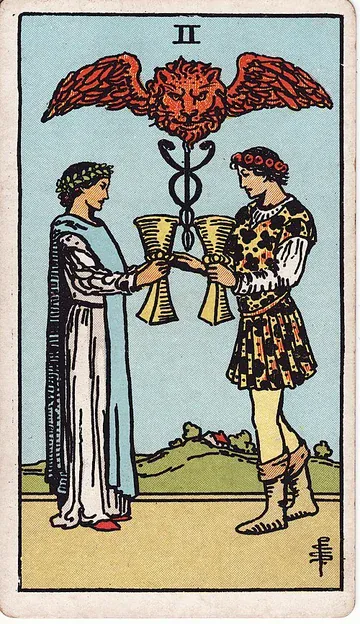
Two of Cups
The dyad's recognition becoming the trio's celebration. Two of Cups is the private vow; Three of Cups is the moment that vow steps into the kitchen where the friends are gathered. The pairing marks the season when an intimate bond becomes ready for wider witness — public emergence, introductions to chosen family, the first joint dinner with the friend group. The relationship has stopped flinching at being seen.
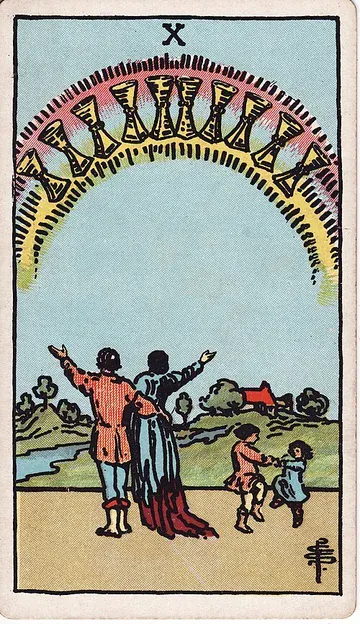
Ten of Cups
The small festival meeting the household blessing. Three of Cups is the toast at the kitchen table; Ten of Cups is the family under the rainbow with the children running ahead. Together they describe the long arc of communal joy, from the first round with chosen family through the years that turn chosen family into actual family. The Ten arrives only where the Three has been faithfully kept. Tend the round; the household builds from it.
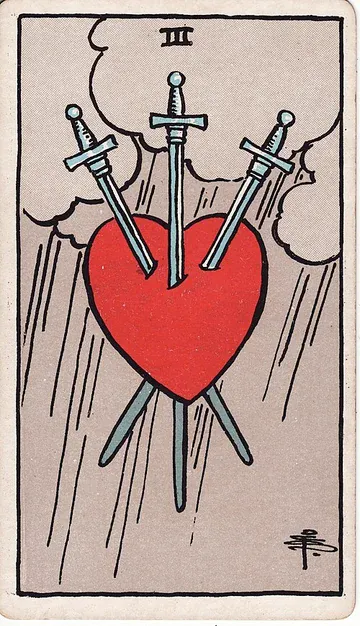
Three of Swords
The same number, different suits — the toast and the heartbreak in tonal collision. Three of Cups celebrates inclusion; Three of Swords names the moment one figure realizes they were not, in fact, included. The pairing often reads as social wounding — the trio that became two-against-one, the gathering whose unspoken topic was the absent friend, the betrayal that came from inside the round. Grief is the work; rebuilding the round elsewhere is the path forward.

The Empress
The Empress is Binah's lower octave in the Majors — the great mother, the abundant garden, the body that holds and feeds. The Three of Cups, also seated in Binah, vibrates at the same frequency. Together they describe the deep maternal warmth of community: chosen family that nourishes, friend circles that hold like wombs, gatherings that genuinely feed rather than perform. Often around fertility, mothering in any direction, and the deepening of women's-circle bonds.

The World
The cosmic completion meeting the small festival. The World is the dance of integrated elements at planetary scale; the Three of Cups is the same energy held in the local round of three. Together they describe milestones that land at the right scale and are celebrated at the right scale — the big achievement honored with the small dinner, the cosmic ending marked by the human toast. Even the largest completions are made of, and require, the small festivals beneath them.
Frequently Asked Questions
Does the Three of Cups reversed say no, or say that the room around you would say no?
Usually the second, which is a softer thing to work with — a soft no rather than a refusal, and it hardens only when the question depends on the active support of an existing social circle. The reversed Three of Cups describes a configuration that has not yet stabilized — the round around the question is uneven, divided, or quietly opposed to the action. The wise response is usually to wait until the social dynamic clarifies before committing. A week, a month, sometimes a season; the answer resolves once the round settles.
What tips the Three of Cups from celebration into something worth examining?
Repetition without attention — the round keeps running after the reason for it has gone. The Three of Cups reversed is the festival that has curdled — the gathering that still looks like communion but has begun to exclude, perform, or wear thin. It can describe the third party in a relationship, the friend group that has become a clique, the celebration culture that has slipped into excess, or the chosen family whose warmth comes with conditions. The card asks the seeker to read what the round has actually become rather than what it claims to be.
Does the Three of Cups reversed always mean a third person in the relationship?
Not always a person — but almost always a third thing. Reversed in love readings, the Three of Cups names triangulation. A third party may be in the picture — sometimes a flirtation, sometimes an ex, sometimes the friend whose closeness has crossed a line, sometimes simply an obligation occupying attention that should be on the partnership. It can also describe the dyad that has outsourced its private life to the social calendar. The card asks for return to the candle-lit dyad and honest tending of what has been allowed to drift.
What is the Three of Cups reversed tarot card meaning for a friendship?
For friendship, the reversed Three of Cups names the round that has thinned. The trio that has become two-against-one. The gathering whose warmth has cooled without anyone admitting it. Sometimes gossip. Sometimes drift. Sometimes the friend group that has stopped welcoming new members and become a closed clique. The card asks for honest conversation within the round, the willingness to leave a gathering early when energy has flattened, and an open chair for the next member who is not yet there.
If the Three of Cups reversed is their feeling, am I one of several people they are holding?
Often yes, and the card says so without accusation: the warmth is divided — they feel something for you, and the feeling is competing with other feelings, other obligations, other people they are also caring for. Reserved people show it as quiet retreat into their established circle; demonstrative people show it as public toast that does not match the private silence. The work, if there is work, is theirs — to bring the feeling out of the divided round and into a configuration that fully includes you.