
Three of Swords · Core Meaning
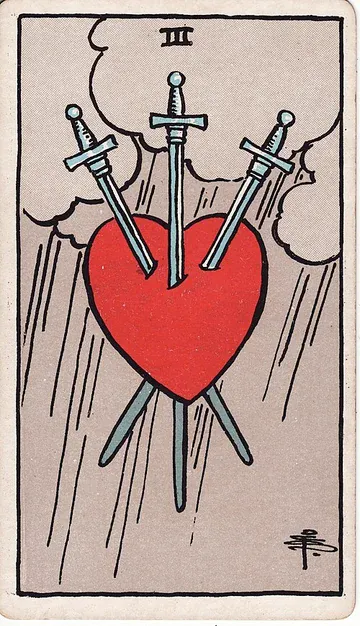
The Three of Swords is the heart after the sentence has finally been spoken. Not the fear before the news, not the numbness after a collapse, but the exact instant when the wound receives its name. Three long swords pass through a red heart under a gray sky. Rain falls. The image is severe because it refuses decoration. Nothing in it asks to be rescued from its own clarity.
The card's cruelty is also its mercy. The heart is pierced, not smashed. It still hangs whole. It has not become rubble. The blades make clean lines through it, and because the lines are clean, the wound can be known. This is why the card so often feels worse than the surrounding cards while doing a more honest work. A vague sorrow can spread through a life like fog. A named sorrow becomes a room with walls, a door, and a place to sit.
As a Sword card, this grief belongs to Air: speech, thought, language, the nervous system, the breath that catches in the throat before the real sentence comes out. The suit does not make the pain colder. It makes the pain intelligible. The tears are not irrational in this card. They are evidence. They show where the mind, after long avoidance, has cut through denial and touched the heart directly.
The number is three, the first binding of two forces into a single shape. In Kabbalistic language the card belongs to Binah in Yetzirah: the Great Mother, the womb of formation, containing sorrow until it can take form. Binah is not sentimental comfort. It is the dark vessel that says: put the pain here, let it have edges, let it be held without being explained away. Yetzirah is the world of formation, where feeling gains image and breath. Together they describe grief becoming legible.
The astrological signature is Saturn in Libra's second decan, 10/3-10/12. Saturn brings time, consequence, boundary, the thing that cannot be negotiated away. Libra brings the scales of relationship, agreement, proportion, fairness. In this card the weight of time drops onto one side of the scale and reveals what the relationship has actually carried. The revelation may hurt because it is balanced at last. The truth does not arrive as punishment. It arrives as weight.
The rain matters. It is not a theatrical backdrop. It rinses iron, rust, and the stone stairs after rain; it gives the card its scent. The sky is gray, not black. The weather is heavy, but it is weather. The card never says the wound is forever. It says the wound needs its hour. It says a clean cut is still a cut. It says the heart cannot become whole by pretending no blade has passed through it.
At its clearest, the Three of Swords means honest heartbreak, named grief, the clean cut, tears as truth. It is the email that confirms what the body already knew. It is the conversation in which someone finally stops circling. It is the diagnosis of a relationship, a plan, a hope, a self-image. The card asks for the dignity of exact language. Not "it is complicated" if the word is betrayal. Not "we drifted" if the word is abandonment. Not "I am fine" if the word is broken.
The card also distinguishes pain from catastrophe. The gray sky matters because it is not absolute darkness. The rain has duration. The heart has shape. The swords have count and placement. Catastrophe makes everything formless; this card does the opposite. It gives the hurt a geometry. For a reader in the first shock, that geometry can be the first mercy: the pain is not everywhere. It is here, here, and here.
Because the card is a three, the wound often has more than one source. There is what happened, what it meant, and what it disproved. There is the person, the pattern, and the sentence you can no longer say about yourself. Reading the card well means honoring all three blades rather than pretending one explanation can carry the whole heart.
This card is not anti-love, anti-work, anti-hope, or anti-body. It is anti-falsehood. It respects the heart enough to show what entered it. It respects grief enough not to rush it into a lesson. The first work is not to heal. The first work is to stop lying about where it hurts.
Three of Swords · Love & Relationships
In love, the Three of Swords is the relationship truth that hurts because it is finally shaped. It can describe betrayal, separation, a confession, a necessary ending, or the quiet recognition that the bond in front of you is not the bond you kept defending. The card does not make every love story tragic. It does insist that pain already present in the room be named without perfume.
For an established partnership, this card often marks the conversation both people have avoided. The issue may be fidelity, resentment, emotional absence, a grief neither partner knew how to carry, or the blunt recognition that one person has been lonely inside the relationship for a long time. The card's instruction is not theatrical collapse. It is exact speech. Put the blade on the table. Say which promise was cut. Say which silence became a third person in the room.
For a newer connection, the Three of Swords can describe the first real disappointment. The fantasy is pierced. Someone is unavailable, inconsistent, still bound to another story, or simply less able to meet you than their first brightness suggested. This does not require contempt. The heart may hurt because nothing ugly happened, only something true. The rain falls on a clean disappointment as surely as on a dramatic one.
For a single seeker, the card points to the grief that still stands between desire and approach. It may be an old breakup, a rejection, a family wound, or the memory of having wanted someone who could not want you with the same courage. The work is not to become "ready" by force. It is to name the old blade before a new person is asked to prove they are not holding it.
For a marriage or long bond under strain, the Three of Swords can mark the hour when repair becomes possible because denial is over. This is not a promise that the relationship continues. It is a statement that honest work starts only after the real wound is spoken. Some bonds survive this card because both people can look at the pierced heart together. Some bonds end because one person keeps asking the other to admire the handle of the sword.
For separation, divorce, or a breakup already underway, the card gives the grief permission to be grief. It is not the Five of Cups, which stands before spilled cups and a river. It is sharper, more verbal, more immediate. It is the legal sentence, the last message, the empty side of the bed after the explanation finally arrives. The card asks for witnesses who can hear the real name of the thing without hurrying you toward brightness.
Co-parents, and anyone whose separation arrives with shared logistics — a lease, a dog, a business, a family calendar — get a harder version of the same instruction. The wound must be named, and the school run still happens on Tuesday. Here the Three of Swords asks for two languages: one for the private page where the blade is described exactly, and one for the doorway handover where a child is watching. Keeping them separate is not dishonesty. It is the difference between a heart that hangs whole in the rain and one that bleeds onto everybody standing nearby.
For questions about reconciliation, the upright Three of Swords is severe. The old wound is not a minor misunderstanding. If contact resumes, the first subject cannot be nostalgia. It must be the blade. What happened? Who bled? What apology has form rather than atmosphere? Without that, the return only pushes the same metal deeper.
For a secret love, affair, triangle, or bond tangled with another commitment, the three swords become literal. The heart is pierced by divided loyalties. Nobody remains untouched by the arrangement, even if everyone is elegant about it. The card is not moral theater; it is structural clarity. Three blades cannot occupy one heart without leaving three wounds.
For queer, hidden, or socially pressured love, the card can name a different kind of heartbreak: not lack of love, but the pain of a world that makes honest love costly. Here the gray sky may be family pressure, legal anxiety, exile, or the exhaustion of translation. The card asks for truth without self-cruelty. Do not call a hostile room your personal failure.
For love after bereavement, this card may describe the ache of loving someone absent. The heart remains whole, but a blade marks the place where a living answer used to be. The work is not to remove love from the wound. It is to let the rain keep the memory clean.
The person who held the sword grieves without ceremony. Ending a bond you still love is its own piercing, and it rarely receives condolences: friends congratulate the decision, the other person's pain fills every room, and your own is treated as inadmissible evidence. The Three of Swords admits it. A cut made by your own hand still enters a heart. Name what was lost alongside what was necessary — the shared kitchen, the plan for a particular July, the person you were only in that company. Grief does not require innocence to be grief.
For the person who feels humiliated by having loved, the card is especially tender beneath its severity. It separates the wound from the shame around the wound. To have trusted, hoped, written the message, waited at the window, imagined a future, or believed an apology does not make the heart foolish. It makes the heart visible. The sword did not enter because the heart was weak. It entered because the heart was open enough for truth to reach it.
For the person tempted to turn pain into a performance of strength, the Three of Swords refuses the costume. It does not admire indifference. It does not ask for public poise, clean exits, or the kind of dignity that means no tears touched the face. Dignity here means accuracy. If it was love, call it love. If it was harm, call it harm. If it was both, let both blades have names.
For the question of what the Three of Swords means in love, the answer is: love has reached a truth it cannot move around. That truth may end the bond, deepen the bond, or strip away a fantasy so the actual people can be seen. The card is painful because it respects love enough not to flatter it.
Three of Swords · As Feelings
As feelings, the Three of Swords is not simple dislike. It is hurt with language around it. Someone may feel wounded, exposed, disappointed, betrayed, ashamed, or newly aware of how much they cared. The heart in the image is pierced because feeling has not remained soft atmosphere; it has become a fact with edges.
If the person is hurt by you, the card describes the moment they stop minimizing it. They may have tried to be reasonable, generous, adult, detached. Now the sentence has sharpened: that hurt me. Their feelings are not theatrical by nature, but they are precise. The more they sound calm, the more carefully the words may have been chosen.
If they hurt you, the card can show guilt breaking through defensiveness. The blade has crossed the distance between mind and heart. They understand something not as an argument but as consequence. This does not automatically create repair. It does mean the inner weather is no longer abstract. The rain has started.
If the bond is new, the Three of Swords as feelings often means disappointment before attachment has fully formed. They may feel the first sting of mismatch: timing, distance, another person, a value difference, a sentence that landed poorly. The sadness is real, but it may not yet be deep history. It is a clean cut, not scar tissue.
If the bond is old, the card describes layered pain. Their feeling may include love, resentment, fatigue, and the awful intimacy of knowing exactly where to place the sword because they know the heart so well. Long relationships make precise wounds possible. The card asks that this precision be treated as serious, not dismissed as drama.
If someone seems cold while this card describes their feelings, read the cold as a nervous-system response. The throat and lungs belong to this card's body map; breath tightens, voice thins, speech becomes formal. They may sound like a document because the body is trying not to collapse. Air can freeze around pain.
If someone seems angry, the anger may be grief wearing armor. The Three of Swords often arrives before anger has softened into mourning. A sharp message, a refusal, a cutting remark, or a sudden boundary may be the visible sword. Under it is a heart trying to stay whole while admitting it has been pierced.
If you ask whether someone has feelings and receive this card, the answer is yes, but the feeling is not easy pleasure. They care enough to hurt. They may be grieving what did not happen, what cannot happen, or what happened badly. This is not the Nine of Cups' warmth or the Two of Cups' mutual gaze. It is the ache of significance.
If you ask how an ex feels, the Three of Swords suggests the wound remains active in thought. They replay the sentence, the break, the unfairness, the final image. The card does not say they are plotting return. It says the heart has a clear record of the cut.
Sometimes what they feel has been shaped by a version of events you never gave them. A friend edited the story. A message was read in the worst available tone. A silence was filled in with motive. Three blades, three angles: this card knows a heart can be pierced by an account as surely as by an act. Their hurt is genuine even when its cause is partly fiction. Whether the account can be corrected is a separate question from whether the feeling is real, and the two questions should not be answered in the same breath.
If the person is far away, blocked, silent, or impossible to read, the card does not authorize invention. It says the available feeling is pain. That pain may be theirs, yours, or the field between you. The Three of Swords is careful about projection because Air can make brilliant arguments from too little evidence. Stay with what is known: a wound exists, and the mind is trying to give it shape.
If they are trying to move on, the card may show the raw interval before emotional freedom. They are not untouched. They may be dating, working, laughing, answering messages, and still carrying the clean line of the cut. Feelings here are not absent because life continues. The heart can continue and hurt at the same time.
Not every question about feeling is romantic. A friend who stopped answering, a sibling after the conversation about the inheritance, a parent after the sentence said across the table: the Three of Swords describes their inner weather the same way. Between friends the wound is usually disappointment rather than betrayal — they expected you to show up in a particular way, you did not, and there is no accepted vocabulary for that loss. It goes unnamed. Unnamed grief almost always presents itself as distance, and distance is easy to misread as indifference.
As feelings inside the self, the card may describe the private sentence you keep avoiding because saying it makes the wound real. "I loved them." "I was betrayed." "I did not want this." "I am relieved." Sometimes the most painful feeling is the one that does not match the approved story. The Three of Swords lets the unacceptable feeling stand in the rain and be named.
Three of Swords · Career & Work
In career and work, the Three of Swords is the hard result that cannot be softened by a better caption. The project is cut. The offer is withdrawn. The review lands harshly. A colleague breaks trust. A role that seemed secure reveals a crack. The card asks for the professional dignity of plain recognition before strategy begins.
For a current role, it can describe a workplace heartbreak: being passed over, excluded from a decision, criticized in public, or realizing that an organization you served does not value you in the way you believed. This is not merely "feedback." The heart is involved because loyalty was involved. Name the injury before turning it into a productivity plan.
For a job search, the card may mark rejection, silence after promising interviews, or the finding that the position was never as open as it seemed. The cleanest response is not self-erasure. Read what happened accurately. A closed door is painful. It is not proof that the whole street hates you.
For a role decision, the Three of Swords points to the option that requires grieving. Leaving may be right and still hurt. Staying may require naming the wound that made staying difficult. The card rejects the corporate habit of calling every painful turn an opportunity. Some turns are losses first. They become useful only after they are allowed to be losses.
For founders, freelancers, and independent workers, this card often shows the client who disappears, the invoice disputed, the collaborator who takes the idea elsewhere, or the launch that meets rain instead of applause. Because independent work carries identity so close to labor, the cut can feel personal. The card says: distinguish the wound from the whole self. Then answer the contract, the scope, the record, the next step.
For creative work, the Three of Swords can be the critique that pierces the piece because it is accurate. Bad criticism bruises the ego and passes. Accurate criticism hurts cleanly. It shows where the work is not yet honest. Let the blade point to the weak line, the false ending, the borrowed voice. Do not worship the wound. Use the information after the first rain.
For team conflict, the card names the meeting after trust breaks. Someone said the private thing publicly. Someone took credit. Someone kept a crucial truth from the group. The best repair begins with sequence: what happened, who was affected, what boundary changes now. Air wants clean order. Saturn in Libra wants consequence proportionate to the imbalance.
For leadership, the card may be the pain of delivering hard news. Layoffs, refusals, restructuring, the honest assessment of a person who cannot continue in a role: the sword is in your hand even if the heart is yours too. The card asks for clarity without cruelty. Vague kindness prolongs pain. Exact kindness lets the rain begin.
Not everyone cut by a round of layoffs loses the job. The ones who stay inherit the emptied desks, the doubled workload, and the private arithmetic that the line could have fallen one name earlier. The Three of Swords reads that as an injury rather than as luck. Gratitude is the posture expected of survivors, and gratitude is a poor container for grief. Say what was actually lost: colleagues, the story the company told about itself, the belief that competence protects. Only then is it possible to judge what the remaining work is worth.
For students and apprentices, the card can describe failing an exam, receiving a rejection from a program, or hearing that a path imagined for years does not fit. The grief is real because the imagined self was real. Let that self be mourned. A new course of study should not be built on contempt for the one that broke.
For burnout, the Three of Swords is the moment the body and mind admit work has become injury. The throat tightens before meetings. The lungs shorten. The nervous system reads the inbox as weather. This is not weakness. It is data. The card asks for a clean name: overwork, humiliation, moral injury, boredom, fear.
For people returning after a leave, illness, bereavement, or caregiving interruption, the card may describe the pain of re-entering a workplace that kept moving. The desk is still there, but the person sitting at it has changed. Colleagues may mean well and still say the wrong bright sentence. The Three of Swords asks for a humane pace and clear boundaries around what can be discussed.
For people whose work involves care, conflict, law, medicine, education, or crisis, the card can name secondary heartbreak. You carry other people's cuts until your own heart begins to feel crowded with blades. Professional distance may be necessary, but numbness is not the same as distance. The card asks for supervision, ritual closure, and a place where the borrowed grief can be washed off.
Where the workplace is also the family — a shop with a parent's name above the door, a company built with a spouse, a studio shared with an old friend — the blade lands twice. A disagreement about scheduling becomes a betrayal at dinner. The Three of Swords asks which wound is being negotiated in any given hour, because the two need different rooms and different language. Written terms, defined scope, and an agreed way to end things are not coldness here. They are the clean cut that keeps one relationship from being severed slowly by a thousand ragged ones.
For money-linked career fear, the card warns against pretending the financial blade is not there. Rent, debt, dependents, health insurance, immigration status, caregiving: these are real weights. Libra's scale must include them. A brave decision that ignores material consequence is not necessarily honest. The card prefers sober grief to dramatic purity.
Three of Swords · Money & Finances
In money, the Three of Swords names the financial wound: the bill that lands, the loss that becomes official, the shared account that reveals a betrayal, the budget line that finally says what the body knew. It is not a prosperity lesson. It is the moment the numbers pierce the story.
For personal budgeting, the card asks for exactness. How much is owed? What date matters? Which expense is grief dressed as comfort? Which subscription, loan, gift, or secret purchase carries the real cut? Air wants the spreadsheet because the heart cannot keep bleeding in abstraction. Write the figures down without moral theater.
For couples and shared finances, the Three of Swords can indicate painful disclosure. One partner hid debt. One partner carried more than they admitted. One partner used money to avoid saying what they wanted. The card does not reduce love to accounting, but it refuses to separate trust from accounting when trust passed through the account.
For investments, business losses, or market disappointment, the card is a clean no to denial. The position is down. The deal is broken. The expected return is not arriving in the imagined form. Do not revenge-trade against grief. Do not throw good money after the wish because the heart hates being wrong. Close the cut, then decide.
For debt, the card can feel severe and useful at once. It marks the day the total is faced. Shame may rise first. Let it rise, then set it down beside the paper. Debt is a structure, not a personality. The wound needs a plan, but the plan begins after the wound has a number.
For inheritance, divorce, or family money, the Three of Swords often appears when love and law stand too close together. A will disappoints. A settlement hurts. A sibling's demand exposes an old hierarchy. The card asks for records, witnesses, dates, and clean language. Do not let family myth blur the blade.
For spending after heartbreak, the card gently but firmly names compensation. The purchase may not be pleasure; it may be a bandage. The meal, the garment, the flight, the object with garnet shine or onyx darkness may be beautiful and still unable to close the wound. Buy what is needed. Do not ask a receipt to become a ritual.
For a person financially supporting others, the card can describe the heartbreak of limits. You may want to rescue everyone and find that the account cannot carry that wish. This is a real grief. It may involve parents, children, siblings, friends, or a partner whose need keeps exceeding the shared vessel. The Three of Swords asks for a boundary that hurts less than collapse. The kind sentence may be no.
For a person whose money wound comes from betrayal, fraud, coercion, or control, the card asks that the injury be named in the correct register. Not "I was careless" if someone manipulated you. Not "we had different values" if someone stole. The right word matters because the next practical step depends on it: legal advice, account changes, documentation, a trusted witness, a new password, a safer address.
For a person afraid to look at the accounts because every number feels like judgment, the card asks for a witness and a timer. Ten minutes with the statement open may be more honest than three months of dread. The rain does not have to fall all day. It can fall in a measured ritual: open, read, name, close, breathe.
The practical message is sober: pause, name, document, seek advice where technical advice is needed, and resist making the wound into identity. Money pain can humiliate because it appears to measure worth. The Three of Swords rejects that lie. It measures a cut, not a soul.
Three of Swords · Health
For health, the Three of Swords should be handled with care. It is not a diagnosis and does not replace medical guidance. As an inner mirror, it describes the felt experience of pain becoming impossible to ignore: the tight throat, the shortened breath, the chest grief, the nervous system that keeps replaying the moment of impact.
The card's traditional body associations are throat and lungs, with the nervous system threaded through them. This is the sob caught before it becomes sound. It is breath held through a conversation. It is the ache between shoulder blades after days of bracing. The card asks what the body has been forced to say because the mouth did not.
For acute stress, the card often marks the crash after bad news. Sleep breaks. Appetite changes. The body moves as if under gray weather. Rather than spiritualizing the symptoms, answer them practically: water, rest, a call to a trusted person, a clinician when needed, less stimulation, fewer heroic explanations.
For chronic stress, the Three of Swords may describe the old wound kept active by constant thought. The nervous system learns the shape of the blade and reacts before the present moment has done anything wrong. This is where professional support, trauma-informed care, breathwork, movement, and steady routines can matter. The card describes the pattern; qualified care helps with the body.
For grief, the card gives tears their rightful place. Crying is not failure in this image. The rain is the cleansing element. The heart is not less dignified because water falls. A person who cannot cry may need another form of rain: writing, walking in wet air, speaking the plain sentence to one witness, sitting in a shower until the body stops pretending.
For recovery after a procedure, illness, or bodily shock, the upright card asks for respect around the cut. Do not rush the scar into symbolism. Tend the actual wound. Follow instructions. Let tissue close at tissue speed. The card's wisdom is not speed; it is form.
For mental health, the card can describe depressive grief, anxiety after rupture, intrusive memory, or the particular loneliness of heartbreak. The language should stay clean: if risk is present, get immediate human help. If support is available, use it. The card is a mirror for pain, not a substitute for care.
For heartbreak that has become physical habit, the card asks for tiny restorations. Loosen the jaw before answering the message. Put both feet on the floor before the difficult call. Let the exhale be longer than the argument in the mind. These are not cures. They are ways of telling the body that the present moment contains more than the blade.
For caregivers and people who must keep functioning while hurt, the card acknowledges the strange split between duty and grief. Children still need dinner. Patients still need care. Work still asks for speech. The heart may be pierced while the hands remain useful. This is not hypocrisy. It is survival. Still, the rain needs a place to fall later, or the body becomes the weather.
For people who intellectualize pain, the health message may be to leave the head by a small door. Air is gifted at analysis. It can describe the wound, date the wound, compare the wound, and still avoid feeling the wound. Let the body contribute one fact the mind cannot edit: where the breath stops, where the throat tightens, where the hands go cold, where the tears begin.
The healthiest expression of the Three of Swords is named sorrow moving through the body rather than lodging there. The rain falls. The lungs reopen. The throat says the sentence. The nervous system learns that the blade is an event, not an atmosphere that must last forever.
Three of Swords · Spirituality
Spiritually, the Three of Swords is the discipline of not lying to the soul. It is the card of the prayer that begins without elegance: this hurts. The image refuses all glossy consolation. No gold doorway opens in the sky. No soft hand removes the blades. Rain falls because rain is the honest sacrament of this card.
For a journaling practice, the card asks for one clean page. Write the fact, not the interpretation. Write the sentence, not the thesis. "I was left." "I am angry." "I miss what harmed me." "I do not forgive today." Such sentences are not failures of spiritual maturity. They are doors into the real room.
For ritual practice, the Three of Swords belongs to iron, onyx, garnet, mugwort, juniper, and rainwater on stone. A simple rite suits it: wash the hands, name the three blades, place one stone for each, and remove them one by one only after the names have been spoken. The point is not performance. It is honest form.
For seekers who prefer light, this card can feel like exile from practice. It is not. Some spiritual work happens under a gray sky. Binah holds sorrow without demanding it become luminous on schedule. Saturn in Libra asks what is fair, what is owed, what boundary must be restored. These are sacred questions even when they sound like legal questions.
For forgiveness, the card is cautious. Forgiveness that arrives before naming often becomes another blade. The heart cannot be instructed to absolve what the mouth has not yet admitted. Let grief speak first. Let anger speak without becoming the whole house. Let repair, if it comes, come through truth rather than pressure.
For ancestral or family grief, the card may show a wound that did not begin with you but has found language through you. A family rule against crying, a history of exile, a silence around betrayal, a pattern of swallowing the blade because peace was more valuable than truth: the Three of Swords brings rain to the inherited room. Naming is not accusation. It is the first clean inventory.
For spiritual communities, the card warns against bypassing harm with sacred language. A wound caused in a ritual space, friendship circle, or teaching relationship still needs ordinary truth: what happened, who was harmed, what boundary holds, what restitution is possible. Incense cannot replace accountability. The gray sky is holy because it tells the truth.
For readers who fear that pain means spiritual failure, the Three of Swords is a correction. Pain is not proof that practice failed. It may be proof that practice has made enough room for truth to surface. A shallow practice can keep everything pleasant. A deeper one sometimes hands you the exact word you avoided for years and asks you to write it without ornament.
For readers who are angry at the sacred, the card leaves room for that anger. The sky does not argue with the rain. A prayer can sound like accusation and still be prayer. A page in a digital grimoire can hold the sentence: I do not understand why this hurt so much. The card does not require devotion to be polite before it is allowed to be real.
For readers who have been taught to call every wound a blessing, the card offers a cleaner theology: some wounds are wounds. Meaning may grow near them later, the way green appears near wet stone, but the wound does not need to be praised in order to be integrated. The rain is enough. The truth is enough. The heart's continued beating is enough.
For readers keeping a record of ritual life, this card asks that the entry stay plain. Date, weather, sentence, body. What happened. Where it was felt. Who witnessed it. What is needed next. The page becomes a basin for rain rather than a stage for suffering.
If the entry needs a closing line, use one that does not overreach: this is the name of the wound today. Tomorrow may bring another name, or no new name at all. The card respects such modest endings because grief often moves by inches.
The sacred work is the inch, not the grand conclusion.
That is why the rain falls steadily, without argument, until stone accepts it.
No witness is wasted.
The heart records the careful witness as shelter.
The spiritual gift of the card is clean witness. To stand before the pierced heart and say, yes, this happened, is already a form of reverence. The soul does not need every wound turned into wisdom by evening. It needs one person, one page, one quiet room where the wound can be known without being used.
Three of Swords · Yes or No
No. Not cleanly. Not yet.
The Three of Swords upright is one of the deck's clearest no-cards for questions that ask whether a path is easy, mutual, painless, or ready. The card does not answer with spite. It answers with the pierced heart. Something in the question contains a wound, a separation, a hard truth, or a cost that cannot be ignored.
For love questions, the answer is no if the question is "are we fine," "is this harmless," "can I avoid the painful conversation," or "is this person fully available." The card may still contain love. It does not contain uninjured love. A yes that requires pretending the swords are decorative is not the card's yes.
For career questions, the answer is no if the question asks whether a rejection, critique, or rupture can be bypassed. The card says the result must be faced. It may also say no to a role that carries too much hidden pain, no to a collaboration already pierced by distrust, no to a plan built on denial.
For money questions, the answer is no to risky escalation, revenge spending, or financial secrecy. It is not a no to recovery. It is a no to avoiding the number. The budget, the debt, the loss, or the shared obligation needs a clean name before movement.
For health questions, the answer is no to ignoring symptoms, swallowing grief, or treating emotional pain as an inconvenience. The card asks for care, not alarmism. If the body is speaking, answer with practical support.
For timing questions, the card says not now. The rain is still falling. The first task is recognition. After the wound has been named, after the conversation has happened, after the body has stopped bracing, another card may answer differently. This one keeps the gate closed until truth has passed through it.
For "yes or no as feelings," the answer is not a clean yes to affection or a clean no to care. It is yes to hurt being part of the field. It is yes to significance and no to ease. If the question asks, "do they care," the card answers that care may be present through pain; if the question asks, "is this emotionally safe right now," the answer leans no until the wound is named.
For "yes or no for advice," the answer is yes to the hard sentence and no to the soft lie. Yes to asking for clarity. No to waiting for someone else to make the cut elegant. Yes to tears that tell the truth. No to the performance of being above injury. The Three of Swords gives its permission only to what makes the wound more honest.
For "yes or no for reconciliation," the card asks what kind of reconciliation is being imagined. No to reunion that avoids the wound. No to the apology that wants speed more than repair. No to the old pattern with a cleaner outfit. The only yes is a narrow one: yes to a conversation that names the blade, accepts consequence, and allows the answer after that conversation to be uncertain.
For "yes or no for contact," the answer depends on the purpose of the contact. If the message seeks a wound to be seen, write it first in a private place and let it cool. If the message seeks accountability, keep it exact. If the message seeks one more chance to be hurt in a familiar way, the card says no with the full weight of Saturn in Libra.
There is one narrow yes inside the card: yes, tell the truth. Yes, name the wound. Yes, let the tears come. Yes, stop pretending the heart is intact in the exact place where it is pierced. But for the ordinary yes-or-no searches around the Three of Swords, the practical answer is no, with a reason and a next step.
Three of Swords · Advice
Name the wound plainly, and in the fewest words it will take. Not beautifully. Not strategically. Plainly. The card does not ask for an essay when the true sentence is six words long. It asks for the sentence that lets the rain begin.
Do not rush to meaning. The mind often tries to rescue the heart by turning pain into a lesson before the blood has dried. "At least I learned." "Everything happens for a reason." "It made me stronger." The Three of Swords refuses this speed. Learning may come later. Reason may remain unavailable. Strength is not the first obligation. Honesty is.
Speak to one person who can hear the real name. Not the person who needs the story softened. Not the person who will convert it into advice before the first paragraph ends. Choose a witness with enough stillness to let the heart hang in the gray rain without touching the blades too soon.
If an apology is owed, make it exact. Say what happened. Say what it cost. Say what changes. Do not ask the hurt person to praise your courage for naming the blade. The Three of Swords respects accountability because Saturn in Libra respects proportion. Repair without proportion becomes another wound.
If a boundary is needed, make it clean. No ornate courtroom speech. No hidden test. State what contact stops, what access changes, what condition matters. The clean cut is kinder than the ragged one. The card's sword is painful because it is sharp; dullness would tear more.
If the grief is yours, give it body. Walk in rain if weather allows. Hold onyx or garnet if touch helps. Put a hand at the throat and breathe slowly into the lungs. Write the three names of the wound: what happened, what it meant, what it cost. Then close the page for the day.
If the wound involves another person, separate the sentence meant for your journal from the sentence meant for them. The journal can hold the weather in full: rage, grief, contradiction, the ugly sentence, the tender sentence, the part that still misses them. The message should carry only what can be cleanly owned or clearly requested. Air needs editing as much as expression.
If you are the one who caused pain, the advice is not to hide behind self-punishment. Shame can look noble while keeping attention on the person who harmed. Return attention to the heart that was pierced. Ask what repair means in concrete terms. Accept that the other person may need distance more than eloquent remorse.
If you are the one who received pain, the advice is not to build a temple to the injury. Keep evidence where evidence is needed. Keep memory where memory is honest. But do not make every future tenderness pass an exam written by the person who hurt you. The Three of Swords names the old blade so new hands are not automatically accused of holding it.
If no conversation is possible, make the naming ritual private. Say the sentence aloud in an empty room. Put it in a note. Record it and delete it. Walk until the sentence changes from a storm into a line. The card does not require the other person to hear the truth before the truth becomes real.
The card's final advice is restraint. Do not make pain your whole title. Do not let the wound become property. Do not show every approaching person the three blades as proof that they owe you gentleness before they have done anything. Name it, tend it, and let it remain an event rather than a throne.
Three of Swords · Card Combinations
Three of Swords + Two of Swords
The decision avoided becomes the wound named. Two of Swords keeps the blindfold on, holding tension in perfect stillness; Three of Swords shows what the stillness costs. Together they describe the moment neutrality breaks. The question is no longer whether a choice can be postponed, but what part of the heart has been carrying the postponement.
In relationship readings, this pairing often shows the conversation that silence created. Nobody may have intended harm. The harm came from suspended truth: unspoken attraction, unmade decisions, a refusal to choose between people, a private grief kept away from the shared table. The blindfold was not peace. It was pressure. The Three shows where pressure entered the heart.
Three of Swords + Four of Swords
The cut followed by rest. This pairing asks for a recovery chamber after hard truth: no immediate re-entry, no frantic explanation tour, no demand that the heart prove its resilience. The Four gives the Three a bed, a chapel, a silence. Let the nervous system come down before the next conversation.
In work or family conflict, this combination is a strong instruction to stop processing in public. The wound needs privacy before interpretation. Read the message once, not twenty times. Let the meeting end. Put the phone down. The Four of Swords does not deny the Three; it keeps the Three from becoming a room full of sharpened echoes.
Three of Swords + Three of Cups
Private heartbreak meeting community. The wound may involve friendship, social circles, celebration that excludes someone, or the painful recognition that a group cannot hold the truth it helped create. At its best, Three of Cups gives witnesses to the rain. At its worst, it turns the wound into gossip. Choose the table carefully.
For love, this pairing can name the friend group after a breakup, the shared circle after betrayal, the party where everyone knows more than they say. It asks whether community is helping the heart stay human or asking it to perform composure for the comfort of the room. Good friends bring soup and quiet. Poor witnesses bring an audience.
Three of Swords + Five of Cups
Sharp heartbreak deepening into mourning. The Three names the blade; the Five stands before what spilled. Together they ask for grief with sequence: first the fact, then the lament, then the slow turn toward what remains. This combination is heavy but honest. It does not rush the bridge in the background.
The danger is fixation on the first half of the sequence. The Three can keep naming the cut; the Five can keep staring at the spilled cups. Together, without care, they become a loop of evidence and lament. Their medicine is also in the image: the cut has a name, the cups have count, and the bridge remains behind the mourner. Specificity keeps grief from becoming a sky without horizon.
Three of Swords + Death
The clean cut becomes an ending that changes the whole season. Death does not merely hurt; it transforms the field after hurt. With the Three of Swords, it can mark the relationship, identity, job, or hope that cannot be revived in its old form. The instruction is sober: let the ended thing be ended, and let the rain prepare the ground.
This pairing is not melodrama. It is precise because both cards know form. The Three gives the wound its shape; Death gives the ending its boundary. Together they protect the seeker from half-endings, endless returns, and the fantasy that a cleanly ended life can be negotiated back by eloquence. What remains after this pairing is not immediate comfort. It is truth with enough room around it for the next season to begin.
Three of Swords + The Star
Rain becoming water poured on purpose. The Star does not withdraw the three blades; it changes what the sky is doing. Where the Three shows weather falling on a heart that cannot stop it, the Star shows a figure kneeling at the pool with a vessel in each hand, choosing where the water goes. Together they mark the hour when grief stops happening to someone and becomes something they tend.
In practice this pairing tends to land on the seeker who has survived the worst month and does not yet trust the quiet. Do not ask the Star for proof; its light is small and unarmed, and the Three has taught the heart to distrust anything that arrives smiling. The combination asks only for one honest act performed in the open air — a walk taken without music, a letter written to be kept, a window left uncovered so the night can be seen from the bed.
Card Combinations
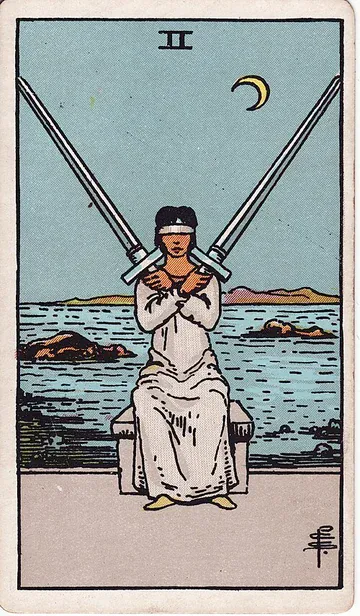
Two of Swords
Two of Swords with Three of Swords shows avoidance turning into named pain. The blindfold cannot stay on forever; the postponed choice has begun to pierce the heart. Together they ask for one clean decision made before silence does more damage.
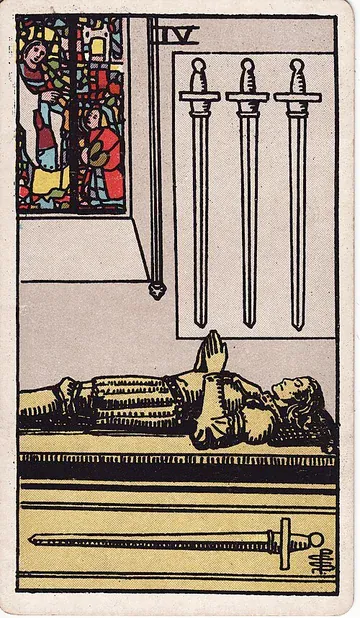
Four of Swords
Four of Swords gives the Three of Swords a recovery chamber. After the hard truth, the mind and nervous system need quiet, sleep, prayer, therapy, or retreat. The combination says the wound is real, and rest is part of the treatment.
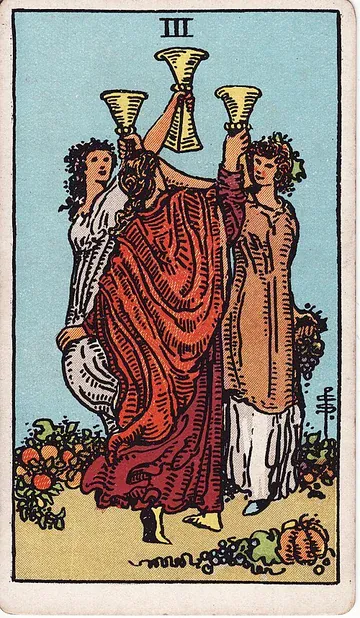
Three of Cups
Three of Cups brings witnesses to the Three of Swords. Friends can help grief move by setting a table, listening cleanly, and refusing gossip. The same pairing can warn that community is turning heartbreak into social currency. Choose the room carefully.
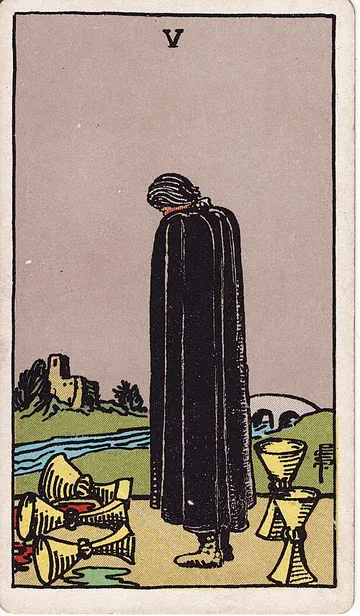
Five of Cups
Five of Cups deepens the Three of Swords into mourning. The blade has entered; now the spilled cups must be faced. This pairing asks for grief with sequence: name the cut, lament what fell, then notice what remains when the eyes can lift.
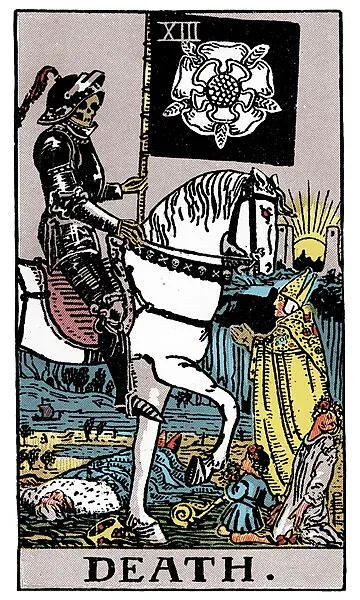
Death
Death with the Three of Swords marks an ending that cannot be negotiated back into its old form. The heartbreak is not merely painful; it changes the season. Let the ended thing be ended, and let the rain prepare the ground for another life.
Frequently Asked Questions
Does the Three of Swords always mean betrayal, or can it also mean an honest conversation?
Betrayal is only one of the shapes it takes. The Three of Swords means honest heartbreak, named grief, and the clean cut of truth: a heart pierced by three blades under rain, pain that has finally received a form it can be spoken in. Sometimes the piercing is something a person did to you. Just as often it is the sentence someone finally said out loud, or the diagnosis, or the letter that ended a long silence. The card asks for exact language before repair, and it is difficult without being hopeless — the sky behind the heart is gray, not black.
What is the rain behind the pierced heart telling me about my relationship?
That the release has already started. The rain in this image falls only after the blades have entered, which is the card's whole argument about love: grief becomes bearable at the moment the thing is named. In a partnership the naming is usually a painful relationship truth — betrayal, separation, disappointment, emotional absence, or the conversation both people have been walking around for a season. The card does not say the love was fake. It says the wound in the bond has to be described plainly, in the plainest available words, before anything honest can be built on top of it.
Does the Three of Swords as feelings mean they have stopped caring?
Usually the reverse. This card measures how much someone cared by how precisely it hurts. As feelings it describes hurt that has language around it — someone wounded, guilty, disappointed, angry, or sharply aware of how much of themselves they had committed. Indifference does not produce a pierced heart; it produces an empty sky. What the card cannot tell you is what they intend to do with the hurt, only that the hurt is articulate and located. The heart in the picture is admitting where the blade entered, which is a more intimate act than most warm cards ever ask for.
Is there anything the Three of Swords says yes to?
Only the truth-telling questions. Asked whether something will go smoothly, the card is a no: not cleanly, not painlessly, not yet. Asked whether to say the difficult thing, it turns: yes, name the wound; yes, have the conversation you have been drafting for weeks; yes, stop pretending the heart is intact where it has plainly been pierced. The Three of Swords yes or no answer depends entirely on which of those two questions is actually being asked. A seeker hoping for painless passage is told no. A seeker asking permission to be honest is told to go ahead.
Why is the heart pierced by three swords?
The heart is pierced rather than shattered because the card is about a wound receiving form. Three is the number of synthesis: several angles of truth entering one emotional center. The swords belong to Air, so the pain is made legible through language, thought, and exact naming.
Continue Reading
Three of Swords · Card overview · symbols · correspondences →
Return to the full card view — image, symbols, sensory correspondences, and Hermetic axes.
Read the reversed meaning →
Read the same depth on the opposite orientation.
Draw your reading now →
Bring this card to a question — open a quiet ritual.