
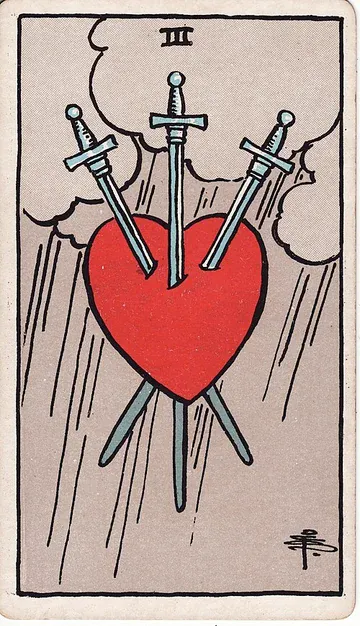
Three of Swords Reversed · Core Meaning
The Three of Swords reversed turns the pierced heart inward. The blades are no longer only the event. They become a posture, a dwelling, sometimes a shield. Upright, the card says the wound must be named. Reversed, it asks what happens after naming: does the rain clean the cut, or does the heart learn to keep the metal as proof?
This reversal has two faces. The first is release: a blade loosens, a sentence loses its old charge, tears come after a long drought, the nervous system learns that the story can be remembered without being re-entered. In this face, the reversed card is tender. It does not erase pain. It marks the first day the pain is not the whole weather.
The second face is attachment to pain. The wound becomes identity. The old betrayal becomes the credential brought into every room. The break, rejection, humiliation, or loss becomes the reason no new request can be made of the heart. This is not mockery of grief. Grief deserves time. The reversed card begins to speak when grief has been given time and still refuses any day that does not center it.
Because this is Air, the reversed card often appears in thought loops. The same conversation is rehearsed. The same message is reread. The same imagined reply is perfected. The mind keeps the blade polished. The throat and lungs stay involved: unsent speeches, shallow breath, the body preparing to defend a wound nobody in the room has touched.
Saturn in Libra reverses as well. The scale that upright tried to balance can become a courtroom without end. Every new person is measured against the old defendant. Every apology is insufficient because the trial is no longer about repair; it is about maintaining the architecture of injury. Saturn's gift is boundary. Saturn's shadow is life sentence.
Binah in Yetzirah also changes texture. The womb that holds sorrow can become a sealed chamber. Formation becomes fixation. The story gains shape, then refuses to change shape. The card asks where the old form has become too small for the living heart.
At its healthiest, Three of Swords reversed means the wound is ready to close. Closure is not denial. It is not the claim that the blade did not enter. It is the body's right to stop being organized around the blade. The rain has done enough washing. The heart remains marked, but not occupied.
The sensory field changes in reversal. Iron rust becomes the taste of a story told too often. Stone stairs after rain become the place where someone keeps returning to look for the same footprint. Onyx and garnet are no longer only mourning stones; they become questions of containment. What dark stone holds the grief without becoming a wall? What red stone remembers the heart without demanding fresh blood?
The reversal can also describe a wound that never received its first clear naming. In that case, "reversed" does not mean healing has begun; it means the blade is hidden under language that is too vague. A person says stress when the word is grief, confusion when the word is betrayal, tired when the word is ashamed. The card may ask for the upright work to happen belatedly: name the wound before trying to release it.
There is another reversed face: the apology that arrives late, the truth that comes after months of fog, the old pain that finally makes sense because one missing fact is revealed. This can be relieving and enraging at once. The heart may say, now I understand, and also, why did I have to carry the wrong story for so long? Both responses belong under the same gray sky.
At its most difficult, the card means the wound is being kept open. Sometimes because pain feels safer than desire. Sometimes because anger feels cleaner than grief. Sometimes because a person received care while wounded and fears losing care when well. The reversed Three of Swords does not shame this. It simply asks the exact question the card keeps asking: this pain, are you living it, or using it?
Three of Swords Reversed · Love & Relationships
In love, the Three of Swords reversed describes the afterlife of heartbreak. The break happened, the betrayal was named, the disappointment landed, or the painful conversation has already torn through the heart. Now the question changes. Is the relationship healing, repeating, hiding the wound, or building its entire identity around the wound?
For an existing partnership attempting repair, this reversal can be hopeful only when both people stop treating pain as a weapon. The injured person needs truth, time, and changed behavior. The person who caused harm needs accountability without demanding absolution. If the same wound is raised in every disagreement, not because it is relevant but because it guarantees victory, the blade has not been removed. It has been given a handle.
For a partnership that keeps circling the same injury, the card warns of ritualized hurt. Every fight returns to the old text, the old name, the old night. The couple may believe they are processing, but the process has become a weather system. Repair requires new structure: specific agreements, possibly counseling, a boundary around re-litigation, and the humility to admit that talking about pain is not the same as changing what caused it.
For a new relationship after heartbreak, reversed Three of Swords often shows the old wound entering before the new person does. Suspicion arrives early. Innocent delays feel like abandonment. A small ambiguity becomes a trial. The card asks for discernment: is this person holding a sword, or is memory placing one in their hand?
Read from the other chair, the card is just as useful. Someone may be loving a person who still holds an old blade: the partner who flinches when a phone is picked up, who checks, who cannot receive a compliment without auditing it for a motive. Patience is fair. Permanent probation is not. The Three of Swords reversed asks what belongs to you to repair and what belongs to a wound that predates you entirely. Steadiness can serve as evidence over time; it cannot serve as a verdict the other heart has decided in advance not to read.
For a single seeker, the reversal can indicate readiness to stop presenting the wound as the whole biography. This does not mean dating before the body is ready. It means allowing identity to grow around more than what happened. A profile, a conversation, a first dinner, a quiet attraction: none of these has to carry the entire courtroom of the past.
For reconciliation, the card is complex. It can show a desire to release bitterness and speak again. It can also show a return motivated by unfinished pain rather than love. Ask what would actually be repaired. If the old wound remains the main bond, reunion becomes another way of keeping the blade warm. If accountability is concrete and both people can live beyond the injury, a different conversation becomes possible.
For an ex's influence, the card often says the person is gone but the wound still edits the present. You compare, guard, test, or narrate from the old cut. The ex does not need to return for the relationship to keep occupying space. The reversed card asks for eviction, not amnesia.
For love triangles or secrecy, reversed Three of Swords can describe the wound being hidden to preserve a structure that is already harming people. Nobody names the third sword because naming it would require action. The heart keeps bleeding quietly so the arrangement can continue to look intact. The card asks for clean truth.
For grief after death or irreversible loss, the reversal may mark the delicate permission to live without treating continued life as betrayal. The love remains. The daily wound may begin to close. This is not forgetting. It is letting the beloved become memory, presence, and influence rather than an open blade.
Estrangement inside a family carries its own version of this card. A parent who is alive and unreachable, a sibling who stopped coming to things, an adult child who does not answer: the wound cannot finish closing because the person keeps existing on the other side of it. Reversed, the Three of Swords neither pushes reconciliation nor forbids it. It asks for an accurate account of what contact has actually cost on each of the last few attempts, and whether the door is best locked, left ajar, or simply left alone through one more season.
For long-distance or intermittently connected love, the reversal can show old pain filling the silence between messages. A delayed reply becomes evidence. A missed call becomes the old abandonment. The card asks for clean agreements about contact, not constant surveillance. The heart needs rhythm more than reassurance repeated until it loses meaning.
Dates carry blades. The anniversary of the break, the birthday, the first cold week of a particular October, the song in a shop, the street with the restaurant still on it — a heart that has been quietly closing for months can open again on a square of the calendar. Nothing has regressed. The reversed card treats this as memory doing its work rather than as healing failing. Plan for the day instead of being ambushed by it: someone to sit with, a task with a clear shape, and a rule about what is not reread after dark.
For people afraid to love again, the reversed card recognizes the logic of the locked room. The room did protect you. It kept rain off the bed for a while. But a locked room also keeps out food, music, ordinary conversation, the second chair. The card does not demand immediate opening. It asks whether the lock still serves the living heart.
Some couples repair by agreeing never to mention it again. The affair, the lost pregnancy, the year of drinking, the thing said during the worst week: it is sealed, and the household runs smoothly over the top of the seal. Reversed, this card names what that arrangement costs. The silence is not peace; it is an object in the room that two people have learned to walk around without appearing to. The question is not whether to reopen everything. It is whether one sentence a year would let the wound breathe enough to stop arranging the furniture.
For couples who have survived a hard season, the healthiest reversed expression is scar rather than wound. The scar is visible. It can be touched. It no longer decides every gesture. The relationship remembers what happened without living inside it. That is the quiet grace this card can offer when both people choose repair over perpetual proof.
Three of Swords Reversed · As Feelings
As feelings, the Three of Swords reversed is pain turning inward, pain loosening, or pain being concealed. The surrounding cards decide the shade, but the central texture remains: someone has been hurt, and their inner life is organized around what they do with that hurt now.
If someone feels hurt but is not saying it, the reversal shows the unsent speech. They may look composed, even polite, while the mind keeps returning to the sentence that pierced them. The throat closes around the words. The lungs shorten. Silence does not mean absence of feeling; it may mean the feeling has become too crowded to speak.
If someone is starting to heal, the card describes pain losing its throne. They still remember. They may still flinch. But the memory no longer determines every hour. Their feelings toward you or the situation may include sadness without active accusation. This is the first weather break after long rain.
If someone is resentful, the reversed card can show grief hardened into a private courtroom. They feel wronged, and they keep gathering evidence. Every new interaction is entered into the record. This may be understandable at first, but the card asks whether the record is serving repair or preserving the wound.
If someone caused harm, the reversal may indicate suppressed guilt. They do not want to look at the heart they pierced, so they minimize, joke, rationalize, or disappear. Guilt that refuses language often becomes irritability. Watch for defensiveness where apology should be.
If someone is attached to the wound, their feelings may be less about the present bond than about the identity the pain gives them. This is delicate and should not be used as accusation. The card simply names a human pattern: sometimes hurt becomes the only stable proof that the love mattered. Releasing it can feel like saying the love did not matter. That is the lie the card asks them to outgrow.
If the bond is new, reversed Three of Swords as feelings may mean they are interested but guarded by old heartbreak. They may test, withdraw, or read danger into ordinary uncertainty. The feeling toward you may be real, but it is filtered through the old rain.
If the bond is long-standing, the card can show tenderness buried under old injury. They still care. They may even want peace. But the heart has learned a defensive shape. Feelings come with footnotes, exceptions, remembered dates, and conditions that were never spoken clearly.
If the question concerns an ex, the reversal often means the wound is no longer fresh, but not fully integrated. They may be moving on, or they may be tired of being defined by the break. Either way, the feeling is less sharp than upright. The blade is loosening, even if the scar remains.
If the person is asking about reconciliation but not reaching out, the reversed card may show a feeling of unfinished pain rather than a plan. They may miss the old closeness and resent the old injury in the same breath. This is why the card resists simple romantic answers. The heart can lean toward the door while the hand keeps the bolt in place.
Relief is a feeling this card allows. What someone feels after a rupture is sometimes not longing but the loosening of a held breath — and then shame about the loosening, because relief looks like evidence that the love was small. It is not. A heart can mourn a person and be glad the arrangement ended, in the same hour, without contradiction. Reversed, the Three of Swords is precisely about what becomes of a wound that is not permitted an accurate description: relief kept secret hardens into guilt, and guilt is easily mistaken for unfinished love.
If the person is with someone else, reversed Three of Swords can indicate a wound they have carried into the new arrangement. This does not make the new bond false or the old bond alive. It says the scar has not fully integrated. Feelings may flicker as comparison, guilt, tenderness, or irritation. The card asks for restraint around fantasy. A scar is not an invitation.
Numbness is another answer the card gives. Someone may go looking for the ache on the expected date and find an empty place where it used to live. That can frighten more than the pain did. The reversed card reads it as a nervous system standing down after a long guard, not as the death of affection. Feeling returns in fragments and at inconvenient hours — in a supermarket aisle, mid-sentence, over nothing at all. Absence of sharpness is not absence of care. It is what a closing wound feels like from the inside.
As feelings inside yourself, this card asks whether you are ready to stop rehearsing the speech. Not to deny the harm. Not to excuse it. Simply to let the nervous system learn a new sentence: the wound happened, and I am more than the wound.
Three of Swords Reversed · Career & Work
In career, the Three of Swords reversed describes recovery from professional hurt, or the refusal to recover because the hurt has become the explanation for everything. The rejection, betrayal, harsh review, failed project, layoff, or public embarrassment has already happened. The question is how much of the working life still kneels before it.
For a current role after conflict, the reversal asks whether trust is being rebuilt or merely avoided. People may be polite. Meetings may continue. The old wound may never be named because everyone wants function more than honesty. That works for a while. Then the unsaid thing becomes culture. The card asks for one clean conversation before the room learns permanent evasion.
For job seekers after rejection, the card can mark the stage where disappointment no longer deserves control over the next application. The rejection hurt. The silence was rude. The process may have been unfair. Still, the next letter should not be written from humiliation. Let the wound inform strategy, not identity.
For someone considering leaving a role, reversed Three of Swords may indicate staying because the last career wound made movement frightening. "Because of that time" has become the shield against the next beginning. The card asks whether caution is wisdom or scar tissue speaking with a manager's voice.
For someone considering a new role, the card warns against interviewing with old injury in charge. You may over-explain, under-ask, distrust every positive signal, or accept too little because the previous workplace made you grateful for basic decency. The new table should not be built to the measurements of the old wound.
For founders and freelancers, the reversal often follows client betrayal, public criticism, unpaid work, or a launch that failed. There is a necessary period of withdrawal. After that, the business needs updated contracts, clearer deposits, better scope, firmer boundaries. If the only update is bitterness, the blade remains in the operating model.
For creative workers, the card can show the piece abandoned because one critique pierced too deeply. Or it can show the healthy return after the critique has been digested. The question is whether the work itself is still alive. If yes, revise. If no, bury it cleanly and stop visiting the grave every morning.
For leadership, Three of Swords reversed may describe the aftermath of hard decisions: layoffs, failed strategies, broken promises, or harm done by delay. A leader can become defensive around the wound and call defensiveness resilience. The card asks for an accountable postmortem. What happened? Who carried the cost? What changes prevent repetition?
For team dynamics, it can describe the workplace where everyone knows who hurt whom, and nobody says it. The body of the team develops shallow breathing. People avoid channels, exclude names, create side rooms. The reversal asks for structure: mediated conversation, documented expectations, boundaries around gossip, and repair where repair is real.
For students, apprentices, or people changing fields, the card asks that one failure not become a permanent verdict. A failed exam, rejection, or critical mentor may have entered the heart. Let the lesson remain; remove the blade. The next attempt should be prepared, not haunted.
For people returning from a toxic workplace, the reversal marks the residue: suspicion of ordinary feedback, dread before harmless meetings, the impulse to document every sentence because once documentation was survival. Keep the useful protections. Release the ones that make every room into the old room. The distinction may take time and outside perspective.
A formal process that concluded in nothing leaves its own residue. The complaint was filed, the investigation ran its length, the letter arrived in careful wording, and the person who caused the harm still sits two desks away. Reversed, the Three of Swords describes what happens after that letter: the wound stays open because the institution declined to close it. Waiting for the record to be corrected can cost more years than the original injury took. Keep the documentation. Then decide what a working life looks like when no apology is going to be part of it.
For public failure, cancellation, or reputational pain, the card asks that the event be neither denied nor enthroned. Learn what must be learned. Make amends where harm was real. Refuse the appetite to keep searching your own name as a form of self-punishment. The professional self needs consequence, not endless exposure.
Sometimes the manager who did the damage has gone, and the flinch has stayed. New leadership, a rewritten policy, a friendlier room — and still the throat tightens when an invitation arrives with no agenda attached. The reversed Three of Swords separates the building from the blade. Test the present conditions on purpose: ask the question that would once have been unaskable, take the day that was unofficially forbidden, and watch what actually happens. Evidence gathered now is the only thing that retrains a body trained by somebody who has already left.
For burnout recovery, the card can be a good sign. The nervous system is beginning to understand that the emergency is over. Work may still feel sharp in memory, but the lungs slowly reopen. Build a schedule that proves safety through repetition. Do not rush back into the same weather and call it ambition.
Three of Swords Reversed · Money & Finances
In money, the Three of Swords reversed describes the financial wound after the first shock. The loss, debt, betrayal, or hard number has already been seen. Now the question is whether the wound becomes a plan, a secret, a shame identity, or a story repeated so often that no practical movement can enter.
For debt, the reversal can be the first workable stage after panic. The total is known. The shame has not vanished, but it no longer owns the room. This is the moment for payment plans, calls, consolidation, professional advice, and boring calendars. The blade comes out through structure.
For hidden financial pain, the reversed card warns of secrecy becoming corrosive. A person may hide debt from a partner, conceal spending, avoid opening letters, or maintain the appearance of stability while the heart pounds. The card does not ask for public confession. It asks for one truthful witness and one documented next step.
For couples, it can describe the aftermath of a money breach. Trust may be technically repaired while emotionally guarded. The injured partner checks accounts with a tightened throat. The other partner resents being watched. A new agreement must be specific enough to let both people breathe: limits, dates, access, accountability, and the end of vague promises.
For investments or business loss, reversed Three of Swords cautions against making pain the strategy. Selling everything from panic, doubling down from humiliation, or refusing to review the loss because it hurts all keep the blade active. The card asks for calm records and outside expertise where needed.
For family money, inheritance, divorce, or settlements, the reversal can mark the long resentment after the papers are signed. The numbers are final, but the heart keeps arguing. Some financial wounds involve justice; others involve grief wearing the mask of justice. Knowing which is which saves years.
For scarcity patterns, the card asks whether old financial hurt still governs present choices. A childhood shortage, a humiliating dependency, a past bankruptcy, or the memory of being controlled through money may make ordinary spending feel dangerous. The wound deserves respect. It does not deserve permanent command.
For spending, the reversal warns against using old pain as permission. "After what happened, I deserve this" may be true once, maybe twice. As a governing law, it keeps the wound open and charges interest. Comfort is allowed. Compensation is not the same as care.
For people rebuilding after financial betrayal, the card asks for a pace that respects both trust and trauma. Shared passwords, separate accounts, written budgets, spending thresholds, credit freezes, legal records: these may sound unromantic, but romance is not the task. Safety is. Once safety has form, tenderness has a place to return.
For people ashamed of needing help, the reversal can show the wound that refuses the hand offered. Pride may look like independence while keeping the blade in place. Accepting help does not make the old loss disappear. It does prevent the old loss from becoming the only architect of the future.
For people rebuilding credit, savings, or basic stability, the reversed card honors the dullness of repair. No single payment feels like redemption. No budget line sings. Yet each repeated act loosens the metal. The old financial wound may want a dramatic reversal; the card offers a quieter one, measured in statements opened on time and choices made without self-contempt.
For people whose earning has been shaped by heartbreak, the card asks a subtle question: are you working to build a life, or working to outrun a wound? Ambition born after humiliation can carry force, but it can also keep the nervous system in permanent trial. Let money become shelter, not a witness forced to testify that the old pain was wrong.
The healthiest financial expression of this card is clean repair: the old number named, the shame reduced, the plan repeated, the private identity loosened. Money pain becomes less powerful when it is moved from secrecy into structure. The heart is not a ledger. The ledger is only one tool for removing the blade.
Three of Swords Reversed · Health
For health, Three of Swords reversed points to pain after pain: the recovery period, the hidden ache, the stress pattern that stayed after the event, or the first release of a wound held too long. It is not medical advice. It is a symbolic map of how the body remembers and releases hurt.
The throat, lungs, and nervous system remain central. Reversed, the unsaid sentence may sink deeper into the body. Breath becomes shallow by habit. The throat tightens before certain names. The nervous system responds to old weather as if rain has started again. The card asks for gentle, practical attention rather than dramatic interpretation.
For emotional recovery, the reversal can be encouraging. The sob that would not come finally comes. The panic that used to last hours passes sooner. Sleep returns in pieces. The body begins to learn that the blade is no longer entering. This is slow medicine: repetition, support, hydration, food, light, movement, care.
For suppressed grief, the card warns that not crying is not the same as healing. The wound may be wrapped so tightly that no air reaches it. Numbness may have been necessary at first. If it has become the whole climate, the card asks for a safe method of thawing: therapy, grief groups, trusted conversation, somatic work, or quiet writing.
For chronic stress, reversed Three of Swords may describe the stage where the original cause is gone but the body keeps defending. This deserves patience. A nervous system trained by injury does not change by being scolded. It changes through repeated evidence of safety and, when appropriate, professional care.
For recovery from illness, procedure, or bodily shock, the reversed card asks that healing be allowed to feel uneven. Scar tissue pulls. Energy returns and retreats. The mind gets impatient with the body. The card answers with the gray sky: weather changes gradually. Follow qualified guidance. Let closure happen at tissue speed.
For mental health, the card can describe rumination, old grief loops, resentment fatigue, or the strange emptiness that appears when pain stops being the main organizer. If there is danger of self-harm or crisis, immediate human support matters. In ordinary symbolic language, the card says the wound should not be managed alone if it has become a room you cannot leave.
For people who learned to function by disconnecting from the body, the card asks for re-entry in small increments. Notice temperature. Notice breath. Notice the weight of the cup in the hand. The nervous system may not trust grand declarations of safety. It may trust repeated ordinary evidence: the door is locked, the meal is warm, the message does not need an immediate answer.
For people whose grief is private because the world does not recognize the loss, the reversal is especially kind. Unacknowledged grief can lodge in the body because no public ritual gives it shape. A friendship ended, a pregnancy was lost, a family member is alive but unreachable, a dream closed quietly. Make a ritual small enough to be true. The body needs witness even when society offers no ceremony.
For people who are tired of healing, the card admits the fatigue. There are seasons when every practice, appointment, breath exercise, and reflective page feels like another obligation created by the wound. Rest from self-improvement may be part of care. Eat, sleep, do the task in front of you, and let the body experience an ordinary hour not organized around repair.
For people who fear relapse into old pain, the reversed card asks for signs rather than panic. What does the first tightening feel like? Which sentence starts the loop? Which room, date, name, or smell returns the body to the old weather? Naming early signs is not pessimism. It is a lantern placed near the stairs after rain.
The reversed health advice is simple: let the wound close without calling closure betrayal. The body is allowed to stop proving what happened. The heart is allowed to remember without remaining pierced. The lungs are allowed to take a full breath in a life that has continued.
Three of Swords Reversed · Spirituality
Spiritually, the Three of Swords reversed asks whether suffering has become an altar that receives too many offerings. Pain can open a gate to truth. It can also become the gatekeeper that refuses every other truth. The card does not mock devotion to grief. It asks whether the devotion still serves the soul.
For journaling, the reversed card changes the prompt. Upright asks, "what is the wound called?" Reversed asks, "what does the wound receive from staying open?" Care, identity, righteousness, protection from desire, a reason not to risk, a reason not to forgive, a reason not to begin: write the answer without accusation. Honesty is the rite.
For ritual, use removal rather than drama. Name the three blades on paper. Fold the paper. Place three stones on it. Over three days, remove one stone each day and write one sentence about life beyond that blade. Burn nothing if burning turns the pain theatrical. Wash the hands. Let water be enough.
For prayer or meditation, the card asks for fewer explanations. Sit with the heart as scar, not spectacle. If tears come, let them. If no tears come, do not manufacture them to prove sincerity. The reversed Three of Swords is especially strict about performance. Pain performed for the self can still become performance.
For forgiveness, the reversal is sometimes the card of readiness. Not because the harm was small. Because the harm no longer deserves to occupy every chamber. Forgiveness may mean release, distance, legal clarity, refusal to keep rehearsing the speech, or the decision not to make the wound the family inheritance. It does not require access.
For shadow work, the card points to grief as property. Every approach from another person becomes an occasion to display the old pain. Every new tenderness is tested against a story it did not create. The shadow is not grief itself. The shadow is using grief to control the terms of all future closeness.
For people who built meaning from pain, the reversal may feel like loss of vocation. If suffering made you wise, who are you without fresh suffering? If heartbreak made you compassionate, does ease make you shallow? The card answers by showing the scar as archive. Wisdom does not need the wound reopened each morning to remain valid.
For devotional practice, this card may ask for a day without petition. No request to be fixed, no request to understand, no request to become exemplary through pain. Light the candle and say nothing. Let the silence prove that the sacred does not require you to bleed in order to be seen.
For people who have made art from pain, the reversal asks whether the source must remain open for the work to remain true. The first poems may have needed blood. The next ones may need craft. The first songs may have needed the blade. The next ones may need breath. The card permits the artist to keep depth without keeping the wound raw.
For people who counsel, teach, or guide others from their own history, the reversal asks for clean distance between testimony and identity. A scar can make a person trustworthy. An open wound can make every other person's grief a mirror. The card asks for supervision, humility, and the willingness to be more than the story that made you useful.
The spiritual grace of the reversed card is quiet: one morning, the rain has stopped, and the stone stairs are only wet. Nothing announces the shift. The heart remains marked. The sky remains capable of weather. But the blades are no longer the center of the altar. The seeker can walk.
Three of Swords Reversed · Yes or No
Usually no — unless the question is about release.
For ordinary yes-or-no questions, the Three of Swords reversed leans no because the wound is still influencing the answer. Something is unresolved, concealed, rehearsed, or not yet clean enough to support the desired yes. The card does not slam a door. It asks why the hand on the door still hurts.
For love, the reversed card is not a simple yes to reunion. It can mean bitterness softening, but it can also mean returning to keep the wound alive. If the question is "are they over it," the answer is not fully. If the question is "can we ignore what happened," no. If the question is "can healing begin," yes, if both people stop using pain as proof.
For feelings, the answer is yes to hurt being present, yes to guardedness, yes to memory still shaping response. It is not a clean yes to emotional availability. The heart may care and still be organized around defense.
For career, the card says no to decisions ruled by old rejection, humiliation, or distrust. It says yes to revising the plan after learning from the wound. A new application, role, or collaboration needs to be approached from the present, not from the old courtroom.
For money, the answer is no to hiding, delaying, or spending from pain. It is yes to debt plans, disclosures, records, and sober repair. The card's yes is procedural rather than glamorous: open the statement, make the call, write the number.
For health and wellbeing, the card says no to suppressing the wound and yes to support that helps it close. It favors therapy, rest, breath, medical care where appropriate, and any grounded practice that teaches the body the event is no longer happening.
For the card read as feelings, the yes-or-no answer needs the same nuance. Yes, feelings remain. No, they may not be clean enough to act from. Yes, the hurt is softening in some cases. No, old pain should not be mistaken for present devotion. The reversed card is a hinge, not a door thrown open.
On love, the answer leans no if the question asks whether everything can return to how it was. It leans yes only if the question asks whether a more honest form can be built after the old one has been grieved. The old shape is not the measure of success. The blade changed the heart; repair must respect the changed heart.
On career, the answer is no when the old wound is making the decision. Do not refuse a good opportunity merely because a previous institution humiliated you. Do not accept a poor one merely because it is gentler than the last. The reversed card asks for present-tense evidence: what is being offered now, what is being asked now, what boundary exists now?
Asked for advice, the reversed Three of Swords answers yes to any action that moves pain from performance into care. Yes to therapy, mediation, a written boundary, a private ritual, a cleaner contract, a long walk after the message is drafted but before it is sent. No to the action whose secret purpose is to reopen the cut and call the bleeding proof.
For timing, the card says the hour is transitional. The old pain has not fully left, but it is no longer entitled to every decision. Wait if waiting creates care. Act if action removes the blade. Do neither from the wish to make someone else finally understand how much it hurt.
So the short version, asked as a yes-or-no, is: no for avoidance, no for clean readiness, yes for release, yes for repair, yes for letting the old blade come out. The answer depends on whether the question keeps the wound open or helps it close.
Three of Swords Reversed · Advice
Let the wound close — that is the whole of this card's inverted counsel. This does not mean pretending it never happened. It means refusing to keep the blade in place so the pain remains legible to others. A scar can testify. An open wound does not have to do all the speaking.
Stop rehearsing the speech for one day. Not forever. One day. The mind may object because rehearsal feels like control. In truth, rehearsal often keeps the body at the scene. Give the nervous system one day without being summoned back to the courtroom.
Tell the story differently, or do not tell it. If every version ends with the same proof of your injury, try ending once with what you did after. If the story has become a toll others must pay before they approach you, close the booth. People who did not create the wound should not be asked to live under its full law.
If repair is possible, move from accusation to terms. What action changes? What boundary holds? What behavior demonstrates understanding? The reversed card does not want endless emotional fog. It wants the clean architecture that lets pain stop managing the house.
If repair is not possible, stop making the absent person the keeper of your closure. They may never understand. They may never say the sentence correctly. They may never return the piece of dignity you imagine in their hand. The card asks whether your life can continue without their cooperation.
Practice small releases with the body. Exhale longer than you inhale. Unclench the jaw. Put warmth on the chest. Walk until the thought changes texture. Wash a cup. Change the sheets. These acts are not trivial; they tell the body that the present has objects other than the blade.
Offer one kind sentence today, to yourself or to someone uninvolved. The cue is exact because old pain often spills onto innocent people. Kindness interrupts the wound's empire. It proves the heart can act from something other than injury.
If the wound has become a social identity, practice being present without announcing it. Attend one dinner without telling the old story. Answer one friendly question without offering the scar as credential. This is not secrecy. It is training the self to enter rooms where the wound is not the price of admission.
If the wound still needs care, give it care without enthroning it. Schedule therapy, write the letter you do not send, make the legal call, change the password, ask for company on the hard anniversary. These are acts of removal. They take the blade seriously enough to stop polishing it.
If apology is involved, make the apology smaller and more exact. A grand apology often tries to become weather. The reversed Three of Swords wants tools: the fact named, the harm named, the change named, the pressure removed. Do not ask the injured person to manage your sorrow about having injured them. Let the apology be a key, not another room they must clean.
If forgiveness is involved, do not force the word. Release may happen without that word. Distance may be the form release takes. A boundary may be the cleanest mercy. The card does not require emotional nobility. It requires that the wound stop running the whole house.
If the old pain returns after a season of peace, do not call the peace false. Grief can echo without reclaiming the room. Answer the echo with the tools that helped before: the witness, the breath, the clean sentence, the practical boundary. Healing is not a straight line drawn away from the blade. It is the heart learning that a remembered cut is not the same as a present one.
If someone benefits from your wound staying open, notice that too. Some relationships depend on you remaining injured, apologetic, available, or afraid. The reversed Three of Swords asks for a life no longer organized around proving pain to people who use that proof as access. Closure may disappoint them. That disappointment is not evidence against closure.
Finally, do not confuse closure with betrayal. The grief needs you alive to remember it. The love needs you alive to honor it. The harmed self needs a future, not a museum. Let the rain finish. Let the heart remain marked and beating.
Three of Swords Reversed · Card Combinations
Three of Swords Reversed + Two of Swords
Avoidance after injury. The blindfold goes back on because the heart does not want another blade. This pairing asks what decision is being postponed in the name of healing. Rest is valid; refusal to look is different. The next movement is one honest sentence, not a complete strategy.
In love, this can show a person who says they are protecting peace while quietly protecting fear. In work, it can show the employee who refuses to read the review, open the email, or examine the failed project because the previous cut still burns. The cards together are compassionate but firm: the blindfold may have been necessary for a night. It cannot become a dwelling.
If the Two sits before the reversed Three, the avoidance may still be active. If the reversed Three sits before the Two, the wound may be closing but the next decision has not yet been made. Order matters less than the shared instruction: do not confuse stillness with neutrality when the heart is already carrying evidence.
In journaling terms, the pair asks for two columns: what I do not want to see, and what it costs not to see it. The answer does not have to be dramatic. Sometimes the cost is a smaller breath, a shorter future, a relationship that cannot move because one sentence stays locked behind the teeth.
If the answer points toward action, keep the action small enough to complete. Open the file. Ask the question. Book the appointment. Move the blade one inch. Reversed Three of Swords with Two of Swords does not need a heroic breakthrough; it needs proof that sight is survivable.
After sight, choose the next inch, and only the next inch.
The reversed card trusts small proof more than dramatic vows, because small proof teaches the body without frightening it.
That is enough for today.
Tomorrow can receive a different proof, if one is needed, gently enough.
Three of Swords Reversed + Four of Swords
True recovery after the cut. The Four gives the reversed Three a quiet chamber where the wound can close. This is one of the gentler pairings: therapy, retreat, sleep, silence, reduced contact, the end of compulsive explanation. Let rest be active medicine rather than disappearance.
The distinction is important. Disappearance avoids the wound; retreat tends it. If the Four is healthy, the room has air, clean sheets, time limits, and a return path. If the Four has become avoidance, the reversed Three keeps whispering the old story from the pillow. Ask whether the silence is restoring breath or preserving fear.
This pair is especially useful after conflict that involved the nervous system: panic, public embarrassment, medical stress, family rupture, or a message that made the lungs tighten. The Four says the body needs a chapel before it needs a verdict. The reversed Three says the chapel should help the blade leave, not preserve it as relic.
Three of Swords Reversed + Three of Cups
Community after heartbreak, or community used to avoid heartbreak. Friends may help the blade come out by witnessing without gossip. They may also keep the story alive by retelling it with relish. The combination asks for careful company. Choose people who help the wound close, not people who decorate it.
This pairing also speaks to celebration after grief. A birthday after divorce, a dinner after loss, the first laughter after a betrayal: joy may feel disloyal at first. The reversed Three with Three of Cups says joy does not erase the wound. It proves the heart has other chambers. Let the right people sit there.
If the group itself caused the wound, the pairing asks for discernment around return. Some circles apologize well. Some only miss the version of you who absorbed harm quietly. Community is medicine only when it respects the scar. Otherwise it becomes the old weather with music playing.
Three of Swords Reversed + Five of Cups
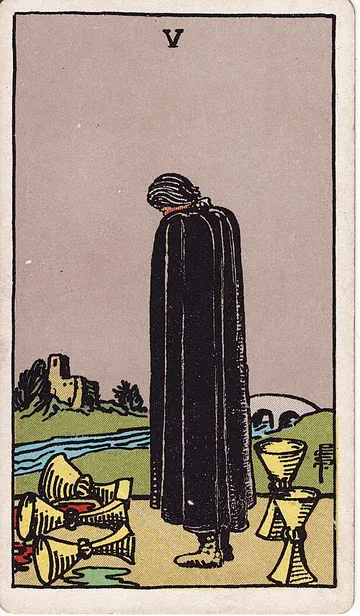
Mourning that is ready to turn. The Five still sees what spilled; the reversed Three says the sharpest blade is loosening. Together they describe the stage where grief remains real but identity begins to widen. Do not force gratitude. Simply notice the bridge when the eyes can lift.
If the pairing is difficult, it can show grief that has become a practiced posture. The figure in the Five keeps facing the spilled cups; the reversed Three keeps returning to the wound. The medicine is not cheerful denial. It is one honest inventory of what remains: two cups, a bridge, a body still standing, rain that has begun to thin.
This pairing can also mark the moment after the first genuine release, when sadness remains but drama has drained out. The mourner may feel strangely empty without the sharpness. That emptiness is not failure. It is space. Let it stay unfilled long enough for the quieter forms of life to enter.
Three of Swords Reversed + Death
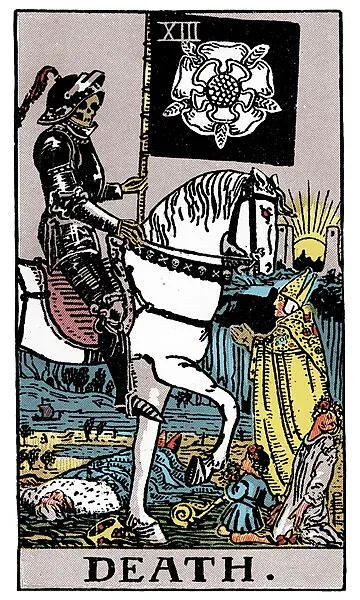
The release becomes irreversible. Death with the reversed Three of Swords marks the end of an old wound's authority: a relationship story, grievance, self-concept, or mourning pattern loses its throne. This can feel frightening because pain may have organized the room for years. Let the old form end. The scar can travel; the blade cannot.
This combination can also appear when forgiveness, distance, or closure changes the social order around the wound. People who knew you as injured may not recognize the quieter version. Some may try to hand the blade back because they understood you better with it. Death says the old contract is over. The reversed Three says the heart is not required to keep bleeding for continuity.
Card Combinations
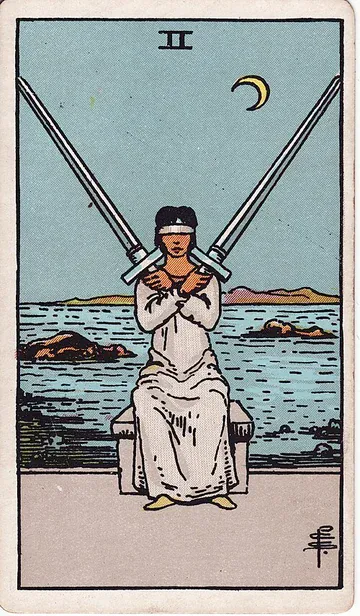
Two of Swords
Two of Swords with Three of Swords shows avoidance turning into named pain. The blindfold cannot stay on forever; the postponed choice has begun to pierce the heart. Together they ask for one clean decision made before silence does more damage.
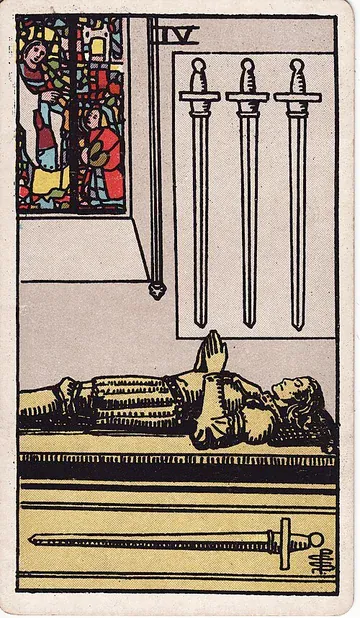
Four of Swords
Four of Swords gives the Three of Swords a recovery chamber. After the hard truth, the mind and nervous system need quiet, sleep, prayer, therapy, or retreat. The combination says the wound is real, and rest is part of the treatment.
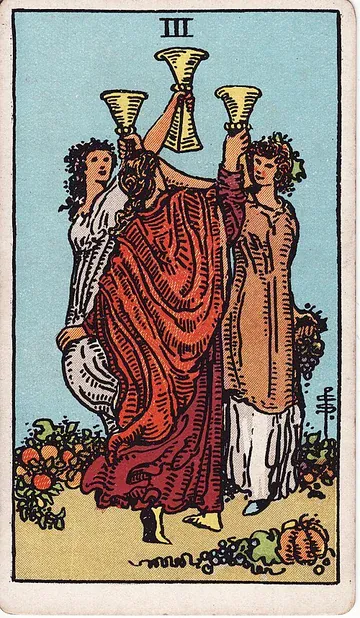
Three of Cups
Three of Cups brings witnesses to the Three of Swords. Friends can help grief move by setting a table, listening cleanly, and refusing gossip. The same pairing can warn that community is turning heartbreak into social currency. Choose the room carefully.
Five of Cups
Five of Cups deepens the Three of Swords into mourning. The blade has entered; now the spilled cups must be faced. This pairing asks for grief with sequence: name the cut, lament what fell, then notice what remains when the eyes can lift.
Death
Death with the Three of Swords marks an ending that cannot be negotiated back into its old form. The heartbreak is not merely painful; it changes the season. Let the ended thing be ended, and let the rain prepare the ground for another life.
Frequently Asked Questions
Is the reversed Three of Swords the blade coming out, or the blade being held in?
Both readings live inside the same inverted card, and the seeker usually knows which one is theirs. It describes the wound after the first shock: pain hidden from view, pain kept deliberately open so that it stays legible to others, or pain that has genuinely begun to close. The question it puts is whether grief is being lived honestly, worn as identity, concealed out of pride, or finally released without anyone having to deny what happened. The blade is moving in this card. What the reversed position withholds is the direction, and that part is answered by conduct rather than by the reading.
Does the reversed Three of Swords say yes to letting the blade come out?
To that, yes. Otherwise it is usually no — no to avoidance, to reunion without repair, to decisions led by old pain. It can be yes when the question is about release: yes to healing, yes to support, yes to removing the blade, yes to letting the wound close.
How do I tell whether an old heartbreak is healing or just being rehearsed?
By whether behavior has changed or only the conversation has. Reversed in love, the Three of Swords describes the aftermath: repair after betrayal, bitterness softening at the edges, an old wound carried into a new bond, or a relationship that keeps producing pain as proof that the love was real. Rehearsal feels like intimacy, because it is intense and it is shared, but it leaves the blade exactly where it was. Healing shows up as a changed boundary, a changed habit, a changed answer to the same provocation. The card asks for that evidence before it will call the season finished.
Can someone still care while the reversed Three of Swords describes what they feel?
Yes, and that is precisely the difficulty of the position. The reversed card points to hurt held inside — guarded tenderness, suppressed guilt, resentment, or pain slowly losing its force. Someone may care a great deal and still filter every exchange through an older injury that has nothing to do with you. The blade is loosening, or hidden, or being polished by memory until it shines. None of those states is indifference. What they have in common is that the feeling reaches you late and slightly altered, and the person holding it may not have noticed the delay.
What does the Three of Swords reversed mean for career?
For career, Three of Swords reversed describes recovery from professional hurt or being limited by it. Rejection, harsh critique, betrayal, burnout, or a failed project may still shape choices. The card advises updated boundaries, sober review, and action from the present rather than from humiliation.
Continue Reading
Three of Swords · Card overview · symbols · correspondences →
Return to the full card view — image, symbols, sensory correspondences, and Hermetic axes.
Read the upright meaning →
Read the same depth on the opposite orientation.
Draw your reading now →
Bring this card to a question — open a quiet ritual.