
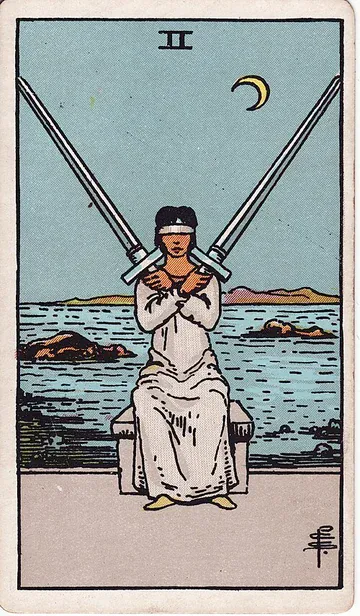
Two of Swords Reversed · Core Meaning
A pause becomes a hiding place at a moment nobody marks on the calendar. The blades are still crossed. The bench is still occupied. The white cloth is still tied around the eyes. But what was originally a strategic deferral — the deliberate pause that protected the seeker from a hasty judgment — has become something else: a hiding place. The blindfold is no longer chosen, even if the seeker still tells themselves they are choosing it. The two forces at the chest are no longer in held balance; they are leaking sideways, stabbing what was unguarded, generating consequences in the space the eyes have refused to see.
This is the reversed card's central knot: the same posture, with the meaning inverted. Upright, the Two of Swords is the discipline of the patient seat. Reversed, the same seat has become the avoidance. The figure on the bench has stopped weighing. She is just sitting. The deliberation finished some time ago — possibly months ago, possibly years — and the cipher is now being held out of habit, fear, or the simple inability to admit that the wait has stopped being patience and become refusal.
There is a second flavor of the reversed card: the cipher being broken from the outside. Sometimes the Two of Swords reversed describes the moment when the held truce is forced into resolution by an external pressure — a deadline arrives, a third party intervenes, the situation moves on without the seeker's consent. Delay the choice long enough and the choice gets made for you. The default option is already running without anyone's consent. The card warns that the held seat, kept too long, becomes the seat from which the seeker watches the consequences of their non-decision unfold.
The astrological signature reverses too. The Moon in Libra, upright, is the lunar weighing — both pans visible, neither favored. Reversed, the moonlight refuses to land. The seeker still sits on the scale, but the scale has stopped weighing because the weights have not been replaced. The Libra side becomes performative balance — the public stance of fairness, while the private decision has long since happened in one direction. The seeker is balanced in posture only.
The kabbalistic signature reverses too. Chokmah upright is the primordial Two, polarity-not-yet-bodied. Reversed, the polarity has been bodied without the seeker's full participation. The Two has become a hardened opposition rather than a held tension. The Three — the synthesis, the third thing that resolves the polarity — has been refused, not because it has not yet arrived, but because welcoming it would require lowering the cipher. The seeker has decided, somewhere below conscious knowledge, that the held cipher is safer than the Three.
Reversed, the Two of Swords asks: how long have you been here? And: what is the cipher actually protecting? And: what would happen if you took the blindfold off, even just once, even just for a glance?
The card is not punishing the seeker. It is reflecting back what is. Most adults, somewhere in their thirties or forties or fifties, encounter this version of themselves — the version that has been holding a cipher for so long the holding has become invisible to them. There is no shame in the recognition. The reversed Two of Swords becomes integration when the recognition is followed by the small honest gesture: the lifted blindfold, the sent message, the conversation no longer deferred, the bank statement finally opened.
Two of Swords Reversed · Love & Relationships
The truce has now been held so long that the truce is the relationship. Both of you are still pretending the bigger conversation has not yet ripened. The truth is, it ripened months ago. The cipher of crossed blades has stopped protecting the bond from a premature rupture; it is now preventing the bond from any further movement, in either direction.
For an existing partnership, the reversed card often arrives at the season when avoidance has hardened into routine. The conversation about money is in its third year of being deferred. The conversation about children, or moving, or the in-laws, or the pattern that keeps repeating, has been politely set aside so many times it has become invisible. You both know it is there. Neither of you wants to be the one who breaks the truce. The reversed card warns that the unspoken thing is not staying contained — it is leaking sideways into the smaller conversations, the bedroom, the quality of the silences after dinner. The cipher held too long does not protect; it ferments.
For someone in a new connection, the reversed Two of Swords can describe a pattern of mutual hesitation that has begun to calcify. Both of you have been giving each other space to "figure it out" for longer than the figuring-out actually requires. The space has stopped being respect and become a soft version of disappearance. The card asks: are you actually waiting for clarity, or are you waiting for the other person to make the decision for you so you do not have to be the one who chose? Both answers are honest. Both deserve to be looked at.
Asked whether someone loves you, this reversed card answers by pointing at how long the answer has been withheld. They feel something. They have felt something for longer than the held silence suggests. The reversed card is the card of the partner whose private decision has happened — and whose public decision has not yet been made. They may have decided to stay. They may have decided to leave. The cipher is no longer a deliberation; it is a stalling of the announcement. The work, on your side, is to recognize that you can ask. You can name the pattern. You can offer them an honest exit from the cipher. They may take it. They may not. Either is information.
For the question of reconciliation after a break, the reversed Two of Swords offers a difficult mirror. Both of you are still in a held configuration about each other. Neither of you has fully closed the door. Neither of you has fully opened it. You are both, in private, weighing the return — and neither of you is willing to be the first to drop the cipher and reach across. The card asks: do you want this person, or do you want the held configuration to be solved so you can stop carrying it? They are different questions. Answer the first one honestly. The second one will resolve itself once the first is clear.
For the single seeker, the reversed card is one of the deck's gentler warnings. You have built a life in which not deciding to date is the decision. The dating apps are deleted, then redownloaded, then deleted again. The friends who would set you up have stopped offering. The conversations about your love life with family have ended in a tired truce on both sides. The cipher you are holding is not protecting your peace; it has become your peace. The card asks whether the peace is honest or whether it is the blindfold turned hiding place. You do not have to date this month. You do have to look at why you have stopped wanting to.
For someone who has been ghosted, ambiguously rejected, or kept in a holding pattern by someone they care about, the reversed Two of Swords names the pattern with surgical precision. The other person has been holding their own cipher — and theirs has overstayed its usefulness too. Their non-answer is, at this point, an answer. The card asks the seeker to read the held silence as the verdict it has become and to lower their own cipher first. Continuing to hold yours in mirror to theirs gives them the cover their cipher requires to remain held. Lowering yours forces the situation into a different shape.
For a partner who is being avoidant, the reversed Two of Swords describes the moment when the avoidance has stopped being self-protection and become the relationship's primary feature. They have been tired for too long. Their reasons have been explained too many times. The card asks whether the avoidance is something they are working on or whether the avoidance is now what you are dating. The distinction is critical. The first deserves patience. The second does not.
For a long-distance relationship that has been on hold for an extended period, the reversed card often arrives when the geography has stopped being the obstacle and has become the convenient excuse. Both of you can blame the distance for the lack of movement. The card asks: if the distance resolved tomorrow, what would you do? If neither of you can answer the question quickly, the held cipher of the geography has been doing the work of avoiding a different conversation. Have that conversation now, by phone, before the geography resolves itself in either direction.
A note on the card's particular love-language inversion: where the upright Two of Swords loves the way someone listens with closed eyes loves, the reversed card loves the way someone refuses to look loves. It is not malicious. It is the love that has decided, somewhere quiet, that not seeing the other person fully is what makes the love survivable. The reversed card asks for a single honest glance. Not a full removal of the blindfold — just a glance. What does the love actually look like when you let yourself see it directly? The answer is rarely as bad as the held cipher fears.
Two of Swords Reversed · As Feelings
Opaque even to the one holding it: that is what the crossed-blade cipher becomes when this card turns over in a question about feeling. They are still in a held posture toward you, but the holding is no longer honest deliberation. They have stopped weighing. They have started hiding. The feeling is real, but the feeling is being sat on, and the sitting has begun to deform the feeling itself.
This is the card of the partner who feels something they have decided not to look at. They are not coldly indifferent. They are not actively warm. They are in a private posture of refusal — refusing to acknowledge what they feel, refusing to act on it, refusing to release it. The reversed card describes a feeling-state most people pass through at least once in their lives: the held heart that has stopped being held with any clear purpose.
If they are reserved by nature, the reversed Two of Swords personality goes into a kind of structural stillness. They are not just quiet around you; they have become harder to read across all the contexts in which you knew them. The friends notice it too. The work colleagues notice it. The reservation has become a generalized withdrawal. Read this not as you-specific rejection but as the broader pattern of someone who has held cipher in too many areas of their life at once. They are not going to recover their warmth toward you specifically until they recover it generally.
If they are demonstrative, the reversed card warns of performed normalcy. They will tell you everything is fine. They will keep up the routine. They will say the words. But in the quiet, when the words have stopped, the texture of their attention has shifted. The eyes do not fully meet yours anymore. The body language has gone slightly off. The blindfold is being held more tightly than it was, which means there is more they are refusing to see. This is the most easily missed signal in the reversed card — the partner whose surface is fine and whose interior is in a held cipher you cannot directly access.
For a partner you have been with a long time, the reversed Two of Swords in feelings describes the resentment held privately. They love you. They have also been carrying a small grievance for longer than they would admit, and the grievance has begun to color their experience of you in ways neither of you has named. The card asks for the gentle invitation: what is the small thing that has been bothering you? The question, asked without defensiveness, can lower the cipher. The grievance is rarely as bad as the holding of it has made it seem.
For a new connection, the reversed Two of Swords in feelings can mean they are pretending to weigh you — performing the dignified ambivalence of the upright card — when in fact they have already privately concluded and are stalling the announcement. This is rarely malicious. It is more often a kindness gone slightly wrong: they do not want to be the one who says the difficult thing first. They are giving you space they suspect you are not asking for. The card invites the seeker to read the held cipher as a signal and to make the first move toward honesty themselves.
For a partner who has been pulling away, the reversed Two of Swords in feelings is the precise card. They are not gone. They are not present either. They are sitting on a bench you cannot see, with their own cipher held over their own eyes, and the cipher is no longer about you specifically — it has become about whatever they are refusing to look at in their own life. Your patience with them has limits. The card respects the limits. It also asks you to recognize that their cipher is theirs, not yours to lower for them.
For someone who has wronged you and is now in a reversed Two of Swords feeling-state, the card describes the apology that has not yet been said because saying it would require lowering the blindfold and seeing what was done. They feel guilt. They are not yet feeling it cleanly enough to do anything with it. The card asks the seeker to make peace with the possibility that the apology may never come. Some ciphers are held until death. Your healing cannot wait for the lowering of someone else's blindfold. Lower yours; that is enough.
There is a particular feeling-shape this reversed card carries: numb attachment. The other person is still attached. The attachment is no longer felt as anything live. They will continue showing up, performing the role, going through the motions — and the felt warmth that used to animate the role has gone into a private cipher. Take this seriously. Numb attachment is one of the most disorienting feeling-states to receive from a partner because the surface is intact. The card asks the seeker not to mistake the surface for the substance.
A small caution for the seeker: the reversed Two of Swords in feelings can describe your own state, not just theirs. If you have been asking what someone feels about you for an unusually long stretch, the held cipher may be yours — the held question itself a kind of blindfold against the answer you suspect but do not want to confirm. The card invites the honest glance at your own posture. Sometimes the partner's feelings are less mysterious than the seeker's reluctance to receive the obvious reading.
Take the reversed Two of Swords in feelings as an invitation to lower your own cipher first. Whatever they feel, it surfaces faster when you are clear about what you feel. The card responds to honesty initiated from your side. The held configuration of two people both refusing to look ends most reliably when one person, finally, looks.
Two of Swords Reversed · Career & Work
Every input a professional decision could need has arrived, and the bench is still occupied. The two paths have been weighed. The pros and cons have been listed. The conversations with mentors have been had. And still — months past the moment when the data was complete — the seeker is sitting on the bench, blades crossed, refusing to move. The reversed card warns that the held cipher has become the actual position. The deliberation has stopped being deliberation and become the job.
If you are asking whether to stay in a current role or leave, the reversed card answers with discomfort. You know. The reason you are asking again is not that the data is unclear; the reason is that you do not want to act on what you have known, sometimes for a year or longer. The card respects the difficulty. Leaving is hard. Staying when you have decided to leave is harder, slowly. The reversed card is the card of the held resignation letter — written, saved as a draft, never sent. It is not asking you to send it this week. It is asking you to recognize that the cipher you are holding around the role has become the avoidance of the act, not the deliberation of the decision.
For someone weighing two job offers, the reversed card warns of the offer expiring while the seeker is still mid-deliberation. Recruiters move on. Hiring committees fill the role. The default option — staying where you are — wins by attrition because the seeker could not commit to choosing in time. The card is not punishing the seeker. It is naming the pattern: held cipher in career decisions has a half-life. After three weeks, the held seat starts costing options. After six weeks, the options have decided for you. Set a deadline; honor the deadline. The crescent only waxes if the seeker cooperates with the timing.
For someone weighing whether to start a venture, the reversed Two of Swords describes the entrepreneur who has been "almost ready to launch" for years. The plan has gone through eleven revisions. The savings have been calculated three different ways. The market research has been redone. And the actual launch has been deferred again and again, each time with a reasonable-sounding justification. The card is gentle but precise: the readiness will never feel complete enough. The cipher has become the project. The launch, at this point, is the way out of the cipher rather than the consequence of having finished the deliberation.
For freelancers and entrepreneurs in active business, the reversed card describes the stalled negotiation that has gone on long enough to become the relationship. The client and you have been in a polite cipher about the rate, the scope, the next phase, the exclusive contract — for months. Neither of you wants to break the truce. The work continues. The conversation about the work has not advanced. The card warns that the held truce, in business contexts, is rarely as stable as it feels. Whoever speaks first usually wins the renegotiation. The reversed card asks who you are waiting for to break the silence and why you have decided it should not be you.
For a creative practice in the reversed Two of Swords, the warning is specific: the chrysalis has hardened. What was once a generative pause between projects has become a non-practicing season. The studio has not been visited in a month. The project that was gestating has stopped gestating. The waxing crescent stopped waxing some time ago. The card asks for the small honest gesture — show up to the studio for an hour without expecting to make anything. The cipher held over creative work calcifies fast; the lowering of it is rarely dramatic. It is most often just the small return to the practice, with no agenda.
For someone considering a promotion or new responsibility, the reversed Two of Swords describes the avoidance of accepting one's own ambition. You want the role. You have wanted it for some time. You have been in a held cipher about whether to put yourself forward because putting yourself forward would require admitting to wanting it — and admitting to wanting it would require risking the disappointment of not getting it. The card respects the fear. It also names the cost: the role you do not pursue gets given to someone who pursued it. The cipher protects nothing here. The lowering of it is the only path forward.
For job-search readings in the reversed Two of Swords, the card describes the search that has lost its momentum. The applications have slowed. The interviews have become routine. The seeker has stopped expecting to land the role and has settled into a comfortable cynicism about the market. The card asks for the disruption of the cipher — apply to one role you would normally consider out of reach, send one cold message to a hiring manager, attend one networking event. Not as performative effort. As the breaking of the held pattern. The reversed card warms to the upright when the search becomes alive again, even in small ways.
For someone in a difficult workplace conflict, the reversed Two of Swords reads as the avoidance that has begun to cost professionally. The colleague who has been impossible has gotten worse because no one has named the pattern. The boss who has not been giving you what you need has not given it because you have not asked clearly. The held cipher in a workplace conflict deteriorates in a way that the held cipher in a personal relationship sometimes does not — workplaces have structural pressures that personal lives lack. The card asks for the named conversation, in a meeting room, with HR present if needed. The cipher held too long in workplace contexts becomes a performance review item.
A note on the trap of this card with career: the reversed Two of Swords can describe the seeker who has built an entire professional identity around being the careful, considered, never-rash decision-maker. The careful posture is real. It is also, at some point, no longer serving. The card distinguishes between the careful person who eventually decides and the careful person who has made carefulness their permanent excuse. If your career has stalled at the level your carefulness has been able to sustain, the cipher has become the ceiling. Lower it. Make a slightly imprudent move. The crescent waxes when the seeker risks the cipher's sufficiency.
Two of Swords Reversed · Money & Finances
Money avoided for long enough hardens into a posture. The bills are not being read. The bank statements are being deferred. The investment account that needs rebalancing has not been opened in months. The conversation with the partner about the household budget has been postponed so many times it has become a running joke neither of you finds funny. The reversed card names the pattern with surgical precision: the held cipher around money has stopped being deliberation and become the blindfold turned hiding place.
On a major purchase, the inverted card's caution has a different flavor from the upright's. You have been deliberating for too long. The thing you wanted is no longer the version available. The price has changed. Your need has changed. The cipher has carried you past the moment when the purchase would have been the right move and into the moment when the deliberation itself is the issue. Ask yourself: do you still want the thing, or do you want the deliberation about the thing to be over? If the latter, decide either way. Buy or do not buy. The cipher's persistence is its own cost.
For an investment decision, the reversed Two of Swords warns of decision fatigue and analysis paralysis. The market has moved while you were weighing. The asset that looked attractive six weeks ago is at a different price. The card asks for a deadline-bound decision. Set a date — three days from now, a week from now — and commit to acting in either direction by that date. The cipher held over investments rarely produces better returns than a moderate decision made in time. The reversed card respects the seeker's caution and asks the caution to be coupled with an end.
For a seeker carrying debt, the reversed Two of Swords describes the avoidance of the actual numbers. You have not pulled the credit report in a year. You have not added up the total debt across cards and loans. You have not opened the email from the collections agency. The cipher you are holding is not protecting your peace; it is generating the next round of consequences in a domain you cannot afford to keep blindfolded. The card asks for one honest hour with a spreadsheet. Not as punishment. As the lifting of the cipher long enough to see what is actually there. The number is rarely as bad as the avoidance has built it up to be.
For someone in financial recovery, the reversed Two of Swords describes the comfortable plateau that has become a stop. You climbed out of the worst of it. The recovery stabilized. And then you stopped progressing — the savings have not grown in a year, the next financial goal has not been set, the budgeting practice that got you here has been allowed to lapse. The card warns that the held cipher around financial discipline calcifies fast. The recovery you achieved is real; the next chapter requires the cipher's lowering. Lower the swords and restart the budgeting habit that got you this far.
For windfall — inheritance, bonus, unexpected income — the reversed Two of Swords describes the windfall sitting in the account undeployed for months. Not because you are practicing the patient holding of the upright card, but because deciding what to do with it has become its own avoided conversation. The money is doing nothing. The investment opportunity that should have caught some of it has passed. The card asks: what are you actually waiting for? If the answer is "more clarity," the clarity is unlikely to arrive while the cipher is held this tightly. Make a moderate decision. Deploy half. The cipher loosens when the action begins.
For questions of long-term financial planning, the reversed Two of Swords often arrives at the moment of pension review, estate planning, or major insurance decision that has been deferred for a decade. These are the decisions adults are often most uncomfortable with because they require looking directly at endings — retirement, mortality, the limits of one's earning years. The cipher protecting these conversations is real. The cost of the cipher is also real. The card asks for the small first step: a single appointment with a fee-only financial advisor, a single hour reading the existing policy, a single afternoon with the family discussing wills. The cipher does not have to be lowered all at once. It has to be lowered.
For partners in a financial held cipher together — the conversation about money you have been avoiding for a year — the reversed card is unusually direct. The avoidance is shared, and the shared avoidance is generating consequences neither of you has fully named. The card asks for a sit-down conversation with no agenda except seeing the actual numbers together. One hour. A blank piece of paper. Both of you looking at the same data. The cipher held by two people simultaneously is twice as hard to lower; the lowering is also twice as relieving when it finally happens.
A practical move when the reversed card appears in a money question: name the smallest financial task you have been avoiding. Not the big one. The smallest. The unopened envelope. The single bill not yet paid. The login you cannot remember. Do that one task today. Not as discipline. As the breaking of the cipher. The reversed card responds to the smallest gesture of return more than it responds to grand financial restructuring. Lift the blindfold by an inch. The rest follows.
Two of Swords Reversed · Health
A guard held past the danger it was set against becomes the body's default. The shoulders have been raised so long they no longer come down even in sleep. The jaw has been clenched for so many years it has reshaped the face. The breath has been held high in the chest for so long the diaphragm no longer remembers its full motion. The card warns that the chronic holding has become the body's default, and the default is generating its own consequences.
The reversed card's particular health signature, like the upright, is the throat, the lungs, and the nervous system — but now in symptom rather than tendency. Watch for the chronic cough that has been ignored for months. The throat tension that has hardened into a TMJ pattern. The respiratory issue that has been deferred from one doctor's appointment to another. The anxiety that has begun to manifest as a physical pattern — shaking hands, racing heart at rest, the wakefulness at three in the morning that has become routine. The held cipher in the body has begun to leak sideways into systems that should not be carrying the strain.
If you are asking whether a medical issue you have been ignoring needs attention, the reversed card answers yes. You know the symptom is real. You have been telling yourself it is not yet bad enough to bother the doctor. The cipher you are holding is not preventing the issue from existing; it is preventing its diagnosis. The card asks for the appointment, this week. Not because the issue is necessarily serious, but because the holding has become the issue. The reversed Two of Swords in health is rarely about catastrophe; it is most often about the small thing that became a larger thing because no one looked at it in time.
For someone managing a chronic condition, the reversed Two of Swords describes the season of slipped self-management. The medication has been taken irregularly. The follow-up appointments have been missed. The home monitoring has stopped happening. The discipline that held the condition stable has loosened, and the loosening has felt like rest. The card warns that what feels like rest is, in this configuration, the cipher's gradual hardening into avoidance. Re-engage with the protocol. The held cipher in chronic-illness management is one of the most dangerous versions of this card.
For acute issues, the reversed Two of Swords describes the diagnostic delay that has gone on too long. The test was supposed to be done last month. The specialist referral has been on your desk since spring. The follow-up appointment was canceled twice. The card asks for the lifting of the cipher. Not because the news will necessarily be bad, but because not knowing has stopped being patience and become avoidance — and the avoidance, in acute matters, has its own cost.
For mental health questions, the reversed Two of Swords names a precise pattern: the depressive or anxious season that has lasted longer than the seeker has admitted. You have been telling yourself the bad week is just a bad week. The bad week has been three months. The therapy you stopped attending was helping. The medication you adjusted yourself was working. The journal that helped is unopened. The card asks for the honest acknowledgment — not as defeat, as accuracy. The held cipher in mental health, when held alone for long enough, becomes the condition. Re-engage with the practitioners. The lowering of the cipher, in this domain, is itself the medicine.
For someone in burnout, the reversed Two of Swords describes the held performance of okay-ness. You are still showing up to work. You are still answering the messages. You are still being functional in the ways the world requires. And you have been, for some time, deeply not okay underneath the cipher. The card asks for the small honest disclosure — to one person, this week. Not the dramatic announcement; the quiet sentence. "I'm not actually doing well." The cipher loosens when the seeker says, out loud to one trusted other, what the cipher has been protecting them from saying.
For questions about sleep, the reversed Two of Swords describes the chronic sleep disturbance that has become normalized. You have been sleeping badly for months. You have stopped considering it a problem. The body is no longer recovering at night. The card asks for the small reset: a sleep practitioner, a screen-free hour before bed, the removal of caffeine after noon, the one structural change you have been avoiding because it would require admitting that the current pattern is no longer working. The held cipher around sleep is one of the most consequential — the body's repair work depends on the cipher's lowering at night.
For someone in nervous-system collapse — the burnout that has become physical, the anxiety that has reshaped daily life, the chronic alert state that no longer turns off — the reversed Two of Swords names the pattern with care. The body is not weak. The body has been holding the cipher for everyone. It cannot hold it forever. The card asks for the structural rest that the seeker has been refusing — the time off, the medical leave, the harder conversation with the family or the workplace about the unsustainability of the current setup. The reversed card warms to the upright not through more holding, but through the deliberate, supported lowering of what has been held alone for too long.
A practical move when the reversed card appears in a health question: open one envelope. Make one appointment. Take one medication you have been irregular about, on schedule, today. The body responds to the small gesture more than it responds to the grand resolution. The cipher does not have to drop completely. It has to drop by an inch, today.
Lowering the blindfold by an inch is a gesture, not medical advice. Keep your practitioners. The card's role is to name the pattern of held avoidance the body has begun to suffer under, and to ask, gently, for the smallest honest motion in the direction of care.
Two of Swords Reversed · Spirituality
Patient discernment, left standing too long, sets into avoidance. What was once the discipline of held inquiry — refusing the easy answer, weighing both pans of the scale, trusting the slow synthesis — has become a permanent posture of non-commitment. The seeker has built an identity around being the careful one, the nuanced one, the one who refuses fundamentalism in any direction. The carefulness is real. The cipher protecting it has, somewhere along the way, become the practice itself.
This is the seeker who has read every book and committed to no path. The seeker who has tried every modality and integrated none. The seeker who can cite the contradictions in any tradition with surgical accuracy and has, in the citing, made the contradictions the only stable thing. The reversed card respects the intelligence. It also names the cost: the held cipher in spiritual life prevents the very thing the spiritual life was supposed to deliver.
For someone in active spiritual practice, the reversed Two of Swords describes the practice that has become routine in the dull sense. The meditation cushion is still being used; the meditation has stopped happening on it. The journal is still being opened; the entries have become summaries of the day rather than excavations of it. The teacher has stopped saying anything new because the seeker has stopped bringing real questions. The card asks for the disruption: a new teacher, a different tradition, a question the current practice cannot answer. The held cipher around a practice that has stopped working is its own form of refusal.
For seekers in a long doubt, the reversed Two of Swords offers a difficult mirror. Doubt held responsibly is one of the deepest spiritual disciplines. Doubt held performatively becomes a way of avoiding the commitment doubt would otherwise refine. If you have been "exploring" for a decade without ever choosing, the exploration has become the avoidance. The card is not asking for premature commitment. It is asking whether the cipher is still working — whether the held doubt is still producing wisdom or has begun to function as the comfortable seat from which all paths can be examined and none entered.
For seekers exploring belief, the reversed card warns of spiritual consumerism that has begun to substitute for spiritual life. Books are being collected. Retreats are being attended. Teachers are being interviewed. And nothing is being practiced, in the sustained way, between the events. The cipher is the constant motion between traditions. The traditions cannot teach the seeker who refuses to sit long enough in any one of them. The reversed card asks for the difficult act of staying — choosing one practice for a season, even imperfectly, and refusing the comfort of comparison until the practice has had a chance to teach what it teaches.
For questions about path, the reversed Two of Swords asks whether the patience the seeker has been practicing is still real patience or has become the elegant excuse for not committing. The Chokmah signature, reversed, is the polarity that has refused to become the Three. The Two has hardened. The synthesis the seeker was supposed to wait for cannot arrive while the held cipher is being valued more than the synthesis itself.
The card's spiritual practice, when it appears reversed, is the lowering of the cipher in a single domain. Not all of them. One. Pick one question you have been holding in dignified ambivalence for years — a question about belief, practice, vocation, relationship to a tradition — and let it land in either direction. Not because you are now certain. Because the certainty was never going to arrive while the cipher was being held this carefully. The seeker who has lowered one cipher recovers the capacity to hold the others honestly.
A small caution: the reversed Two of Swords spiritually does not mean the seeker should abandon the discernment that has served them. The discernment is real. The card distinguishes between the held seat that is still doing its work and the held seat that is now the seeker's hiding place. The first is sacred. The second is the cipher curdled. The card asks for the honest reading of which is which — and offers no shortcut for the reading.
The reversed card warms to the upright when the seeker takes one piece of the spiritual life that has been held in cipher and lets it become real. A regular practice, however small. A teacher accepted, however imperfectly. A tradition entered, however provisionally. The seat on the bench was always the apprenticeship. The reversed card names the moment when the apprenticeship has become permanent — and the lowering of the cipher is the journeyman's first step out of it.
Two of Swords Reversed · Yes or No
Soft no — and a warning that the not-deciding has already become the answer.
The reversed Two of Swords is not a clean no, but it is closer to no than the upright is to yes. It is the answer that says the held cipher has overstayed its usefulness, the situation has begun to decide itself in your absence, and the wait you thought you were practicing has become the verdict the wait was supposed to forestall. The card warns that continuing to hold the cipher will not produce the answer you wanted — it will produce the consequence of having not decided, which is rarely what the held seat hoped for.
For yes-or-no questions about a relationship, a job, a move, a decision: the answer is leaning no, with the further note that the no is happening through your inaction rather than your choice. The relationship is decaying through avoidance. The job offer is expiring. The move is becoming impossible because the window has narrowed. The reversed card respects that you do not want to be the one who says no out loud; it points out that the no is being said by the situation itself while you sit on the bench.
The card asks: what would change if you said the no out loud, deliberately, today? Often the answer is small. The relationship would end a week sooner than the avoidance would have ended it. The job would be turned down with grace rather than expired into. The move would be deferred openly rather than missed by accident. The reversed card respects the difference between the no said and the no defaulted. The said no preserves the seeker's agency. The defaulted no carries forward as resentment.
For questions about whether someone is being honest, whether an offer is genuine, whether a plan will hold, the reversed card warns of pleasant surfaces concealing held tensions. What is presented may not be false, but it is incomplete. There is something the other party is not saying. The held cipher between you and them is mutual. The card asks the seeker to lift the blindfold by an inch — to ask the second question, to read between the lines, to notice what is being smoothed over. The full picture is not yet visible because the seeker has been afraid to look.
For binary decisions — should I act, should I wait — the reversed card answers act, with reluctance. The wait has gone on long enough. Whatever the action is, it is now overdue. The reversed Two of Swords does not generally recommend action when the upright has counseled patience; the difference between the two is precisely the diagnosis of when patience has tipped into avoidance. If the card has come up reversed, the patience has tipped. The action is overdue not because the seeker miscalculated but because the situation has now matured past the point where waiting still produces wisdom.
For questions about timing — when will it happen? — the reversed card describes timing that has been actively pushed away. The thing the seeker is asking about could have happened. It has been delayed by the held cipher. Removing the cipher removes the delay. The card respects the fear; the fear is real. It also names the cost: continued holding pushes the timing further out, sometimes indefinitely.
For yes-or-no questions about a difficult conversation — should I say the thing, should I confront the person, should I clarify the misunderstanding — the reversed Two of Swords answers yes, urgently. The conversation has been deferred long enough. Each additional week of deferral makes the conversation harder, not easier. The card asks for the saying-it. Not the perfect version. The honest version, in your own words, with the imperfection the held cipher has been trying to wait out. The conversation will not become more polished by being delayed. It will become more brittle.
For yes-or-no questions where the seeker has already privately decided and is asking the cards for permission to act, the reversed card answers gently: you have already given yourself permission. You have been waiting for someone or something to cosign the decision so the responsibility for it does not rest entirely on you. The card distributes the responsibility back where it belongs: with the seeker. Act. The cipher is done. The cosign you are looking for is your own.
For yes-or-no questions where neither path is clearly correct, the reversed card warns that the held seat is no longer holding the question — the question is holding the seeker. The deliberation has stopped advancing. The same arguments are circling. The body has tired of the loop. The card asks for a smaller-scale decision — not the large yes-or-no, but the next concrete step, however imperfect. Act small. Act this week. The larger answer will form once motion has been re-introduced.
If the question was: have I been avoiding this? The reversed card answers yes, without judgment. Most seekers have been. The recognition is the lowering of the cipher.
Two of Swords Reversed · Advice
Lift the blindfold. Not all the way — just far enough for one honest glance at the thing you have been refusing to see. The card is precise: it does not ask the seeker to abandon careful deliberation, to make hasty decisions, or to flip into reckless action. It asks for one specific gesture — the small unbinding of the eyes, the brief return of sight, the courage to look at what has been kept off the page.
If there is one specific instruction the reversed card offers, it is to set a date. Pick the day, this month, when the cipher will be lowered. Write it on the calendar. The seeker who has been holding a question in cipher for a long time often has no horizon for the holding — the wait is indefinite, which means the wait has become the answer. Setting a date gives the wait a shape. Even if the date arrives and the question is still unresolved, the existence of the date forces the cipher to remain a deliberate practice rather than a default.
A second instruction: name the cipher out loud. Tell one person what you have been holding. Not a full disclosure; one sentence. "I have been avoiding deciding about [the thing]." The act of saying it out loud, to someone trustworthy, changes the held cipher's relationship to the seeker. It cannot be unnamed. The held truce that has been protected by silence loosens when the silence is gently broken from one side. The reversed card responds to spoken acknowledgment more than it responds to silent willpower.
A third instruction: open one envelope. Lift the blindfold once. Whatever the data is — the bill, the message, the medical report, the email from the friend you have been avoiding, the letter from the family member you have not read — open it. Look at the contents. You do not have to act on them today. You have to know what they say. The cipher is not the deliberation; the cipher is the not-knowing what is being deliberated. Restore the knowing. The deliberation can resume from there.
A fourth instruction: do the smallest possible version of what you have been refusing to do. If you have been deferring a difficult conversation, send a single text — not the whole confrontation, just an opening. "Can we talk this weekend?" If you have been deferring a financial reckoning, log into one account, look at one balance. If you have been deferring a medical issue, make one appointment, even months out. The reversed card warms to the upright through the smallest gesture of return. The cipher does not have to be lowered all at once. It has to be lowered by an inch, today.
A fifth instruction, harder than the others: examine the cipher's secondary gain. What has the held seat been protecting you from? Not the surface answer — the deeper one. Sometimes the cipher held over a relationship is protecting the seeker from having to admit to a different relationship that needs ending. Sometimes the cipher held over a career is protecting the seeker from having to admit to a different vocation they have been afraid to claim. The cipher's persistence is rarely about the surface question; it is usually about the deeper question the surface question has been displacing. Find the deeper one. Address that.
A sixth instruction, gentler than the others: forgive yourself for the held cipher. Most seekers who draw the reversed Two of Swords arrive with a private guilt about how long they have been stuck. The card disagrees with the framing. Stuck is not what you have been. Held is what you have been. The holding had reasons. The reasons were honest at the time. The cipher has overstayed its usefulness now, but it was not wrong to begin with. The seeker who is gentle with the cipher has an easier time lowering it than the seeker who is angry at the cipher for existing.
Practical advice for the day the card appears: do something that requires you to see clearly. Read a page of dense material with full attention. Have a conversation in which you commit to saying what you actually mean. Open the document, account, or message you have been avoiding. The reversed card responds to vision. The blindfold has been on too long. Even five minutes of unobstructed sight today is enough to begin the cipher's release.
A final instruction, the most important: lift the blindfold, even just for a glance. You are not protecting yourself by keeping it on. You are letting the situation ferment. One look — even a brief one, even at one corner of the picture — changes what the cipher is doing. The waxing crescent above the right shoulder has been waxing all this time. The light is real. The closed eyes are not protecting the light; they are refusing it. Open them. Glance. The cipher loosens.
Two of Swords Reversed · Card Combinations
The Two of Swords reversed rarely appears alone, and the cards beside it decide whether the lifted blindfold is a relief or a rupture. Read the pairings below as a single image: the seated figure has finally moved, and the neighbouring card says what she moved toward.
With the Three of Swords, the blindfold comes off onto a fact that hurts. The reversed Two of Swords next to the Three describes the moment the avoided truth is finally spoken out loud, and the pain that follows is the cost of the delay, not a punishment for the honesty. The combination says: the wound was already there; you have only stopped pretending it was not.
With the High Priestess, the pairing softens. The reversed Two beside her says the decision does not need to be forced yet; what needs to happen is listening to the part of you that already knows. The Priestess returns the swords to their sheaths for a night. Sleep on it once more, but this time with your eyes open.
With the Moon, the reversed Two of Swords warns that the blindfold was removed too early, in poor light. What you now see may be distorted by fear or by someone else's story. Do not act on the first picture. Wait for daylight, check the facts, and only then decide which sword to lower.
With Justice, the combination is unusually clear. The figure has stood up, the scales are level, and a verdict is available. This pairing supports signing, ending, declaring, or choosing, provided you can state the reason in one plain sentence. If you cannot, Justice sends you back to the bench.
With the Two of Cups, the lowered swords open into a real conversation. The stalemate between two people breaks, not because one of them won, but because both put the blades down at the same time. This is the reconciliation pairing of the reversed Two of Swords: the truce that becomes a meeting.
Card Combinations
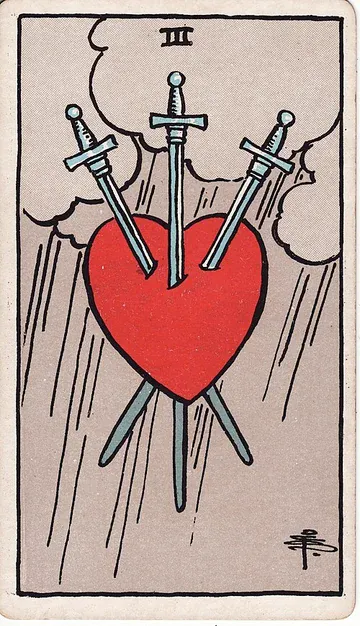
Three of Swords
The truce broken. The held cipher of the Two gives way to the wound of the Three — the holding kept past its useful life, the breaking sharper because the holding was so long. Not every cipher should be held forever; the warning the card gives most pointedly is that some cipher must be opened in time. Done late, the wound replaces the deliberation. The combination names the cost of the indefinite held seat.
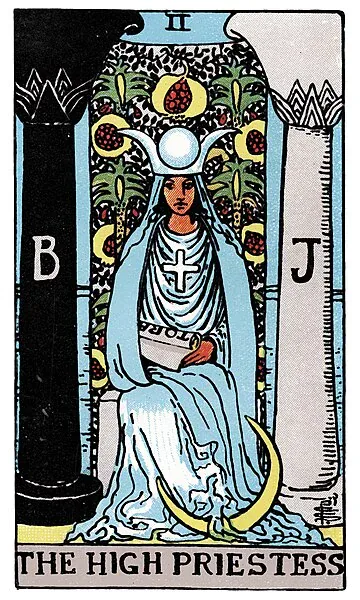
The High Priestess
The held cipher reflected by the deeper one. The Two of Swords sits before her sea; the High Priestess sits before her veil. Both are blindfolded in their own ways — the Two by white cloth, the Priestess by lunar knowledge that does not need eyes to see. Together they describe the seeker whose patience has matured into wisdom. The deferral has become a way of knowing. Trust the deeper register the silence has begun to speak from.
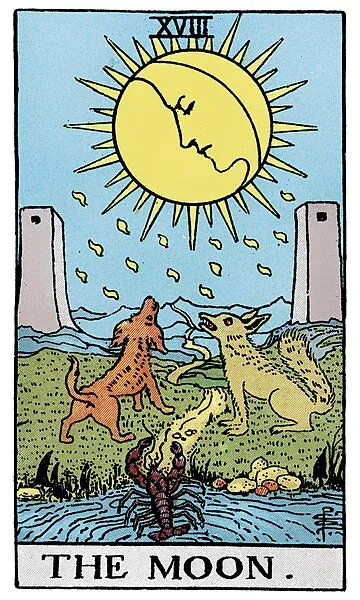
The Moon
The held cipher inside the unresolved. The Moon's sea is ambiguous; the Two's sea is sharp-edged but small-waved. Together they describe a season of held navigation through fog — the seeker cannot trust surface impressions of any choice and must hold the cipher patiently while the deeper picture clarifies. The combination warns against decisions made by moonlight alone; it asks for the longer view, the daylight wait, the willingness to remain in not-yet-knowing.
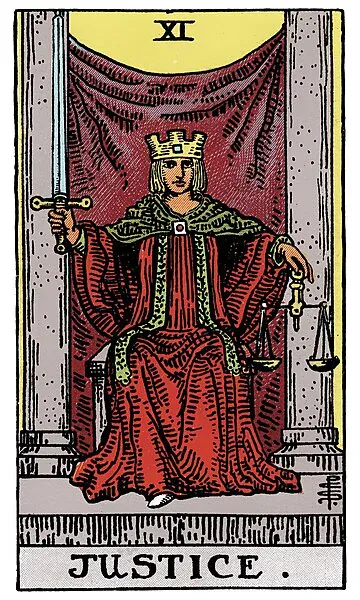
Justice
The deferred ruling and the actual one. Justice has lifted the blindfold and seen clearly; the Two of Swords still holds the blindfold by choice. Together they describe a sequence — the patience of the Two giving way, eventually, to the precision of the Eleventh. The combination teaches that the seeker who has learned to hold the cipher has earned the right to a Justice ruling that lands cleanly. The Two is the apprenticeship; Justice is the work it was for.
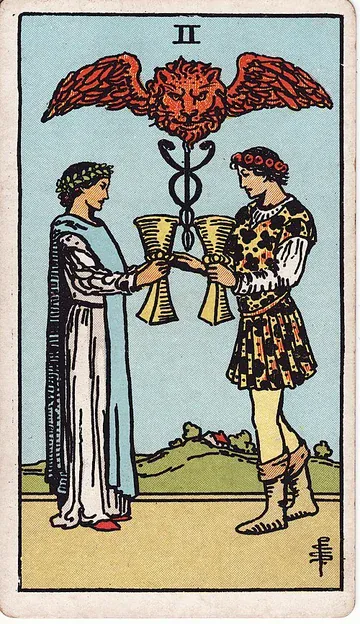
Two of Cups
Same number, opposite suit — the dialogue the Two of Swords delays. The Two of Cups is the toast across the table, the meeting of eyes, the offering accepted. The Two of Swords is the meeting deferred, eyes closed, offering held in the air. Together they describe the relationship waiting to become a real conversation. What is the cipher protecting? The held silence keeps the bond from breaking but also from deepening. Eventually one of you must open the eyes and meet the other's.
Frequently Asked Questions
If I keep not deciding, has the reversed Two of Swords already answered for me?
It has, and that is the warning the card carries. The reversed Two of Swords leans no, with the added note that the not-deciding has already begun to function as the answer. Treat it as a soft no, with the deeper note that the situation is deciding itself in your absence. Continued holding of the cipher will not produce a different answer — it will only produce the cost of having not chosen. Lift the blindfold; look once.
When does the pause in the Two of Swords stop being strategic?
At the point the blindfold stops being chosen. Reversed, the card means the held cipher has overstayed its usefulness. What was once strategic patience has become avoidance. The blindfold is no longer protecting the seeker from a hasty judgment; it is preventing them from seeing what is already plain. The card asks for one honest glance, the smallest gesture of return — the unopened envelope, the deferred conversation, the long-postponed appointment. None of those gestures decides anything; each of them restores the sight the decision will eventually need.
How do I tell a protective pause from a relationship that has simply stalled?
By whether anyone is still weighing. Reversed in love, the Two of Swords describes a bond suspended past the moment when suspension was useful. Both partners have stopped weighing and started hiding. The unspoken thing is leaking sideways into the smaller conversations. For new sparks, it warns of mutual hesitation that has calcified. For singles, it names the comfortable solitude that has become a hiding place. The card asks for the first honest move from your side.
Does the reversed Two of Swords mean they have stopped feeling anything for me?
No — it means they have stopped looking at what they feel. The other person holds something they have decided not to examine. They are not coldly indifferent — they are in numb attachment, refusing to acknowledge their own response. The held cipher has become opaque even to them. Read it as their refusal to see, not their lack of feeling. Sometimes the seeker is the one who must lower their own cipher first, since two blindfolds in one room produce a silence that neither person chose and both maintain.
What is the Two of Swords reversed advising?
The reversed Two of Swords advises lifting the blindfold, even just for a glance. Set a date for the deferred decision. Open one envelope you have been avoiding. Name the cipher out loud to one trusted person. Do the smallest possible version of what you have been refusing to do. The card warms to the upright through small honest motions, not grand resolutions — one honest glance at what has been refused sight.