
· III ·
La Emperatriz
«Dejo que la semilla madure a su propio compás.»
Derecha
Invertida
Derecha
Resumen
Las cosas echan raíz bajo su amparo.
Fertilidad, acción, generación — el amor ha tomado cuerpo; el deseo tiene a dónde ir.
Invertida
Resumen
La abundancia ha vaciado su fuente.
El poder generador o se atasca o desborda su forma — ella olvidó que también necesita ser cuidada.
Símbolos
Historia
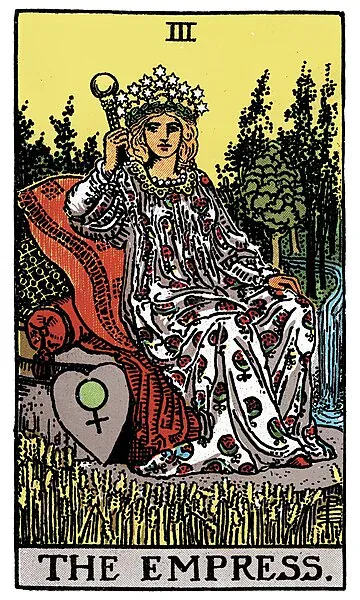
La Emperatriz reposa en plena naturaleza — coronada de doce estrellas, cetro en mano, junto a un cojín en forma de corazón que ostenta el signo de Venus. Tras ella, un campo de trigo maduro; una cascada vierte su agua en su reino boscoso. Granadas bordadas recorren su túnica; los pliegues de su falda se funden con la hierba. No fuerza nada — permite. Es la generación misma: amor en acción, fertilidad hecha cuerpo.
Correspondencias
- Elemento
- Tierra
- Color
- Esmeralda · rojo cobrizo
- Dirección
- Sur
- Estación
- De fines de primavera al verano
- Temperamento
- Sensual · pleno de abundancia
- Planeta
- Venus
- Zodíaco
- Tauro · Libra
- №
- 3
- Significado
- Tres — síntesis; el primer número que da cuerpo.
- Viaje
- La voluntad del Mago y la escucha de la Sacerdotisa se encuentran aquí y toman cuerpo.
- Letra
- ד · Daleth (DAH-let)
- Significado
- Puerta — la rendija que puede abrirse.
- Tipo
- Letra doble
- Camino
- 14 · Jojmá ↔︎ Biná
- Color
- Esmeralda · cobre · rosa palo
- Aroma
- Rosa · sándalo
- Planta
- Rosa · duraznero · trigo
- Piedra preciosa
- Esmeralda · coral
- Metal
- Cobre
- Nota
- F#
- Animal
- Paloma · gorrión · cierva
- Tiempo
- Tarde · un día en plena floración
- Arquetipo
- La Gran Madre — el semillero de las cosas.
- Figuras
- Deméter · Venus · Inanna.
- Eco cultural
- El antiguo himno del durazno en pleno follaje — el florecer mismo ya es un orden.
Sombra
El nutrir resbala hacia la exigencia; todo debe brotar de ella hasta que su propia fertilidad la vacía; o al revés — la gestación se atasca por dudar, y las semillas se pudren en la tierra.
Cartas relacionadas
Combinaciones con esta carta
· Pares con arcanos mayores ·
La Muerte & La Emperatriz — lo que el cuidado nos pide soltar
Se encuentran dos de las cartas más corporales del mazo. La Emperatriz nutre, reúne, sostiene; La Muerte composta, suelta, deja caer. No son enemigas: son la inhalación y la exhalación del mismo trabajo biológico. Cuando aparecen juntas, la pareja tiende a sacar a flote una pregunta sobre aquello que cultivamos con amor y que ya terminó su temporada de crecimiento, y sobre qué alimentará, a su vez, el acto de soltarlo.
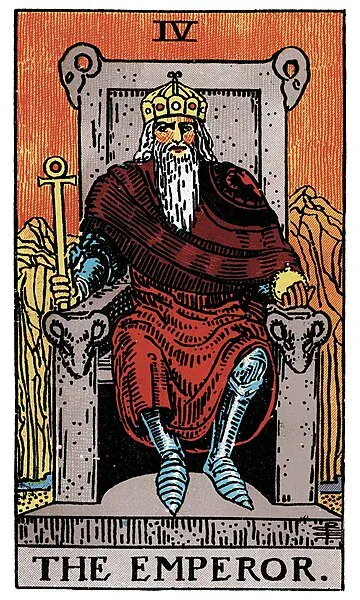
El Emperador & La Emperatriz — la estructura encuentra el flujo
Se encuentran dos de las cartas más arquetípicas del mazo. Se las suele leer como padres cósmicos, pero la pareja resulta más útil como herramienta de diario para notar el equilibrio interior entre estructura y flujo, entre lo que uno construye y lo que uno nutre. Juntas tienden a sacar a flote una pregunta sobre cuál de estas dos posturas está usando de más, o de menos, la vida que llevas ahora.
La Emperatriz & El Sumo Sacerdote — la naturaleza encuentra la institución
Dos cartas de forma dada se encuentran desde miradores opuestos. La Emperatriz es la forma que brota de la tierra: instintiva, corporal, estacional. El Sumo Sacerdote es la forma transmitida por linaje: codificada, enseñada, repetida. Juntas tienden a proponer una indagación de diario sobre cuáles de los ritmos actuales son biológicos y cuáles heredados, y cómo negocian entre sí en una semana cualquiera.
La Emperatriz & La Luna — nutrir en la incertidumbre
La Emperatriz es la fertilidad a plena luz; La Luna es esa misma fertilidad vista bajo otra luz, donde los contornos se difuminan y el inconsciente pasa al frente. Juntas tienden a sacar a flote preguntas sobre el trabajo creativo, la fertilidad, la intuición y cualquier forma de cuidado que uno esté ejerciendo sin ver del todo el resultado. Es la pareja de la gestación larga, aquella cuya forma solo se conocerá después.
· UNA CARTA TRANQUILA ·