Archetype — Tendency, Not Template
Throughout Archetypes and the Collective Unconscious (CW 9i), Jung repeats the caution: the archetype is never a character, image, or plot. It is "the tendency out of which such images form." The archetype itself is never seen directly — what we see is always an archetypal image: how a given culture, at a given moment, has dressed that current in specific flesh.
That is why the world's mythologies are full of Wise Elders, Great Mothers, Tricksters. Not because cultures borrowed from one another, but because these tendencies are built into the structure of the psyche itself. The costumes change — Hermes in Greece, Loki in the North — but the skeleton is the same.
A few terms have to be kept precise. The **Shadow** is not "evil" but **unintegrated aspects of the self** — when suppressed it projects outward; when owned it becomes a source of vitality. The **Self** (capital S) is not the lowercase self (the ego) but the name Jung gives to the unifying center toward which the whole psyche tends; the mandala is its typical image. **Individuation** is not "individualism" — the first is an internal integrative process, the second is a social stance.
The Twenty-Two Majors · An Archetype Map
The 22 Majors, from 0 The Fool to XXI The World, form the purest archetype corridor in the deck. Each entry below names the archetype that card primarily carries — and "carries" is the operative word: not equal to, but summoning.
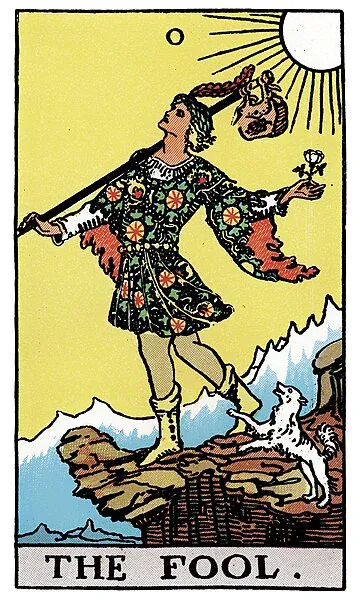
0 · The Fool
The Child · Puer Aeternus
The eternal youth — the soul not yet weighted by the world. Pausing at the brink is not recklessness but trust that the path grows under one's feet. Jungian writers have long traced his light and his shadow.
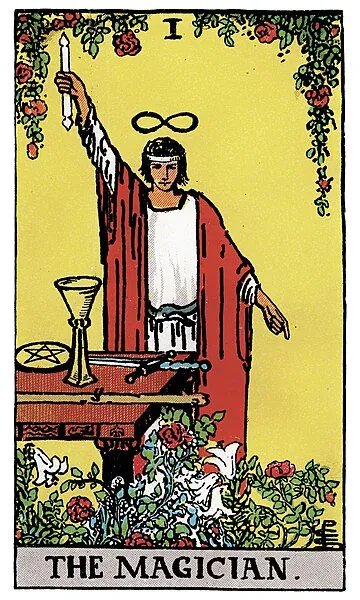
I · The Magician
The Messenger
Hermes as archetype — one who passes between worlds, translating the unseen into the seen. The Trickster dwells under the same roof: creation and cunning, one nimble wind.
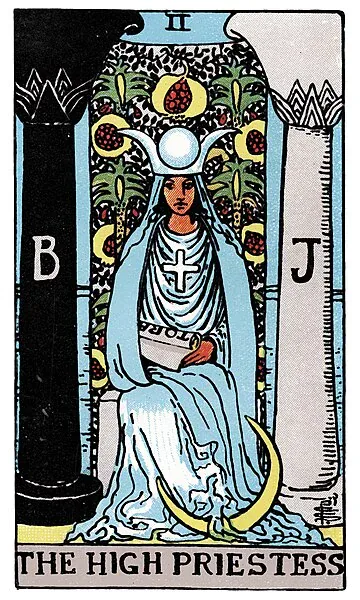
II · The High Priestess
The Keeper of the Threshold
One face of the anima — the inward, non-striving receptivity. She does not give answers; she simply lets the questioner draw close enough to ask their own.
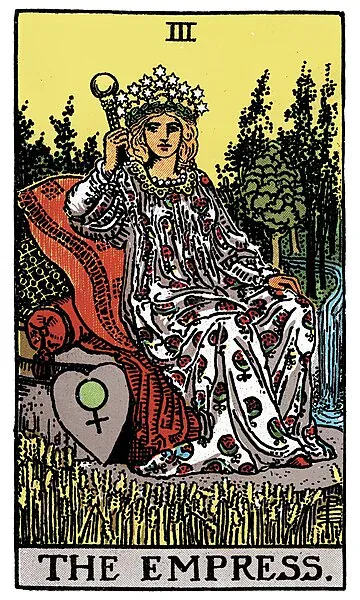
III · The Empress
The Great Mother
Jung's "Psychological Aspects of the Mother Archetype" (CW 9i §148) — the seed-bed of things. Both nourisher and devourer; the light face lives here, the dark face in the Moon and Death.
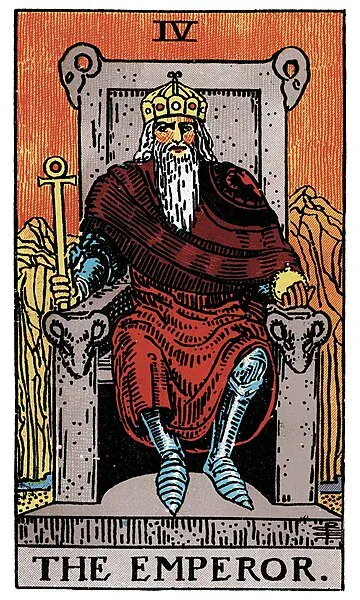
IV · The Emperor
The Sovereign Father
The founder of order — the hand that turns 'possible' into 'rule.' Paired with the Great Father archetype; when overextended, the boundary hardens into a cell.
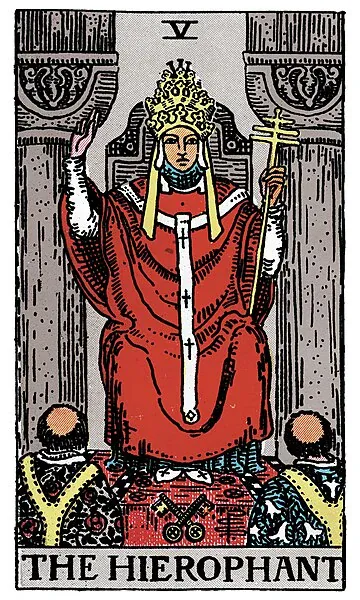
V · The Hierophant
The Sage
The teaching face of Jung's Wise Old Man / Senex — fitting the handed-down into a form that can be handed on. The fire that is inherited, not invented.
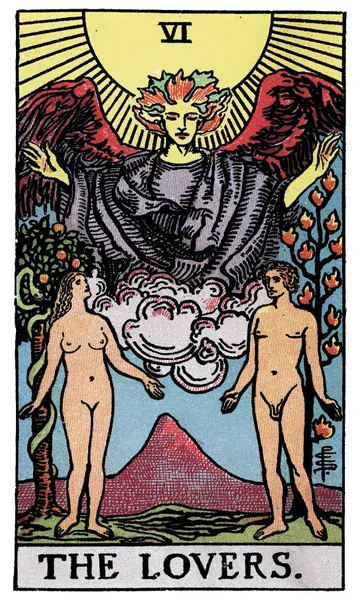
VI · The Lovers
The Syzygy
Jung's term for the conjunction of opposites — anima and animus meeting, or any two-ness asking for one decision. Not sweetness itself, but the real seam of choice.
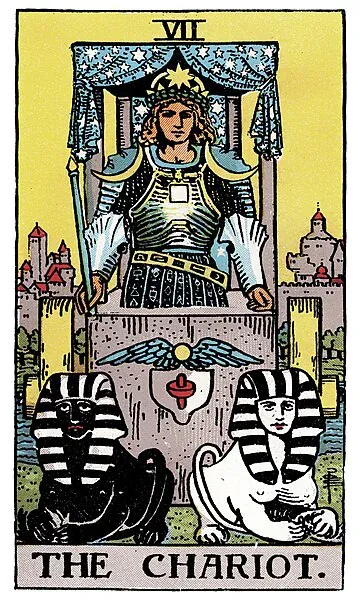
VII · The Chariot
The Hero
The Campbellian hero having just crossed the first threshold. The Chariot is will momentarily taming opposition — two-colored sphinxes drawn not by rein but by the driver's presence.
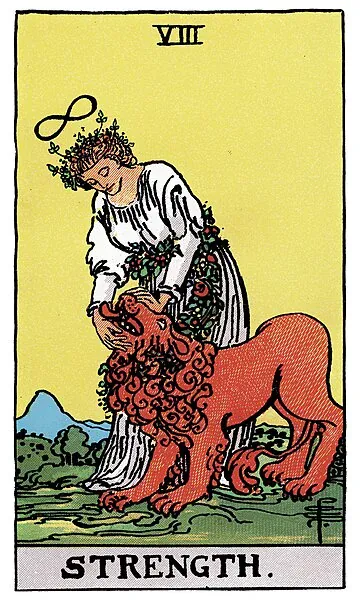
VIII · Strength
The Tamer
The lion's teeth closed by softness — the archetype that breathes with instinct rather than pressing it down. The strength older than hardness; Laozi's line of thought.
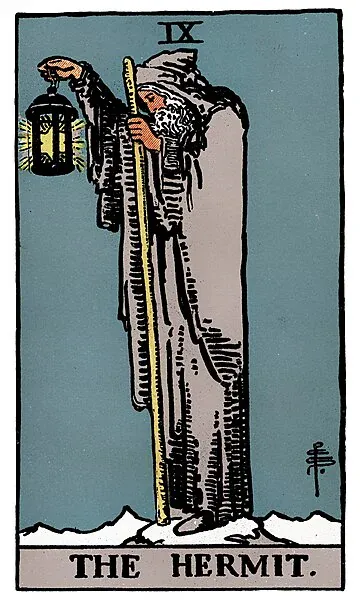
IX · The Hermit
The Hermit-Sage
The solitary face of the Wise Old Man — not handing out answers to the crowd, only raising his lantern over a single step. The lamp is not property; it is method.
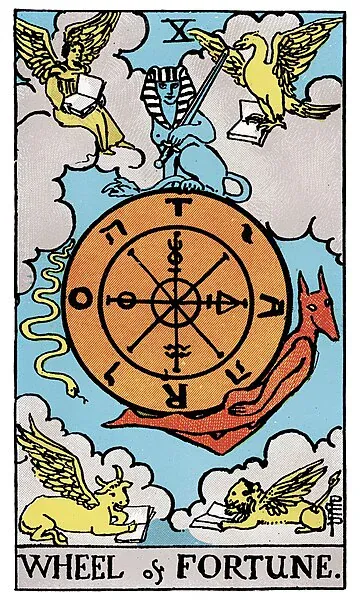
X · Wheel of Fortune
The Wheel
The turning that exceeds one will — Fortuna, Dharma, the rhythm with no end. Less a "personage" archetype than an archetype of situation.
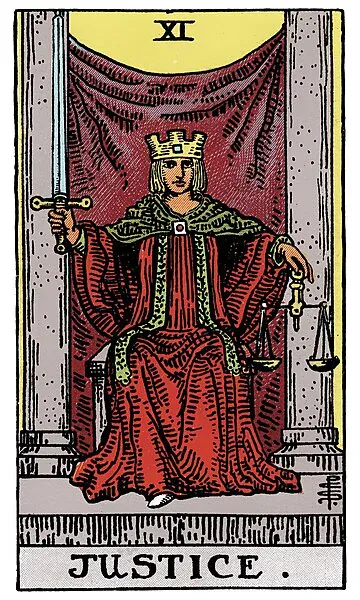
XI · Justice
The Weigher
The Ma'at / Themis line — one who has seen both sides and can still set the hand down. Not revenge but the capacity to "hear through, weigh through, and not lean."
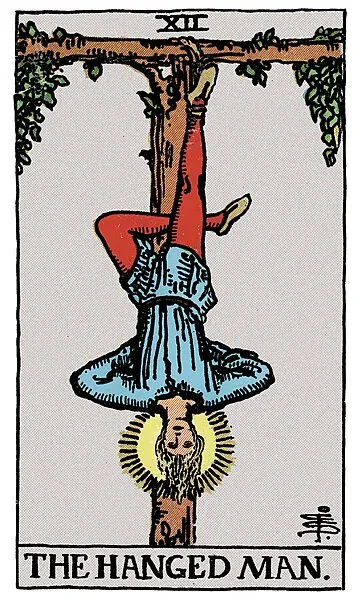
XII · The Hanged Man
The Hanged One
The voluntary inversion — Odin nine nights on the World-Tree to win the runes. The archetype that makes stillness itself into practice.
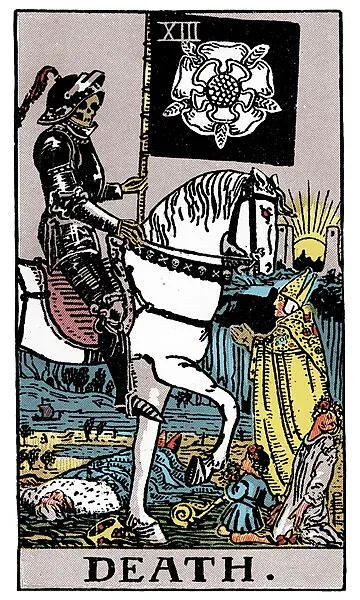
XIII · Death
The Psychopomp
Anubis, Charon — the one who ferries souls. Not "death" as event but the archetypal function of companionship across the threshold; Jung's Shadow work often passes through here.
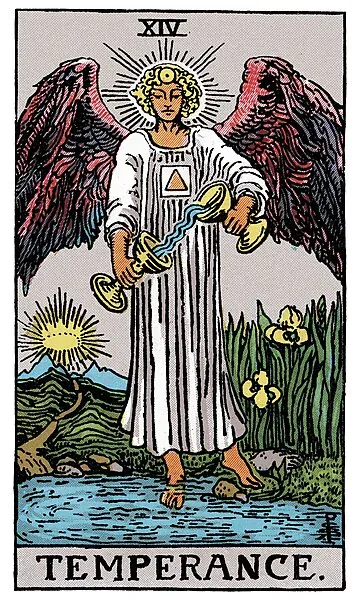
XIV · Temperance
The Alchemist
The late-Jungian archetype par excellence — pouring water between two vessels to temper a third thing. Psychology and Alchemy (CW 12) turns on precisely this pivot.
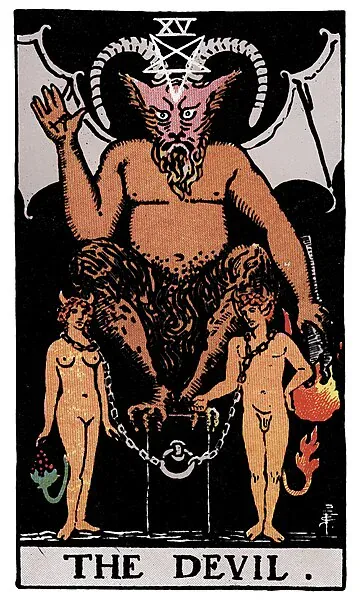
XV · The Devil
The Shadow
Note: the Shadow is not "evil." It is **unintegrated aspects of the self.** Projected outward it wears a devil's face; owned, it becomes life-force. Jung, CW 9ii Aion.
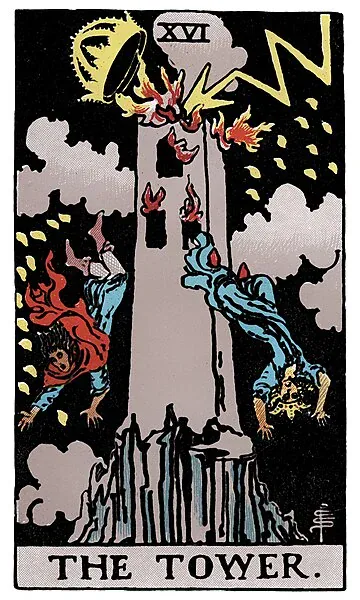
XVI · The Tower
The Disruptor
The necessary collapse — fiction structure pierced in a flash by truth. The Trickster's destructive face, but larger: a kataklysmos of collective consciousness.
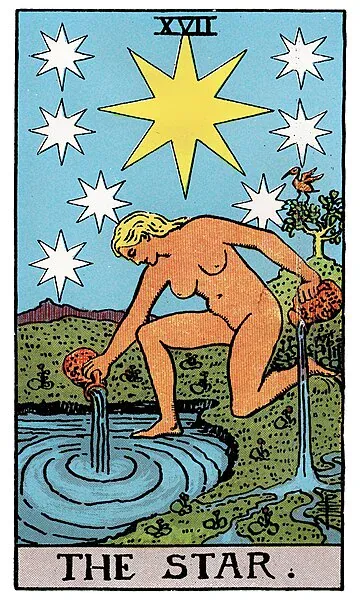
XVII · The Star
The Restorer
The tender repair after the tower falls — the archetype of hope. Not naïve optimism but the willingness, after collapse, to still pour the remaining water.
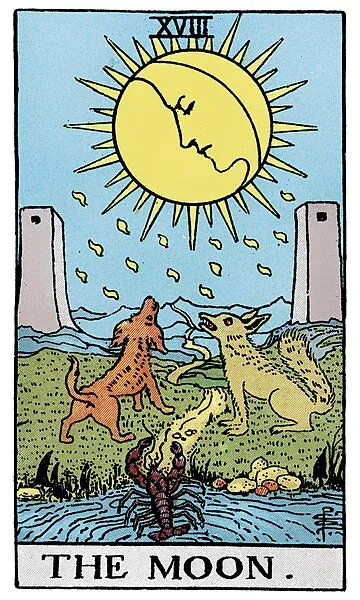
XVIII · The Moon
The Dream-guide
Hecate, the night face of the Triple Goddess — she who escorts through the unverifiable. It is often read as the wettest stretch of the Self's road toward consciousness.
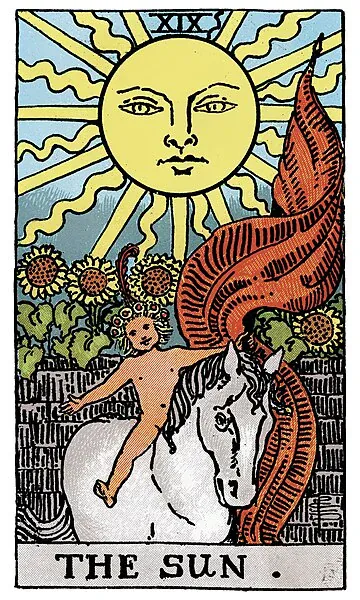
XIX · The Sun
The Divine Child
Jung's "The Psychology of the Child Archetype" (CW 9i §259) — not the Puer at the start but the child who arrives after Shadow and Moon. At noon, no shadow.
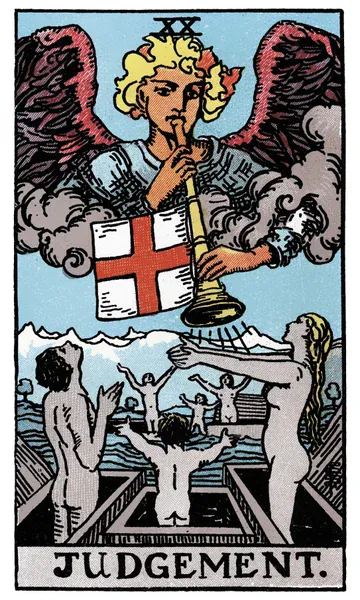
XX · Judgement
The Reborn
Called by one's own name — under the trumpet, the former self rises integrated. Jung called this "symbolic death-and-rebirth," a cardinal archetypal moment.
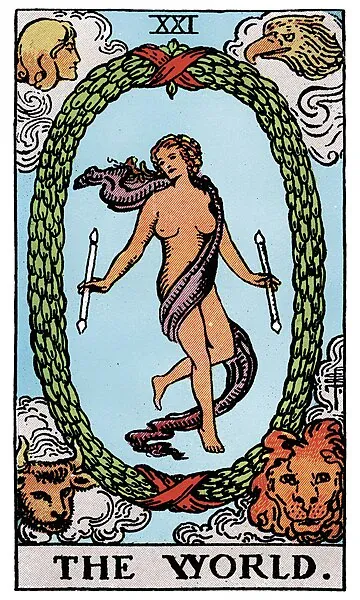
XXI · The World
The Self
Capital-S Self — the unifying center of the psyche. The mandala is its commonest archetypal image: four creatures around the central dancer, both within and beyond the circle. A closing, and already the next opening.
Cross-Cultural Echoes
Archetypes wear different costumes in different cultures. Jung's claim is not a universalism that says "humankind has always believed the same thing"; it is **pattern recognition** — recurring imagery in mythologies that had no contact, from which he inferred a shared psychic structure. That is a hypothesis, not a proof. The correspondences below point to **functional similarity**, not strict identity. "Sun Wukong equals the Fool" goes too far; "Sun Wukong carries the Trickster function, which the Fool also summons" is the honest sentence.
Trickster
In "On the Psychology of the Trickster-Figure" (CW 9i) Jung reads it as a "compensatory appearance of the collective shadow" — when order stiffens, the Trickster enters, disrupting, reshuffling.
Great Mother
CW 9i §148. The seed-bed of things — both nourisher and devourer. Jung insists on the doubleness: Demeter and Kali are two faces of one coin.
Wise Old Man
Jung's Senex. When the hero stalls, the Sage brings knowledge that could not be willed into being. Late-life counterpart of the Self.
Mythic figures
Shadow
CW 9ii Aion. **Unintegrated self** — once projected, it wears an enemy's face. Jung urges integration, not suppression, because what is pressed down returns the fiercer.
Self
CW 9i "Concerning Mandala Symbolism." The unifying center of the psyche — not the lowercase self / ego, but the simultaneously-central-and-transcendent Self at the point of integration. The mandala is its core image.
Hero
Campbell's monomyth (1949): departure, initiation, return. Jung in Symbols of Transformation (CW 5) reads the hero as consciousness tearing itself free of the maternal ground.
Maiden / Kore
"The Psychological Aspects of the Kore" (CW 9i, 1941). More than "virgin" in the literal sense — an early face of the anima, the as-yet-unlived, transformed by descent.
Sage
The teaching face of the Wise Old Man — keeper of collective memory. Distinct from the Hermit: the Sage turns toward community; the Hermit turns toward self.
One more time: the correspondences above are not "evidence." They are **a reading frame**. Figures in each culture wear many hats — Inanna is love and war; Guanyin is succor and liberation; forcing them into a single archetype flattens what they actually did. Use this table as a doorway, not a cage.
Court Cards · Four Stages of Psychic Maturation
The 16 Court cards = 4 elements (Fire / Water / Air / Earth) × 4 stages (Page / Knight / Queen / King). "Stage" here is neither age nor gender but four typical postures the psyche takes toward its own element. Four cards in one suit are the same current seen through four thicknesses of mastery.
Page · Apprentice
First encounter with the element — curious, unburnt, unbitten. The Page says "let me try," a posture one could call "first initiation."
Knight · Seeker
Externalizing the element into action — charging, questing, sometimes getting lost inside it. The Knight says "I ride for this," and this stage is easy to overextend.
Queen · Presence
A stable inner relationship with the element — able to hold its heat, moisture, weight inside oneself. **Not about gender** but about mature receptivity as a stance of the soul. Male souls have their Queens too.
King · Sovereign
Making the element a structure others can lean on — not a display of power but "I can set law for this current." Wise Old Man and Great Father meet here in their late phase.
Minor Arcana · Situational Archetypes
The 40 pip cards (Ace through 10 across four suits) are not character archetypes — they are **situational archetypes**. They do not ask who, they ask what kind of moment: the night of grief, the morning of betrayal, the afternoon of inheritance, the dusk of solitary holding.
Jung wrote that there are as many archetypes as there are typical situations in life (CW 9i) — certain situations themselves carry archetypal charge: first love, loss, homecoming, betrayal. The minors unfold that list at finer grain — the Five of Cups is specifically "the few cups that have already spilled," not "loss" in the abstract.
Reading with an Archetypal Eye
When a card comes up, do not hurry to ask "what does this predict." Try the other question: **What role is this card inviting me to play right now?** To be a Trickster once, loosening the stuck order? To be a Sage, saying aloud what I already knew?
And distinguish two moves: **projection** — throwing the force outward. "My boss is a Shadow archetype" is textbook projection. **Embodiment** — taking it home. "There is a part of me currently playing Shadow." The archetype is always inside; it is never a label one pins on somebody else's forehead.
“What role is this card inviting me to play?”
Further Reading
The same 22 majors, told as narrative — complementary to this archetypal angle.
Jungian Shadow integration — practices small enough to keep.
The two thinkers behind the twentieth-century tarot revival.
The 16 courts unfolded across four elements × four stages.