
Death Reversed · Core Meaning
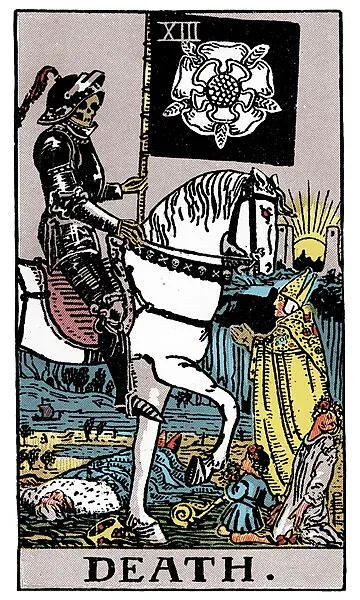
Burial is the rite the Death tarot card reversed postpones indefinitely. The skeleton has passed, but the household insists the room is still occupied. The crowned king is down, yet someone keeps polishing the crown. The bishop kneels, yet the ritual goes on as if the prayer can reverse the weather. The maiden turns away and calls the turning away peace. The child sees too much and is told not to speak.
This is Death reversed meaning at its core: the ending has happened, but it has not been acknowledged. Change is held at the door. Not because the old thing is alive, but because naming its death would rearrange everything. The result is not preservation. It is rot. The unacknowledged ending begins to sour the living parts of the life around it.
Upright Death cuts cleanly. Reversed Death delays burial. It keeps the former relationship alive through checking, the former job alive through resentment, the former identity alive through performance, the former wound alive through repetition. It may look like loyalty. It may look like patience. It may look like hope. The card asks whether those names are accurate, or whether they are myrrh poured over a body that needs earth.
The imagery becomes claustrophobic reversed. The pale horse cannot move. The river behind the rider stops being passage and becomes swamp. The white rose on the banner is still pure, but it is trapped in a room that refuses air. The sun between the twin towers is visible, yet the seeker remains on the near bank, bargaining with the corpse because the far bank requires a self they do not yet know how to be.
Scorpio's fixed water explains the difficulty. Fixed water remembers. It bonds, holds, absorbs, and refuses to evaporate on command. Pluto works underneath conscious permission. Late autumn after first frost is not sentimental; it makes visible what cannot survive the season. Reversed, the seeker tries to keep green leaves on a branch that has already gone brittle. The effort becomes more exhausting than the grief would be.
For a querent in denial, Death reversed is a compassionate but unsparing mirror. It does not say, "try harder." It says the trying is part of the problem when the object of effort is already dead. For a querent in fear, the card says the feared ending may have already occurred internally, and the dread is now attached to the announcement rather than the fact. For a querent who feels stuck without understanding why, the card asks where life is being asked to flow around an unburied body.
For a querent who has built a life around endurance, this card can feel almost insulting. Endurance may be the virtue that kept them alive. It may have preserved a family, paid a debt, held a business together, or carried a body through illness. Death reversed does not mock endurance. It asks whether endurance has become automatic after the living reason for it has vanished. A virtue can become a tomb when it refuses to notice the season has changed.
For a querent who is waiting for permission, Death reversed shows the danger of outsourced closure. The ex may never say the needed sentence. The parent may never admit the harm. The employer may never acknowledge that the role is over. The old community may never bless the departure. Waiting for the crowned king to authorize his own burial keeps the seeker kneeling beside him. The card asks for inner authority where external authority fails.
For a querent who keeps calling the situation "complicated," Death reversed asks whether complexity is true or merely protective. Some situations are genuinely layered: children, illness, immigration, debt, shared property, public vows, long histories. But complexity can also become incense thick enough to hide decay. The card does not demand simplistic action. It demands that the central fact be named inside the complexity. A dead thing surrounded by difficult logistics is still dead.
The reversed card's first medicine is naming. Name the loss before solving it. Name the breakup before seeking replacement. Name the professional death before writing a new title. Name the end of the old body, the old faith, the old family role, the old appetite. Charon does not ferry euphemisms. The coin must be real.
Death Reversed · Love & Relationships
Death reversed love is the relationship that has ended in substance while the ritual continues. The texts still go out. The anniversary is still marked. The argument still returns to the same altar. The photograph remains framed. But the living exchange has gone. The house may look occupied from the street; inside, the rooms smell closed.
For an existing partnership, Death reversed often points to a bond preserved by avoidance. Both people know something is wrong, but the direct sentence is treated as too dangerous. A partner may keep performing affection because naming absence feels cruel. Another may keep demanding proof because they sense the absence and cannot bear its name. The card says the unspoken ending is already shaping the relationship. Silence does not prevent the death; it only makes the air harder to breathe.
Sometimes Death reversed describes a relationship that can survive, but only after the dead part is identified. The dead part may be a sexual pattern, a conflict style, a living arrangement, an old betrayal used as permanent leverage, or the myth that the relationship should feel like it did in the first year. A living partnership can carry a dead pattern for a while. It cannot build a future around it. The burial has to be specific.
For separations, breakups, and no-contact situations, Death reversed points to refusal to let the chapter close. Checking the profile, replaying the last conversation, keeping the object, asking friends for updates, rehearsing the perfect message: these actions are small offerings to the unburied dead. They may briefly soothe the nervous system. They also keep the river uncrossed. The card does not shame longing. It asks longing to stop impersonating life.
For the question of reconciliation, Death reversed is usually a warning. It can indicate that both people are trying to reanimate the old relationship rather than meet as changed adults. The reunion fantasy may be less about love than about avoiding grief. If reconciliation is possible, the old form must be treated as dead first. That means time, accountability, altered structure, and an end to the exact pattern that caused the break. Without that, the relationship resumes as a haunted room.
For a new connection, Death reversed can show the old partner still in the bed, symbolically if not literally. A seeker may be trying to begin while still organized around the previous ending. Or the other person may be present but not free, still carrying a corpse from another story. The chemistry may be real. The timing may still be compromised by what has not been buried.
For a solo seeker, the reversed card asks where loyalty to pain has become identity. Some people become faithful to the wound because the wound is the last remaining bond. The former beloved is gone, but grief keeps a shrine. The betrayal is over, but suspicion keeps the betrayer influential. The card asks for the shrine to be dismantled gently. The white rose belongs to the living, not to the room of relics.
If the question is whether someone still has feelings, Death reversed often says yes, but the feelings are tangled with refusal, guilt, fear, or stagnation. They may not be ready to release. They may also not be ready to repair. This is the difficult middle: attachment without movement. The child in the image looks directly because someone must tell the truth no one else wants to say.
For the seeker who keeps asking whether to hold on, Death reversed asks what holding on is doing. Is it preserving a living bond through a difficult winter, or preserving access to a person who has stopped meeting you in truth? Is patience creating repair, or only postponing grief? The card does not reward self-abandonment disguised as devotion. It asks the hands to open enough to see whether anything living remains in them.
For the person who fears being the one to speak, the card points back to the child. The child looks directly because innocence has not yet learned the politics of pretending. In adult love, directness can feel brutal. It may also be the first tenderness the relationship has received in a long time. "This is not alive as it is" can be a cruel sentence if thrown like a weapon. It can be a merciful sentence if spoken as truth.
For relationships with children, family pressure, shared homes, or public vows, Death reversed asks for even more precision. The presence of consequence does not make an ending false; it makes the ending require more care. A household can need stability and still need truth. A child can need protection from chaos and still be harmed by adults staging a life that no longer breathes. The card asks for grown-up structure: legal advice where needed, practical timelines, fewer theatrical declarations, more honest rooms.
For love that is not dead but is carrying dead matter, reversed Death asks both people to stop accusing the whole bond before naming the specific corpse. The dead matter may be an affair that was never mourned properly, a sexual silence, a financial betrayal, a contempt habit, a version of the future one partner no longer wants. If the living bond remains, the funeral is internal: the old agreement ends so a truer one can be written. Without that rite, resentment becomes the third partner.
Sometimes the ending is converted into a friendship before it is allowed to be an ending. The calls continue. The birthday is remembered. Practical help is still offered and still accepted, and both people describe the arrangement as maturity. Sometimes it genuinely is. When it is not, the friendship is a machine keeping a body warm with the sheet pulled to the chin: neither person grieves, neither person is free, and any new bond either of them attempts has to be conducted in a house with one room permanently occupied. A real friendship after love does exist, and Death reversed is not against it. But it is built on the far bank, by two people who crossed separately. It cannot be used as the boat.
The practical love counsel is to stop using ambiguity as a substitute for intimacy. Ask the clean question. Give the clean answer. If the relationship is dead, do not make it perform. If one part is dead and another lives, name both. A living love can survive funerals. It cannot survive indefinite rot hidden under flowers.
Death Reversed · As Feelings
Death reversed as feelings describes attachment caught around an unacknowledged ending. The person may feel unable to let go, unable to move forward, unable to admit what has changed. Their feeling is not clean finality. It is stalled grief, clinging, dread of transformation, or a private knowledge that the old emotional form is dead while the hands keep holding it.
If the person is reserved, Death reversed may look like avoidance. They do not speak because speech would make the ending real. They answer vaguely. They remain near enough to prevent closure and far enough to avoid repair. This can be deeply painful for the seeker because it feels like a sign to wait. The card asks for sharper sight: not all nearness is life. Sometimes nearness is the body refusing burial.
If the person is demonstrative, the reversed card can look like repeated dramatic returns. Big messages, apologies, declarations, late-night confessions, sudden nostalgia. The feeling is intense, but intensity is not the same as transformation. They may be trying to revive the emotional charge of the bond without changing the pattern that killed it. The Tower would break the room; Death reversed keeps lighting candles in it.
For a long bond, Death reversed as feelings often means the person is attached to who you were together, not necessarily to who either of you is now. They may love the shared history. They may fear the social, family, or inner consequences of admitting the relationship has changed beyond recognition. Their feeling may be grief disguised as duty. It may be duty disguised as love. The distinction matters because the body knows the difference even when language does not.
For a new connection, Death reversed may mean someone is not emotionally available because an old ending remains unburied. They may like you. They may be drawn to your presence. But a previous story still holds the central room. You cannot compete with a ghost because a ghost does not have to be real to govern the house. The card asks the seeker to notice whether they are being invited into a living bond or into a mausoleum with fresh flowers.
If the question is "are they done," reversed Death often says they are not done emotionally, but that does not equal readiness. They may be stuck at the threshold. They may be resisting the finality of the end. They may be keeping you in mind because letting go would require meeting the life that comes after. This can feel hopeful, but the card's warning is precise: stuck is not the same as returning.
If the question is "do they want change," Death reversed says fear is stronger than willingness right now. They may want the relief that change promises and resist the death that change requires. They may want the relationship renewed without surrendering the old control. They may want forgiveness without the funeral for the former pattern. Their feelings may be real. Their capacity for transformation is the question.
For the seeker, the card advises against becoming the psychopomp for someone who refuses the river. You can name what you see. You can offer one honest conversation. You can leave a clean door for truth. You cannot carry another person's unburied ending across on your back. Charon takes passengers who board. He does not drag them from the shore.
If they are returning after silence, Death reversed asks what has changed besides the distance. Return can be sincere and still unripe. A person may miss the warmth, the access, the version of themselves reflected in the bond. Missing is not the same as having crossed the underworld. Ask whether the old pattern has been buried, or whether the person has simply grown lonely beside it.
If they are refusing to let you go while refusing to choose you clearly, the card names attachment without responsibility. This is one of Death reversed's sharper emotional forms. The person may want the comfort of your continued presence without undergoing the death of their indecision. They may keep the river uncrossed because a crossed river demands a different life. The seeker should not confuse being held in limbo with being cherished.
If they have already told other people, their feeling is further along than the conversation you are having. A friend knows. A sibling knows. A flat has been viewed. This is one of the more painful shapes Death reversed takes, and it is rarely cruelty: the ending already exists socially and is withheld personally because saying it to your face makes it true in the one room that still frightens them. What reads as ambivalence may be rehearsal. The card does not send the seeker hunting for proof — that search has its own rot. It asks them to notice the sensation of being managed, and to decide how long they are willing to be the last person informed about their own life.
Read Death reversed in feelings as a weather report of stagnation around loss. There may be care. There may be longing. There may be guilt. But the emotional field is not moving freely. The healthiest response is not pressure; it is clarity. Ask what is alive now, not what was alive once.
Death Reversed · Career & Work
Death reversed career readings describe professional stagnation around a dead role, dead project, or dead identity. The work may still be functioning externally. Salary arrives. Meetings happen. The title remains on the email signature. But internally, the form has ended. The worker keeps showing up as a version of themselves who no longer exists, and the cost is paid in dullness, resentment, fatigue, or quiet contempt.
For someone in a current role, Death reversed asks whether staying has become a way to avoid grief. Leaving a job can mean losing status, routine, colleagues, health insurance, a story about competence, a family-approved identity. Those losses are real. But the card warns that refusing to name them keeps the seeker half-alive at work. The pale horse is blocked in the hallway. Nothing new can enter because the old role still occupies every chair.
For someone considering a career change, reversed Death often marks the fear of crossing. The person may research endlessly, polish plans, talk about someday, gather certifications, or keep revising the portfolio without submitting it. These actions can look responsible. The card asks whether they are actually burial delays. Preparation is useful until it becomes a dignified way to remain on the near bank.
For entrepreneurs and freelancers, Death reversed can describe the business kept alive because it once worked. The old offer, old launch cycle, old audience promise, or old platform may be draining more life than it returns. The founder may resist ending it because the public identity is attached. A dead product can become a fallen king that still rules the company. The practical instruction is to identify what is being maintained for memory rather than usefulness.
For creative work, reversed Death is the artist who keeps making the recognized style after the hand has moved on. The old voice continues because it receives praise. The new voice is still under the river, fishlike, difficult to show. This card can mark a painful but necessary creative burial: abandoning a manuscript, closing a public persona, ending a collaboration, leaving a subject that built the artist's name. The white rose is the essence of the art that survives the old form.
For workplace conflict, Death reversed may point to an organization refusing to admit a structure is broken. Leadership rearranges language instead of ending the harmful process. A team keeps a project alive because canceling it would reveal bad judgment. An employee is asked to maintain morale around a corpse. Here the card validates the seeker's sense of decay. The smell is real.
For promotion questions, Death reversed may show the seeker chasing recognition from a system whose approval no longer feeds them. The promotion becomes a crown placed on a body that wants to leave the court. If the desire for advancement is alive, pursue it cleanly. If the desire is revenge, proof, or fear of being no one without the title, the card asks for a different burial: the old need to be validated by a dead structure.
For career advice specifically, the reversed card asks for an exit map rather than an exit fantasy. Write the financial runway. Identify the skills that still live. Name the relationships worth preserving. Put a date beside the project that needs to close. If leaving is impossible this month, end one dead practice inside the current role: the unnecessary meeting, the invisible overtime, the ritual of saying yes before thinking. Burial can begin inside the building.
For people close to retirement, sabbatical, or a major professional pause, reversed Death can reveal fear of the blank after the role ends. The job has become a name, a calendar, a reason to wake, a way to be needed. Ending it may be right and still frightening. The card asks for rites of passage, not abrupt erasure: handover, archive, blessing, rest, and a deliberate first season without the old title.
For job-search questions, Death reversed can signal that old grief is shaping the search. A person laid off may still be negotiating internally with the previous employer. A person burned out may apply only to roles that repeat the original wound. A person humiliated by a former boss may chase titles as revenge. The card asks for the old professional death to be mourned before the next role is asked to redeem it.
Sometimes the seeker is the one holding another person's ending. A manager, a founder, a client, a board member, a parent running a family firm: the decision was effectively made in April and the conversation has still not happened in July. In the gap, someone plans, spends, turns down another offer, and keeps working late to repair a thing that has already been decided about them. Death reversed names that silence accurately. Delay is not kindness when the cost is transferred to the person who has not been told. If the outcome is genuinely still open, say that it is open and say what would change it. If it is closed, close it with notice, references, money, and a date. The psychopomp's whole dignity is that he does not walk beside the dead pretending to be a traveling companion.
The advice is not reckless departure. Death reversed respects practical timing. It asks for honest naming first. Name the dead role. Name the project that needs closure. Name the identity that no longer fits. Then make the next concrete move: a savings plan, a conversation, a shutdown date, a transition document, a portfolio submission, a boundary around hours. The burial can be orderly. It still has to be real.
Death Reversed · Money & Finances
The subscription renews, the loan rolls over, the arrangement nobody ended quietly bills again — Death reversed is money stagnating around a pattern that was never buried. The account may not be collapsing. The numbers may even look manageable. But something is quietly rotting: a debt strategy that never closes the wound, a subscription to a former ambition, a family obligation that has become exploitation, a lifestyle built around an identity the seeker no longer inhabits.
For debt, Death reversed is the unopened envelope and the mental fog around exact numbers. The problem grows in the dark because naming it would make the loss real. A person may keep paying minimums as a way to avoid seeing the full body of the debt. The card asks for the ledger to be brought into daylight. Not to induce shame. To stop rot.
For spending, the reversed card often points to purchases that preserve a dead self. Clothes for a social life no longer desired. Tools for a project abandoned years ago. Gifts sent to maintain a role as rescuer. Storage fees for belongings that belong to another era. Each payment says the old life still lives. Death reversed asks whether that sentence is true.
For investments or business money, Death reversed warns against sunk-cost loyalty. The phrase "we have already put so much into this" is often the voice of the unburied dead. More money does not restore life to a completed form. This card supports cutting losses when the living evidence is gone. It also supports pausing before adding fresh resources to an old wound.
For family money, Death reversed can show inherited scripts that no one wants to name. One person always rescues. One person always hides. One person always controls through gifts. One person is expected to kneel like the bishop and bless the arrangement as love. The card asks the seeker to identify the dead law beneath the living transactions. Boundaries around money are often funerals for family myths.
For income, reversed Death may point to earning from a source that drains the soul because the seeker fears the blank space after ending it. The income may be necessary for now. The card does not shame survival. It asks for a plan that acknowledges the truth. If the role is dead, let the budget begin preparing the burial. If the business model is dead, stop calling decline a temporary dip.
For shared finances after a separation, reversed Death can be especially tangled. A joint account, unpaid loan, shared subscription, property, pet expense, or informal debt may become the last living thread between people who otherwise ended. Sometimes that thread is necessary during transition. Sometimes it becomes a way to keep the ghost reachable. The card asks for written terms and a final date. Money should not be asked to do the work of mourning.
For inherited money or expected support, Death reversed asks whether the seeker is waiting beside a gate that no longer opens. The promised help, family pattern, settlement, or old source of security may be delayed, diminished, or morally costly. This does not require panic. It requires a financial life that does not depend on keeping an unburied expectation alive.
For money advice, reversed Death is often the card of the ugly spreadsheet that becomes beautiful because it tells the truth. The numbers may not be pleasant. The clarity is still medicine. Put the whole pattern in one place: income, recurring costs, debts, silent loans, obligations, objects stored for a former life. Then mark what belongs to the living future and what belongs to the dead arrangement. The first cut should be small enough to complete and symbolic enough to matter.
For financial advice, the card is practical: audit what continues only because no one has ended it. Cancel one dead payment. Close one unused account. Sell or donate one object from a former life. Write down the full debt number. Set a final date for funding a project that no longer answers. Do not make the whole financial life a dramatic purge. Start with the place where decay is most obvious.
Death reversed money work is liberation by subtraction. The goal is not austerity for its own sake. The goal is to return cash, attention, and strength from the dead to the living. Money is life-force in practical clothing. Do not keep dressing a corpse with it.
Death Reversed · Health
For health readings, Death reversed is the body asking for an ending that has been postponed. This is not a medical verdict and not a substitute for care. It is a symbolic mirror for denial, delay, relapse into an old pattern, or the slow physical cost of maintaining a life the body knows is over. The air is closed. The river is not moving. Something needs to be named so the body can stop carrying it alone.
For acute concerns, reversed Death may point to avoidance of the appointment, the test, the conversation, or the practical change already recommended. The seeker may know what needs attention and keep waiting for a less disruptive moment. The card says the moment of disruption may be the mercy. The rider at the threshold is not there to frighten. He is there because delay has become part of the condition.
For chronic conditions, Death reversed often describes the difficulty of releasing a former normal. A person may keep measuring the body against what it did before illness, burnout, grief, or age changed the terms. That comparison can become a second suffering. The card asks for a funeral for the old normal. Without that funeral, every accommodation feels like defeat rather than relationship with the present body.
For habits, substances, food, sleep, screens, work pace, or stress cycles, the reversed card speaks plainly: a pattern that once helped may now be harmful. The coping mechanism is not evil. It may have saved the seeker during a harsher season. But the season has changed and the mechanism has not. This is the dead thing unburied inside daily routine.
Emotionally, Death reversed can show grief trapped in the tissues. The face keeps functioning. The calendar stays full. The person says they are fine. The body says otherwise through fatigue, tightness, dull appetite, shallow breath, or a heaviness that has no single cause. The card does not diagnose those sensations. It asks what ending has not been mourned and where the body has been appointed mourner in place of the heart.
For recovery, reversed Death warns against trying to resume the old life too quickly. After surgery, burnout, loss, sobriety, depression, or any deep change, the psyche may want to prove that nothing has altered. The body may disagree. The pale horse cannot be turned into a parade horse. Recovery may require a changed rhythm, changed limits, changed relationships, changed ambitions. The old structure may be gone.
For caretakers, reversed Death may describe the refusal to admit a care arrangement has become unsustainable. Love may still be present. The current form may still be dead. A family can keep one person kneeling as bishop because everyone else benefits from calling the posture devotion. The card asks for outside help, new structure, respite, or the end of the fantasy that one body can carry the whole river.
For body image and aging, reversed Death can show grief disguised as self-attack. The former face, former capacity, former speed, former appetite, former resilience: these may be gone or altered. Fighting the body as if it betrayed the old image keeps the old image enthroned. The card asks for mourning before discipline. Without mourning, every health plan becomes punishment for not being the former self.
For health advice, the reversed card asks for one appointment with reality. That may be a clinician, therapist, nutrition professional, grief counselor, support group, or trusted person who can sit beside the facts without dramatizing them. Bring the actual list, not the edited one. Bring the symptom timeline, the habit pattern, the relapse, the fatigue, the fear. The point is not confession for its own sake. The point is to stop making the body the only room where the truth is allowed to exist.
For mental health, the card's counsel is to seek support around endings. This can mean therapy, grief work, group support, a medical check-in, or a trusted witness who can hear the unvarnished sentence. The child in the image looks directly because direct seeing is medicine. Shame thrives in half-turned rooms.
The practical question is: what have you been trying not to end because ending it would make the rest of life rearrange? A schedule, a substance, a caretaking role, a relationship pattern, a work pace, a self-punishing story? Name one. Bring it to someone qualified when needed. Let the body stop serving as the only witness.
Death Reversed · Spirituality
Spiritually, Death reversed is initiation refused. The threshold is visible, the river audible, the coin already in the hand, and still the seeker remains on the bank arranging explanations. This is not failure. It is a recognizable human moment. The ego prefers a painful known world to an honest unknown one.
For an established practitioner, reversed Death may describe a practice kept alive after its soul has departed. The ritual is performed, the words recited, the cards drawn, the candle lit, but the act no longer opens anything. The danger is not boredom. The danger is confusing repetition with fidelity. A form that once carried the sacred may need burial so the sacred can move.
For someone leaving an inherited religion or worldview, the reversed card marks unresolved grief. The seeker may reject the institution and still be haunted by its language. Or they may keep attending outwardly while inwardly gone. Both are forms of being unburied. The white rose matters here: something true may survive the death of the container. The work is to separate essence from authority.
For mystical experience, Death reversed warns against wanting transformation without ego death. The seeker may ask for signs, breakthroughs, visions, or rebirth while refusing the concrete ending being requested: the apology, the sobriety, the boundary, the departure, the surrender of being right. Pluto is not impressed by spiritual vocabulary. The underworld asks for the actual thing.
For ancestor work, Death reversed may indicate a family dead who have not been given their proper place. This does not require superstition; it can be psychological, historical, and ritual at once. Unspoken grief, erased names, inherited trauma, and family myths can become unburied presences. The practice is not to live for the dead. It is to acknowledge them enough that the living are no longer governed by silence.
For seekers who repeatedly dismantle their lives, reversed Death may show the opposite problem: endings used to avoid staying long enough to be changed. Constant purging can look spiritual. It can also become flight from intimacy, craft, accountability, or ordinary devotion. The card asks whether the latest proposed ending is a true burial or another refusal to inhabit the living difficulty.
For spiritual advice, reverse the usual hunger for signs. Do not ask for a new symbol until the old instruction has been obeyed. Death reversed often appears when the seeker knows exactly what must end and keeps seeking more elaborate confirmation. Pull fewer cards. Write fewer interpretations. Do the already-known act. The underworld does not respect decorative certainty; it respects passage.
The path from Tiphareth to Netzach is again instructive. Reversed, the heart resists descending into the waters of desire and instinct. It wants beauty without loss, devotion without vulnerability, ritual without alteration. Nun, the fish, cannot swim in a sealed jar. Spiritual life requires water that moves.
A thirty-minute practice for Death reversed: write the sentence "I have not buried..." and complete it ten times. Do not make the answers noble. Let them be specific. Then choose one answer and place it under a stone, bowl, or dark cloth for seven days. Each day, sit beside it for five minutes without solving it. On the seventh day, decide on one burial action. The delay becomes conscious; conscious delay can become movement.
The spiritual medicine is not forced rebirth. It is consent to the ending that has already occurred. Once the dead are given their rites, the living no longer need to whisper around them. A practice, a life, a faith, or a desire can breathe again because it is no longer sharing air with what refuses burial.
Death Reversed · Yes or No
No, if the question depends on avoiding the ending. Conditional yes, if the first step is acknowledgment.
Death reversed yes or no is not a clean permission card. It points to blockage, resistance, and the cost of not naming what is already over. If the question is "can this continue without change," the answer is no. If the question is "can movement return after the truth is named," the answer becomes yes, but only through burial.
For love questions, Death reversed is usually no to reconciliation in the old form. It can be yes to repair if both people are willing to name the dead pattern and stop reviving it. If one person wants renewal and the other wants the comfort of the old script, the card remains no. Attachment is not enough.
For feelings questions, the card often says no to emotional availability. The person may still feel something, but their feeling is caught in resistance, grief, guilt, or fear. If the practical question is whether they are ready to act clearly, reversed Death usually answers no. If the question is whether the feeling has completely vanished, the answer may be more complicated. Stuck emotion is not absence.
For questions about waiting, Death reversed says no to waiting that has no structure. A defined pause can be wise. A date for the next conversation can be wise. A mutually acknowledged healing interval can be wise. But waiting that feeds on checking, hoping, and decoding is the unburied dead asking for another candle. The card asks for terms or closure.
For questions about reaching out, the reversed card asks whether the message would bury something or keep it breathing artificially. A clean apology, a practical logistics note, or a truth spoken without demand can serve the crossing. A message designed to reopen the emotional wound, test the attachment, or avoid grief usually receives a no.
For questions about career and money decisions, Death reversed gives a conditional answer: yes to the action that ends the leak, no to the action that funds another delay. Yes to closing the failing project if the evidence is clear. No to investing more because the loss feels humiliating. Yes to a transition conversation. No to another month of pretending the role is merely tiring when the deeper truth is that it has no life.
For career questions, Death reversed says no to indefinite delay. It says no to pouring life into a dead project. It can say yes to a transition plan, a closure meeting, a shutdown date, or a careful exit. For money questions, it says no to sunk-cost thinking and yes to auditing, canceling, consolidating, and ending the financial leak.
For health questions, it says no to postponement and yes to appropriate attention. The card does not diagnose. It does not replace a clinician. It does say that avoiding the needed conversation, appointment, boundary, or habit change is part of the problem.
For timing, Death reversed often indicates delay caused by resistance rather than external fate. The door is not locked; the hand is not turning the handle. The question to ask is not "when does this move" but "what truth has not been admitted because movement would follow?"
The shortest answer: no to embalming, yes to burial. No to staging life around a corpse, yes to the grief that restores movement. The yes exists, but it lives on the far side of an honest ending.
Death Reversed · Advice
Death reversed advice is to name the loss first, right now. Do not begin with a plan. Do not begin with a replacement. Do not begin with a story about why it is fine. Begin with the sentence that has been avoided: this ended, this changed, this no longer lives here, this version is gone.
Find the euphemism and remove it. "We are complicated" may mean the relationship is over and no one has agreed to say so. "I am exploring options" may mean the career is dead and fear is writing the calendar. "I am being patient" may mean grief has been turned into waiting. "I am loyal" may mean a corpse is receiving devotion. Death reversed asks for language sharp enough to cut cloth for burial.
Perform one act of acknowledgment. Tell one trusted person the plain truth. Put the object in a box and label the box honestly. Change the contact name. Close the browser tab. Count the debt. Open the medical portal. Schedule the conversation. The act should be small enough to do this week and real enough that the nervous system notices.
Stop feeding the rot. Every unburied ending has a food source: checking, paying, explaining, hoping, rescuing, rehearsing, defending, storing, hiding. Identify the food source. Withdraw one portion. The goal is not punishment. The goal is to let the dead thing stop consuming the living.
Let grief be inefficient. Reversed Death often persists because the seeker wants a clean transition with no ugly feeling. Real grief is rarely elegant. It repeats, contradicts itself, remembers stupid details, gets tired, becomes hungry, forgets, returns. Give it a container rather than a deadline: a walk, a journal, a therapist's room, a weekly hour, a dark cloth over the object. Without a vessel, grief leaks into everything.
Separate hope from evidence. Reversed Death often survives by feeding on one remembered tenderness, one ambiguous message, one future fantasy, one former success. Hope is not the enemy. Hope without evidence becomes embalming fluid. Put the evidence on one page and the hope on another. Let them look at each other. The page that carries more living weight should guide the next action.
Ask what part of you benefits from the unburied state. This is not blame. It is precision. An unfinished ending may preserve identity, moral superiority, access, avoidance of loneliness, avoidance of choice, or protection from the blank page. The dead thing may be costly and still useful to a frightened part of the psyche. Address that part directly. It needs care, not command.
Make a burial schedule. Reversed Death often remains abstract because the ending is emotionally huge. Break it into rites: one day to gather the objects, one day to tell the witness, one day to change the account, one day to write the unsent letter, one day to rest. Put rest on the schedule as part of the rite. The psyche trusts endings more when they have sequence.
After the first act, resist checking whether you feel reborn. Rebirth is not the immediate proof of a good ending. The first proof may be silence, emptiness, irritation, fatigue, or the strange shame of no longer having the old drama to organize the day. Let that be enough. The soil does not sprout the hour after burial.
Do not confuse public announcement with burial. Posting, explaining, making the ending legible to others, or crafting the correct narrative can become another delay. Some endings need witnesses. Others need quiet. Charon's boat is not a stage. Choose the witness who helps the crossing, not the audience that helps the performance.
If another person refuses to acknowledge the ending, do not make your life depend on their consent. This is the hard counsel of Death reversed in relationships, work, and family systems. Shared truth is ideal. Solitary truth may be necessary. The child in the card looks directly even when the adults cannot. Let the child-part speak clearly.
Finally, make room for the living thing without demanding that it prove itself immediately. After rot is cleared, the first sign of life may be modest: one honest appetite, one clean yes, one morning without rehearsal, one task done without dread. Protect that small life. Death reversed becomes upright when acknowledgment begins. It becomes transformation when acknowledgment is followed by repeated, concrete acts of release.
Death Reversed · Card Combinations
Death reversed combinations show where refusal, delay, and unburied endings gather pressure. The paired card reveals the mechanism: suspension becomes avoidance, rupture is postponed until it breaks through, calling is ignored, rest turns into freeze, departure is rehearsed but not made. Read the pair by asking what cannot be buried and what remains unable to live because of it.
These pairs are not punishments. They are pressure maps. Death reversed is already a sign that the psyche is spending force to prevent a crossing. The companion card shows where that force goes: into waiting, catastrophe management, ignored vocation, frozen recovery, or the repeated rehearsal of leaving. The useful question is not "how bad is this?" but "which honest act would let movement return?"
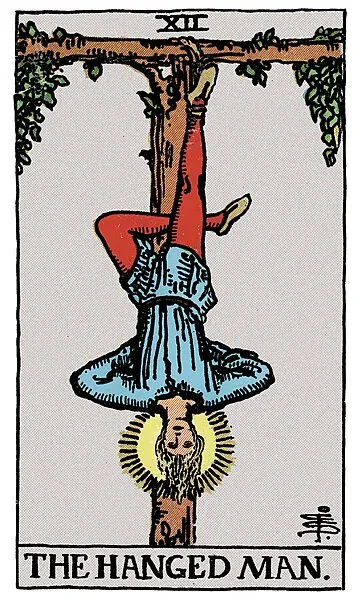
Death Reversed + The Hanged Man
Suspension has become a way to avoid the funeral. The Hanged Man can be sacred waiting; reversed Death can turn that waiting into a beautiful excuse. The seeker may call it surrender while privately refusing the ending. This pair asks for the difference between ripening and postponement. If insight has already arrived, continued hanging may be fear in devotional clothing.
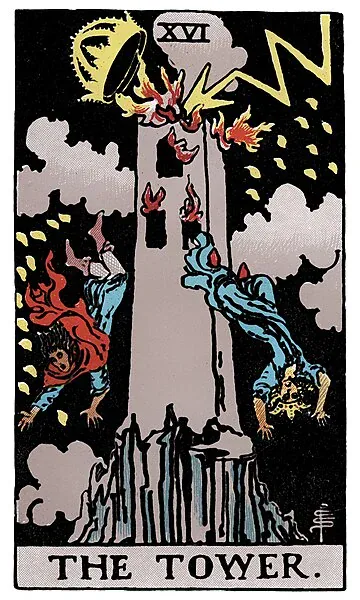
Death Reversed + The Tower
The structure is kept standing around a corpse. The Tower gathers charge because Death reversed refuses the clean ending. This pair often appears when polite avoidance, institutional denial, or emotional bargaining has made rupture more likely. The medicine is to choose the smaller truth before the larger break chooses its own hour.
The concrete form of this pair is almost always a date somebody else controls. The lease renews in March. The contract rolls over unless notice is given. The visa, the school year, the treatment plan, the family gathering at the end of the month — a calendar will open the subject whether or not the people involved feel ready. Reading the pair well means speaking before the date speaks. A truth said in a kitchen on an ordinary Tuesday costs a fraction of the same truth extracted by collapse in front of witnesses, and it leaves the seeker holding authorship rather than wreckage. The Tower does not care who was polite.
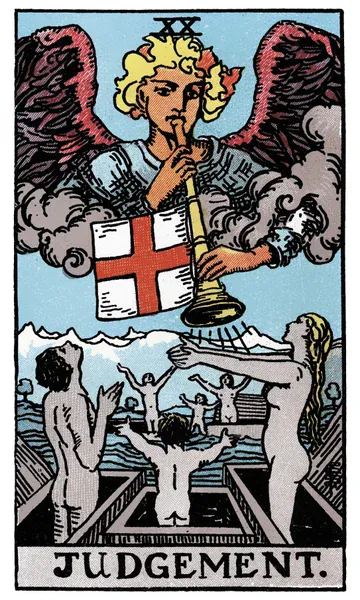
Death Reversed + Judgement
The call is sounding, but the grave remains sealed from within. Judgement asks for accountability and emergence; Death reversed resists the burial that makes emergence possible. Together they describe someone summoned into a new life while still arguing for the old story. The trumpet is not punishment. It is the sound of the name that fits now.
Death Reversed + Four of Swords
Rest has turned into freeze. Four of Swords can be necessary recovery, but with Death reversed it may become the chamber where the ending is preserved indefinitely. The body is still because it is healing, or still because it is afraid to rise into a changed life. The difference is felt after rest: more breath, or less.
The test is worth running weekly, because the two kinds of stillness look identical from outside and even from inside. Rest that repairs leaves a person slightly hungrier, slightly more curious, slightly more able to answer a message that has been sitting unopened. Rest that hides leaves the same weight behind the sternum and a longer list of things not opened. With Death reversed, the second kind can run for months and be defended the whole time as self-care, which is the only vocabulary the culture supplies for lying down. Keep the rest. Add one waking act that belongs to the life after the crossing, however small — a walk at dusk, one letter answered, the window opened in the room where the air stopped moving.
Death Reversed + Eight of Cups
The figure has packed for departure and keeps circling the cups. Eight of Cups knows the road is necessary; Death reversed fears the finality of walking it. This pair describes rehearsed exits, farewell messages never sent, plans made and remade. The cups have already stopped feeding the soul. The remaining work is to let the feet tell the truth.
A rehearsed exit has a tell. The packing is always emotional and never logistical: the seeker can recite the farewell speech word for word, and cannot say what the first Monday afterward looks like — where they sleep, what the money does, who gets told, which key goes back. This pair asks for that boring half, because the boring half is the part an unburied ending cannot survive. Eight of Cups walks out under a moon and never looks back at the count. Death reversed keeps turning the figure around to check whether the cups are still standing where they were left. Counting them is not leaving them.
Card Combinations
The Hanged Man
Death with The Hanged Man is the threshold between surrender and passage. Something must end, but the timing asks for one last change of perspective before the cut. If the insight has already arrived, the suspension should not become a shrine to delay.
The Tower
Death with The Tower shows an ending that can no longer remain private. Death marks the completed form; The Tower breaks the structure built around denying it. The pair is severe, but it clears false architecture fast.
Judgement
Death with Judgement is burial followed by summons. The old chapter closes, then a clearer call rises from the grave. This pair asks for accountability after release: what does the ending require the living self to answer?
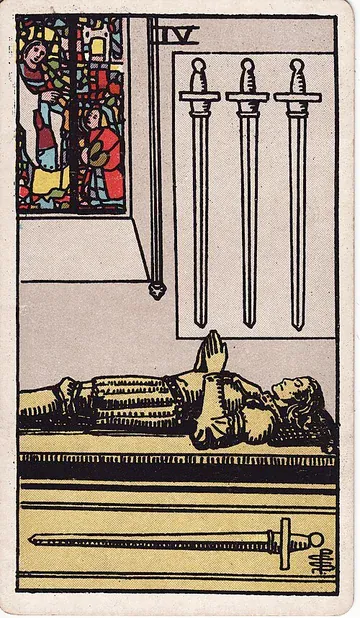
Four of Swords
Death with Four of Swords asks for a chamber of rest after the crossing. The ending is real, but immediate reinvention would violate the body. Sleep, silence, prayer, and nervous-system repair become part of the transformation.
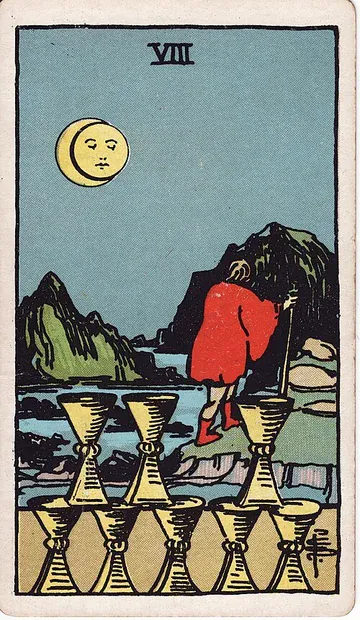
Eight of Cups
Death with Eight of Cups is chosen departure with finality. The cups once mattered, and that is why leaving carries grief. Together they show a soul walking away not from failure, but from a completed emotional chapter.
Frequently Asked Questions
What does Death reversed mean?
Death reversed means an ending has occurred or is overdue, but it has not been acknowledged. The dead thing remains unburied, and life begins to organize itself around avoidance. It can show resistance to change, stagnation, clinging, or grief that has no vessel. The river is present, but no crossing has been consented to. Look for the place where effort is preserving appearance rather than life. That is where the air has gone stale, and where the first honest window belongs now. The medicine is naming the loss and making one real act of closure.
Does Death reversed mean a relationship can still be revived?
Not by reviving the old room. Death reversed describes a relationship, or a pattern inside one, kept alive after its life has gone. It can show avoidance, unfinished breakup energy, stalled reconciliation, or an old wound governing the present bond. Sometimes the whole relationship is over; sometimes the dead thing is a conflict pattern, betrayal script, or fantasy of return. In reconciliation questions, it warns against reviving the old room and calling it healing. The living question is not whether anyone still feels something, but whether the form can change. Repair is possible only when the dead pattern is named directly. Without that, the relationship remains haunted by what no one admits.
If someone keeps coming back and nothing changes, is that Death reversed?
That is one of its clearest shapes. Death reversed as feelings points to stuck attachment: care, longing, guilt, or grief caught around an unacknowledged ending. The person may not be emotionally free, but that does not mean they are ready to repair or return. Their feeling is stalled at the river, still looking back toward the old shore. They may miss what was, resist what is, and fear what comes after. Watch for nearness without responsibility, return without changed behavior, and silence that keeps the ending suspended. Clarity matters more than intensity with this card, because intensity can keep the ending unburied.
Is Death reversed a no because of the ending, or because of the refusal?
Because of the refusal. Death reversed is usually no if the question depends on avoiding change. It is conditional yes if the first step is acknowledgment, closure, and release. In love, it is no to reviving the old form unchanged. In work or money, it is no to sunk-cost loyalty and yes to a concrete transition or ending plan. In feelings, it is no to clear availability while the old grief remains unburied. The card answers from the threshold: movement returns after the burial, not before. If a yes requires denial, treat it as no.
What is the first concrete act after admitting the thing is over?
The advice of Death reversed is to name the loss first. Remove euphemisms, identify what is already dead, and perform one concrete act of acknowledgment: close the account, box the object, ask the direct question, schedule the appointment, or end the ambiguity. Stop feeding the rot through checking, paying, rehearsing, or hoping without evidence. Choose one witness who can hear the plain truth. Then let the nervous system register that a door has closed. Do not rush to replace what has been buried. Let the cleared space feel strange. Do not force rebirth. Give the ending its rites and let movement return honestly.