
What Grey Means
Grey is the most overlooked color in the Rider-Waite-Smith palette. Most readers see it as a non-color — the compromise between black and white, the mood-neutral background. The painted scene asks for something more specific. Grey is not a midpoint but a state: the light has been admitted into the chamber, but the chamber has not yet declared what the light reveals. It is the color of weather that has not broken into rain, of the verdict that has not yet been pronounced, of the hour just before either dawn or full dusk where neither term applies. Read carefully, grey is closer to a verb than a noun — the work of withholding, the active reservation of judgment that lets a scene stay open long enough to be looked at.
The Western painting tradition gives grey two technical names that sit behind the deck's reading. Verdaccio, the grey-green underdrawing of the medieval workshop, is the layer Cennino Cennini's manual instructs the apprentice to lay down before flesh: the body of every figure begins as cool grey shadow that color is later applied to. Grisaille, the fifteenth-century technique of painting an entire panel in monochrome grey, was used on the closed exterior wings of altarpieces (the Ghent Altarpiece, the Mérode Triptych) to evoke sculpture in stone — a deliberate withdrawal of color so the opening of the panel onto the inner painting becomes a kind of resurrection. The deck inherits this technical sense rather than the moral one. Where East-Asian ink traditions treat grey as a positive medium of its own — the wash of the literati landscape, the deliberate negative space that carries breath — the Western frame Pamela Colman Smith painted from treats grey as the moment before color: the suspended ground on which the painted figure must still arrive. The two readings are different but not opposed; both name a presence, not a lack.
How Grey Appears in the Deck
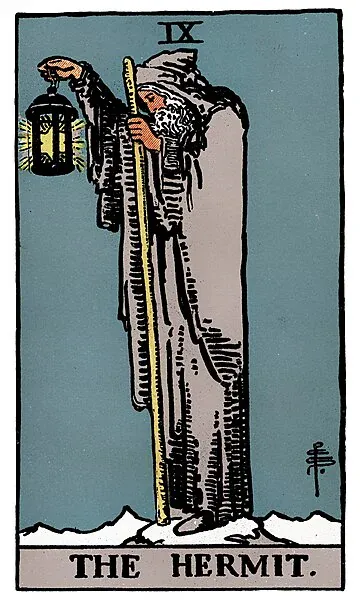
The deck stages grey along two strands. On the trumps it marks stillness — the moment a major arcana figure has stopped to wait for the light to arrive. The Hermit (IX) wears the long grey robe and hood that all but erase him from the world; the snow he stands on is the same tone, so figure and ground become one continuous grey, leaving only the lantern as the warm point. The grey is not anonymity but arrangement — the wind, the snow, and anyone asking the way see the light in his hand first, rather than him. On Justice (XI) the two grey pillars at her flanks are unadorned: severity on one side, mercy on the other, both neutral in palette so the verdict's legitimacy comes from the polarity she stands within rather than from any decoration. On The Sun (XIX) the grey stone wall behind the garden is the boundary the child has just ridden past, still standing, neither demolished nor crossed by force — maturity is the discovery that the wall can be passed from either side. On Judgement (XX) the grey sea and grey sky merge into one tone — no before, no after, no above, no below; only the now that the trumpet has threaded.
On the swords suit grey marks the second strand: thought without conclusion, the mind in suspension. On the Three of Swords the grey cloud-bank behind the pierced heart is thick but not black — this is not the end of the world, only weather that must pass; grief has its duration, and the duration is held inside grey rather than night. On the Five of Swords the jagged grey clouds above the field of trampled banners are split into sharp shards, the kind of weather that draws the skin tight without ever letting down rain — the air of an argument just past, charged but not resolved. On the Nine of Swords the thin grey line of dawn at the bed's foot is the only non-black in the room: the night's catastrophe is real, but the line of grey is the room's remaining promise of daylight, and merely noticing it is itself a small partial release. Read the trumps and the swords together and grey draws a single readable line: the color the deck wears when time has stopped without yet ending.
Cards That Carry Grey
Seven pinned instances of grey across the deck — four trumps (Hermit · Justice · Sun · Judgement) and three swords pips (Three · Five · Nine). Its meaning shifts from robe, to pillar, to wall, to sea, to cloud, to dawn-line.
Hover a pin to see where the symbol sits on the card.
The Hermit
On the Hermit the grey is the long robe and hood that all but erase him from the world. The snow he stands on is the same tone — figure and ground are one continuous grey, leaving the lantern as the only warm point. He has arranged himself so anyone asking the way sees the light first, and only afterward sees him.
· Read this card →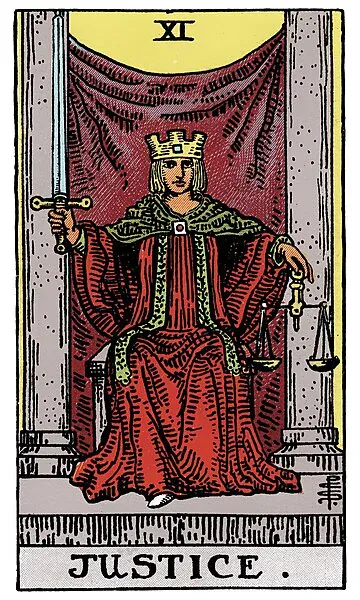
Justice
On Justice the grey is the two pillars at her flanks — one of severity, one of mercy, both unadorned. The neutral palette is structural: the verdict's legitimacy comes from the polarity she stands within, not from her person, and grey is the color that lets the polarity stand without taking sides.
· Read this card →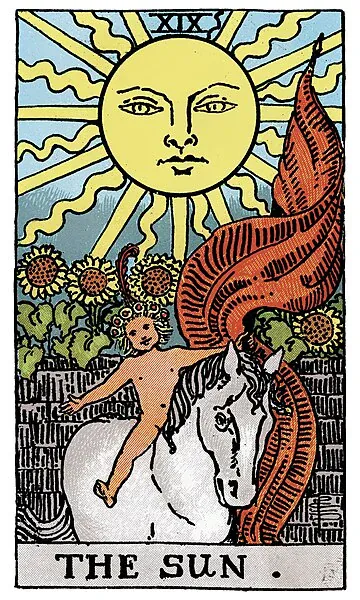
The Sun
The garden's boundary — the child has ridden past, yet the wall still stands.
· Read this card →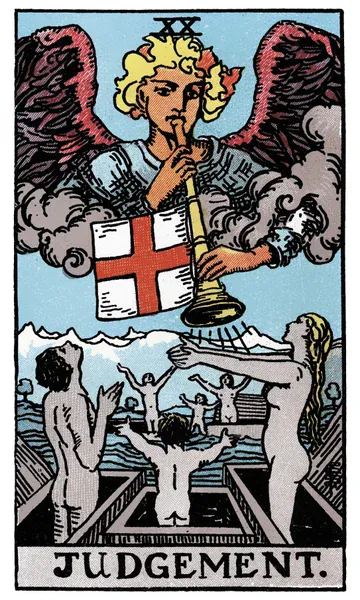
Judgement
Water and sky the same tone — no before, no after, no above, no below; only the now that the horn has threaded.
· Read this card →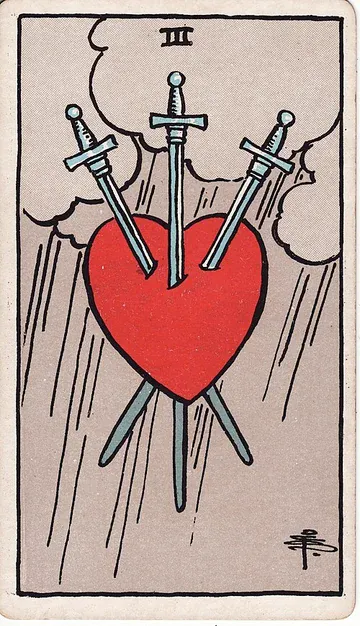
Three of Swords
On the Three of Swords the grey is the cloud-bank behind the pierced heart — thick but not black. This is not the end of the world; it is weather that must pass. Grief has its duration, and the duration is held inside grey rather than night — the difference is the whole reading.
· Read this card →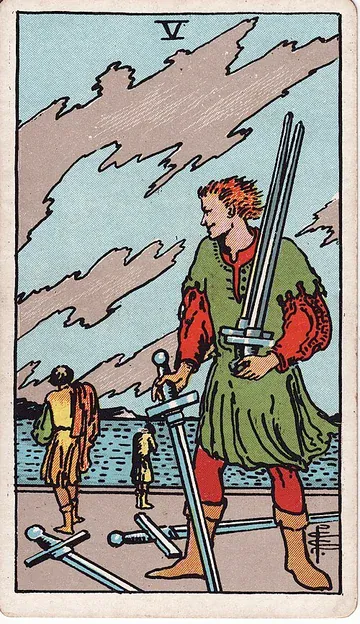
Five of Swords
The sky seems to have joined in the fight just past — the clouds split into sharp shards. It is the kind of weather that draws the skin tight without ever letting down rain.
· Read this card →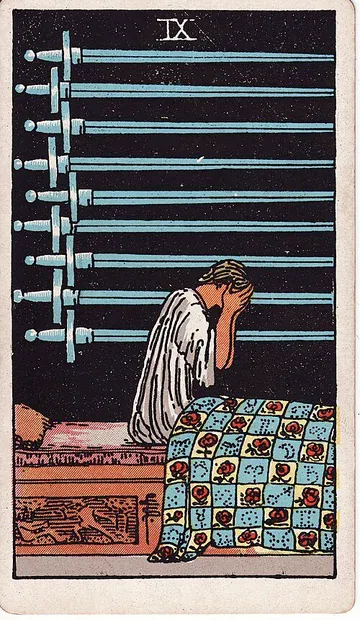
Nine of Swords
On the Nine of Swords the grey is a thin line of dawn at the bed's foot — the only non-black in the room. The night's catastrophe is real, but the room still keeps its small remaining promise of daylight; merely noticing the grey is itself a small, partial release.
· Read this card →Other Symbols Nearby
Grey belongs to the Color category — the painted hues that carry doctrinal weight inside the scene. It sits between [black](/guide/symbols/black) (the unilluminated ground, the nigredo before the work) and [white](/guide/symbols/white) (the washed soul, the albedo after) — neither dissolution nor purification but the held interval between them, the chamber in which light has been admitted but conclusion has not. Other colors in the atlas (golden, blue, green) are catalogued in the index, with long-form essays following.
Older Sources
Grey enters Western painting before color does. The medieval workshop manual of Cennino Cennini (c. 1390s) instructs the apprentice to lay down verdaccio — a cool grey-green pigment of black, ochre, and lime-white — as the underdrawing on which all subsequent flesh and drapery will be modeled. The body of every figure in late-medieval and early-Renaissance Italian panel painting begins as a body of grey shadow that pink, ivory, and gold are later applied to. By the fifteenth century the Northern workshops of van Eyck and the Master of Flémalle had extended this technical step into a finished idiom: grisaille, monochrome grey painting carried to completion. The Ghent Altarpiece and the Mérode Triptych close on grisaille exteriors imitating sculpture in stone — Adam and Eve, the angel and the Virgin of the Annunciation — so the moment the wings open onto the colored interior becomes a small painted resurrection, the world arriving from underdrawing into full hue. Grey here is not absence but the layer the world is built upon.
Pamela Colman Smith inherited this technical sense, and used it sparingly. Her greys cluster on two kinds of card: the trumps of stillness (Hermit · Justice · Sun · Judgement), where time has stopped to allow witnessing, and the swords suit, where thought is the elemental key and the air must be painted as suspension rather than weather. The contrast with East-Asian ink tradition is worth naming carefully: in the Chinese and Japanese literati landscape, grey is not the moment before color but a positive medium — the wash that carries breath, the deliberate negative space that holds the painted scene open. The two traditions are different in technique and in metaphysics, and Smith painted from the Western one. But the shared grammar is real: both use grey as a presence, not a lack — as the active interval the painted figure depends on. C.G. Jung's reading of the alchemical sequence holds the same shape in psychic key — the moment after the dissolution of nigredo and before the whitening of albedo, the soul broken but not yet washed, the unconscious admitted but not yet integrated. Smith's greys — the Hermit's robe, Justice's pillars, the Sun's wall, Judgement's sea, the swords' clouds and dawn-line — sit on top of this stack. They are the figure of weather without conclusion, of the breath held between the in and the out.